
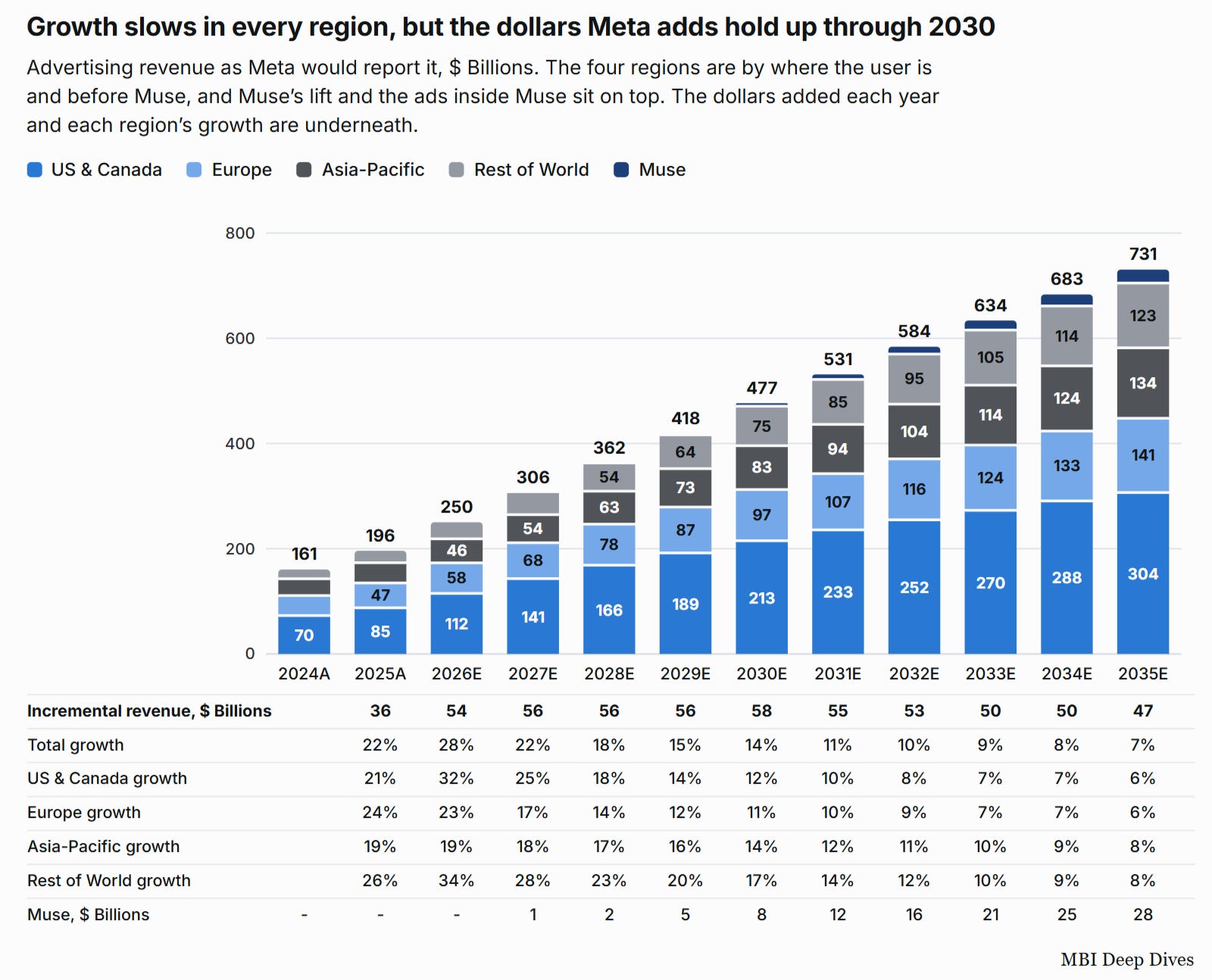
Modeling Meta, Part 1: Advertising
Meta’s advertising model is rebuilt as frontier AI training absorbs more compute and capital spending, challenging assumptions that incremental capex directly supports revenue.
Meta’s advertising model is rebuilt as frontier AI training absorbs more compute and capital spending, challenging assumptions that incremental capex directly supports revenue.
Nvidia’s interim CFO-led transition after Jensen Huang coincides with a $130 billion January-quarter revenue guide, China sales scrutiny…
Aurum PropTech’s KuberX loan desk lent ₹200 crore in September, monetizing free property search through loans, while Aurum trades at…
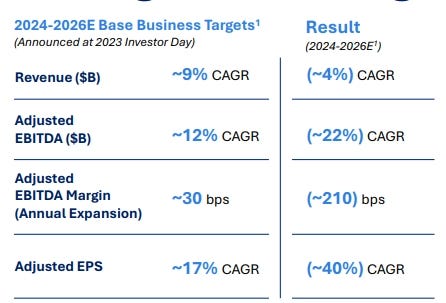
Builders FirstSource targets $350 million in annual sales growth above the market by winning more products per home and deepening local…
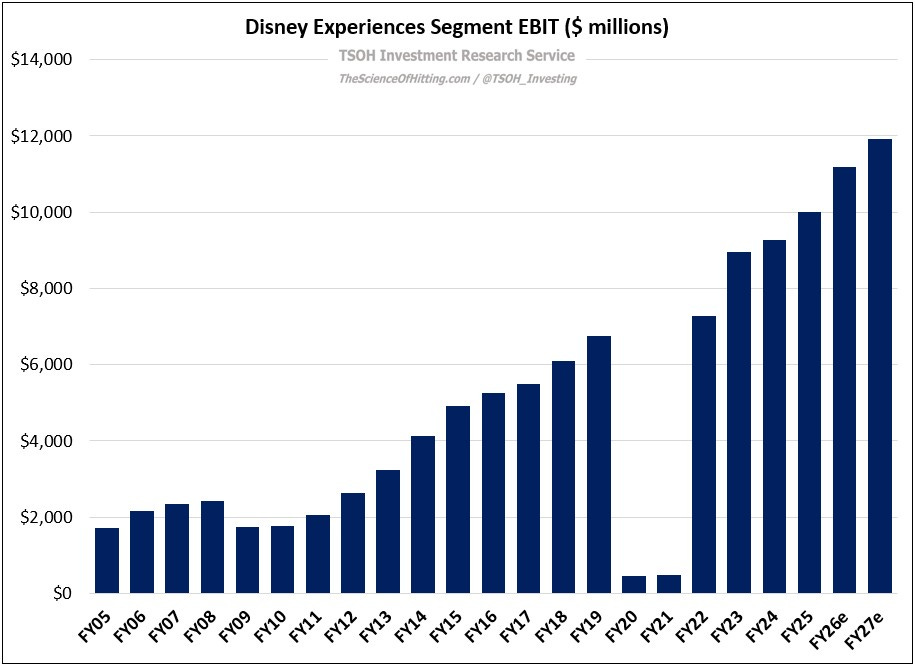
Disney raised adjusted EPS about 16% in FY26 despite double-digit declines in U.S.

Nineteen large U.S.-listed stocks hit 52-week lows Friday, including Alphabet and Nvidia, as AI-related names face further downside in a…

Anthropic’s $1.5 trillion IPO tests whether frontier AI models can sustain a moat as open-weight rivals close the gap and performance costs…

OB’s portfolio fell 11.8% to £36,052 amid mining-stock declines, while it argues AI spending enriches chipmakers and energy suppliers…
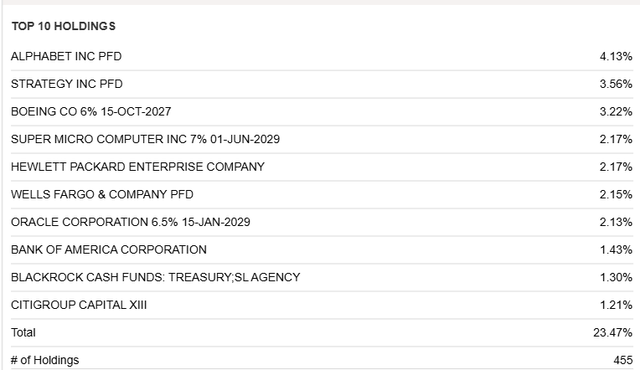
Latin American banks INTR, NU and AVAL reported solid quarters, while preferred-stock ETF distortions create opportunities in individual…

Nvidia shares rose 31% after co-founder Jensen Huang was reinstated as CEO.

Amazon says AWS differs from other compute providers while accepting lower margins to serve frontier AI workloads and agents.
 T · short
AT&T’s stalled deleveraging and share repurchase case has prompted a bearish turn on the telecom stock.
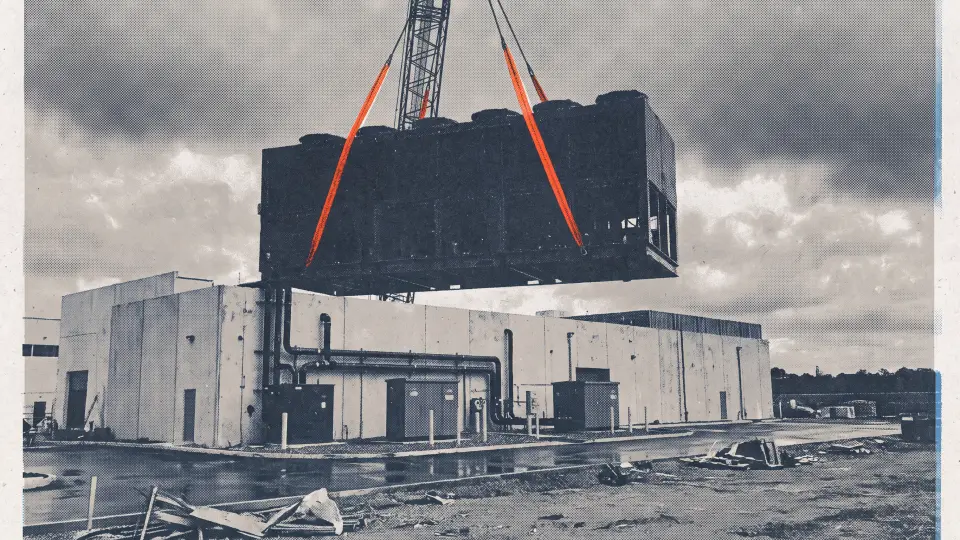
Amazon’s AWS revenue grew 39.3% to $46 billion, backed by a $578 billion backlog, while 2026 capex targets $220 billion and estimated…

SoFi’s stock case hinges on interest rates, tangible book value and private-credit loan sales after its $1.5 billion equity offering.
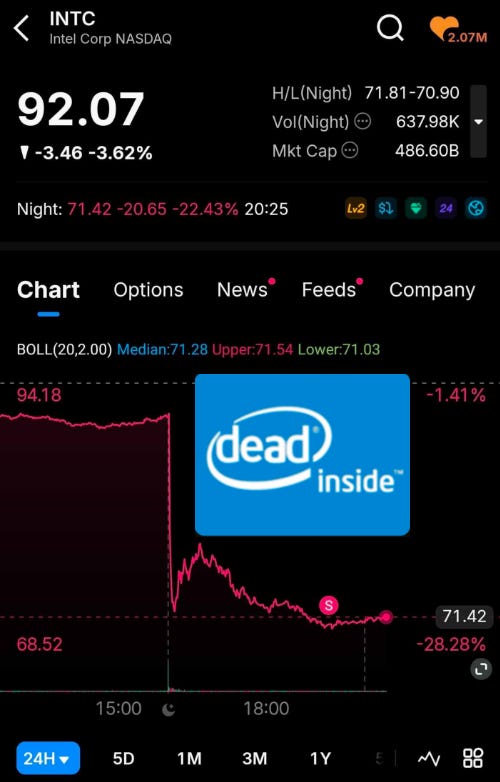
Intel’s Q3 2026 datacenter CPU shortage reflects wafer-start planning failures, not substrate constraints, after demand shifted from client…
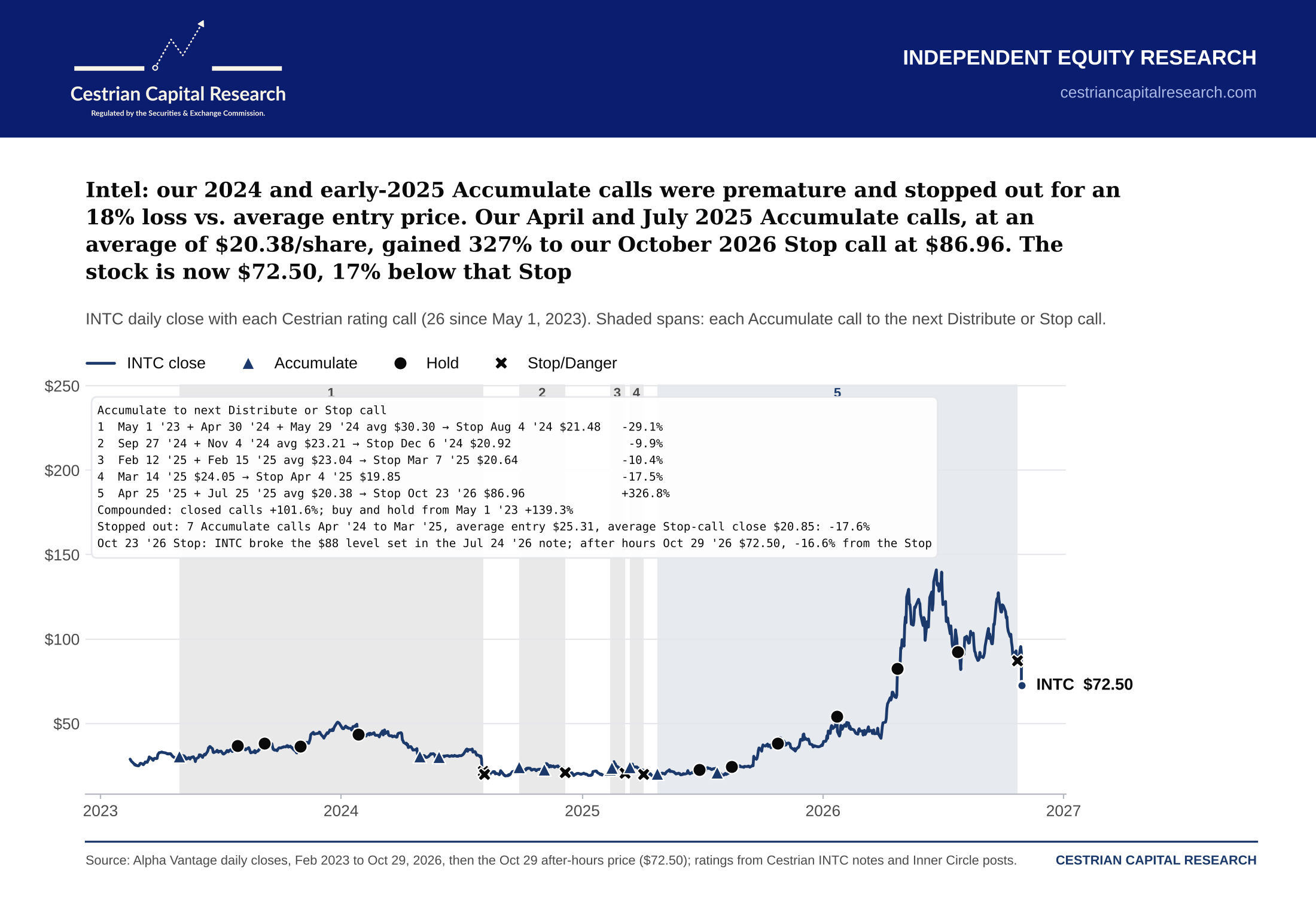
Intel's Q3 revenue rose 21% to $16.5 billion, led by 78% data-center and AI growth, but Q4 guidance of $15.5 billion trailed consensus.

Alphabet, Amazon and Intel face market pressure as the big three cloud giants reaffirm AI spending plans.

Twilio CEO Khozema Shipchandler urged investors to “buy the dip” after earnings sent the software maker’s shares down 17% after hours.

Sharp Tech is now available on video, featuring discussion of Anthropic’s S-1, Meta, Muse and the Brewers.

Alphabet's EPS miss came from a SpaceX stake loss, while 24.7% revenue growth and a $561 billion Cloud backlog counter free cash flow…
 Cain Lee 1 click

ServiceNow’s Q3 revenue rose 20.5% to $4.11 billion, while non-GAAP EPS missed consensus and fourth-quarter cRPO growth guidance slowed to…
Every publication on this site, hand-picked.
 Adam Schadt
 Albert Anthony
 Alexander Grover
 Andres Veurink
 APAC Research
 Arizona Equity Research
 Atlas Diary
 Bay Area Ideas
 Benjamin C. Barry
 Bernard Zambonin
 Blake Winiecki
 Capital Connoisseur
 Chetan Woodun
 Crimson And Gold Research
 Cypriot Invests
 Dane Bowler
 Daniel Bell
 Daniel Jones
 Daniel Schönberger
 Danil Sereda
 David Zanoni
 Deep Value Investing
 Dhierin Bechai
 Dilantha De Silva
 Dustin Quasney
 Edmund Ingham
 Elliott Gue
 Equity Eagle
 Eudaemon Research
 Fernanda Galvez Jalil
 Fountainhead
 Gary Gambino
 Geneva Investor
 Gil Rotstein
 Given Mahlangu
 Gytis Zizys
 Henrik Alex
 High Alpha Professor
 Ignacio Planas Gonzalez
 Infinity Curve
 Investor Overview
 IWA Research
 Jaden Mealy
 JR Research
 Julia Ostian
 Kevin Avroutskii
 Khaveen Investments
 Kurt Christensen
 Lee Bailey
 LL Insights
 Long Player
 Louis Gerard
 M&M Capital
 Marc Gerstein
 Melissa Tucker
 Mike Arnold
 Mike Zaccardi, CFA, CMT
 Miletus Research
 Motti Sapir
 Multiplo Invest
 Myriam Alvarez
 Narek Hovhannisyan
 Nicholas Thomas Lowry
 Nicolas Bolsinger
 Number Cruncher
 Oakoff Investments
 Petri Dish Reports
 Philip Wang
 Prakhar Agarwal, CFA
 PropNotes
 PV Research
 Pythia Research
 Quantryon Capital
 Robert J. Lake
 Ron Ferrie
 Rubicon Associates
 Ryan Canady
 Sam Mancini
 Sanjay Swamy
 Seeking Profits
 Sharon McArd
 SiliconBytes Insights
 Simple Investment Ideas
 Sorrento Research
 Stephen Ayers
 Steven Fiorillo
 Tech and Growth
 Terry Chrisomalis
 The Alpha Analyst
 The Asian Investor
 The Bullionaire
 The Curious Analyst
 The J Thesis
 The Market Auditor
 The Supercycle Investor
 The Undercovered Dozen
 Tim Travis
 Uttam Dey
 Value Capital Research
 Vishal Jadaun
 Yiannis Zourmpanos
 Zoltan Ban
Every account on this site, hand-picked.
 ⚽️📡
 💥PETITION💥
 A Capital
 absreturnchaser
 Adam D. Wyden
 Alpha Vulture
 AltayCap
 Asif Suria
 Bank Reg Blog
 Barbarian Capital
 BDC
 Bill Ackman
 Brian McGough
 Broken Moats
 BuccoCapital Bloke
 Calvin Blissett
 catechwilliams
 Charles Frischer
 Chris Camillo
 Clark Square Capital
 Cluseau Investments
 Colin King
 Connor Haley
 Conor Maguire | Value Situations
 Convequity
 Dalius - Special Sits
 David Orr
 Deep Sail Capital
 Derek Pilecki
 Devin LaSarre
 DOMO Capital Management, LLC
 Edwin Dorsey
 Evan Tindell
 Fajasy
 Farmer
 Fierce_beast
 Fred Liu
 Garrett Arms
 Gavin Baker
 George Noble
 Hunterbrook
 Ian Bezek
 Idea Brunch
 JabroniCoin.USD
 Japan Deep Value
 John_Hempton
 junkbondinvestor
 kab60
 KEDM.com
 Kevin Mak
 Kingdom Capital
 Kuppy
 Laughing Water Capital
 Lee Roach
 Little Owl Research
 Maius
 Maj Soueidan
 marginofdanger
 mavix
 Mike
 Mikro Kap David
 Mr Neutral Man aka "Howard Marks of REITs”
 Multiples Capital
 Myles
 Nat Stewart
 Negligible Capital
 Odd Diligence
 Odd Lot Arbitrageur
 PAA Research
 Paradis
 Pernas Research
 Porter Collins
 Prepared Remarks
 Psyop Capital
 Raging Capital Ventures
 Red Dog Capital RiverRoadPartners
 Rohan Pavuluri
 Rusholme Capital
 Sahil Khetpal
 Serenity
 SG
 Sheel Mohnot
 SouthernValue
 Steve Eisman
 The Friendly Bear
 Tim Eriksen
 Timyan Bank Alert
 Todd Wenning
 ToffCap
 Trevor Scott
 Undiscovered Compounders
 Voss Capital
 Yaron Naymark
Ordered by how often our editor reaches for them.