New Ask Claude or ChatGPT about any stock, using Bullpen. Bullpen in Claude or ChatGPT. 7 days free

Monday, November 23, 2026

Back to the front page

From X

Convequity on X

Palo Alto Networks is buying the tooling to train its own security models $PANW agreed on 18 November to pay $4.5B in stock for Applied Compute, founded in 2025 by three former OpenAI researchers. Most coverage treats it as an expensive research hire. We see PANW moving from securing other companies' AI to training security into the model itself. Enterprises have long treated security and utility as a trade-off. Tighter security made software harder to use, so buyers chose utility and underinvested in security. AI changes that choice. A company will only let an agent act on its data once it trusts the model, so wide AI adoption needs security built into the model. Applied Compute post-trains open-weight models, which means it takes a published model and trains it further on one customer's data for one job, mostly with reinforcement learning. It then serves the tuned model on its own cloud, and the customer keeps the weights. Fireworks, Baseten and Together sell much the same thing. All three offer fine-tuning and reinforcement learning on open-weight models, and all three say the customer keeps the weights. Fireworks launched reinforcement fine-tuning in June 2025. Baseten made its reinforcement learning toolkit generally available on 6 November. So post-training is not what sets Applied Compute apart. It leans harder on researchers who sit with the customer and build the training environments from that company's own data. Arora said no other team matched its pedigree in post-training open-weight models. We think the edge is the team more than the product. PANW did not buy the largest open-model host. Fireworks was reportedly valued near $17.5B. PANW paid 38% above the $3.25B round Applied Compute closed on 2 November, and about 45x on our arithmetic: $4.5B against ARR that topped $100M. Nikesh Arora told investors PANW looked at nine providers first. We think PANW bought a good asset at a price it could afford, and the return depends on how Arora builds it inside PANW. The baseline case is that PANW trains its own security models. Arora said it will train more than 35 specialized security use cases. PANW holds years of attack data from its firewalls and Cortex, and Applied Compute supplies the tooling to turn that data into weights PANW owns. Our SaaS Survival Scorecard counts that step under Model-Layer Leverage. Google and Microsoft have trained security models and, in our view, neither has shown a breakthrough. PANW has the stronger data for this job. The larger opportunity is making Chinese open-weight models safe for enterprises to use. Applied Compute's inference page lists Kimi, GLM, Qwen, DeepSeek and MiniMax next to Nvidia's Nemotron. The strongest open-weight models today are mostly Chinese, and PANW has not named which it will train on. If PANW can post-train a Chinese model for security work and show customers it is safe to deploy, enterprises can use the best open models without settling for weaker Western ones. Arora told investors this business could grow larger than PANW's cybersecurity business, and PANW expects more than $1B of ARR from the deal by fiscal 2029. A third path is competing with Fireworks and Baseten for general open-model customers. Our confidence in that one is low. We are surprised PANW moved this late. But enterprise AI adoption is still early, so the timing still works. The deal closes in PANW's fiscal Q3 2027, and no security model trained on Applied Compute's tooling has shipped yet.

Convequity on X

Alibaba's 50% cloud rebound is now a bet on its own chips $BABA told investors the new US export rule will cost it cloud growth next year. The bigger story is what CEO Wu Yongming says will replace the lost compute. The rule took effect on Nov 19, the day of the call. It restricts chip exports to overseas data centers that supply large volumes of compute to Chinese companies, on top of the existing limits on buying advanced chips. Both outside routes to compute narrow at once. Wu says the rules will affect next year's products and services. Cloud revenue grew 53% last quarter. The preliminary target for fiscal 2028 (April 2027 to March 2028) is 30–45%, and Wu says the long-term 20 GW data center target may be revised down. Then the roadmap for T-Head, Alibaba's in-house chip unit, all per the call: • Zhenwu M890: fully rolled out this year • V900: 3x the M890's computing performance, mass production in Q1 2027 • V900 super-node clusters: commercial scale in Q2 2027 • J900: large-scale production in 2028 A super-node is many chips networked tightly enough to work as one large machine, which is what training a big model needs. Wu says that after 2027 most of the new AI chip capacity Alibaba adds will be its own chips, with other domestic chips bought mainly for inference. He says Qwen is already training its next-generation model on T-Head chips. The promised payoff is cloud growth back to 50% or higher in calendar 2028. I read that 50% as conditional. Wu says the market is still supply constrained, so growth depends on how much compute Alibaba can deploy. That makes the 2028 number a bet on the V900 ramping on schedule. If mass production slips, the rebound slips with it. The call gave no V900 yields, no comparison with Nvidia, and no evidence of training on large V900 clusters. The same US rule also tightens foreign foundry access for chip designers in restricted countries, which has forced many tier 2 Chinese AI chip makers to scramble for domestic process node capacity out of Samsung and TSMC. The risk has not gone away. It has moved from Washington's export list to T-Head's supply chain.

Convequity on X

TSMC's reported credit screen favors Broadcom over smaller custom-chip designers Commercial Times reports that TSMC ($TSM) now sets a credit limit for each customer from its balance sheet. Orders above the limit are paid in cash, and some customers prepay to reserve capacity. A widely shared X post and India Today's headline read it as TSMC reacting to Jensen Huang's exit from Nvidia ($NVDA). The reports say the rule mainly applies to custom AI chip designers. TSMC has not commented and the report names no customer. The reason is timing. A custom-chip designer pays TSMC when the wafers are made and collects from its own customer only when finished chips ship, after packaging. AI orders keep getting larger, so TSMC carries more risk on each customer and asks for the cash first. Broadcom ($AVGO), which designs Google's TPU chips with Google, made $13.7B of free cash flow in its August quarter and holds $24B of cash. Alchip, a Taiwanese custom-chip designer, raised $510M overseas in June. Our estimate: $13.7B over 91 days is about $150M a day, so Alchip's raise equals about 3.4 days of Broadcom's free cash flow. Marvell ($MRVL) is prepaying about $1B to key suppliers this fiscal year, about twice what Alchip raised. Lenders are tightening in the same way. Those funding Nvidia's $500B GPU financing platform reportedly want more than the 25% guarantee Nvidia offered. If TSMC gives capacity to customers that pay first, Broadcom and Nvidia keep their leading-edge wafers, and designers that fund orders by raising outside money lose slots first. A cloud company choosing a design partner needs that partner to get wafers, so we expect more custom-chip programs to go to Broadcom.

Bill Ackman on X

You got some things right and other things wrong, but in general, your overall construct is incorrect. It is not the case that the other alts contributed all of their performance fees to their public companies, and that our shareholders don't benefit from the investment performance generated by our funds. It is true that Pershing Square Inc. ($PS) is structured differently from the other alternative asset managers (alts) like Blackstone, KKR, and others. Our unique structure is highly beneficial to our company and our shareholders, as I explain below. In short, when Blackstone and the other alts went public, they contributed a substantial portion -- typically 40% to 60%, but not all of their incentive, performance, or promote compensation to the public company and retained the balance to compensate their employees. The outcome of this approach has been suboptimal. First, promote income, particularly from private equity funds, is highly volatile. It is only earned and paid when funds generate a return in excess of a preferred return and when a liquidity event happens, that is, when portfolio companies and/or the funds' real estate assets are sold. As a result, analysts and investors in the alts value the highly volatile income from incentive fees at a low multiple. Wall Street likes recurring and growing fee streams like management fees. It does not like volatile incentive fee income. By contributing so much of their incentive fees to their public companies, the other alts did not retain enough incentive fees to pay their teams. The result is that the other alts grant large amounts of equity compensation to their employees in addition to the promote income they pay to their employees. This equity compensation dilutes reported earnings by as much as 20% or more. In order to address these concerns, when we structured Pershing Square Inc. (PS) in anticipation of its public offering, we bifurcated the performance fee differently. Rather than giving Pershing Square Inc. a pro rata slice of our performance fees, we gave the public company a senior interest in our performance fee income -- what we call Preferred Performance Fees -- and employees retained a subordinate interest in the incentive fee income, what we call Subordinated Performance Fees. PS retains the performance fees on the first five percentage points of returns net of management fees from our funds that charge performance fees, and our employees receive the performance fees on returns above 5% if there are any. If our funds do not earn a return in excess of 5% in any year, any unpaid Preferred Performance Fees accrue into a future year or years until they are earned and paid. In other words, the company and our shareholders get paid first before our employees. As long as investors believe we can earn a gross compound return of 6.5% -- the 5% preferred return plus the 1.5% annual management fee -- over the long term (a high likelihood, in our view, in light of our investment strategy that has generated gross returns of nearly 20% for the last 23 years), Preferred Performance Fees are effectively economically equivalent to management fees and therefore deserving of a similar valuation multiple. We believe our high-return investment strategy will allow us to not only earn the Preferred Performance Fees over time, but also enable us to continually earn Subordinate Performance Fees that we can use to compensate, recruit and retain high quality talent. As a result, we don't need to issue large amounts of stock and option compensation to employees like the other alternative investment managers, minimizing the risk of dilution to shareholders. [PS also benefits from the fact that, as is typical in the hedge fund industry, we earn incentive fees from both realized and unrealized gains so we are not forced to sell assets in order to generate returns. Our funds generate performance fees as long as our annual performance net of management fees is positive, which makes our performance fees much more recurring than those from private equity or private real estate funds.] While in a great performance year, the amount of performance fees earned by Pershing Square Inc. is effectively capped by our structure, the growth in assets that occur from great performance years inure to the benefit of all shareholders in that year and in future years. For example, if, in one year, we generate 30% net returns, while PS only receives performance fees on the first five percentage points of return, its cash flows and intrinsic value grow substantially due to the net 30% increase in fee-paying assets that is generated from our investment performance. Because 98% of our capital is in permanent capital vehicles, nearly all of our net performance is continually reinvested and compounded in our funds and additive to the growth of our fee-paying assets in that year and in future years. With respect to your claim that this structure creates a conflict, I disagree. First, the structure was clearly explained to all investors in the IPO and in our public filings, and investors and analysts have found the structure extremely favorable, particularly when compared with the other alts. Second, our structure incentivizes us to generate excellent investment returns and enables us to attract and retain the best talent without burdening the company with excess G&A, restricted stock or option expenses. Third, any new funds we launch which generate performance fees will have the same Preferred Performance Fee structure and therefore benefit PS in the same manner as do our existing funds. Fourth, our employees own the substantial majority of our shares creating further alignment. We own a greater percentage of our company than do the employees of any of the other alternative asset managers. Fifth, since we have retained, effectively outside of the company, sufficient performance fee income to compensate, retain and recruit employees, we are able to manage PS with a relatively modest amount of general and administrative expense of about $50 million. This has enabled us to operate with the highest operating margins of any of the publicly traded alternative asset managers. Thank you for the taking the time to write your post, which has given me the opportunity to clarify the concerns that you raised. I welcome any further questions or concerns that you or other shareholders may have. X for the win.

Sage: All Quiet on the Mid-Market Front

Sage’s FY26 results and FY27 guidance maintain roughly 10% revenue growth and margin expansion, with shares at 1,123.1p and valued near 23…

Basin Kings

EQT, a leading US natural gas producer, and the Rice family’s rise to power in Appalachia.
Is EDA Dead?

Synopsys and OpenAI will share revenue from GPT-Synopsys, an AI chip-design model built on Synopsys’ licensed EDA tools rather than…
British American Tobacco: Harvest

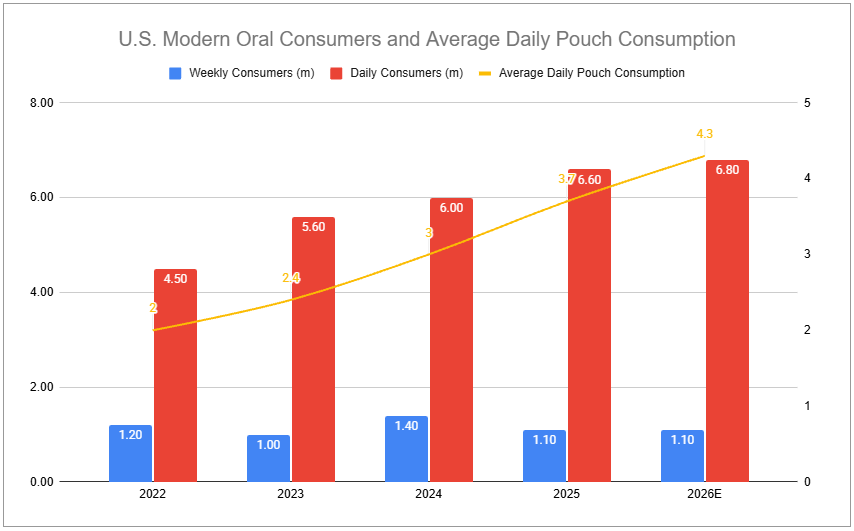
British American Tobacco’s U.S. reset revives combustibles and rebuilds its nicotine-pouch portfolio after legacy-brand writedowns and Velo…

Practical Parametric Yield

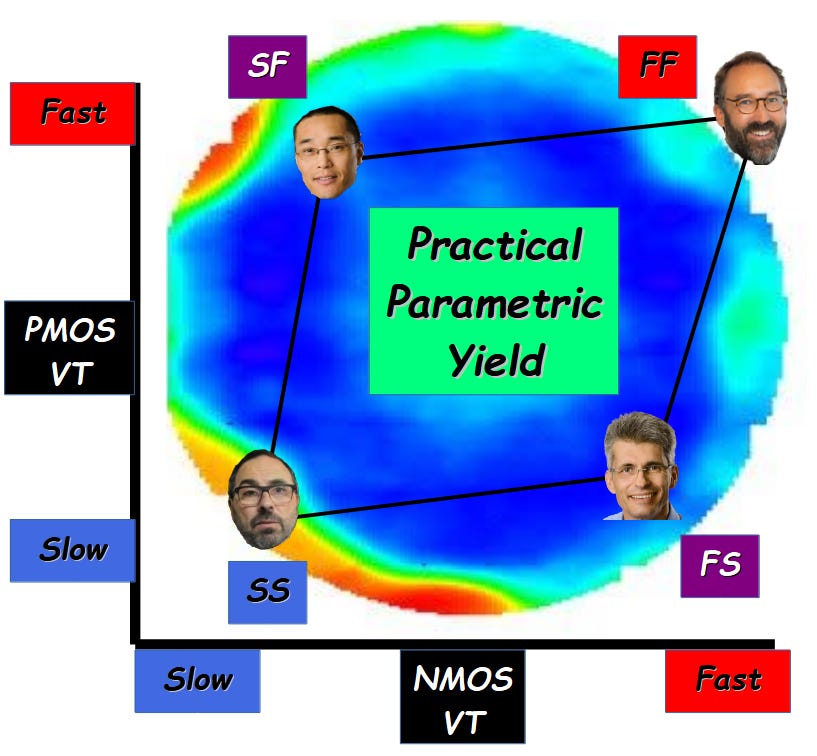
Cerebras’s WSE-3 faces parametric-yield constraints that could restrict supply, making power and clock-speed tradeoffs central to its next…

Publications we follow

Every publication on this site, hand-picked.

130 publications

Newsletters 110

Seeking Alpha 102 of 304

X accounts we follow

Every account on this site, hand-picked.

94 accounts

Investor letters we follow

383 firms

Sectors

Ordered by how often our editor reaches for them.