
 MRVL 2026-10-07
 Marvell Projects $80 Billion In Revenue, But I'm Not Buying
Marvell targets $80 billion in FY2031 revenue after raising FY2028 guidance to $20 billion, but hyperscaler concentration and a stretched…
 Julia Ostian 3 clicks
NASDAQ
MRVL
10 stories
$252B Market cap · 2026-10-06
MRVL 2026-10-07 Marvell targets $80 billion in FY2031 revenue after raising FY2028 guidance to $20 billion, but hyperscaler concentration and a stretched…
Julia Ostian 3 clicks
Marvell’s 2026 investor day draws a skeptical review of its optical connectivity, DSP and AI infrastructure claims, while crediting its…

Marvell’s AWS data-center revenue rose 46% in Q2 FY2027 as Qualcomm enters custom silicon and optical connectivity.
 Eudaemon Research 2 clicks
@SixSigmaCapital It’s kind of the standard AI stack, Chips than Memory than Optics. But a layer deeper is the question if inference is the biggest theme, than does everyone making their own custom silicon become more mainstream? In that case $MRVL probably is highest beta play there.

Qualcomm offers more valuation cushion than Marvell despite Marvell’s stronger AI revenue, as its Amazon partnership supports data-center…
 Delta Analyst 1 click
Nvidia’s $2bn Marvell investment is not a simple endorsement $MRVL is one of the few real DSP alternatives to Broadcom. Nvidia lacked that lever — now it has influence. Marvell has also struggled in custom AI silicon and networking (Trainium 3 was a clear disappointment). The path of least resistance becomes designing compute that attaches to NVLink rather than building independent high-speed I/O. On scale-up, the field is largely NVLink vs Broadcom’s Ethernet camp. UALink was the alternative; Marvell was the key switch name. Once Marvell is aligned with Nvidia, UALink’s prospects as a true independent standard weaken. Three effects at once: 1) DSP influence, 2) custom ASICs pulled toward NVLink, and 3) a potential NVLink competitor blunted. We stayed on the sidelines. Not every Nvidia partnership is automatically bullish.
Various parts of the AI CAPEX trade ($MU, $SNDK, $COHR, $MRVL are down (-30%)-(-40%) in the past month, in what inning are we in for this sell-off?
If you're wondering just how unusual this year has been, here's yet another way to look at it. TWENTY THREE S&P 500 stocks have increased 100%+ this year. That's by far the highest number for at least the past FORTY years (maybe all-time). The stocks that have doubled have contributed roughly 5-6% of the overall 8% gain YTD for the S&P 500. It is highly unusual for an S&P 500 stock to double. In most years, there are at most a few stocks that double. Of course the last time we saw a surge in the number of S&P 500 stocks that doubled was in 1999..... History suggests this type of unrelenting bid will not be sustained. As you look at the list below, you'll notice the only non-AI/semis/data center stock in the S&P 500 that has doubled is $MRNA, which was down (-90%+) from its COVID19 highs. If you're looking for doubles or 10-baggers going forward, perhaps it's time to look outside of the data center trade... $SNDK $WDC $STX $MU $INTC $DELL $MRVL $FLEX $AMD $AMAT $LITE $GLW $LRCX $TER $ON $COHR $MRNA $FIX $HPE $GNRC $KLAC $Q
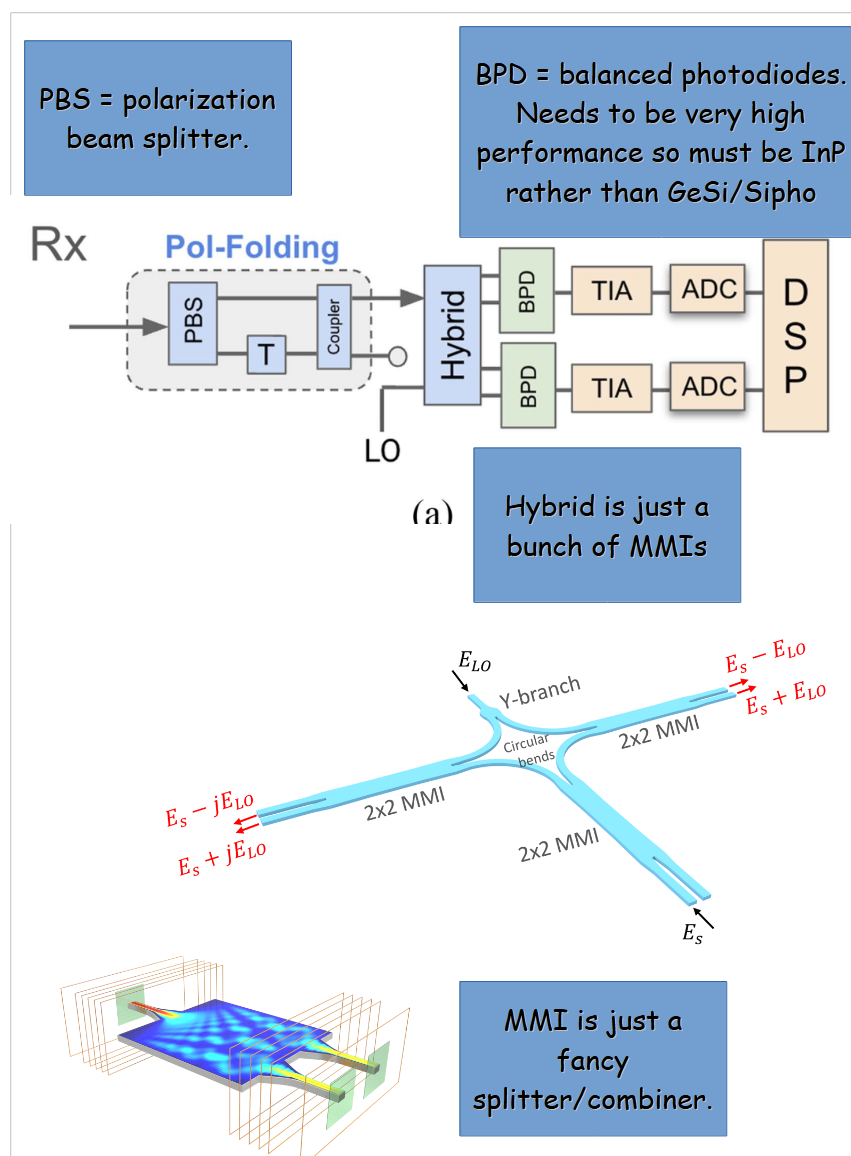
Coherent lite transceivers could intensify InP demand, favor Marvell, and require nonmonolithic transmitter designs; the note also flags an…
Marvell's Structera CXL cards make surplus DDR4 usable in memory pools, with dense SRAM IP helping mask latency amid DRAM shortages.
Letters that discuss MRVL.
Companies the stories above are also about, besides MRVL.
