
Convequity on X
Customers are redesigning around shortages in chips, memory, optics and power. Our 4Q26 rebalance adds to $CBRS and SPCX, trims Soitec and $POET, and takes profits in $PLTR. We also cover $LRCX, $MTSI, $IREN and $CRWV.
NASDAQ
CBRS
30 stories
$27B Market cap · 2026-10-28
Customers are redesigning around shortages in chips, memory, optics and power. Our 4Q26 rebalance adds to $CBRS and SPCX, trims Soitec and $POET, and takes profits in $PLTR. We also cover $LRCX, $MTSI, $IREN and $CRWV.
Strange short report on Cerebras $CBRS. Wafer-scale power and thermal constraints are longstanding engineering challenges. They can force compromises on clock speed versus a smaller die. That doesn't mean unacceptable overall performance. CS-4 is getting more out of WSE-3T, with the same core count and SRAM capacity as WSE-3, through higher clocks and improved I/O. Cerebras attributes the higher clocks to better power delivery. My read is that earlier systems left performance on the table to stay within power and thermal limits. Directionally, Cerebras looks to be working through those constraints better than I expected. Higher clocks alone don't answer the lifespan allegation. I’d still want to know how representative those failures are of current systems. I also give weight to Oracle, OpenAI and AWS choosing to work with Cerebras.
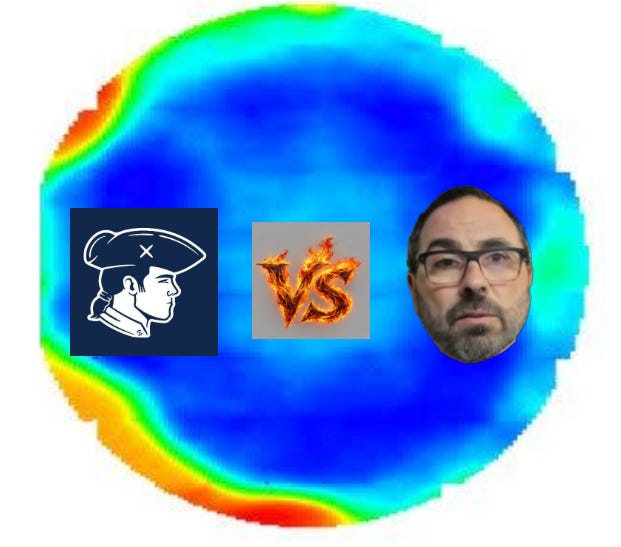
Cerebras’ alleged electromigration issues hinge on temperature and voltage limits, not total power draw, while thermal variation and…
Lots of people blindly defending $CBRS after the Culper short who clearly didn’t even open the report. If the report is even half true (which it seems convincing) CBRS has a whole lot of air below (and it’s not like valuation is cheap regardless). For the record I thought their NVDA short report was very weak

Cerebras relies on OpenAI for almost all of its $25 billion backlog while renting AI capacity, raising questions over its semiconductor…
@babyfolio @StonkChris Havent dug in much but from what i seen and heard market seems to be real wrong om $CBRS
*ORACLE AND CEREBRAS ANNOUNCE PARTNERSHIP IN STATEMENT Bagholder party. Didn't realize $CBRS has 20% short interest
@ryY1436253 Pretty sure there’s a lot going on with $CBRS from IPO lockups. But the chart looks like this so it passes https://t.co/nL6JLsC9ZK
Cerebras ($CBRS) is a taxi built for very fast inference while Nvidia ($NVDA) runs the bus network. Most of the confusion around CBRS comes from reviewing the wrong vehicle. In our view, Cerebras' wafer-scale design and abundant on-chip SRAM let it reach high utilization at batches of roughly 3–4. That makes it exceptionally fast for low-batch inference. GPUs need much larger batches and tightly connected clusters to get there, but their flexibility, scalability and throughput make them the better mass-market token factories. The bus wins on economics when serving many users at once. We think Cerebras is mostly attractive over the next two to three years, provided demand grows enough for premium-priced, high-speed inference rather than mostly low-cost, high-volume tokens. How big that premium segment gets is the main variable in our thesis.
Cerebras, a wafer-scale AI chipmaker, is forecast to nearly 10x sales by 2028 as capacity expands, while its shares have fallen on capacity…
 Stone Fox Capital 11 clicks
We think the gross margin gap between Cerebras ($CBRS) and NVIDIA ($NVDA) says little about which company delivers compute more cheaply. Cerebras reported a 14% gross margin in Q2 2026, against roughly 75% for NVIDIA. That is not a clean comparison, because Cerebras's commercial agreements include customer warrants. A customer warrant gives a buyer of Cerebras compute the right to buy Cerebras shares at an agreed price, adding potential equity upside to the compute it purchases. Cerebras records the value of these incentives over time as a reduction in revenue. Its cost of delivering the compute stays the same, so the full amount comes out of gross profit and its reported gross margin falls too. Add the warrants and a few other items back and Cerebras's Q2 margin was 41%, so the reported gap tells us little about what each company spends to deliver equivalent compute. Cerebras could challenge NVIDIA with attractive economics on selected workloads without matching every capability of NVIDIA's platform. In our view NVIDIA's stronger answer is Feynman reaching customers on schedule with the 3D-stacked SRAM we expect. Stacking more fast memory close to the compute would reduce the need to fetch data from slower external memory, helping NVIDIA narrow the architectural advantage behind Cerebras's fast inference. NVIDIA's adoption of Groq technology could ease some of this pressure, but we believe Groq's current architecture remains weaker than Cerebras's for low-latency inference. The longer Feynman takes to arrive at scale, the more time Cerebras has to win customers.
Sure... Random train of thoughts on markets now, optics like $LITE / memory + $IREN / Anthropic. On Memory: - Demand visibility on $MU / Samsung / SK Hynix extend into 2030-2031. Samsung has LTAs covering 70% of their capacity into 2031 (likely with SK Hynix type price floors)... and their operating profit is already absurd. There's a consensus that shortage in 2027 will be much more severe than 2026... Even $SNDK expends gross margins to exceed 80% entering 2030. You're going to hear Acer and other CEOs that want memory prices to go down cite bear cases like CXMT/YMTC, and Chinese players. But just looking at supply procurement that $NVDA is doing + hyperscalers, demand visibility is absurd for the next 5 years. And by that time, cumulative FCF coming in from these take/pay + pricing floor contracts might exceed some of their entire marketcaps so it feels like there's some baseline. Near-term is always volatile (IV dropped a ton across $EWY to $DRAM to $MU), so people with call options likely got nuked, along with underlying prices. But if Samsung is 3x 2027E, has 5 year LTAs with 70% of capacity committed from hyperscalers, and price floors, it's kinda hard to see these names suffer a sustained crash... For optics: - $LITE is literally sold out into 2029, starting discussions into 2030. With demand visibility lasting into 2031… with hyperscalers largely funding the capacity buildout. Their 2028 Greensboro fab expansion was ~$5B in UHP laser capacity revenue alone, yet it’s basically allocated toward $NVDA (50%+ with options for more) and co from channel checks. Existing supply chain bottlenecks are extremely severe as optical content/XPU skyrockets entering 2027-2028. So everything from DSPs/TIAs, photodiodes, lasers, InP/SOI substrates, wafers (epi, SOI, etc) are expected to go brrr. And what does that imply to anyone else with enormous amounts of capacity coming online like $AAOI + $SIVE + $MTSI capacity expansion in 2027? Or other players like Sumitomo / Furukawa? But again it's not quite the same situation as memory since the BOM % is extremely low in a cluster... If micron/samsung raised another 2000% hyperscalers would go bankrupt. But doing that for InP substrates seems possible. Or a 100% increase on CW laser content. I actually thought $LITE was overvalued at $100B+ MC, relative to capacity expansion on your smaller optical players to their respective MCs. So I chose to position accordingly (But lumentum does deserve premiums for demand visibility). For the companies leading the charge like $NVDA / $AVGO / $MRVL: - Nvidia has 70% forward revenue growth FY2028 which is supply constrained growth. - Broadcom 100% Y/Y for 2027/2028 which is also supply constrained growth. - Marvell FY2031 upgraded guidance to $70B-$90B from $46B analyst projections... They all seem to be very happy.... and read through on demand for next 2-3 years is enormous (also echoing what $INTC CEO said today on the panel with $AVGO CEO). So you have overwhelming growth on memory + photonics + from the leaders... But the nuance is not everything in the AI supply chain get the same economic benefit. HBM/Laser/CPU/MLCC and other players in the bottlenecks look to be printing money. And seem to be the largest beneficiaries of the current bottlenecks. Test players are also getting price hikes + capacity allocated by players like $NVDA, but economic impact seems a tad lower than other players since forward P/E for many I modeled were still in the 45x+ range even if you hiked prices like 10-30%. As for capex intensive players... there's some like $IREN ($25-30B for 2027) that despite a deal with Anthropic ended up dropping. I don't think markets seem to appreciate players spending a lot of money + ongoing financing (think they're like halfway through their $6B ATM). Just some hopium for $IREN investors, $NBIS also signed a deal with $META at the start of the year (but markets didn't care at all, since Nebius dropped to ~$70-80 at the lowest point?). But did 6 months later, as the time to revenue inflection gets closer and you're past the ATM/capex window, markets would likely care more. I don't think it's irrational but at the same time, the fundamentals have improved from Mirantis acquisition to others. I also think it was known for awhile it was either OpenAI/Anthropic from CEO comments earlier too? But either way to be a more risk-off environment where funds seem to be rotating to larger names as a flight to safety. $CRWD / $PLTR as just two example, but my take is that the valuations of these rotations are reaching clown levels. And that certain AI supply chain beneficiaries in comparison are undervalued now. I was thinking markets would just rotate to names that are extremely profitable like Samsung or names that have <2X P/E, so it was surprising to see $KOSPI and some legacy memory players get sold off today. Since all of this is colliding with uncertainty about sht macro environments and renewed sustainability concern of AI capex/commitments from frontier labs like OpenAI/Anthropic from due to that FT piece recently. I've always been sounding the alarm about the contractual backlog OpenAI has with $CBRS, $MSFT, $ORCL and others earlier in the year. But OpenAI did just raise $122B or so , so I don't quite think they're at risk of going down anytime soon. I also don't think overall capex can just exponentially go up, but even if it stalls / hovers around a certain point or even drops... Capex toward certain areas like optics will still explode as hyperscalers fight over allocations when CPO scale up comes about, but might drop in others where more capacity comes online like test or DRAM. So it's a lot more nuanced than capex down = everything down or vice versa. I also slightly agree with community agreements that open weight models wouldn't lessen demand on AI infrastructure (otherwise $NVDA wouldn't be funneling funds into Reflection), but all the contractual obligations that Anthropic has might get messy if their models/company get cannibalized. Either way, I'd expect some of these frontier lab valuations to likely compress but I do think Jensen knows what he's doing though to avoid contagion. But basically: - Extremely difficult market now, can't just throw money at any AI supply chain company like $GLW and expect it to go up. There's cause for concern of rate hikes mixed with financing per $AVGO CEO but not to the point you just blindly sell off everything. Also I think markets are stupid and ties baskets together so that leads to mispricing + individual buying opportunities with certain chokepoints too. If capacity + demand is visible and forward p/e compresses like $AAOI to single digits off hundreds or thousands of percent growth from hyperscalers off $471m transceiver revenues and hundreds of thousands of monthly ELSFP capacity. Or $SIVE coming online with 100M+ laser capacity + multiple foundries with ASP hikes on lasers. I wouldn't lump them into other AI supply chain names in IP like $RMBS or others. My take is that AI supply chain beneficiaries with closer inflection points, demand visibility, and forward P/E compressing due to economic leverage would likely outperform medium term despite current volatility. TLDR: - Memory strongest risk/adjusted return with LTAs + pricing floors extending to 2030's + buybacks. - My opinion is that optical supercycle for 2027-2028 with CPO/NPO is going to look absurd relative to capacity coming online of smaller suppliers. - Overwhelming fundamentals/growth colliding with sht macro + media scares - Markets are stupid and groups things in baskets and sells them all off together or buys overvalued names, creating short/long opportunities I'd give a prayer to people on short term options given underlying drop + IV decline, but there could be a reversal... who knows. Most valuable thing right now is time.
$NVDA vs $AVGO: The Optical Edge NVIDIA can keep growing while facing pressure from more directions. Custom chips, optical supply constraints and specialized inference systems give customers more reasons to consider alternatives. Broadcom’s optical capabilities could help it win the accompanying compute order. Customers need both accelerators and the optical components that connect them to bring capacity online. Securing those components alongside an ASIC purchase could shift the customer’s platform choice toward AVGO. Control across lasers, photonic and electronic chips, and packaging also gives Broadcom more freedom to optimize the complete design. Embedded lasers could reduce the laser power required, easing dependence on scarce, high-power external lasers, although replacement becomes harder. For AVGO, this remains a potential design route. NVIDIA can respond through partnerships, but separate suppliers still have their own margins and product priorities. Google ($GOOGL) and Amazon ($AMZN) are expanding the alternatives through TPUs and Trainium. Our ABBX model allocates 10GW of Anthropic’s 13.8GW planned capacity to those two platforms. The plans span different timelines, but show how a few large buyers could redirect substantial spending away from GPUs. Huawei adds pressure through its integrated optical approach and the prospect of Chinese models supplying cheaper tokens internationally. That could affect both hardware choices and the prices compute providers can charge. Cerebras ($CBRS) targets workloads where faster responses matter. It can compete for latency-sensitive decoding without replacing GPUs across every stage of inference. NVIDIA’s defenses remain substantial. GPU batching supports high total output, flexibility across workloads matters, and its ecosystem is deeply established. Customers can use GPUs for prefill and specialized chips for decoding. Wider enterprise model development would also favor NVIDIA because smaller buyers have less reason to fund custom-chip programmes. At comparable valuations, we prefer adding to AVGO: it can benefit from custom-silicon adoption while helping customers secure the optics needed to deploy it. For NVIDIA, the key question is how much market share and pricing power it retains as customers gain more alternatives.
Cerebras retains its 750 MW commitment despite OpenAI's Nvidia move, but TSMC supply, owned capacity and gross-margin recovery remain the…
 Deep Value Investing
OpenAI’s TPU lesson makes me more cautious on $CBRS. Richard Ho, OpenAI’s hardware chief and a former TPU designer, says one lesson from Google was that “you have to make it programmable.” Models change too quickly to overfit the chip to one architecture. That caught my attention because TPU is already programmable. Groq statically schedules execution in its compiler, while Cerebras makes a different bet on wafer-scale compute and distributed local memory. The question is how much of the performance advantage survives when models change, including MoE routing and memory demands. Ho also wants hardware that can move across inference workloads without locking the fleet into fixed ratios of specialized machines. That matters when buyers are committing years of capex and power. If OpenAI and other large buyers increasingly favor that flexibility, I expect CBRS to remain a specialist over the next few years. The absolute market can still be large enough for Cerebras to build a very good business, but I’m more skeptical that its architecture becomes the mainstream choice. "As long as you’re willing to live with those limitations, they’re good. But if you’re able to make it programmable, then you have a lot of flexibility for adapting to change. And we had to adapt to change. TPU also adapted to different changes in the algorithm, even at that time with CNNs. Clearly now, in the world of LLMs and agents, the mix is changing pretty rapidly. So that was the pitfall we really wanted to avoid: to overdesign and overfit to one particular model. We looked at it in that context." ---[54] The Man Who Built OpenAI's First Chip TechTechPotato
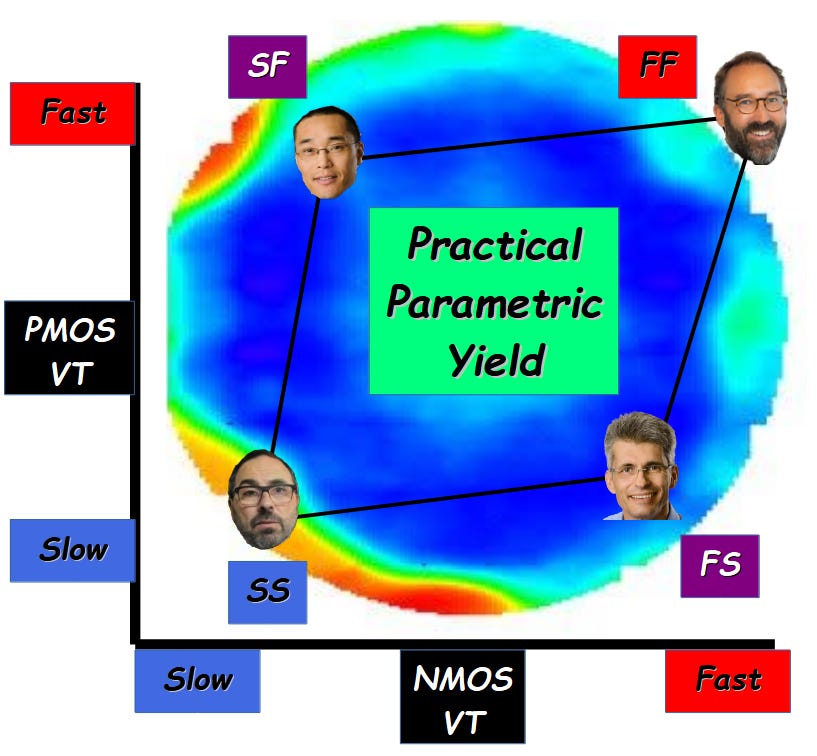
Cerebras’s WSE-3 faces parametric-yield constraints that could restrict supply, making power and clock-speed tradeoffs central to its next…

Irrational Analysis reports 51.55% outperformance versus a semiconductor ETF, adding Credo for SerDes and QMCO for AI-driven tape storage…
Bro, $AMZN semi ETF portfolio is probably going to end up more compelling than what $NVDA owns... Today Amazon signed a $49.8M private placement into PCB maker Gold Circuit Electronics (2368). So now Amazon has ownership/warrants in: - $AAOI - Alchip - $MRVL (Celestial) - $ALAB - $CRDO - $JBL - $FLEX - $STM - $CBRS - $GNRC - $FN - TD SYNNEX - $QCOM - Gold Circuit Electronics And others.. If we look at the private placement amount for GCE in speciifc, it's like .36% of the company... Kinda small financially, meaningful strategically. Esp. since there were claims that GCE supplies ASIC-server PCBs to the four major hyperscaler CSPs... Regardless it's pretty funny to see Amazon to Nvidia start to own all the worlds leading companies. Since Amazon has exposure to the entire supply chain like PCBs now, optical fabric with Celestial, lasers with $AAOI, assembly from $FN to $JBL, ASIC partners like $QCOM / ALchip.
Doing this on the eve of the first massive share unlock on $CBRS is quite the move... https://t.co/4S5yCotZ7M
Batch size sets the trade-off between speed and cost in AI inference. An AI server answers many users at once by bundling their requests into one batch. Our $CBRS note compares this to running a bus. There are two ways to run it, and each gives something up. 1. Fill the bus. Put as many passengers as possible on every run. More stops slow each passenger's trip, but the cost of the run is spread across more people, so the cost per passenger falls. Larger batches do the same: each user's answer is slower, and the cost per token falls because the system produces more tokens from the same hardware. 2. Carry fewer passengers and stop less. Each trip is faster, but fewer seats mean the cost of the run is spread less well, so the cost per passenger rises. Smaller batches are fast for one user and raise the cost per token. So in the analogy, speed for each user is how fast each passenger arrives. Cost per token is cost per passenger. A system set up for one gives up some of the other. When someone compares two inference systems, check the batch size behind each number. A speed figure or a cost-per-token figure quoted without it cannot be compared fairly.
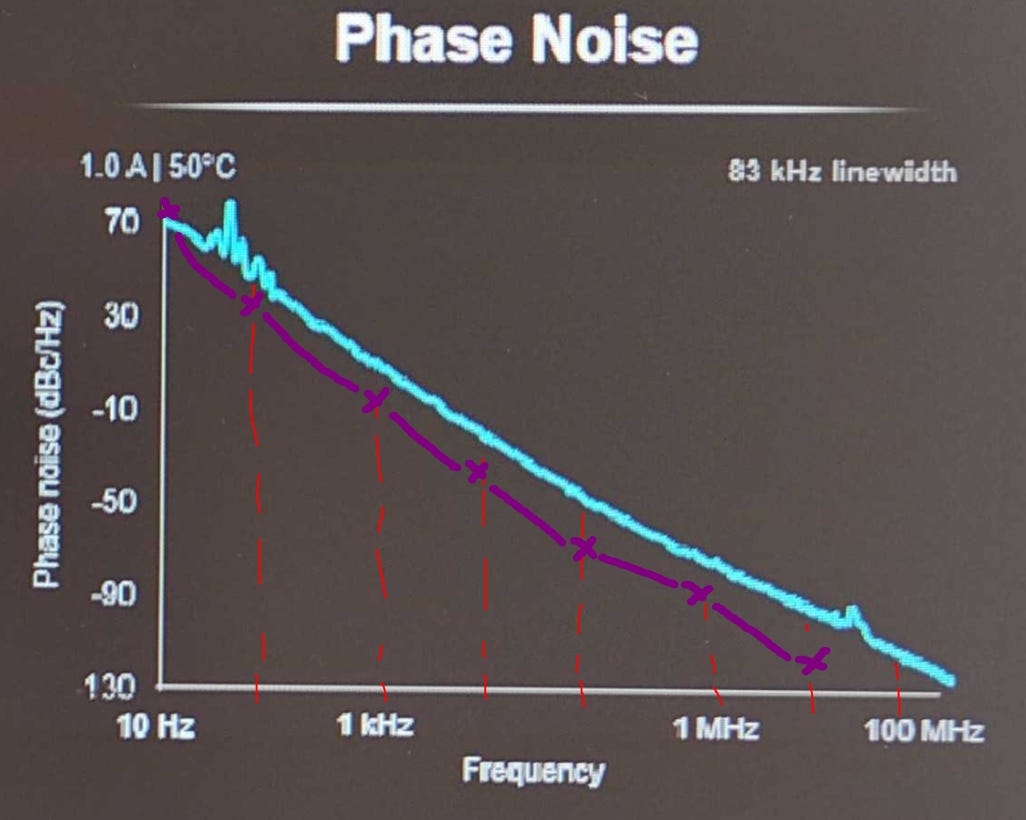
Coherent’s CPO/NPO laser misses 1 MHz effective-linewidth requirements, Irrational Analysis argues.
JDP Capital @Jeremy_Deal is quite bullish on Cerebras Systems $CBRS, which is currently trading 50% below its post IPO peak. According to the Fund, given its revenue under contract, the stock could be more than $1,000 per share within the next few years vs. today's $186. Another take from the Q2 letter: “Drug discovery may be one of the largest beneficiaries of AI of any industry on earth as the companies with the most proprietary data and the deepest clinical histories will widen their advantages”. JDP’s new position in this field was Eli Lilly $LLY.
 CBRS 2026-08-26
Cerebras’ CS-4 wafer-scale chips target latency-sensitive AI inference, but Nvidia’s ecosystem, manufacturing yields and KV-cache…
 Star Investments 1 click
Cerebras is a taxi. NVIDIA runs the buses. Almost every confusion about $CBRS begins with reviewing the wrong vehicle. We just published Part 1 of our Cerebras deep dive: → Why wafer-scale SRAM excels at low-batch decode → Why $NVDA becomes the cheaper token factory at high concurrency → Why Cerebras was built for training—but found its future in inference → Why the two architectures are increasingly complementary, not substitutes Our conclusion: Cerebras is mostly a buy over the next 2–3 years—but demand for premium-speed inference will decide the case. The full high-level report is live. 👇 https://t.co/awUwxPUSHI
Companies the stories above are also about, besides CBRS.
