New Ask Claude or ChatGPT about any stock, using Bullpen. Bullpen in Claude or ChatGPT. 7 days free

Sunday, November 22, 2026

Back to the front page

From X

Fajasy on X

Free accounts now get premium access to SECSift for Nvidia $NVDA, Alibaba $BABA, and Celsius $CELH. It 💩's on SEC EDGAR in every aspect: Here's everything it can do: ↓ READER > Every filing since 2001 opens as one clean, scrolling page, with every word and number exactly as filed. > Look up any company by ticker, name, or CIK (the SEC's ID number for every company), even ones that don't have a ticker yet. > The sidebar lists every section, table, and image in the filing, so you can jump straight to the one you want. > Find in filing searches every word and table cell, with AND, OR, NOT, and exact phrases when you want to get specific. > The filings list shows each filing's type, period, and filed date, with 8-Ks tagged by what they report (like "8-K 5.02" for an officer or director change). > Keep up to 10 companies open in tabs, like a browser. > Save filings into folders, and pick up where you left off from your last 25 filings. Both sync to your account. > Insider filings (Forms 3, 4, and 5) open in their own view, with a plain-English summary and a table of the trades. > Switch a table to growth (the percent change from the period before) or common-size (each line as a percent of revenue). > Show numbers as filed or in thousands, millions, or billions, and put the newest or oldest period first. > Customize the page's fonts, colors, text size, column width, and spacing, or choose a preset like "Large print". Your setup follows your account. TABLES AND EXPORTS > Copy any table into a spreadsheet or doc, or save the table as an image stamped with the company, filing, and source. > Download any table to CSV or Excel, with real numbers and formats. > The Analyze button gives you a short AI read of what moved most in a table. > AI gives a short, plain name to every table and image the filing left untitled. > Similar tables finds the same table in the company's other filings, like the income statement from past 10-Ks. > Merge tables turns those into one table across years, with restated numbers taken from the newest filing, plus YoY, QoQ, or margin rows with a click. > Chart any row as a line or bars, then save a clean chart image sized for Twitter/X, LinkedIn, Instagram, or YouTube, with your own title, colors, and watermark. > Export the whole filing as Markdown or a PDF, or grab every table or image in one go. COMPARE > Compare shows exactly what's new, changed, or removed since the company's last filing of the same type, or any earlier one you choose. > Compare is free with an account and doesn't use AI. > New text shows in violet, changed text in blue, and removed text crossed out in gray, right in the document. > Choose Redline to see the changes marked in color, or Blackline to fade everything that didn't change so only the edits stand out. > Tables are compared number by number, so a restated figure shows up in blue. > Turn on Sift too, and each section lists its most important changes first. SIFT > Sift is the AI that reads a filing section by section and flags the passages worth your time. > Each flag is green (positive), yellow (notable), or red (a concern), with a short note on why. > Every section gets a "Read", "Skim", or "Skip" verdict and a plain-English summary, so a 200-page report takes minutes instead of hours. > Legal boilerplate gets faded (or hidden), so the real disclosures stand out. > Disagree with a flag? Add your own, or change Sift's. > Tone comes with Sift and points out sections where management's wording got more cautious or more confident than in the company's last filing of the same type. Tone colors the exact words that changed (orange for cautious, teal for confident). AI CHAT > Ask this filing is a chat that reads the whole document, and every answer links to the passages it cites. > Highlight any passage to ask the AI about just that text, with quick buttons like "Explain in plain English" and "Why does this matter?", or make your own custom prompts. > The same highlight menu copies a link that opens the filing at that exact passage. NOTES > Leave private notes on exact passages. Click a note later and you're right back at that spot. > Sort notes with color tags, mark them resolved, search them, and pull up notes from your other filings without leaving the one you're reading. > Notes sync across your devices and carry into PDF exports as real comments. GLOBAL FILINGS SEARCH > Search every filing on EDGAR (the SEC's filing database) since 2001 for a word or phrase, like "going concern". > Narrow the search by form, date, company, headquarters, float, exchange, or industry. > Click a result and the filing opens at the matching passage. WATCHLIST AND ALERTS > Get an email when a company, fund, or person you watch files, or when any new filing matches your keywords or screens. > Choose what you want to hear about for each company, like events, press releases, proxies, insider buys and sells, new stakes of 5% or more, and share registrations. > Set a minimum trade size, in dollars or percent of holdings, so small insider trades don't clog your inbox. > Follow investors like Berkshire Hathaway or an activist fund for their new stakes, trades, and 13F holdings. > Keyword alerts catch a word or phrase in new filings from any company. > Filing screens catch whole categories as they're filed, like IPOs, spin-offs, mergers, tender offers, activist stakes, bankruptcies, auditor changes, and late filings. > Turn on "Run Sift" and the AI reads each new filing as it arrives, with every flag listed in the email. > Emails tell you what happened, not just that a filing came in, like "Open-market sale, 12,500 shares ($1.0M), 40% of holdings". > Get keyword and screen alerts as they come in, or bundled at up to 4 set times/day. MCP SERVER > MCP is an open standard that lets AI apps like Claude, ChatGPT, and Cursor use outside tools. > Connect SECSift, and your AI can find filings, pull a section or table, merge a table across filings, run Sift, answer questions, compare filings, search every filing, and manage your alerts. > Results link back to SECSift, and AI actions come out of the same credits, at the same prices as the site. SECSIFT API > Pull filings, sections, and tables into your own code, exactly as filed. > Tables come back in JSON or CSV, and you can merge one table across a company's filings. > Full-text search and filing comparisons work through the API too. CHROME EXTENSION > On Twitter/X and Substack, every post with a cashtag like $AAPL gets a pill that opens the company's latest report on SECSift. > On Stocktwits, the popup lists the companies on the page with their latest filings. > On EDGAR, filing and company pages get a button that opens them on SECSift. > Highlight text on any page, right-click, and search SECSift for those words. > Connect your account to see your alerts in the toolbar and chat with any filing in Chrome's side panel. SECSIFT FOR EXCEL > Import a filing's tables straight into Excel, merged across recent filings. > SECSIFT formulas pull one figure, a whole table, or a table merged across filings into your model. > Imported tables carry your exact format guidelines. > Refresh or remove imported tables from one pane. PLANS > Reading filings is free and requires no account. > A free account adds Compare, search, notes, saved filings, and 100 AI credits, plus every premium feature for $NVDA, $BABA, and $CELH. > Analyst ($15/month) comes with 1,000 credits/month and the Pro and Max AI models. > Analyst also adds exports, similar tables and charts, alerts, the API, and custom fonts and colors. > Pro ($30/month) is everything in Analyst with 3,000 credits/month, higher limits, and cheaper extra credits. > Extra credits are available on any plan and never expire. Can probably save you a lot of time and help you make more informed investment decisions. So maybe give it a try?

Convequity on X

The NYT’s One-Sided Critique of Jensen Huang’s Style Misses How Nvidia Was Built The recent New York Times piece on Jensen’s “humiliation culture” at $NVDA is classic mainstream selective framing. It isolates the intensity and calls it cruelty while ignoring the operational system that produced the results. The pattern is familiar. Same treatment Jobs and Kalanick received. Highlight the hard moments, omit the logic, the outcomes, and the rest of the character. 1. Elite standards are the process On the job Jensen runs a high-intensity, standards-first culture. Public feedback, direct accountability, zero tolerance for avoidable mistakes. It looks more like Delta or SEAL selection than a normal tech company. Criticizing that intensity is like demanding special-forces instructors be emotionally softer during training. The hardness is how you produce the top-grade result. It is not random cruelty. 2. Bottom-up signal velocity is the real edge Every employee can write Top-5 Things directly to Jensen. He has historically sampled around 100 of these daily from all levels. Flat structure, dozens of direct reports, minimal filtering. That system is how weak signals on CUDA, deep learning, and transformers reached him early and got doubled down on hard. The same intensity that media frames as harsh is what keeps the company fast and unfiltered. That is what made Nvidia. 3. Logical care for careers He has said he would rather “torture you into greatness because I believe in you.” In practice this usually means demotion or reduced scope rather than firing, so people can stay and improve. Reported turnover stays in the low single digits versus industry averages in the high teens. The data does not match pure-cruelty framing. 4. Off the clock is a different register On the job: performance-first, pushy, focused on what drives results. You see the public intensity, the “return all the salary you’ve received so far and get out” moments that make people lose sleep for weeks. That is the training environment. Outside it the register shifts. When VP John Zedlewski was hospitalized with aggressive cancer at a low point, Jensen immediately reached out to Stanford contacts and cut through red tape to get him into a clinical trial that turned out to be a perfect fit. Zedlewski later said any claim that Jensen does not really care about staff is simply inaccurate. When strategy employee Vartika Singh’s sister was battling brain cancer and deteriorated while in California (medical decisions plus crushing hospital bills), Jensen personally helped the family through circumstances that seemed impossible and took time to meet the sister. He told Singh: “I am proud of you. Treasure this time together.” Biographer Stephen Witt noted that nearly every employee he interviewed also had a tender story — including Jensen once offering to pay an employee’s medical bills out of pocket. On compensation he has said he personally reviews the full list of roughly 42,000 packages every cycle and increases company spend 100% of the time. “You take care of people, everything else takes care of itself.” “I pay my employees as much as I can.” Media coverage almost never includes this side. It breaks the cartoon. 5. Founder-led pattern, not unique villainy The strongest owner organizations (Apple under Jobs, Tesla and SpaceX under Musk) run similar high-standards cultures. Jensen’s version is more pure logic and long-term organizational success than pure dictator ego. Selective excerpts that only show the harsh moments are not analysis. They are an incomplete picture aimed at unsophisticated audiences. The full system — intensity + signal velocity + material care — is what compounds into the Nvidia outcome.

Basin Kings

EQT, a leading US natural gas producer, and the Rice family’s rise to power in Appalachia.
Sledgehammer Time

Nvidia's earnings and uncertainty over post-Jensen AI investment are reverberating across markets as the stock comes under pressure.
Grand Expectations

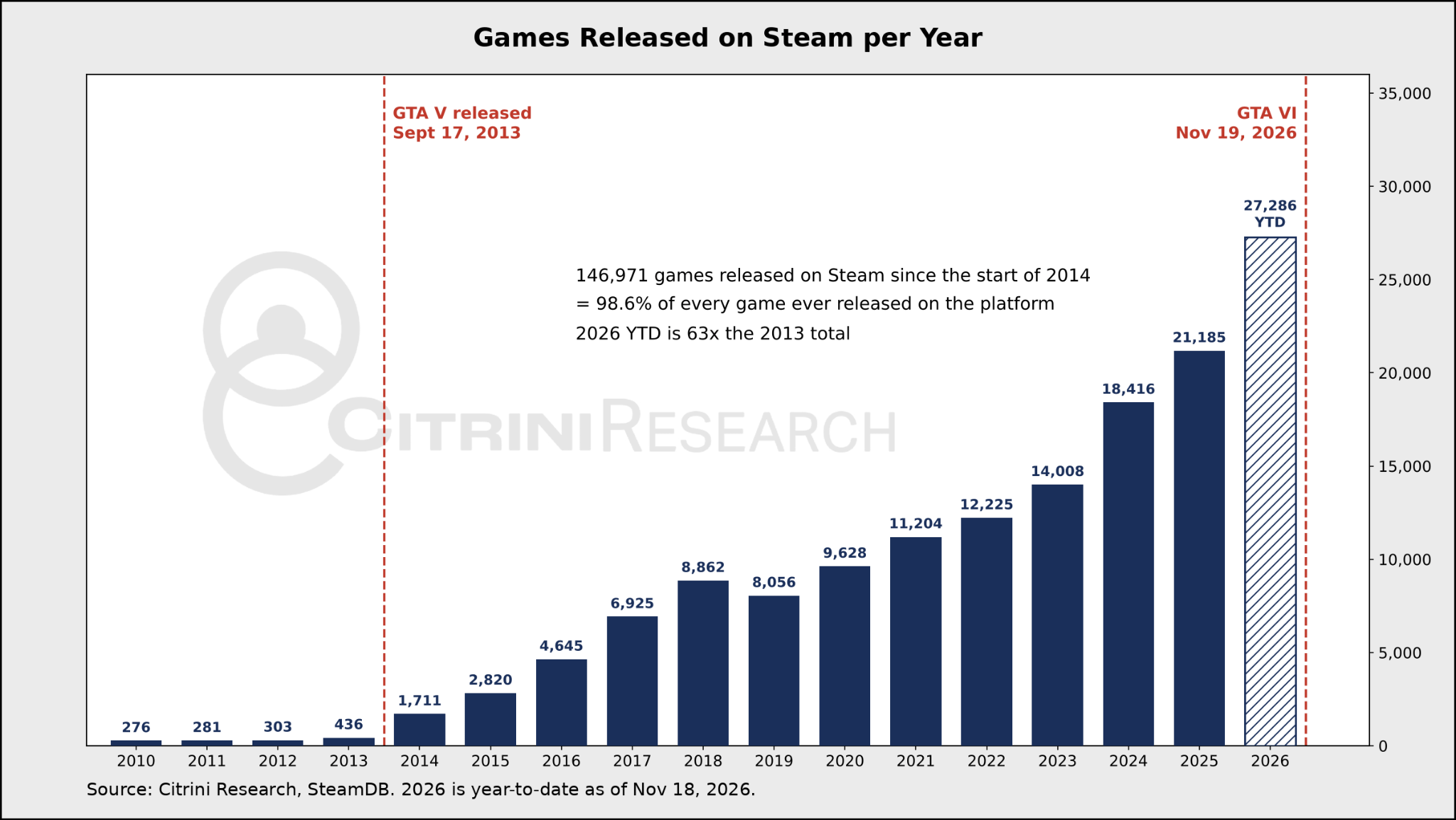
Grand Theft Auto VI launched to a 99 Metacritic score after estimated $1.5 billion to $2 billion development and marketing spending,…
INTU no longer

Intuit’s $3.68 billion Mailchimp sale removes a noncore unit as TurboTax shifts to assisted filing and Credit Karma faces volume pressure.

Google

Google has narrowed OpenAI’s chatbot lead through Gemini distribution across Search, Android and Chrome, backing its AI stack with custom…

ORCL Update

Oracle rose about 12% intraday on October 28, 2026 as AI infrastructure and cloud-demand sentiment improved and credit-spread concerns…
Danaher’s robotics era

Danaher’s new CEO paired a Q3 beat and raised EPS outlook with a 2027 4%-5% organic-growth starting point, while pitching AI-enabled…
Publications we follow

Every publication on this site, hand-picked.

130 publications

Newsletters 110

Seeking Alpha 100 of 303

X accounts we follow

Every account on this site, hand-picked.

94 accounts

Investor letters we follow

383 firms

Sectors

Ordered by how often our editor reaches for them.