New Ask Claude or ChatGPT about any stock, using Bullpen. Bullpen in Claude or ChatGPT. 7 days free

Friday, November 13, 2026

Back to the front page

From X

Calvin Blissett on X

The Korean preferred (the one with the SpaceX stake $SPCX ) reported this week, and the headline was a loss. I read the filing, the call coverage and the first round of broker notes. Here's my takeaways: The loss came from marking investments to market. SpaceX dropped in the quarter and a few other positions went against them. Take that out and the brokerage still made good money in a quarter when Korean trading volumes fell hard. That was the test I cared about. The boom ended and the core business still earned roughly what I'd assumed for a normal year. Growth: On the call, management said they’re preparing to enter Singapore, the US and Australia as well as Japan. They gave no names, prices or timing for those three. Japan, through the Sanko Securities deal, comes first. The plan, in their words, is to buy local brokers in developed markets and use them to offer online wealth management to local retail investors. That’s the same model they run in Korea, sold through an app rather than branches. They said online is much cheaper to run than offline. The long-term goal is one platform where clients hold both regular investments and digital assets, which is why the Hong Kong unit already offers crypto trading. Separately, they’re folding their Shanghai and Beijing offices into Shenzhen and Hong Kong. They also just agreed to buy a small licensed Japanese broker for a modest sum, aiming to launch an online wealth app there within about two years. Japanese households keep an enormous pile of savings in cash and are only starting to move it into markets. If the playbook that works in Korean pensions carries over, it’s a cheap option. The parts that contribute to baseline earnings held up: Pensions and wealth management barely moved while trading fees fell sharply. Retirement money doesn't leave because the market had a bad month, and the company is still #1 in the part of the pension market it competes in. Pricing held on overseas trades while competitors keep giving trades away for free. The overseas businesses are having their best year ever. The SpaceX stake is still worth several times what they paid. Management said on the call that gains get returned to shareholders once they're actually realized. With the lockup ending next month, that money is close to being real. What management has done for shareholders this year: Its largest buyback ever, a big chunk of it spent on the preferreds, including the first preferred for the first time. The largest share cancellation in its history in July. Over the last two years it handed back more than the policy required. This week it said it will cancel about 60% of the treasury shares left over from an old merger right after the March shareholder meeting. The new three-year policy keeps the same minimum payout, with extra returns once SpaceX gains are realized. They've also said in writing that part of the reason for buying preferred was to narrow the gap between the common and preferred prices. Companies are rarely that explicit although I have seen it before Why the prefs could be the next thing they buy: the new policy dropped the fixed yearly commitment to cancel preferred shares, which I didn't love at all, and nobody on the sell side seems to have noticed. But the wording changed in a way that helps. The cancellation of the old merger shares sits outside the payout policy. So every year, the minimum payout has to be met with dividends and fresh buybacks. That money has to go somewhere. With the prefs at about a 63% discount to the common, each won spent on them retires roughly 2.7x as much of the company as the same won spent on the common, and the prefs get exactly the same dividend. If the goal is shrinking the share count, the prefs are the cheapest place to do it. Management already acted on that in June, at almost twice today's price. The negatives: management plans to sell some treasury stock over time instead of cancelling all of it. One broker puts the dilution at under 2% a year. Next quarter will carry a regulatory fine plus another SpaceX markdown. REGULATORY RISK IS SOMETHING TO WATCH BECAUSE OF AN INVESTIGATION! Most of the brokers kept their buy ratings. One estimated returns on equity in the low teens without giving SpaceX any credit.

Mr Neutral Man aka "Howard Marks of REITs” on X

SFR REIT VineBrook Stops Buybacks, Flags Upcoming Maturities @LeylaKuni I talk about REITs because stuff like this happens. VineBrook is a nontraded REIT which claims a NAV of $50 but tenders for shares at $33/share. Average home is expected to sell for $129k each. You can get Single Family Home Exposure by buying $INVH which is operating from a position of strength by selling homes between $300k/home to $600k/home to buy back their stock trading at $270k/home. Pays a dividend of 4.5%, covers interest payment 4.1 times, and bought back $1 billion of shares since Q4 of 2025 or roughly 6.1% of the S/O. I think shares are worth $37 to $50 and you can buy shares for $26/27!!! ********************************* From Bisnow The nontraded single-family rental home REIT also disclosed that it has $650.8M of debt maturing within a year, and it doesn’t have liquidity to satisfy those obligations, AltsWire reported. VineBrook owned about 20,500 single-family rental homes in 21 states as of Sept. 30. Its occupancy fell from 94.7% to 93.5% year-over-year, but its average monthly rent rose from $1,339 to $1,460, AltsWire reported. The REIT’s board approved a change to stop processing share repurchase requests on Oct. 26, three weeks after completing the $30M tender offer at $33 a share. That was 34% below the per-share net asset value of about $50 on Sept. 30. The $30M would buy about 909,000 shares, but about 2.75 million shares were tendered but not withdrawn before the offer expired Oct. 5. The REIT said shares not purchased would be returned. The tender offer was VineBrook's first broad liquidity opportunity since it suspended its share repurchase plan in December 2022, except in cases of death, disability or similar hardship, AltsWire reported. The new share buyback halt doesn’t include those exceptions. VineBrook also disclosed that it has two MetLife notes that will mature in March and August, a JPMorgan Chase acquisition facility maturing in July, and convertible notes maturing in June, all contributing to the $650.8M of debt coming due within a year. The company is in discussions with potential lenders and expects to refinance the MetLife loans before maturity. Options to satisfy the obligations include partial loan paydowns, using extension options and selling homes. It has a one-year extension option on the JPMorgan facility. VineBrook plans over the next year to sell about 2,700 homes in its main portfolio for roughly $348M and sell 1,050 homes in its NextPoint Homes portfolio for about $284M. The REIT sold more than 2,300 homes between its two portfolios during the first nine months of this year, generating about $351M. Pretium Partners, another SFR company that manages more than 90,000 homes, agreed this week to pay $49.7M to settle charges from the Federal Trade Commission regarding misleading rental pricing practices. Blackstone Real Estate Income Trust, or BREIT, wrote down $496.7M tied to 14 commercial properties and various single-family homes during Q3, up significantly from $27.4M over the same period a year earlier.

QXO Inc Earnings Update: Q3 2026

QXO's Q3 sales rose 79% to $4.9 billion after TopBuild and Kodiak acquisitions, while acquisition debt lifted interest expense to $163…

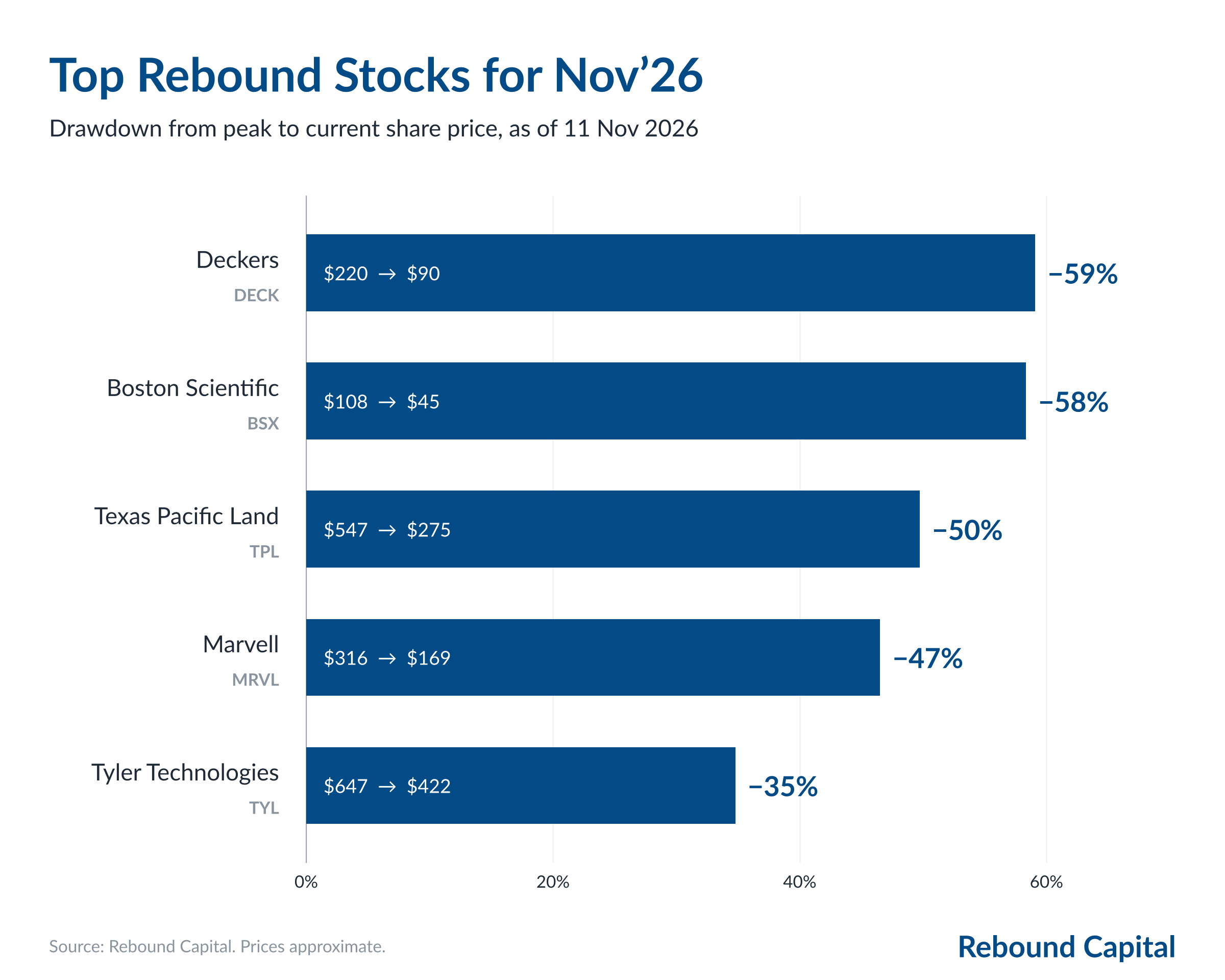
Top Rebound Stocks for Nov’26

Texas Pacific Land's 50% selloff reflects faded data-center expectations, while its Permian royalty business generated $498 million of 2025…

2026.42: Home At Last

Stratechery’s weekly bundle covers Apple HomeView and SpaceX’s cellular ambitions.

TSOH Weekly Roundup (10/16/2026)

Bumble agreed to a $1.3 billion take-private deal, while Netflix cut about 1,000 jobs and Meta discussed its Muse superintelligence models.

Publications we follow

Every publication on this site, hand-picked.

130 publications

Newsletters 110

X accounts we follow

Every account on this site, hand-picked.

91 accounts

Investor letters we follow

376 firms

Sectors

Ordered by how often our editor reaches for them.