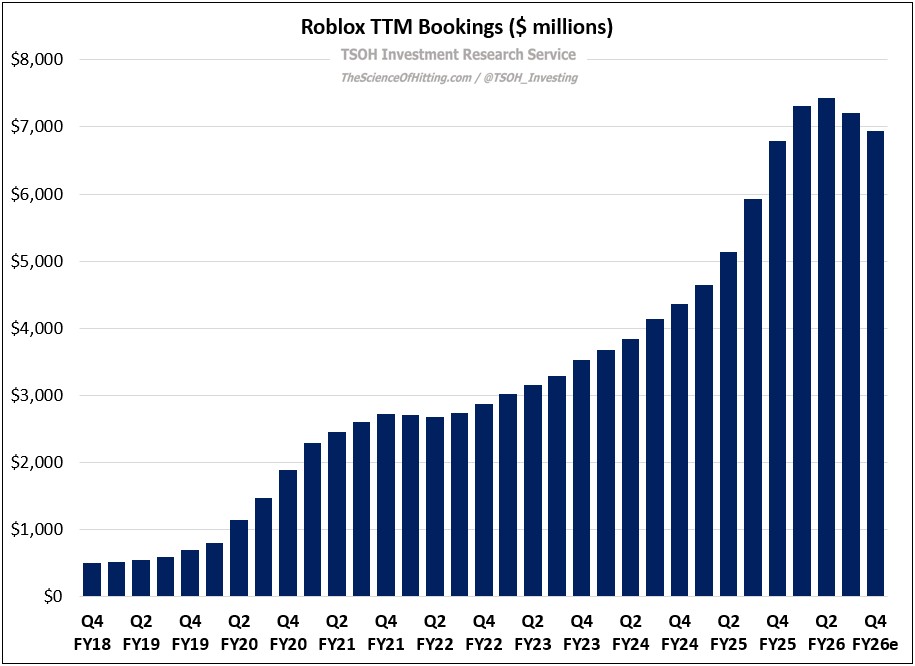
Roblox: Capture This Moment
Roblox’s Q3 FY26 DAUs fell year over year for the first time, while bookings declined 12% to $1.7 billion.
Roblox’s Q3 FY26 DAUs fell year over year for the first time, while bookings declined 12% to $1.7 billion.
Every single investment professional is adding $NVDA in the PA today…
Every AI name in Taiwan from Mediatek to Winbond looks like its limit up. TAIEX: +4.94%, its 2nd largest daily gain in history. I guess the market is impressed by $NVDA’s Jensen Huang vitality at his age?
@RockwoodNotes @loneelmcapital Love the equity yield curve mental model, grows more and more relevant daily. Your $OMC thesis is they are insulated from AI because they have become akin to a warehouse of ad data? Dispensing it and holding it and tracking it for a fee. Thoroughly enjoy your content
I fully support $NVDA and Jensen Huang through this time. Even the most legendary figure in the AI industry is human. Trump, Clinton, Bezos, Gates, and many others have faced scrutiny over their personal lives. It takes courage to own up to it publicly and move forward
Why I like Toast $TOST 🍞 - Mr.Bread
@ContrarianChe @John_Hempton You’re wrong and Hampton is right. $NVDA was $225.83 on 5/13/26, when they issued the short report and closed Friday at $186.64, so the stock has lost 17.4% since the report was published.
Week ahead lists Nvidia, earnings, inflation and PPI releases alongside Iran conflict developments.

Moody’s ratings business faces potential deceleration, while AI-related debt issuance and anti-data-center politics pose less risk than…

Alphabet bought long-dated GOOGL calls after a 12.6% earnings drop, betting AI monetization and distribution overcome capex pressure and…
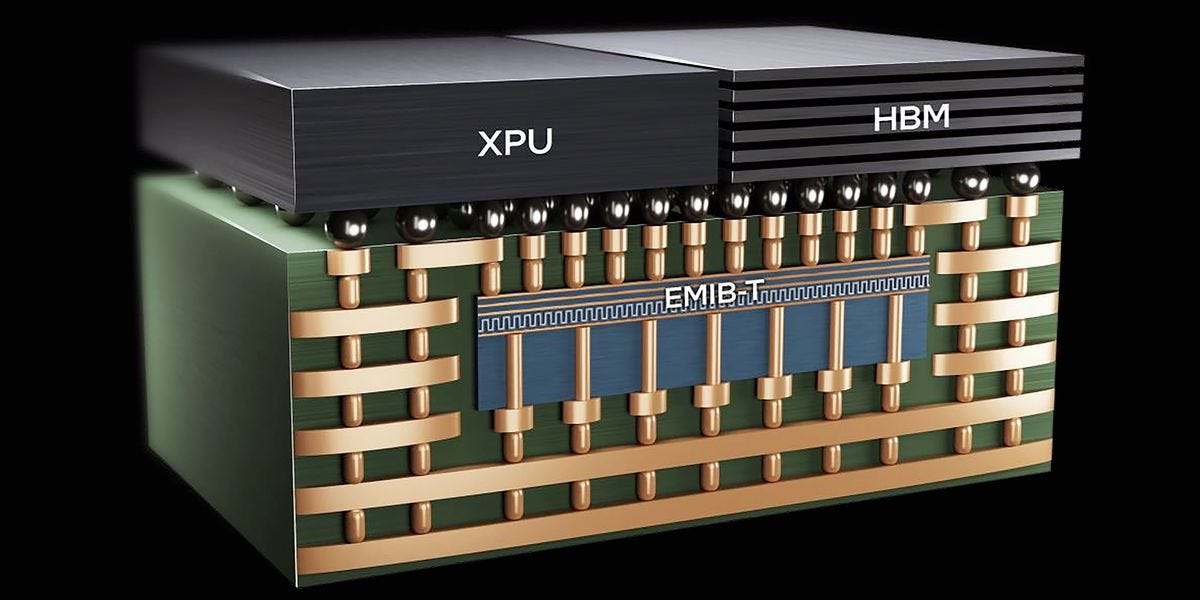
Intel’s EMIB-T, glass-core roadmap and 2027 ABF substrate supply outlook are the focus of an expert call.

China’s housing downturn has cut some flat values 40% since 2021, curbing discretionary spending and sharpening a portfolio focus on…

Procore CFO Rachel Pyles discusses accelerating growth and economies of scale after an upbeat third-quarter report.
Diageo’s first quarter under CEO Dave Lewis showed modest price changes and regional growth outside North America, supporting a turnaround…

Tower Semiconductor reported $526 million in quarterly revenue and extended photonics contracts through 2029, while its low-loss silicon…

AMD’s data-center revenue rose 97%, while MercadoLibre, TIC Solutions, XPEL and Zoetis also report quarterly results.
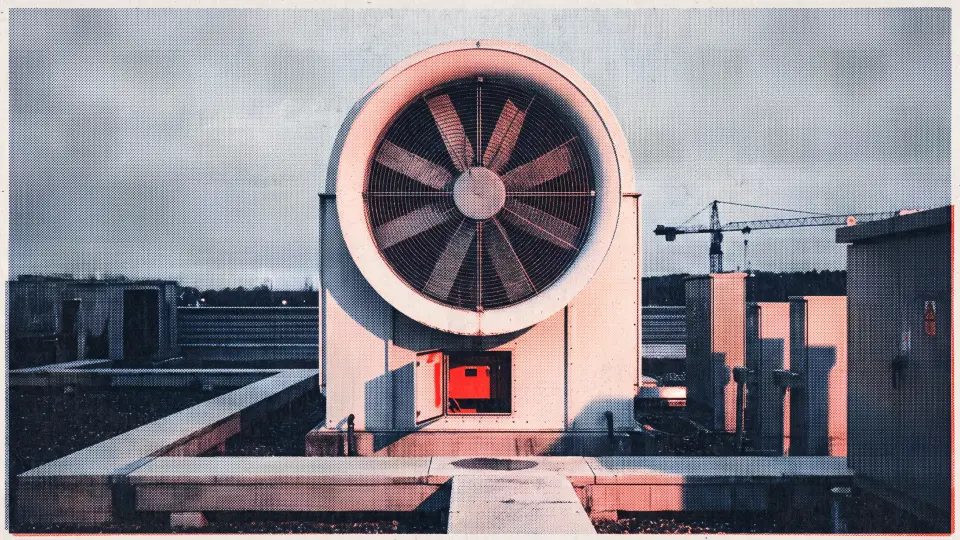
Amazon's AWS revenue rose 39.3% with a 38.7% margin, while heavy CapEx is expected to keep free cash flow negative through next year.
 Dhierin Bechai 3 clicks
 MSI · long
Motorola Solutions’ core value proposition remains intact after business changes since 2022, supporting a growth-at-a-reasonable-price…
GFL’s take-private process has drawn KKR, Blackstone, Brookfield and IFM, while CEO Patrick Dovigi signals he will accept only the right…
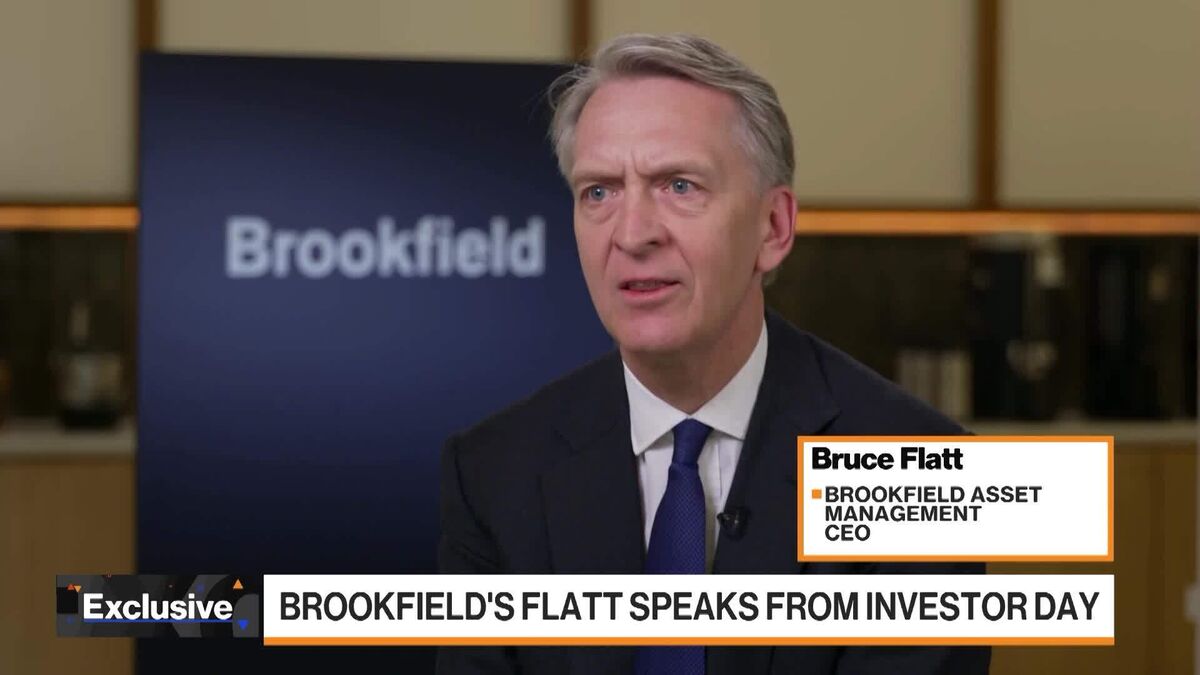
Brookfield is recasting itself from an industrial owner into a $1.3 trillion asset manager and insurer, betting AI infrastructure can…

Steve Eisman argues AI extinction warnings from Dario Amodei and Sam Altman seek regulation that creates pricing moats.
Nintendo's Switch 2 attach rate, flat Switch Online accounts and rising memory costs fuel a bear case, while Spotify and Netflix margins…
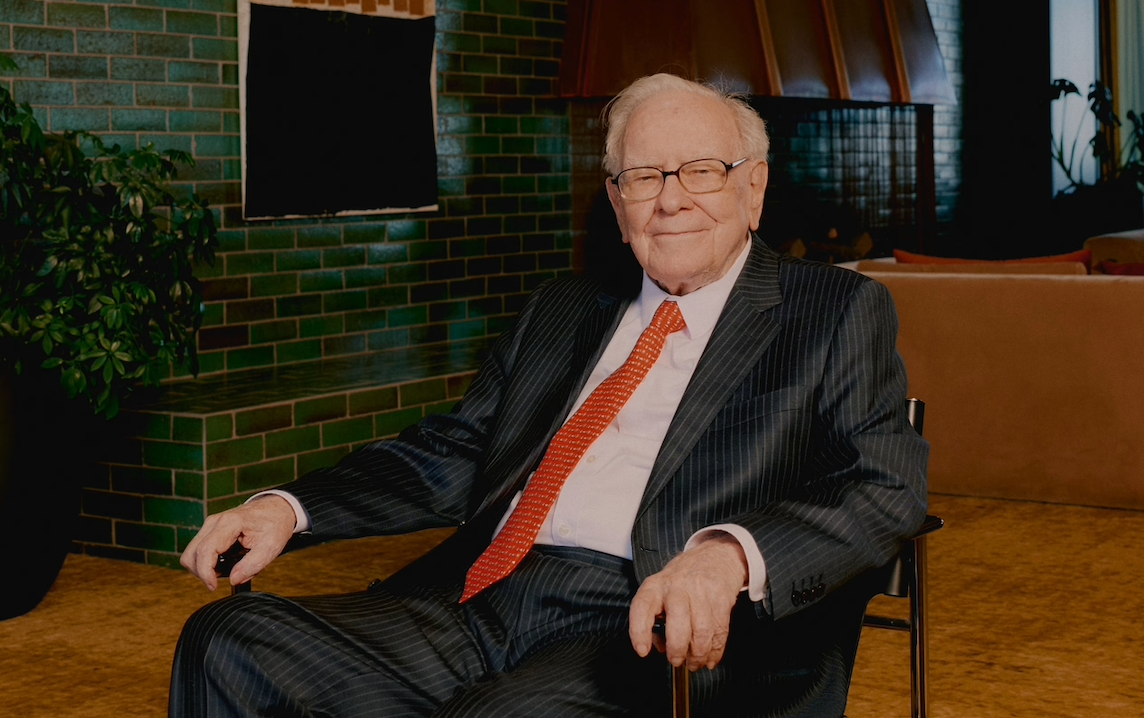
Berkshire Hathaway completes its succession plan: Warren Buffett becomes Chairman Emeritus, Howard Buffett takes the chair, and Greg Abel…

DoorDash's grocery push targets a shift from weekly stock-up trips to frequent online fill-in orders, though smaller baskets complicate…
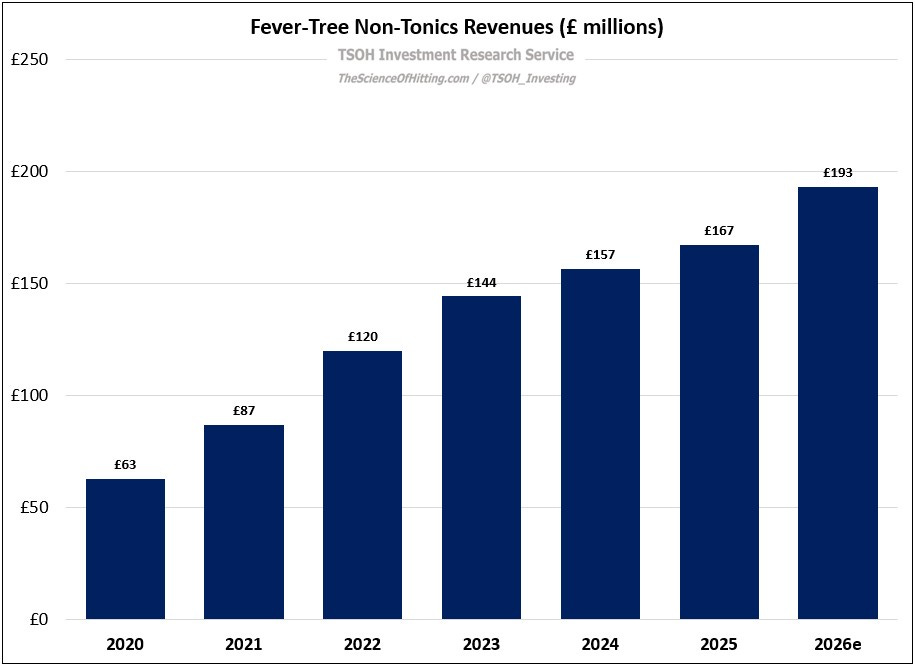
TSOH Weekly Roundup covers organized retail crime, Home Depot’s centralized operating missteps under Bob Nardelli, and research updates on…

Grab generates 53% of revenue from delivery, 36% from mobility and 10% from financial services, using its Southeast Asian marketplace to…
Special-situations survey flags Cooper’s $3 billion buyback, Grab’s $900 million repurchase, and Beretta’s $44.80 partial tender for Sturm…
Every publication on this site, hand-picked.
 Adam Schadt
 Albert Anthony
 Alexander Grover
 Andres Veurink
 Arizona Equity Research
 Bay Area Ideas
 Blake Winiecki
 Capital Connoisseur
 Crimson And Gold Research
 Cypriot Invests
 Dane Bowler
 David Zanoni
 Deep Value Investing Dhierin Bechai
 Dilantha De Silva
 Dustin Quasney
 Elliott Gue
 Equity Eagle
 Eudaemon Research
 Fernanda Galvez Jalil
 Fountainhead
 Gary Gambino
 Geneva Investor
 Given Mahlangu
 Henrik Alex
 High Alpha Professor
 Ignacio Planas Gonzalez
 Infinity Curve
 Investor Overview
 IWA Research
 Jaden Mealy
 JR Research
 Julia Ostian
 Khaveen Investments
 Kurt Christensen
 Lee Bailey
 LL Insights
 Long Player
 Marc Gerstein
 Melissa Tucker
 Mike Arnold
 Mike Zaccardi, CFA, CMT
 Miletus Research
 Motti Sapir
 Myriam Alvarez
 Petri Dish Reports
 Philip Wang
 Prakhar Agarwal, CFA
 PropNotes
 PV Research
 Quantryon Capital
 Robert J. Lake
 Ron Ferrie
 Rubicon Associates
 Ryan Canady
 Sam Mancini
 Seeking Profits
 Sharon McArd
 SiliconBytes Insights
 Simple Investment Ideas
 Sorrento Research
 Stephen Ayers
 Steven Fiorillo
 The Alpha Analyst
 The Asian Investor
 The Bullionaire
 The Curious Analyst
 The J Thesis
 The Market Auditor
 The Supercycle Investor
 The Undercovered Dozen
 Tim Travis
 Uttam Dey
 Value Capital Research
 Vishal Jadaun
 Zoltan Ban
Every account on this site, hand-picked.
 ⚽️📡
 💥PETITION💥
 A Capital
 absreturnchaser
 Adam D. Wyden
 Alpha Vulture
 AltayCap
 Asif Suria
 Bank Reg Blog
 Barbarian Capital
 BDC
 Bill Ackman
 Brian McGough
 Broken Moats
 BuccoCapital Bloke
 Calvin Blissett
 catechwilliams
 Charles Frischer
 Chris Camillo
 Clark Square Capital
 Cluseau Investments
 Colin King
 Connor Haley
 Conor Maguire | Value Situations
 Convequity
 Dalius - Special Sits
 David Orr
 Deep Sail Capital
 Derek Pilecki
 Devin LaSarre
 DOMO Capital Management, LLC
 Edwin Dorsey
 Evan Tindell
 Fajasy
 Farmer
 Fierce_beast
 Fred Liu
 Gavin Baker
 George Noble
 Hunterbrook
 Ian Bezek
 Idea Brunch
 JabroniCoin.USD
 John_Hempton
 junkbondinvestor
 kab60
 KEDM.com
 Kevin Mak
 Kuppy
 Laughing Water Capital
 Lee Roach
 Little Owl Research
 Maius
 Maj Soueidan
 marginofdanger
 mavix
 Mike
 Mikro Kap David
 Mr Neutral Man aka "Howard Marks of REITs”
 Multiples Capital
 Myles
 Nat Stewart
 Negligible Capital
 Odd Diligence
 Odd Lot Arbitrageur
 PAA Research
 Paradis
 Pernas Research
 Porter Collins
 Prepared Remarks
 Psyop Capital
 Raging Capital Ventures
 Red Dog Capital RiverRoadPartners
 Rohan Pavuluri
 Rusholme Capital
 Sahil Khetpal
 Serenity
 SG
 Sheel Mohnot
 SouthernValue
 Steve Eisman
 The Friendly Bear
 Tim Eriksen
 Timyan Bank Alert
 Todd Wenning
 ToffCap
 Trevor Scott
 Undiscovered Compounders
 Voss Capital
 Yaron Naymark
Ordered by how often our editor reaches for them.