
Negligible Capital on X
*INSTACART EXPLORING A SALE: INFORMATION Sale could value $CART at $16 - $17B and they've had preliminary talks with $DASH and $UBER
NASDAQ
DASH
16 stories
$81B Market cap · 2026-10-21
*INSTACART EXPLORING A SALE: INFORMATION Sale could value $CART at $16 - $17B and they've had preliminary talks with $DASH and $UBER
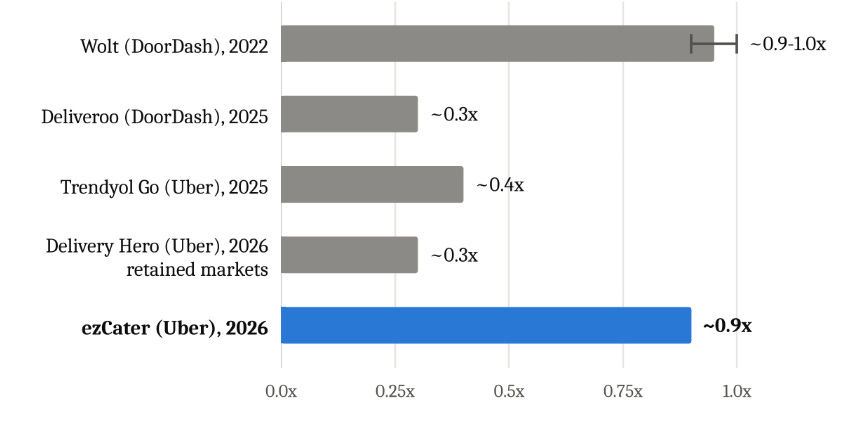
Uber’s $2.3 billion cash purchase of ezCater extends its buy-versus-build strategy and raises questions about the price and capital…
My investing thesis in a nutshell (w/examples): 1) Buy with a strong margin of safety or stock price near/below cash and/or book value. 2) Buy in industries and/or markets where the money is flowing. Makes it a lot easier. 3) Buy the best early and/or the most overlooked in that particular industry. 4) Pay up for unfair advantages, excellent mgmt teams, and companies with huge latent pricing power. 5) Sell when the thesis breaks. Or a much better risk/reward setup hits your desk. Otherwise continue to add/hold. Don't track stock prices. Track the main business KPIs like any competent mgmt team would. Example #1: Bought $NBIS 4x mid $20's (best overall). Then bought $BRUN common and warrants pre-merger (most overlooked). Example #2: Bought $FTEK $1.39. Cash floor new excellent operator CEO. Strong upside potential w/data centers. Example #3: Bought $BABA $70's. Strong margin of safety, market leader, unfair advantages. Sold $170 for better risk/reward. Example #4: Bought $ELMT @$19 and @$14. Unfair advantage. Strategic. Cheap. Critical in strong growth industries. Example #5: Bought $TOST @$24. Beaten down due to macro headwinds and new/early $DASH competition. But almost everything in business stronger and expanding to new verticals. Lastly, if you're unsure or don't fully understand the business. Just say no. In fact, say no to most stocks. Most probably your best idea is already in your portfolio. Don't lockup your money in a 3/5 setup, you're trying to make outsized returns! And sub to my newsletter (link in bio) if you want my deep dives. 😉

Muse could sidestep ads by becoming a neutral commerce agent, while DoorDash and Airbnb build proprietary agents that steer users toward…
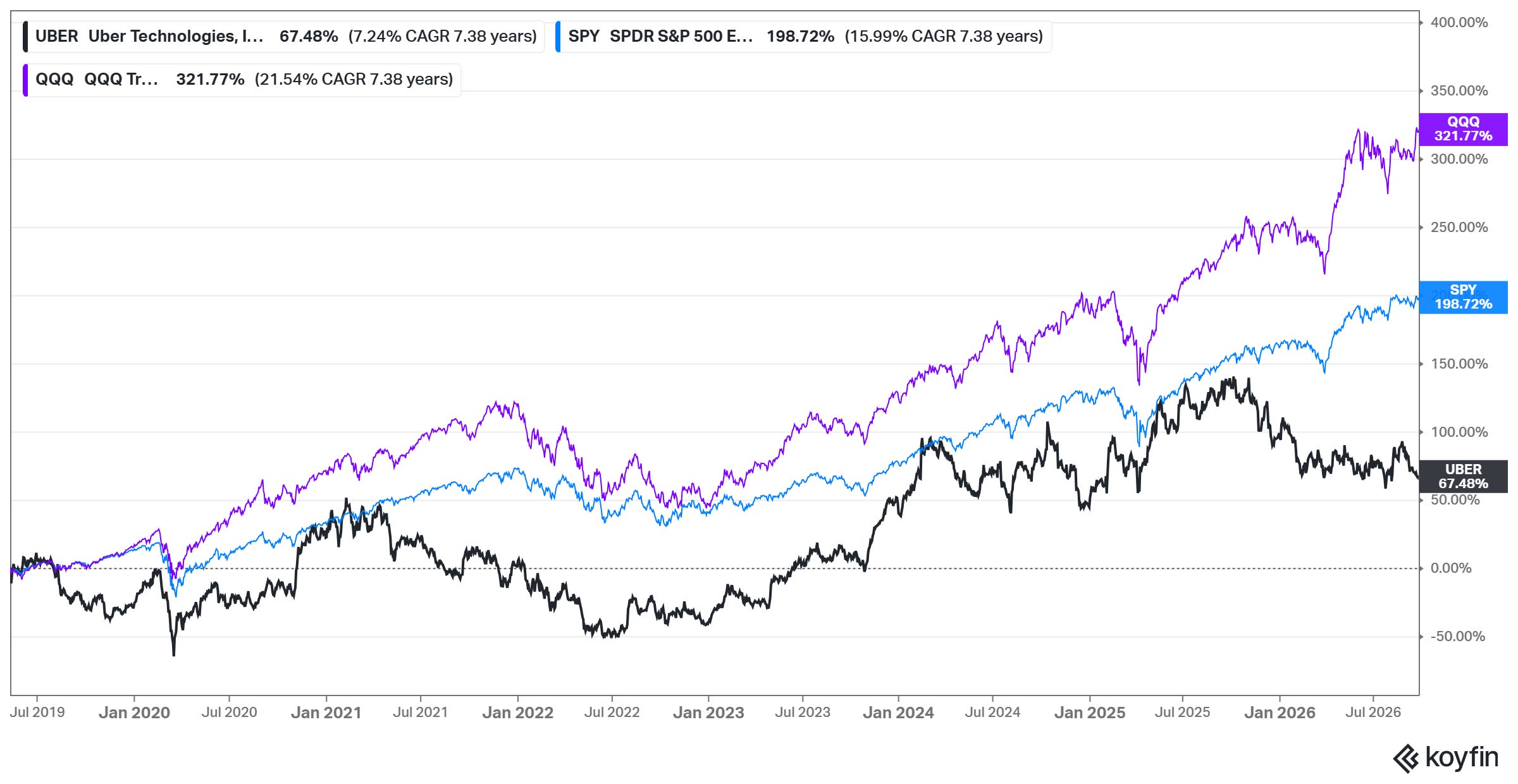
Uber's $193 billion in gross bookings and $10 billion in free cash flow contrast with modest stock gains as autonomous vehicles and…
Wrote this quick note when adding $GRAB to my internal watchlist after the dual insider transactions by CEO @AnthonyPY_Tan and COO @alexhungate that were filed after hours yesterday. The purchase reminds me of Neil Mehta's (Greenoaks) insider purchases of Coupang $CPNG and @Alfred_Lin's $100 million purchase of DoorDash $DASH for Sequoia last year.

DoorDash's grocery push targets a shift from weekly stock-up trips to frequent online fill-in orders, though smaller baskets complicate…
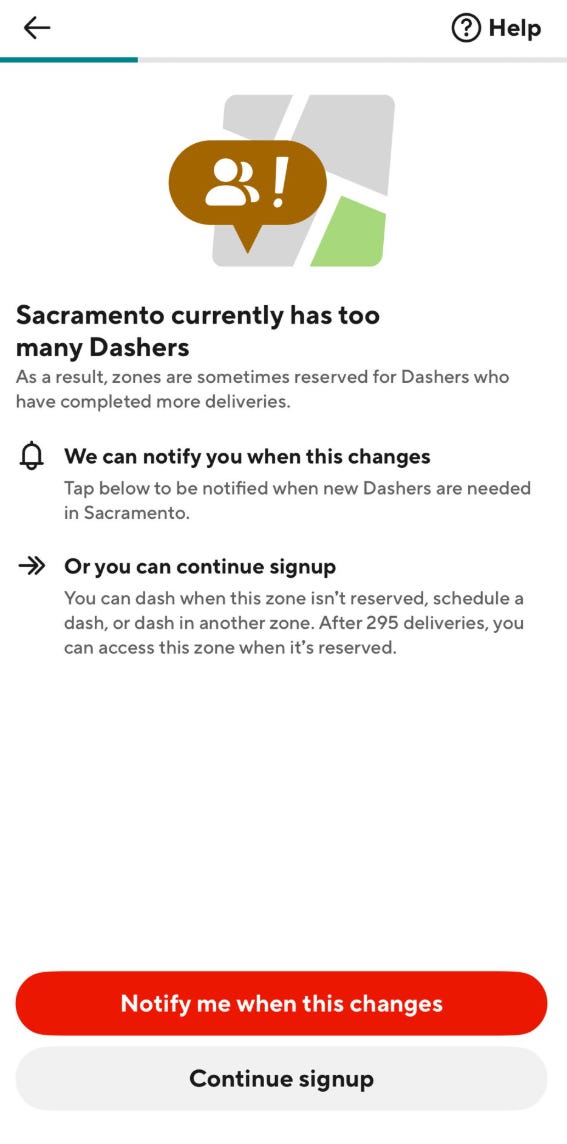
DoorDash’s delivery economics rely on customer tips and flexible labor, while rising courier costs make autonomous delivery central to…
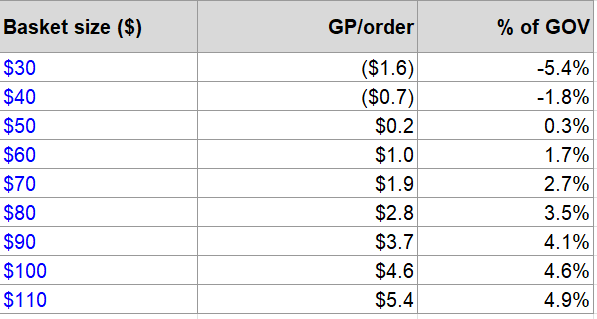
Instacart’s larger grocery baskets create disproportionately better delivery economics than DoorDash’s, making half the basket size worth…
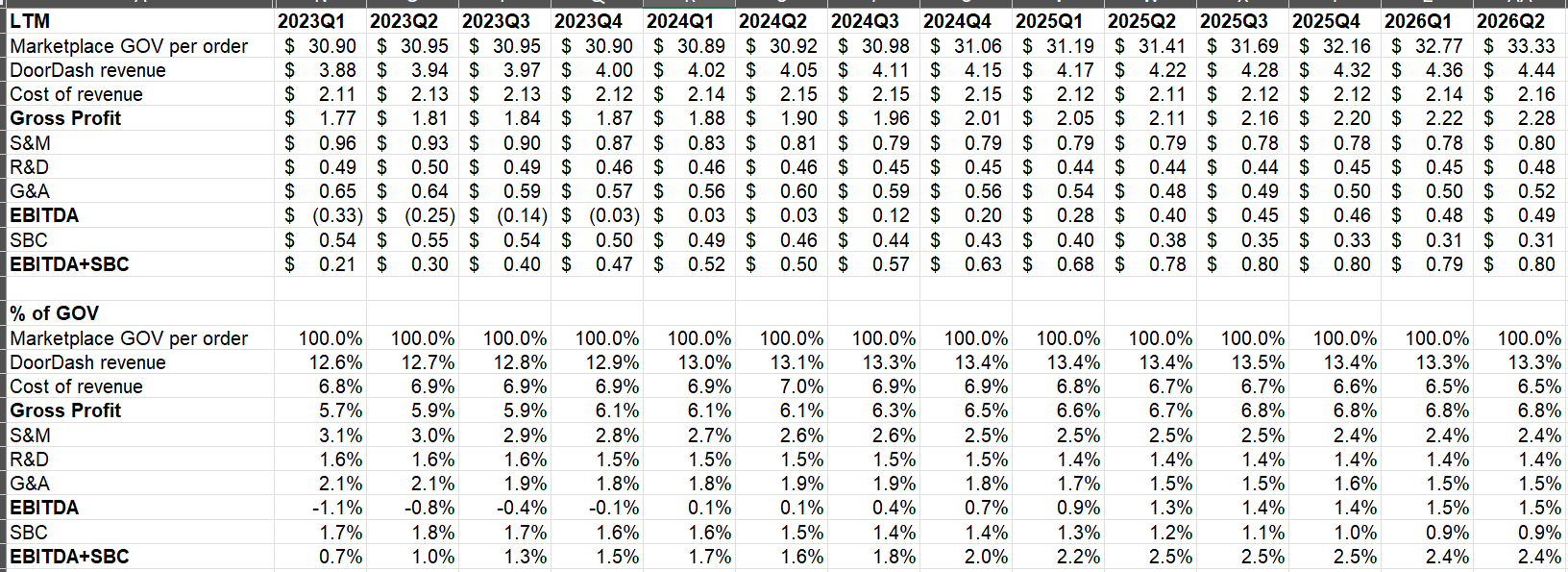
Instacart’s per-order unit economics provide a benchmark for assessing DoorDash’s LTM profitability and operating model.
 DASH · long
DoorDash holds roughly 60% U.S. market share in on-demand restaurant logistics, underpinning a long thesis on its defensible delivery…
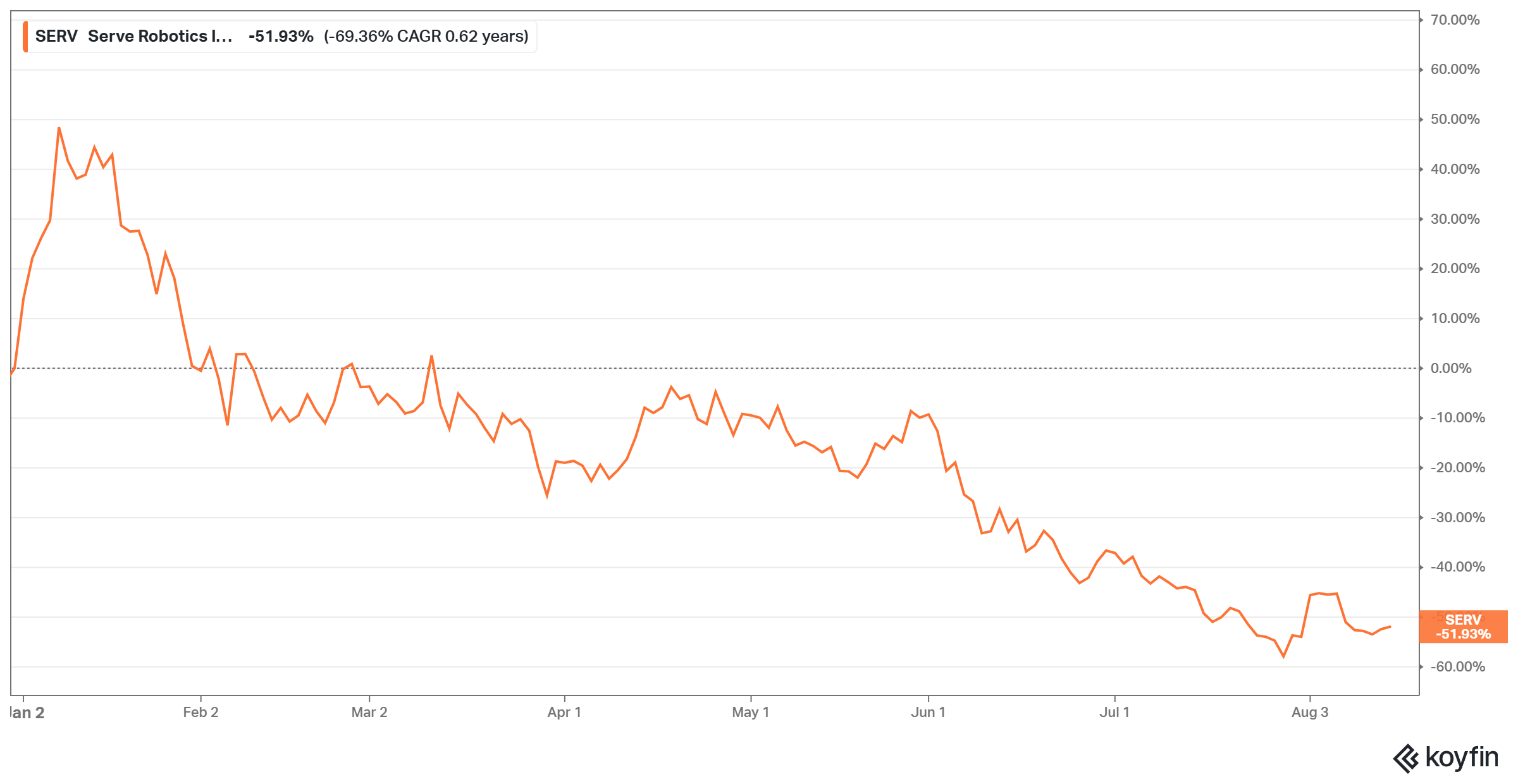
DoorDash’s integrated autonomous-delivery strategy contrasts with Uber’s 2026 divestment of Serve Robotics, its former delivery-robot…
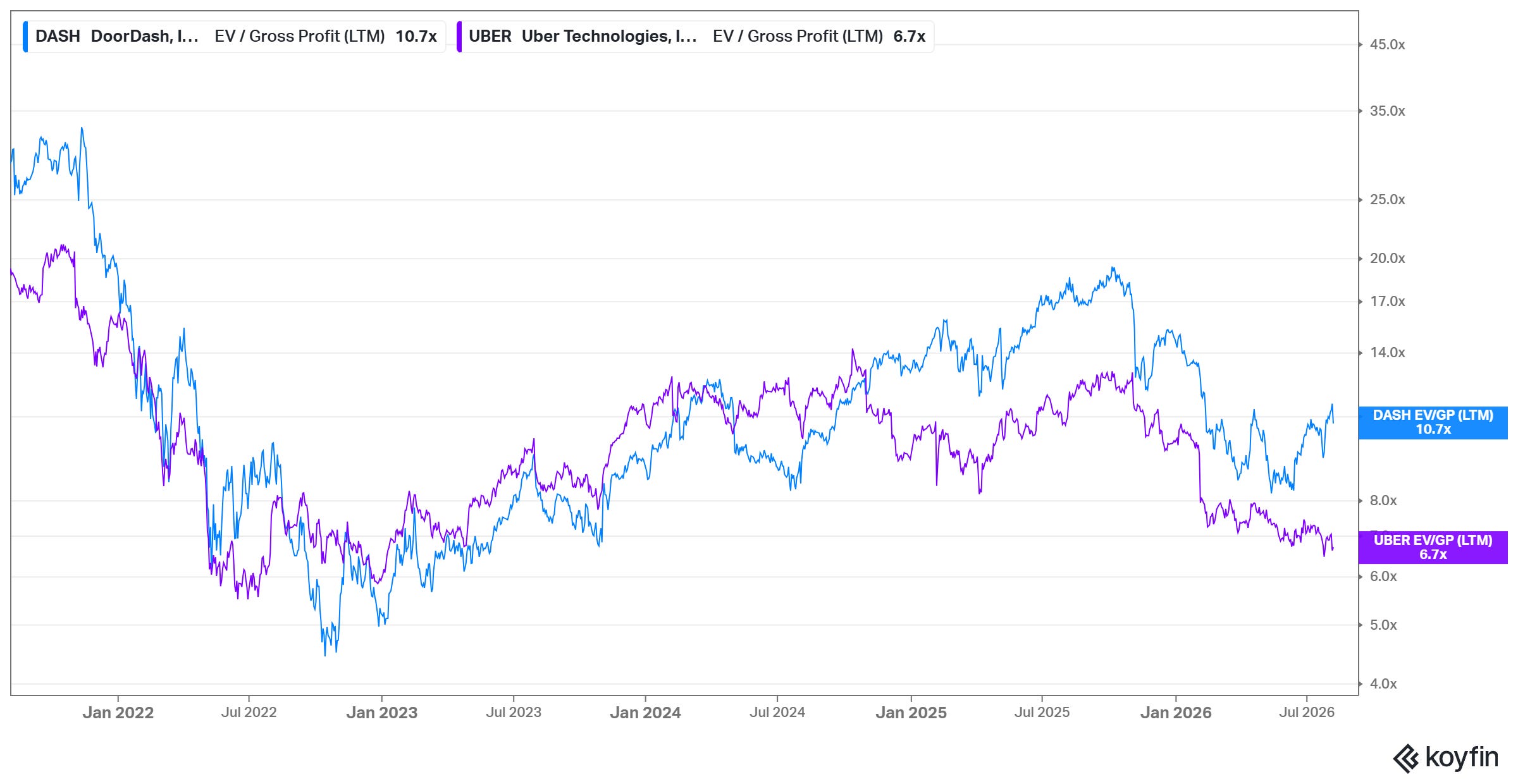
DoorDash’s 2Q 2026 orders rose 27% and marketplace GOV grew 36%, with DashPass driving a slight acceleration in U.S. restaurant demand.
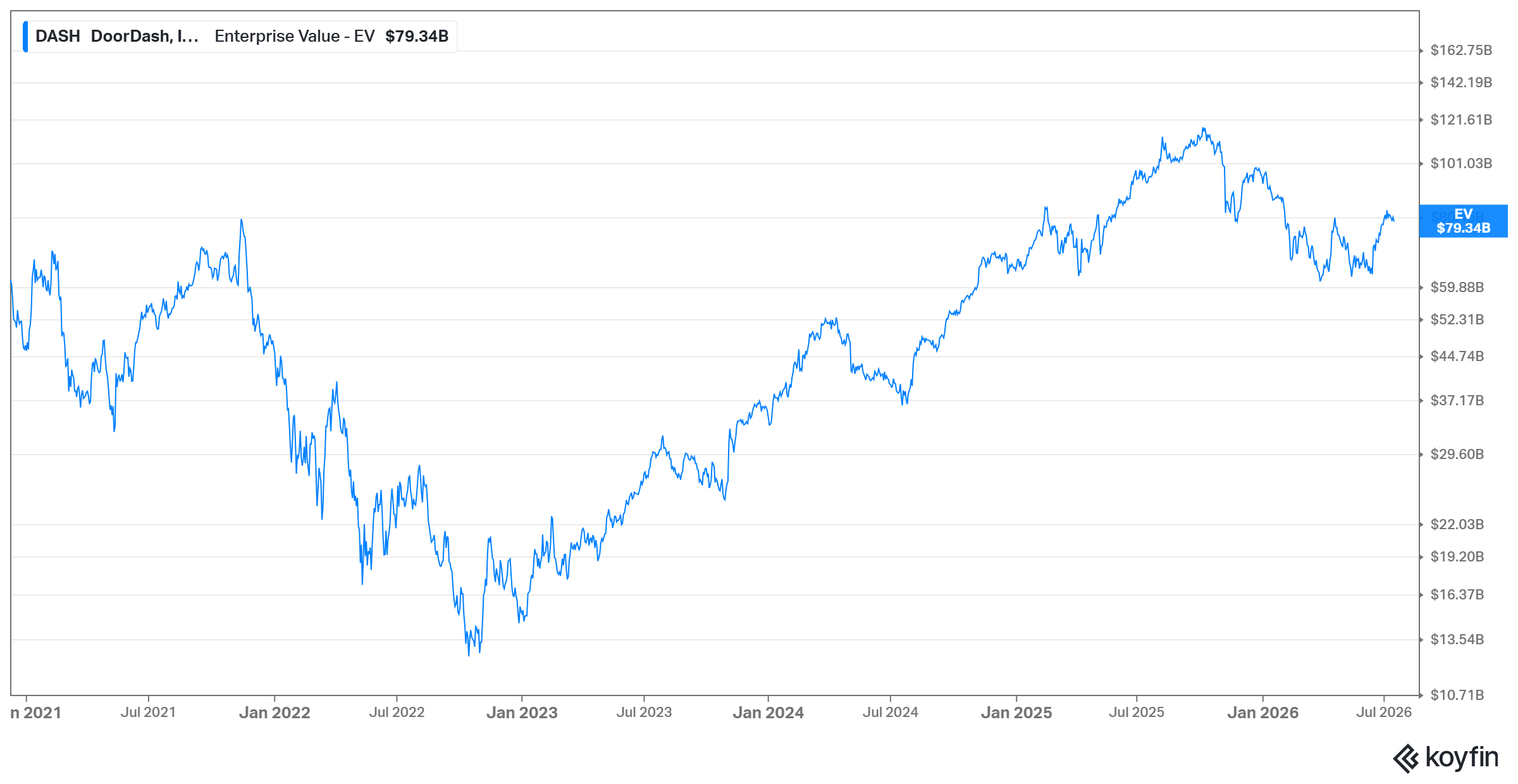
DoorDash built a last-mile logistics network around restaurant delivery, then extended it to groceries, convenience, and other local…
DoorDash positions itself as infrastructure for local commerce.
DoorDash is framed as an undervalued giant with potential to double.
Letters that discuss DASH.
Companies the stories above are also about, besides DASH.


