
New Ask Claude or ChatGPT about any stock, using Bullpen. Bullpen in Claude or ChatGPT. 7 days free

Monday, November 23, 2026

Back to the front page

A “safe” floor and a 2028 “wow”

Stevanato’s 2027 low-single-digit growth reflects GLP-1 syringe destocking at Novo, while capacity backfill and higher-margin formats support a 2028 recovery.

From X

Convequity on X

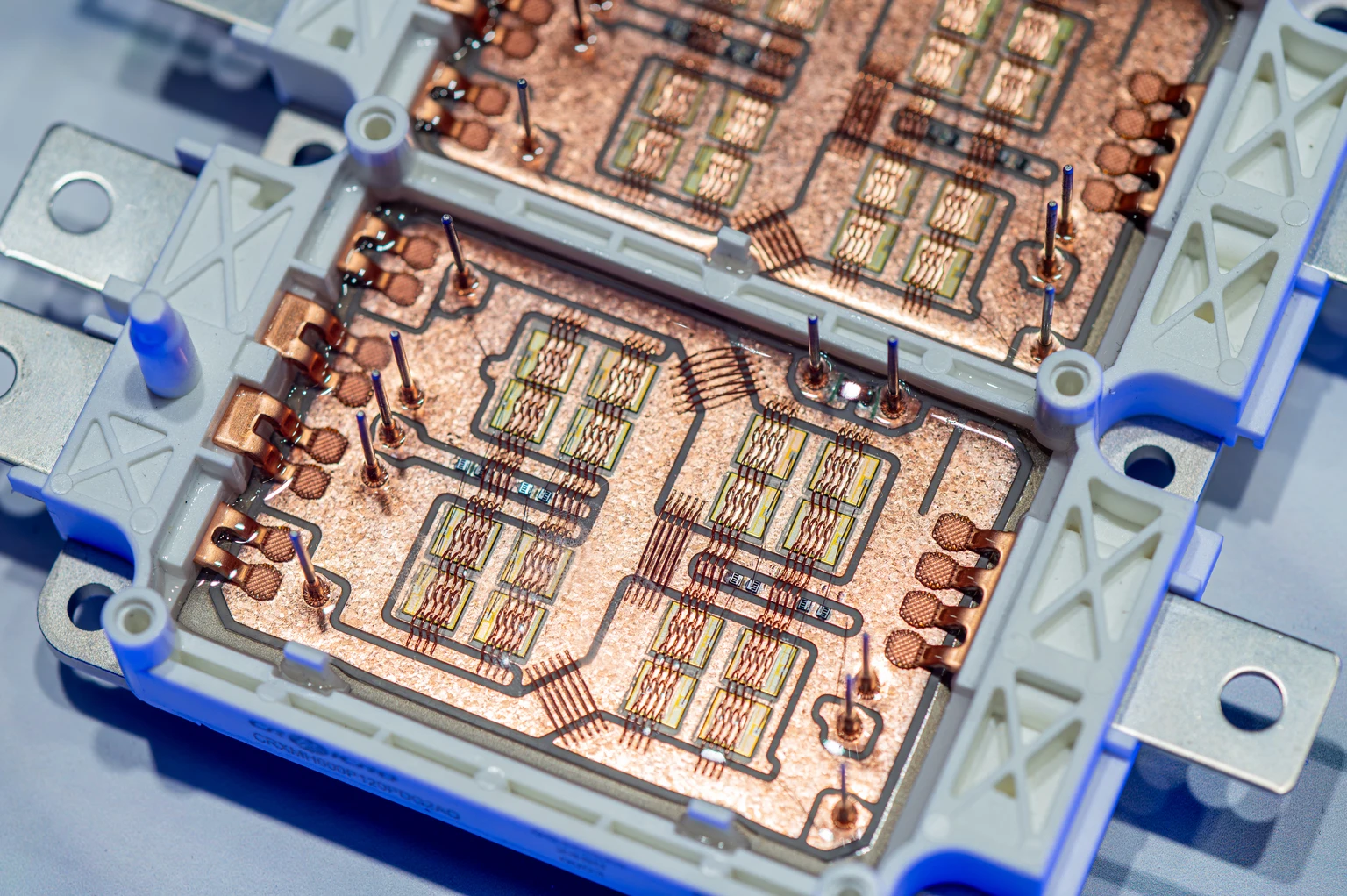
Tesla's Powercore takes 34.5 kV grid power to 800V DC in one step at 7.4 MW. This is a huge deal for the 800V HVDC landscape. $TSLA unveiled Powercore on 17 November. One cabinet takes 10 to 34.5 kV AC and puts out 800 to 2,000 V DC, with 98.86% peak efficiency and first units operating in 2027. Tesla is working with $NVDA to certify it for 800V DC data centers. This changes part of what we wrote in June, when we argued 800V DC was not ready for mainstream adoption. Our reason was the conversion path. Solid-state transformers in production worked at low voltage only. A data center had to step the grid's 13 to 20 kV down to about 400V AC, convert that to 800V DC, then step down again to 50V for the servers. We put the direct path from the grid to 800V at two or more years away. Think of voltage as water pressure. The transmission line is the trunk main. The substation transformer drops it to a 34.5 kV district main. The path we described in June uses two sets of valves to get from the district main to the 800V pipe that feeds the server racks. Powercore uses one. Most Powercore users, including SpaceX ($SPCX), will pair it with behind-the-meter natural gas turbines coupled with Megapack. The last drop inside the rack, from 800V to about 50V and then 12V, is not part of what Tesla announced. Powercore stops at 800V, so the 50V step we flagged in June is still there. So Tesla is addressing the main gap we flagged in June, with a product that first operates in 2027 and that Nvidia has not yet certified. How does Tesla do it? No silicon carbide (SiC) transistor in volume production blocks 12 kV or more on its own. $WOLF has shown a 10 kV device, and it is not in volume supply. Converters in this class stack many cells in series, each built on 1.2 to 3.3 kV SiC parts, so the cells share the grid voltage between them. Tesla has not published Powercore's circuit design, switch material or supplier. Our reading is stacked SiC cells, because gallium nitride (GaN) in production is mostly rated 650V and below. Tesla builds its converters in-house, about 3 terawatts so far, and says Powercore uses "U.S. and imported parts". It does not own a SiC fab. Teardowns of Model 3 and Model Y inverters show SiC chips from $STM, and $ON is reportedly a second source for the cars. Tesla is ahead on size, and it has company. Amperesand said it would ship 30 MW of one-step 800V units in 2026, built on Wolfspeed 3.3 kV modules. Delta Electronics has had a unit running at a Chinese data center since February. Heron Power, founded by former Tesla executive Drew Baglino, plans volume production of a 4.2 MW data-center unit in late 2027. $ETN has a 2 MW, 15 kV unit that passed a new UL standard, and Infineon supplies SiC for Eaton's platform. Tesla's edge is 7.4 MW per cabinet, converter manufacturing at scale, and Megapack batteries on the same DC bus. The read-across by layer: 1) Medium-voltage gear. Powercore replaces the conventional transformer, switchgear and rectifier between the substation and the rack. $VRT and Schneider Electric sell that equipment and, per an industry survey, have not announced a commercial solid-state transformer. JPMorgan reportedly says Powercore would compete with traditional data-center electrical suppliers once it ships. 2) SiC chips. Every one-step converter needs a large number of SiC switches, whoever builds the cabinet. Chinese industry estimates put this demand at roughly $500M a year by 2030. If Tesla takes share, more of that volume goes to whichever supplier Tesla picks. 3) Rack power. The 800V to 50V step stays with the chip vendors Nvidia has named for 800V: Infineon, STMicro, ON, $NVTS and InnoScience. Navitas and InnoScience sell GaN for that step, which Powercore does not touch. Wolfspeed is not on Nvidia's list. It would also be worth tracking whether Tesla expands into this layer itself. For Tesla, a 1 GW campus needs about 135 Powercores. Energy revenue fell 15.6% y/y to $2.88B in 3Q26 at a 33.1% gross margin, against 18.0% for the rest of the company. $SPCX will likely be the largest user and the biggest beneficiary of this cutting-edge power supply for AI data centers. It is a big part of the reason SPCX can build 500 MW of data center per month, and 1 GW per month next year, without the typical lead time for energy. It is also the reason SPCX can build 1 GW of data center at roughly $35 billion, about 60% of peer costs. #Tesla #800VDC

Convequity on X

Keysight's orders show customers are still paying for 1.6T optical links Optics shares have fallen this month. Innolight lost 9% in one session on 6 November and Applied Optoelectronics is down 45% in a month. Keysight ($KEYS) took $2.34 billion of orders in fiscal Q4 against $1.99 billion of revenue, 1.17 times. AI bookings for the full year were about 2.5 times the prior year's, and the number of AI customers nearly doubled. Keysight makes the test instruments that prove a high-speed link works, and a transceiver maker buys from it twice. In R&D, engineers use its bit-error-rate testers and lab oscilloscopes to design and qualify each new module speed. On the production line, its digital communication analyzers, sampling oscilloscopes that measure a module's optical signal, test 800G and 1.6T modules before they ship. In August management put its data center link business at about two-thirds R&D and one-third manufacturing, with the mix moving toward production as 1.6T ramps. The other buyers sit on either side of the module: chip designers validating silicon before tape-out, switch and cable makers qualifying 1.6T copper and optical links, and cloud companies emulating AI traffic on a cluster's network before deployment. A separate business sells wafer test systems to foundries and memory makers, where orders grew double digits on advanced nodes, high-bandwidth memory (HBM) and silicon photonics. Foundries are now taking silicon photonics into commercial production, which adds optical test to the electrical wafer test Keysight already sells. Management expects the bigger step-up from co-packaged optics (CPO), which moves the optics into the switch package, in 2028. Customers buy much of this equipment when they develop and qualify the next link speed, before modules ship in volume, so Keysight's orders move ahead of the optics makers' revenue. Management said 1.6T is early in its ramp and 3.2T is already in R&D. Our estimate: the CFO guided Q1 orders down by a mid-single-digit percentage, which puts them near $2.2 billion against a $2.05 billion revenue guide, about 1.08 times. Risk: the CFO said $200–300 million of the backlog built up because Keysight could not ship fast enough, so that part measures its own supply shortage.

Bill Ackman on X

You got some things right and other things wrong, but in general, your overall construct is incorrect. It is not the case that the other alts contributed all of their performance fees to their public companies, and that our shareholders don't benefit from the investment performance generated by our funds. It is true that Pershing Square Inc. ($PS) is structured differently from the other alternative asset managers (alts) like Blackstone, KKR, and others. Our unique structure is highly beneficial to our company and our shareholders, as I explain below. In short, when Blackstone and the other alts went public, they contributed a substantial portion -- typically 40% to 60%, but not all of their incentive, performance, or promote compensation to the public company and retained the balance to compensate their employees. The outcome of this approach has been suboptimal. First, promote income, particularly from private equity funds, is highly volatile. It is only earned and paid when funds generate a return in excess of a preferred return and when a liquidity event happens, that is, when portfolio companies and/or the funds' real estate assets are sold. As a result, analysts and investors in the alts value the highly volatile income from incentive fees at a low multiple. Wall Street likes recurring and growing fee streams like management fees. It does not like volatile incentive fee income. By contributing so much of their incentive fees to their public companies, the other alts did not retain enough incentive fees to pay their teams. The result is that the other alts grant large amounts of equity compensation to their employees in addition to the promote income they pay to their employees. This equity compensation dilutes reported earnings by as much as 20% or more. In order to address these concerns, when we structured Pershing Square Inc. (PS) in anticipation of its public offering, we bifurcated the performance fee differently. Rather than giving Pershing Square Inc. a pro rata slice of our performance fees, we gave the public company a senior interest in our performance fee income -- what we call Preferred Performance Fees -- and employees retained a subordinate interest in the incentive fee income, what we call Subordinated Performance Fees. PS retains the performance fees on the first five percentage points of returns net of management fees from our funds that charge performance fees, and our employees receive the performance fees on returns above 5% if there are any. If our funds do not earn a return in excess of 5% in any year, any unpaid Preferred Performance Fees accrue into a future year or years until they are earned and paid. In other words, the company and our shareholders get paid first before our employees. As long as investors believe we can earn a gross compound return of 6.5% -- the 5% preferred return plus the 1.5% annual management fee -- over the long term (a high likelihood, in our view, in light of our investment strategy that has generated gross returns of nearly 20% for the last 23 years), Preferred Performance Fees are effectively economically equivalent to management fees and therefore deserving of a similar valuation multiple. We believe our high-return investment strategy will allow us to not only earn the Preferred Performance Fees over time, but also enable us to continually earn Subordinate Performance Fees that we can use to compensate, recruit and retain high quality talent. As a result, we don't need to issue large amounts of stock and option compensation to employees like the other alternative investment managers, minimizing the risk of dilution to shareholders. [PS also benefits from the fact that, as is typical in the hedge fund industry, we earn incentive fees from both realized and unrealized gains so we are not forced to sell assets in order to generate returns. Our funds generate performance fees as long as our annual performance net of management fees is positive, which makes our performance fees much more recurring than those from private equity or private real estate funds.] While in a great performance year, the amount of performance fees earned by Pershing Square Inc. is effectively capped by our structure, the growth in assets that occur from great performance years inure to the benefit of all shareholders in that year and in future years. For example, if, in one year, we generate 30% net returns, while PS only receives performance fees on the first five percentage points of return, its cash flows and intrinsic value grow substantially due to the net 30% increase in fee-paying assets that is generated from our investment performance. Because 98% of our capital is in permanent capital vehicles, nearly all of our net performance is continually reinvested and compounded in our funds and additive to the growth of our fee-paying assets in that year and in future years. With respect to your claim that this structure creates a conflict, I disagree. First, the structure was clearly explained to all investors in the IPO and in our public filings, and investors and analysts have found the structure extremely favorable, particularly when compared with the other alts. Second, our structure incentivizes us to generate excellent investment returns and enables us to attract and retain the best talent without burdening the company with excess G&A, restricted stock or option expenses. Third, any new funds we launch which generate performance fees will have the same Preferred Performance Fee structure and therefore benefit PS in the same manner as do our existing funds. Fourth, our employees own the substantial majority of our shares creating further alignment. We own a greater percentage of our company than do the employees of any of the other alternative asset managers. Fifth, since we have retained, effectively outside of the company, sufficient performance fee income to compensate, retain and recruit employees, we are able to manage PS with a relatively modest amount of general and administrative expense of about $50 million. This has enabled us to operate with the highest operating margins of any of the publicly traded alternative asset managers. Thank you for the taking the time to write your post, which has given me the opportunity to clarify the concerns that you raised. I welcome any further questions or concerns that you or other shareholders may have. X for the win.

Sage: All Quiet on the Mid-Market Front

Sage’s FY26 results and FY27 guidance maintain roughly 10% revenue growth and margin expansion, with shares at 1,123.1p and valued near 23…
INTU · long

Intuit INC

Intuit, down 60% year to date, is the Nasdaq 100’s worst performer, ahead of declines at Workday and Adobe.
Firefly Aerospace q2’26 Earnings Update

Firefly Aerospace ended Q2 2026 with $1.5 billion backlog and a 2.49x book-to-bill ratio, adding lunar, defense and launch contracts for…
Publications we follow

Every publication on this site, hand-picked.

130 publications

Newsletters 110

Seeking Alpha 102 of 304

X accounts we follow

Every account on this site, hand-picked.

94 accounts

Investor letters we follow

383 firms

Sectors

Ordered by how often our editor reaches for them.