Wednesday, October 28, 2026

Back to today

From X

@convequity 12 clicks

Convequity on X

$ORCL Spends More of Its Cash Flow on Capex Than $AMZN or $MSFT — Does the Backlog Justify the Stretch? We hold Oracle, so we pulled the numbers from our ABBX dashboard to check whether the contracted backlog supports the heavier spending. Capex intensity (last four quarters) Oracle spent about 161% of operating cash flow on capex (to 31 Aug 2026). Amazon was about 107% and Microsoft about 63% (both to 30 Jun 2026). Oracle put USD 75.7B into capex against USD 46.9B of operating cash flow. Debt and lease load Add borrowings, lease liabilities, and the undiscounted value of leases signed but not yet started. Purchase obligations are excluded for all three. - Oracle: about USD 457B, or 3.6x its USD 125B of borrowings. - Amazon: about 2.9x. - Microsoft: about 11x (its borrowings are small relative to lease commitments). Oracle stands out on size versus cash flow: roughly 9.7x trailing operating cash flow, versus 2.5x at Microsoft and 2.3x at Amazon. The backlog counterweight Oracle’s RPO (remaining performance obligations) is USD 664B — close to Microsoft’s USD 678B commercial RPO, while generating only about a quarter of Microsoft’s operating cash flow. RPO covers about 1.45x Oracle’s debt-plus-leases figure, versus 1.48x at Microsoft. Those contracts provide revenue visibility, though delivery still depends on margins and timing. Amazon’s USD 496B backlog is AWS-only, so it is not a clean comparison. ABBX capacity estimates show Oracle rising from about 4 GW to about 12.8 GW by 2029, Microsoft from 8.5 to 17 GW by 2030, and Amazon from 10.6 to 16 GW by 2028. That implies roughly USD 52B of RPO per planned GW for Oracle versus about USD 40B for Microsoft (rough scale comparison given different RPO scopes and time horizons). Our take The bigger risks at Oracle are timing, execution, and funding rather than a lack of demand. Oracle expects about 13% of its RPO to convert to revenue in the next 12 months while capex is being spent now. Its 12.8 GW figure is an ABBX estimate, not company guidance; it carries ABBX’s lowest confidence of the three, and grid approval is still pending at one or more sites. Oracle also sold USD 20B of stock in FQ1 FY27. We think the backlog justifies holding the position, but sized for funding risk. What we watch: RPO converting to revenue on schedule, new capacity coming online, and whether more equity is needed.
@StableBread 4 clicks

Fajasy on X

Here’s where BWX Technologies’ $BWXT stock could be by the end of 2027, 15 months from now, in my bear, base, and bull cases. I value each case on 2028 adjusted EBITDA, since the market will be pricing 2028 numbers by then. For net debt, I use today’s $1.65B minus the $750M from its medical isotope sale, or $0.9B. To stay conservative, I don’t credit the FCF $BWXT earns between now and the end of 2027. Management plans to spend the cash, including on acquisitions, but hasn’t said how much or on what, so I leave out both the cash and any EBITDA acquisitions could potentially add. Therefore, each case’s value is 2028 adjusted EBITDA times the multiple, minus the $0.9B of net debt, over 92.0M diluted shares (its convertible notes only dilute above $262.51). Bear case ($118, -19%) The bear case assumes budgets slip (the government is running on a continuing resolution through December 11), the terms of its Janus contract (the Army’s microreactor program for military bases) disappoint, and new-build orders arrive later than John MacQuarrie, president of Commercial Operations, expects. That implies only 5%/year adjusted EBITDA growth to $735M in 2028, and a multiple of 16x, slightly below $BWXT’s 16.6x at the end of 2023, for a value of $118/share. Base case ($162, +11%, most likely) The base case assumes $BWXT delivers its 2027 framework (high-single-digit growth to $720M of adjusted EBITDA) and grows 10% in 2028 to $790M as new-build revenue starts. That implies the multiple holds at 20x, near today’s, for a value of $162/share. $BWXT’s own 2030 plan goes further. Today’s $15.0B EV is 13.0x the $1.15B midpoint of its 2030 adjusted EBITDA target. If $BWXT hits that midpoint, trades at 18x instead of the base case’s 20x, and runs at 2.5x net leverage (~$2.9B of net debt) after deploying its capital, the stock would be worth $194/share at the end of 2029. With ~$4/share of total dividends through 2029, that’s a 9.9%/year return from $145.70. But getting from the base case’s $790M in 2028 to $1.15B in 2030 takes ~21%/year growth, more than double the 2028 pace, so the new orders and acquisitions outside $BWXT’s predictable core (the programs backed by backlog and long-term contracts) have to show up. Bull case ($204, +40%) The bull case assumes a new-build order lands by early 2027, $BWXT signs a Janus contract on par with microreactor startup Radiant’s (up to $750M), and margins rise toward 20%. That implies adjusted EBITDA of $820M in 2028 and a re-rating to 24x, just under the 24.8x of Curtiss-Wright $CW today, for a value of $204/share. Notably, none of the three cases considers a commercial BANR (microreactor) sale, a Wyoming TRISO fuel plant, a battleship reactor, or a data center customer, so at $145.70/share, you’re getting commercial microreactors and data centers as a free option.
@StableBread 2 clicks

Fajasy on X

Here’s what Boost Run $BRUN has already committed to pay, and what it still has to finance in H2 2026. $BRUN’s GPUs need space and power, which it rents in other companies’ data centers (colocation). The four leases signed since April already cover the space and power for the year-end deployments, and CEO Andrew Karos said its partnerships now reach 253 MW of power. $BRUN owes the rent on those sites whether or not the GPUs get financed. In 2027, the commitments $BRUN has already signed call for ~$221M of payments, including $103.5M on its GPU leases, $28.9M of rent on the sites in use as of June 30, ~$69M on the four new leases, and $20M for software. $BRUN’s $191.8M of pro forma cash and $93.6M of contracted prepayments, $285.4M together, cover the ~$221M of 2027 payments before counting any monthly billings from customers. But the same cash also pays $BRUN’s share of the H2 2026 build, so its monthly billings will have to cover part of the 2027 payments. To reach the $1.0-1.2B of GPU spending management expects for 2026, $BRUN has to deploy $663-863M of GPU servers in H2 2026, 2.3-3.0x its cash and contracted prepayments. If lessors fund 79.5% of the H2 2026 build, as they did in H1 2026, $BRUN needs $527-686M of new leases, 2.2-2.9x the $238.1M the company owed on finance leases as of June 30. The other $136-176M would be paid in cash. The $527-686M works out to $264-343M/quarter on average across Q3 and Q4, 1.3-1.6x the $208.2M of leases $BRUN took on in Q2. $BRUN’s lease debt would rise by less than the $527-686M, since the company keeps paying down its leases while adding new ones. During H1 2026, its finance lease debt rose $207.7M on $337.3M of new GPU equipment, or 61.6%, which for H2 2026 would imply ~$410-530M more debt. New leases will likely cost more than ~7% after the rise in rates. For context, at the 9.0% $IREN agreed to pay on its August GPU financing, the extra interest on $527-686M would be ~$6.5-8.5M/year, 1.6-2.1% of the $400M ARR target. And $BRUN isn’t slowing down. By June 30, the company had already placed orders well above the $578M first-year minimum in its April 2026 agreement with Dell $DELL, which also requires at least $215.5M/year of Dell equipment from April 2027 to April 2031 or a payment for the shortfall.
@convequity 1 click

Convequity on X

Banks are right, for now, to block third-party AI agents from taking action inside consumer bank accounts. An agent paying with a capped card, as $META's Muse does, is a different and narrower permission. Axios reported this week that major U.S. banks are finding unapproved third-party agents inside customer accounts, most let in with the customer's own login. Some tried actions that looked independent of what the customer asked. $MS is blocking such agents, per Axios sources. $JPM, $BAC and $C are restricting them. Banks are slow to change how a deposit account works for a reason: the duty runs to every customer and to the bank's own systems, not only to the early adopter who opted in. An agent logged in with real customer credentials puts fraud, liability and security risk on the bank, and that risk reaches customers who never opted in. The bank is right to keep that action out of the account for now, even if some customers want it. An agent holding the login can see the whole account and send money out. An accepted wire is generally final and sits outside Regulation E, the consumer rule for electronic transfers. An ACH transfer the account sends has no chargeback. Getting it back depends on the receiving bank agreeing. Tell an agent to pay, and an ACH payment inside that instruction can count as authorized under that rule. Money lost inside that grant is the customer's. Jamie Dimon called this a liability transfer: "If people are using them, they should understand the risk." That settles the customer's loss, not the bank's exposure. Muse pays through Stripe Link or a single-use virtual card capped at the total the buyer approves. The customer can dispute a wrong charge. The issuer can cancel that card so the next attempt fails. The agent never touches the deposit account. Agentic commerce has to prove itself on the capped card before that access reaches the deposit account.
@convequity

Convequity on X

Neoclouds Now Trade as a Hedge Against AI Demand Growth Convequity’s latest ABBX review shows $CRWV, $NBIS and $IREN are inversely correlated with AI demand growth. Stronger demand widens the working-capital hole and keeps investors risk-off, even as order books expand. Insatiable demand is usually the reason to own the supplier. Here it does the opposite. Jensen Huang told CNBC at GTC Berlin that neocloud demand is “off the charts” and that working capital is the missing piece. Working capital is current assets minus current liabilities. A cash-conversion mismatch squeezes it even when demand is huge. Liabilities hit first. A neocloud pays $NVDA and networking suppliers in roughly 30–60 days. Asset-backed hardware loans add heavy near-term debt service. Assets lag. A signed customer contract sits off the balance sheet as backlog. It only becomes receivables or cash once the cluster is deployed, energized and billed — months later. Cash leaves before revenue arrives. A faster pipeline simply widens the short-term deficit. Latest ABBX figures NBIS: $8.5B gross debt vs $8.0B cash; guidance for >$9B customer prepayments this year. IREN: $7.6B debt vs $5.9B cash; $13.8B hardware and site commitments; 20% prepay on the Microsoft contract. CRWV: $35.6B debt vs $5.5B cash, plus $16.3B operating leases and $35.5B rent not yet commenced. Build-out relies far more on debt than customer prepayments. Even with those prepayments, NBIS and IREN keep raising large extra funding. CRWV faces the same hole with a far larger debt stock. Handing contracts back to resell at higher spot prices would ease CRWV’s cash hole only if customers and lenders agreed. Customers pay even if they do not use the capacity, CRWV must deliver it, and we found no public right to change the price or exit early. Break a customer contract and the hardware lenders can lock up CRWV’s cash. If that lockup holds, they take the cash to repay the loan. Borrowing later would cost more, and the switch only pays while spot stays high. If spot fell, CRWV would lose both the committed revenue and the contract value backing those loans. For investors to turn risk-on again, AI demand growth needs to slow enough for infrastructure supply to catch up.

ORCL Update

Oracle rose about 12% intraday on October 28, 2026 as AI infrastructure and cloud-demand sentiment improved and credit-spread concerns…
Danaher’s robotics era

Danaher’s new CEO paired a Q3 beat and raised EPS outlook with a 2027 4%-5% organic-growth starting point, while pitching AI-enabled…

My Last GFL Update - Hopefully

GFL’s take-private structure hinges on BC Partners rolling 60% of its stake to preserve debt portability under the 40% permitted-holder…
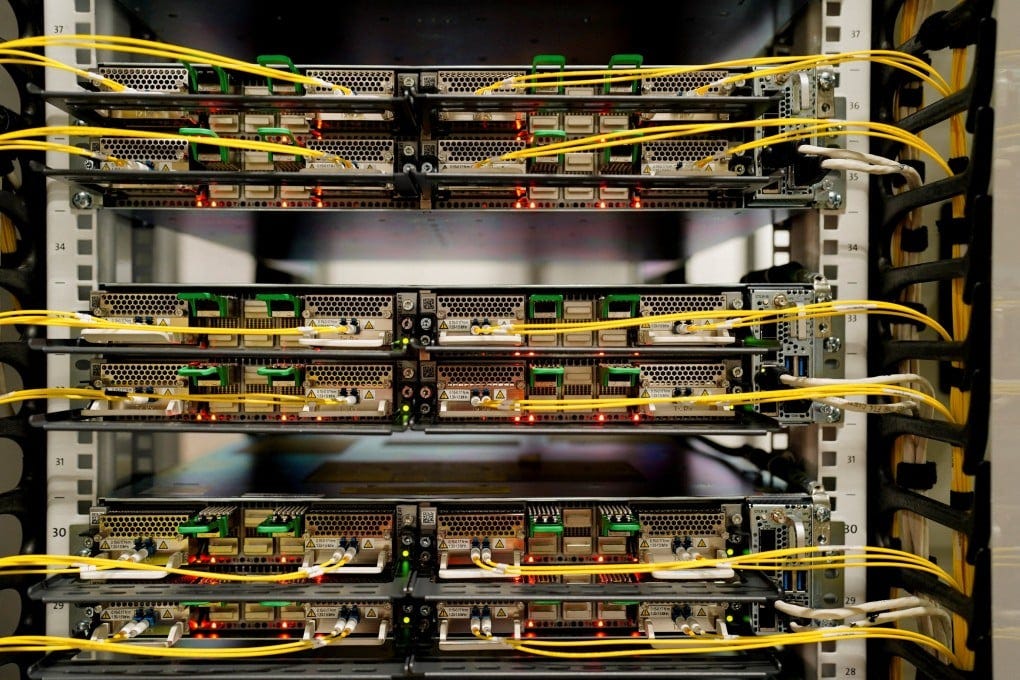
Are Neoclouds Dead?

Neoclouds face tighter debt financing as AI infrastructure capex outruns cash flow, leaving cash-burning GPU providers more exposed than…

Reddit: Deep Dive Analysis

Reddit generated $805 million in Q2 2026 revenue, 95% from ads, but slowing Google search referrals expose AI-driven traffic and…
Qualcomm Inc. (QCOM)

Qualcomm supplies chips for on-device AI agents and data center inference, with Meta and AWS agreements expanding its role across both…

SBAC · long

Sba Communications CORP

SBA Communications trades at 14.9x forward AFFOPS, near a record low, despite being pitched as the market’s cleanest tower operator.

Publications we follow

Every publication on this site, hand-picked.

129 publications

Newsletters 109

X accounts we follow

Every account on this site, hand-picked.

91 accounts

Investor letters we follow

190 firms

Sectors

Ordered by how often our editor reaches for them.