Meta 3Q26 Business Update: Not Just an Ads Business?
Meta’s 3Q26 Family of Apps revenue rose 26% as Muse reached 10 million users, testing AI-agent shopping that Walmart permits while Amazon blocks.
Meta’s 3Q26 Family of Apps revenue rose 26% as Muse reached 10 million users, testing AI-agent shopping that Walmart permits while Amazon blocks.
@ShitFund I remember being on the opposite side of him on $OPEN.
Thank you again for these great $WAL Pr calls, Bill https://t.co/pZo95YXpKI https://t.co/YbY03WulEx
@ThothCapital @valuedontlie I would love to/can’t wait to read your $calm report
@Asymmetric_Val Without taking a look at $COF 100%
Tags: $JACK $GPRN $CRMT $HTZ $RTB $ARQQ $BTQ $MNRA $RUM $GPRO $SWMR $EQPT
@mbamcnulty Mark ILD @ $0. Assume $LQDA continues to + $20M in PAH revs per Q (Q3 was $30M) and @ YE'27 its annualizing ~$930M revs. At $1B they said "over 50%" would be FCF so call it $465M in normalized FCF or ~$4.50/share. Even very low multiples get you alot of upside in ~14 months.
@tuviagroup IMO, $CPT generally owns the best assets of the public MF reits with an avg age of 16 years
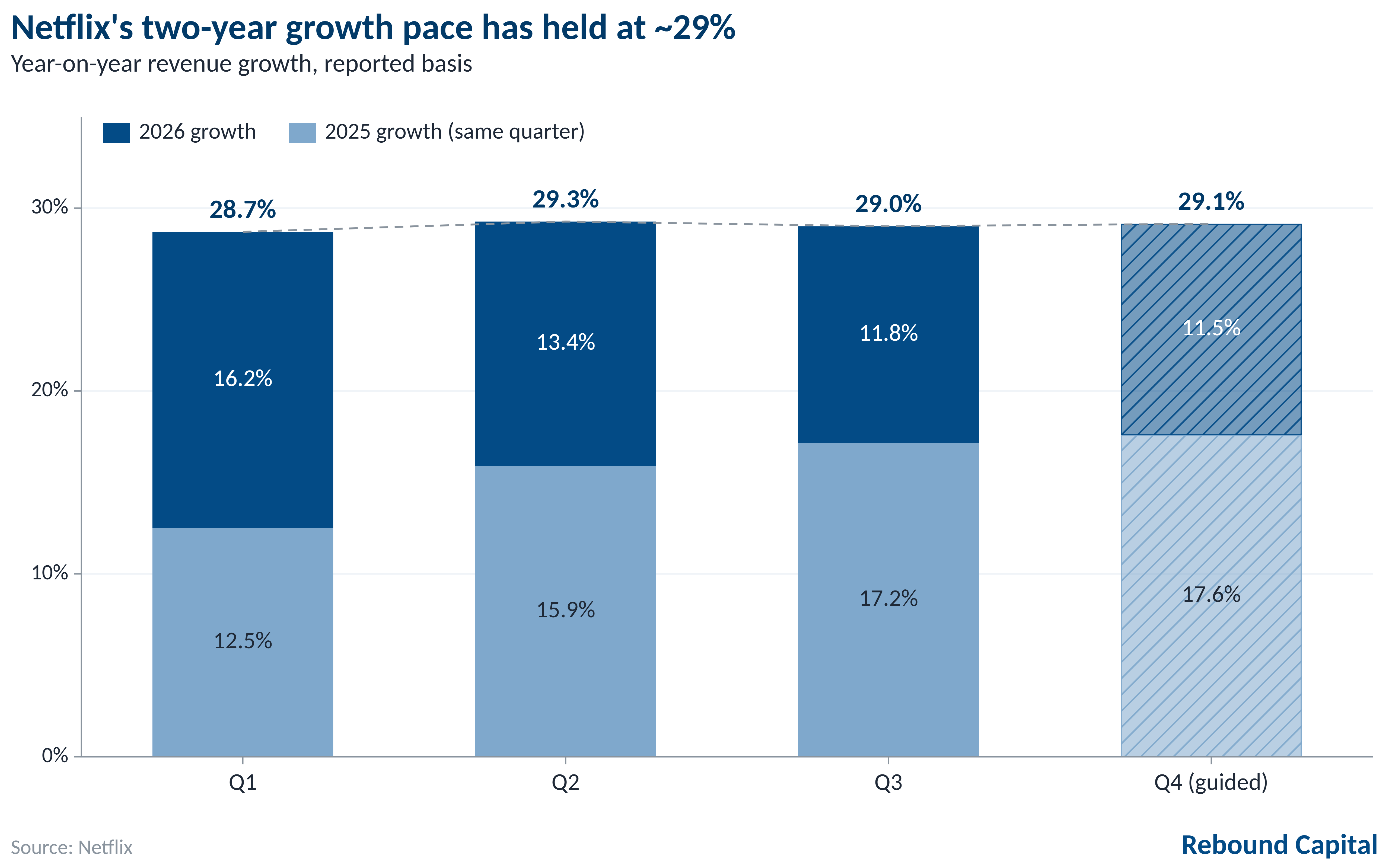
Netflix Q3 earnings update revises the thesis and rating.

Sagimet Biosciences' denifanstat enters a fully funded U.S. acne registration trial after Phase 3 results, with SGMT trading below cash and…
 Equity Eagle 3 clicks
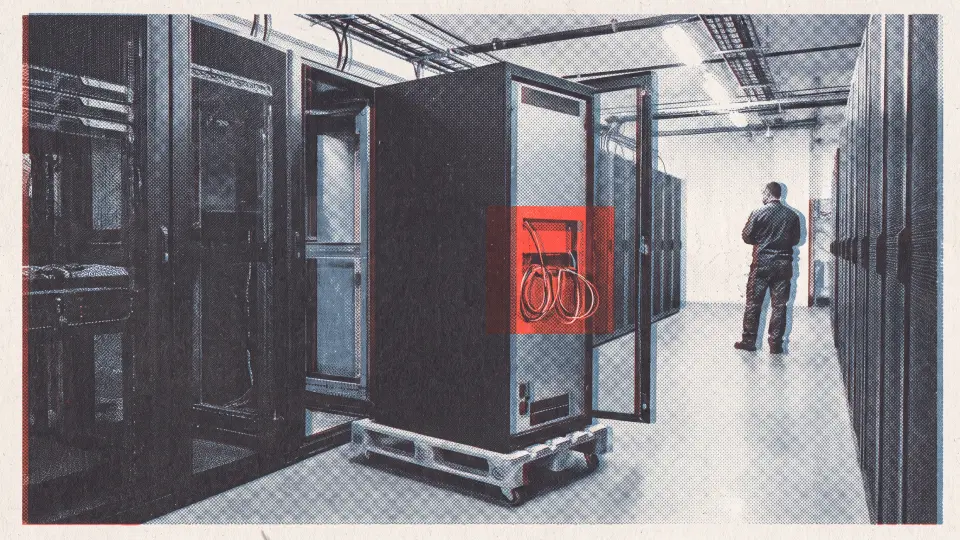
CoreWeave is compared with Amazon's early public years, when investors expected bankruptcy amid losses and dependence on outside capital.
Bending Spoons has spent about $10 billion on software acquisitions, including pending Miro, while Q2 organic growth was 3% and all…
 Jack Bowman 9 clicks
Eli Lilly's Mounjaro and Zepbound drove 2025 revenue to $65.2 billion as the drugmaker expands AI partnerships with Nvidia, Isomorphic…

Gladstone Investment's 50% equity portfolio drove NAV and dividend gains, but five holdings make up 44.5% of fair value and heighten Level…
 Stephen Nemo 3 clicks

Silvercorp’s falling Ying grades, prolonged GC suspension, El Domo execution risk and Chaarat funding needs weaken its valuation despite…

Snowflake says internal AI use is lifting revenue and profit, while customers show early implementation success.

Netflix’s earnings raise questions about whether its growth profile still merits a franchise valuation, alongside discussion of Disney’s…
Vicor’s $66.6 million in AI power-delivery royalties generated about $50 million of operating profit, eclipsing its module business as…
CareCloud may attract a private-equity buyer after its Q3 call, with acquiring enough shares the main obstacle to a take-private deal.
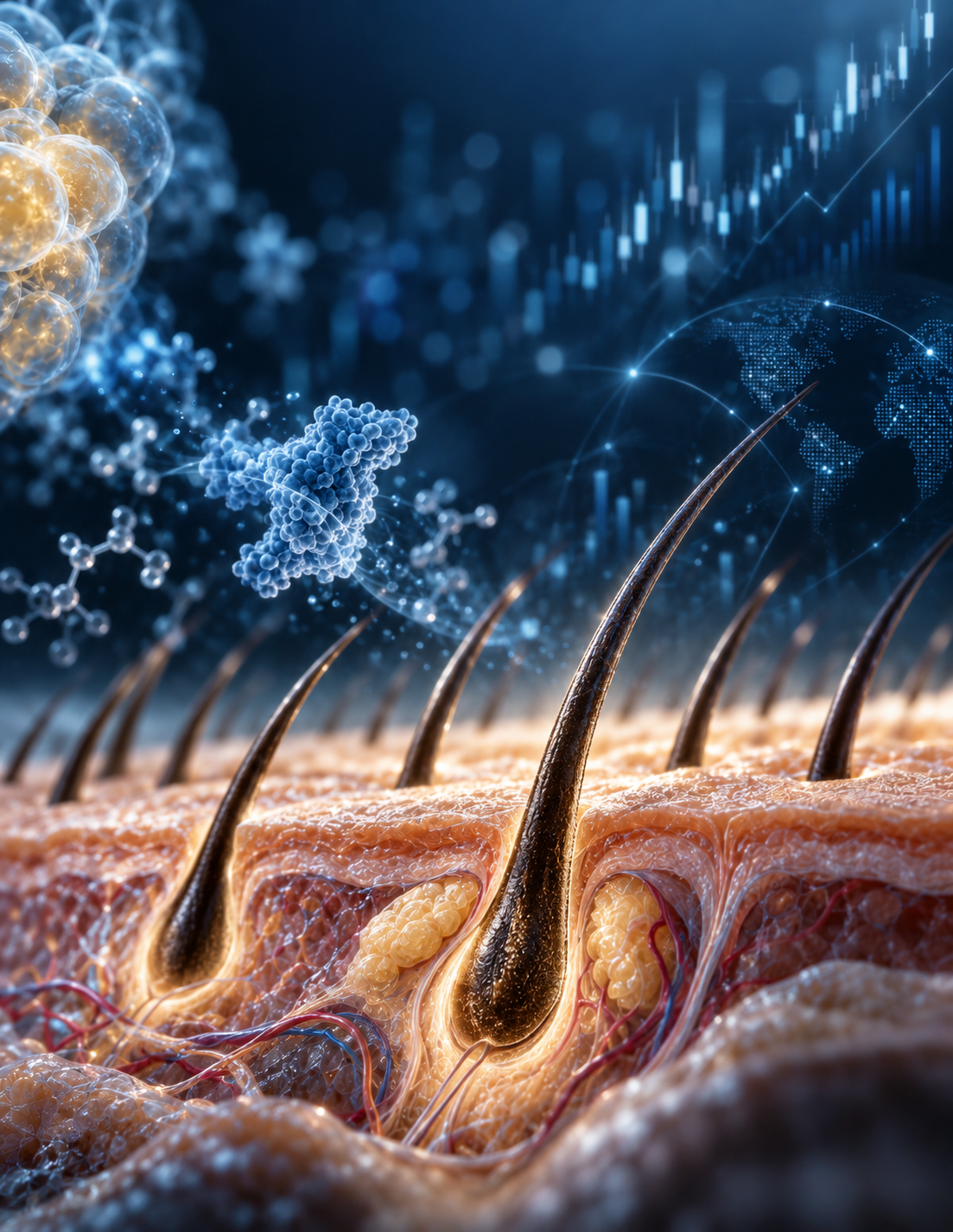
Novo Nordisk has only floated hair loss, while Veradermics’ Phase 3 oral minoxidil data lead a field of licensing and takeover candidates.
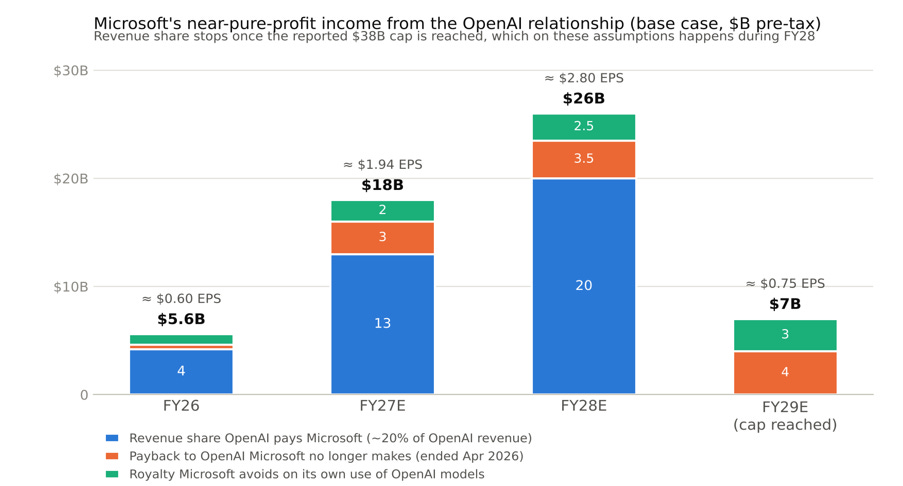
Microsoft booked $24.1 billion from OpenAI in FY2026, nearly a quarter of Azure revenue, raising questions over finite, high-margin…

RTX reported 11% sales growth to $25.0 billion, raised 2026 guidance and reached a record $340 billion backlog, while free cash flow fell…

HEICO sells FAA-approved aircraft replacement parts at 30% to 50% discounts to OEMs, gaining customers as restrictive aftermarket contracts…

Northrop Grumman posted 7% Q3 sales growth to $11.1 billion, lifted profit guidance and reached a record $109.6 billion backlog, led by…

Disney trades at 14x FY27 consensus EPS of $7.50 as parks, merchandise and streaming rebuild its franchise flywheel.

Amazon’s fulfillment network and customer-review base limit autonomous AI shopping agents, whose referrals generate under 0.5% of major…

TSMC says 2nm ramp costs and overseas fabs are temporarily pressuring gross margin as AI demand keeps semiconductor supply tight.
 Gil Rotstein 10 clicks

CoreWeave and neocloud peers face financing pressure, but sold-out GPU capacity and rising H100 and B200 rental rates support continued AI…
Every publication on this site, hand-picked.
 Albert Anthony
 Andres Veurink
 Bay Area Ideas
 Blake Winiecki
 Capital Connoisseur
 David Zanoni
 Deep Value Investing
 Dhierin Bechai
 Dilantha De Silva
 Elliott Gue Equity Eagle
 Eudaemon Research
 Fernanda Galvez Jalil
 Henrik Alex
 High Alpha Professor
 Investor Overview
 IWA Research
 Jaden Mealy
 Julia Ostian
 Khaveen Investments
 Kurt Christensen
 LL Insights
 Long Player
 Marc Gerstein
 Melissa Tucker
 Mike Zaccardi, CFA, CMT
 Miletus Research
 Myriam Alvarez
 Petri Dish Reports
 Philip Wang
 Prakhar Agarwal, CFA
 PropNotes
 PV Research
 Quantryon Capital
 Robert J. Lake
 Ron Ferrie
 Ryan Canady
 Sam Mancini
 Sharon McArd
 SiliconBytes Insights
 Simple Investment Ideas
 Sorrento Research
 Stephen Ayers
 Steven Fiorillo
 The Alpha Analyst
 The Asian Investor
 The Bullionaire
 The Curious Analyst
 The J Thesis
 The Supercycle Investor
 The Undercovered Dozen
 Tim Travis
 Value Capital Research
 Vishal Jadaun
Every account on this site, hand-picked.
 ⚽️📡
 💥PETITION💥
 A Capital
 absreturnchaser
 Adam D. Wyden
 Alpha Vulture
 AltayCap
 Asif Suria
 Bank Reg Blog
 Barbarian Capital
 BDC
 Bill Ackman
 Brian McGough
 Broken Moats
 BuccoCapital Bloke
 Calvin Blissett
 catechwilliams
 Charles Frischer
 Chris Camillo
 Clark Square Capital
 Cluseau Investments
 Colin King
 Connor Haley
 Conor Maguire | Value Situations
 Convequity
 Dalius - Special Sits
 David Orr
 Deep Sail Capital
 Derek Pilecki
 Devin LaSarre
 DOMO Capital Management, LLC
 Edwin Dorsey
 Evan Tindell
 Fajasy
 Farmer
 Fierce_beast
 Fred Liu
 Gavin Baker
 George Noble
 Hunterbrook
 Ian Bezek
 Idea Brunch
 JabroniCoin.USD
 John_Hempton
 junkbondinvestor
 kab60
 KEDM.com
 Kevin Mak
 Kuppy
 Laughing Water Capital
 Lee Roach
 Little Owl Research
 Maius
 Maj Soueidan
 marginofdanger
 mavix
 Mike
 Mikro Kap David
 Mr Neutral Man aka "Howard Marks of REITs”
 Multiples Capital
 Myles
 Nat Stewart
 Negligible Capital
 Odd Diligence
 Odd Lot Arbitrageur
 PAA Research
 Paradis
 Pernas Research
 Porter Collins
 Prepared Remarks
 Psyop Capital
 Raging Capital Ventures
 Red Dog Capital RiverRoadPartners
 Rusholme Capital
 Sahil Khetpal
 Serenity
 SG
 Sheel Mohnot
 SouthernValue
 Steve Eisman
 The Friendly Bear
 Tim Eriksen
 Timyan Bank Alert
 Todd Wenning
 ToffCap
 Trevor Scott
 Undiscovered Compounders
 Voss Capital
 Yaron Naymark
Ordered by how often our editor reaches for them.