
Carecloud News
CareCloud may attract a private-equity buyer after its Q3 call, with acquiring enough shares the main obstacle to a take-private deal.
NASDAQ
CCLD
19 stories
$75M Market cap · 2026-10-30
CareCloud may attract a private-equity buyer after its Q3 call, with acquiring enough shares the main obstacle to a take-private deal.
I spoke with an expert in the RCM industry today who also previously worked at Apple and Intuit. Currently he has a startup that sees and is going to execute on the same strategy $CCLD pursues. Implementing tech and bringing into the 21st century RCM firms that are greatly behind. He said it’s rare for RCM customers to use same EHR. Said essentially that there will always be a need for software engineers b/c AI is not a magic solution and some last mile things cannot be automated/need a human. Implying CCLD cost advantage due to off shore Pakistan team stays a competitor advantage. He mentioned that the 25-30% contribution margin Carecloud targets from acquisition could be MUCH higher and this is pretty conservative, he was very surprised by this.
@rebv808 I believe I covered the first question, so I mean it when I say that’s a great question. You mean on the latter % of customers that $CCLD already has as RCM that don’t use EHR right?
$CCLD questions I have so far for Stephen Synder (CEO) interview if I am missing anything please let me know Charlie Munger famously talked about the importance of distinguishing between technological improvements where the economic benefits “stick to our ribs as owners” and those where “all of the advantages from great improvements are going to flow through to the customers.” (Stripe Press) I think it’s fair to say AI will lower costs overall for the RCM industry for those able to take advantage of it. McKinsey estimates that AI enablement of the revenue cycle could reduce cost to collect by 30% to 60%. (McKinsey & Company) We are already beginning to see this play out: roughly 20% to 40% of organizations report broad or enterprise-wide use of AI-enabled tools across different parts of the revenue cycle, while 70% to 90% of decision-makers expect to increase spending on AI-enabled RCM capabilities over the next three years. (Oliver Wyman) How is this playing out currently, and how do you see it progressing? More specifically, where do you think the economic benefits of AI ultimately accrue? Will AI make the strong stronger and the weak weaker—allowing scaled, technologically capable RCM providers to lower their costs faster and potentially furthering industry consolidation? Or, as AI tools become increasingly commoditized and accessible, could they instead level the playing field and erode some of CareCloud’s existing competitive cost advantage? A bit similar to the last question: Could AI change the dynamic of struggling companies not being able to upgrade products and or win clients. Allowing them to improve and compete hence lowering acquisition opportunities? How much growth aside from obviously inorganic acquisitions is existing customers expanding versus new clinics signing up? Do you think about size when acquiring or is it purely a factor of opportunity and fit. It would seem intuitive smaller acquisitions are easier and cheaper. Is there a pace or target you have in mind regarding acquisitions One shareholder asked for more metrics/metrics with news. Just granularity, Shareholder assumes it will be on earnings call but affects of data breach and portion if any that isn’t covered by insurance. What you’re seeing and anticipate seeing in terms of loss of current customers and momentum in future sales. A majority of the employees are in Pakistan which is currently going through a turbulent time and is basically a junta. Do you think there's any need to de-risk it? I believe the ROI from acquisition is at the midpoint of purchase multiple (.6-1x) and target contribution margin (25-30%) on a full year time frame after 9 months to get there to be About 34%. If your stock had the same FCF yield how would you weight buybacks vs acquisitions. Given the same assumed 34% full year after achieving targets on acquisition In Q2 2026, Hadi said: “OurAI and acquisition strategies have become a single, unified growth engine.” Does that mean that AI strategy/product development has similar economics or is it table stakes and has to be invested in merely to keep up?
$CCLD. I will be interviewing the CEO of my largest position Stephen Synder in the future. Any questions you guys would like asked? If they are reasonable and good I will ask.
I kind of love this, sets up the capital slosh effect that happened in 2000s with the great rotation from tech to value. I think something similar happens here eventually and offers uncorrelated returns which will be more valuable. I will be eating dirt on value until then, clipping my coupons and buybacks. $KSPI $BOC $SLM $HHS $ZIM $CCLD $WU $HY $AMR $CNR $METC $HCC $FISV $YB $BTU $CNRD
Not purely academic $CCLD shareholders what price would you sell at and why? Does anyone know any large holders, if so please reach out. The ownership structure is pretty fragmented and made up of passive funds I have to believe anything to managements liking above $5 would get the job done, if not less as management doesn’t have a dominant say (~15%)
@NycMsk @grok provide context regarding $CCLD churn and trends recently, how they define and calculate retention rate because I know it’s a little wierd and give it to me past 3 years
A really good $CCLD pitch that I think is very conservative with their PT. Street 12-month analyst PT is $7.33 versus circa $1.8 stock today. LINC.CareCloud.pdf
$CCLD crazy important earnings. Questions and things to monitor: new AI products, cybersecurity any and all information (loss of sales momentum, loss of current clients, still covered by insurance, lawsuits), why no acquisitions, are they still focused on acquisitions or spending more time developing AI products, is the person leading the AI strategy fit to lead it? At what point are buybacks considered despite the phenomenal ROI from acquisition.
If anyone has the capital this is free money $CCLD https://t.co/r2t4EVE2P7
$CCLD. Image 1 shows a 2.82x MOIC in 5 years with the same multiple 8x and paltry EBITDA growth, basically without acquisition. One of those two variables would have to give. EBITDA growth of 16% over 5 years is highly conservative especially if they gain momentum as a AI beneficiary or just continue acquiring. 8x EBITDA is conservative as well, this is versus peer sets transacting at a median of 13.6x (Image 2) and 18.6x (Image 3). @R1RCM @Waystar @trubridge @CorroHealth @IKSHealth
Too small, you could buy for triple the stock price and do beautifully as a private equity firm even given the worst case outcome due to cybersecurity which is loss of momentum in sales and a bit of churn. Would be more than made up for by the amount of leverage $CCLD could withstand, how many acquisitions they could do with a deeper and cheaper cost of capital
Ever since I started following $CCLD I thought it was a great LBO candidate. This thing belongs in a PE portfolio and whoever LBOs will do very well, I would love to participate. $85m market cap, around $120m EV roughly. Can support a lot of leverage due to subscription/reoccurring cash flows. It is cheap in absolute (circa 3x FCF). It is at 1/4 the average multiple arguably worse peers have transacted at (maybe even less by now). Long runway for continued acquisition playbook (management said constantly evaluating 2k opportunities). Acquisition playbook targets distressed RCM companies, cuts costs due to CCLD offshore cheap labor and cross and upsells to existing sticky customers, $CCLD offers a broad suite of products and are implementing adn devloping AI products. Acquisitions earn 20-40% in 6 months. Prices paid are .5-1x Revenues way towards the lower end. Risk: 2026 guidance requires aggresive H2 and cybersecurity incident If anyone is interested in a LBO or pushing for a sale, please reach out, I have done and will do extensive diligence.
@taobanker Man try $CCLD
@paulcerro And $CCLD

CareCloud trades at 4x free cash flow with 95% retention, a $100 million market cap and a large healthcare-software acquisition runway.

CareCloud runs provider billing without taking receivables risk, then cross-sells cloud software and stratusAI across 45,000-plus providers…
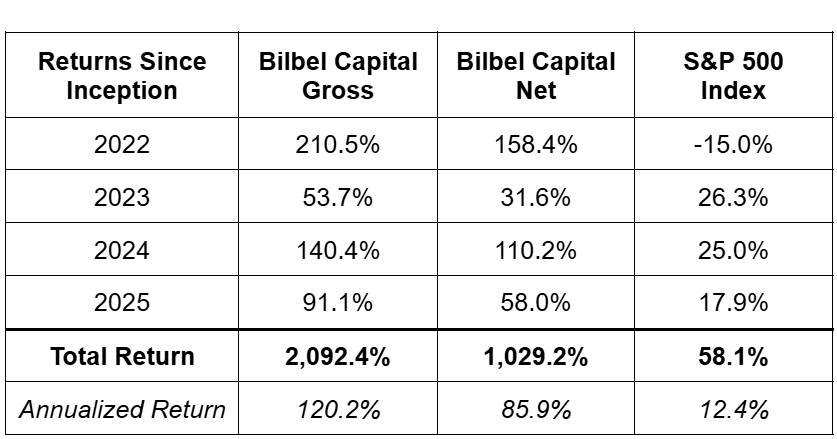
Bilbel Capital’s 2025 letter details CareCloud’s $16.5M Medsphere acquisition, targeting $35–40M EBITDA in 2026, and recounts losses from…
Letters that discuss CCLD.
Companies the stories above are also about, besides CCLD.
