Tuesday, October 13, 2026

Back to today

From X

@StableBread 1 click

Fajasy on X

Neither of the two commercial prospects BWX Technologies $BWXT has named for its BANR microreactor is a data center. 1) Prodigy Clean Energy, a Montreal-based developer of factory-built nuclear plants: Two BANRs for a transportable pilot plant in Belledune, New Brunswick, built mainly at $BWXT’s Ontario plants and running in the early 2030s. New Brunswick’s government signed a letter of intent (LOI) to buy the power. $BWXT and Prodigy are still negotiating a definitive agreement, and the release provides no dollar value. 2) Tata Chemicals Soda Ash: A Wyoming soda ash producer that signed an LOI to explore deploying up to eight BANRs. $BWXT also markets BANR to data centers. However, I found no data center contract, customer, LOI, or revenue in any $BWXT press release from January 2025 through October 2026, in the FY2025 10-K, or in the 2026 10-Qs. $BWXT’s own mentions stop at a product page saying BANR can provide “clean electricity for municipalities, data centers and campuses,” and slides 11 and 25 from its Investor Day on September 29, 2026, which list “AI/data center demand” as a driver of nuclear demand in general. I didn’t hear the phrase “data center” mentioned once during Investor Day, and slide 49 lists data centers in the third phase of $BWXT’s microreactor plan. CEO Rex Geveden said at Investor Day that “the incremental demand from AI right now is 60 GW” and “winning at AI means winning at power, and winning at power probably means having a nuclear solution.” If he’s right, $BWXT benefits by supplying components, fuel, and services to more reactors, not by selling microreactors to data centers. Advanced Reactor Design and Engineering, the product line that includes Project Pele (its prototype microreactor for the Pentagon) and $BWXT’s other microreactor programs, brought in $203.8M in 2024 and $147.1M in 2025, then $52.6M in H1 2026, down from $69.8M a year earlier. At 3.0% of $BWXT’s $1,761.8M of H1 2026 revenue, microreactors are still a small, early business.
@calvinblissett 3 clicks

Calvin Blissett on X

$CHRD: 6.5x FCF, Good CEO, buying back lots of stock, low-cost pure play EP. 8% FCF yield at $60 WTI. No meaningful leverage CHRD trades at ~$142, market cap ~$7.74B, enterprise value ~$8.63B. Dividend yield ~3.7% ($5.20 annual base). Buyback/total shareholder yield is higher: policy returns ≥75% of adjusted free cash flow (mostly buybacks after the base dividend) at current low leverage (<0.5x). On 2026 guidance of ~$1.3B Adj. FCF, this implies a potential total cash return yield in the low-to-mid teens. Valuation is low: ~9.5x TTM P/E, ~7.6x forward P/E, EV/EBITDA ~3.2-3.6x, P/FCF ~6.5x. Analyst consensus PT ~$166-174 (~20%+ upside); highs to $193. Marcellus non-op sale (to POSCO, expected Q4 2026 close) provides ~$550M gross proceeds, sharpening pure-play Williston focus, boosting cash/flexibility for returns or balance-sheet strength, and removing a non-core asset. Reasons for future growth: Flat-to-low absolute oil volumes (maintenance program ~161 MBopd oil) but rising per-share metrics via efficiency and buybacks. Longer laterals (majority of program, including 4-mile) cut costs/breakevens and improve recovery; base production enhancements and lower declines support volumes with less capital. Pure-play focus post-sale plus disciplined consolidator role in the Bakken. Efficiency gains already drove material FCF improvements. LTM Owner’s Earnings (Buffett-style): Roughly Net Income + DD&A + other non-cash charges − maintenance CapEx (and normalized for WC/one-time items). For this E&P, nearly all CapEx is maintenance to offset natural declines, so Owner’s Earnings approximates free cash flow. TTM (to ~Jun 30, 2026): Operating cash flow ~$2.59B, CapEx ~$1.40B → FCF ~$1.19B. DD&A ~$1.54B; Net Income ~$841M. Company-reported adjusted FCF (preferred operational proxy) was strong in 1H26 (~$738M combined Q1+Q2) and has been running at an elevated rate. This is a rigorous, cash-based measure after the capital required to sustain the business. Expected next-12-months Owner’s Earnings: ~$1.3B adjusted free cash flow (company 2026 guidance, including derivatives, at $75 WTI / $3 HH for 2H). Why higher than LTM: stronger realized oil prices vs. prior periods, operational efficiencies (longer laterals, cost controls, base enhancements), volumes at/above high-end of prior guidance, and capital discipline (CapEx held ~$1.4B midpoint). The $550M Marcellus proceeds is one-time cash (not recurring earnings) that further supports returns and balance-sheet optionality. At ≥75% payout, this supports substantial shareholder distributions while maintaining a strong BS. Business simply: Pure-play Williston Basin (Bakken) E&P—largest operator there. Drills oil-focused horizontal wells, produces/sells crude, NGLs, and gas. High-quality inventory; shift to longer laterals improves economics. Management: Danny Brown (CEO; prior Oasis/Anadarko). Track record of efficiency, synergies, disciplined capital allocation, and per-share value creation. Capital allocation: Base dividend + aggressive buybacks under the 75%+ Adj. FCF framework (leverage-dependent). Share count reduced meaningfully; cumulative returns large relative to market cap. Maintenance production focus. Risks: Oil price sensitivity/volatility (primary driver), basin decline/inventory longevity, execution on laterals or M&A, regulatory factors in ND/MT, energy transition headwinds. Margin of safety & upside: Low leverage, high cash generation even at moderate oil prices ($60-70 WTI still supports solid FCF/returns), conservative CapEx, and efficiency gains provide protection. Upside from multiple expansion toward peers/history, continued buyback accretion to per-share metrics, operational outperformance, oil strength, and pure-play clarity. Consensus implies ~20%+ near-term upside; higher in stronger commodity scenarios. Attractive FCF yield + value profile in E&P. Figures based on company results/guidance, market data, and analyst notes as of early October 2026. Oil prices and execution remain key variables.
@calvinblissett

Calvin Blissett on X

$FF: $195m EV, 30-40m current EBITDA est at RIN prices. 30m in hidden Arkansas land value (1.7k A out of 2.2k not being used) Thesis: Future Fuel's economics are primarily a bet on biodiesel margins. FF owns a relatively high-cost 59-million-gallon-per-year biodiesel plant, so it generally needs stronger industry margins than larger competitors to justify running at high utilization. The reason a high-cost producer like FF can still matter is the Renewable Fuel Standard (RFS): refiners must satisfy EPA-mandated renewable-fuel volumes, either by blending fuel or acquiring RIN credits. When mandated demand approaches or exceeds economical industry supply, the D4 RIN price rises until the marginal/high-cost producers have enough incentive to restart. FF is one of those marginal producers. That is the core thesis today. D4 RINs have risen sharply from roughly $0.50 in the depressed period to around $1.50, reflecting tighter expected supply/demand, while the EPA's much higher 2026–27 requirements should require substantially more biomass-based diesel production. If the industry remains short of required supply and the RIN bank is drawn down, RINs and therefore biodiesel margins should remain high enough to keep FF operating profitably; roughly speaking, every $0.10/gallon of sustainable margin on ~50 million gallons equals ~$5 million of annual operating profit. A return toward $0.30–$0.50/gallon margins could mean ~$15–25 million of biodiesel operating profit, versus very little or losses when margins collapse. The catalysts are higher plant utilization, continued tight D4 RIN supply/2027 RIN-bank depletion, and stronger chemicals earnings; the major risk is the opposite—RIN prices fall because supply increases, EPA policy weakens demand, exemptions expand, or renewable-diesel capacity overwhelms the market. In simple terms: FF is the expensive factory that the market may now need to run, and the RIN price is effectively what determines whether it gets paid enough to do so.

Vicor Update, Part Two

Vicor uses ITC exclusion-order cases to license power-module patents, with published royalty multipliers rising from 1.0x before filing to…

Expert Call | Nebius

Nebius’s 1 GW annual active-capacity target from 2027 is realistic, according to a former product manager, with greenfield data centers…

PTRN · short

Pattern Group INC

Pattern Group is a fragile consumer business targeted on the short side.

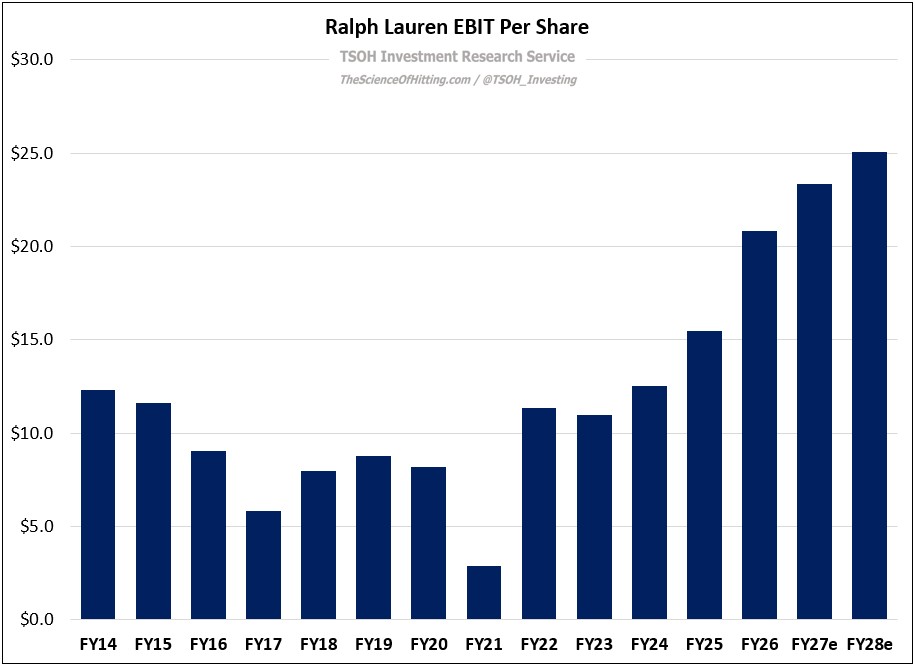
“Is Ralph Lauren Still Relevant?”

Ralph Lauren’s 2017 CEO change put Patrice Louvet in charge of reversing nine quarters of same-store sales declines and restoring the…

Publications we follow

Every publication on this site, hand-picked.

129 publications

Newsletters 107

X accounts we follow

Every account on this site, hand-picked.

88 accounts

Investor letters we follow

189 firms

Sectors

Ordered by how often our editor reaches for them.