New Ask Claude or ChatGPT about any stock, using Bullpen. Bullpen in Claude or ChatGPT. 7 days free
FF $129M

Cap as of Nov 20 6 stories

Get FF news in Claude, ChatGPT or your own code. See plans

Calvin Blissett on X

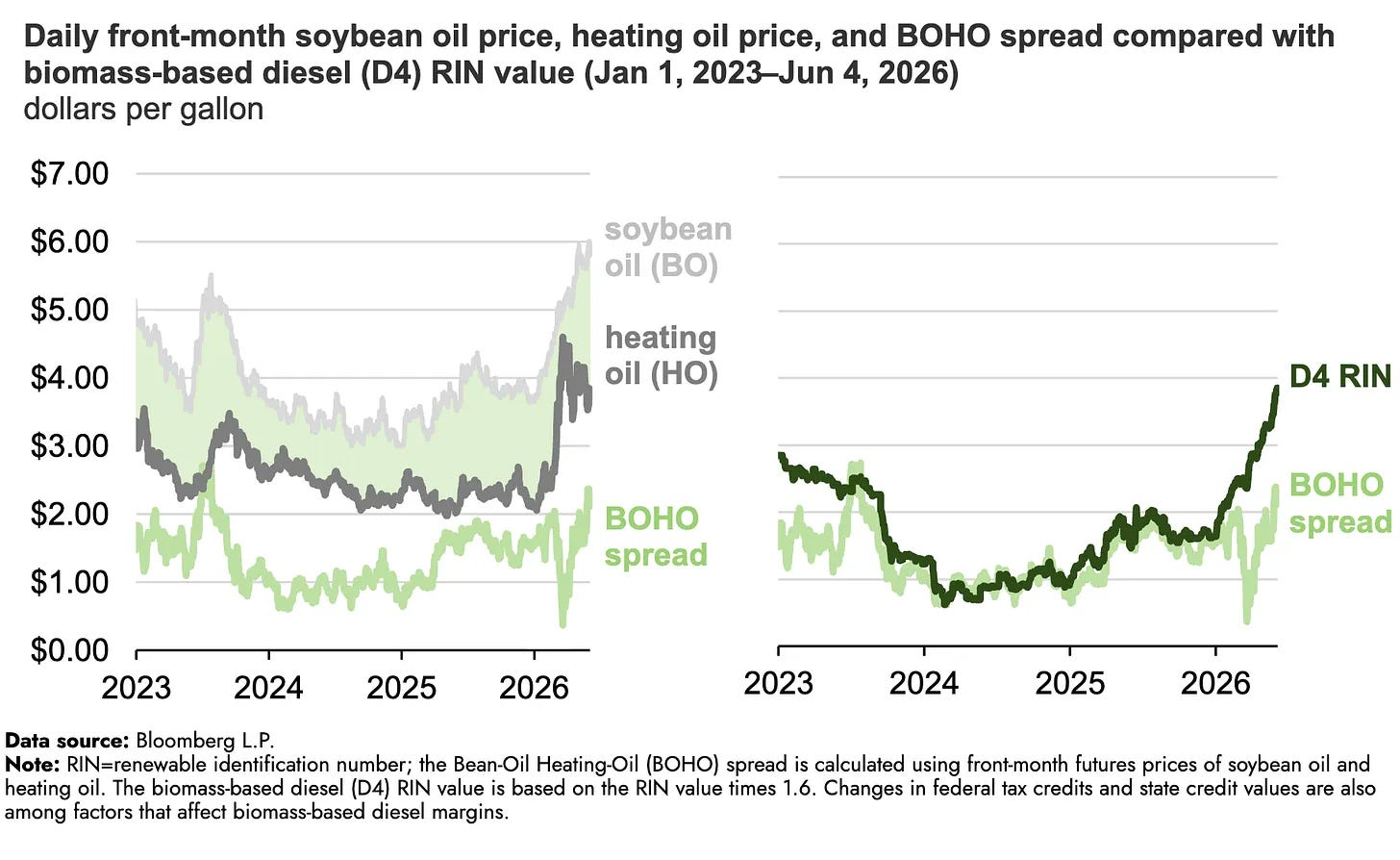
$FF: $195m EV, 30-40m current EBITDA est at RIN prices. 30m in hidden Arkansas land value (1.7k A out of 2.2k not being used) Thesis: Future Fuel's economics are primarily a bet on biodiesel margins. FF owns a relatively high-cost 59-million-gallon-per-year biodiesel plant, so it generally needs stronger industry margins than larger competitors to justify running at high utilization. The reason a high-cost producer like FF can still matter is the Renewable Fuel Standard (RFS): refiners must satisfy EPA-mandated renewable-fuel volumes, either by blending fuel or acquiring RIN credits. When mandated demand approaches or exceeds economical industry supply, the D4 RIN price rises until the marginal/high-cost producers have enough incentive to restart. FF is one of those marginal producers. That is the core thesis today. D4 RINs have risen sharply from roughly $0.50 in the depressed period to around $1.50, reflecting tighter expected supply/demand, while the EPA's much higher 2026–27 requirements should require substantially more biomass-based diesel production. If the industry remains short of required supply and the RIN bank is drawn down, RINs and therefore biodiesel margins should remain high enough to keep FF operating profitably; roughly speaking, every $0.10/gallon of sustainable margin on ~50 million gallons equals ~$5 million of annual operating profit. A return toward $0.30–$0.50/gallon margins could mean ~$15–25 million of biodiesel operating profit, versus very little or losses when margins collapse. The catalysts are higher plant utilization, continued tight D4 RIN supply/2027 RIN-bank depletion, and stronger chemicals earnings; the major risk is the opposite—RIN prices fall because supply increases, EPA policy weakens demand, exemptions expand, or renewable-diesel capacity overwhelms the market. In simple terms: FF is the expensive factory that the market may now need to run, and the RIN price is effectively what determines whether it gets paid enough to do so.

RI(N)sing higher

RIN prices near all-time highs reflect tighter renewable-fuel mandates, a shrinking credit bank, and biodiesel production shortfalls.

Tickers on this page

Companies the stories above are also about, besides FF.