GameStop Is Extreme Deep Value
GameStop's collectibles mix rose to 45% of sales as gross margin reached 44%, supporting a deep-value case built on cash and store economics.
GameStop's collectibles mix rose to 45% of sales as gross margin reached 44%, supporting a deep-value case built on cash and store economics.
Bank7 Corp. $BSVN to Acquire Century Financial Services Corporation and Expand Southwest Franchise into New Mexico https://t.co/EBkIPiIu5X
What’s the bear thesis on $MGM here? All of the $PPLI Barry deal premium has evaporated. Even if his bid was fugazzi, it highlighted a valuation disconnect especially as it related to Asian assets… What am I missing?
Energy Storage / BESS systems are really getting to be a big deal. Mover today on $TURB. https://t.co/eWx8SYvodP
@scottfelsenthal thanks - bought $MRP a few months ago
Look at all the merger arb guys trade $RGR via Jones

CoStar spent more than $1 billion building Homes.com to challenge Zillow, betting seller-agent leads, proprietary listing content and…
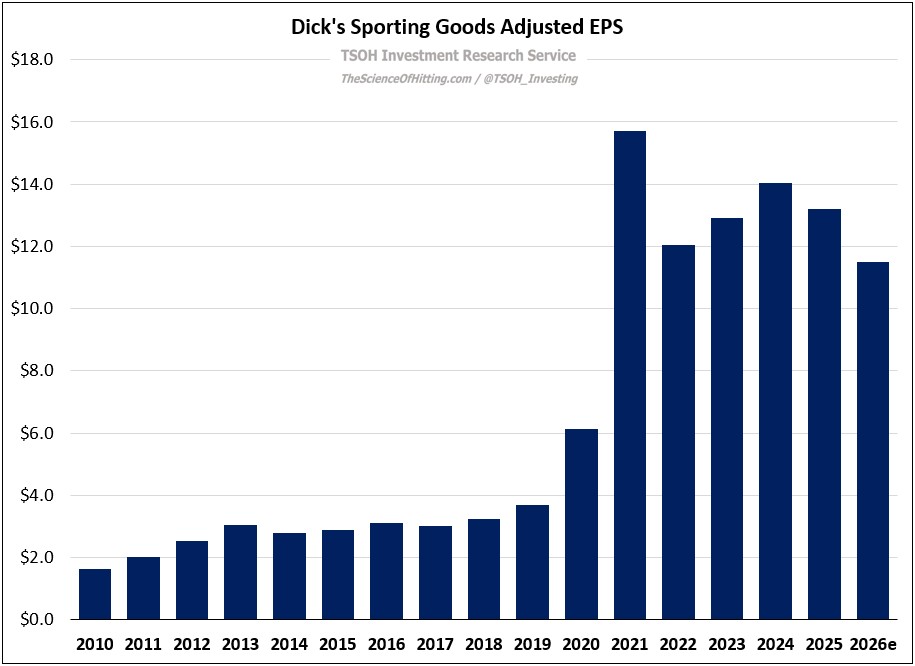
Dick’s Sporting Goods’ $2.4 billion Foot Locker acquisition nearly quadruples its store count and adds international exposure, risking a…
Goldman Sachs posted $20.98 in Q2 EPS on $20.3 billion of revenue and raised its dividend to $5 per share, with M&A and issuance activity…
 Mike Zaccardi, CFA, CMT 2 clicks
Latticework’s weekly briefing spotlights discounted European assets including Barco, Bolloré, Brookfield and D’Ieteren, with catalysts…

Vail Resorts, down 60% since 2022, is pitched for an El Niño-driven ski-season rebound; the portfolio also buys ORR and shorts GEO.

Berkshire Hathaway's Greg Abel has overseen a $10 billion Alphabet investment, $6.8 billion Taylor Morrison deal and resumed buybacks as…
 Bohdan Kucheriavyi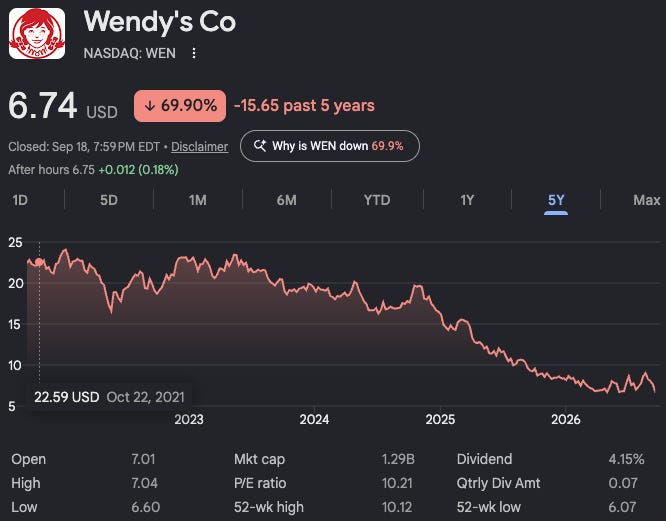
Meritage Hospitality, a 320-unit Wendy’s franchisee, filed Chapter 11 amid $137 million of bank debt, $391 million of leases and a…

Brookfield Corporation, down 20% YTD, manages $1.27 trillion across asset management, insurance and operating businesses as rates, debt and…

Berkshire Hathaway's $324.9 billion T-bill portfolio benefits from higher rates as Greg Abel succeeds Warren Buffett and BHE adds 11,000 MW…
 Steven Fiorillo
Palo Alto Networks posted 34% Q4 revenue growth to $3.41 billion, boosted by CyberArk and Chronosphere, while NGS ARR reached $9.1 billion…
 MSI · long
 Motorola Solutions’ core value proposition remains intact after business changes since 2022, supporting a growth-at-a-reasonable-price…

Southwest Airlines targets more than $2 billion of 2026 EBIT from assigned seating, extra legroom and bag fees despite higher fuel costs…
 Dhierin Bechai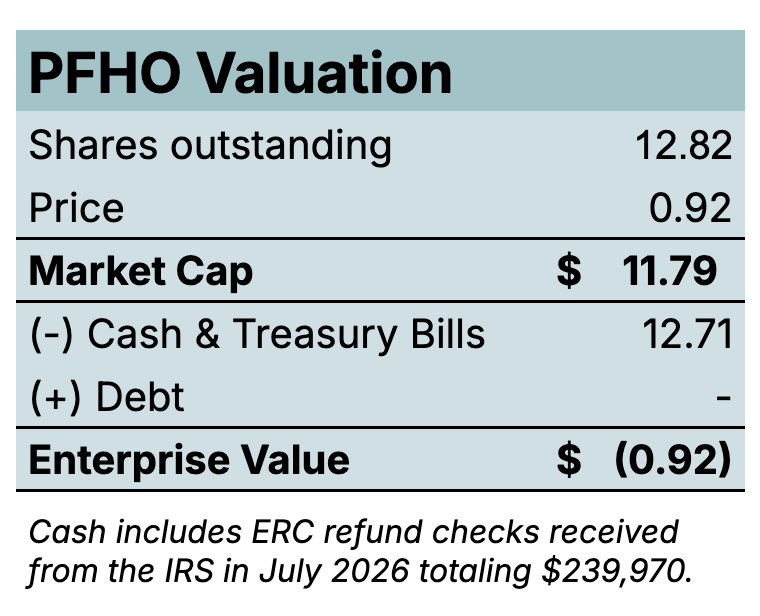
Pacific Health Care trades below its more than $1 per-share net cash despite profitable workers’ compensation claims services, California…
GFL’s take-private process has drawn KKR, Blackstone, Brookfield and IFM, while CEO Patrick Dovigi signals he will accept only the right…
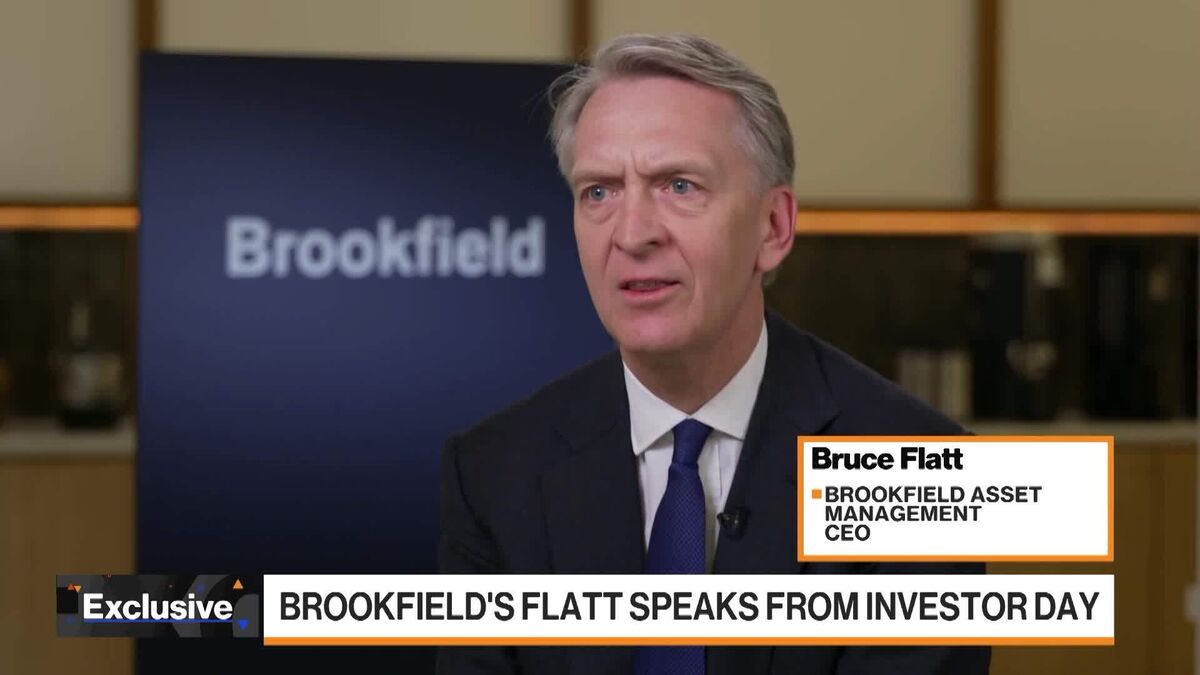
Brookfield is recasting itself from an industrial owner into a $1.3 trillion asset manager and insurer, betting AI infrastructure can…

Karman Holdings (KRMN) is upgraded after a 68% drop, with 24% organic growth, a $1.3 billion backlog and higher 2026 guidance offset by…
Dhierin Bechai 1 click
Steve Eisman argues AI extinction warnings from Dario Amodei and Sam Altman seek regulation that creates pricing moats.

Nintendo's Switch 2 attach rate, flat Switch Online accounts and rising memory costs fuel a bear case, while Spotify and Netflix margins…

DoorDash's grocery push targets a shift from weekly stock-up trips to frequent online fill-in orders, though smaller baskets complicate…

Planet Labs’ $116.1 million second-quarter revenue, 70% defense mix and planned Owl constellation position satellite imagery and AI data as…
 Petri Dish Reports 2 clicks
Every publication on this site, hand-picked.
 Andres Veurink
 Bay Area Ideas
 Capital Connoisseur Dhierin Bechai
 Equity Eagle
 Eudaemon Research
 High Alpha Professor
 Investor Overview
 IWA Research
 Jaden Mealy
 LL Insights
 Marc Gerstein Mike Zaccardi, CFA, CMT
 Miletus Research
 Myriam Alvarez Petri Dish Reports
 Philip Wang
 Prakhar Agarwal, CFA
 PV Research
 Robert J. Lake
 Sam Mancini
 Sharon McArd
 SiliconBytes Insights
 Simple Investment Ideas Steven Fiorillo
 The Bullionaire
 The Curious Analyst
 The Undercovered Dozen
 Value Capital Research
Every account on this site, hand-picked.
 ⚽️📡
⚽️📡 💥PETITION💥
 A Capital
 AltayCap
 Bank Reg Blog
 Barbarian Capital
 BDC
BDC Bill Ackman
 Broken Moats
 BuccoCapital Bloke
 catechwilliams
 Charles Frischer
 Chris Camillo
 Clark Square Capital
 Cluseau Investments
 Colin King
 Connor Haley
 Conor Maguire | Value Situations
 Convequity
 David Orr
 Deep Sail Capital
 Devin LaSarre
 DOMO Capital Management, LLC
 Edwin Dorsey
 Evan Tindell
 Farmer
 Fierce_beast
 Fred Liu
 Gavin Baker
 Ian Bezek
 Idea Brunch
 JabroniCoin.USD
 John_Hempton
 junkbondinvestor
 kab60
kab60 KEDM.com
 Laughing Water Capital
 Lee Roach
 Little Owl Research
 Maius
Maius Maj Soueidan
 marginofdanger
 mavix
mavix Mike
Mike Mikro Kap David
 Multiples Capital
 Myles
Myles Nat Stewart
 Negligible Capital
 Odd Lot Arbitrageur
 PAA Research
 Pernas Research
 Porter Collins
 Prepared Remarks
 Psyop Capital
 Raging Capital Ventures
 Red Dog Capital
 RiverRoadPartners
 Rusholme Capital
 Sahil Khetpal
 SG
SG Tim Eriksen
 Timyan Bank Alert
 Todd Wenning
 ToffCap
 Trevor Scott
 Voss Capital
 Yaron Naymark
Ordered by how often our editor reaches for them.