GameStop Is Extreme Deep Value
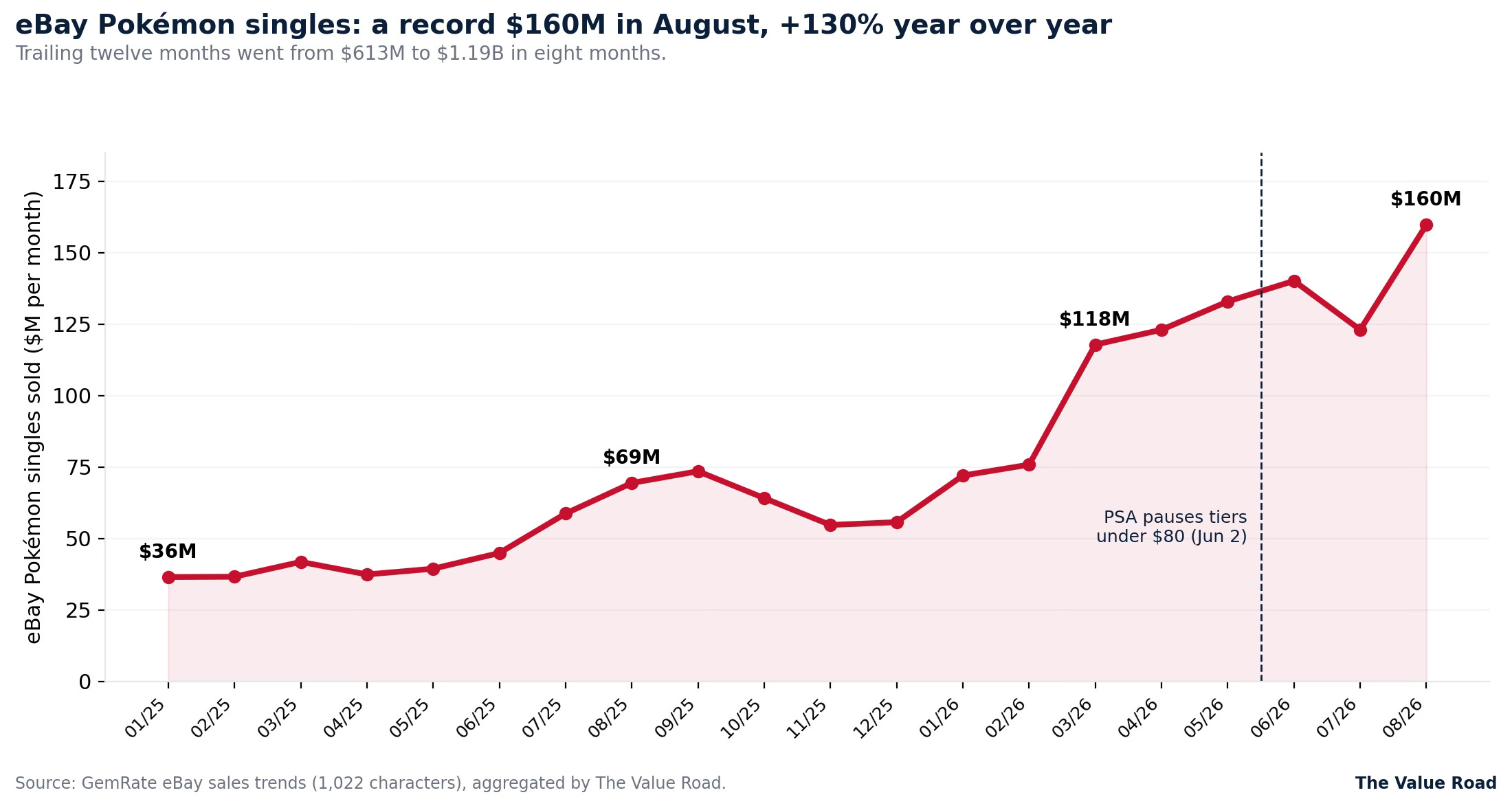
GameStop's collectibles mix rose to 45% of sales as gross margin reached 44%, supporting a deep-value case built on cash and store economics.
GameStop's collectibles mix rose to 45% of sales as gross margin reached 44%, supporting a deep-value case built on cash and store economics.
OpenAI’s CFO Sarah Friar also on a media tour spreading the good cheer… bullish $ORCL https://t.co/oymK8c7nVc
Sam Altman sounded a lot more at ease about his revenue ramp and was even bullish about his compute commitments (even saying they may have been too conservative) in this podcast. Given that he has been relatively quiet on the podcast circuit over the past year, I view this as a positive tell on OpenAI/$ORCL. https://t.co/yezInyb9XB
Majority of EPS growth is in tech. Rest of the market EPS growth is tepid. $QQQ imploding, $RSP ripped. Sustainable?
Well would you look at that. $COLO $EWY https://t.co/fIuPhTl9TI
Oil up 7.5% and $EXPE continues its squeeze because it's simply the opposite end of the ai trade? How long can these on/off trades define every stock in the market? Crazy
Friendly reminder that $MRK is well positioned and well incentivized to purchase $LQDA. Yutrepia fits very well with Merck's respiratory portfolio. https://t.co/JAdLguTw7D

CoStar spent more than $1 billion building Homes.com to challenge Zillow, betting seller-agent leads, proprietary listing content and…
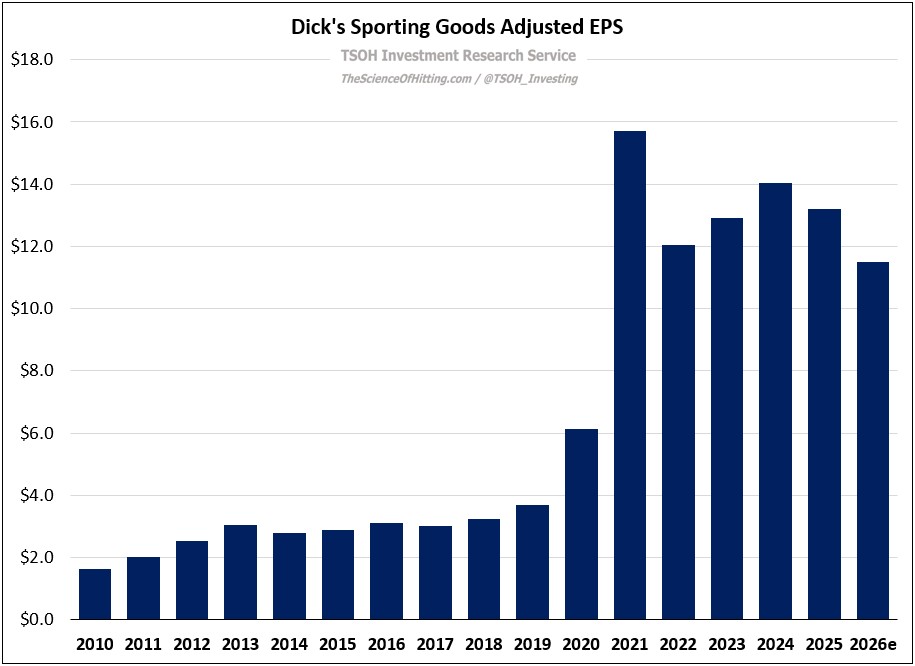
Dick’s Sporting Goods’ $2.4 billion Foot Locker acquisition nearly quadruples its store count and adds international exposure, risking a…

Goldman Sachs posted $20.98 in Q2 EPS on $20.3 billion of revenue and raised its dividend to $5 per share, with M&A and issuance activity…
 Mike Zaccardi, CFA, CMT 2 clicks
Latticework’s weekly briefing spotlights discounted European assets including Barco, Bolloré, Brookfield and D’Ieteren, with catalysts…

Genuine Parts targets NAPA network improvements, Motion’s industrial recovery and a 2027 Automotive-Industrial separation to lift sales,…
 Value Capital Research 2 clicks
Brookfield Corporation, down 20% YTD, manages $1.27 trillion across asset management, insurance and operating businesses as rates, debt and…

Southwest Airlines targets more than $2 billion of 2026 EBIT from assigned seating, extra legroom and bag fees despite higher fuel costs…
 Dhierin Bechai 2 clicks
Palo Alto Networks posted 34% Q4 revenue growth to $3.41 billion, boosted by CyberArk and Chronosphere, while NGS ARR reached $9.1 billion…

GFL’s take-private process has drawn KKR, Blackstone, Brookfield and IFM, while CEO Patrick Dovigi signals he will accept only the right…
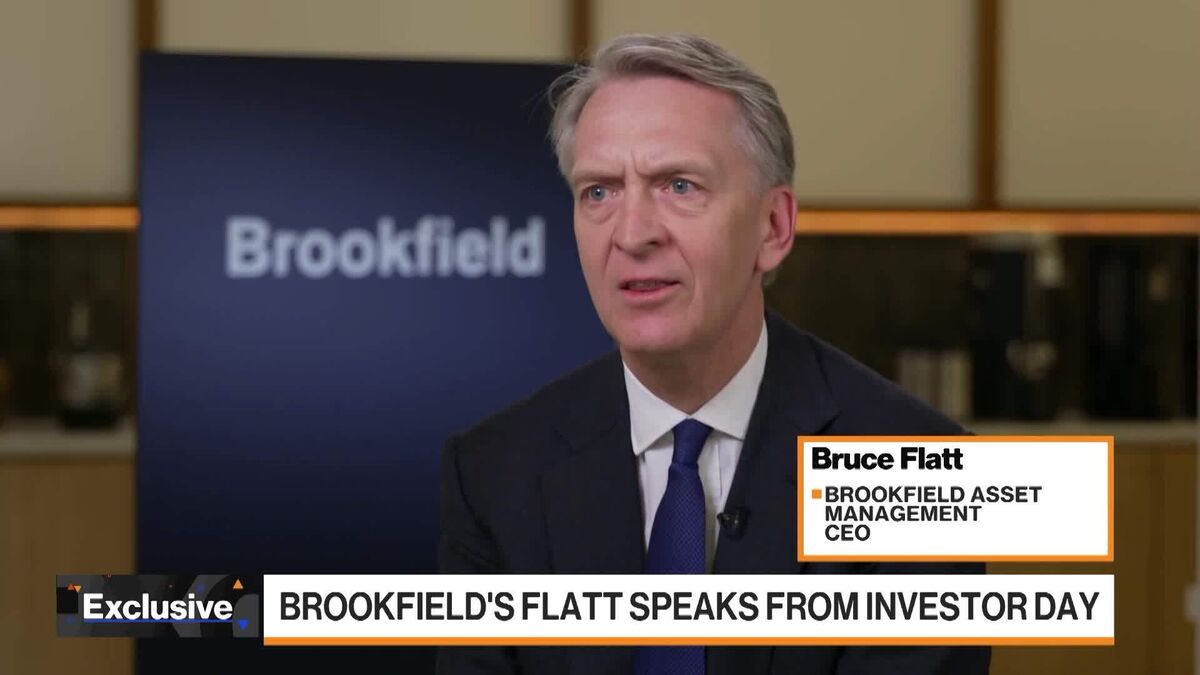
Brookfield is recasting itself from an industrial owner into a $1.3 trillion asset manager and insurer, betting AI infrastructure can…
 MSI · long
 Motorola Solutions’ core value proposition remains intact after business changes since 2022, supporting a growth-at-a-reasonable-price…

Steve Eisman argues AI extinction warnings from Dario Amodei and Sam Altman seek regulation that creates pricing moats.

Nintendo's Switch 2 attach rate, flat Switch Online accounts and rising memory costs fuel a bear case, while Spotify and Netflix margins…

DoorDash's grocery push targets a shift from weekly stock-up trips to frequent online fill-in orders, though smaller baskets complicate…
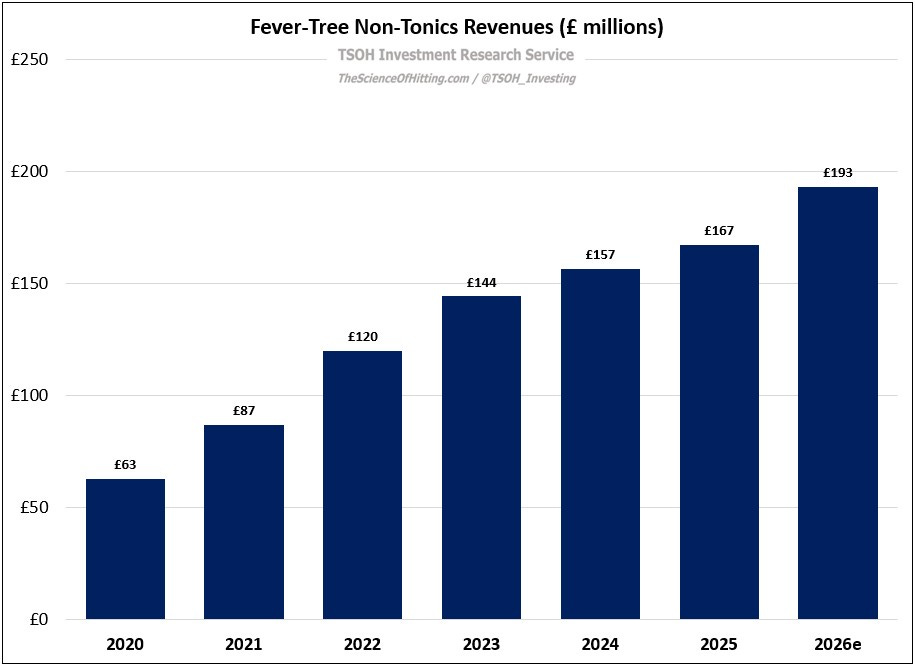
TSOH Weekly Roundup covers organized retail crime, Home Depot’s centralized operating missteps under Bob Nardelli, and research updates on…

Generac’s $2.4 billion Amazon generator agreement for 2027-28 anchors its data-center growth thesis, with 30% projected revenue growth in…
 Fernanda Galvez Jalil
Grab generates 53% of revenue from delivery, 36% from mobility and 10% from financial services, using its Southeast Asian marketplace to…

Wheaton Precious Metals trades near $150, above its $99–$139 DCF range, despite 61% net margins and 88% year-over-year revenue growth from…
 Alexander Grover
Special-situations survey flags Cooper’s $3 billion buyback, Grab’s $900 million repurchase, and Beretta’s $44.80 partial tender for Sturm…

STMicroelectronics, Navitas and Wolfspeed offer contrasting power-semiconductor cases tied to NVIDIA’s 800V AI data-center architecture,…
Every publication on this site, hand-picked.
 Andres Veurink
 Bay Area Ideas
 Capital Connoisseur Dhierin Bechai
 Equity Eagle
 Eudaemon Research
 Henrik Alex
 High Alpha Professor
 Investor Overview
 IWA Research
 Jaden Mealy
 LL Insights
 Marc Gerstein Mike Zaccardi, CFA, CMT
 Miletus Research
 Myriam Alvarez
 Petri Dish Reports
 Philip Wang
 Prakhar Agarwal, CFA
 PV Research
 Robert J. Lake
 Sam Mancini
 Sharon McArd
 SiliconBytes Insights
 Simple Investment Ideas
 Steven Fiorillo
 The Bullionaire
 The Curious Analyst
 The Undercovered Dozen Value Capital Research
Every account on this site, hand-picked.
 ⚽️📡
⚽️📡 💥PETITION💥
 A Capital
 AltayCap
 Bank Reg Blog
 Barbarian Capital
 BDC
BDC Bill Ackman
 Broken Moats
 BuccoCapital Bloke
 catechwilliams
 Charles Frischer
 Chris Camillo
 Clark Square Capital
 Cluseau Investments
 Colin King
 Connor Haley
 Conor Maguire | Value Situations
 Convequity
 David Orr
 Deep Sail Capital
 Devin LaSarre
 DOMO Capital Management, LLC
 Edwin Dorsey
 Evan Tindell
 Farmer
 Fierce_beast
 Fred Liu
 Gavin Baker
 Ian Bezek
 Idea Brunch
 JabroniCoin.USD
 John_Hempton
 junkbondinvestor
 kab60
kab60 KEDM.com
 Laughing Water Capital
 Lee Roach
 Little Owl Research
 Maius
Maius Maj Soueidan
 marginofdanger
 mavix
mavix Mike
Mike Mikro Kap David
 Multiples Capital
 Myles
Myles Nat Stewart
 Negligible Capital
 Odd Diligence
 Odd Lot Arbitrageur
 PAA Research
 Pernas Research
 Porter Collins
 Prepared Remarks
 Psyop Capital
 Raging Capital Ventures
 Red Dog Capital
 RiverRoadPartners
 Rusholme Capital
 Sahil Khetpal
 SG
SG Tim Eriksen
 Timyan Bank Alert
 Todd Wenning
 ToffCap
 Trevor Scott
 Voss Capital
 Yaron Naymark
Ordered by how often our editor reaches for them.