

How to Use Peter Lynch's PEG: Interparfums and United Therapeutics
Interparfums trades at a 3.13 PEG using 8% growth, while a 17.5% growth assumption lowers its PEG to 1.43.
Interparfums trades at a 3.13 PEG using 8% growth, while a 17.5% growth assumption lowers its PEG to 1.43.

GameStop $GME is doing the classic “pitch a tent” chart

CrowdStrike posted 28.3% revenue growth and record $419 million net new ARR, then agreed to acquire Zscaler in a $43.9 billion all-stock…

Credo Technology targets more than 85% fiscal 2027 revenue growth, with optical revenue above $600 million as customer concentration…
 Oakoff Investments
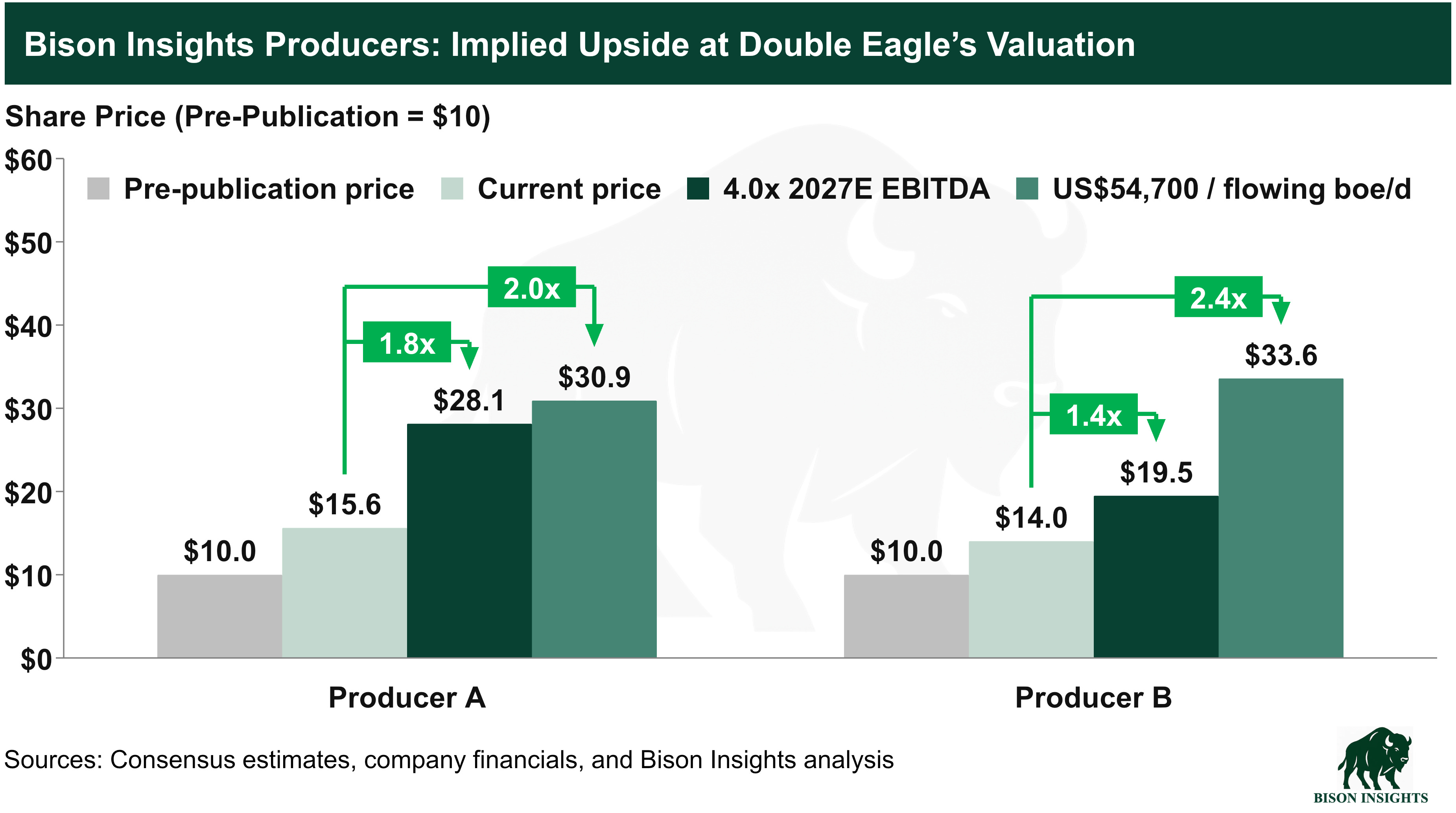
Diamondback’s $5 billion Double Eagle acquisition values Midland Basin assets at 4x projected 2027 EBITDA, raising questions about decline…

Comcast plans to spin off NBCUniversal and Sky by mid-2027 as Peacock profitability offsets broadband losses, aiming to reduce its…
 IWA Research

Cerrado Gold targets a late-2027 Manantial Espejo restart and Lagoa Salgada construction, while Minera Don Nicolás tracks toward the upper…
CrowdStrike agreed to acquire Zscaler for about $260.41 per share after Zscaler reported $949.3 million in quarterly revenue, up 20%, and…

Cerebras CEO Andrew Feldman discusses wafer-scale AI chips, 3D DRAM, token economics, orbital compute and the company’s planned 700 MW…
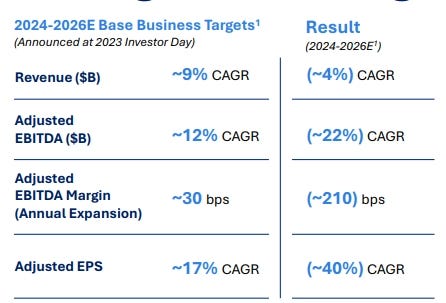
Builders FirstSource targets $350 million in annual sales growth above the market by winning more products per home and deepening local…
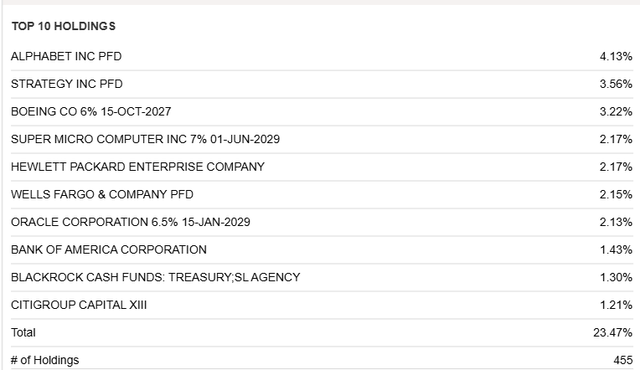
Latin American banks INTR, NU and AVAL reported solid quarters, while preferred-stock ETF distortions create opportunities in individual…
Zscaler shares surged after agreeing to acquire CrowdStrike in an all-stock deal, as CEO Jay Chaudhry outlined the transaction’s logic.

ServiceNow's 2025 free cash flow falls 43% to $2.62 billion after stock-based compensation, while rising share count persists despite $2.61…

Snap-on’s $19.15 normal EPS, 5% assumed growth rate and long dividend record make it a test case for Benjamin Graham’s defensive-investor…

AutoZone’s $8.6 billion in supplier payables finances more than its inventory, leaving negative equity but $6.6 billion in net operating…
 ATI · long
ATI produces specialty titanium and nickel alloys for aircraft, medical instruments, naval propulsion, nuclear reactors and industrial…

Rocket Lab's $90 fair value rests on Neutron validation and an Iridium deal expected to turn cash flow positive by mid-2027.
 Melissa Tucker

Carson Block’s Nvidia short thesis links former Nvidia and Super Micro executives to alleged chip smuggling, arguing China export-control…

Nebius shares have fallen 73% from their peak as delayed Microsoft capacity and $67-72 billion of planned 2026-27 capex raise financing and…
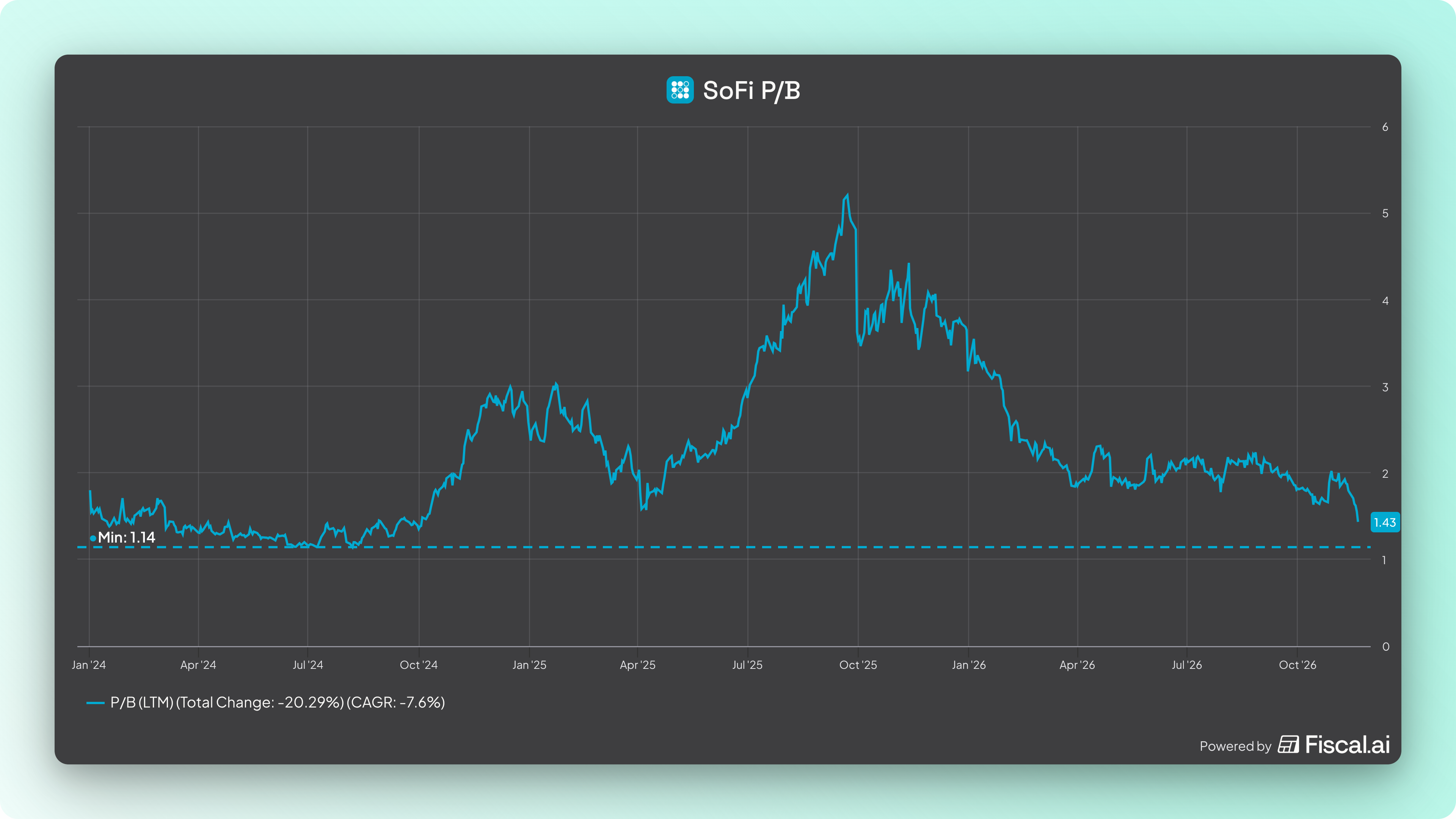
TPG’s $63.25-a-share takeout of Bill Holdings shifts coverage to SoFi, whose drawdown follows strong customer and deposit growth and recent…
Sage’s FY26 results and FY27 guidance maintain roughly 10% revenue growth and margin expansion, with shares at 1,123.1p and valued near 23…

Zimmer Biomet trades at 9.66x forward EV/EBITDA as its sales-force overhaul nears completion, with China easing, ROSA Shoulder and Monogram…
 Equity Eagle
Every publication on this site, hand-picked.
 Adam Schadt
 Albert Anthony
 Alexander Grover
 Andres Veurink
 APAC Research
 Arizona Equity Research
 Atlas Diary
 Bay Area Ideas
 Benjamin C. Barry
 Bernard Zambonin
 Blake Winiecki
 Capital Connoisseur
 Chetan Woodun
 Crimson And Gold Research
 Cypriot Invests
 Dane Bowler
 Daniel Bell
 Daniel Jones
 Daniel Schönberger
 Danil Sereda
 David Zanoni
 Deep Value Investing
 Dhierin Bechai
 Dilantha De Silva
 Dustin Quasney
 Edmund Ingham
 Elliott Gue Equity Eagle
 Eudaemon Research
 Fernanda Galvez Jalil
 Fountainhead
 Gary Gambino
 Geneva Investor
 Gil Rotstein
 Given Mahlangu
 Gytis Zizys
 Henrik Alex
 High Alpha Professor
 Ignacio Planas Gonzalez
 Infinity Curve
 Investor Overview IWA Research
 Jaden Mealy
 JR Research
 Julia Ostian
 Juxtaposed Ideas
 Kevin Avroutskii
 Khaveen Investments
 Kurt Christensen
 Lee Bailey
 LL Insights
 Long Player
 Louis Gerard
 M&M Capital
 Marc Gerstein Melissa Tucker
 Mike Arnold
 Mike Zaccardi, CFA, CMT
 Miletus Research
 Motti Sapir
 Multiplo Invest
 Myriam Alvarez
 Narek Hovhannisyan
 Nicholas Thomas Lowry
 Nicolas Bolsinger
 Number Cruncher Oakoff Investments
 Petri Dish Reports
 Philip Wang
 Prakhar Agarwal, CFA
 PropNotes
 PV Research
 Pythia Research
 Quantryon Capital
 Robert J. Lake
 Ron Ferrie
 Rubicon Associates
 Ryan Canady
 Sam Mancini
 Sanjay Swamy
 Seeking Profits
 Sharon McArd
 SiliconBytes Insights
 Simple Investment Ideas
 Sorrento Research
 Stephen Ayers
 Steven Fiorillo
 Tech and Growth
 Terry Chrisomalis
 The Alpha Analyst
 The Asian Investor
 The Bullionaire
 The Curious Analyst
 The J Thesis
 The Market Auditor
 The Supercycle Investor
 The Undercovered Dozen
 Tim Travis
 Uttam Dey
 Value Capital Research
 Vishal Jadaun
 Yiannis Zourmpanos
 Zoltan Ban
Every account on this site, hand-picked.
 ⚽️📡
 💥PETITION💥
 A Capital
 absreturnchaser
 Adam D. Wyden
 Alpha Vulture
 AltayCap
 Asif Suria
 Bank Reg Blog
 Barbarian Capital
 BDC
 Bill Ackman
 Brian McGough
 Broken Moats
 BuccoCapital Bloke
 Calvin Blissett
 catechwilliams
 Charles Frischer
 Chris Camillo
 Clark Square Capital
 Cluseau Investments
 Colin King
 Connor Haley
 Conor Maguire | Value Situations
 Convequity
 Dalius - Special Sits
 David Orr
 Deep Sail Capital
 Derek Pilecki
 Devin LaSarre
 DOMO Capital Management, LLC
 Edwin Dorsey
 Evan Tindell
 Fajasy
 Farmer
 Fierce_beast
 Fred Liu
 Garrett Arms
 Gavin Baker
 George Noble
 Hunterbrook
 Ian Bezek
 Idea Brunch
 JabroniCoin.USD
 Japan Deep Value
 John_Hempton
 junkbondinvestor
 kab60
 KEDM.com
 Kevin Mak
 Kingdom Capital
 Kuppy
 Laughing Water Capital Lee Roach
 Little Owl Research
 Maius
 Maj Soueidan
 marginofdanger
 mavix
 Mike
 Mikro Kap David
 Mr Neutral Man aka "Howard Marks of REITs”
 Multiples Capital
 Myles
 Nat Stewart
 Negligible Capital
 Odd Diligence
 Odd Lot Arbitrageur
 PAA Research
 Paradis
 Pernas Research
 Porter Collins
 Prepared Remarks
 Psyop Capital
 Raging Capital Ventures
 Red Dog Capital RiverRoadPartners
 Rohan Pavuluri
 Rusholme Capital
 Sahil Khetpal
 Serenity
 SG
 Sheel Mohnot
 SouthernValue
 Steve Eisman
 The Friendly Bear
 Tim Eriksen
 Timyan Bank Alert
 Todd Wenning
 ToffCap
 Trevor Scott
 Undiscovered Compounders
 Voss Capital
 Yaron Naymark
Ordered by how often our editor reaches for them.