
Deep Dive: Deckers Outdoor Corp ($DECK)
Deckers trades at about 11x earnings as investors question whether UGG and HOKA can sustain growth after generating 97% of FY26 revenue.
Deckers trades at about 11x earnings as investors question whether UGG and HOKA can sustain growth after generating 97% of FY26 revenue.

Spoke with an expert about $LEN the other day He told me that Lennar focuses so much on entry level homes that it's got a "here goes the neighborhood" effect Other builders won't build in the same MPC/area This could potentially cut them off from sites in the future

Berkshire now has a $1.3B position in Bending Spoons. Stock is up 38% (to $52) on news that Berkshire bought $330M via private placement at $33/share $BSP

D.A. Davidson analyst Gil Luria (has a $100 price target and a neutral rating on $CRWV ) says “the equity value is going to be zero” on a podcast released today A bit conflicting there Gil
D.A. Davidson analyst Gil Luria (has a $100 price target and a neutral rating on $CRWV ) says “the equity value is going to be zero” on a podcast released today A bit conflicting there Gil
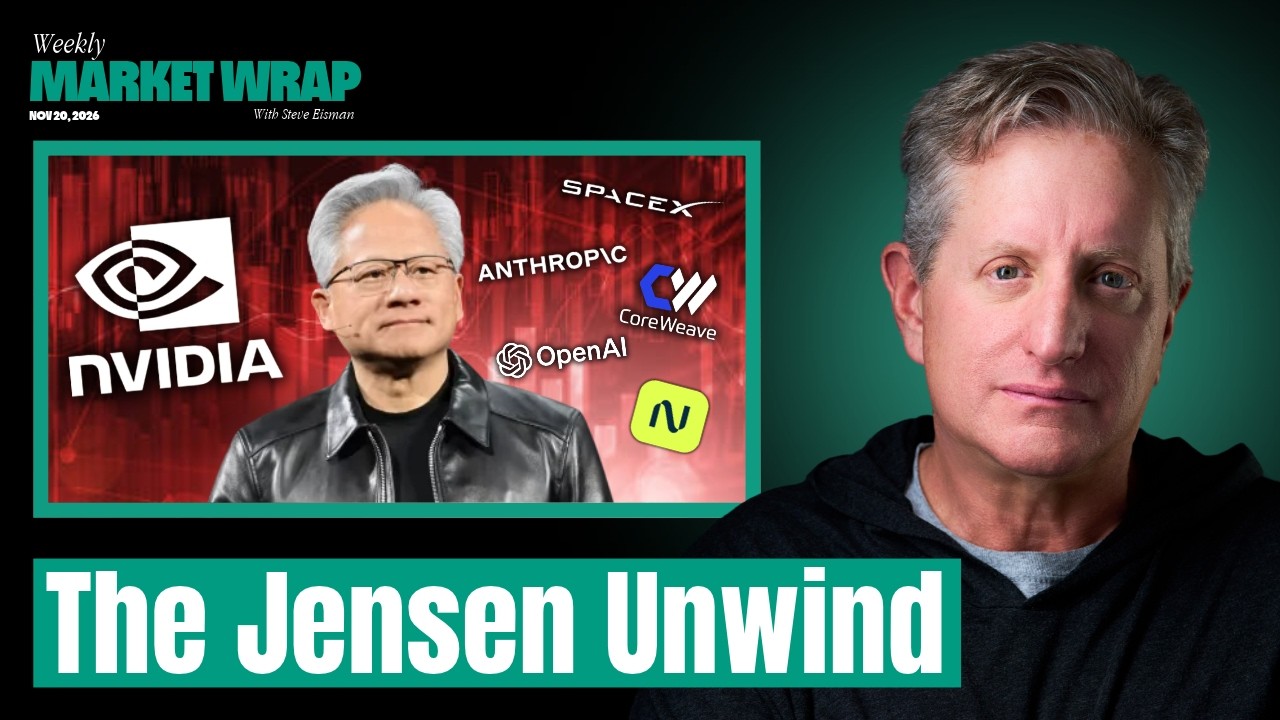
Steve Eisman argues Jensen Huang’s resignation unwinds Nvidia’s circular-financing AI stack, ending the one-trade AI market; he also…

Nvidia's earnings and uncertainty over post-Jensen AI investment are reverberating across markets as the stock comes under pressure.
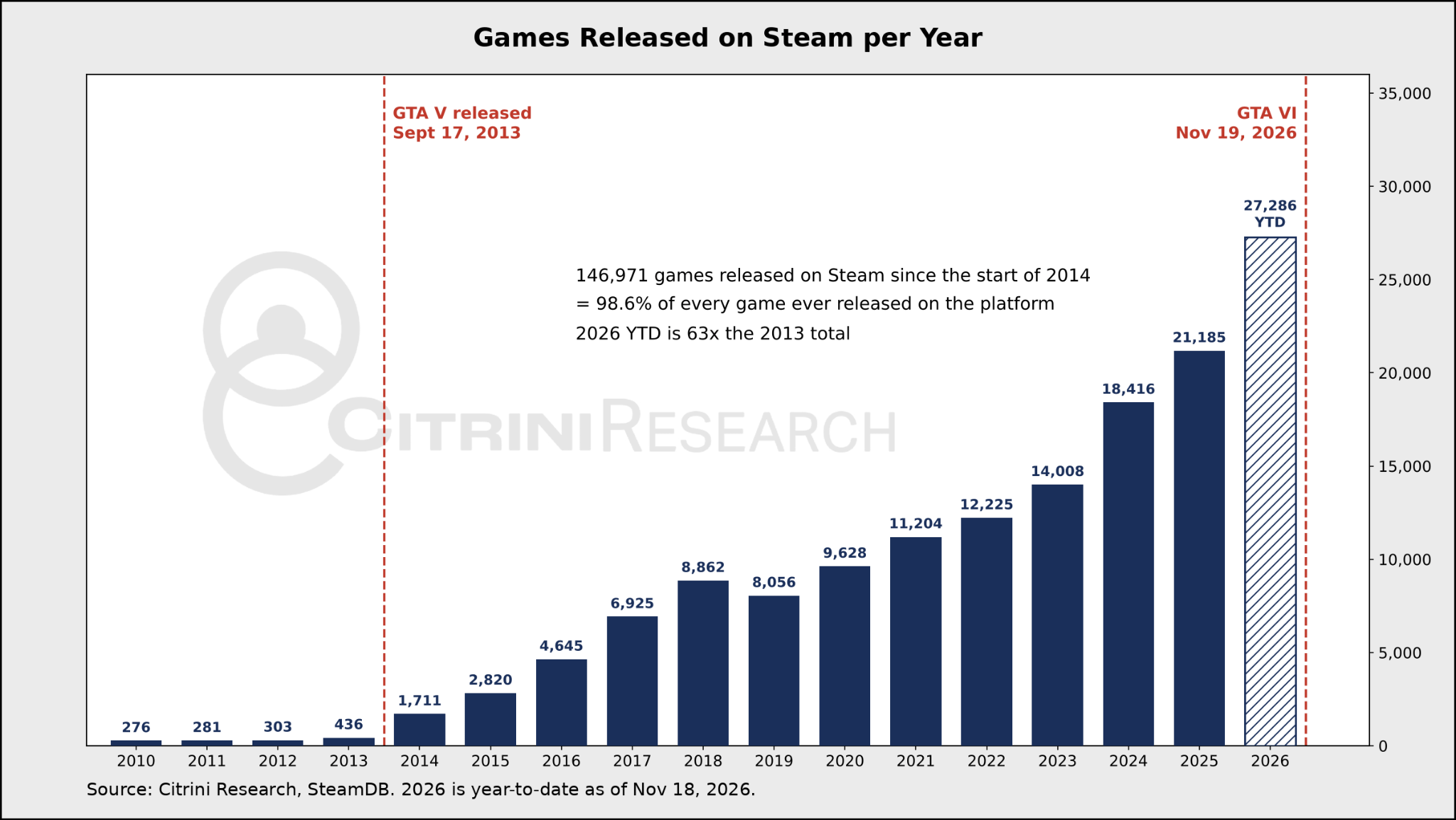
Grand Theft Auto VI launched to a 99 Metacritic score after estimated $1.5 billion to $2 billion development and marketing spending,…
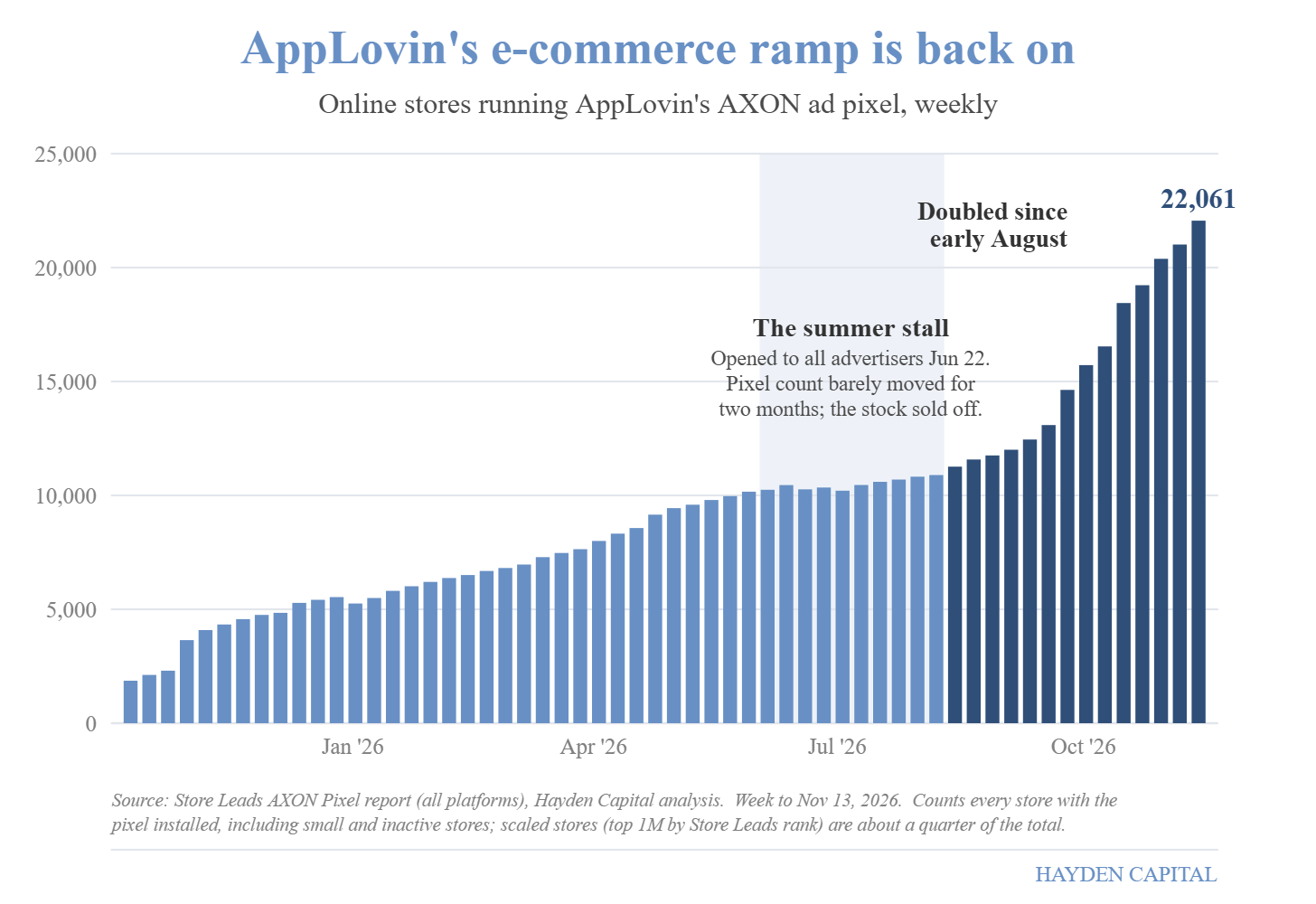
AppLovin’s e-commerce advertiser base doubled to 22,061 stores since August, lifting CPMs roughly 46% as more products monetize previously…

Natera grew Q3 revenue 34% to $794 million, raised 2026 guidance to $3.005 billion to $3.035 billion, and named oncology head Solomon…

NatWest trades below 8x 2026 consensus EPS after weaker net interest margin guidance, despite multi-year-high profitability, solid credit…
 Mark Dockray 5 clicks

Intuit’s $3.68 billion Mailchimp sale removes a noncore unit as TurboTax shifts to assisted filing and Credit Karma faces volume pressure.

Manchester United, MANU, trades at 15.17x forward EV/EBITDA despite flat fiscal 2027 EBITDA guidance, £729 million of net debt and rising…
 Grassroots Trading 4 clicks

Google has narrowed OpenAI’s chatbot lead through Gemini distribution across Search, Android and Chrome, backing its AI stack with custom…

Meta and Nvidia show how founder-led strategy makes key-man risk central to long-term AI and Reality Labs spending.
Netflix’s WWE deal pairs 52 weeks of programming with its ad-supported tier, while Peter Rice takes over content amid layoffs and Bela…

Sabre’s $4.6 billion debt load and 2029-30 maturities frame Constellation Software’s 12.7% PEMS stake, despite management’s 9% annual…

Qualcomm’s Q4 FY2026 review assesses its semiconductor business, moat, financials and valuation amid a chip-sector rebound.

Marvell's Lumentum deal secures laser supply for AI networking and supports its $20 billion fiscal 2028 revenue target.
 Nicholas Thomas Lowry 4 clicks

Intuit shares fell 9.8% after chatbots slowed Credit Karma, while QuickBooks grew mid-teens and FY27 guidance stayed unchanged.

Bloom Energy's revenue rose 138% year over year as data center moratoriums pressured its shares.

Ford trades 35% below its May 2026 high as investors treat Model e's roughly $4 billion annual loss as permanent despite higher EBIT…
 Jared Tan 4 clicks
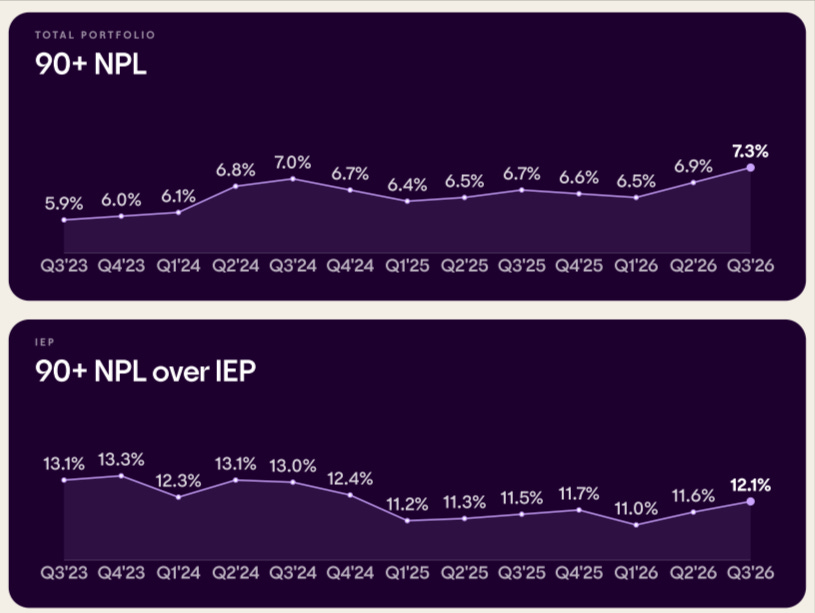
Nu Holdings is expanding banking in Brazil, Mexico, Colombia and the US while investors scrutinize Brazilian credit quality and lending…


AMD and Nvidia sought licenses to export advanced AI chips to China; Commerce approved 300,000 of AMD’s 600,000 requested chips by May 11…
Every publication on this site, hand-picked.
 Adam Schadt
 Albert Anthony
 Alexander Grover
 Andres Veurink
 APAC Research
 Arizona Equity Research
 Atlas Diary
 Bay Area Ideas
 Benjamin C. Barry
 Bernard Zambonin
 Blake Winiecki
 Capital Connoisseur
 Chetan Woodun
 Crimson And Gold Research
 Cypriot Invests
 Dane Bowler
 Daniel Bell
 Daniel Jones
 Daniel Schönberger
 Danil Sereda
 David Zanoni
 Deep Value Investing
 Dhierin Bechai
 Dilantha De Silva
 Dustin Quasney
 Edmund Ingham
 Elliott Gue
 Equity Eagle
 Eudaemon Research
 Fernanda Galvez Jalil
 Fountainhead
 Gary Gambino
 Geneva Investor
 Gil Rotstein
 Given Mahlangu
 Gytis Zizys
 Henrik Alex
 High Alpha Professor
 Ignacio Planas Gonzalez
 Infinity Curve
 Investor Overview
 IWA Research
 Jaden Mealy
 JR Research
 Julia Ostian
 Kevin Avroutskii
 Khaveen Investments
 Kurt Christensen
 Lee Bailey
 LL Insights
 Long Player
 Louis Gerard
 M&M Capital
 Marc Gerstein
 Melissa Tucker
 Mike Arnold
 Mike Zaccardi, CFA, CMT
 Miletus Research
 Motti Sapir
 Multiplo Invest
 Myriam Alvarez
 Narek Hovhannisyan Nicholas Thomas Lowry
 Nicolas Bolsinger
 Number Cruncher
 Oakoff Investments
 Petri Dish Reports
 Philip Wang
 Prakhar Agarwal, CFA
 PropNotes
 PV Research
 Pythia Research
 Quantryon Capital
 Robert J. Lake
 Ron Ferrie
 Rubicon Associates
 Ryan Canady
 Sam Mancini
 Sanjay Swamy
 Seeking Profits
 Sharon McArd
 SiliconBytes Insights
 Simple Investment Ideas
 Sorrento Research
 Stephen Ayers
 Steven Fiorillo
 Tech and Growth
 Terry Chrisomalis
 The Alpha Analyst
 The Asian Investor
 The Bullionaire
 The Curious Analyst
 The J Thesis
 The Market Auditor
 The Supercycle Investor
 The Undercovered Dozen
 Tim Travis
 Uttam Dey
 Value Capital Research
 Vishal Jadaun
 Yiannis Zourmpanos
 Zoltan Ban
Every account on this site, hand-picked.
 ⚽️📡
 💥PETITION💥
 A Capital
 absreturnchaser
 Adam D. Wyden
 Alpha Vulture
 AltayCap
 Asif Suria
 Bank Reg Blog
 Barbarian Capital
 BDC
 Bill Ackman
 Brian McGough
 Broken Moats
 BuccoCapital Bloke
 Calvin Blissett
 catechwilliams
 Charles Frischer
 Chris Camillo
 Clark Square Capital
 Cluseau Investments
 Colin King
 Connor Haley
 Conor Maguire | Value Situations
 Convequity
 Dalius - Special Sits
 David Orr
 Deep Sail Capital
 Derek Pilecki
 Devin LaSarre
 DOMO Capital Management, LLC
 Edwin Dorsey
 Evan Tindell
 Fajasy
 Farmer
 Fierce_beast
 Fred Liu
 Garrett Arms
 Gavin Baker
 George Noble
 Hunterbrook
 Ian Bezek
 Idea Brunch
 JabroniCoin.USD
 Japan Deep Value
 John_Hempton
 junkbondinvestor
 kab60
 KEDM.com
 Kevin Mak
 Kingdom Capital
 Kuppy
 Laughing Water Capital
 Lee Roach
 Little Owl Research
 Maius
 Maj Soueidan
 marginofdanger
 mavix
 Mike
 Mikro Kap David Mr Neutral Man aka "Howard Marks of REITs”
 Multiples Capital
 Myles
 Nat Stewart Negligible Capital
 Odd Diligence
 Odd Lot Arbitrageur
 PAA Research
 Paradis
 Pernas Research
 Porter Collins
 Prepared Remarks
 Psyop Capital
 Raging Capital Ventures
 Red Dog Capital RiverRoadPartners
 Rohan Pavuluri
 Rusholme Capital
 Sahil Khetpal
 Serenity
 SG Sheel Mohnot
 SouthernValue
 Steve Eisman
 The Friendly Bear
 Tim Eriksen
 Timyan Bank Alert
 Todd Wenning
 ToffCap
 Trevor Scott
 Undiscovered Compounders
 Voss Capital
 Yaron Naymark
Ordered by how often our editor reaches for them.