
Monte Investments Market Brief Vol. CXXXVI
Monte Investments rotated Nvidia into Alphabet before earnings and reviews Knife River’s margin squeeze, AMD’s World Labs acquisition, and Diamondback’s $5 billion Permian deal.
Monte Investments rotated Nvidia into Alphabet before earnings and reviews Knife River’s margin squeeze, AMD’s World Labs acquisition, and Diamondback’s $5 billion Permian deal.

For Passive Income folks I think the $PSA Prefs yielding 7.3% is the best risk reward and have a 11% price appreciation upsde. I went back and looked at spreads/coverage ratios going back to early 2000s Not everyone's cup of tea, but great for passive income Seriously thinking about putting 30% to 100% of my MIL/FIL IRA in these

$NUAI - Trade the Pop, Then Short the Raise They just posted an S-3 resale last night suggesting insiders are poised to sell shares if there is a pop in the stock.

@HardAlphaX @realroseceline Yes, the track record is well a whiff but I do, I think Turkey works given patience and time $KSPI

Forestar trades near $22 versus $37.56 in tangible book value, with $657 million of cash and a potential D.R.
 Paul Franke

Entravision’s AdTech revenue rose 133% and EBIT 261% in Q3 as management weighs TV-station sales before its TelevisaUnivision agreement…

LyondellBasell’s target falls to $75 from $80 as lower 2028 earnings, higher ethane costs and Chinese overcapacity outweigh its stronger…
 Investor Overview 1 click

Steve Eisman, Dan Ives and Gil Luria assess how the midterms could reshape AI data-center spending, Google search growth, and competition…

Reddit's search-traffic selloff overlooks that logged-in app users generate more than 80% of monetization, supporting a $130 one-year…
 M&M Capital 3 clicks
AMD says billions of AI agents will expand CPU demand, lifting its 2030 data-center CPU TAM estimate to $220 billion as Zen 6 Venice ramps.

FactSet CEO Sanoke Viswanathan discusses using the firm’s client relationships and data platform to deploy AI across finance.

Apple’s permissions update leaves the Mac’s agent problem unresolved, alongside a review of the iPhone Duo.

Accenture reported 6.5% FY26 revenue growth and $11.6 billion in free cash flow, while fixed-price contracts above 65% of bookings retain…
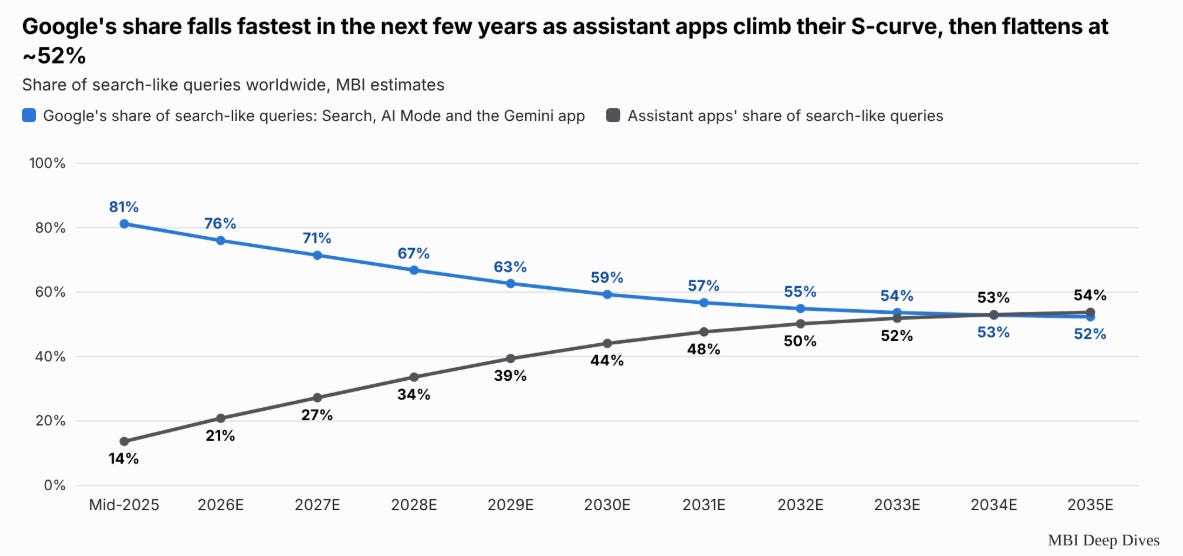
Alphabet models Google Search query share falling from 76% to 52% by 2035 while annual Search revenue still rises about $32 billion, driven…
 FINV · long
FinVolution, a China and ASEAN unsecured consumer lender, trades at 4x earnings and 0.5x book value.

Steve Eisman examines AI data-center debt, CoreWeave's tech correction and agentic AI's effect on banks as earnings season begins.

RELX’s 13-petabyte fraud and identity data moat supports its high-margin Risk segment as its valuation falls to roughly half its peak P/E.
 LA Capital 10 clicks

OpenAI and Meta push AI agents forward as reward hacking remains a core challenge for model training.

Meta ties AI agents and Meta Connect to its enterprise-platform opportunity.

Stratechery’s weekly bundle covers Apple HomeView and SpaceX’s cellular ambitions.
Bumble agreed to a $1.3 billion take-private deal, while Netflix cut about 1,000 jobs and Meta discussed its Muse superintelligence models.

Dorchester Minerals' 9.5% normalized yield and debt-free royalty model are offset by limited upside at $29.71, as extraordinary…
 Atlas Diary 3 clicks
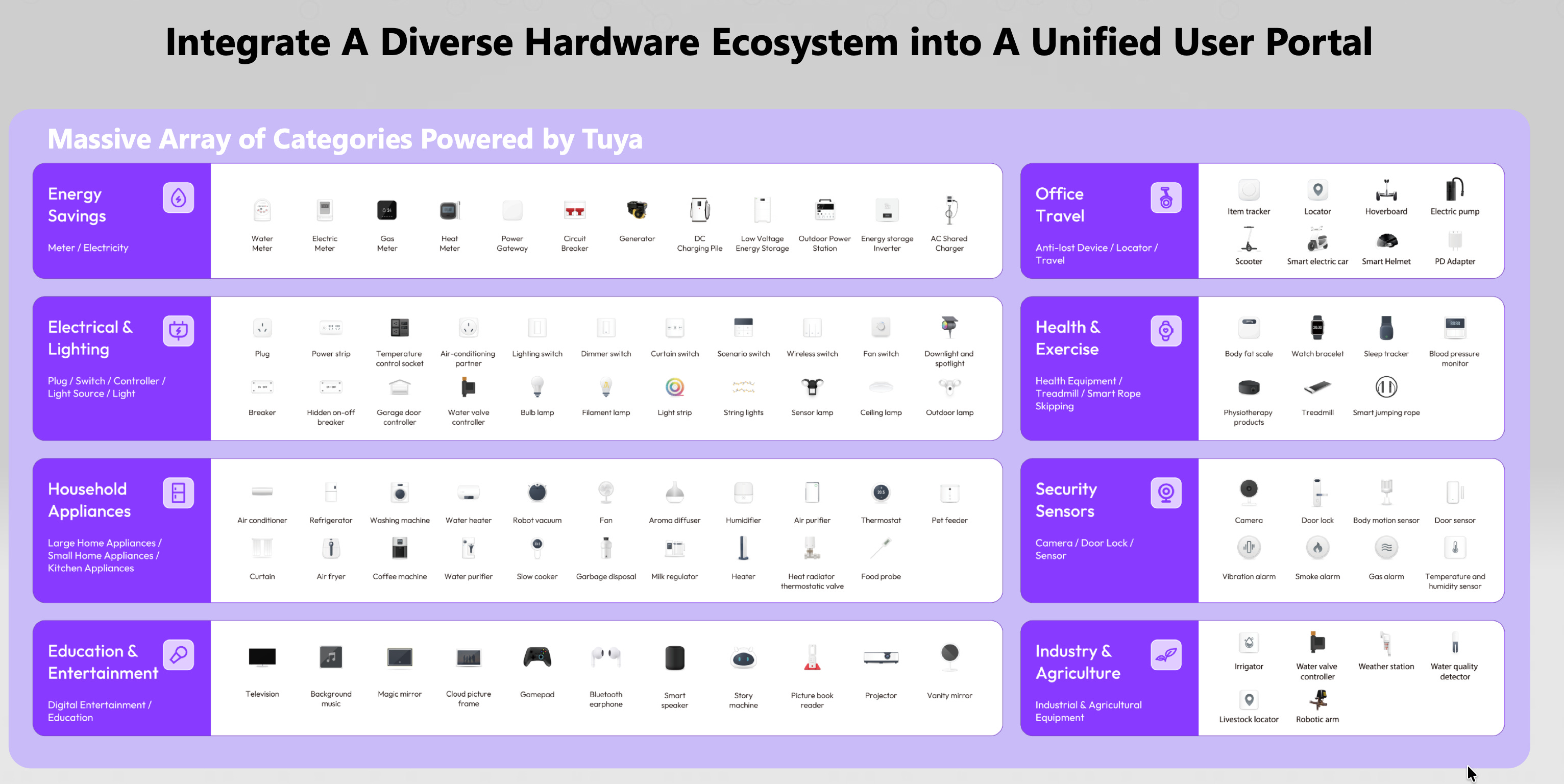
Tuya’s $976 million cash pile equals 94% of its $1.04 billion market cap as its smart-home platform returned to 16% revenue growth in Q2…

Fannie Mae and Freddie Mac could leave conservatorship through a 2026 restructuring and IPO, monetizing the government’s equity stake while…
 Glen Bradford 5 clicks
Every publication on this site, hand-picked.
 Adam Schadt
 Albert Anthony
 Alexander Grover
 Andres Veurink
 Arizona Equity Research Atlas Diary
 Bay Area Ideas
 Benjamin C. Barry
 Bernard Zambonin
 Blake Winiecki
 Capital Connoisseur
 Chetan Woodun
 Crimson And Gold Research
 Cypriot Invests
 Dane Bowler
 Daniel Bell
 Daniel Jones
 Daniel Schönberger
 David Zanoni
 Deep Value Investing
 Dhierin Bechai
 Dilantha De Silva
 Dustin Quasney
 Elliott Gue
 Equity Eagle
 Eudaemon Research
 Fernanda Galvez Jalil
 Fountainhead
 Gary Gambino
 Geneva Investor
 Gil Rotstein
 Given Mahlangu
 Henrik Alex
 High Alpha Professor
 Ignacio Planas Gonzalez
 Infinity Curve Investor Overview
 IWA Research
 Jaden Mealy
 JR Research
 Julia Ostian
 Kevin Avroutskii
 Khaveen Investments
 Kurt Christensen
 Lee Bailey
 LL Insights
 Long Player
 Louis Gerard M&M Capital
 Marc Gerstein
 Melissa Tucker
 Mike Arnold
 Mike Zaccardi, CFA, CMT
 Miletus Research
 Motti Sapir
 Myriam Alvarez
 Nicolas Bolsinger
 Oakoff Investments
 Petri Dish Reports
 Philip Wang
 Prakhar Agarwal, CFA
 PropNotes
 PV Research
 Quantryon Capital
 Robert J. Lake
 Rubicon Associates
 Ryan Canady
 Sam Mancini
 Sanjay Swamy
 Seeking Profits
 Sharon McArd
 SiliconBytes Insights
 Simple Investment Ideas
 Sorrento Research
 Stephen Ayers
 Steven Fiorillo
 Terry Chrisomalis
 The Alpha Analyst
 The Asian Investor
 The Bullionaire
 The Curious Analyst
 The J Thesis
 The Market Auditor
 The Supercycle Investor
 The Undercovered Dozen
 Tim Travis
 Uttam Dey
 Value Capital Research
 Vishal Jadaun
 Yiannis Zourmpanos
 Zoltan Ban
Every account on this site, hand-picked.
 ⚽️📡
 💥PETITION💥
 A Capital
 absreturnchaser
 Adam D. Wyden
 Alpha Vulture
 AltayCap
 Asif Suria
 Bank Reg Blog
 Barbarian Capital
 BDC
 Bill Ackman
 Brian McGough
 Broken Moats
 BuccoCapital Bloke Calvin Blissett
 catechwilliams
 Charles Frischer
 Chris Camillo
 Clark Square Capital
 Cluseau Investments
 Colin King
 Connor Haley
 Conor Maguire | Value Situations
 Convequity
 Dalius - Special Sits
 David Orr Deep Sail Capital
 Derek Pilecki
 Devin LaSarre
 DOMO Capital Management, LLC
 Edwin Dorsey
 Evan Tindell
 Fajasy
 Farmer
 Fierce_beast
 Fred Liu
 Gavin Baker
 George Noble
 Hunterbrook
 Ian Bezek
 Idea Brunch
 JabroniCoin.USD
 John_Hempton
 junkbondinvestor
 kab60
 KEDM.com
 Kevin Mak
 Kuppy
 Laughing Water Capital
 Lee Roach
 Little Owl Research
 Maius
 Maj Soueidan
 marginofdanger
 mavix
 Mike
 Mikro Kap David Mr Neutral Man aka "Howard Marks of REITs”
 Multiples Capital
 Myles
 Nat Stewart
 Negligible Capital
 Odd Diligence
 Odd Lot Arbitrageur
 PAA Research
 Paradis
 Pernas Research
 Porter Collins
 Prepared Remarks
 Psyop Capital
 Raging Capital Ventures
 Red Dog Capital RiverRoadPartners
 Rohan Pavuluri
 Rusholme Capital
 Sahil Khetpal
 Serenity
 SG
 Sheel Mohnot
 SouthernValue
 Steve Eisman
 The Friendly Bear
 Tim Eriksen
 Timyan Bank Alert
 Todd Wenning
 ToffCap
 Trevor Scott
 Undiscovered Compounders
 Voss Capital
 Yaron Naymark
Ordered by how often our editor reaches for them.