When the liquidity does not add up
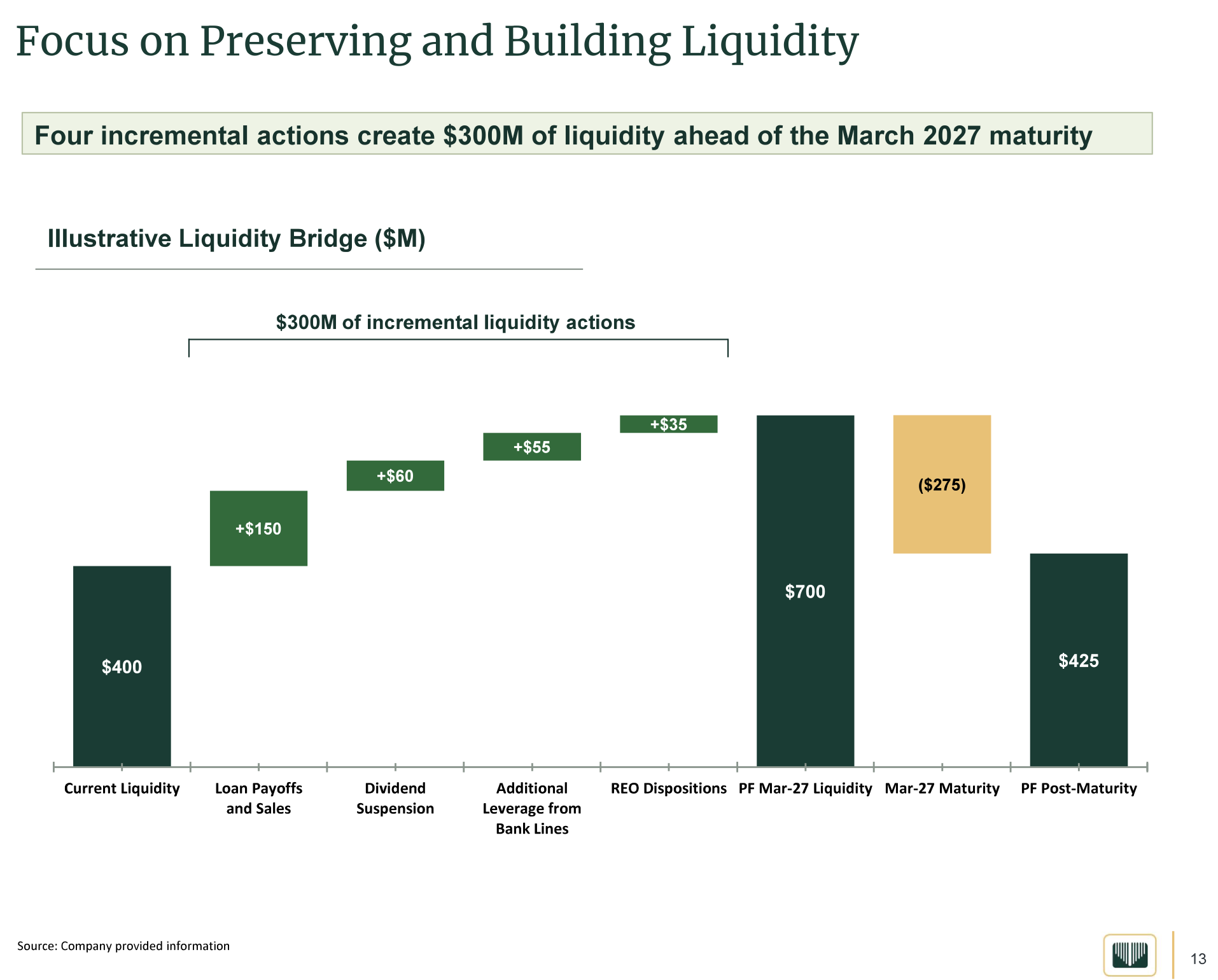
Arbor Realty Trust’s dividend suspension is presented as creating $60 million of liquidity, raising questions about its ability to meet 2027 debt maturities.
Arbor Realty Trust’s dividend suspension is presented as creating $60 million of liquidity, raising questions about its ability to meet 2027 debt maturities.
@TheBigBerbowski Nice use of capital, given $IREN heavy dose of losses through 2029. I guess they see better ROI on the sponsorship. https://t.co/f30x6mjc87
Excellent illustration of $CRWV capital structure https://t.co/fEZpy9xXbe https://t.co/9kK2aZS3Up
HY bonds losers from last week. Some familiar faces. $FMC $JBLU $UNIT $FUN $CRWV https://t.co/MvkKq0lssG
$FMC bonds down 70 points in the last year. Jeez. Generics took pricing, distributors sitting on expensive inventory, and FMC now taking a $625-675mm hit to clear it Bonds down 38pts last week alone... https://t.co/CL6xOPeSfD
Crews at a data center construction site in Georgia unearthed incendiary white phosphorus late last year. Police sent in a bomb squad. The site: a former Army dump near Atlanta, where Digital Realty ($DLR) is building a $3 billion data center campus. https://t.co/BSLbwjk7cE
Feels like shorting Taiwanese AI stocks is probably a good hedge right now. Positioning remains extremely elevated = highly exposed to short-term downside. Just look at how the market responded to $TSM's awesome earnings/guidance....-2.5%.

Verra Mobility’s Avis termination threatens 2027 earnings, while Government Solutions profit rose 25% and implied fourth-quarter guidance…
FTAI’s Aerospace Products margin rebounded to 31% as CFM56 module output rose, while Power deposits and contracted deliveries fund its 2027…

Microsoft’s Azure grew 48% as AI monetization accelerated, but doubled CapEx, largely for CPUs and GPUs, reduced quarterly free cash flow…
 Yiannis Zourmpanos 2 clicks

Life360 has fallen 60% despite 40% revenue growth, 100 million monthly users and profitability, as its family-safety subscriptions and…
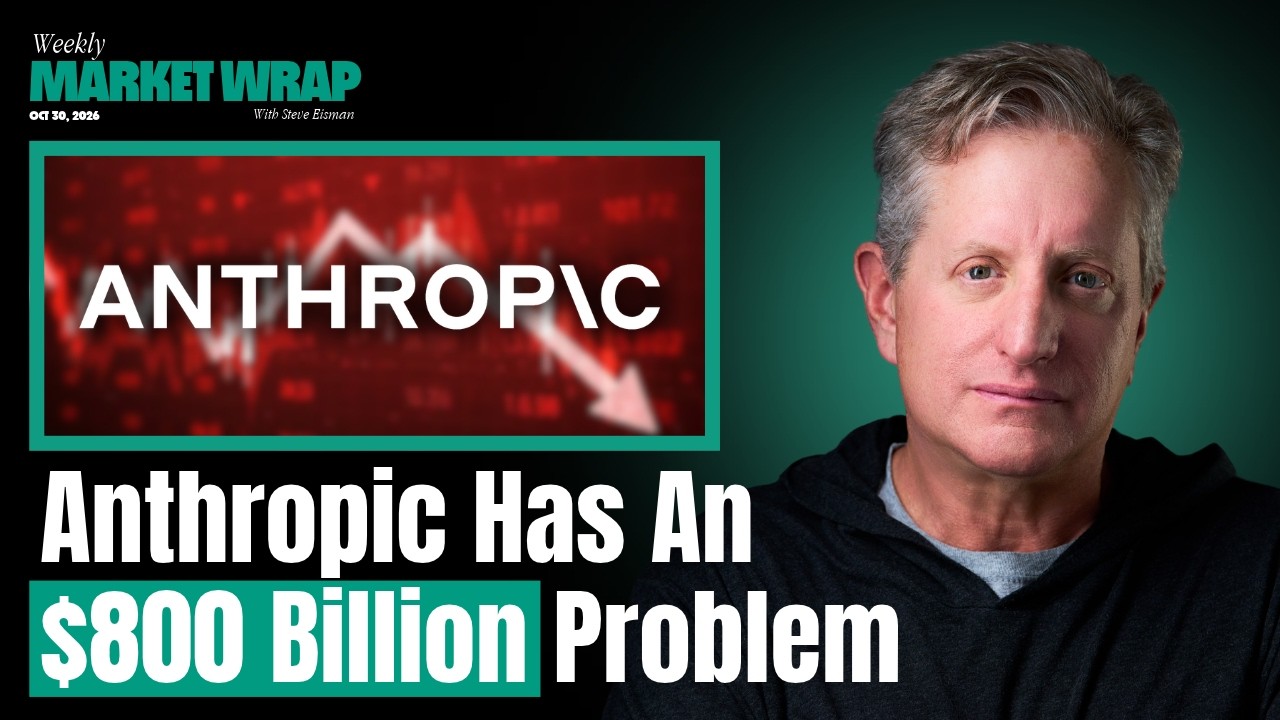
Anthropic’s revenue growth slowed from 147% in Q2 to 45% in Q3, raising questions about AI capital spending as Amazon holds capex flat.

American Tower could gain $1.13 to $3.54 in AFFO per share if Starlink accesses 80,000 U.S. cell sites and becomes a fourth major tenant.
 Dane Bowler 3 clicks

Chevron’s Q3 revenue rose 35% to $65.2 billion and EBITDA 75% to $20.2 billion, while production trailed guidance and refining margins…

AstraZeneca reported $16.2 billion Q3 revenue, up 7%, as oncology grew 17% and Farxiga fell 25% after US generics.

Sanofi raised FY26 guidance after Q3 sales grew 14.3% at constant currency, led by 34.8% Dupixent growth; vaccines declined 6.6%.
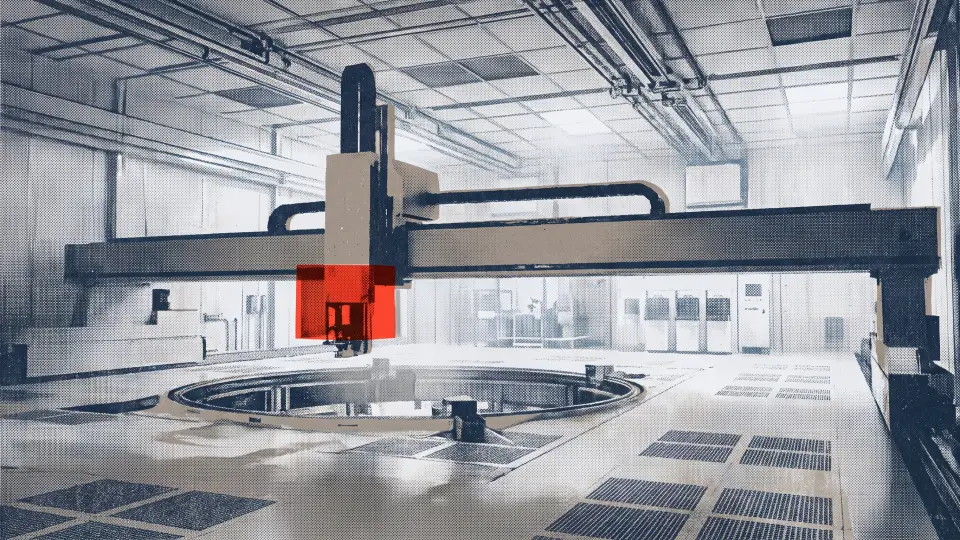
SK hynix's U.S. ADR trades at a valuation discount despite AI-driven memory demand, with 50% of 2027–2028 capacity under long-term…
 Adam Schadt 2 clicks
 PSN · long
Parsons generates roughly half of its $6.4 billion revenue from Federal Solutions, serving defense and intelligence customers.

Regeneron’s Q3 revenue rose 36% to $5.1 billion, driven by a 68% jump in Sanofi collaboration revenue, while operating income doubled to…

Bloom may have reopened imports of scandium-containing components from China to the United States, according to new trade data.
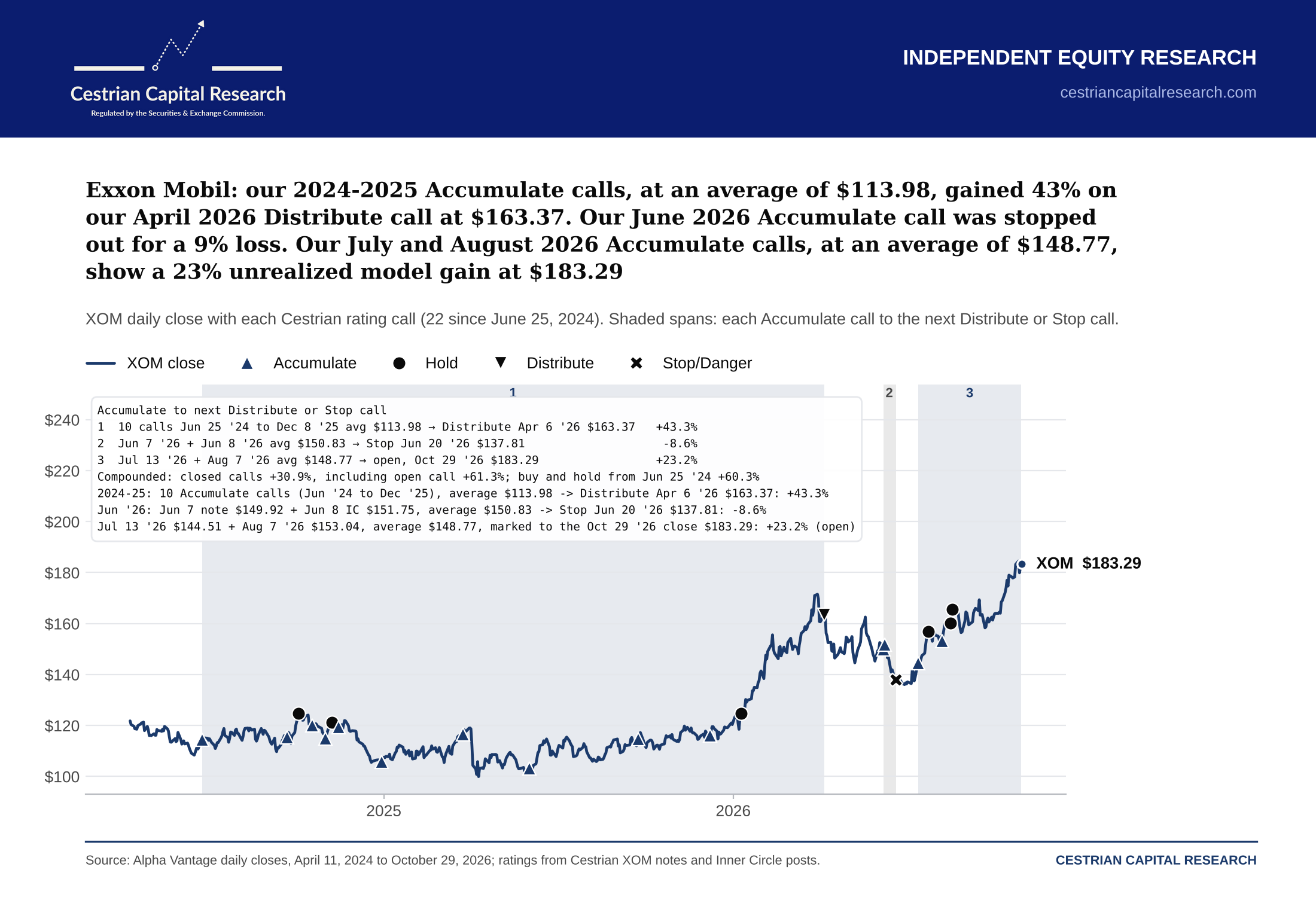
ExxonMobil’s Q3 revenue rose 33% to $113.2 billion as refining earned $9.1 billion, surpassing upstream; the company set 2027 buybacks at…
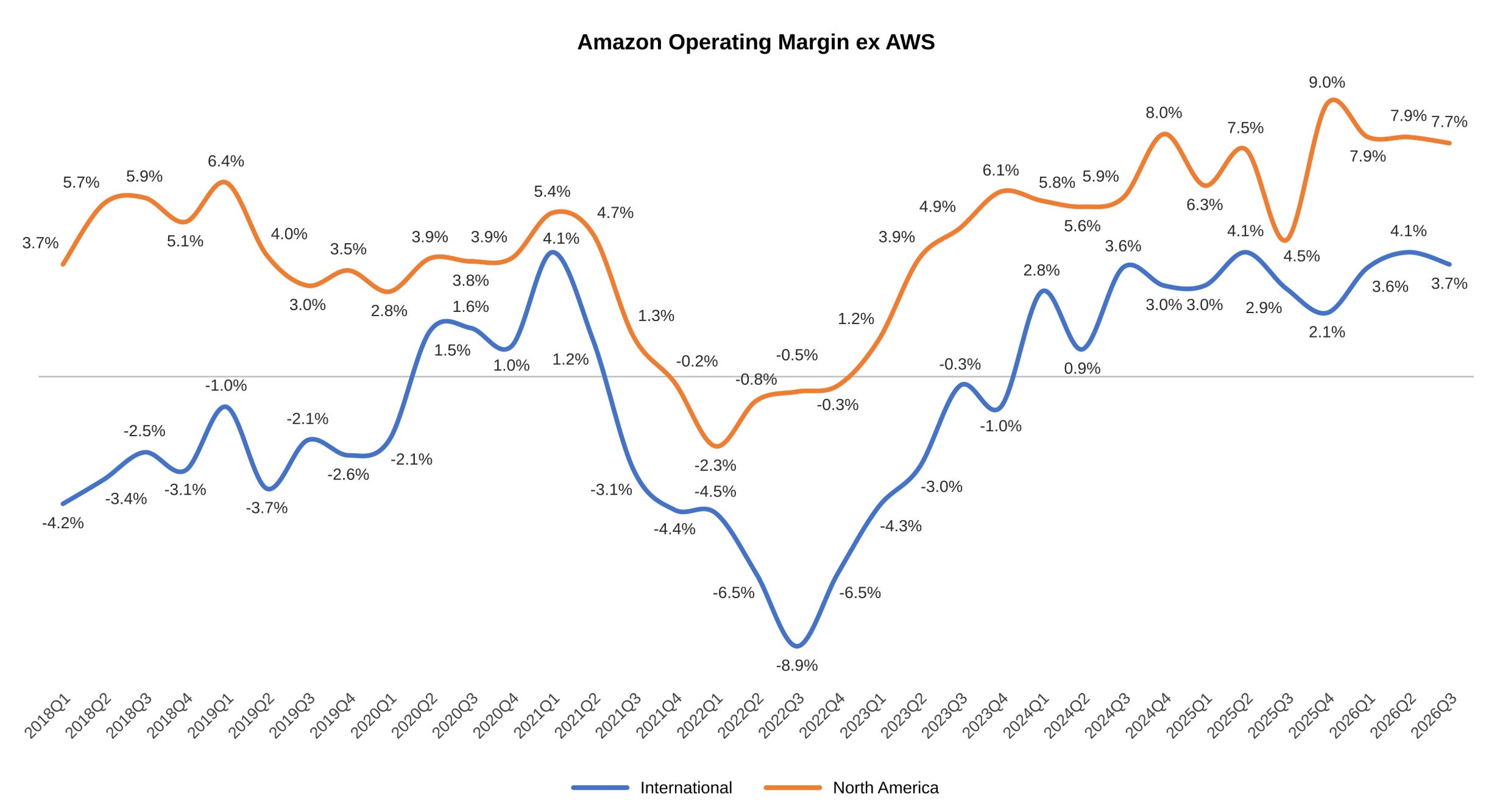
Amazon projects AWS growth above 40% through 2028 while funding a $220 billion capex plan with rising debt and an $80 billion equipment…

Markel spent $315 million repurchasing shares in Q3 as Thrive agreed to buy ADT for $7.6 billion and Hasbro cited rising adult toy demand.

Alphabet's Google Cloud operating income more than tripled to $11.1 billion, while EPS fell 26% on a $2.76 billion SpaceX paper loss.
 Rick Orford 5 clicks

Amazon reported $201.9 billion Q3 revenue and 39% AWS growth, while $220 billion in 2026 capex drove trailing free cash flow to a $42.4…

Amazon’s AWS revenue grew 39% to $46B as capex drove negative FCF; Lilly raised 2026 guidance to $91-92B on GLP-1 volume growth.
Verisk Analytics’ 40 petabytes of proprietary insurance data and regulatory infrastructure shield its underwriting business from generative…
Every publication on this site, hand-picked.
Adam Schadt Albert Anthony
 Andres Veurink
 Arizona Equity Research
 Bay Area Ideas
 Blake Winiecki
 Capital Connoisseur Dane Bowler
 David Zanoni
 Deep Value Investing
 Dhierin Bechai
 Dilantha De Silva
 Dustin Quasney
 Elliott Gue
 Equity Eagle
 Eudaemon Research
 Fernanda Galvez Jalil
 Fountainhead
 Geneva Investor
 Given Mahlangu
 Henrik Alex
 High Alpha Professor
 Ignacio Planas Gonzalez
 Infinity Curve
 Investor Overview
 IWA Research
 Jaden Mealy
 JR Research
 Julia Ostian
 Khaveen Investments
 Kurt Christensen
 LL Insights
 Long Player
 Marc Gerstein
 Melissa Tucker
 Mike Arnold
 Mike Zaccardi, CFA, CMT
 Miletus Research
 Myriam Alvarez
 Petri Dish Reports
 Philip Wang
 Prakhar Agarwal, CFA
 PropNotes
 PV Research
 Quantryon Capital
 Robert J. Lake
 Ron Ferrie
 Ryan Canady
 Sam Mancini
 Seeking Profits
 Sharon McArd
 SiliconBytes Insights
 Simple Investment Ideas
 Sorrento Research
 Stephen Ayers
 Steven Fiorillo
 The Alpha Analyst
 The Asian Investor
 The Bullionaire
 The Curious Analyst
 The J Thesis
 The Market Auditor
 The Supercycle Investor
 The Undercovered Dozen
 Tim Travis
 Uttam Dey
 Value Capital Research
 Vishal Jadaun
 Zoltan Ban
Every account on this site, hand-picked.
 ⚽️📡
 💥PETITION💥
 A Capital
 absreturnchaser
 Adam D. Wyden
 Alpha Vulture
 AltayCap
 Asif Suria
 Bank Reg Blog
 Barbarian Capital
 BDC
 Bill Ackman
 Brian McGough
 Broken Moats
 BuccoCapital Bloke
 Calvin Blissett
 catechwilliams
 Charles Frischer
 Chris Camillo
 Clark Square Capital
 Cluseau Investments
 Colin King
 Connor Haley
 Conor Maguire | Value Situations
 Convequity
 Dalius - Special Sits
 David Orr
 Deep Sail Capital
 Derek Pilecki
 Devin LaSarre
 DOMO Capital Management, LLC
 Edwin Dorsey
 Evan Tindell
 Fajasy
 Farmer
 Fierce_beast
 Fred Liu
 Gavin Baker
 George Noble
 Hunterbrook
 Ian Bezek
 Idea Brunch
 JabroniCoin.USD
 John_Hempton
 junkbondinvestor
 kab60
 KEDM.com
 Kevin Mak
 Kuppy
 Laughing Water Capital
 Lee Roach
 Little Owl Research
 Maius
 Maj Soueidan
 marginofdanger
 mavix
 Mike
 Mikro Kap David
 Mr Neutral Man aka "Howard Marks of REITs”
 Multiples Capital
 Myles
 Nat Stewart
 Negligible Capital
 Odd Diligence
 Odd Lot Arbitrageur
 PAA Research
 Paradis
 Pernas Research
 Porter Collins
 Prepared Remarks
 Psyop Capital
 Raging Capital Ventures
 Red Dog Capital RiverRoadPartners
 Rohan Pavuluri
 Rusholme Capital
 Sahil Khetpal
 Serenity
 SG
 Sheel Mohnot
 SouthernValue
 Steve Eisman
 The Friendly Bear
 Tim Eriksen
 Timyan Bank Alert
 Todd Wenning
 ToffCap
 Trevor Scott
 Undiscovered Compounders
 Voss Capital
 Yaron Naymark
Ordered by how often our editor reaches for them.