OSS Q3 FY12/26 Earnings Analysis
One Stop Systems grew Q3 continuing-operations revenue 36% to $12.6 million, raised FY2026 revenue guidance to $45 million, and used $11.8 million of operating cash.
One Stop Systems grew Q3 continuing-operations revenue 36% to $12.6 million, raised FY2026 revenue guidance to $45 million, and used $11.8 million of operating cash.
More $CUBE news Sold 80% to Heitman in a JV valued $197mm at a roughly mid 5% cap rate and used proceeds to buy back better assets like those in NYC in that 6.3% to 6.5% cap rate range Improves quality and sell non-core at lower cap rate than higher quality assets Retains management and builds annuity mgt fee stream
I have consistently talked about buying $CUBE in the past year and highlighted their incredible NYC/NNJ portfolio It accounts for 1/4 of the company's NOI, up 5.5% in Q3 on a YOY basis. Moves the needle. Overall NOI up 2.1% YOY High barrier, no rent regs like housing, truly a great asset NOI declines mostly in Sunbelt high supply markets Story is as old as time Bought at a rough 6.7% cap about a year ago at $36 ish now $41.08 plus about $2.12 in dividends since Not too shabby for a 20% one year return for buying a high quality SS with low leverage
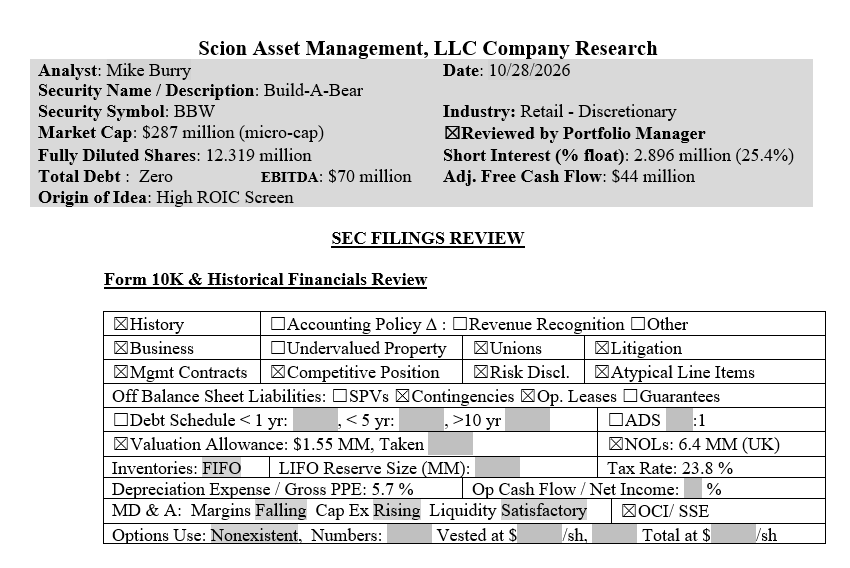
$PURR https://t.co/yeJJ2cHVeE
@stocksonnets @CliffordAsness @LeylaKuni I know how much my book is down!!! At least we had two event driven trades in $ELME and $SITC that worked out during that time
$CAKE execs are sellers into the political hype. Form 144s filed today indicate ~$3m of sales. https://t.co/3UrKd4AXRe
$DNA - Looks to have peaked mid day today. https://t.co/EcCnSY98aH
Continue reading here for the $357M Texas cell plant $TOYO’s term sheet is tied to: https://t.co/76t1GCSzlU
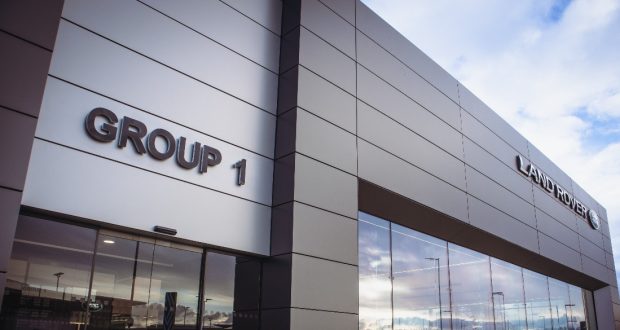
Group 1 Automotive trades at 5.5 times earnings as aging gasoline vehicles and EV repairs sustain service profits; insiders bought while…
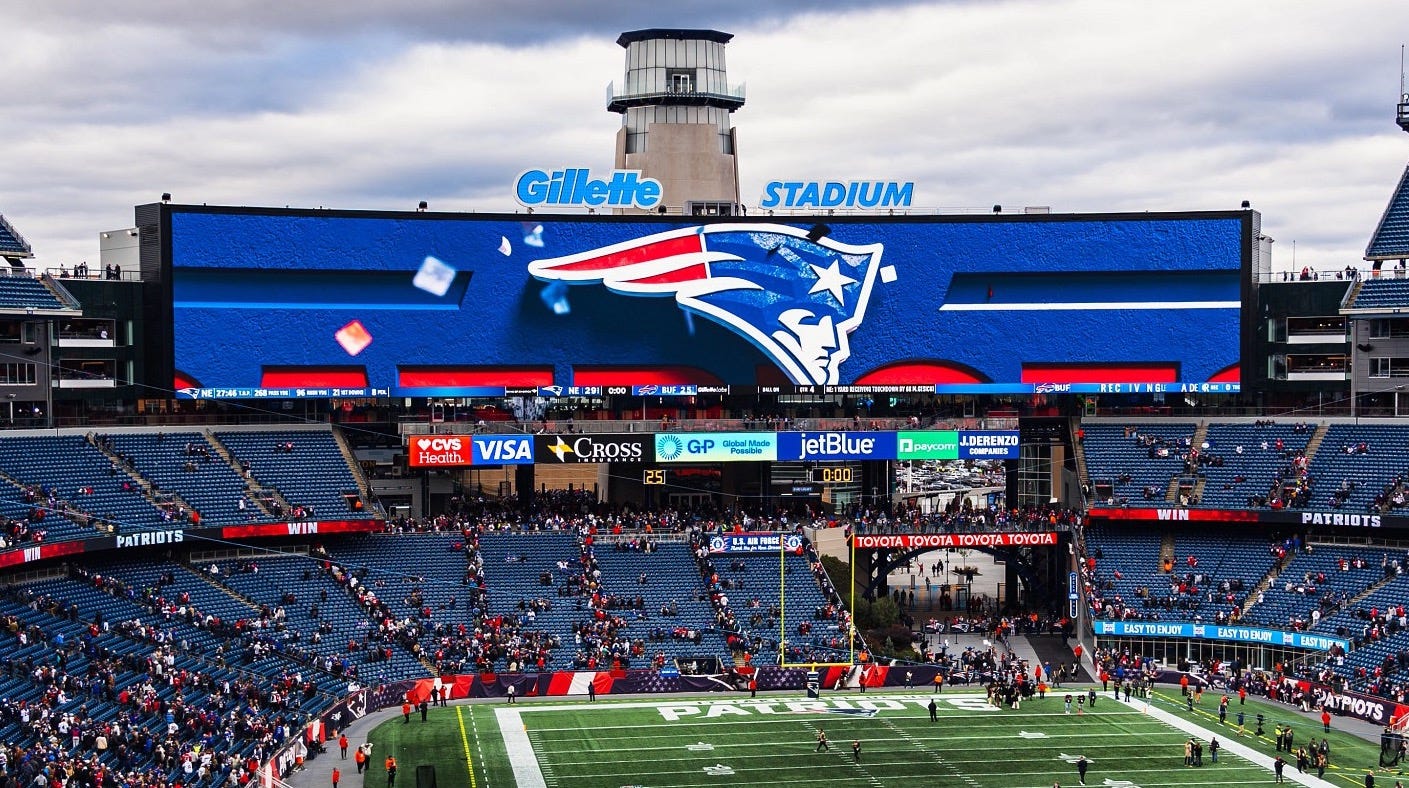
Daktronics, the leader in U.S. sports video boards, targets 10-12% EBIT margins after shifting production to China and Mexico and exiting…

Alexandria Real Estate (ARE) faces lease expirations and occupancy pressure through 2028, but leasing momentum supports a projected…
 Luuk Wierenga

Enova’s Q3 2026 revenue exceeded $1 billion as originations rose 31%, while its failed Grasshopper Bank bid drove a 23% one-day stock…

Xenia Hotels & Resorts pairs luxury hotel assets, brand affiliations and planned renovations with investment-grade credit and covered…
 Albert Anthony 2 clicks

Innodata shares fell 25% to $44.74 after India Today reported 550 job cuts in India.

AppFolio grew third-quarter revenue 19% as Realm-X AI agents gained adoption, lifting guidance to $1.122 billion to $1.127 billion.
TTM Technologies’ record Q3 and data-center exposure drove a 27.7% stock drop as investors questioned debt-funded growth, leverage and the…
 Nicolas Bolsinger 1 click

Monte Investments updates Carpenter Technology after a 25% sell-off, tracks EQT’s $12.83 billion Range Resources acquisition and assesses…

Small- and mid-cap data center stocks trade as one despite sharply different funding bridges: 12 of 15 cover fixed costs on signed…
 BTU · long
Peabody Energy, ticker BTU, is a low-cost producer of thermal and metallurgical coal with mines in the United States and Australia.

Aveanna benefits as Medicaid shifts ventilator care home, while UK housebuilder scarcity and El Niño create separate long-term tailwinds.
Groupon, Corsair and StepStone report within 15 minutes, setting up volatility between Groupon’s after-hours release and its Friday morning…

CareCloud runs provider billing without taking receivables risk, then cross-sells cloud software and stratusAI across 45,000-plus providers…

Diversified Energy cut $233 million of debt in 1H26, repurchased $93 million of stock and sold $273 million of land and assets while…

Perimeter Solutions’ 2Q26 revenue rose 31%, while operating income fell 11% as USDA pricing and DLA delivery timing hurt Fire Safety; it…

Genius Sports’ $1.2 billion Legend acquisition adds direct bettor monetization, while its exclusive NFL data rights could supply prediction…

Leslie’s Inc. has faced a string of recent problems in its pool business.

Perimeter Solutions’ Fire Safety EBITDA grew 1% as USDA pricing and a DLA inventory transition weighed, while its $120 million Monaco…
Floor & Decor’s same-store sales improved to minus 2%, while $45 million of tariff refunds lifted second-quarter gross profit and operating…
Every publication on this site, hand-picked.
 Adam Schadt Albert Anthony
 Andres Veurink
 Bay Area Ideas
 Blake Winiecki
 Capital Connoisseur
 Dane Bowler
 David Zanoni
 Deep Value Investing
 Dhierin Bechai
 Dilantha De Silva
 Dustin Quasney
 Elliott Gue
 Equity Eagle
 Eudaemon Research
 Fernanda Galvez Jalil
 Fountainhead
 Geneva Investor
 Given Mahlangu
 Henrik Alex
 High Alpha Professor
 Ignacio Planas Gonzalez
 Infinity Curve
 Investor Overview
 IWA Research
 Jaden Mealy
 JR Research
 Julia Ostian
 Khaveen Investments
 Kurt Christensen
 LL Insights
 Long Player
 Marc Gerstein
 Melissa Tucker
 Mike Arnold
 Mike Zaccardi, CFA, CMT
 Miletus Research
 Myriam Alvarez
 Petri Dish Reports
 Philip Wang
 Prakhar Agarwal, CFA
 PropNotes
 PV Research
 Quantryon Capital
 Robert J. Lake
 Ron Ferrie
 Ryan Canady
 Sam Mancini
 Seeking Profits
 Sharon McArd
 SiliconBytes Insights
 Simple Investment Ideas
 Sorrento Research
 Stephen Ayers
 Steven Fiorillo
 The Alpha Analyst
 The Asian Investor
 The Bullionaire
 The Curious Analyst
 The J Thesis
 The Supercycle Investor
 The Undercovered Dozen
 Tim Travis
 Uttam Dey
 Value Capital Research
 Vishal Jadaun
 Zoltan Ban
Every account on this site, hand-picked.
 ⚽️📡
 💥PETITION💥
 A Capital
 absreturnchaser
 Adam D. Wyden
 Alpha Vulture
 AltayCap
 Asif Suria
 Bank Reg Blog
 Barbarian Capital
 BDC
 Bill Ackman
 Brian McGough
 Broken Moats
 BuccoCapital Bloke
 Calvin Blissett
 catechwilliams
 Charles Frischer
 Chris Camillo
 Clark Square Capital
 Cluseau Investments
 Colin King
 Connor Haley
 Conor Maguire | Value Situations
 Convequity
 Dalius - Special Sits
 David Orr
 Deep Sail Capital
 Derek Pilecki
 Devin LaSarre
 DOMO Capital Management, LLC
 Edwin Dorsey
 Evan Tindell
 Fajasy
 Farmer
 Fierce_beast
 Fred Liu
 Gavin Baker
 George Noble
 Hunterbrook
 Ian Bezek
 Idea Brunch
 JabroniCoin.USD
 John_Hempton
 junkbondinvestor
 kab60
 KEDM.com
 Kevin Mak
 Kuppy
 Laughing Water Capital
 Lee Roach
 Little Owl Research
 Maius
 Maj Soueidan
 marginofdanger
 mavix
 Mike
 Mikro Kap David
 Mr Neutral Man aka "Howard Marks of REITs”
 Multiples Capital
 Myles
 Nat Stewart
 Negligible Capital
 Odd Diligence
 Odd Lot Arbitrageur
 PAA Research
 Paradis
 Pernas Research
 Porter Collins
 Prepared Remarks
 Psyop Capital
 Raging Capital Ventures
 Red Dog Capital RiverRoadPartners
 Rohan Pavuluri
 Rusholme Capital
 Sahil Khetpal
 Serenity
 SG
 Sheel Mohnot
 SouthernValue
 Steve Eisman
 The Friendly Bear
 Tim Eriksen
 Timyan Bank Alert
 Todd Wenning
 ToffCap
 Trevor Scott
 Undiscovered Compounders
 Voss Capital
 Yaron Naymark
Ordered by how often our editor reaches for them.