
$TPB: can Turning Point Brands be the third player in nicotine pouches? | Saberpoint Capital
Turning Point Brands' FRE and Alp nicotine pouches aim to become a third C-store brand behind ZYN and Velo as PMTA rules limit new entrants.
Turning Point Brands' FRE and Alp nicotine pouches aim to become a third C-store brand behind ZYN and Velo as PMTA rules limit new entrants.
Raytheon Gets $24.4 Billion Navy Contract for Standard Missile-6 Interceptors $RTX https://t.co/uNGS51L1bU
ON Semicondcutor to Buy Synaptics for Cash, Not Stock, in Downsized Deal $ON $SYNA https://t.co/ZBg5wXAYaX
Would be more interesting if it was $QQQ, but something like this seems good for hedging the market melt up possibility. I'm curious to see if the margin requirement turns out to be the standard 15% on IBKR. https://t.co/3hvxvkfJ1H
#1 report on $BMBL scuttlebutt in college Girl: “bumble is for old people and wierd” she used tinder for hu and hinge for “quality” Guy: “the gay one?” Went to go scroll on tinder
Is this bullish $PBI?? 🤣 https://t.co/mtBoKcxR8m
@JordanBoekel I have skimmed over $FINV, $LX made good money in $YUMC, looked at $PDD. I think management is even more important given regulatory risk and China and that is partly why I like $YB

Constellium’s widening feedstock-to-end-price spread supports 2026 EBITDA guidance of $980M-$1.02B and free cash flow above $300M.
 Andres Veurink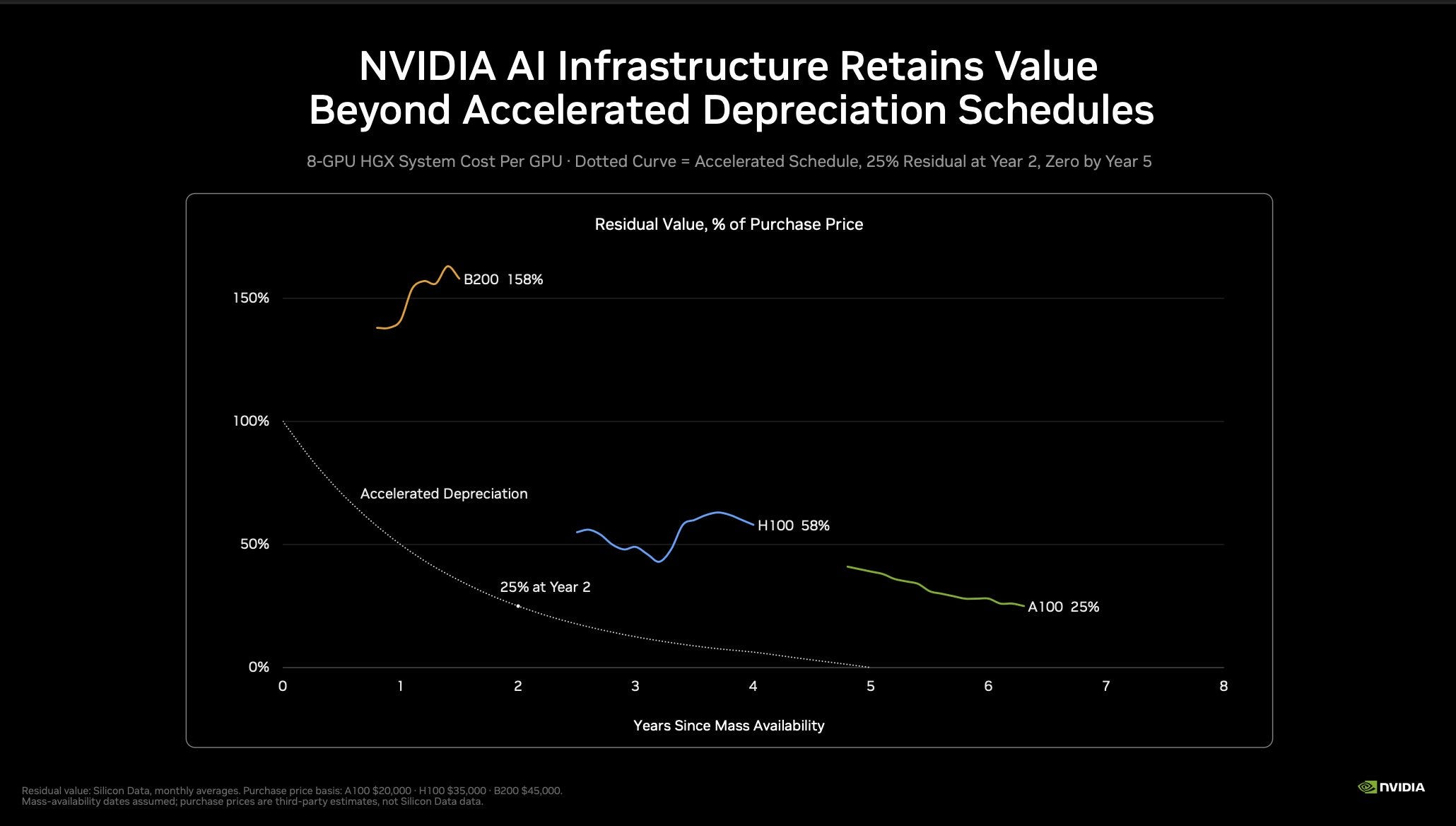
Nvidia argues A100, H100 and B200 GPUs retain value beyond five-year depreciation schedules, reviving comparisons with the 1960s…

Muse could sidestep ads by becoming a neutral commerce agent, while DoorDash and Airbnb build proprietary agents that steer users toward…
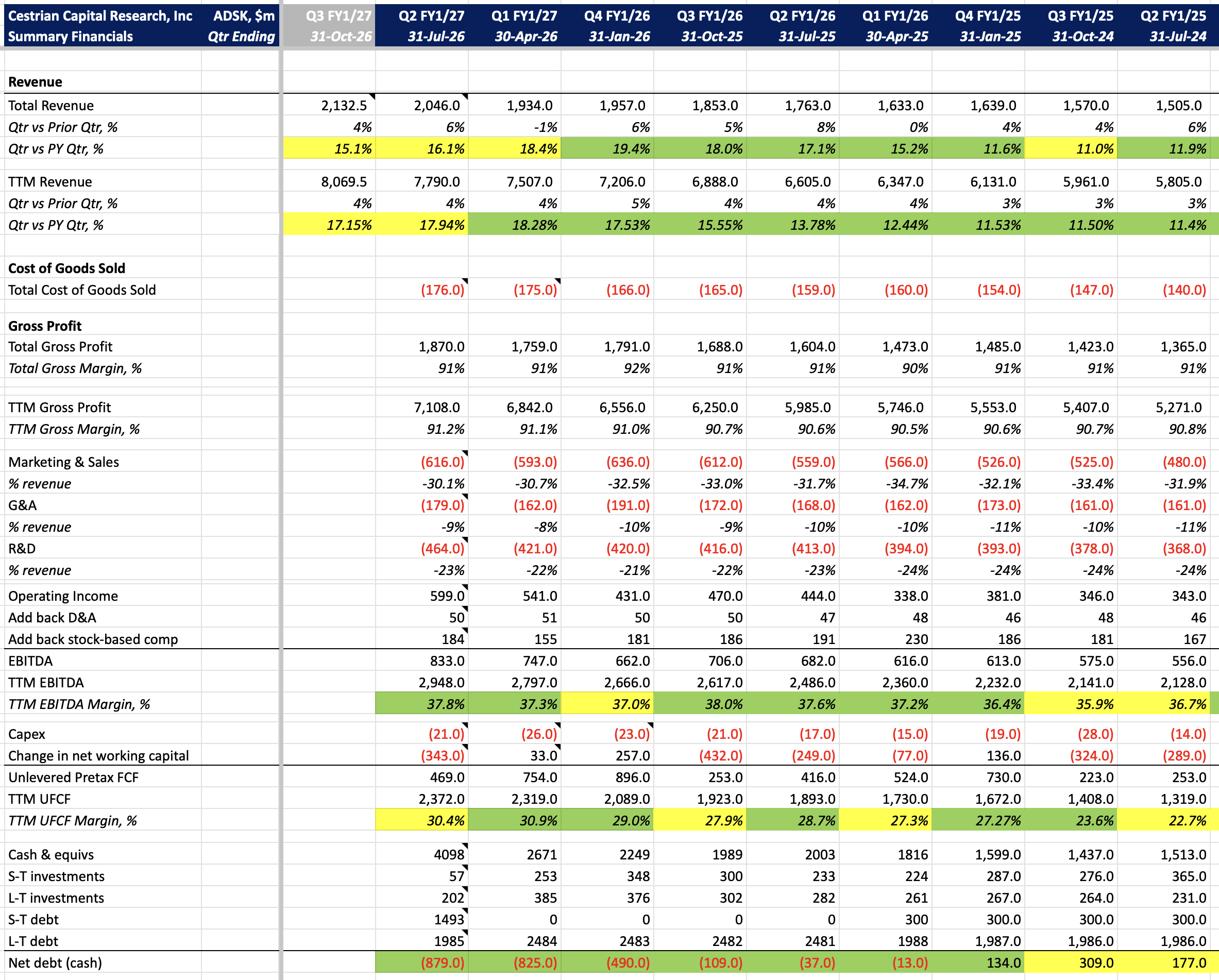
Autodesk reported Q2 revenue growth of 16% to $2.05 billion, while RPO growth slowed to 2%; FY2027 guidance calls for $8.30 billion to…

YieldMax HOOD Option Income Strategy ETF pays high weekly income from Robinhood volatility, but return-of-capital distributions and a 0.99%…
 Ivan Gaddari
Ethos Technologies ($LIFE) sells AI-driven life insurance while relying heavily on multilevel marketing agencies using aggressive cold…

Karman Holdings reported 58% Q2 revenue growth, $1.3 billion backlog and margin expansion while replacing leadership and remediating…

Innodata's 45% pullback resets its valuation after two quarters of 50% revenue growth, though two customers still supply 71% of revenue and…
 Kurt Christensen
Rollins’ shares have fallen more than 50% from their peak, resetting valuation as route density, reliable service and pricing support…
Pearson, CarMax, Talen Energy, KBR and Apollo Commercial Real Estate lead a 33-company survey of activist campaigns, buybacks, M&A and…

Group 1’s 19% ownership cap, tied to automaker franchise agreements, frames Conifer’s 1.9 million-share stake and potential buyback-driven…
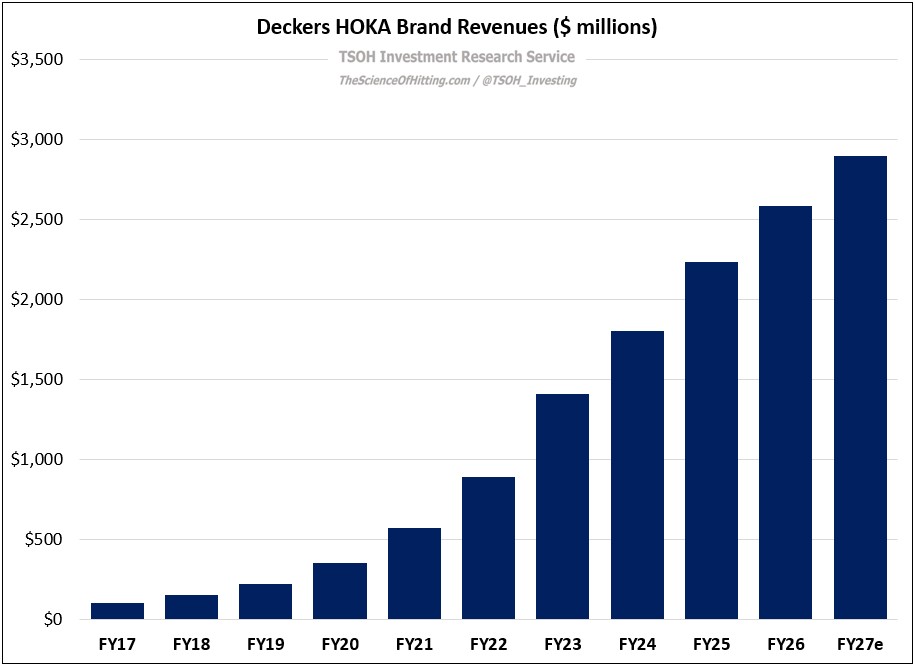
Deckers built HOKA into a brand nearing UGG’s scale, with HOKA revenue up about fivefold since FY21.
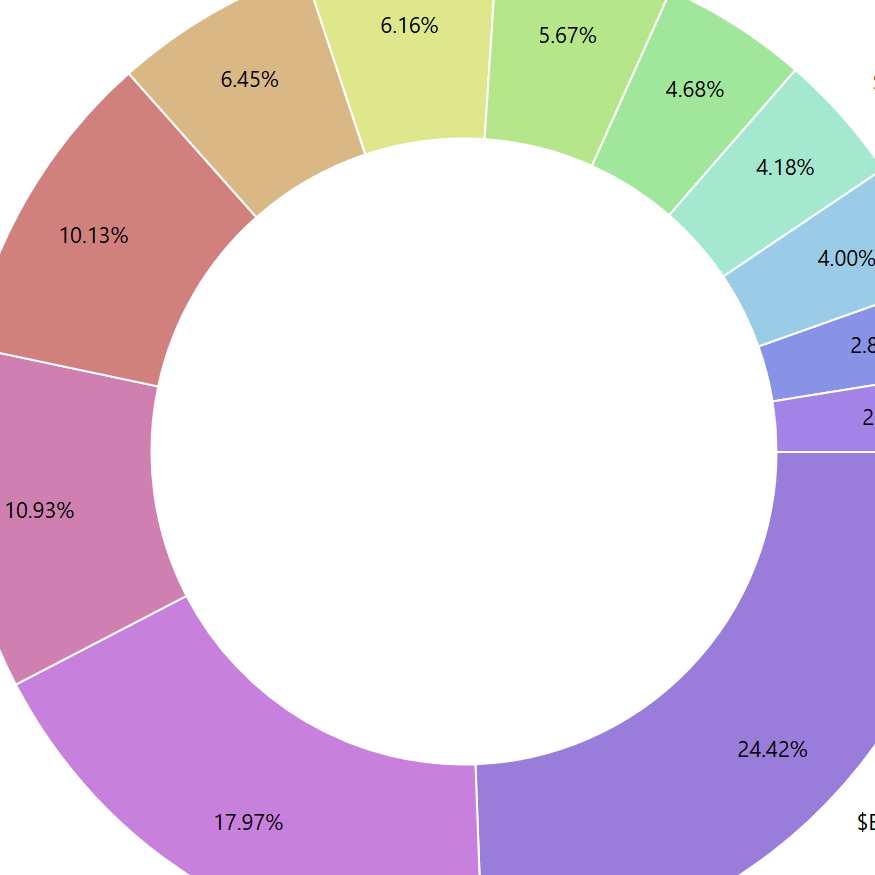
Entravision, the portfolio’s largest position, fell more than 40% from its highs as Q3 returns dropped to 37.8% YTD.
Irrational Analysis reports 51.55% outperformance versus a semiconductor ETF, adding Credo for SerDes and QMCO for AI-driven tape storage…

LeMaitre Vascular’s shift to larger acquisitions lifted its success rate to 80% and gross margin to 72%, supported by $376 million of cash…
 Bruno Montoya Amador
  ELME · long
 Elme Communities, a REIT, is nearing the end of a long liquidation process.

Occidental Petroleum could benefit as declining shale inventories and high rates curb industry capex, tightening oil supply against demand…
 Gen Z Investor
Zentek shipped its first ZenGUARD air-filter order to a Canadian federal facility as its Albany graphite PEA confirmed a US$3.85 billion…

Meta’s Muse illustrates how persistent AI agents shift compute from per-query to per-user, driving heavier GPU, CPU and memory demand.

Chevron moved to Distribute at $204 after Q2 free cash flow reached $18.1 billion on $104 Brent, with near-peak margins driving supernormal…
Every publication on this site, hand-picked.
 Albert Anthony Andres Veurink
 Bay Area Ideas
 Capital Connoisseur
 Deep Value Investing
 Dhierin Bechai
 Equity Eagle
 Eudaemon Research
 Fernanda Galvez Jalil
 Henrik Alex
 High Alpha Professor
 Investor Overview
 IWA Research
 Jaden Mealy
 Khaveen Investments
 LL Insights
 Long Player
 Marc Gerstein
 Mike Zaccardi, CFA, CMT
 Miletus Research
 Myriam Alvarez
 Petri Dish Reports
 Philip Wang
 Prakhar Agarwal, CFA
 PV Research
 Robert J. Lake
 Ron Ferrie
 Sam Mancini
 Sharon McArd
 SiliconBytes Insights
 Simple Investment Ideas
 Sorrento Research
 Stephen Ayers
 Steven Fiorillo
 The Alpha Analyst
 The Bullionaire
 The Curious Analyst
 The Supercycle Investor
 The Undercovered Dozen
 Value Capital Research
 Vishal Jadaun
Every account on this site, hand-picked.
 ⚽️📡
⚽️📡 💥PETITION💥
 A Capital
 Adam D. Wyden
 AltayCap
 Bank Reg Blog
 Barbarian Capital
 BDC
BDC Bill Ackman
 Broken Moats
 BuccoCapital Bloke
 Calvin Blissett
 catechwilliams
 Charles Frischer
 Chris Camillo
 Clark Square Capital
 Cluseau Investments
 Colin King
 Connor Haley
 Conor Maguire | Value Situations
 Convequity
 David Orr
 Deep Sail Capital
 Devin LaSarre
 DOMO Capital Management, LLC
 Edwin Dorsey
 Evan Tindell
 Farmer
 Fierce_beast
 Fred Liu
 Gavin Baker
 Ian Bezek
 Idea Brunch
 JabroniCoin.USD
 John_Hempton
 junkbondinvestor
 kab60
kab60 KEDM.com
 Laughing Water Capital
 Lee Roach
 Little Owl Research
 Maius
Maius Maj Soueidan
 marginofdanger
 mavix
mavix Mike
Mike Mikro Kap David
 Multiples Capital
 Myles
Myles Nat Stewart
 Negligible Capital
 Odd Diligence
 Odd Lot Arbitrageur
 PAA Research
 Pernas Research
 Porter Collins
 Prepared Remarks
 Psyop Capital
 Raging Capital Ventures
 Red Dog Capital
 RiverRoadPartners
 Rusholme Capital
 Sahil Khetpal
 SG
SG Sheel Mohnot
 Tim Eriksen
 Timyan Bank Alert
 Todd Wenning
 ToffCap
 Trevor Scott
 Voss Capital
 Yaron Naymark
Ordered by how often our editor reaches for them.