 @DOMOCAPITAL
DOMO Capital Management, LLC on X
$SHOE put open interest since October 1st.... haven't seen this sort of put option and short selling attack since you know when.... and $SHOE is extremely profitable, trading below working capital, and has zero debt other than store leases. Wild, wild situation. Someone is going to blow up big time.

Chord Energy trades at 3x mid-cycle EV/EBITDA with a 15% free-cash-flow yield at $75 WTI, while repurchasing shares and expanding its…
SA  Ron Ferrie 4 clicks
 @marginofdanger
marginofdanger on X
@evfcfaddict @alluvialcapital $BWEL will work eventually
 @calvinblissett
Calvin Blissett on X
Let me just spell out a bit more why this announcement matters. In this quarter alone they have 7 billing wins (3 from existing clients and 4 from Empower). Billings/RCM is the best part of $CCLD business. Reoccurring cash flows. It matters because CareCloud has mostly been viewed and priced (well it’s priced like garbage ~3x EBITDA) like it can only grow inorganically. The facts are starting to point the other way.
 @LittleOwlRes 1 click
Little Owl Research on X
I do not know what I was thinking with $RAVE 🤦♂️ given the recent disputes between management and the board a 20%—and growing—earnings yield on the EV (nearly 30% fcf yield) is still just way too expensive. Please, teach me a lesson. Keep selling. I need to feel the pain of my error.
 @majgeoinvesting
Maj Soueidan on X
He should keep it in the defense family, take those proceeds and stick it in $SIF 🫠 This is not investment advice or a recommendation to transact in securities. Do your own homework for what you think a Co. with a big backlog, growing earnings at 25%+ and selling under a P/E of 10x is worth.
 @UCompounders
Undiscovered Compounders on X
Hope junior mining investors don't forget that 3-digit returns are made on "buy when there's blood in the streets, even if the blood is your own" days. In case you had any doubt, today is one. Hopefully, it won't be the last. $GDXJ

DICK’S Sporting Goods heads into Q3 after a Q2 miss drove shares down over 25% year to date and 30% in six months.
SA  Justin Purohit
UFP Industries trades near its 2022 price despite EPS falling 62%; a $95–$105 valuation assumes $6.30 normal-year EPS, with freight and…
SA  Tim Travis 4 clicks
 PATK · long
Patrick Industries (PATK) is pitched long on its current valuation.
BL Value Investors Club
Bruce Flatt’s Brookfield built 19 percent annual returns by buying distressed real assets below replacement cost with long-term…
S Latticework by MOI Global 4 clicks

Forestar trades near $22 versus $37.56 in tangible book value, with $657 million of cash and a potential D.R.
SA  Paul Franke 3 clicks
 @P_Remarks 1 click
Prepared Remarks on X
Andrew there is a little company named PetMeds $pets trading at negative enterprise value with >$100m in sales and >60% of rev from reorder sales. You should buy it to plug into your SEO engine and enter the humongous pet TAM Thanks for coming to my ted talk
TPG trades 20% below its average distributable-earnings multiple despite the fastest fee-related earnings growth among alternative…
S Capital Employed 9 clicks
@calvinblissett Calvin Blissett on X
Passed on: - $TK: screens at net cash ≈ market cap, but that cash is TNK's. Parent cash plus its TNK stake is ~$1.01B vs a ~$1.23B market cap. Buy TNK directly. - $DFIN: ran to $68, and the SEC's semiannual-reporting proposal hits filing volume. - $RICK: NY AG indictment, CEO and CFO out. - $BAER: ~$15M of equity under ~$650M of debt and preferred. - $CMRE / $DAC: big backlogs, but contracted net earnings don't cover EV yet. - $MATW, $ACTG, $ARKR, $CVEO: FCF or leverage. - $GRND: not cheap.
@calvinblissett Calvin Blissett on X
$TNK ~$89.43 Teekay Tankers runs 33 mid-size crude and product tankers, mostly spot. ~$3.10B mkt cap, $1.42B cash, no debt, ~$1.7B EV. First-half EPS was $10.87, already above all of 2025 ($10.10), and Q3 added $5.04. Q4 so far: Suezmax $272K/day and Aframax $208K/day, 30x+ its breakeven. Clarksons has year-end net cash at ~$53/sh. EV is only ~0.4x the value of the ships, so you're getting the fleet at ~40 cents on the dollar plus the cash. The catalyst: the board will consider a special dividend with Q4 results in February instead of May. The $0.25 base hasn't moved since 2023, so the pressure on the payout is all one way. It's also selling old ships at high prices (4 for $211M) and ordering newbuilds for 2030. Why rates could stay up: OECD inventories are at a 20-year low, the U.S. SPR is ~half its pre-2020 level, and the orderbook mostly just replaces old ships. Risks: rates mean-revert and Teekay Corp controls it. BofA raised 2026 EPS by $12 and still rates it Underperform.
@calvinblissett Calvin Blissett on X
$ARCO ~$7.21 "We are not technically in the food business. We are in the real estate business." — Harry Sonneborn, McDonald's first CFO Arcos Dorados is the world's largest independent McDonald's franchisee, with exclusive rights in 20 Latin American and Caribbean markets and 2,582 restaurants. ~$1.5B mkt cap, ~4% dividend yield, consensus EPS $0.80 for 2026 and $0.86 for 2027, so ~8-9x. LTM adj. FCF $156M (~10% of the market cap), net debt 1.3x EBITDA. McDonald's itself trades at 20x+ earnings. Its biggest franchisee, running the same system across a continent, trades at less than half that. Munger once described the ideal small-town portfolio as the best office building, the best apartments, the dominant car dealership and the top McDonald's. Headline earnings look worse than they are. Q3 EPS fell to $0.15 from $0.71 because last year included an $85.6M Brazilian tax credit. Excluding it, EBITDA was up 9%. Digital is where it's winning: 66% of sales, loyalty members +60% to ~38M, and 29% of sales now tied to an identified customer. October Investor Day targets: 550-600 openings in 2027-30, high-single to low-double-digit EBITDA growth, and a $25M buyback started. Bear: margins are off the peak (9.5% vs 12.8%), Brazil comps were only +3.5%, and the +46% in the south is mostly Argentine inflation. $1.3-1.5B of capex eats a lot of the FCF.
@calvinblissett Calvin Blissett on X
$CLVT ~$2.33 Clarivate owns the databases researchers, universities and patent lawyers pay for every year: Web of Science, Journal Impact Factor, patent data, ProQuest. Down ~93% in five years, and it bottomed at ~$1.65 this fall. ~$1.49B mkt cap, ~$3.4B net debt after the ~$600M Life Sciences sale, ~$4.9B EV. FY26 guide: $865-885M adj. EBITDA and $320-340M FCF, ~5.6x EBITDA and a ~22% FCF yield. Consensus EPS is $0.67, so ~3.5x. The math that matters: equity is only ~30% of EV. Every $100M of debt paid down moves ~7% of the market cap to shareholders without the business growing at all. Three years of FCF at this pace retires ~$1B. It's tendering for 2028 notes below par now. Recurring revenue is most of the mix, with 45% EBITDA margins and organic ACV +1.8%. The new co-development deal with IP law firm Sterne Kessler is mgmt's answer to the AI question: put AI on top of its own patent data instead of letting someone else do it. AlphaSense expert calls cut both ways. Bull (11/11): the data quality is the moat, and AI run on Clarivate's content beats AI run on open data. Bear: AI is bolted onto a patchwork of acquired systems, and open data could close the gap in 2-5 years. Risks: AI, transactional revenue -58%, $284M of impairments YTD, ~3.9x levered.
@calvinblissett 1 click Calvin Blissett on X
"You're trying to print the next 10 years of Value Line in your head." — Warren Buffett, 1999 Saturday Value Line. 142 small and mid-caps in this week's issue. Seven I liked, a lot I passed on. Favorite is $CLVT, a levered stub at ~3.5x consensus earnings. The one to watch this week is $TTWO, with GTA VI out Thursday.
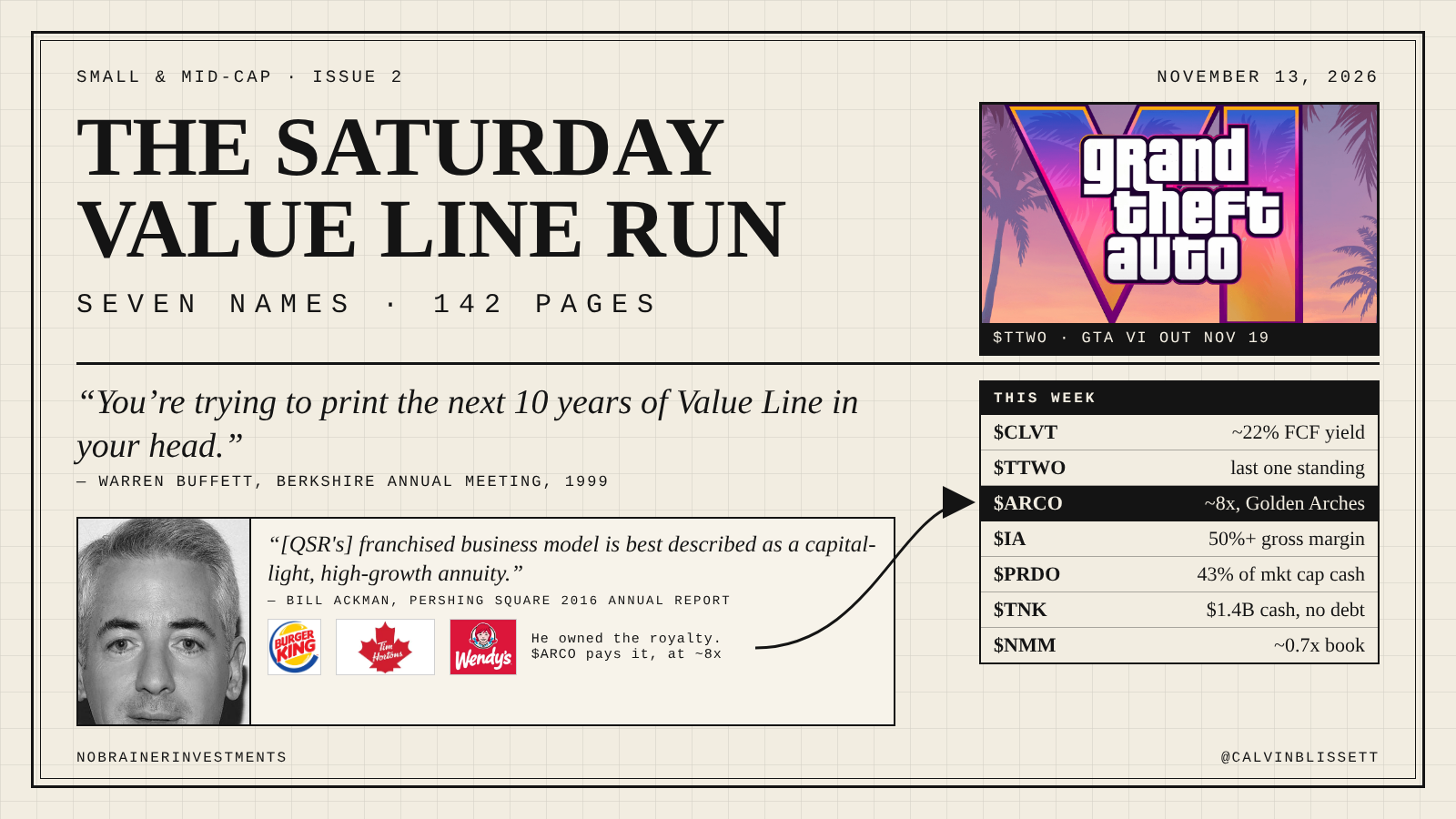
Clarivate, Take-Two and Arcos Dorados lead a seven-stock Value Line screen focused on debt paydown, GTA VI economics and Latin American…
S Calvin Blissett 5 clicks

Brookfield trades at about 17 times trailing distributable earnings, while its 73% BAM stake accounts for $63 billion of its $94 billion…
SA  Secret Compounders 3 clicks
 @ACapitalLP 2 clicks
A Capital on X
On a serious note, $CODI is one of the more glaring mispricings I’ve ever seen. People can argue whether NAV is $25 or $40/share, but I’m convinced that if you liquidated the entire company tomorrow, the assets would be worth at least 2x where the stock trades today. So why does this divergence exist? And more importantly, what closes the gap? Asset sales, replacing management, simplifying the structure, eliminating the governance discount? You don’t even need the stock to trade at 100% of NAV. What gets it to 80%? And at $12/share, how much downside are you really underwriting relative to the potential upside? That’s the asymmetry that interests me. I just don’t think there’s enough eyeballs on this given the size…

Navios Maritime Partners trades at a deep discount to adjusted NAV, with contracted fleet revenue and buybacks offset by newbuild financing…
SA  Atlas Diary
OMSE trades just above net cash despite growth, earnings and no debt, with Aramco concentration, reporting controls and liquidity the chief…
SA  Daryl Davis
@ACapitalLP 1 click A Capital on X
What am I missing with $FUL (H.B. Fuller)? Ancora is involved, the stock is down ~17% YTD while $AVY is up ~3% and $RPM is flat. Trading at ~7x EBITDA despite improving margins and a potential BAS divestiture that could accelerate deleveraging. I understand the AMS acquisition and leverage overhang, but at what point does the valuation disconnect become too wide to ignore?
 @KEDM_COM 1 click
KEDM.com on X
Small stock with lots of volatility and interesting action of course. Eriksen Cap disclosed a 17.5% stake in this micro-cap and intends to chat about capital allocation with management. Saker Aviation Services $SKAS is pretty much a net cash, negative EV shell today.
 @orrdavid
David Orr on X
Yes, I really do think Hikari Tsushin $9435 is really worth at least double. I also really thought $NVDA could become the most valuable company in the world in 2023. And I also really thought Credit Suisse was insolvent before 2023. What, I shouldn't be allowed to voice these opinions? Why? Because some compliance guy wants to invent reasons to keep me on edge and charge me money? Or because some government regulator needs to justify his job? To them I'd say: you're picking the wrong target, this one actually punches back.
 @stockgutter
SG on X
$AMPG losses are narrowing and EV is ~$60m. Stinkbid placed for tomorrow.
@calvinblissett Calvin Blissett on X
$ZIM has been a position of mine for a few months now, quite boring in the best way. A good value investor hiding place in this market
 @david_katunaric
Mikro Kap David on X
What's stopping $WSTL (former holding) from returning some cash to shareholders? They were doing so well on the buyback front in late 2024 and early 2025. At this rate, people will mistake it for a 🇯🇵 co, with $40M+ in net cash against a $65M market cap.

An unnamed healthcare company became the portfolio’s largest position at 8%, with a $130 target implying 195% upside despite broken…
S Guardian Research 7 clicks
 @StableBread
Fajasy on X
Read $FTEK’s M&A language in its Q3 release here: Continue reading here for what $FTEK’s cash and book value say about the downside:
@calvinblissett Calvin Blissett on X
The Value Investor's SpaceX ($SPCX) : A Korean Preferred at 0.3x Book. Indrect exposure to SpaceX=~68% of price, Management Says It Wants the Gap Closed. 4% dividend, 4x conservative earnings. Brand advantage in a commodity indsutry. Fundamental Business does not earn from Space X at all 𝘈𝘭𝘴𝘰 𝘒𝘰𝘳𝘦𝘢𝘯 𝘱𝘳𝘦𝘧𝘦𝘳𝘳𝘦𝘥’𝘴 𝘐 𝘱𝘢𝘴𝘴𝘦𝘥 𝘰𝘯 𝘢𝘯𝘥 𝘸𝘩𝘺, 𝘧𝘰𝘳 𝘧𝘳𝘦𝘦! 𝘈𝘴 𝘸𝘦𝘭𝘭 𝘢𝘴 𝘸𝘩𝘢𝘵 𝘐'𝘮 𝘸𝘢𝘵𝘤𝘩𝘪𝘯𝘨 𝘳𝘦𝘨𝘢𝘳𝘥𝘪𝘯𝘨 𝘵𝘩𝘰𝘴𝘦 2.
Gen Digital trades at 10.1x FY2027 earnings after two guidance raises, with Q2 revenue up 12% to $1.37 billion and 83 million paid…
SA  Avalon Capital Research 1 click
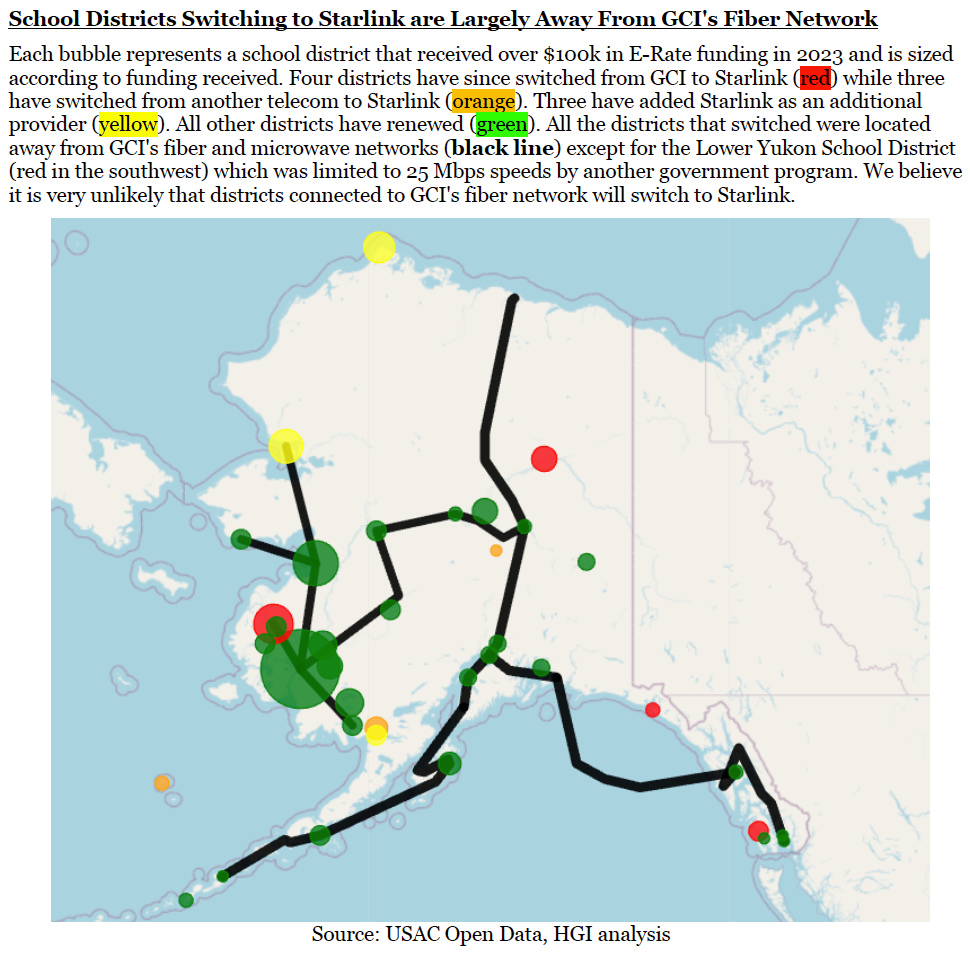
Liberty Capital’s GCI business grew 5% in high-margin healthcare and school contracts, while Quintillion could lift EBITDA to $440 million…
S Hidden Gems Investing 2 clicks

Celestica trades at 9.6 times projected 2027 adjusted EPS after an 83% Q3 revenue gain, while lower free cash flow guidance reflects growth…
SA  Ryan Canady 2 clicks

Cars.com is assessed through Buffett-style owner earnings, focusing on cash retained after maintenance capital spending rather than GAAP…
S The Owner's Memo 2 clicks
@ACapitalLP 1 click A Capital on X
Why wouldn’t you buy $KYIV below $13? Dominant Ukrainian telecom with ~47% market share, trading at <4x EBITDA, generating substantial FCF, with digital revenue growing ~70% YoY. Already trades at a massive “war discount”, and any credible progress toward peace offers meaningful upside optionality...
@DOMOCAPITAL DOMO Capital Management, LLC on X
Yeah, if you're focused on some sort of biofuel or energy play - $GPRE is almost certainly the best play from this point on. $ANDE just paid 4.25x ethanol assets that are very similar to what GPRE has. GPRE likely $30 if not $40+ by end of 2027 especially with higher likelihood of year-round E15 getting passed and with CA E15 beginning 1/1/2027. Plus GPRE spoke on call that they're likely buying back shares from this point on. By end of Q4 GPRE will be in a net cash position, including unmonetized 45Z credits, and is trading at like 3x 2027 EBITDA.
Sterling’s $4.1 billion backlog faces Texas permitting risk after a governor proposed a moratorium, while Connexion, Capital Asset Planning…
S Trade Ideas Flow 3 clicks
 @leevalueroach
Lee Roach on X
I’ve been covering $CKX forever. In April you could have owned this basically for free. The market was giving zero value to it even after a great land sale. Basically a pile of cash and land. Now Brad Jacobs is injecting $1 billion into it. Wow.

Blue Dolphin Energy trades near 1.3 times earnings as its Texas refinery benefits from diesel shortages, with projected 2026 EBITDA of $111…
S Capital Employed 6 clicks
@calvinblissett 1 click Calvin Blissett on X
$EMBC: Embecta (EMBC), spun out of Becton Dickinson in 2022, makes the pen needles and syringes people with diabetes use to inject insulin. Its U.S. pen needle business is shrinking from lost share and price cuts, and more patients are moving from daily insulin shots to weekly GLP-1s. To offset that, it is selling its needles inside the boxes of generic GLP-1 drugs, already launched in India, Canada and Brazil and targeted at $100M+ in revenue by 2033. It is also launching cheaper needles and syringes for new markets and buying into other drug-delivery products beyond insulin. Quick Pitch $350m Market Cap/$1.62B Enterprise Value. Less than 3x P/E. Warren Buffett Owners Earnings of $122m ex SBC. Cut dividend switched to $100m Buyback authorization that's being used. CEO/CFO/Director/CLO all bought August 12th
 @RagingVentures 1 click
Raging Capital Ventures on X
Even with the nice move today, $SKIN still only trades for ~4.5x EV/EBITDA. To potentially regain inclusion in the Russell 2000 (it was recently deleted), I estimate that $SKIN would have to trade for around 5.5x EV/EBITDA, or roughly $23 per share. That doesn’t seem like a high bar for a stable, capital-light business that should start generating meaningful FCF while also benefiting from two new pending product upgrade cycles.

CareCloud’s Q3 revenue rose 9% through acquisitions but fell 8% pro forma; the RCM consolidator targets 25–30% margins by shifting acquired…
S Calvin Blissett 2 clicks
@DOMOCAPITAL DOMO Capital Management, LLC on X
Over the next three years $GPRE earnings are going to exceed its entire enterprise value.... That's insane and it isn't based on any temporary factor such as the Iran war. These are durable, sustainable earnings. How does the market possibly come to a $14 valuation on this? Insane.
@RagingVentures 2 clicks Raging Capital Ventures on X
Solid Q and nice guidance hike from $SKIN, with growth in consumable revenues, improved margins, and good cost controls. New mgmt is focused on improving execution and product innovation. Biz is capital lite and trades at just ~4x EV/EBITDA with only 6.5 mm shares out.
 @Mr_Neutral_Man
Mr Neutral Man aka "Howard Marks of REITs” on X
Hmm, come to think of it. Maybe that previous chart isn't so far off. It's just that I own the stuff that's got at least a 20% discount to NAV A good example is that $PSA $EXR are 5.1 and 5.5% cap but $CUBE is 5.8%, but in the mid 6% not that long ago Bigger REITs also has more weighting
 SILC · long
Silicom (SILC) is pitched as inexpensive on its existing hardware business, with upside framed as a cheap call option.
BL Value Investors Club 4 clicks
@leevalueroach 3 clicks Lee Roach on X
Anyone smart on $MNTN? Stock is collapsing faster than my marriage and they have a pretty great balance sheet. If the AH holds this looks really cheap from first glance.
@majgeoinvesting 1 click Maj Soueidan on X
Excerpts from our morning email on $BRM.V and Hammond Manufacturing ( $HMMAF) BRM was clearly the best company I met at the @PlanetMicroCap Toronto conference last week. Whenever anyone asked me the question of who I liked the best at the conference, one stock came out of my mouth. It was BRM. Today’s record quarter supports this opinion and explains why we recently added it to our model portfolio platform. Biorem continues to display operating leverage, with revenue up 48% while EPS more than doubled… The Hammond Manufacturing story is just another example of how one of the best Multi Bagger factors to monitor is companies going through capacity expansions. This is especially true for those that are considered to be value traps trading at deep value levels because investors have lost faith in management’s commitment to shareholder-friendly capital allocation initiatives. We saw that happen with $MUEL before it rose 10x, and now we’re seeing it happen with Hammond Manufacturing…

Tim Isgro discusses reconstructing Li Lu, Eddie Lampert and Mohnish Pabrai investments, AI-assisted research, and Clear Secure, Remitly and…
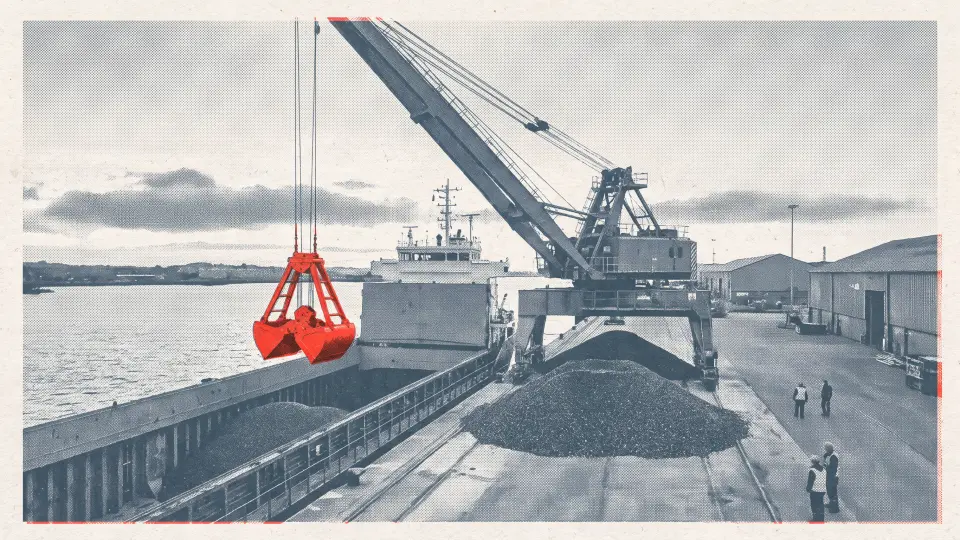
Diana Shipping’s Genco stake equals nearly 60% of its market cap, leaving its 36-ship fleet valued at about $1 per share as charter…
SA  The Market Auditor

Educational Development trades at 0.21x tangible book after selling its distribution complex to repay debt, but FY26's $2.3m profit masked…
S Dismissed & Asset-Backed 1 click
@leevalueroach Lee Roach on X
Rollins, Inc. $ROL is not cheap enough for me here as a true deep value (I pick up shit and find corn) investor, but a $50 million open market purchase by the Rollin's family is a massive vote of confidence here. Wonder if they are related to Henry Rollins?
@leevalueroach Lee Roach on X
Peabody $BTU is looking pretty good here imo. I’m sure they will screw up Centurion and will fall post earnings but it’s cheap here with irreplaceable assets and no net debt.
Nick Sleep’s Nomad returned 921% before fees by concentrating in Amazon, Costco and Berkshire, and backing businesses that share scale…
S Jimmy's Journal 3 clicks
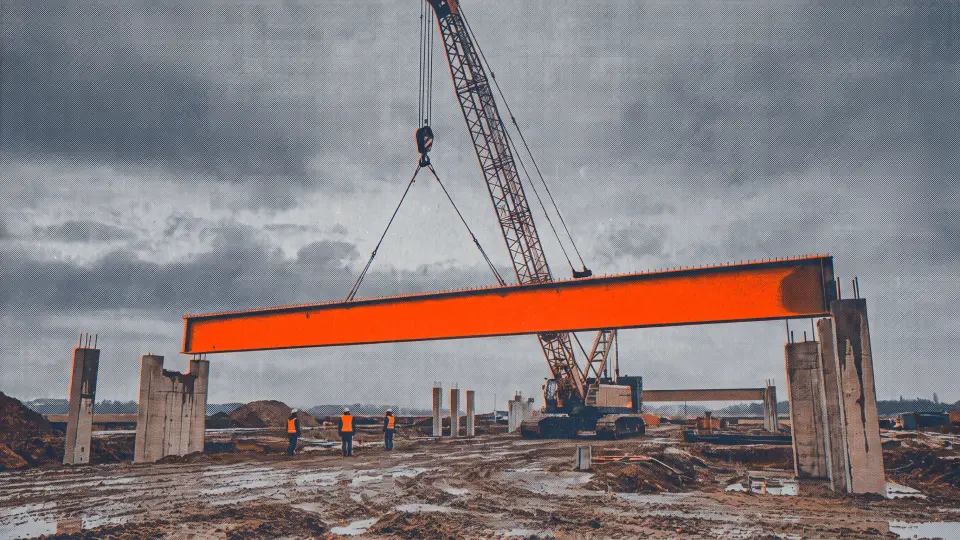 PRIM · long
Primoris Services, a $5 billion EPC contractor, has fallen about 60% from its peak.
BL Value Investors Club
 BR · long
Broadridge Financial Solutions is framed as a high and rising free-cash-flow generator at a depressed valuation, with insider buying…
BL Value Investors Club
 ONT · long
Onterris, formerly Montrose Environmental Group, trades at 8.6x next-12-month EBITDA as an environmental consulting and response services…
BL Value Investors Club 1 click
 @finphysnerd 3 clicks
Myles on X
I think $HONA looks pretty attractive here. Some execution risk, but this is fundamentally a fantastic business that is experiencing short term issues, while experiencing spinoff selling and hedge fund degrossing. I think it's hard to lose too much money here.
TurnMark Capital’s Jamil Tahir describes buying entrepreneur-led microcaps at fundamental inflection points and using Claude to automate…
S Sunday's Idea Brunch 3 clicks
@ACapitalLP 2 clicks A Capital on X
𝙀𝙭-𝘼𝙣𝙩𝙚 𝙫𝙨. 𝙀𝙭-𝙋𝙤𝙨𝙩 𝘾𝙖𝙩𝙖𝙡𝙮𝙨𝙩𝙨 One of the more important distinctions in catalyst-driven investing is “ex-ante” vs. “ex-post” catalysts (my words). Both can offer significant valuation dislocations, but the mechanics of realizing that value are fundamentally different… “Ex-ante” trades are cleaner. You identify a gap between price and intrinsic value, with an upcoming event (spin-off, asset sale, regulatory decision, etc.) that can force the market to reassess the security. You have a mechanism for value realization and at least (some) visibility into timing. “Ex-post” trades are much harder. Something unexpected happens, investors “shoot first, ask questions later,” and the stock collapses. Deep-value and distressed investors love these situations because the apparent discount to intrinsic value can be enormous. But the event that created the dislocation does absolutely nothing to resolve it. Look at $BAYN, where an identifiable June litigation catalyst helped drive a meaningful rerating. Contrast that with $CODI following its Lugano accounting scandal, where the stock collapsed from the high teens into the single digits. It took months of financial reporting progress, improved visibility, and renewed confidence for the stock to recover even partially. On the flip side, look at $VRRM following its major contract loss, where what initially looked like a massive overreaction was followed by further deterioration, with the stock now at $2.80. The irony is that ex-post trades almost always require a new “mini ex-ante” catalyst to unlock value. Otherwise you’re simply betting that the market eventually recognizes something is cheap. That can take years, and even then the security may never recover anywhere close to its prior valuation. The lesson is that a catalyst creating a valuation gap is not the same as a catalyst closing it. Cheapness is not a catalyst, and the magnitude of a selloff tells you very little about the probability of recovery…
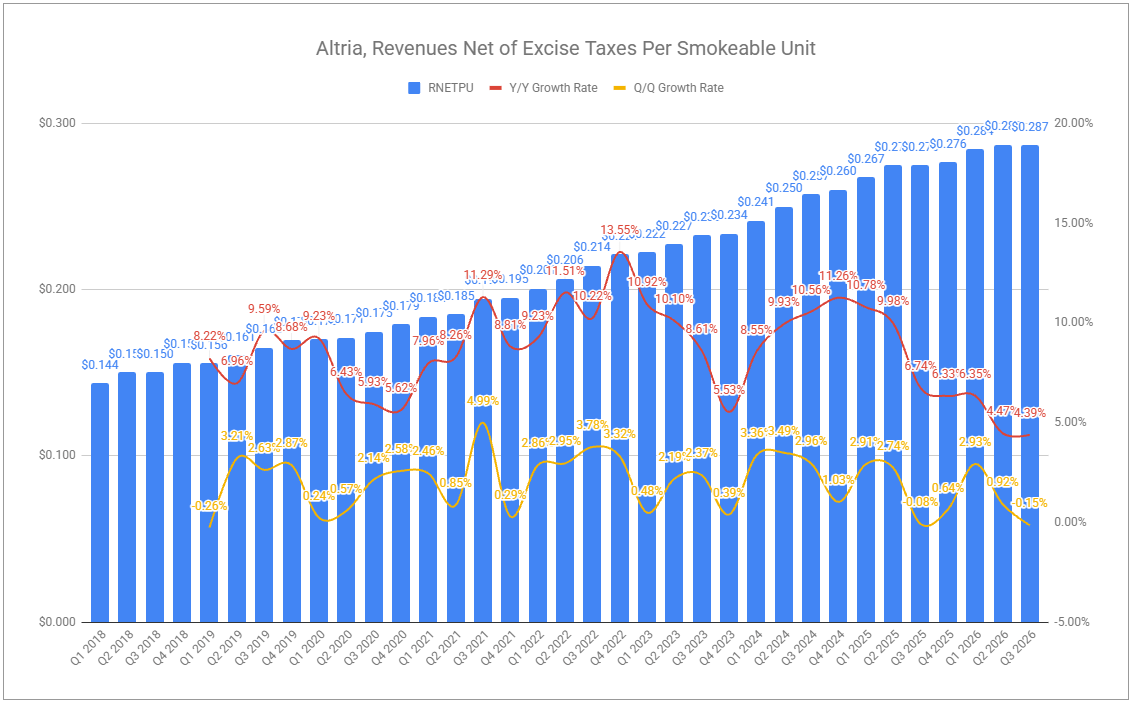
Altria raised 2026 adjusted EPS guidance to $5.66 to $5.74 and authorized more buybacks, while on! loses share as cigarette margins hold.
S Invariant 3 clicks
@calvinblissett 4 clicks Calvin Blissett on X
$ANGI: $5.99, $243M mkt cap, $189M of cash vs $422M of debt, ~$477M EV, ~4.3x EBITDA. Shares down 16% in a year and the stock down 55%. Angi is HomeAdvisor plus Angie's List, the place you find a plumber, spun out of IAC in April 2025. I won't pretend it's clean. Q2 revenue fell 11% to $248M, service requests fell 6%, guidance got pulled, and management pushed a return to growth into 2027. Refinancing the bonds due within a year is the top priority. So why is it here? JLHR wrote it up on VIC in May 2025 at $15.75 at 6-6.5x EBITDA. His point was that everyone was staring at revenue and missing how much better the earnings power had gotten. It's 4.3x now. Since then the share count is down 16%, BlackRock just disclosed a 12.5% stake, and July's EBITDA margin ran ~700bp above Q2. They also bought Contractor+, a back-office app used by 50K contractors, to make Angi part of the pro's daily workflow. Value Line gives it a 5 for Performance and a 5 for Safety, the scariest costume in the issue. Investor day is Nov 17. If the refi gets done and revenue stops falling, you're paying ~4x EBITDA for one of the best-known brands in home services. If not, it's a lot of debt for a $243M equity.
@calvinblissett Calvin Blissett on X
$TZOO: $5.16, $53M mkt cap, ~$8M of cash vs ~$6M of debt, ~$51M EV. Shares down 12% in a year, and insiders own 36%. Travelzoo is the travel-deals email your parents still open. 30 million members, founded by Ralph Bartel, and his family still runs it. It's halfway through switching from advertising to paid "Club" memberships. GAAP makes that look awful because the cost of signing members is expensed up front, while the fees come in over 12 months. Q3 revenue was $22.9M, up 3%, with a wider loss but record paid-member adds. clarksquarecap wrote it up on VIC in April at $5.92. He argued it screens badly on every metric while the economics get better, and estimated ~$1.40 of EPS by 2027, around $20 at 15x. He put the downside at 10-15% at a trough EV/sales. After Q3, people on X said the same thing: "GPM back up, CAC down, and record acquisition of paying members," and one called it "5x P/E diluted on 2028 numbers." Value Line has Financial Strength at C++, but it raised the Technical rank yesterday. It's tiny and illiquid, and the whole thesis depends on renewal rates nobody has seen yet. The first cohort renewing is the catalyst. Size it like a $53M company.
@calvinblissett 1 click Calvin Blissett on X
$NTB: $56.15, $2.22B mkt cap, 9.8x trailing and 8.1x forward earnings, a 21% ROE, a 3.6% dividend, and 5.4% of the shares bought back in the last year. ~2.2x tangible book of $25.32. Butterfield has been banking in Bermuda since 1858 and also runs trust and wealth businesses in Cayman and the Channel Islands. Offshore deposits are sticky and cheap, and the trust business is a fee stream that doesn't care about rate cuts. Q3 core EPS was $1.58, flat with Q2, revenue beat at $161.9M, and tangible book dipped 3.3% on bond marks. gary9 wrote it up on VIC in 2017 at $33.94 and nailed why it stays cheap: "NTB screens as expensive on a P/B multiple, while the higher ROEs are dismissed due to a 0% tax rate." Nine years later the same thing is true. 2.2x tangible book looks expensive for a bank, until you see it earns 21% on equity and sends ~9% of its market cap back every year in dividends and buybacks. Value Line rates it Safety 2 with a Price Stability of 75, the steadiest name in the issue. The thing to watch is taxes. If Bermuda's global minimum tax ever reaches a bank this size, the 0% rate goes away, and so does part of the ROE.
@calvinblissett 2 clicks Calvin Blissett on X
$UPWK: $9.15, $1.14B mkt cap, $614M of cash and securities vs $379M of debt, ~$907M EV. ~$204M of TTM FCF, an ~18% FCF yield, 7x forward earnings, and 5% fewer shares than a year ago. Upwork is where companies hire freelancers for code, design, writing, and more and more, cleaning up after AI. The market decided agents replace freelancers and took the stock down 46% in a year. The business is shrinking a little, not collapsing: last quarter GSV fell 4% and active clients went from 796K to 763K, but spend per client rose 5% to $5,230 and adj EBITDA grew 12% to $64M at a 33% margin. The best insight came from the CEO, not an analyst. Hayden Brown said requests like "turn my vibe-coded concept into a production website" and "humanize the translation output from this AI" are growing. felton2 wrote it up on VIC in Feb 2025 at $15.56 and called the AI fear the entry point. It's $9.15 now with more cash flow, and one guy on X summed it up: 16x forward sales in 2021, single-digit forward earnings in 2026. Management is acting like owners. They bought back $110M (8.3M shares) in the first half and have $254M left on the authorization, about 22% of the market cap. Value Line has it at Technical 5, so nobody is chasing it. If revenue just stops shrinking, you own a net-cash marketplace at 7x earnings that's eating its own shares.
@DOMOCAPITAL DOMO Capital Management, LLC on X
$GPRE Wow - that's a ton of cash for a company with a $955M market cap......... current valuation makes no sense.
 @kab604
kab60 on X
"The current environment strongly favors allocating capital toward share repurchases and as such we have secured Board authorization for an additional $1 billion in share repurchases" $AN up pre-market, $GPI and $ABG up biggly since the lows... These things shouldn't trade ~7x
 @DeepSailCapital 1 click
Deep Sail Capital on X
@alainknokke Give it some time. Also if you read the article you would have seen I said don’t short $CRML right now because of the borrow situation, and suggested a higher entry point on $ALOY
@StableBread Fajasy on X
First Solar $FSLR trades at 6.7x TTM EBITDA and 10.4x TTM net income, while TOYO Co., Ltd $TOYO trades at just 0.9x and 2.0x. At $3.83/share, $TOYO has a market cap of $163.6M and an EV of $137.2M ($163.6M + $25.7M of bank loans + $51.4M owed to VSUN, an affiliate - $103.5M of cash). It trades at 0.9x TTM EBITDA of $156.4M, 2.0x TTM net income of $80.5M, and 0.78x its $209.8M of book value. Since 80.7% of its H1 revenue came from U.S. end customers, $TOYO’s closest comps are four other listed solar manufacturers selling into the U.S. (TTM multiples as of the October 26 close): → First Solar $FSLR (U.S. thin-film panel maker): 6.7x EV/EBITDA, 10.4x P/E, 1.75x P/B, and down 47.2% from its 2026 high. → Canadian Solar $CSIQ (panel and battery storage maker): 18.8x EV/EBITDA, a net loss, 0.22x P/B, and down 65.2%. → JinkoSolar $JKS (China-based panel maker): A net loss, 0.19x P/B, and down 72.7%. → T1 Energy $TE (Texas panel assembler building a U.S. cell plant): Negative EBITDA, a net loss, 2.95x P/B, and down 82.4%. So the market prices $TOYO’s earnings at 0.9x EBITDA, less than a seventh of First Solar’s 6.7x, a multiple that only makes sense if the four U.S. trade actions on its Ethiopian cells wipe out most of those earnings. Only $TE has fallen further from its 2026 high. I was originally going to write up T1 Energy until I found $TOYO, which offers a more attractive setup mainly because (1) it’s profitable, with $80.5M of TTM net income vs. T1’s $367.8M net loss, (2) it trades at 0.78x book vs. T1’s 2.95x, and (3) it has $26.4M of net cash vs. T1’s $629.2M of net debt.
 @MaiusPartners
Maius on X
@GlobalStockPick At least it is not so "cheap" yet that it attracts a certain $LULU investor base; that is when one has to truly worry!
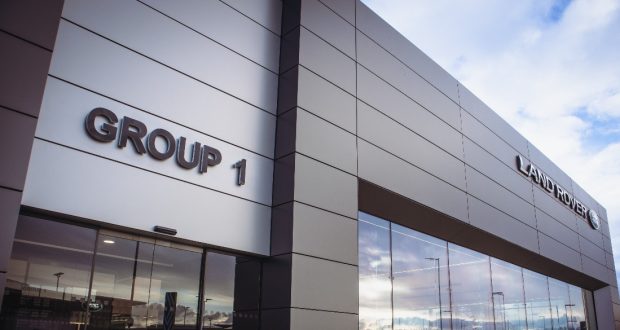
Group 1 Automotive trades at 5.5 times earnings as aging gasoline vehicles and EV repairs sustain service profits; insiders bought while…
S Cannibal Stocks 1 click

Alexandria Real Estate (ARE) faces lease expirations and occupancy pressure through 2028, but leasing momentum supports a projected…
SA  Luuk Wierenga
@KEDM_COM KEDM.com on X
We highlighted Harbor Diversified $HRBR back in Jan after the announcement that the company was selling Air Wisconsin, which would bring the estimated cash level of the company to $3.5 per share, whilst the company was trading at $1.5 a share. Cedar Creek Partners @eriksen_tim also highlighted this ED in its Q3.
 @TidefallCapital 1 click
Trevor Scott on X
$WHR Whirlpool price today: $27.42 Whirlpool EPS in 2021: $28.36
@leevalueroach Lee Roach on X
Back in February I wrote up Sunstock $SSOK, a tiny public company that owned Mom's Silver Shop, a single coin shop in Sacramento. The thesis was simple. The last public financials showed 27,317 oz of silver and 80 oz of gold. At the time, with silver at $113 and gold at $5,340, that was about $3.5M of bullion. The market cap was about $67k. Liabilities were about $753k. Net of those, I got about $2.76M of value, or about $0.45 a share. The catch: the company went dark. In March 2025 it filed a vague late-filing notice, then nothing. The stock moved to the expert market. The shop closed. Someone reached out and told me the prior owner had said the CEO was arrested for fraud and his home and store were raided. I've never been able to confirm that. So it came down to two outcomes. Either the metal is gone or fake and this is a zero, or it's real, authorities have it, and something eventually comes back to shareholders. Where it stands now The metal has gotten cheaper. Silver is around $53 and gold around $4,010. That puts the bullion at about $1.78M. Net of liabilities, about $1.02M, or about $0.17 a share. The stock is quoted around $0.0185, a market cap of about $113k. So it's still about 9x on paper, down from the roughly 40x I wrote about. Most of that move is just silver coming off its highs. All the non-news No SEC filings since the March 2025 notice. Still flagged delinquent. No DOJ press release, no court record, no local news I can find tying the CEO or the company to an arrest, raid, or seizure. No receivership or custodianship filing I've found. One odd data point: in June 2026 the transfer agent verified a new share count, 6,121,873, up 15,000 shares. Small, but someone is still dealing with the transfer agent. That's it. Eight months of silence. So here's the ask If anyone knows anything about $SSOK, Sunstock, or Mom's Silver Shop in Sacramento, I'd love to hear it. Court records, the transfer agent, the former owner, people who used to shop there, anything. Let's see if we can piece this together. DMs are open.
 @hkuppy
Kuppy on X
@KEDM_COM Anyone know what they see in $DOLE It’s cheap, but what is the catalyst they want to unlock??
@StableBread 1 click Fajasy on X
A solar manufacturer that grew revenue 141.5% in 2025 now trades at 2.0x TTM earnings, after falling 77.5% from its June peak. U.S. customs (CBP) has been detaining its Ethiopian cells since May, and Commerce is deciding whether they should pay the duties on Chinese cells, with a first ruling due around December 14. That company is TOYO Co., Ltd $TOYO, now at $3.83/share. $TOYO’s closest comps are four other listed solar manufacturers selling into the U.S., and all four are down from their 2026 highs too, as of the October 26 close: → First Solar $FSLR: Down 47.2% to $168.15/share. → Canadian Solar $CSIQ: Down 65.2% to $8.85/share. → JinkoSolar $JKS: Down 72.7% to $8.17/share. → T1 Energy $TE: Down 82.4% to $2.12/share. Only $TE has fallen further from its 2026 high. Besides CBP’s detentions and the Ethiopia inquiry, four more overhangs landed after the June peak: 1) Discounted stock sale: $TOYO sold $50M of stock and warrants at $11.00 on June 24, a 14.9% discount to the prior close, and the stock fell 38.8% that day to $7.91. 2) New tariff: An August 6 proclamation set a 15% U.S. tariff on imported solar cells and panels, including $TOYO’s cells from Ethiopia, starting December 4. 3) Guidance dropped: $TOYO didn’t reaffirm its 2026 targets with its H1 results on August 19, when the stock fell 24.2%, and on September 28 only said it expects positive EBITDA for H2 2026. 4) Parent delisted: The Tokyo Stock Exchange delisted Abalance, the Japanese group that controls $TOYO, on September 26. Still, $TOYO is profitable and has net cash: → Earnings: $156.4M of TTM EBITDA and $80.5M of TTM net income. → Cash flow: $61.4M from operations in H1 2026, less $27.8M of capex, for $33.7M of FCF. → Balance sheet: Went from a going-concern warning to positive working capital in six months, with $26.4M of net cash as of June 30. → Texas: Doubled its Texas module capacity to 2 GW and signed ~$240M of binding module contracts since mid-June. → Tax credits: Management expects $140M/year of U.S. manufacturing tax credits at full Texas output, 85.6% of $TOYO’s market cap, and leaves those credits out of its forecasts. $TOYO’s EV of $137.2M is just 0.9x its TTM EBITDA. So is $TOYO a profitable non-Chinese cell maker on sale, or is the market right that Ethiopia’s U.S. sales won’t last?
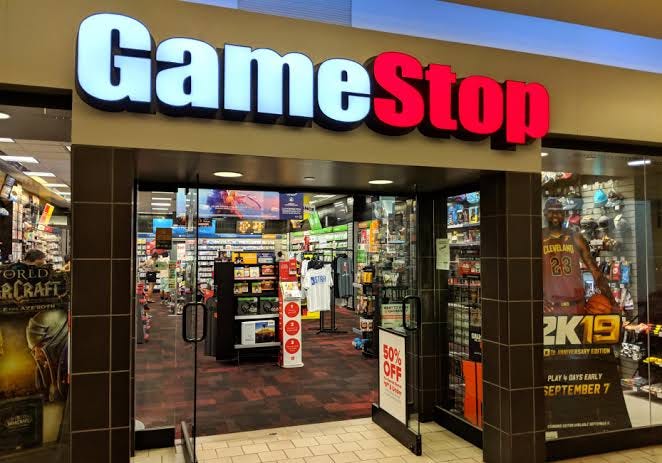
GameStop’s $6.1 billion in net cash equivalents and shift toward collectibles underpin a $30 to $40 per-share valuation thesis.
S Hidden Rock Capital's Newsletter 4 clicks
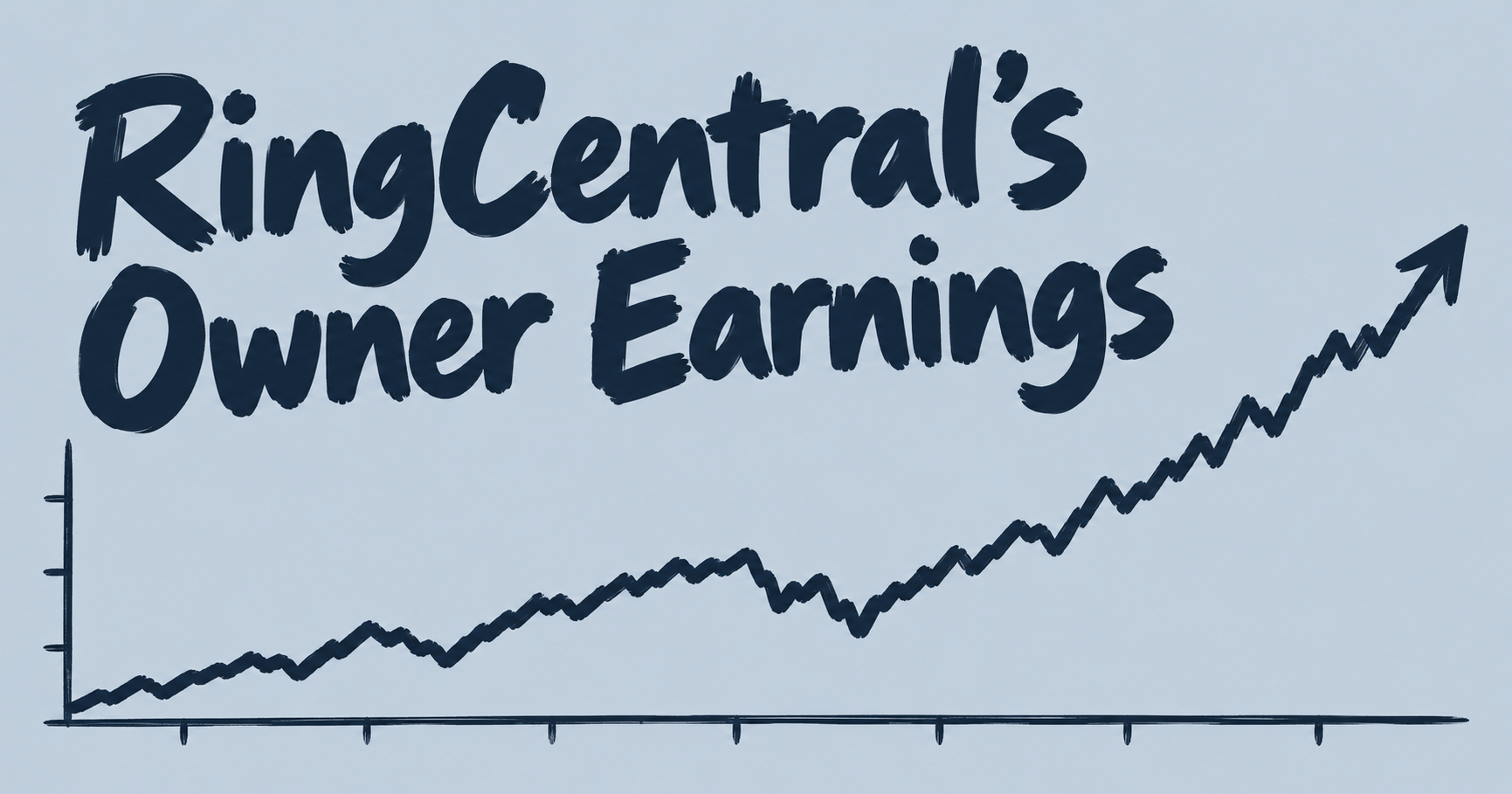
RingCentral traded at 73 times trailing earnings in April 2026, while free cash flow and owner earnings framed RNG as cheap.
S The Owner's Memo
 SBAC · long
SBA Communications trades at 14.9x forward AFFOPS, near a record low, despite being pitched as the market’s cleanest tower operator.
BL Value Investors Club
 SAMG · long
Silvercrest Asset Management is framed as undervalued while funding an ambitious investment cycle.
BL Value Investors Club
@Mr_Neutral_Man Mr Neutral Man aka "Howard Marks of REITs” on X
@voltino_cro We bought $VNO preferred a few years back at 11.5% yield We've done over 20% CAGR for almost 4 years now Just added a little bit recent at a 8.3% yield
 @valuedontlie
Colin King on X
Flagstar $FLG probably outside my "circle of competence" but can't help looking... Cut FY27 EPS guidance from $1.65 to $0.90 (ouch) and pushed out to FY28 (because higher rates?) $60bn loan book with half of it in questionable CRE/MF loans concentrated in NYC (former NYCB), another ~third in growing C&I loan book Efficiency ratio ugly $10 stock with $15/sh TBV = 0.67x Maybe a value trap?
@calvinblissett 7 clicks Calvin Blissett on X
$MP. You guys know me I am CHEAP, negative enterprise value, double digit dividend yields cheap. The theme behind $MP looks very secular, I saw Ross Perot call what they have in California the “Saudi’s Arabia” of magnets. Analysts price targets are virtually all 100% above today’s price. The selloff is not justified based on the underlying commodity price (aka fundamentals) is my takeaway from some reading. I also spoke with someone who worked at BofA this summer and per him “on a call with a senator the senator was essentially just repeating buy $MP and the moderator said shut up and stop”. May someone with a bigger brain then me give their thoughts
@calvinblissett 1 click Calvin Blissett on X
$MP. You guys know me I am CHEAP, negative enterprise value, double digit dividend yields cheap. The theme behind $MP looks very secular, I saw Ross Perot call what they have in California the “Saudi’s Arabia” of magnets. Analysts price targets are virtually all 100% above today’s price. The selloff is not justified based on the underlying commodity price (aka fundamentals) is my takeaway from some reading. May someone with a bigger brain then me give their thoughts

Signet Jewelers cut its share count from 87 million to 38 million since 2012 as short interest reaches 15%, amid a hated diamond market.
S Cannibal Stocks 20 clicks

Charlie Munger and an unnamed fellow speaker discuss how financial statements can be used to judge a business when management, stock price…
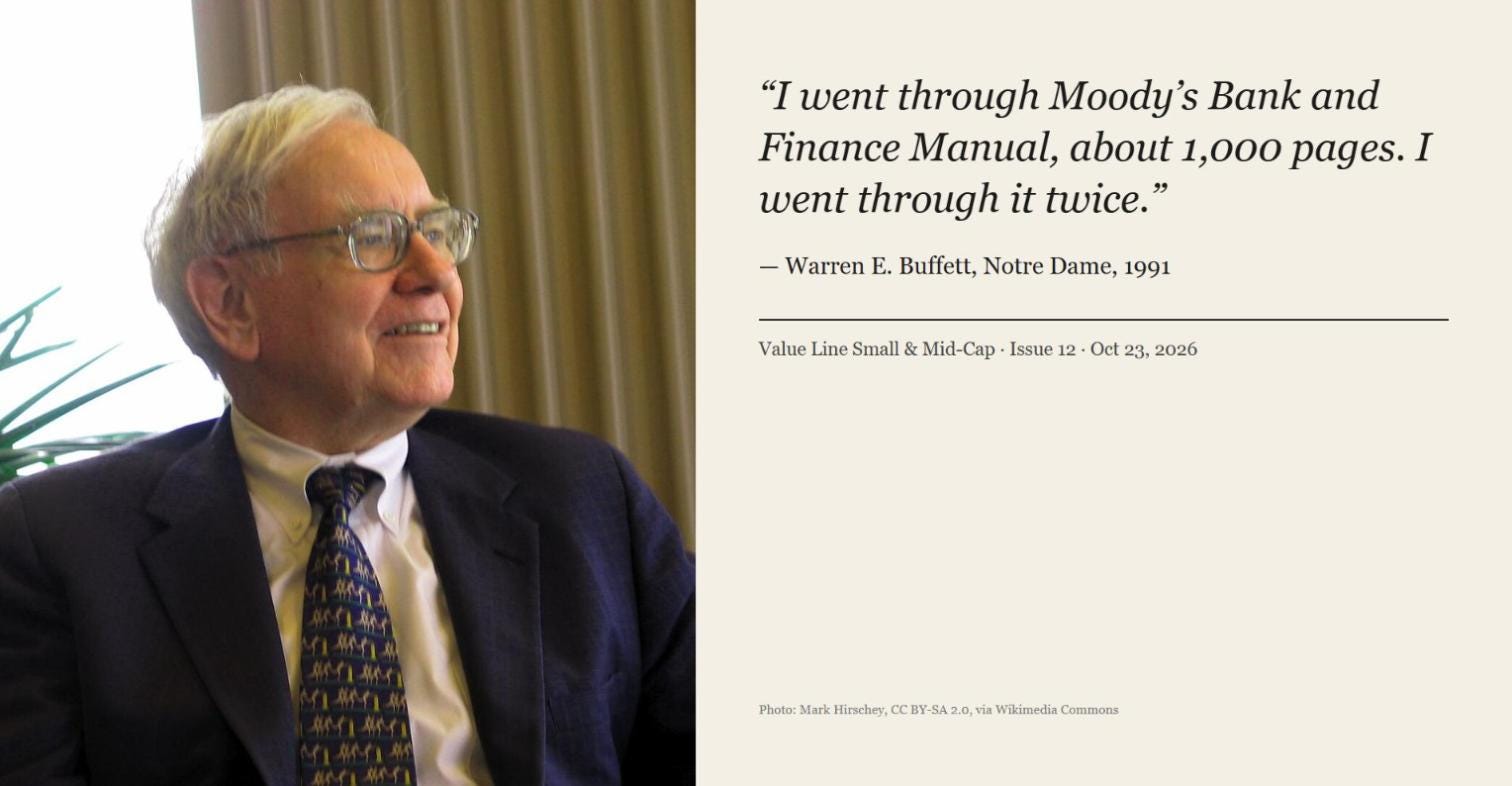
Six Value Line small caps including Blackbaud, Marqeta, Ranger Energy and Definitive Healthcare trade on net cash, buybacks, low multiples…
S Calvin Blissett 81 clicks
@calvinblissett 2 clicks Calvin Blissett on X
$PRGS: $46.45, ~$1.9B mkt cap, ~$1.5B net debt, ~$3.4B EV. Guiding $275M to $283M of adj FCF this year, a ~14.7% FCF yield on the equity, and ~7.5x non-GAAP EPS. This is the levered one. Progress is a software roll-up: it buys sticky, mature products (OpenEdge, Chef, MOVEit, ShareFile), strips out cost, runs ~40% non-GAAP margins and uses the cash to pay down debt and buy back stock. Just closed Domo for $400M, ~3.5x pro forma EBITDA, funded on the revolver, so net leverage is ~2.9x pro forma. The bet is simple: keep throwing off ~$280M a year, push leverage back toward 2x, and the equity owns a bigger slice of the EV every year. Value Line's price in this issue was $38.61, it has run to $46.45 since, so it's not a secret anymore. Risks: ~3x leverage, flat organic growth (ARR +1%), MOVEit litigation, and GAAP EPS is a fraction of non-GAAP.
@calvinblissett 2 clicks Calvin Blissett on X
$RNGR: $14.71, ~$345M mkt cap, ~$395M EV after the STEP deal. Q2 adj EBITDA $28.6M, so ~3.5x run-rate EBITDA. Ranger runs well-service rigs, wireline and coiled tubing in the Permian and Bakken: the crews that keep old oil wells producing. Unsexy, but maintenance work holds up better than drilling. Capital allocation is the pitch. They've bought back ~4.6M shares since 2023 at ~$11 avg, pay a dividend, and just bought STEP's US coiled tubing assets for $27.5M, ~2.5x expected 2027 EBITDA. Chevron gave them 3 more hybrid ECHO rigs in July. Mgmt is targeting $100M+ of EBITDA against a ~$395M EV. Risk: H1 FCF was negative because customers paid slow (receivables went from $78M to $124M). When that cash comes home, FCF jumps.
@calvinblissett 1 click Calvin Blissett on X
$BLKB: $55.54, $2.5B mkt cap, ~$1.1B net debt, ~$3.6B EV. Guiding $280M to $290M of FCF this year, ~11.5% FCF yield on the equity. Blackbaud is the software nonprofits, schools and churches run their donors and books on. Nobody rips out their fundraising system mid-campaign, so revenue is sticky and adj EBITDA margins are ~38%. It only grows ~3%, so it's priced like a melting ice cube. But mgmt has pledged at least half of FCF to buybacks through 2030. They retired ~6% of shares in H1 alone and the count is down from 52.5M at YE23 to 44.8M. That compounds per share even with no growth. Risks: ~2.6x leverage, AI coming for vertical SaaS. Q3 is Oct 28.

Netflix pairs international engagement, free cash flow and buybacks with plans for double-digit revenue growth, margin expansion and larger…
SA  Juxtaposed Ideas 12 clicks
Weyerhaeuser trades at 50% of NAV as timberland prices rise, with 2028 FFO forecast 83% above 2025.
SA  Dane Bowler 11 clicks
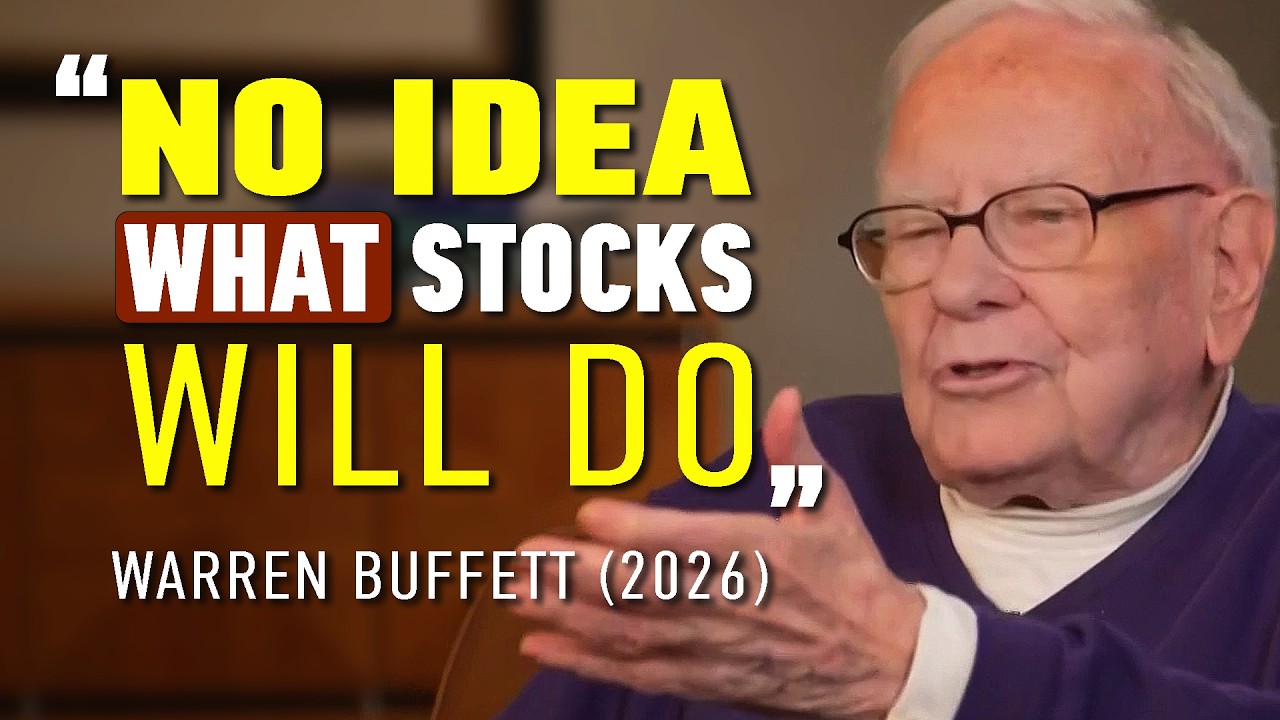
Warren Buffett discusses valuing businesses rather than predicting stock-market moves, and explains why he does not try to assess AI or…
@calvinblissett Calvin Blissett on X
Low liquidity is often seen as an absolute disadvantage in investing, like most things it is more nuanced than that. What if it can actually become an independent driver of returns, creating a Lollapalooza affect for the company who's value of float is increasing due to fundamentals: On liquidity and float: The users are buyers and sellers, and a connection is a possible trade between them. As the float's value rises, more people can take part: bigger funds, index trackers and market makers. Each newcomer adds a possible counterparty for everyone already trading. So, the number of possible trades, which is what liquidity really is, grows roughly with the square of the participants, not in a straight line. It also feeds itself, like any network. Liquidity attracts traders, because they can get in and out cheaply. Those traders add more liquidity, which pulls in more traders. Bid-ask spreads narrow, which lowers trading costs and brings in more volume. The majority of this was eloquently articulated by one of the most formidable minds I am aware of @sammutgabi. Our investment strategy leads us into a fair amount of low liquidity names, where the dynamic mentioned above can spark tantalizing returns such as $RYSAS $RYGO $RYSKF $RYSAS.IS
 @ClarkSquareCap
Clark Square Capital on X
$GRVY is back to trading below net cash, even after paying its ~5% dividend.
@calvinblissett 1 click Calvin Blissett on X
I do deep value and small companies, however value can be anywhere. I did enjoy reading this though and it is compelling. $ORCL
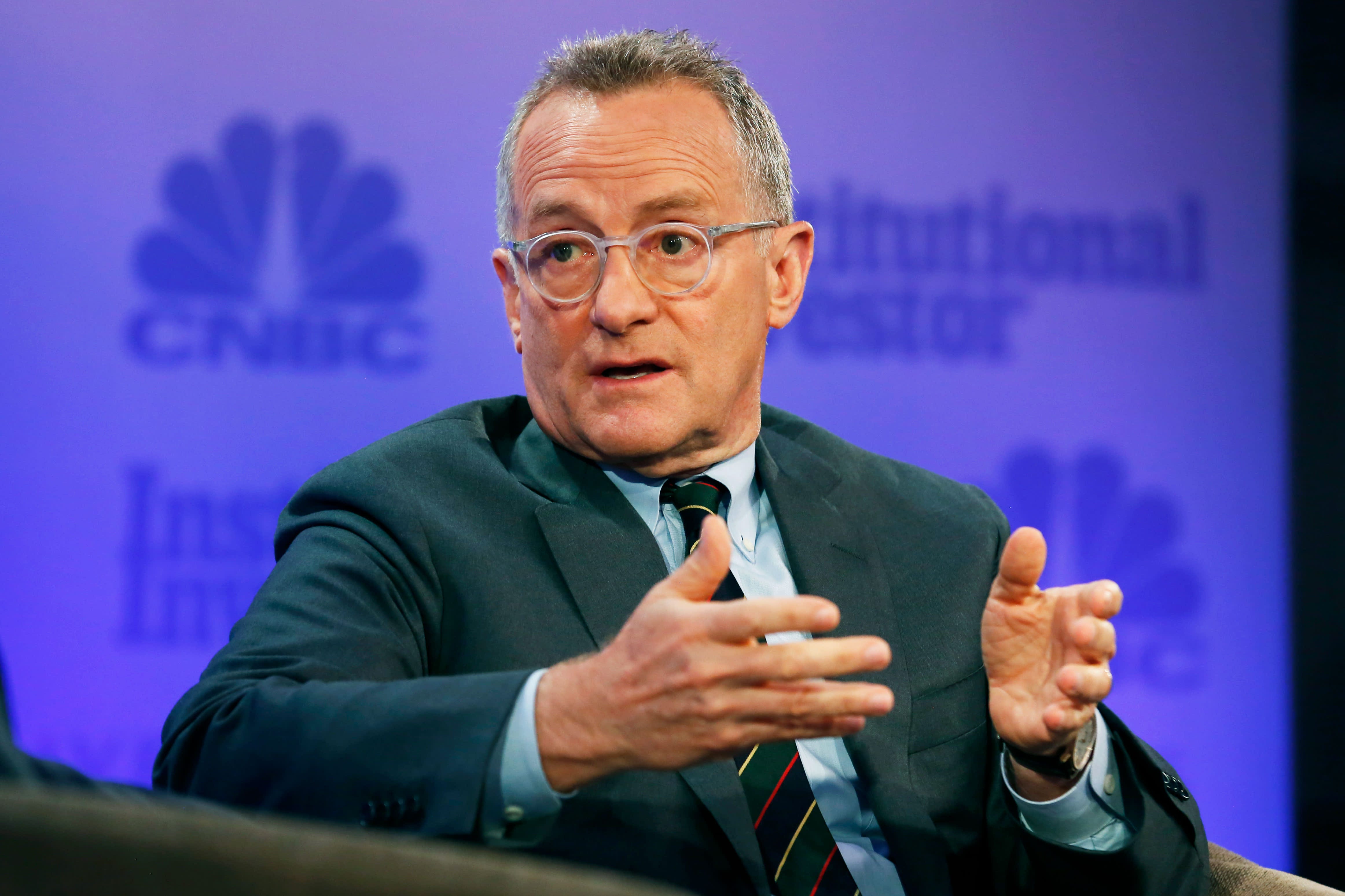
Rollins, North America’s largest pest-control provider, gets 75–80% of revenue from recurring contracts but has fallen about 45% year to…
S Jimmy's Journal 68 clicks

Intel is pitched as a value alternative to Nvidia despite trailing in AI, with profitability potential outside AI leadership.
SA Ryan Canady 7 clicks 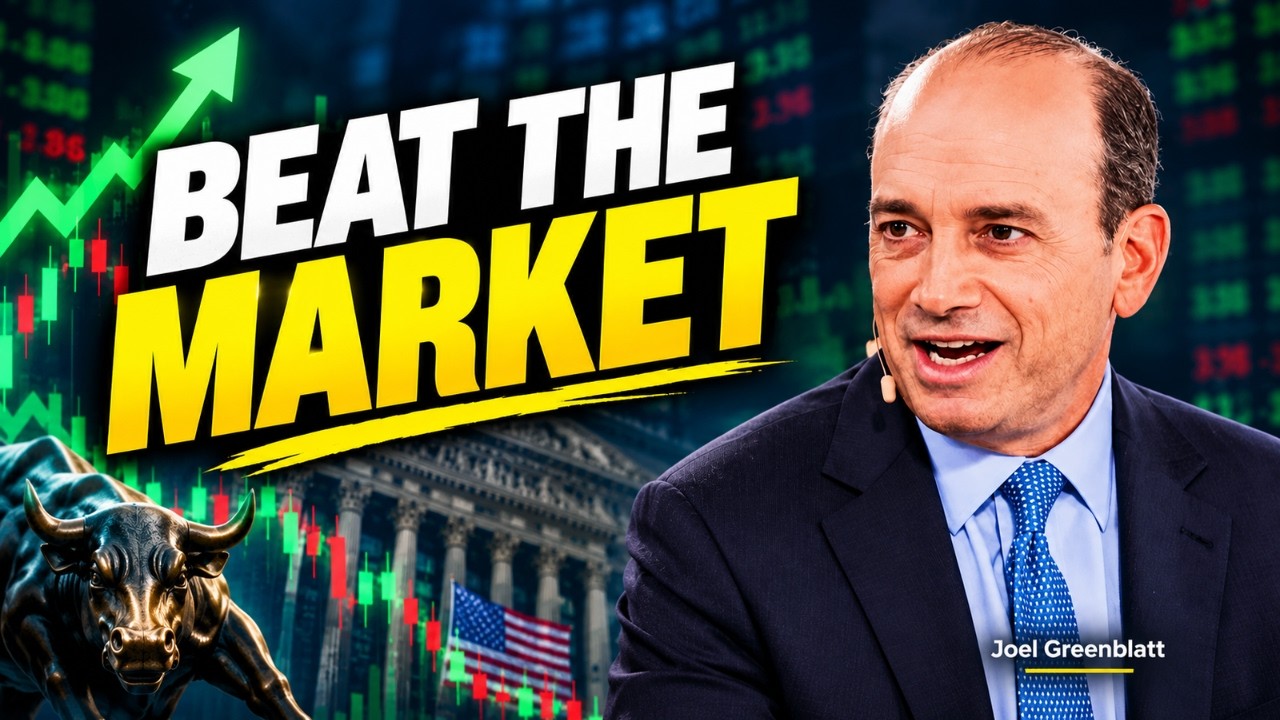
Joel Greenblatt explains why he continues to pick stocks despite agreeing that most people should index.

Sagimet Biosciences' denifanstat enters a fully funded U.S. acne registration trial after Phase 3 results, with SGMT trading below cash and…
SA  Equity Eagle 3 clicks

NioCorp values Elk Creek at $72 million against a $3.44 billion after-tax NPV, with $1.849 billion of financing and execution risk still…
SA  GT Research
LendingTree derives roughly two-thirds of revenue from insurance and trades near 4 times expected adjusted earnings despite record revenue,…
S Substack von Philipp 11 clicks
 SKIN · long
SkinHealth Systems owns a dominant professional skincare consumables franchise but trades at roughly $115 million market cap and $255…
BL Value Investors Club 5 clicks
 FINV · long
FinVolution, a China and ASEAN unsecured consumer lender, trades at 4x earnings and 0.5x book value.
BL Value Investors Club 5 clicks
@calvinblissett 1 click Calvin Blissett on X
GAMCO Investors ($GAMI) is the value-investing asset manager founded by Mario Gabelli, with $36.6 billion of AUM. The shares trade at a steep discount largely because of structure, not operations: GAMCO voluntarily left the NYSE for the OTCQX market, which puts it outside most indexes and institutional mandates. Its public float is small, and voting control sits with non-traded Class B shares held by Gabelli’s family entity. At $25.32, GAMCO holds $231 million of cash and investments with no debt, about $11 per share, or more than 40% of the market cap. With Q2 EPS of $1.07 (up from $0.93 on 13% revenue growth), the stock trades at about 6x annualized earnings, and the operating business excluding cash at roughly 3–4x. Part of its AUM sits in closed-end funds, permanent capital that cannot be redeemed, which makes the fee stream stickier than a typical active manager’s. Key-person risk around Mr. Gabelli is real, and the recent addition of Christopher Marangi to the board supports succession.
@calvinblissett Calvin Blissett on X
Virtus Investment Partners ($VRTS) is a multi-boutique asset manager with $152 billion of AUM. The stock has fallen about 20% since August as quality-style equity strategies suffered $14.1 billion of year-to-date outflows. At $132.29, VRTS trades at about 6x annualized adjusted EPS of $5.54 with a ~7% dividend yield, and net debt is just 0.9x EBITDA. The less obvious fact: Virtus’s average fee rate rose to 43.1bps from 41.3bps a year ago despite outflows. Lower-fee equity assets are leaving, while higher-fee alternatives ($19.7 billion of AUM) and ETFs are growing, including the 56% stake in private-credit manager Keystone, acquired in March. One caveat from the footnotes: the noncontrolling interest liability jumped to $152.5 million, largely Keystone, which signals a future obligation to buy the remaining equity. Buybacks have shrunk the share count to 6.6 million.
@calvinblissett 3 clicks Calvin Blissett on X
PetMed Express ($PETS) is an online pet pharmacy that has collapsed under Chewy and Amazon competition: FY2026 sales fell 21% to $179 million, with a $57 million net loss including a $26.7 million goodwill write-down. At $1.38, the stock trades at about one-third of the $4.00–4.25 per share unsolicited bids the board rejected in December 2025. With $21 million of cash, no debt and about 21 million shares, cash covers most of the ~$29 million market cap, leaving an enterprise value under $10 million, or less than 0.1x sales. The stabilization is tentative but visible: Q4 sales grew sequentially for the first time since FY2024 as AutoShip sign-ups improved, management is cutting $6.1 million of vendor costs, and new white-label pharmacy deals such as Rural King use excess fulfillment capacity. The risk is time: operating cash burn was $28 million last year, so the turnaround must show up within about four quarters. The board says it remains open to future offers.
@calvinblissett 3 clicks Calvin Blissett on X
"I don't know of any other system that's as good… The snapshot it presents is an enormously efficient way for us to garner information about various businesses… I have yet to see a better way, including fooling around on the internet, that gives me the information as quickly." -Warren E Buffett on Value Line. I will do deep dives on the 2 opportunities you guys are most interested in. I think $GAMI, $ALX and $TREE (due to the narrative) are the most itneresting.
@ACapitalLP 5 clicks A Capital on X
The asset base is too large and diversified to ever underwrite loan by loan. The thesis is that the private credit apocalypse is exaggerated, $OWL became the poster child given its reliance on the HNW channel, and the market is assigning far too little value to its non-credit assets and durable fee-generating franchise.
@ACapitalLP 5 clicks A Capital on X
What are the most interesting asset monetization / SOTP situations in the market right now? Looking for companies where the public market is materially undervaluing the underlying assets, with a credible path to unlocking that value through asset sales, spin-offs, or corporate simplification. Not just cheap conglomerates. Actual catalysts. I’ll start: $FUL $CODI $KBR
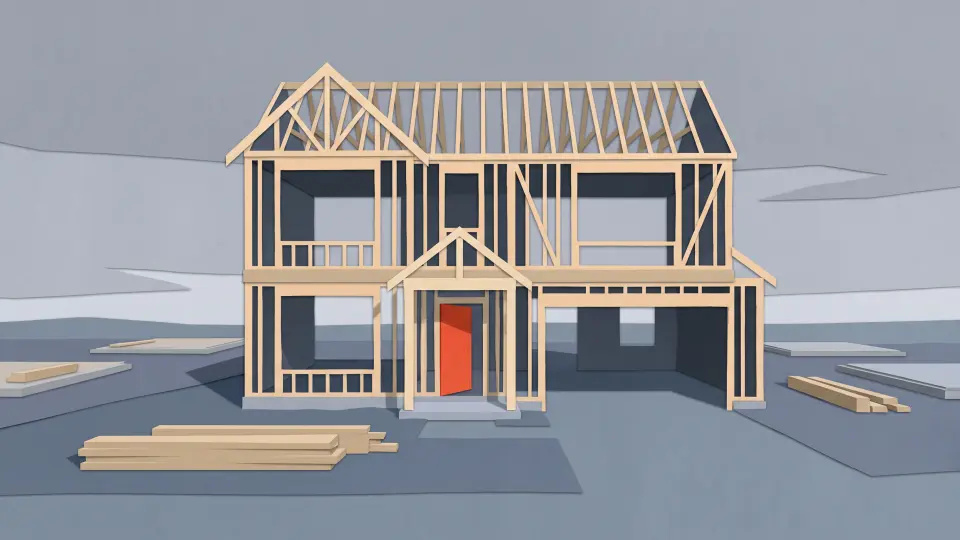
Meritage Homes trades at 0.76x book despite lower leverage, higher equity per share and capital returns, as mortgage rates pressure housing…
SA Tim Travis 12 clicks  @BlueDuckCap 5 clicks
BDC on X
$XGN on sale here. $STIM also. IMHO. Not advice - as always.
@calvinblissett 2 clicks Calvin Blissett on X
I kind of love this, sets up the capital slosh effect that happened in 2000s with the great rotation from tech to value. I think something similar happens here eventually and offers uncorrelated returns which will be more valuable. I will be eating dirt on value until then, clipping my coupons and buybacks. $KSPI $BOC $SLM $HHS $ZIM $CCLD $WU $HY $AMR $CNR $METC $HCC $FISV $YB $BTU $CNRD
@calvinblissett Calvin Blissett on X
Sallie Mae ($SLM) 5.8x OE, Uber Cannibal (50% bought back since 2021), Outsider CEO, double digit EPS growth for years, 30% ROE. TAM just exploded. Franchise business model as a bank. 2.4% dividend Free writeup so please share if you find valuable or useful so I can do more free. Next 2 negative EV companies for founding subs only.
@leevalueroach 1 click Lee Roach on X
Real value investors own four annual reports for $MCCK.
@marginofdanger 1 click marginofdanger on X
$TIPT is trading at 70% of cash value. Has traded off ~10% for no good reason, probably because its a source of funds for investors who want to redeploy given the revaluation of small caps.
@DOMOCAPITAL 8 clicks DOMO Capital Management, LLC on X
Fantastic article on $PESI here: Extremely undervalued stock and market is putting way too much emphasis on whether or not Washington Ecology approves grouting at 200 East sooner vs later. It's going to happen and the West is already approved. $100+ stock moving forward. This is a $4.4 BILLION dollar project and $PESI has a market cap of just $276M. I expect them to be free cash flow positive by Q4 of this year and then (as you can see in article) the volumes really ramp-up whether grouting is approved or not (and it will be as soon as Ecology can approve without it bolstering Republicans in the mid-terms by giving Trump credit for accelerating a project no other administration cared to accelerate - a huge win for the people of Washington). PESI is the ONLY vendor listed on the official DOE. The facility is only one mile away plus it's a huge benefit to the local unions whose workers get to benefit from a local problem. Governor's of states with competitors have already said there's no way they'd allow the liquid nuclear waste to be transported through their state in order to be treated. There is no competitor for PESI. The market is completely sleeping on this. PESI has line of sight towards potentially $500M of annual, incremental revenue in the coming years with a revenue stream that will last DECADES yet trades at $277M. Not many opportunities like this come along and there is practically zero exposure to any sort of market or economic downturn. This is a court mandated clean-up project that will accelerate no matter what the economy does. Not a recommendation - do your own due diligence - but this is now a significant position for our clients.
@valuedontlie 2 clicks Colin King on X
August write-up on Cal Maine $CALM now available to freebie accounts on VIC... Good overview of the situation... at ~$60-65/sh it looks like an asymmetric bet with a 4-6 quarter time horizon

Femasys' $30 million PIPE funds its fertility and birth-control launch, with upside tied to OB/GYN sales execution and health-system wins.
SA  Daron Evans
@DeepSailCapital 1 click Deep Sail Capital on X
$QBTS is still worth $5.2B or 325x revenues. They have $1.5/share of cash. 80% downside still.
@DOMOCAPITAL 1 click DOMO Capital Management, LLC on X
#Valueinvestor @ryancohen $GME
@KEDM_COM 4 clicks KEDM.com on X
Palm Valley Capital Fund bought even more of their largest position, Rayonier $RYN, during the quarter. The Fund estimated that the timberland REIT is trading at a meaningful discount to its estimated value, driven mainly by weak lumber prices. Shares continue to derate even as the company generates strong free cash flow. It now has a 5.6% dividend yield.
@calvinblissett Calvin Blissett on X
This one has been lurking on Joel Greenblatts magic formula for a while; I read this and am intrigued. Est 5x earnings with identifiable catalysts, pretty easy double using conservative multiples that don't credit growth. $TZOO
Flowers Foods trades at 7.5x earnings after an 80% decline, as a 50% dividend cut and potential asset sale aim to reduce leverage following…
S Value Don't Lie 11 clicks
 @InvestSpecial
Dalius - Special Sits on X
$GNTX is a dominant auto supplier trading at an undemanding valuation. - #1 in auto-dimming mirrors - Higher-value products improving the mix - Clean balance sheet, zero debt - ~10x normalized unlevered FCF Pitch by Palm Valley Capital
Albemarle posted a 20-fold Q2 profit increase and $638 million of free cash flow as lower lithium prices drove its shares down 40%.
SA  The Supercycle Investor 2 clicks
@calvinblissett Calvin Blissett on X
$TLF: Tandy Leather Factory (TLF) is the dominant specialty retailer and wholesaler of leather, tools, hardware, dyes, and DIY kits for leathercraft, with ~101 stores plus e-commerce serving a niche hobbyist and artisan base; its narrow moat stems from a 100+ year brand, unmatched physical store network that doubles as hands-on community and education hubs (classes, expert staff, ability to feel product quality), and a deep proprietary assortment of kits/tools that general craft chains cannot match, supporting high gross margins (recently expanding toward 65%) and modest customer stickiness. At ~$2.55/share it has a market cap of ~$21M and enterprise value of ~$43M (with ~$28M debt/leases vs. ~$6.4M cash); it trades at a steep discount to tangible book value of $47M ($5.73/share, P/B ~0.45x) and working capital of ~$35M, both well above the market cap, implying liquidation value (even after conservative discounts on inventory) exceeds the equity value and provides a meaningful margin of safety. Capital allocation has featured large special dividends (including ~$6.1M or $0.75/share in early 2026, partly from prior asset sales) with an unused $5M buyback authorization, while recent investments in a new headquarters/flagship and systems pressured cash. Future growth is modest, driven by pricing power, e-commerce/nontraditional channels, and expense discipline in a flat-to-declining niche rather than volume expansion. LTM Owner’s Earnings (FCF) are negative at roughly -$2.3M due to operating outflows and elevated CapEx; next-12-month figures should improve toward breakeven or modestly positive as one-time spending normalizes and margins hold. Likely catalysts include sustained operating profitability and positive free cash generation (already evident in recent quarterly margin gains and small profits), potential further capital returns if cash rebuilds, and deep-value attention given the low float and discount to book; risks center on consumer discretionary sensitivity, rising occupancy costs, competition, and inventory management.
@calvinblissett 3 clicks Calvin Blissett on X
$CHRD: 6.5x FCF, Good CEO, buying back lots of stock, low-cost pure play EP. 8% FCF yield at $60 WTI. No meaningful leverage CHRD trades at ~$142, market cap ~$7.74B, enterprise value ~$8.63B. Dividend yield ~3.7% ($5.20 annual base). Buyback/total shareholder yield is higher: policy returns ≥75% of adjusted free cash flow (mostly buybacks after the base dividend) at current low leverage (<0.5x). On 2026 guidance of ~$1.3B Adj. FCF, this implies a potential total cash return yield in the low-to-mid teens. Valuation is low: ~9.5x TTM P/E, ~7.6x forward P/E, EV/EBITDA ~3.2-3.6x, P/FCF ~6.5x. Analyst consensus PT ~$166-174 (~20%+ upside); highs to $193. Marcellus non-op sale (to POSCO, expected Q4 2026 close) provides ~$550M gross proceeds, sharpening pure-play Williston focus, boosting cash/flexibility for returns or balance-sheet strength, and removing a non-core asset. Reasons for future growth: Flat-to-low absolute oil volumes (maintenance program ~161 MBopd oil) but rising per-share metrics via efficiency and buybacks. Longer laterals (majority of program, including 4-mile) cut costs/breakevens and improve recovery; base production enhancements and lower declines support volumes with less capital. Pure-play focus post-sale plus disciplined consolidator role in the Bakken. Efficiency gains already drove material FCF improvements. LTM Owner’s Earnings (Buffett-style): Roughly Net Income + DD&A + other non-cash charges − maintenance CapEx (and normalized for WC/one-time items). For this E&P, nearly all CapEx is maintenance to offset natural declines, so Owner’s Earnings approximates free cash flow. TTM (to ~Jun 30, 2026): Operating cash flow ~$2.59B, CapEx ~$1.40B → FCF ~$1.19B. DD&A ~$1.54B; Net Income ~$841M. Company-reported adjusted FCF (preferred operational proxy) was strong in 1H26 (~$738M combined Q1+Q2) and has been running at an elevated rate. This is a rigorous, cash-based measure after the capital required to sustain the business. Expected next-12-months Owner’s Earnings: ~$1.3B adjusted free cash flow (company 2026 guidance, including derivatives, at $75 WTI / $3 HH for 2H). Why higher than LTM: stronger realized oil prices vs. prior periods, operational efficiencies (longer laterals, cost controls, base enhancements), volumes at/above high-end of prior guidance, and capital discipline (CapEx held ~$1.4B midpoint). The $550M Marcellus proceeds is one-time cash (not recurring earnings) that further supports returns and balance-sheet optionality. At ≥75% payout, this supports substantial shareholder distributions while maintaining a strong BS. Business simply: Pure-play Williston Basin (Bakken) E&P—largest operator there. Drills oil-focused horizontal wells, produces/sells crude, NGLs, and gas. High-quality inventory; shift to longer laterals improves economics. Management: Danny Brown (CEO; prior Oasis/Anadarko). Track record of efficiency, synergies, disciplined capital allocation, and per-share value creation. Capital allocation: Base dividend + aggressive buybacks under the 75%+ Adj. FCF framework (leverage-dependent). Share count reduced meaningfully; cumulative returns large relative to market cap. Maintenance production focus. Risks: Oil price sensitivity/volatility (primary driver), basin decline/inventory longevity, execution on laterals or M&A, regulatory factors in ND/MT, energy transition headwinds. Margin of safety & upside: Low leverage, high cash generation even at moderate oil prices ($60-70 WTI still supports solid FCF/returns), conservative CapEx, and efficiency gains provide protection. Upside from multiple expansion toward peers/history, continued buyback accretion to per-share metrics, operational outperformance, oil strength, and pure-play clarity. Consensus implies ~20%+ near-term upside; higher in stronger commodity scenarios. Attractive FCF yield + value profile in E&P. Figures based on company results/guidance, market data, and analyst notes as of early October 2026. Oil prices and execution remain key variables.
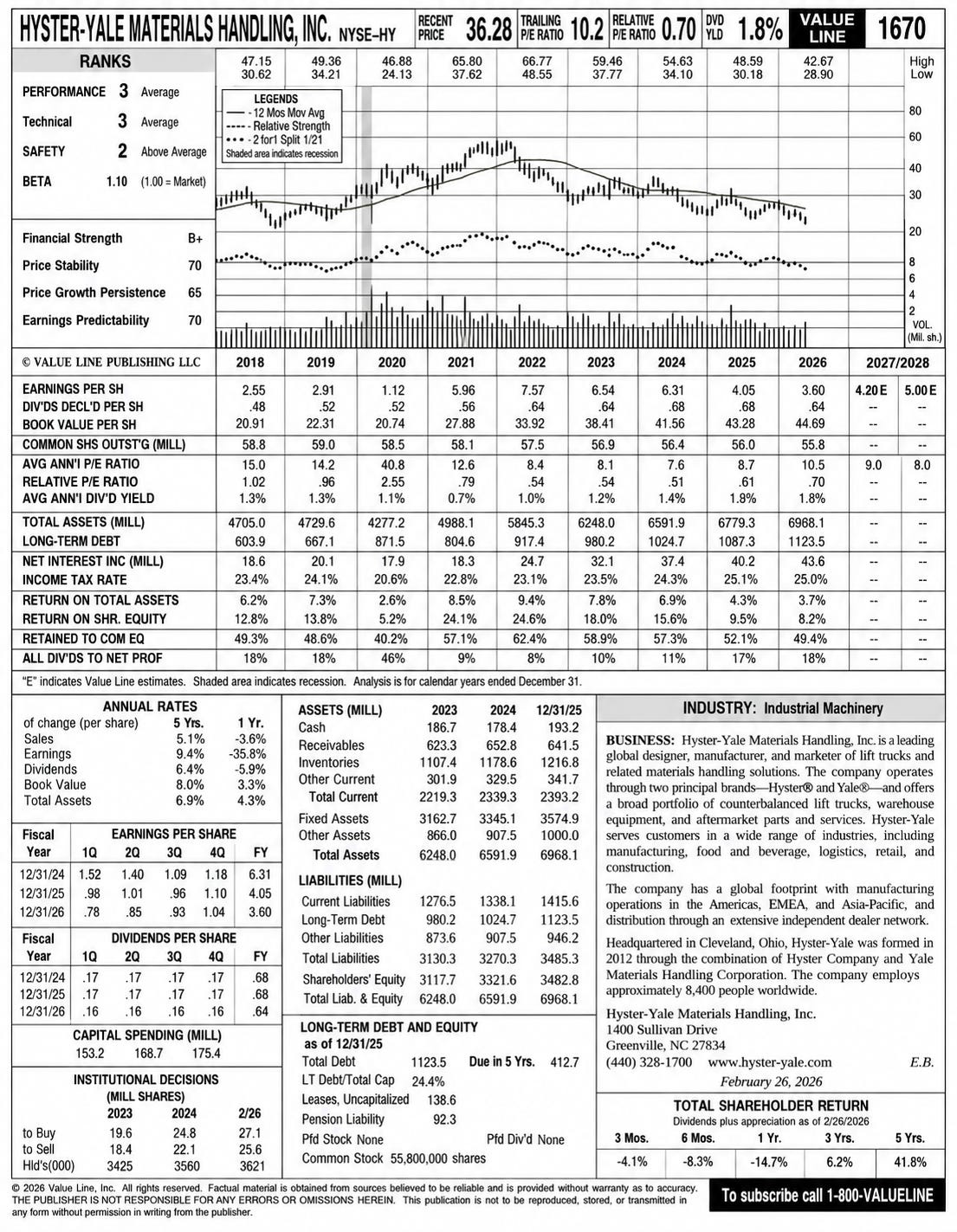
Hyster-Yale trades at 0.16 times sales as lift-truck bookings rebound and restructuring targets $85 million to $100 million in annual…
S Calvin Blissett 4 clicks

OceanaGold trades below its mine value despite US$655 million of cash and no debt, with production set to dip before Wharekirauponga begins…
SA  The Bullionaire 1 click
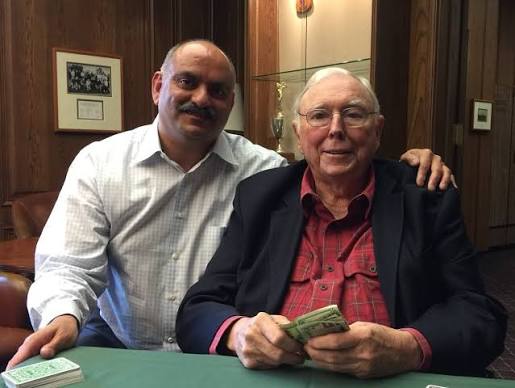
Mohnish Pabrai’s 69 quarterly filings are rebuilt into a never-sell portfolio, including Horsehead, Berkshire, Alphabet, Ferrari and…
S Cannibal Stocks 6 clicks
 @ArmsGarrett
Garrett Arms on X
$TME is a long. At $7.86, Tencent Music has a $12.4B market cap & should earn $1.5B this year (8x EPS). With $6.9B of net cash & investments, you're paying less than 3.5x EV/EBIT for the core operating biz. 1/N
@calvinblissett Calvin Blissett on X
$YB 5% of my portfolio. See writeup for evidence and anecdotes of the quality of the founder
Lennar trades at 0.83 times book as Berkshire Hathaway builds a 12% stake, despite mortgage-rate pressure and a 15.8% Q3 gross margin.
SA Tim Travis  @SowingAlphaSeed
Farmer on X
Just sold a couple positions that have been frustrating me for a couple years ($GBFH and $AERG). They'll probably moon now, but feels liberating.
@SowingAlphaSeed 4 clicks Farmer on X
Doubled my $LPRE position from ~2% to ~4%.

MGP Ingredients trades at 0.74 times tangible book after whiskey oversupply drove sales declines and more than $400 million of impairments.
S Dismissed & Asset-Backed 1 click
@kab604 kab60 on X
Would've been too easy, so I didn't buy. I prefer complicated roll-ups with excessive debt. Just hitching the wagon to a pair of founders who've compounded >17% for decades - below TBV and obvious catalyst NTM - would've been too easy. $LEGH
 ZOOZ · long
ZOOZ Strategy trades at a roughly 37% discount to the market value of its Bitcoin holdings and cash on a fully diluted basis.
BL Value Investors Club 2 clicks
@StableBread 1 click Fajasy on X
My investing thesis in a nutshell (w/examples): 1) Buy with a strong margin of safety or stock price near/below cash and/or book value. 2) Buy in industries and/or markets where the money is flowing. Makes it a lot easier. 3) Buy the best early and/or the most overlooked in that particular industry. 4) Pay up for unfair advantages, excellent mgmt teams, and companies with huge latent pricing power. 5) Sell when the thesis breaks. Or a much better risk/reward setup hits your desk. Otherwise continue to add/hold. Don't track stock prices. Track the main business KPIs like any competent mgmt team would. Example #1: Bought $NBIS 4x mid $20's (best overall). Then bought $BRUN common and warrants pre-merger (most overlooked). Example #2: Bought $FTEK $1.39. Cash floor new excellent operator CEO. Strong upside potential w/data centers. Example #3: Bought $BABA $70's. Strong margin of safety, market leader, unfair advantages. Sold $170 for better risk/reward. Example #4: Bought $ELMT @$19 and @$14. Unfair advantage. Strategic. Cheap. Critical in strong growth industries. Example #5: Bought $TOST @$24. Beaten down due to macro headwinds and new/early $DASH competition. But almost everything in business stronger and expanding to new verticals. Lastly, if you're unsure or don't fully understand the business. Just say no. In fact, say no to most stocks. Most probably your best idea is already in your portfolio. Don't lockup your money in a 3/5 setup, you're trying to make outsized returns! And sub to my newsletter (link in bio) if you want my deep dives. 😉

Outdoor Holding (POWW) trades at 7.5x forward EV/EBITDA, 33% below peers, after 22% first-quarter revenue growth; 20 million in-the-money…
SA  Sorrento Research 2 clicks
@calvinblissett 1 click Calvin Blissett on X
$ARTNA: microcap water utility at lowest P/E ever, 4% dividend. 9x cashflow. Family run for 115 years. Sussex county development expands regulated customer base. Wastewater growth engine. Its principal subsidiary, Artesian Water, is the oldest and largest regulated water utility on the Delmarva Peninsula. The company generates stable, recurring revenue by distributing and selling water and wastewater services to residential, commercial, industrial, and municipal customers under regulatory frameworks. In addition to its core regulated utility operations, Artesian Resources earns supplementary income from non-regulated activities including contract operations, infrastructure development, and service line protection plans, creating a business model that combines predictable utility income with service-based revenue streams.
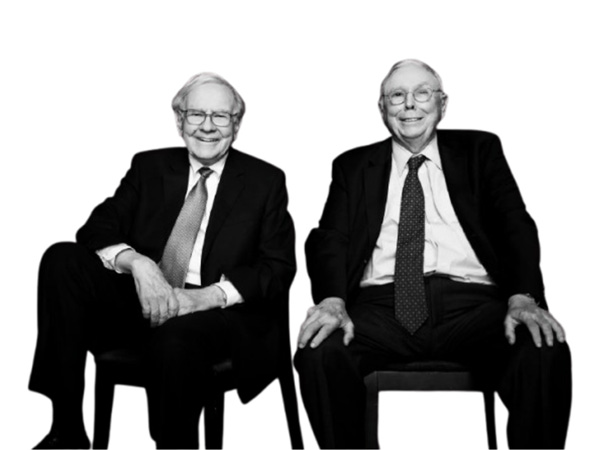
Buffett and Munger argue investors should concentrate in businesses they understand and diversify widely only when they lack conviction.
@StableBread Fajasy on X
If ur reading a write-up and they don't include a valuation range, more often than not: 1) They're lying to themselves. E.g. only pitching bull case. "The next 10x." $GRAB a couple years ago. 2) They're lying to you, the reader. E.g. not focusing on bear case enough. "It's asymmetric"... but actual downside if couple thing flops is 60%+. $FLNC just 2-3 months ago. 3) They have no clue and prob conclude by saying "position as small speculative bet" to be in a win-win scenario to gain subs. $CCXI today... Multiple based valuation is the simple/lazy route and easier to defend, yet less practical. Absolute valuations like DCF or Penman REV forces you to think more through scenarios and the business itself, which is what's actually useful because it's more subjective.
@leevalueroach Lee Roach on X
Good god $WY is getting low here. My guess is rates keep going up and assets like this trade down as people pour into yields. But eventually these become a load the boat up buy. Massive inflation hedges and owning large swaths of land creates multigenerational wealth.
@leevalueroach Lee Roach on X
$EVC is deep value here. Market drunk at the wheel.
@ACapitalLP 1 click A Capital on X
A lot of cheap catalyst names out there... $OWL @ $9.00 $CMCSA < $22 $VISN < $6 $AKER.NO < 1,400 NOK $MGBL @ $17 $DRVN < $12 $FM.TO < $40 CAD
Ladder Capital trades below book value with high yield, but faces margin pressure and office-loan exposure despite diversified funding and…
SA  Albert Anthony

POSCO Holdings trades at a 78.6% P/B discount as lithium, gas and trading profits reshape the steelmaker, while capex and lithium prices…
SA  Capital Connoisseur
@leevalueroach Lee Roach on X
Fair Isaac $FICO is getting killed today. Looks absolutely hammered. Should deep value guys be buying this today? What’s the worst case scenario here?
@UCompounders Undiscovered Compounders on X
442,113,600%. That's how much Altria has compounded over the past 100 years. $MO Remove Altria from the average return of every US stock since 1926, and the average gets cut in half: from 30,000% to 15,000%. What's stopping you from compounding like that?
Pfizer’s new products and $9.7 billion cost-cut plan target earnings support through COVID normalization and patent expiries, alongside a…
SA  Value Capital Research 1 click
@finphysnerd 1 click Myles on X
Have gone long a chunk of this. Probably also going long some $XSHQ, down 8% from the highs.
 @natstewart5
Nat Stewart on X
@dirtcheapstocks Pizza Inn $RAVE is close, misses slightly on EV/EBIT here. Have done large buybacks over the years, but stockpiling cash lately, now ~40% of market cap.

Shake Shack combines 23% restaurant-level margins, 703 locations and positive free cash flow; the bullish thesis targets $4 billion…
SA  Security Analysis 1 click
Hindsight Capital tests crisis-era investment decisions using anonymized company financials, including TransDigm, Halma and Texas Pacific…
S Rebound Capital 9 clicks

Legacy Education's Q4 revenue growth slowed to 12% as student starts fell, while Texas expansion and margin gains underpin its next growth…
SA  Fernanda Galvez Jalil 2 clicks
 @Fierce__beast
Fierce_beast on X
@brianjrobben I mention this possibility as a reason for why it sold down too. I don't think 8% returns are bad for $MCD, but yea, it's not obviously good here. At the same time i'm a bit torn given i am short many resturants this idea maybe is a bit of an idea to balance my book a bit.
@calvinblissett Calvin Blissett on X
$6m market cap, covered by cash. In liquidation with an asset at least worth $6m likely $13m, they invest ~15m in it. This is what young Buffett thrived on $SFES
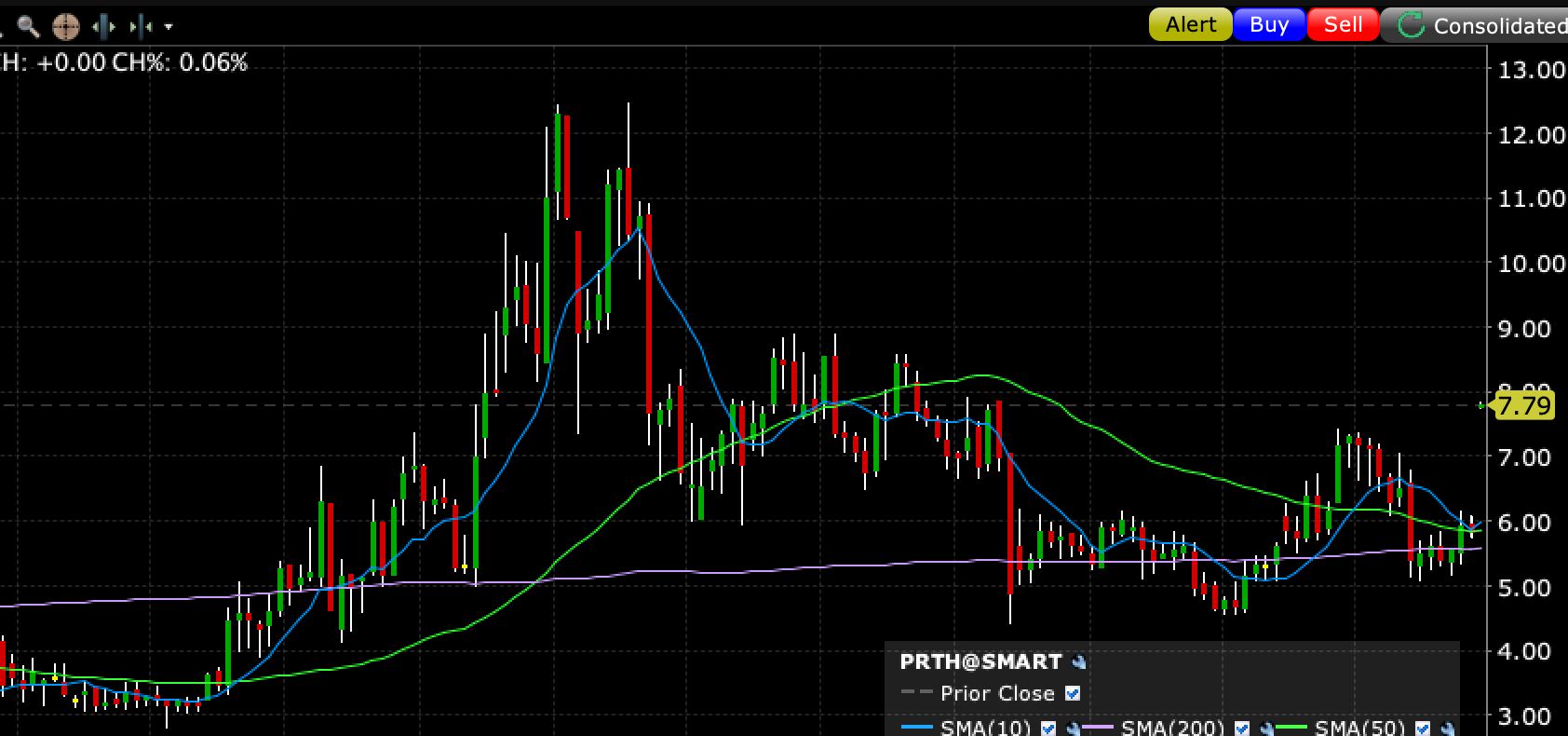
FGPR remains on track, PRTH's management buyout is set at $8.05, and microcap RAVE is described as cheap.
S Nat Stewart - Stock Picking Newsletter 9 clicks
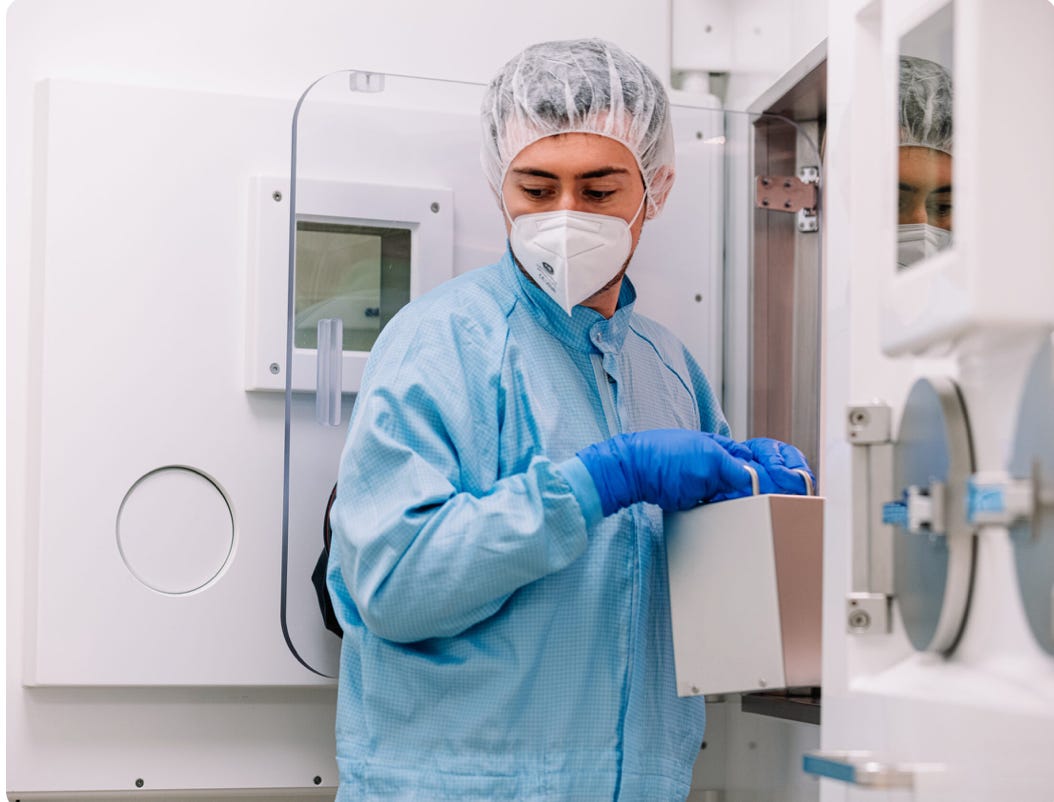
Eckert & Ziegler trades near €12, about 14 times expected earnings, as its isotope supply business expands with radiopharma demand despite…
S Substack von Philipp 2 clicks

Maximus trades at 6.9x fiscal 2026 EPS guidance after the VA paused medical-exam incentives, below Leidos and Booz Allen despite lower…
SA Avalon Capital Research 3 clicks 
Nutex Health raises its target price to $290.43 as FY2026 EPS consensus reaches $27.79, leaving NUTX at 10.5 times forward earnings.
SA  Adam Schadt 5 clicks
@KEDM_COM 1 click KEDM.com on X
StandardAero $SARO announced that Paul McElhinney will be its new CEO, effective Oct 1st. While the reasons behind Ford's retirement after 13 years as CEO are unknown, having a CEO with strong ties to GE is helpful, given that SARO makes its money repairing GE engines. SARO is the value investor's play on the aerospace aftermarket.
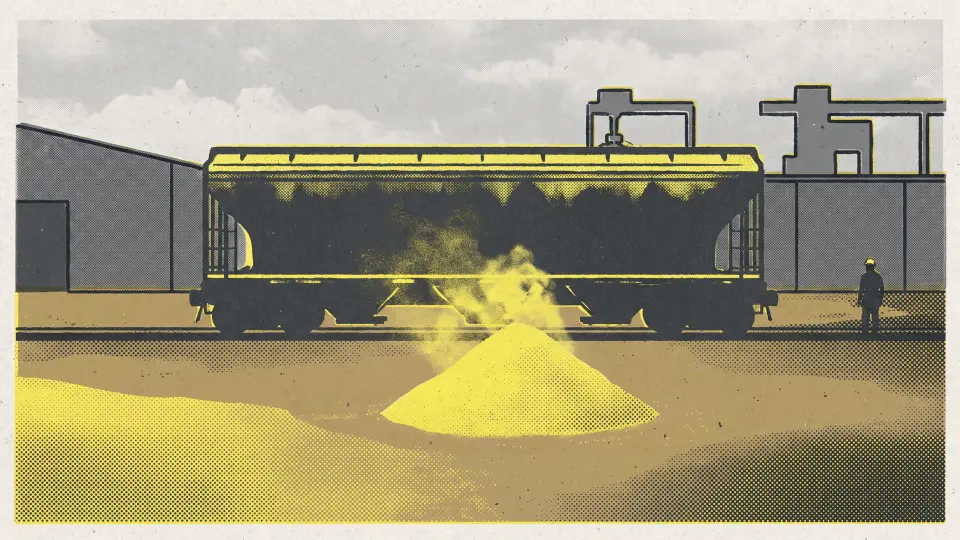
Kronos Worldwide’s 27% inventory reduction added $120 million in cash inflows as chloride-based TiO₂ demand rises amid a sulfur shortage.
SA  Given Mahlangu
Quest Diagnostics, DGX, is expanding through hospital partnerships, dialysis services and advanced diagnostics while Medicare reimbursement…
SA  Myriam Alvarez 1 click

Shift4 trades at 6.5x EBITDA despite 11% reported organic growth, with Shift4 Dine equipment leases cited as evidence of net-new merchant…
YT Yet Another Value Podcast 18 clicks
@finphysnerd 3 clicks Myles on X
@HatfieldCapital @RealHerbHoover From what I've read $MMS has some exposure to va healthcare repricing as well. More importantly the rest of the business is lower quality. No defence/intelligence exposure, some segments overearning (natural disaster work and soft services volumes). Still looks cheap.
@ClarkSquareCap 1 click Clark Square Capital on X
@valuedontlie $LUXE -- turnaround starting to bear fruit. Still egregiously cheap.
Shift4 trades at 6.5 times EBITDA despite 11% organic growth, with Shift4 Dine equipment leases reaching a $400 million run rate as…
S Yet Another Value Blog 5 clicks
 @aleabitoreddit
Serenity on X
I feel like traditional "value investing" went into hibernation. Before it was finding a 10x -12x P/E company like $UPWK or $PYPL, Dominoes, Pepsi. Or even a cheap Japanese company below book value. Then just enjoying slow growth but buyback/dividend appreciation from their cashflow. Now you can find 1.8x runrate P/E company like $ESMT that grew revenue 605.24% Y/Y. And the main thing you need to argue about is duration. Or a 16.2x trailing P/E Sumitomo, despite having way too many hyperscaler LTAs in AI from fiber to lasers. AI created much bigger medium-term anomaly, where "value investing" went towards high growth, "deep value" companies.
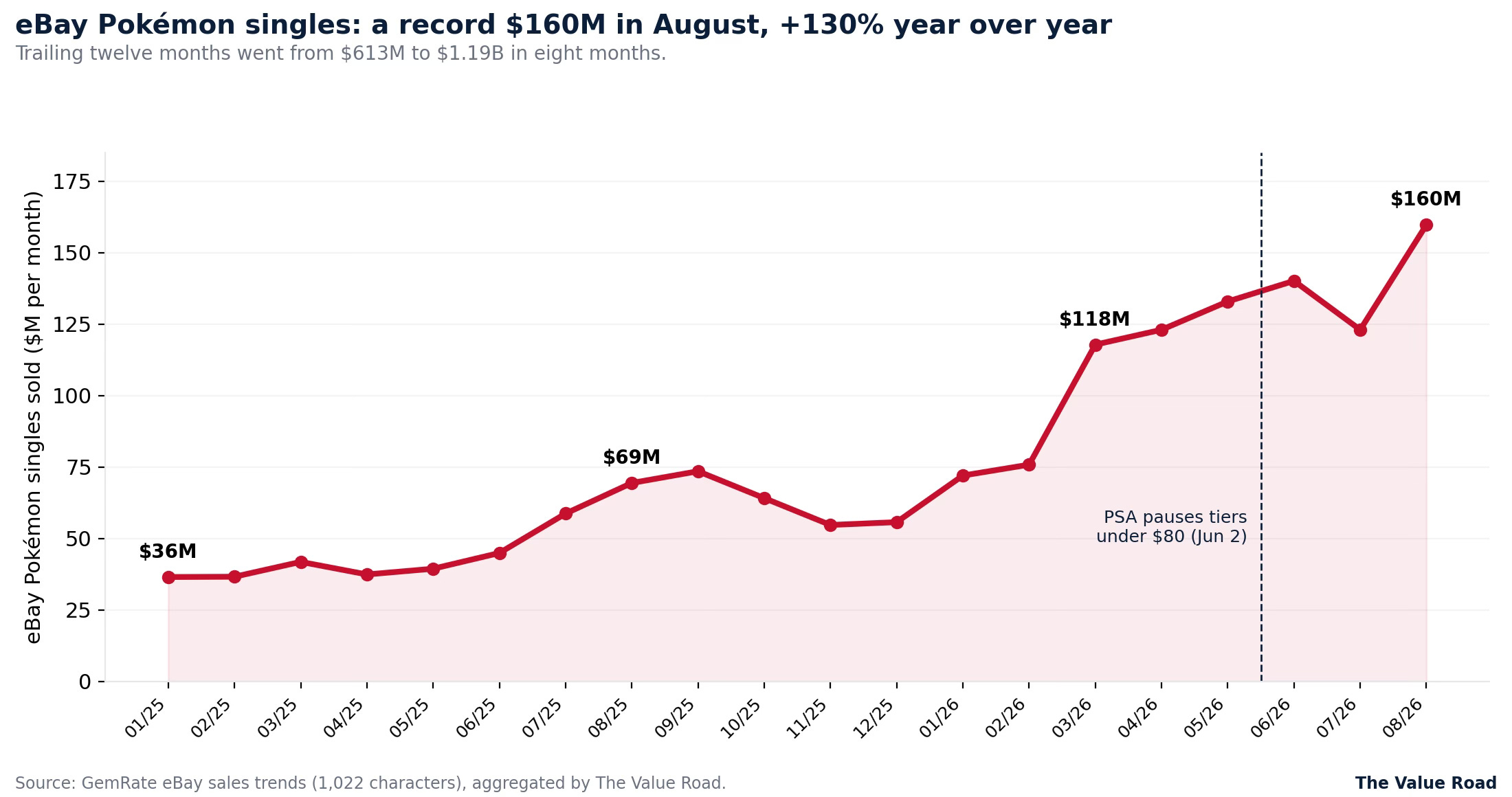
GameStop's collectibles mix rose to 45% of sales as gross margin reached 44%, supporting a deep-value case built on cash and store…
S The Value Road 10 clicks
@leevalueroach 4 clicks Lee Roach on X
The crazy thing about $GME is that the entire financial media has no idea the core business has turned around. Gross margins are at all time highs. Unit economics at the store level the best they have ever been. Nat Turner is one of the most strategic board members and is completely missed by legacy and dying media. The company owns 10% of eBay. Six years ago it was dying. And management is buying stock hand over fist. Ryan Cohen just picked up another $26 million today. I’ve been looking at deep value stocks for years. And this one has all the things I look for. See more here:
@ACapitalLP 2 clicks A Capital on X
@RitzerAdam @valuedontlie $KBR stupid cheap
@leevalueroach 1 click Lee Roach on X
GameStop $GME is one of the most misunderstood companies in the entire market. Wall Street has left the company for dead. Every sell side firm has dropped coverage and zero hedge funds will own this because of the former meme stock hair. Now the stock trades dirt cheap with $5 billion of cash, $5 billion of ebay stock (10% of the entire company), $300 million of bitcoin and $2.8 billion of zero percent convertible debt. You are buying the core business for $4.1 billion. The core business that has completely transformed itself into a highly cash generative card store. Management has turned around the entire company and it is not a dying retailer anymore. It is a cash generative cash machine flipping Pokemon, Magic The Gathering and One Piece cards. Cards are one of the hottest markets in the entire world right now and Wall Street is asleep at the wheel. Unit economics are stunning. There are 1,600 stores in the U.S. $1.9 million sales per store. 45% gross margins at the store level. Four wall EBITDA per store of $580k. This is a four wall margin of 30.6%. There is very little capex and inventory is mostly financed by vendors and there is a float business with the trade-ins with in-store credit zero percent debt. Management is guiding to $650 million of EBITDA for the full year. They are sandbagging the number HARD. I am pulling data from ebay and GemRate and total Pokemon sales in August were up 30% m/m. The highest monthly sales ever recorded. In addition, the 30th anniversary for Pokemon occurred on September 16th. It was the biggest coordinated Pokemon event in history. I went to a dozen of GameStop's and local card shops and they were all sold out. Lines out the door. The phone ringing off the hook. Wall Street is completely unaware that GameStop is flipping cards in size and has transformed their business model. Finally, Q4 is the company's biggest quarter and there are more events for the 30th anniversary landing in the quarter. For the full year, I am modeling in excess of $850 million of EBITDA, $200 million ahead of management's sandbagged guide. Management likely knows this. Ryan Cohen bought $20 million in the open market, and other C-Suite executives followed along with numerous buys, just days ago. And then the company announced they will be reopening stores, for the first time in many years. The payback on reopens should be less than a year. I see the company trading at 4.7x EV/EBITDA, and over 90% of that EBITDA should convert into free cash flow, or a 20% free cash flow yield on the enterprise value. Wall Street is completely missing the story and asleep at the wheel with drool running down their big fat bellies. There will likely be push back on the ebay acquisition, but I encourage everyone to actually dig into the deal. It could be transformative and there are many synergies that Wall Street idiots are missing. Wall Street suits have no idea how the card market has been gamified and turned into a lottery ticket system that has become extremely addicting on apps like Whatnot. In addition, Ryan Cohen is an All Star capital allocator and operator, an extremely rare combination, and a platform like eBay is right up his wheel house. I built a website below that has a 34-deck slide, highlighting the thesis. Have fun and check out my analysis and website. I am long $GME and find the thesis asymmetric.
@ACapitalLP A Capital on X
$KBR even cheaper now.
 @red_dog_capital
Red Dog Capital on X
Saw a post that "non-AI" stocks have nearly -1 corr to the market. What are some examples of good companies getting left behind by capital flows? Maybe $OTIS at 15x '17 P/E with ~80% of EBIT coming from elevator maintenance? Any other good ones with a 10 year time horizon?
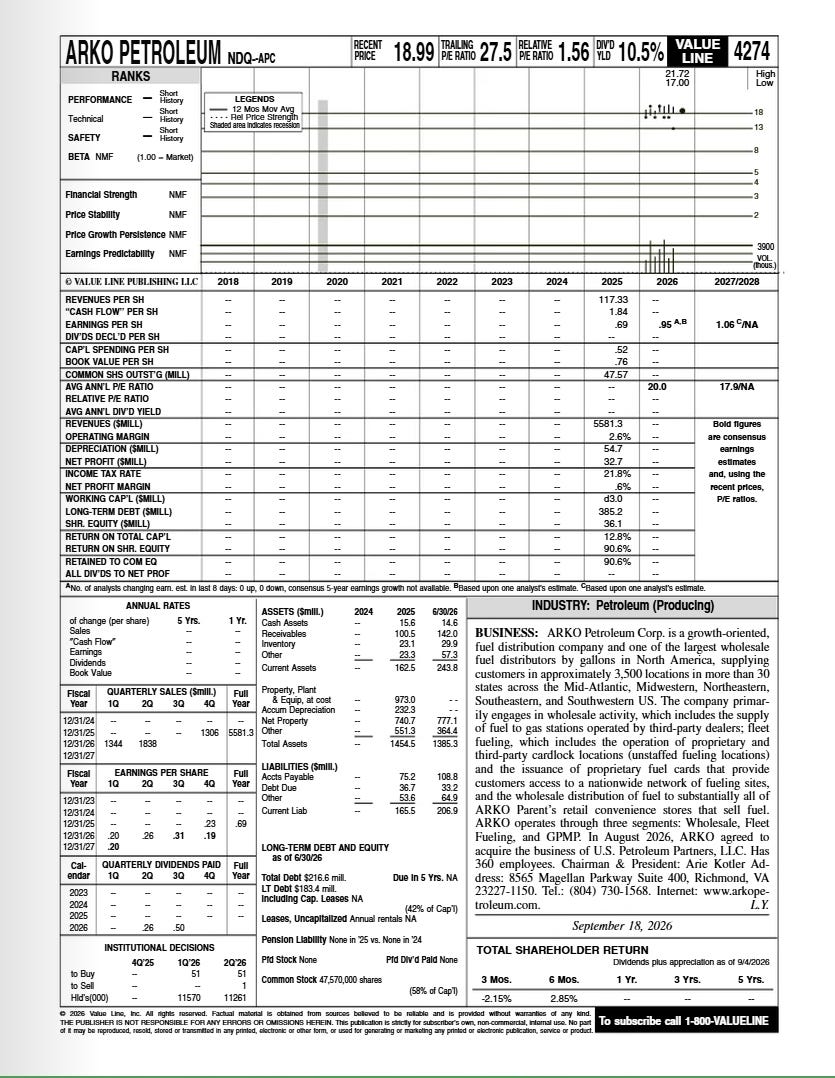
ARKO trades at 3 times estimated 2025 owner’s earnings, while its 73.6% APC stake exceeds its $473 million market cap.
S Calvin Blissett 3 clicks

Latticework’s weekly briefing spotlights discounted European assets including Barco, Bolloré, Brookfield and D’Ieteren, with catalysts…
S Latticework by MOI Global 4 clicks

Crocs, CNX and Group 1 are tested against Dillard’s buyback-driven share-count reduction, with Group 1 leading and CNX’s convertible notes…
S Cannibal Stocks 2 clicks
@calvinblissett Calvin Blissett on X
@mirror_mystery $FICO $PDD $UBER $KNSL $BN $KSPI $CPRT $CSU.TO at low $2,000s because of anchoring bias. $FISV. I do not own many of these, just where I think there’s value based on research I have done.
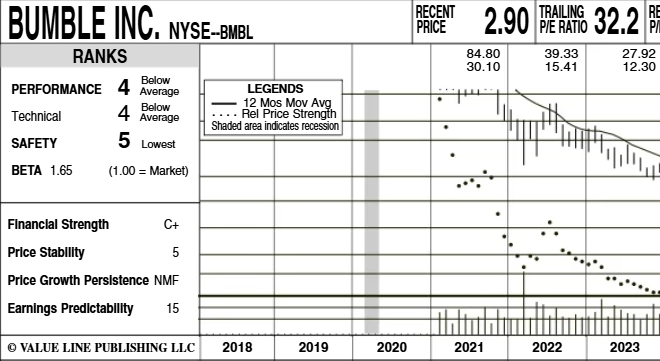
Bumble trades at roughly 2x owner’s earnings and 4.76x enterprise value, with Whitney Wolfe Herd’s return central to a rerating case.
S Calvin Blissett 4 clicks
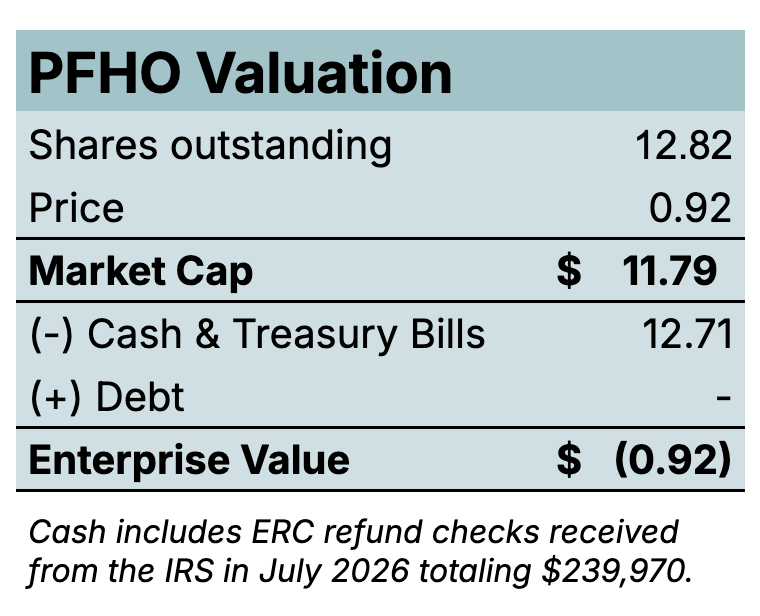
Pacific Health Care trades below its more than $1 per-share net cash despite profitable workers’ compensation claims services, California…
S Obscure Stocks 3 clicks
@calvinblissett Calvin Blissett on X
Nobert Lou crushed it on $NVR in the late 90s, his writeups under Charlie479 on VIC are mandatory reading. You will be a better investor after reading this and gain valuable mental models to overlay on interesting real life examples. Norbert invested in Burlington Northern before Buffett. Joel Greenblatt gave him money. His investment in Brahma profiled here is legendary and similar to Buffett with Coke. I lastly loved his mental models on TGS Nopec
@calvinblissett Calvin Blissett on X
I’m always fascinated by the huge value in large caps and how to frame it. Buffett in $AAPL, $KO, $WFC historically. Terry Smith $DPZ. Ackman $CMG, $CP. $GOOG like a year and a half ago. Mohnish Pabrai called out $META a few years ago and it multi bagged. This is a useful example $MSFT in 2006.
@calvinblissett Calvin Blissett on X
$BMBL looking past GAAP accounting like a 1x Owner's Earnings multiple, not shrinking fast, executing turnaround strategy and optimizing for quality over quantity. Founder back, paying off debt more than doubles the equity. Which the FCF says they can do.
@calvinblissett Calvin Blissett on X
$JRVR ~4x multiple. Below adjusted book of circa $6.68 per share, activist, E&S is a good niche, mgmt rationalizing for economics. This one has messed up bad many times in the past and probably deservedly has a horrible reputation
@Fierce__beast Fierce_beast on X
In the $INMD example i posted recently, it has a P/E of 8x or so, and sure it's earnings seem to be collapsing, but what if it stabalizes and then recovers after a few years? In this shape, 8x is not quite the bargain you thought it was.

Pool Corporation trades at a claimed 33.8% discount to fair value, supported by a 64% recurring-revenue base, buybacks and a rising…
SA  Mark Bern, CFA 4 clicks
@BlueDuckCap 3 clicks BDC on X
Idk it not worth nothing. Snap whole market cap $9b and yet we apparently paying trillions for commoditized “frontier” LLMs that are political nightmares with major leadership questions. $snap is cheap. Specs will get a minority investor. Snap snap can do $1 in FCF / share next year. Consensus is always wrong at these moments.
 @ActAccordingly 1 click
PAA Research on X
The trading action in $LEN should be pretty interesting following a disappointing print and underwhelming guidance (albeit not surprising). The stock trades at tangible book value with a 2.5% dividend yield (that used to mean something) and they look set to buyback 5-7% of the shares outstanding annually. They've moved their entire pricing and gross margin model down to meet the market so they can move volumes. They're moving units in Arkansas at $230,000. There's definitely a market at that price point. There's some controversy about their land bank accounting practices from the work of @hntrbrkmedia, but you still have a biz that's not impairing book and generating profits. Insiders own a fair amount, Berkshire bought last quarter. Is there enough bad news here? Is it finally washed out?
@stockgutter SG on X
another $GYGY

Artisan Partners, APAM, pairs a 10% yield with 9% revenue and AUM growth, though a pending $6 billion global value outflow threatens fee…
SA Sorrento Research 
Crocs drew Li Lu’s investment after generating $660 million of 2025 free cash flow, despite the HEYDUDE write-off, tariff pressure and…
S Cannibal Stocks 5 clicks
Frontline traded below one-third of estimated liquidation value in 2002, and Mohnish Pabrai’s investment returned 55% rather than the…
S The Owner's Memo
@KEDM_COM KEDM.com on X
Penn Davis McFarland bought $ACN at 9x earnings, believing AI chokepoint names are temporary and that enterprise adoption follows the internet's slow curve rather than investors' torrid timeline. Penn Davis said, “With a dividend yield over 5%, we get paid to wait. If our thesis is correct and AI creates a large wave of implementation opportunities, the shares should do extremely well.”

Cannibal Stocks favors cash-generative companies that retire shares at low valuations, citing Dillard’s 80% share reduction and…
Latticework’s weekly briefing covers NVIDIA’s AI demand, Deckers’ de-rating, Shurgard’s asset discount, Flitto’s translation-data backlog…
S Latticework by MOI Global 4 clicks
 SLVM · long
Sylvamo, a $1.6 billion uncoated freesheet paper producer, has fallen about 60% from its November 2024 high above $95 to roughly $40.
BL Value Investors Club 2 clicks
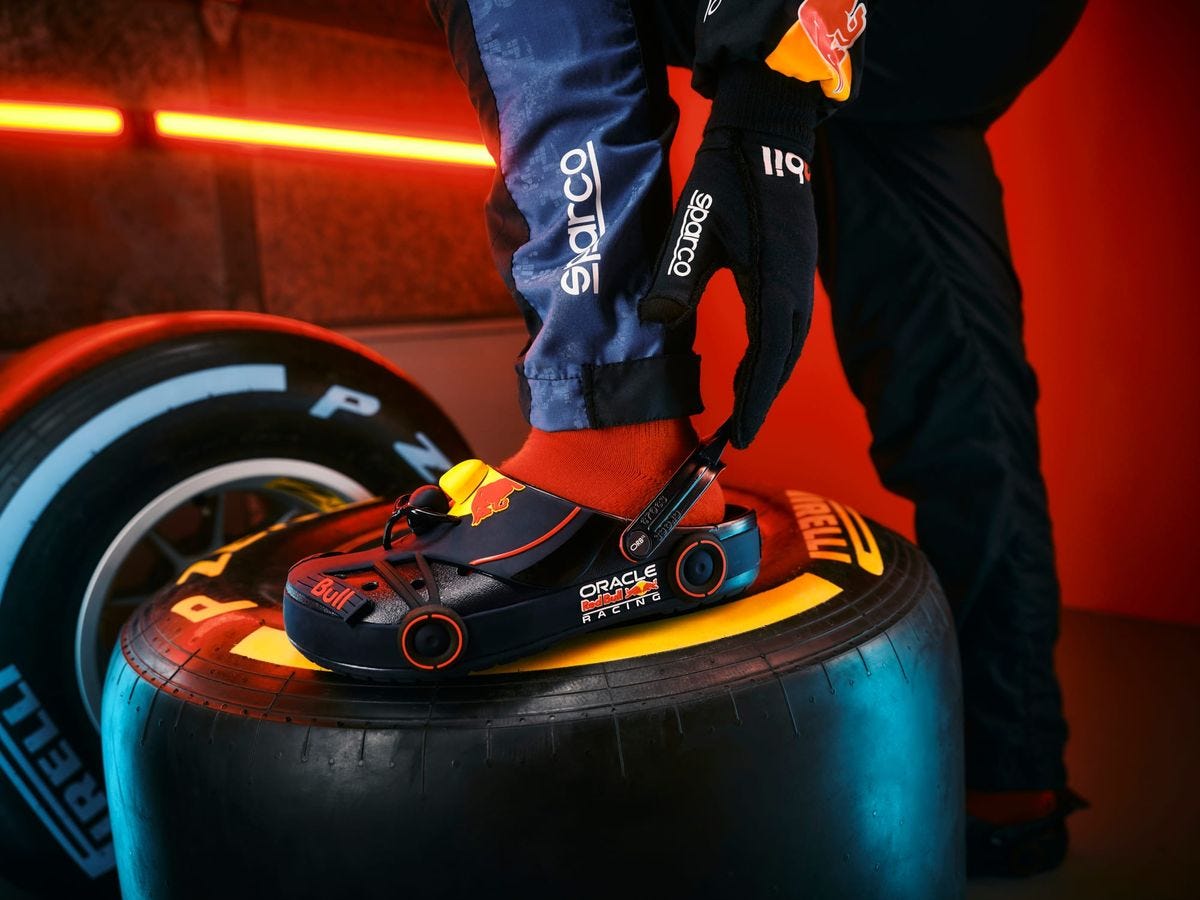
Crocs’ core brand surpassed $1 billion in quarterly revenue, while HEYDUDE weakness, tariffs and 2025 impairments weigh on shares trading…
S Flyover Stocks 4 clicks
Lululemon’s North American sales, margins and legging demand are falling as Alo and Vuori gain share, leaving its brand moat and depressed…
S Hated Moats 3 clicks
@valuedontlie Colin King on X
August quick value write-ups... 1) $CALM -- cheap P/B mean reversion idea 2) $MNRO -- strategic review + activist + CEO incentive 3) $FOUR -- beaten down roll-up 4) $MKTW -- fundamental inflection point

DHT Holdings' low-leverage VLCC fleet has paid 66 consecutive dividends, with charter income covering forecast costs and spot earnings…
SA  Arizona Equity Research
Deckers Outdoor has fallen about 60% from its late-2024 peak and trades at 11x earnings as HOKA growth slows.
S Value Don't Lie 5 clicks
@SowingAlphaSeed 1 click Farmer on X
Asking Astra why Value shows up as the top factor for $MO, but doesn't show up as a factor for $PM or $BTI at all:
 @Mike10947310
Mike on X
@KairosPraxis Agreed but also fwiw… $SIF is at like 7x (!)
@leevalueroach 2 clicks Lee Roach on X
When does McDonald’s $MCD become a buy? I estimate $100 billion of real estate here on a $180 billion market cap and $220 billion enterprise value. Trades at like 15x EBITDA. I usually look at small companies but some of these larger ones are looking interesting.
Check Point Software’s AI-centric cybersecurity platform could lift revenue growth to 10%, supporting a $166 intrinsic value estimate…
SA  Hong Chew Eu
Limbach Holdings, down 63% since June 2025, upgraded on bargain valuation and growth prospects following its acquisition of 1901 Inc.
SA  David Zanoni
@leevalueroach 3 clicks Lee Roach on X
Rayonier $RYN owns 4,003,000 acres across eleven states. Here's what happens when you value everything else on the balance sheet and subtract it. Enterprise value is $7.64B. Market cap $6.19B plus $1.45B of net debt. Now take out the pieces that aren't dirt: Six sawmills and a plywood mill, $1.0B. Cross-checked two ways. Replacement cost runs ~$700/MBF on 1,155 MMBF of capacity. Mid-cycle EBITDA of $175M at 6x gets you the same place. Three master-planned communities, $482M. Wildlight north of Jacksonville, Heartwood next to Hyundai's $7.59B plant in Georgia, Chenal Valley in Little Rock at 70% sold out. DCF'd at 12%. The rural land program, $650M. They sold 7,490 acres at $5,439 last quarter against a portfolio the market marks at $1,447. That 3.7x spread on ~30,000 acres a year, decayed and discounted over a 13-year runway. Solar options on 77,000 acres, $125M at a 25% conversion assumption. Carbon storage across 154,000 acres, $80M. Smackover lithium, $30M. Real geology, ten cents a share. The below-market debt mark, $130M, audited on the balance sheet. That leaves $5.14B for the timberland. Now subtract the trees. 188M tons of standing merchantable inventory at current TimberMart-South stumpage, with pine sawtimber at $23.34/ton and pulpwood at $5.40, is $3.57B. Residual: $1.57B of bare land across 4,003,000 acres. $393 an acre. Cutover land in the South, meaning ground that was just harvested with zero merchantable timber on it, transacts between $1,200 and $1,800. Three marks you can check yourself: In August the company sold 36,000 Washington acres at $4,028 and bought 57,000 Texas and Alabama acres at $2,561. Same month, same management. They paid 77% more than the market credits them for what they already own. Morgan Stanley's fairness opinion produced $47.55 to $55.80 on a DCF and $20.85 to $25.20 on trading comps in the same document. The stock is at $20.81. That gap is institutional cost of capital at 7% versus public equity demanding 9 to 10%, applied to an asset with thirty-year cash flows. Management bought back 4.9M shares for $103.5M in H1 and repaid a $200M term loan with cash rather than refinance it. I built the whole thing a second way, from transaction comps by state instead of tons and dirt. $31.80 versus $31.66. Bear case marks the entire South at $1,700/acre, puts the mills at a trough multiple, converts solar at 15%, and still lands at $24.74. Every case sits above the current price. One caveat I'll state myself: the $393 assumes rural HBU is a separate asset. Treat it as embedded in land value instead and you get $555. Still under cutover. The conclusion holds either way. Full work, every input shown, plus the part about the debt structure that I think almost nobody is modeling, linked below.
 @Adam_Wyden
Adam D. Wyden on X
Looks like Benchmark / StoneX agrees with our analysis. Not $VVV. Our SOTP on 2027 numbers gets us to nearly 40.00. Too cheap. $DRVN
@leevalueroach 2 clicks Lee Roach on X
Me buying $HOG at $18 because Wall Street said it was going to zero.
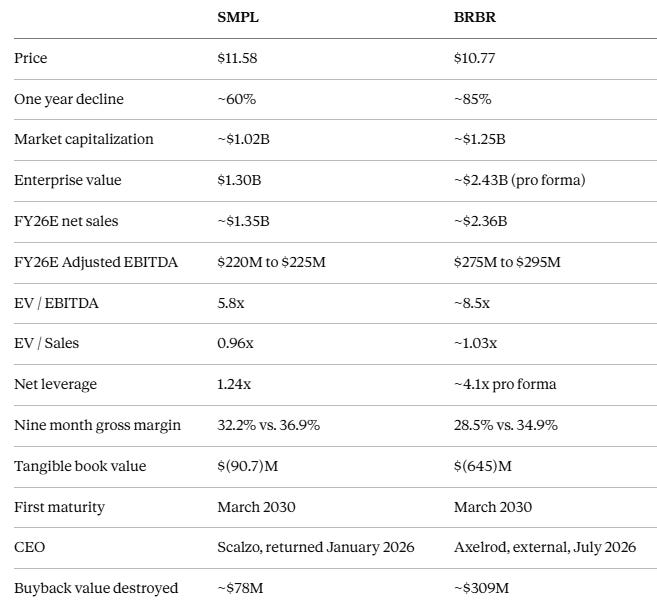
Two U.S. protein-snacking companies lost $6 billion in market value as impairments, inventory growth and margin pressure test whether the…
S The Value Road 12 clicks
@valuedontlie 1 click Colin King on X
Am I thinking about $GME right? (ignoring recent convertible exchanges) 593m share count assumes all debt converts to equity x $19/sh = $11.3b market cap Less $10b net cash & ebay stock = $1.3b EV Trailing GAAP EBIT for underlying retail stores = $480m EV/EBIT at 2.7x
@SowingAlphaSeed Farmer on X
@simcity31 $ORR has been a great investment and I'm happy with it. I just don't think any investment should be sized as large as I sized it.
@majgeoinvesting Maj Soueidan on X
@RodrigoLezama7 @ALDeAng08 @Mike10947310 @MicrocapDr Yeah, liquidity excuse is bogus. Being right fixes everything. Big caps have fallen 50% in one day on earnings misses. Remember when illiquid $MUEL was $45 with a P/E of 4x in 2024. Pessimists said it wouldn’t get much higher. P/E got as high as 15x as the stock went to $500.
@Adam_Wyden Adam D. Wyden on X
$DRVN.. The Company is likely trading at 6x EBIT(DA) and ~14 pct FCF yield and ~20 pct on maintenance in 2027. 8 mm shares are short and the de facto float is 32 mm (backing out large long term owners).. Can basically buyback the entire float with one year of FCF. Not $VVV
@leevalueroach 2 clicks Lee Roach on X
@steven_finch Pretty much everything I own has revenues declining. People pissed and moaned when I bought $HOG because it was "dying"
@natstewart5 1 click Nat Stewart on X
Quick take on Vistance Networks ($VISN) post $5 distribution: ° YE 2026 cash and cash receivables ~60% of current market cap ° Operating cash flow going forward - huge potential FCF yield ° Management proven to be both rational and opportunistic - earned credibility ° Dirt cheap valuation of the core business - EV/EBITDA 2.75X
@InvestSpecial Dalius - Special Sits on X
9/ $PBI pitch by @GreystoneCap Pitney Bowes owns a sticky postage-meter installed base and the only national-scale US presort network. The market still treats it as a terminally declining mailing-equipment business.
@InvestSpecial Dalius - Special Sits on X
7/ $RMTI pitch by @MinotLightCap Potential $18–30/share vs ~$8. Rockwell supplies dialysis concentrates in an effective US duopoly and has finally turned FCF positive. At entry, ~$15m of net cash backed a ~$30m market cap, leaving the operating business valued at ~$15m.
@InvestSpecial Dalius - Special Sits on X
4/ $NAVI pitch by @gatorcapital Navient trades near 40% of TBV as the market treats its legacy student-loan portfolio as a melting ice cube. But private lending has returned to growth, with Q1 marking its first portfolio expansion since 2021.
@leevalueroach 1 click Lee Roach on X
Owning timber REITs here seems like a no brainer. $RYN has an enterprise value of $7.4 billion. They own four million acres. You are buying this for $1,817 per acre. That is dirt cheap. Find me anywhere else you can own a large swath of land for $1,817 per acre. You can’t! The public market will punish RYN for owning a large amount of land. Lower valuation and will call it a value trap. But imagine the optionality of owning this large amount of land. Texas Pacific Land owned a large amount of land and look what happened to their stock price. One of the best performers ever. I’ve done well owning land banks. This one pays a fat dividend. Rare. Market is asleep at the wheel with their pants down and drooling.
 @AsifSuria
Asif Suria on X
It takes courage to go against the current looking for opportunities that the market will not reward in the short-term. Times of turmoil is when we pay special attention to insiders and they led us to energy stock in mid-2020, regional banks in H1 2023, biotech companies in early 2025 and more recently SaaS stocks. While I don't have a position in $NOW, we did start positions in $CRM, $NAVN (partially exited) and more. Here is some of what I wrote about that decision to double down on SaaS in our July 2026 newsletter:
 GPK · long
Graphic Packaging (GPK) is pitched as a long with $22 fair value, implying roughly 100% upside, based on its low-cost paper-based packaging…
BL Value Investors Club 2 clicks
@ACapitalLP A Capital on X
At ~$6.35 $VISN is trading at an implied distribution adjusted EV/EBITDA of 3.8x vs. 9.8x for $HLIT 🤷♂️
@leevalueroach Lee Roach on X
Well looks like I’m going to get another chance to buy PayPal $PYPL as the market losses its entire ass because the buy out fell through. Back of envelope math here is $42.6 billion EV on $6 billion of free cash flow is a 14% free cash flow yield. Not bad! Growth hogs will piss their pants and cry about how there’s little growth.
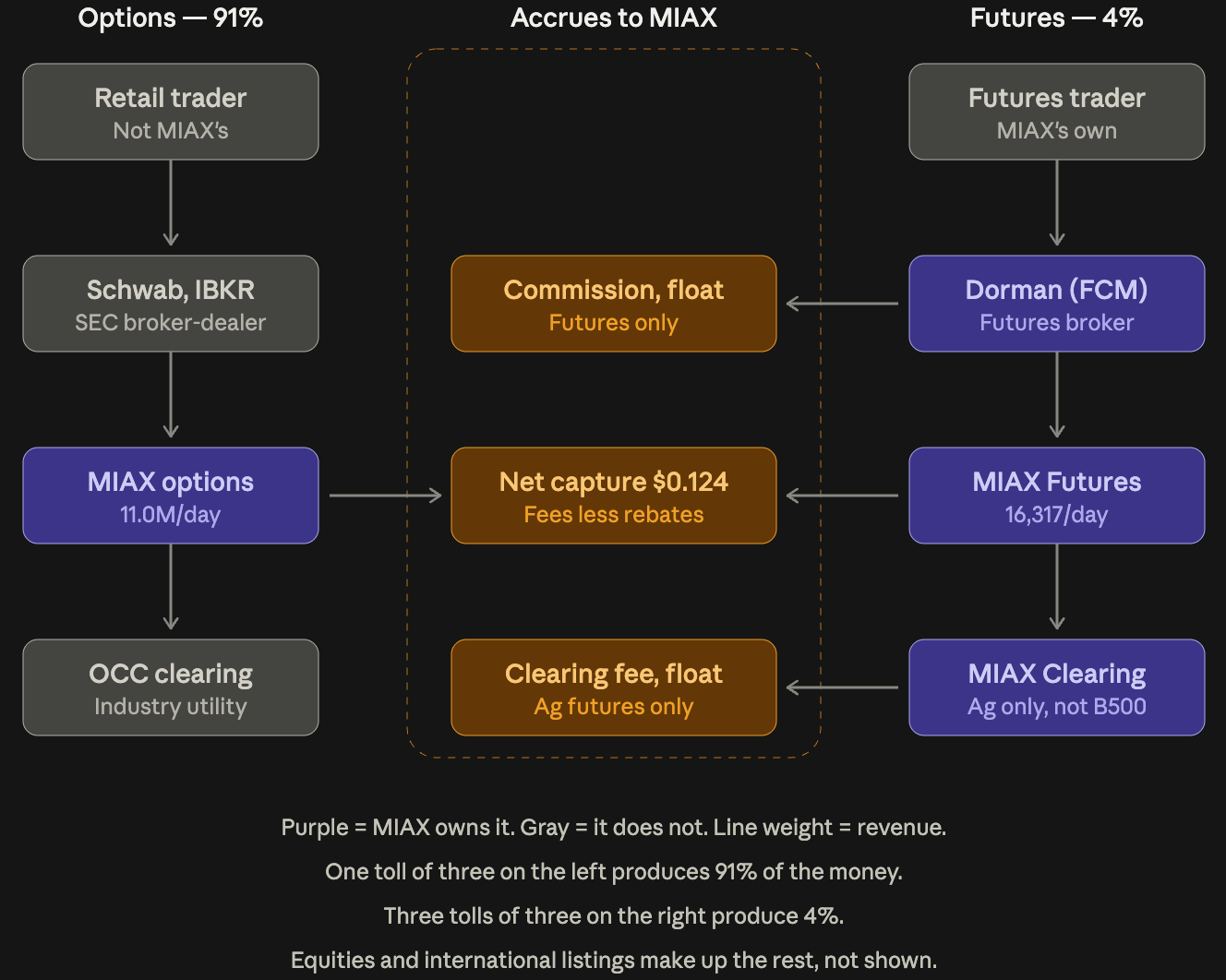
Miami International Holdings, the No. 4 options exchange with 17% share, trades at 12x forward EBITDA despite 35% revenue growth, 54%…
S Sylence Capital 4 clicks
@valuedontlie Colin King on X
Mean reversion idea: $CALM 1) consistently trades at ~2x BV vs. ~1.5x today 2) consistent BV compounding (~18% CAGR since '06) 3) mid-teens ROEs justify 2x BV 4) net cash >30% BV / >20% market cap (fortress B/S) Cyclical but very short cycle time (supply driven) I own some

Cal-Maine, the largest U.S. egg producer, trades at 1.6x book versus a 2.1x 20-year median, with net cash and investments equal to 23% of…
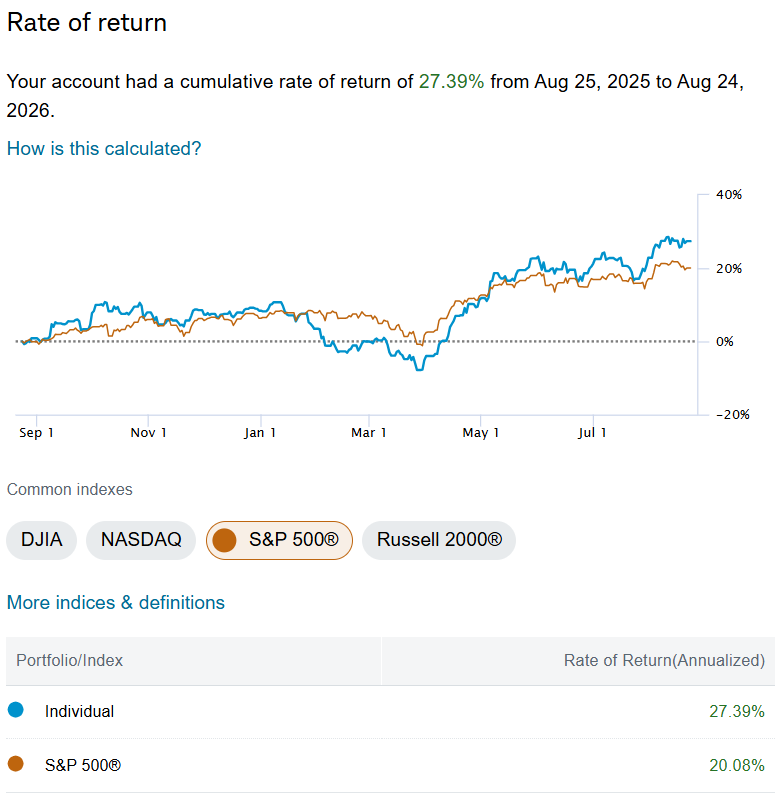
Rebound Capital’s portfolio beat the S&P 500 by 7.3% in its first year, targeting 17% EBIT growth against a 20.3x forward EV/EBIT multiple.

StoneCo's buybacks and special dividend produced roughly 39% H1 shareholder yield as Brazil's rate cuts slow and competition persists.
SA  IWA Research 3 clicks
@david_katunaric Mikro Kap David on X
$BABA management continues to do everything in its power to keep the stock a generational value trap
 PYPL · long
PayPal’s valuation implies free cash flow will shrink 9.3% annually over the next decade, framing a long thesis against its recent revenue…
BL Value Investors Club
 @irbezek 6 clicks
Ian Bezek on X
@taobanker $INTR at 1.2x book 5.5x '27 earnings with a 16% ROE growing at 20% a year probably qualifies. But yes, $BLX is incredible and I still kick myself for selling most of my position at $25 after buying at $15. Grabbed defeat from the jaws of victory there.


