Quick Value #338 - Sonida Senior Living (SNDA)
Sonida Senior Living owns 153 senior housing properties after a March 2026 merger doubled its scale, with aging-driven demand and tight supply supporting NOI growth.
Sonida Senior Living owns 153 senior housing properties after a March 2026 merger doubled its scale, with aging-driven demand and tight supply supporting NOI growth.

1/ Went thru Leslie's first day declaration so you don't have to. The biggest US pool supply retailer JUST filed Chapter 11 yesterday with 900+ stores and $787mm of debt. $LESL

Looks like $APP and $EVC are doing some things together.

@trvsrdrgz2 no. I am loudly saying that you should borrow against the car you live in to buy 1000 more $AMC.

@meidaoge Agility Robotics hasn’t gone public yet, I’m just waiting for listing announcement this quarter for $CCXI

Sun Kwang (003100.KQ) raised grain market share from 25% to 38% as its founding family transferred 24% of the company to holding companies…

Travere Therapeutics' FILSPARI has two FDA approvals and is driving revenue growth, while TVTX shares have nearly tripled since August 2025.
 Out of Ignorance 3 clicks
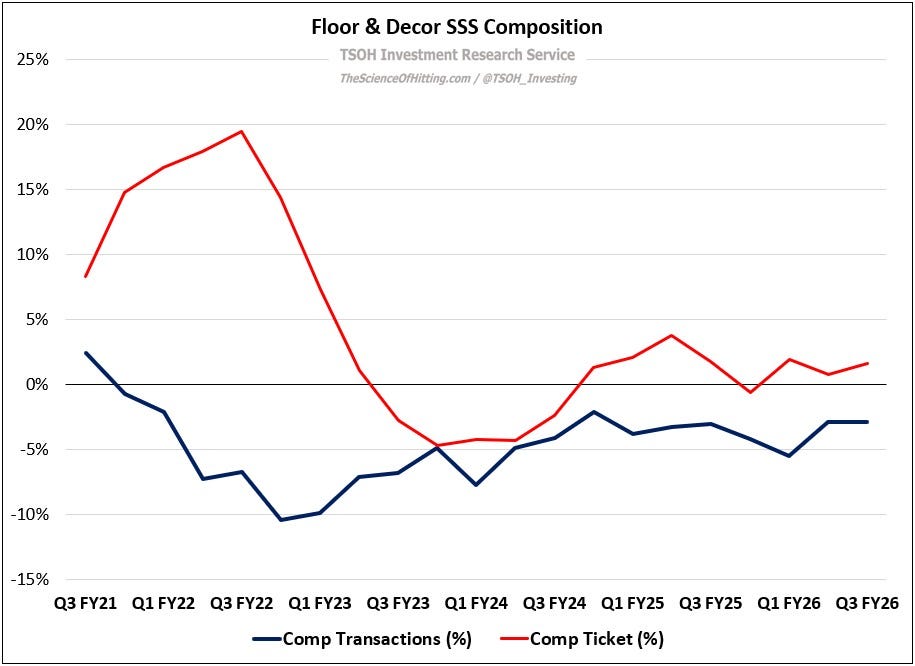
Floor & Decor has logged 20 straight quarters of comp transaction declines, with Q3 quarter-to-date same-store sales down about 3.8% as…
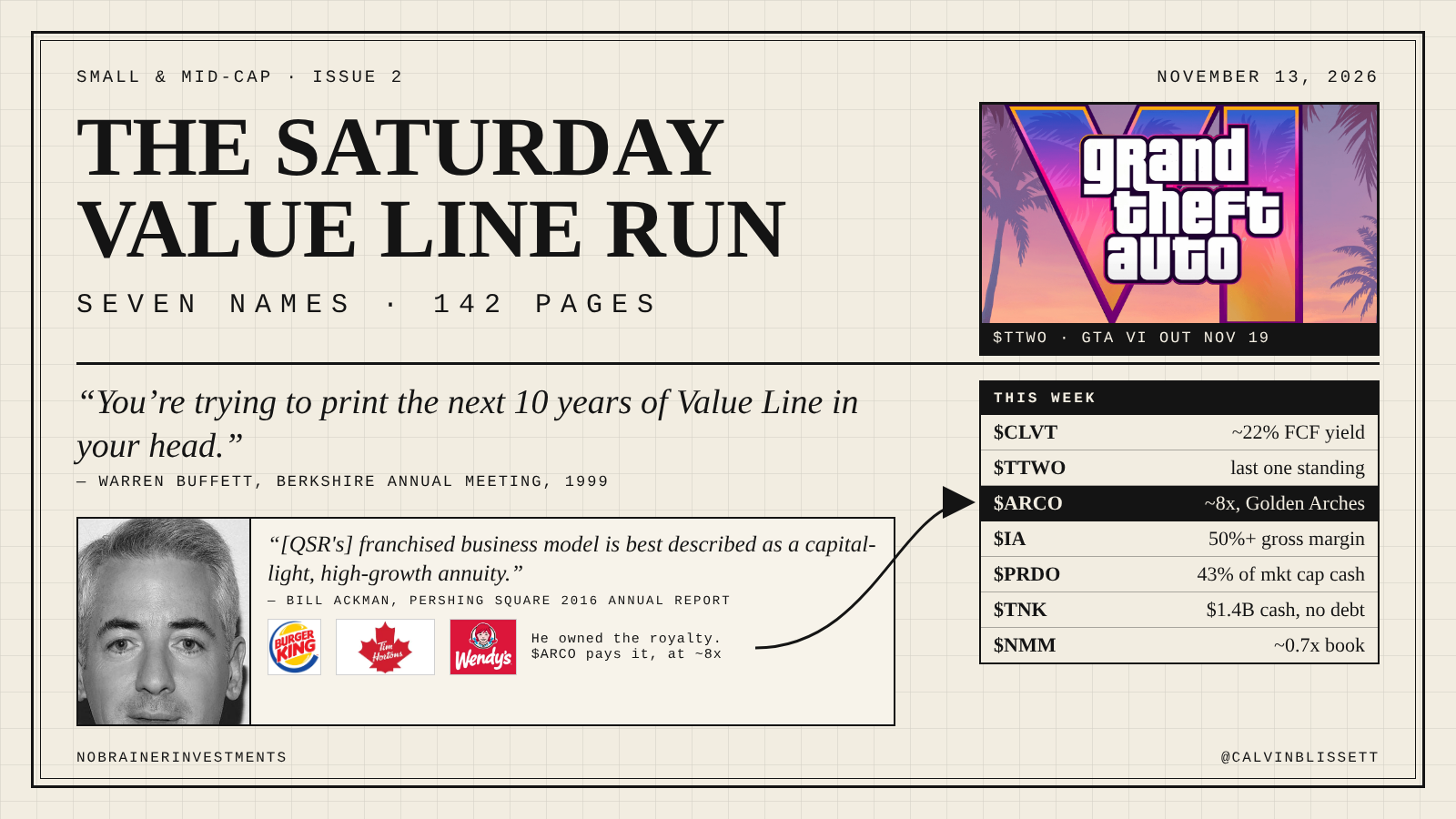
Clarivate, Take-Two and Arcos Dorados lead a seven-stock Value Line screen focused on debt paydown, GTA VI economics and Latin American…

Net Lease Office Properties has distributed $24.19 per share, including a $1.50 special dividend, while liquidation risk centers on its…
 Kingdom Capital 1 click


OTC Markets CEO Cromwell Coulson says the SEC’s proposed offering reforms could let OTCQX and OTCQB companies raise capital through…

Q3 updates cover Crocs, Entravision and Fiserv beats, coal and oil weakness, and Xerox’s sharp decline, testing the underlying cases for…

Sigma Lithium’s production disruptions, negative EBITDA and underutilized plant costs undermine its expansion case despite refinancing.
 CAN Analyst
 INTR · long
Inter & Co, a Brazilian digital bank, grew net revenue 32% year over year while trading at 1.4 times tangible book and 7.9 times earnings.

Navios Maritime Partners trades at a deep discount to adjusted NAV, with contracted fleet revenue and buybacks offset by newbuild financing…
 Atlas Diary

BGIN holds $31.4 million of cash against $34.1 million in taxes payable as first-half revenue fell 85% and self-mining costs exceeded coin…

Arcos Dorados' Q3 comparable sales rose 15.5% on higher traffic, checks and market share; shares trade at 8.8 times forward earnings amid…
 Kenio Fontes 5 clicks
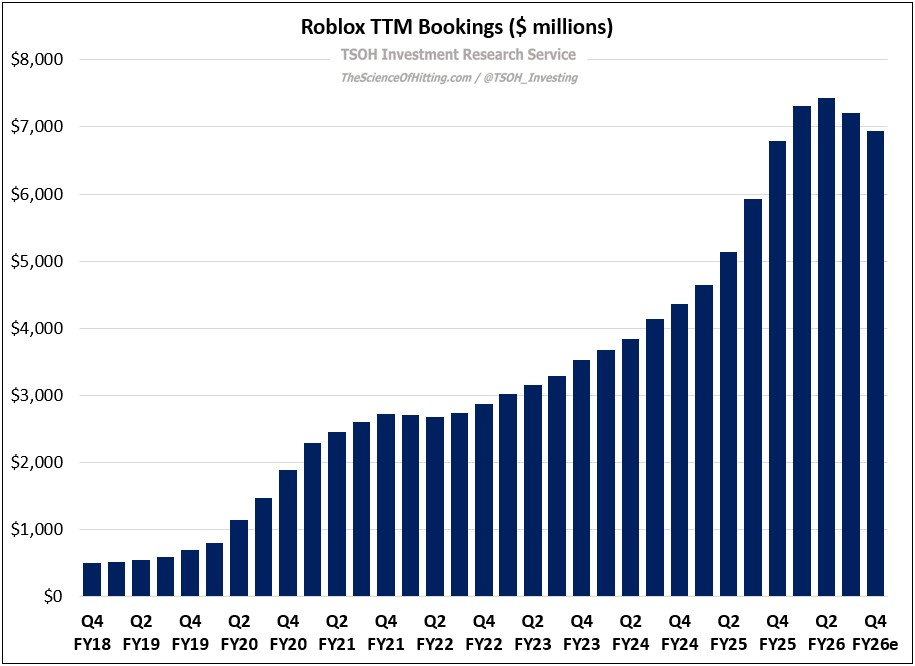
Tripadvisor’s CEO and CFO will depart after weak Q3 results, while Roblox’s CEO discusses AI and Berkshire repurchases $9.6 billion of…
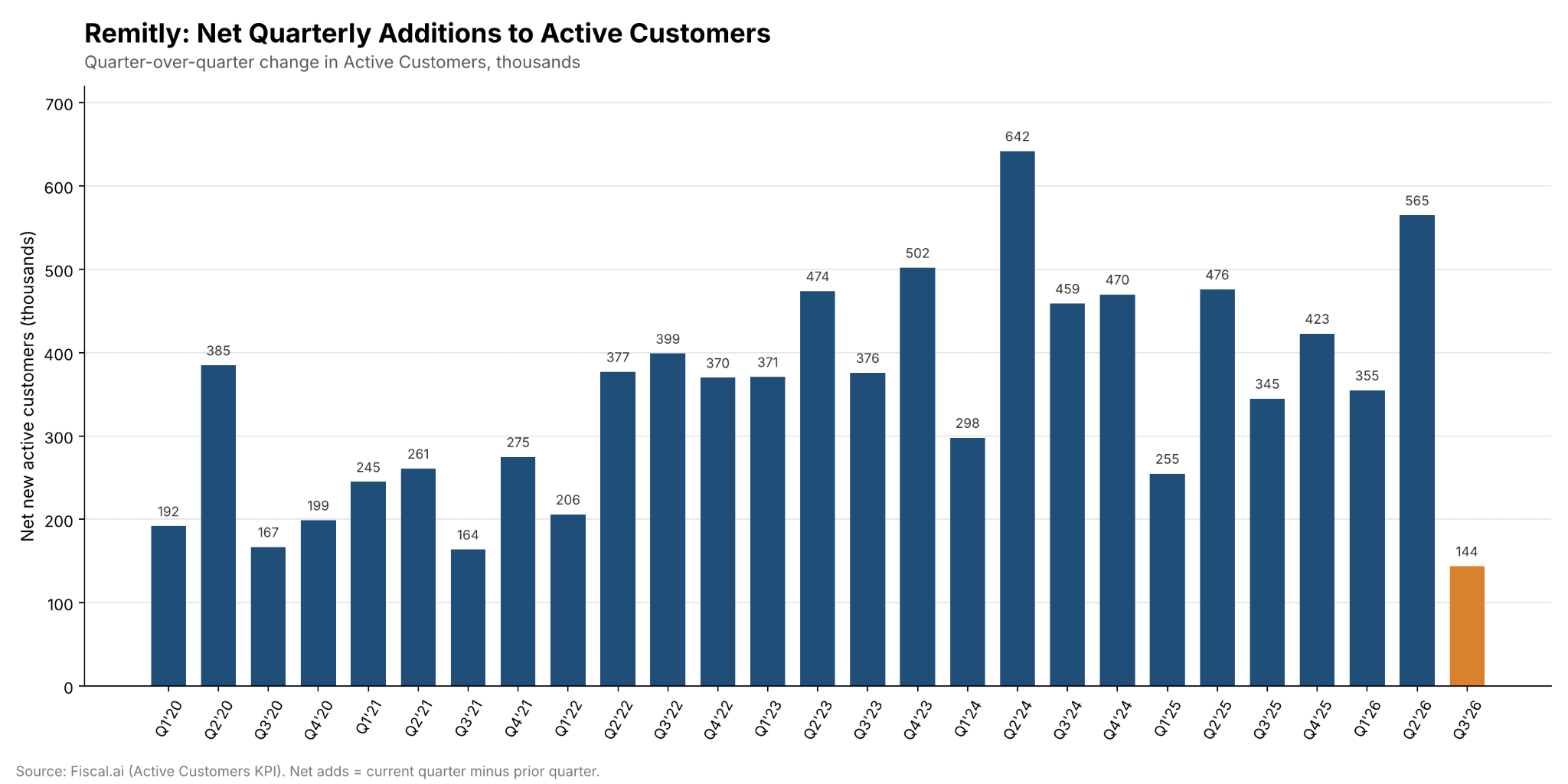
Remitly’s Q3 keeps its remittance growth thesis intact as spending cards, memberships and credit products target $1 billion in annual…
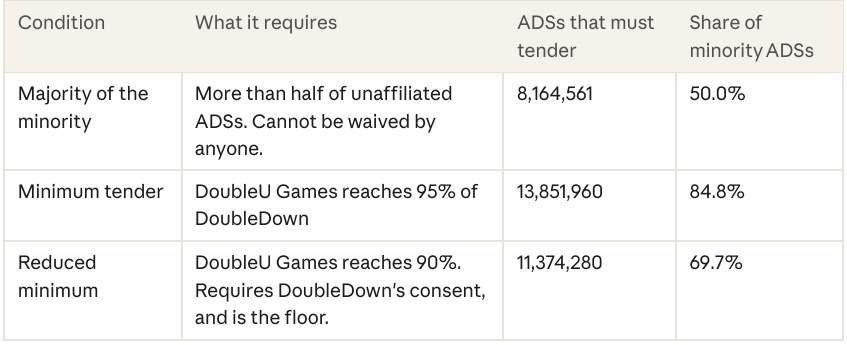
DoubleU Games raised its all-cash tender offer for DoubleDown Interactive minority holders to $16.25 per ADS from $11.25 after net cash…

Paymentus posted Q3 2026 revenue of $372.2 million, up 19.8%, with a 42% adjusted EBITDA margin as management targets $2 billion in revenue.
 Tech and Growth

IEH Corporation posted Q2 revenue growth of 51% to $10.7 million and a record $56 million backlog, led by defense and medical demand.

GrabAGun’s $34 million Camfour acquisition cuts pro forma net cash to about $54 million as sales decline, losses widen and its buyback…
Every publication on this site, hand-picked.
 Adam Schadt
 Albert Anthony
 Alexander Grover
 Andres Veurink
 Arizona Equity Research Atlas Diary
 Bay Area Ideas
 Benjamin C. Barry
 Bernard Zambonin
 Blake Winiecki
 Capital Connoisseur
 Chetan Woodun
 Crimson And Gold Research
 Cypriot Invests
 Dane Bowler
 Daniel Bell
 Daniel Jones
 Daniel Schönberger
 David Zanoni
 Deep Value Investing
 Dhierin Bechai
 Dilantha De Silva
 Dustin Quasney
 Elliott Gue
 Equity Eagle
 Eudaemon Research
 Fernanda Galvez Jalil
 Fountainhead
 Gary Gambino
 Geneva Investor
 Gil Rotstein
 Given Mahlangu
 Henrik Alex
 High Alpha Professor
 Ignacio Planas Gonzalez
 Infinity Curve
 Investor Overview
 IWA Research
 Jaden Mealy
 JR Research
 Julia Ostian
 Kevin Avroutskii
 Khaveen Investments
 Kurt Christensen
 Lee Bailey
 LL Insights
 Long Player
 Louis Gerard
 M&M Capital
 Marc Gerstein
 Melissa Tucker
 Mike Arnold
 Mike Zaccardi, CFA, CMT
 Miletus Research
 Motti Sapir
 Myriam Alvarez
 Nicolas Bolsinger
 Oakoff Investments
 Petri Dish Reports
 Philip Wang
 Prakhar Agarwal, CFA
 PropNotes
 PV Research
 Quantryon Capital
 Robert J. Lake
 Rubicon Associates
 Ryan Canady
 Sam Mancini
 Sanjay Swamy
 Seeking Profits
 Sharon McArd
 SiliconBytes Insights
 Simple Investment Ideas
 Sorrento Research
 Stephen Ayers
 Steven Fiorillo
 Terry Chrisomalis
 The Alpha Analyst
 The Asian Investor
 The Bullionaire
 The Curious Analyst
 The J Thesis
 The Market Auditor
 The Supercycle Investor
 The Undercovered Dozen
 Tim Travis
 Uttam Dey
 Value Capital Research
 Vishal Jadaun
 Yiannis Zourmpanos
 Zoltan Ban
Every account on this site, hand-picked.
 ⚽️📡
 💥PETITION💥
 A Capital
 absreturnchaser
 Adam D. Wyden
 Alpha Vulture
 AltayCap
 Asif Suria
 Bank Reg Blog
 Barbarian Capital
 BDC
 Bill Ackman
 Brian McGough
 Broken Moats
 BuccoCapital Bloke
 Calvin Blissett
 catechwilliams
 Charles Frischer
 Chris Camillo
 Clark Square Capital
 Cluseau Investments
 Colin King
 Connor Haley
 Conor Maguire | Value Situations
 Convequity
 Dalius - Special Sits
 David Orr
 Deep Sail Capital
 Derek Pilecki
 Devin LaSarre
 DOMO Capital Management, LLC
 Edwin Dorsey
 Evan Tindell
 Fajasy
 Farmer
 Fierce_beast
 Fred Liu
 Gavin Baker
 George Noble
 Hunterbrook
 Ian Bezek
 Idea Brunch
 JabroniCoin.USD John_Hempton junkbondinvestor
 kab60
 KEDM.com
 Kevin Mak
 Kuppy
 Laughing Water Capital Lee Roach
 Little Owl Research
 Maius
 Maj Soueidan
 marginofdanger
 mavix
 Mike
 Mikro Kap David
 Mr Neutral Man aka "Howard Marks of REITs”
 Multiples Capital
 Myles
 Nat Stewart
 Negligible Capital
 Odd Diligence
 Odd Lot Arbitrageur
 PAA Research
 Paradis
 Pernas Research
 Porter Collins
 Prepared Remarks
 Psyop Capital
 Raging Capital Ventures
 Red Dog Capital RiverRoadPartners
 Rohan Pavuluri
 Rusholme Capital
 Sahil Khetpal Serenity
 SG
 Sheel Mohnot
 SouthernValue
 Steve Eisman
 The Friendly Bear
 Tim Eriksen
 Timyan Bank Alert
 Todd Wenning
 ToffCap
 Trevor Scott
 Undiscovered Compounders
 Voss Capital
 Yaron Naymark
Ordered by how often our editor reaches for them.