Thursday, October 29, 2026

Back to today

From X

@convequity 1 click

Convequity on X

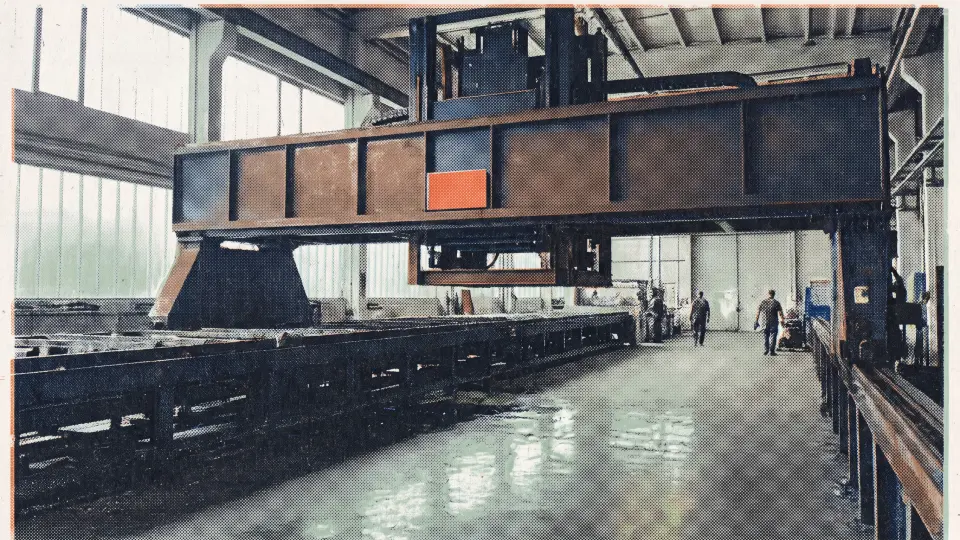
Guess what is a more severe bottleneck than HBM? Grid transformers, switchgear and EPC, and electrical steel, both severity 94, are more severe than HBM at 93. Those numbers come from our AI Infrastructure Bottleneck Map, an AI infrastructure supply chain map. Severity runs from 0 to 100 and measures how hard a node constrains new AI capacity in 2026 to 2028. It measures scarcity, not the size of the market. On each company we score return potential and risk, each from 1 to 10 over the same 2026 to 2028 window. Return potential is the upside still left in the company. Risk is company risk, and 10 is the riskiest. The goal is to identify the companies with high remaining return potential and relatively lower risk. Not investment advice. The five most severe nodes, and what each one is: Grid transformers, switchgear and EPC, severity 94 Medium- and high-voltage equipment, grid interconnect, and the construction services that install them. The backlog runs multiple years, and the constraint is forming through 2028. • $HTHIF Hitachi, Ltd. Return potential 6.2. Risk 1. This is the lowest risk on the list, the return potential is still high, and the grid business sits inside Hitachi rather than in a separate listing. • $POWL Powell Industries. Return potential 7.5. Risk 3.2. This is the highest return potential on the list, the risk is still moderate, and Powell sells the medium- and high-voltage equipment on this node. • $600089.SS TBEA Co., Ltd. Return potential 6.5. Risk 6.1. Return potential is high and risk is high, and TBEA builds high-voltage transformers in China. Electrical steel, severity 94 The core steel inside transformers. Supply is tight, and this constraint is also forming through 2028. • $5401.T Nippon Steel. Return potential 6.4. Risk 3.2. High return potential with relatively lower risk, from a major mill for the electrical steel that goes into transformer cores. • $005490.KS POSCO Holdings. Return potential 6. Risk 3.8. This is the holding company rather than a separate steel listing, POSCO is a major electrical-steel mill, and the return potential is lower than Nippon Steel's with higher risk. • $CLF Cleveland-Cliffs. Return potential 6.5. Risk 4.2. Return potential is high, the risk is higher than Nippon Steel's, and Cleveland-Cliffs is the only US producer of grain-oriented electrical steel, the steel in transformer cores. HBM, severity 93 High-bandwidth memory stacks, which constrain accelerator performance. Supply is extremely tight and the vendors are few. • $005930.KS Samsung Electronics. Return potential 6.5. Risk 3.5. High return potential with relatively lower risk, from one of the three companies that make HBM. • $000660.KS SK hynix. Return potential 6.5. Risk 4. SK hynix is the second of the three HBM makers, with the same return potential as Samsung and higher risk. • $MU Micron Technology. Return potential 6.5. Risk 5. Micron is the third HBM maker, with the same return potential and the highest risk of the three. Gas turbines and on-site generation, severity 88 The turbines that make prime and backup power on site, and the hot-section parts those turbines need. This is the next power constraint forming in the 2026 to 2028 window, and this node has two listed names, not three. • $HWM Howmet Aerospace. Return potential 6. Risk 2.3. High return potential with relatively lower risk, and Howmet makes the castings that large turbines wait on. • $603308.SS Anhui Yingliu Electromechanical. Return potential 7.2. Risk 7.8. Return potential is high and risk is high, and Anhui Yingliu makes castings for industrial gas turbines in China. Leading-edge foundry capacity, severity 86 Manufacturing capacity at 7 nanometers and tighter. The map calls this the main AI hardware bottleneck. • $TSM TSMC. Return potential 6.2. Risk 3.8. The scarce capacity on this node is the capacity TSMC already runs. • $INTC Intel Corporation. Return potential 7.4. Risk 6.8. Return potential is high and risk is high, and the foundry work sits inside Intel with no separate foundry listing. • $0981.HK SMIC. Return potential 6.2. Risk 6.8. SMIC, Semiconductor Manufacturing International Corporation on the Hong Kong line, is the third listed foundry on this node, with a higher risk than TSMC.
@ACapitalLP 2 clicks

A Capital on X

𝙋𝙤𝙬𝙚𝙧𝙚𝙙 𝙎𝙝𝙚𝙡𝙡 𝙋𝙧𝙤𝙫𝙞𝙙𝙚𝙧𝙨 (𝙋𝙎𝙋) 𝙑𝙖𝙡𝙪𝙖𝙩𝙞𝙤𝙣 𝙁𝙧𝙖𝙢𝙚𝙬𝙤𝙧𝙠 $APLD $CIFR $WULF $CORZ $HUT I think people forget that these are real estate companies. That’s why I like “Powered Shell Providers” vs. “AI/HPC” as a descriptor (h/t Morgan Stanley). They secure land and power, develop data centers and lease the infrastructure under long-term contracts. At the end of the day, they have two things of value: (1) an existing portfolio of contracted assets and (2) a pipeline of future developments. That’s it… The valuation exercise is pretty straightforward. Take the stabilized NOI from contracted leases, apply an appropriate cap rate, subtract remaining construction costs and debt, and add back cash and other assets. That’s your theoretical “equity floor.” Then take the uncontracted pipeline, separate it into ~three? buckets based on development readiness, assign each bucket an equity value per MW and a probability of commercialization, and add the risk-adjusted value to the contracted business. Note: You can also reverse-engineer the current share price to see how much the market is implicitly paying for the pipeline. So what’s the worst-case scenario? Why should $CRWV neocloud debt blowing out matter to a landlord with a 15-year lease? There are legitimate risks. Some projects aren’t fully financed, some tenants are more creditworthy than others, and higher financing costs can impact both the ability to complete existing developments and the value of contracted cash flows. Given the leverage involved, even a modest increase in cap rates can have an enormous impact on residual equity value. That’s why the contracted floor isn’t necessarily a hard floor… (but this is true for every stabilized real estate company) But I think the market is conflating two very different things: the value of infrastructure already contracted to a creditworthy tenant and the value of speculative capacity that still needs to be financed, built and leased. Neoclouds own GPUs, rent out compute and face enormous hardware depreciation and recurring capital requirements. PSPs are fundamentally landlords. A deterioration in neocloud financing conditions absolutely matters for tenant credit and future development, but it doesn’t automatically mean that every existing lease is worth less...
@aleabitoreddit 1 click

Serenity on X

I guess what I've seen from Chinese laser capacity expansion: 1. Dongshan/Source Photonics (索尔思): 9M/month capacity -> 22M/month Q4 -> 300m/year in 2027 (mostly EML, but blended) Claims of 1B/year "target" for laser chips with no deadline, but I'd take this as a grain of salt. 2. Shijia (仕佳): 72M/year for 100mW CW, 2-3 year project (mainly 2029 full capacity online) 3. Yunling (云岭): 18.75M/year 70/100mW CW, 3 year schedule (mainly 2029 full capacity online) 4. Ligent (纳真), some reports stated 170M target for total capacity (also blended, lot of which is 200G EML) 5. Yuanjie: ~10M/year currently, expanding for early 2027 and 2028, but no quantities. 6. Hongchen: I think this was the perfect example of flooding H2 2026 arguments. With some some optical bears claiming 60-70M capacity... But this turned out to completely wrong... Their actual statements were "70/100 mW products are entering small-volume production". 7. Dingxin Optoelectronics - Targeting 15M/year blended (with 70/100mW CW and 100G EML lines) Obviously mapped many others like Everbright/Accelink and did some guesses around laser mixes, but only included public disclosures. From your pluggable vendor channel checks: - 70mW/100mW lasers are actually a bottleneck right now per Innolight/Cambridge channel checks, laser ASPs actually increasing. Lasers are tighter than they were a few months ago. I don't think there's a giant moat here, Chinese players are already competitive. But a bottleneck is a bottleneck, and anyone with capacity to monetize that will benefit, since it's a volume game. In terms of what the larger pluggable makers are actually doing: - Innolight September disclosure: actively introducing new suppliers and are planning to sign 2-3 year-long contracts to lock upstream capacity for lasers (still actively securing supply for 1.6T pluggables) So there's some game theory over who can lock up qualified capacity among all your players. Even if there's some over-ordering, laser BOM is cheap, so they'd probably want to lock up capacity with more suppliers than lose billions in downstream revenue. (also kinda hurts competitors) - High end lines (for CPO), non-competitive with Western players like $LITE / $COHR as of next few years. But Chinese players would eventually develop the technology. - $AAOI CEO: Chinese suppliers several years behind on high-power CPO/DWDM laser production "not in the next 2,3 years" - $LITE CEO questioned whether claimed Chinese manufacturing capacity was translating into commercial output. "At least at the moment, we see no impact from any Chinese laser supply." This is despite Shijia, Everbright, Yuanjie and others stating 400mW capabilities and capacity expansion targets from Chinese companies. Although Western CEOs might be disputing their reliability and capability to scale these lines. I see lower end range bottleneck for pluggable will gradually ease as more capacity comes online 2028. But all evidence points against near-term overflooding. The 100mW range for example, someone cited 2 years of equipment investment. Higher ranges were 3 years for equipment investment? So even some Chinese players take years for capacity to come online. The multi year laser shortage statements from laser company executives seems to be true... especially among higher end ranges, since buildout takes a lot of time. Legitimate competition coming from China, but as of now there's a scramble for CW LTAs among the industry in 2026-2027. Lot of capacity is probably allocated toward higher spec lasers or EML, as seen with EML bottlenecking $LITE for the longest time (they have more supply now) that they had to buy CW off the market instead of supplying it themselves. This is while tail end for 800G demand for example, might continue much much longer than expected with sovereign DC buildouts. So there might be some surprising dynamics for duration, we'll see. In the end I do think supply chains will be bifurcated: - Chinese players will prioritize domestic capabilities but heavily sources globally. - Western players (now) prioritize Western supply chains unless China comes online with cheap enough supply (which don't see happening near-term). TLDR: -> Multi-year shortage definitely seems accurate for higher end specs -> Lot of China capacity overflooding claims earlier from H1 turned out to be completely false. People keep making them for some reason across memory to photonics. -> Chinese laser players are competitive for 70mW/100MW, meaningful expansion Y/Y, but nothing showing overflooding, given laser demand increasing, probably gradual easing into 2028. We'll see, supply chain evolves month after month, just my current opinion from what I'm seeing.

Molina & Kinsale

Molina Healthcare and Kinsale Capital’s earnings are reassessed through a long-term lens, emphasizing conviction and detachment during…

WULF · long

Terawulf INC

TeraWulf is shifting from bitcoin mining toward data centers, seeking a higher-quality and more defensive business model.

MYR Group q3’26 Earnings Preview

MYR Group’s Q3 2026 preview cites data-center and power transmission demand, with long-term service agreements supporting margin growth and…

Mosaic, Part One: The Story

Mosaic’s history traces the 2004 Cargill-IMC merger and the phosphate and potash mines that shaped NYSE: MOS.
Mosaic, Part Two: The Deep Dive

Mosaic, NYSE: MOS, is the subject of a second audio program for professional investors analyzing fertilizer producers.
Publications we follow

Every publication on this site, hand-picked.

129 publications

Newsletters 109

X accounts we follow

Every account on this site, hand-picked.

91 accounts

Investor letters we follow

190 firms

Sectors

Ordered by how often our editor reaches for them.