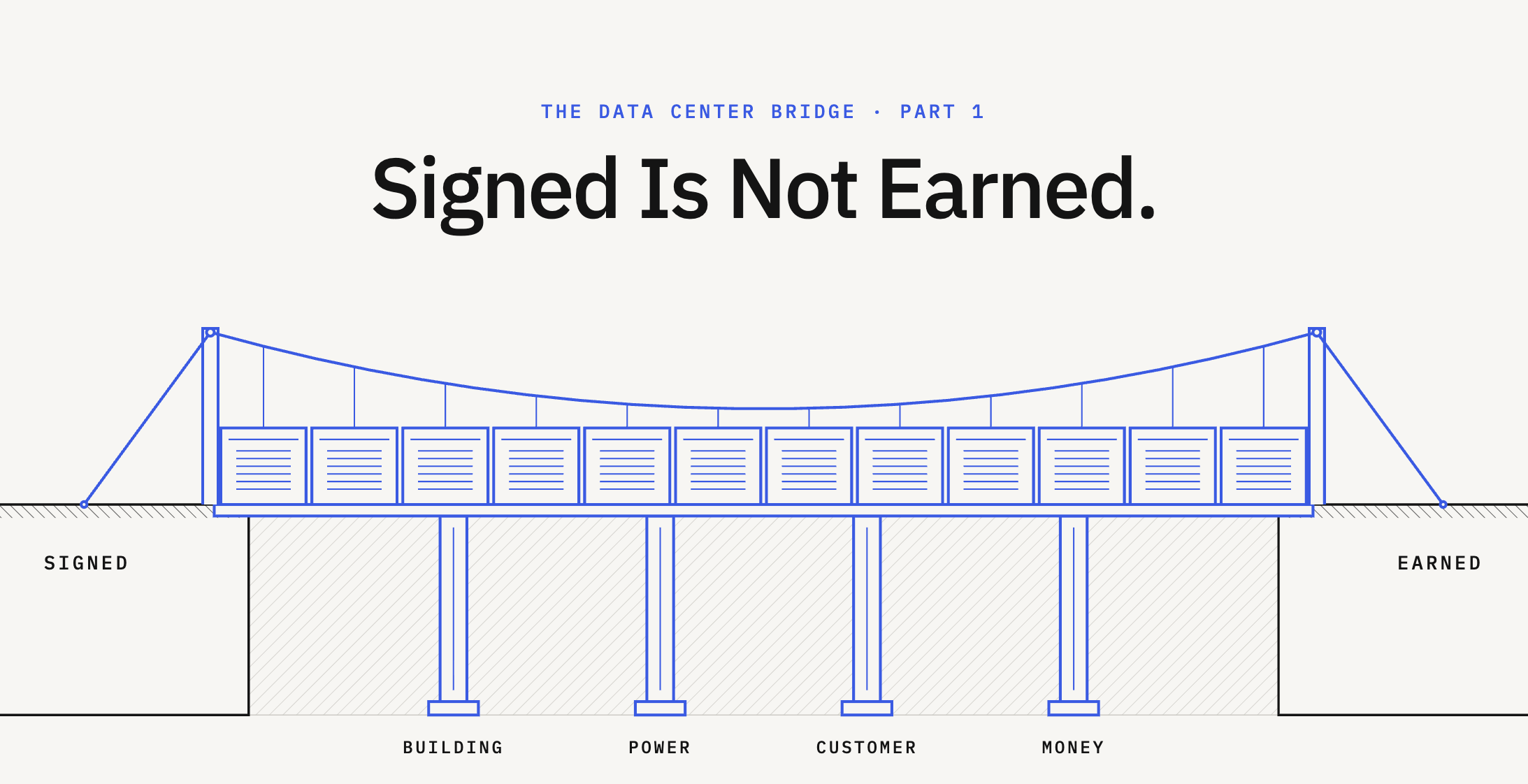
The Data Center Bridge
Small- and mid-cap data center stocks trade as one despite sharply different funding bridges: 12 of 15 cover fixed costs on signed contracts, but 10 cannot do so today.
Small- and mid-cap data center stocks trade as one despite sharply different funding bridges: 12 of 15 cover fixed costs on signed contracts, but 10 cannot do so today.
To the surprise of absolutely no one, the Copart-ACV deal is closed. $CPRT $ACVA Get ready to hear the word “synergies” everywhere. Now it’s up to Copart to show they’ll be good ones. https://t.co/sGgwasBBT1 https://t.co/DYsYj79dcA
$FOXF such a cluster-fuck... Levers up to the tits to buy Marucci at the top (someone plz educate me on synergies between MTB shocks and baseball bats...), now cans CEO and looking to divest Marucci after stock is off 90%
$SPCOQ just popped hard. Looking to see if their Talc bankruptcy was approved. https://t.co/sumHp5UMLx
@charrisinvest @netnethunter I don’t think there is any. @The_Bank_Slate had any interview with him a couple years ago. Best is to dig up old 13d filings. $BRBS is a good proxy. https://t.co/7oB9174W5Y

Molina Healthcare and Kinsale Capital’s earnings are reassessed through a long-term lens, emphasizing conviction and detachment during…

Duolingo sacrificed over $50 million of 2026 bookings to reduce free-app friction, reaccelerate daily users and target 100 million DAUs by…
 Geneva Investor 3 clicks
A four-layer 10-K framework tests revenue timing, receivables, reserves and depreciation against cash flow, using Hertz’s 2012-14…
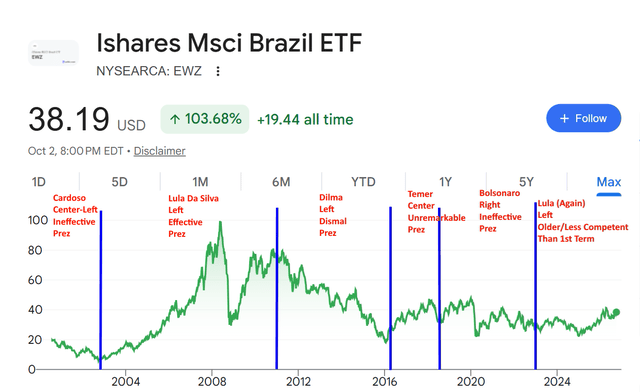
Brazil’s Lula victory leaves Nu and Inter’s thesis intact, while JetBlue heads toward bankruptcy and Mexican airlines pursue a merger.

Namib Minerals’ How Mine mill reached 55,000 tonnes per month, 36% above prior capacity, while a proposed $30 million Ecobank facility…
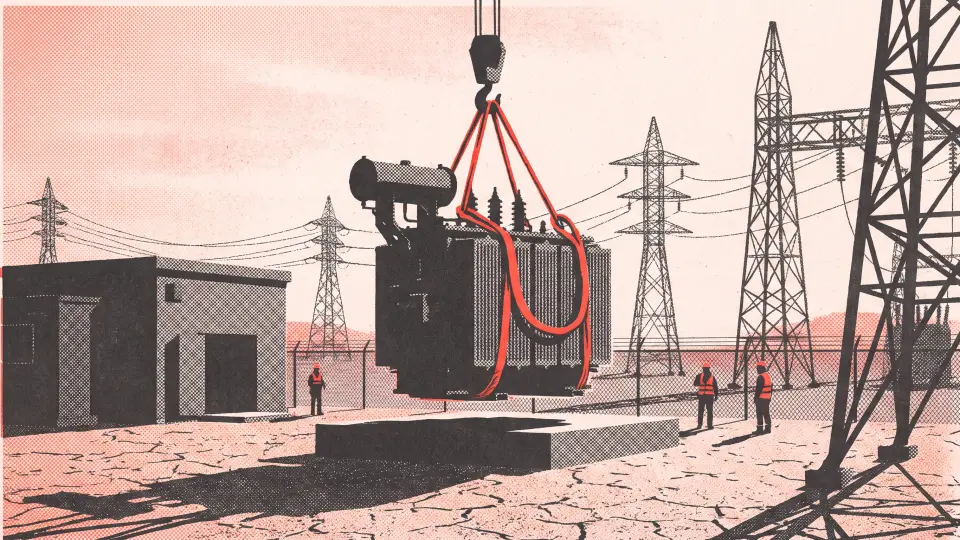
Bimergen Energy filed for a Texas retail-power license to supply data centers directly and gained eligibility for federal contracts through…

Getty Images' 2026 Chapter 11 filing is challenged as a prepack after warrant litigation, a failed Shutterstock merger and AI pressure.

Klaviyo's customer-data platform and new AI Composer product underpin a bullish growth case, with Salesforce's Braze acquisition cited as a…
 Fountainhead 2 clicks

Signet Jewelers cut its share count from 87 million to 38 million since 2012 as short interest reaches 15%, amid a hated diamond market.

Avalo Therapeutics' Abdakibart enters a pivotal hidradenitis suppurativa trial after positive LOTUS data, with monthly dosing and…
 Myriam Alvarez 3 clicks
 DGXX · short
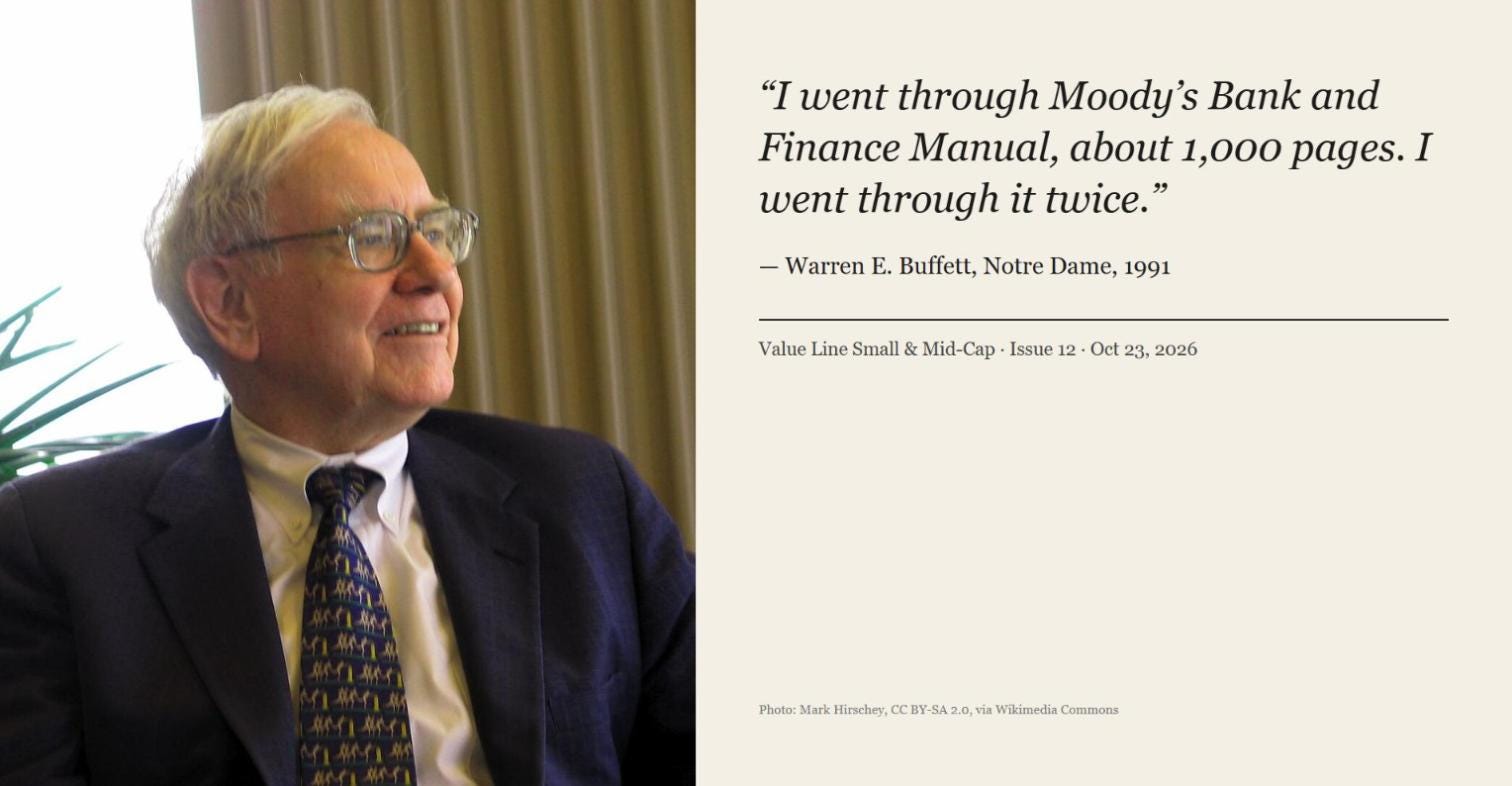
Six Value Line small caps including Blackbaud, Marqeta, Ranger Energy and Definitive Healthcare trade on net cash, buybacks, low multiples…
EXLService's AI-led business, 61% of revenue and growing 30% year over year, trades at 18 times forward earnings after legacy digital…
 Ignacio Planas Gonzalez 4 clicks

ERock’s modular microgrids bridge data-center power gaps years before grid interconnects, with Meta and Anthropic projects filling capacity…

HFI Portfolio bought 94,214 shares of Transocean, RIG, for $570,000 at $6.05 per share.
MYR Group’s Q3 2026 preview cites data-center and power transmission demand, with long-term service agreements supporting margin growth and…

Mosaic’s potash business generated $930 million after capital spending and closure cash in 2025, while phosphate operations consumed $207…

Mosaic’s history traces the 2004 Cargill-IMC merger and the phosphate and potash mines that shaped NYSE: MOS.
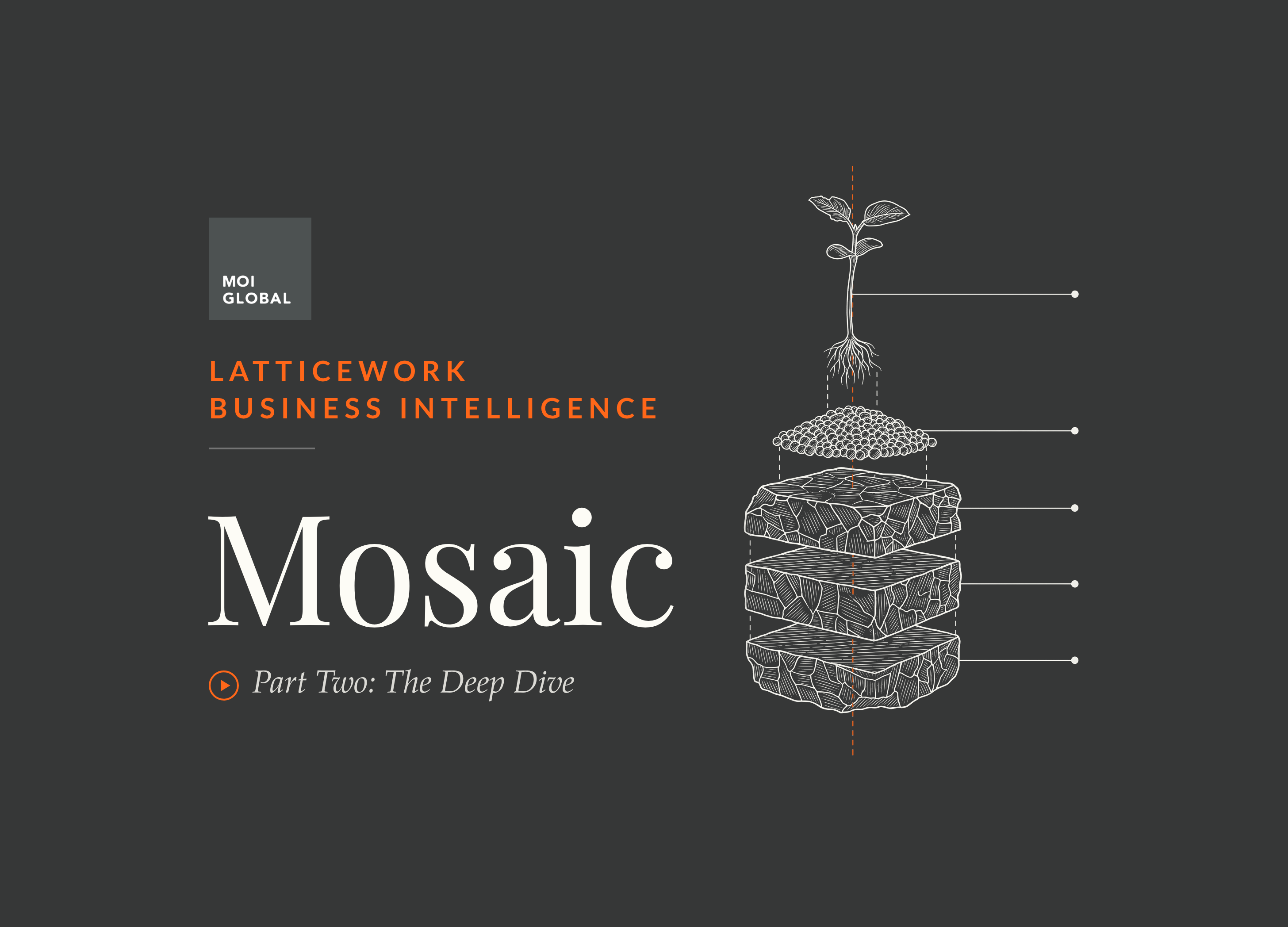
Mosaic, NYSE: MOS, is the subject of a second audio program for professional investors analyzing fertilizer producers.

Western Digital, Penguin Solutions and Millrose Properties lead a roundup of 12 lesser-followed stocks featured from Oct. 10 to Oct. 16.
 The Undercovered Dozen 17 clicks
Every publication on this site, hand-picked.
 Albert Anthony
 Andres Veurink
 Bay Area Ideas
 Blake Winiecki
 Capital Connoisseur
 Dane Bowler
 David Zanoni
 Deep Value Investing
 Dhierin Bechai
 Dilantha De Silva
 Dustin Quasney
 Elliott Gue
 Equity Eagle
 Eudaemon Research
 Fernanda Galvez Jalil Fountainhead Geneva Investor
 Given Mahlangu
 Henrik Alex
 High Alpha Professor Ignacio Planas Gonzalez
 Investor Overview
 IWA Research
 Jaden Mealy
 JR Research
 Julia Ostian
 Khaveen Investments
 Kurt Christensen
 LL Insights
 Long Player
 Marc Gerstein
 Melissa Tucker
 Mike Zaccardi, CFA, CMT
 Miletus Research Myriam Alvarez
 Petri Dish Reports
 Philip Wang
 Prakhar Agarwal, CFA
 PropNotes
 PV Research
 Quantryon Capital
 Robert J. Lake
 Ron Ferrie
 Ryan Canady
 Sam Mancini
 Sharon McArd
 SiliconBytes Insights
 Simple Investment Ideas
 Sorrento Research
 Stephen Ayers
 Steven Fiorillo
 The Alpha Analyst
 The Asian Investor
 The Bullionaire
 The Curious Analyst
 The J Thesis
 The Supercycle Investor The Undercovered Dozen
 Tim Travis
 Value Capital Research
 Vishal Jadaun
 Zoltan Ban
Every account on this site, hand-picked.
 ⚽️📡
 💥PETITION💥
 A Capital
 absreturnchaser
 Adam D. Wyden
 Alpha Vulture
 AltayCap
 Asif Suria
 Bank Reg Blog
 Barbarian Capital
 BDC
 Bill Ackman
 Brian McGough
 Broken Moats
 BuccoCapital Bloke
 Calvin Blissett
 catechwilliams
 Charles Frischer
 Chris Camillo
 Clark Square Capital
 Cluseau Investments
 Colin King
 Connor Haley
 Conor Maguire | Value Situations
 Convequity
 Dalius - Special Sits
 David Orr
 Deep Sail Capital
 Derek Pilecki
 Devin LaSarre
 DOMO Capital Management, LLC
 Edwin Dorsey
 Evan Tindell
 Fajasy
 Farmer
 Fierce_beast
 Fred Liu
 Gavin Baker
 George Noble
 Hunterbrook
 Ian Bezek
 Idea Brunch
 JabroniCoin.USD
 John_Hempton
 junkbondinvestor
 kab60
 KEDM.com
 Kevin Mak
 Kuppy
 Laughing Water Capital
 Lee Roach
 Little Owl Research
 Maius
 Maj Soueidan
 marginofdanger
 mavix
 Mike
 Mikro Kap David
 Mr Neutral Man aka "Howard Marks of REITs”
 Multiples Capital
 Myles
 Nat Stewart
 Negligible Capital
 Odd Diligence
 Odd Lot Arbitrageur
 PAA Research
 Paradis
 Pernas Research
 Porter Collins
 Prepared Remarks
 Psyop Capital
 Raging Capital Ventures
 Red Dog Capital RiverRoadPartners
 Rohan Pavuluri
 Rusholme Capital
 Sahil Khetpal
 Serenity
 SG
 Sheel Mohnot
 SouthernValue
 Steve Eisman
 The Friendly Bear
 Tim Eriksen
 Timyan Bank Alert
 Todd Wenning
 ToffCap
 Trevor Scott
 Undiscovered Compounders
 Voss Capital
 Yaron Naymark
Ordered by how often our editor reaches for them.