Monday, October 26, 2026

Back to today

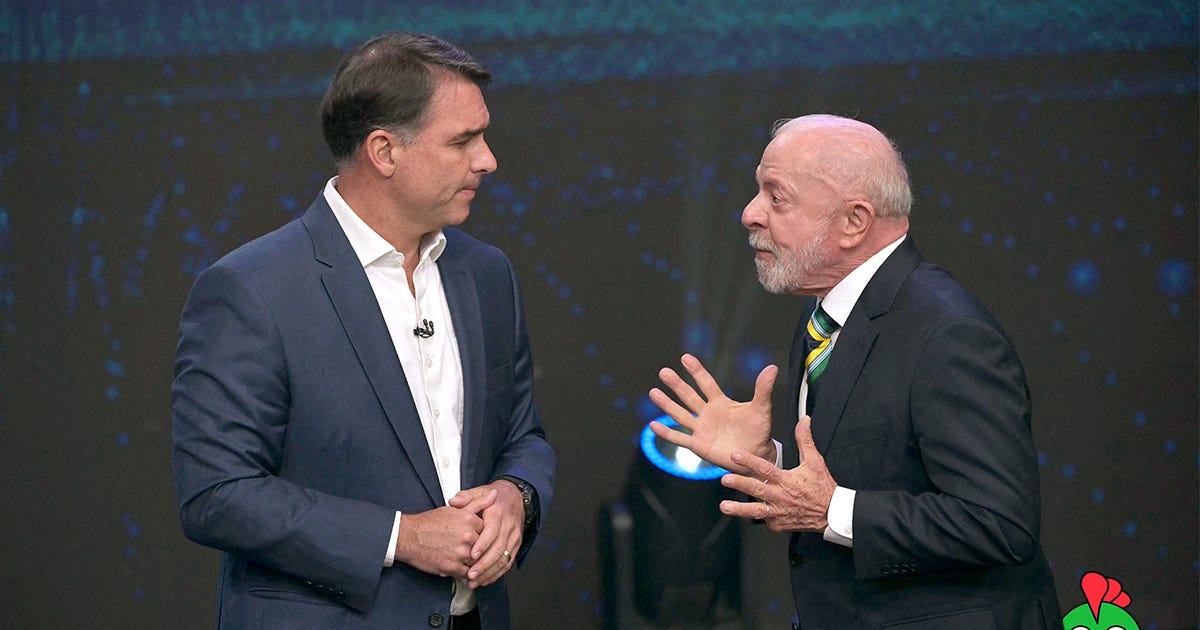
Merger Monday & Election Implications

EQT’s $50 billion merger with Range Resources and Ovintiv’s $1.26 billion acquisition of Logan Energy reshape North American oil and gas alongside Brazil and British Columbia election…

From X

@ACapitalLP

A Capital on X

𝙋𝙤𝙬𝙚𝙧𝙚𝙙 𝙎𝙝𝙚𝙡𝙡 𝙋𝙧𝙤𝙫𝙞𝙙𝙚𝙧𝙨 (𝙋𝙎𝙋) 𝙑𝙖𝙡𝙪𝙖𝙩𝙞𝙤𝙣 𝙁𝙧𝙖𝙢𝙚𝙬𝙤𝙧𝙠 I think people forget that these are real estate companies. That’s why I like “Powered Shell Providers” vs. “AI/HPC” as a descriptor (h/t Morgan Stanley). They secure land and power, develop data centers and lease the infrastructure under long-term contracts. At the end of the day, they have two things of value: (1) an existing portfolio of contracted assets and (2) a pipeline of future developments. That’s it… The valuation exercise is pretty straightforward. Take the stabilized NOI from contracted leases, apply an appropriate cap rate, subtract remaining construction costs and debt, and add back cash and other assets. That’s your theoretical “equity floor.” Then take the uncontracted pipeline, separate it into ~three? buckets based on development readiness, assign each bucket an equity value per MW and a probability of commercialization, and add the risk-adjusted value to the contracted business. Note: You can also reverse-engineer the current share price to see how much the market is implicitly paying for the pipeline. So what’s the worst-case scenario? Why should $CRWV neocloud debt blowing out matter to a landlord with a 15-year lease? There are legitimate risks. Some projects aren’t fully financed, some tenants are more creditworthy than others, and higher financing costs can impact both the ability to complete existing developments and the value of contracted cash flows. Given the leverage involved, even a modest increase in cap rates can have an enormous impact on residual equity value. That’s why the contracted floor isn’t necessarily a hard floor… (but this is true for every stabilized real estate company) But I think the market is conflating two very different things: the value of infrastructure already contracted to a creditworthy tenant and the value of speculative capacity that still needs to be financed, built and leased. Neoclouds own GPUs, rent out compute and face enormous hardware depreciation and recurring capital requirements. PSPs are fundamentally landlords. A deterioration in neocloud financing conditions absolutely matters for tenant credit and future development, but it doesn’t automatically mean that every existing lease is worth less...
@aleabitoreddit 11 clicks

Serenity on X

So back on your Neoclouds like $NBIS + memory read through... From $AMZN CEO + A16z interview. Q: On memory shortages (eg. $MU / SK Hynix / Samsung): A: "There's only so much memory, and I don't think that that shortage ends in 2027." Q: On AWS capacity: A: "A good chunk of 28 is sold out", "largely sold out through 2027." Q: On capex ROI: A: Amazon had ​said it would spend about $220 billion in capex for 2026. But Jassy said the company "could invest a lot more ​and it wouldn't be a bad use of ​capital" This is probably validating economics of Neoclouds model since this comes from a pretty stingy hyperscaler like Amazon... that only serves free bananas to their employees. Unlike trusting $META / Zuck where you the guy throws all you can eat cruise ship type buffets at every employee. - AWS claims approximately 30-40% better price-performance than comparable AI accelerators. Then went on to say Annapurna was "one of the very best acquisitions we've done in Amazon and the history of the company, if not the best." "We spun out a separate team in Annapurna to build an AI accelerator" Just to give a bump to your AI custom silicon type private companies (since others like $AAPL were likely going on shopping sprees). TLDR: - Not really too much groundbreaking, just incremental validation of what was said previous earnings. - Broader shortages (like memory) won't end in 2027 - Always positive to hear from $AMZN on insatiable demand + ROI given atrocious Neocloud sentiment right now
@aleabitoreddit 1 click

Serenity on X

I guess what I've seen from Chinese laser capacity expansion: 1. Dongshan/Source Photonics (索尔思): 9M/month capacity -> 22M/month Q4 -> 300m/year in 2027 (mostly EML, but blended) Claims of 1B/year "target" for laser chips with no deadline, but I'd take this as a grain of salt. 2. Shijia (仕佳): 72M/year for 100mW CW, 2-3 year project (mainly 2029 full capacity online) 3. Yunling (云岭): 18.75M/year 70/100mW CW, 3 year schedule (mainly 2029 full capacity online) 4. Ligent (纳真), some reports stated 170M target for total capacity (also blended, lot of which is 200G EML) 5. Yuanjie: ~10M/year currently, expanding for early 2027 and 2028, but no quantities. 6. Hongchen: I think this was the perfect example of flooding H2 2026 arguments. With some some optical bears claiming 60-70M capacity... But this turned out to completely wrong... Their actual statements were "70/100 mW products are entering small-volume production". 7. Dingxin Optoelectronics - Targeting 15M/year blended (with 70/100mW CW and 100G EML lines) Obviously mapped many others like Everbright/Accelink and did some guesses around laser mixes, but only included public disclosures. From your pluggable vendor channel checks: - 70mW/100mW lasers are actually a bottleneck right now per Innolight/Cambridge channel checks, laser ASPs actually increasing. Lasers are tighter than they were a few months ago. I don't think there's a giant moat here, Chinese players are already competitive. But a bottleneck is a bottleneck, and anyone with capacity to monetize that will benefit, since it's a volume game. In terms of what the larger pluggable makers are actually doing: - Innolight September disclosure: actively introducing new suppliers and are planning to sign 2-3 year-long contracts to lock upstream capacity for lasers (still actively securing supply for 1.6T pluggables) So there's some game theory over who can lock up qualified capacity among all your players. Even if there's some over-ordering, laser BOM is cheap, so they'd probably want to lock up capacity with more suppliers than lose billions in downstream revenue. (also kinda hurts competitors) - High end lines (for CPO), non-competitive with Western players like $LITE / $COHR as of next few years. But Chinese players would eventually develop the technology. - $AAOI CEO: Chinese suppliers several years behind on high-power CPO/DWDM laser production "not in the next 2,3 years" - $LITE CEO questioned whether claimed Chinese manufacturing capacity was translating into commercial output. "At least at the moment, we see no impact from any Chinese laser supply." This is despite Shijia, Everbright, Yuanjie and others stating 400mW capabilities and capacity expansion targets from Chinese companies. Although Western CEOs might be disputing their reliability and capability to scale these lines. I see lower end range bottleneck for pluggable will gradually ease as more capacity comes online 2028. But all evidence points against near-term overflooding. The 100mW range for example, someone cited 2 years of equipment investment. Higher ranges were 3 years for equipment investment? So even some Chinese players take years for capacity to come online. The multi year laser shortage statements from laser company executives seems to be true... especially among higher end ranges, since buildout takes a lot of time. Legitimate competition coming from China, but as of now there's a scramble for CW LTAs among the industry in 2026-2027. Lot of capacity is probably allocated toward higher spec lasers or EML, as seen with EML bottlenecking $LITE for the longest time (they have more supply now) that they had to buy CW off the market instead of supplying it themselves. This is while tail end for 800G demand for example, might continue much much longer than expected with sovereign DC buildouts. So there might be some surprising dynamics for duration, we'll see. In the end I do think supply chains will be bifurcated: - Chinese players will prioritize domestic capabilities but heavily sources globally. - Western players (now) prioritize Western supply chains unless China comes online with cheap enough supply (which don't see happening near-term). TLDR: -> Multi-year shortage definitely seems accurate for higher end specs -> Lot of China capacity overflooding claims earlier from H1 turned out to be completely false. People keep making them for some reason across memory to photonics. -> Chinese laser players are competitive for 70mW/100MW, meaningful expansion Y/Y, but nothing showing overflooding, given laser demand increasing, probably gradual easing into 2028. We'll see, supply chain evolves month after month, just my current opinion from what I'm seeing.
@StableBread

Fajasy on X

Can Boost Run $BRUN borrow the $527-686M it needs for H2 2026 without selling stock? CFO Erik Guckel said on the Q2 call that $BRUN is working on new ways to finance the build: “We continue to innovate on financing structures beyond the equipment financing approach used to date and expect to provide additional color and progress on this over the next quarter.” The October 8 prospectus amendment names asset-backed securitizations (bonds backed by its GPUs and customer contracts) and rated parent-level debt as new forms of financing $BRUN expects to access. But I found no new facility, lender, or term sheet in its filings or press releases from August 14 to October 16. Founder and CEO Andrew Karos acknowledged on the Q2 call that there’s “a big gap in the market right now” in financing for customers without investment-grade credit. $BRUN’s named customers are private AI startups without investment-grade ratings, so its contracts are harder to borrow against. For comparison, $NBIS’s first secured loan on July 17, $775M at 2.50 points over SOFR (a short-term benchmark rate), was backed by GPUs running under a contract with an investment-grade customer. Thinking Machines Lab, the AI startup founded by former OpenAI CTO Mira Murati, alone accounts for $157.2M/year, 52.3% of what $BRUN’s disclosed contracts should bring in by year-end, and was still in talks to raise $5-6B as of early September. I found no announcement that it closed the round through October 16, so lenders financing its GPUs are also betting that the round closes. Karos also mentioned $NVDA’s AI Compute Partnership (AICP), a program NVIDIA launched in July to backstop GPU clouds’ clusters with its investment-grade credit, for a share of their revenue. However, NVIDIA paused some of its AICP deals over antitrust concerns, the Wall Street Journal reported on August 27. NVIDIA said the program is still in place, but The Information, a tech news site, reported on October 5 that NVIDIA is rethinking its revenue-sharing deals with GPU clouds. Still, lessors funded 79.5% of the H1 2026 build for GPUs already rented out on contracts worth ~1.4x their cost, so I believe $BRUN most likely borrows the $527-686M without selling stock. The Q3 report (mid-November) will show how much $BRUN leased in Q3. If lessors funded 70% of the H2 2026 build instead of 79.5%, $BRUN would need $199-259M of its own cash for the build, more than its $191.8M of pro forma cash. Covering the ~$7-67M gap and keeping three months of the ~$221M of 2027 payments in cash would take a $62-122M stock sale. At $8.89/share, the sale would mean 7.0-13.8M new shares, 8.4-16.4% of the 83.8M outstanding. So the stock at $8.89 depends less on demand or the book $BRUN has signed than on whether it can finance the next ~$1B of GPUs without selling shares at beaten-down prices.
@aleabitoreddit

Serenity on X

Yes, I like $SIVE. It's a fun company to cover, since there's a lot of supply chain alpha here. But the company completely Tall Poppy Syndromed itself last earnings. And it's clearly shown in the drawdown. Bit of a longer consolidated thought and some scattered bits of supply chain info: - Sivers has 100M CW DFB laser capacity coming online Q4 2027 during an industry shortage. And very large allocations from foundries online (they were doing these quals with Win Semi + 2 others back in 2023/2024), so they can actively monetize the bottleneck today. The other interesting reason why bottlenecks are important (aside from ASP hikes), is because qualifications convert much faster + more likely given incentives around supply scarcity. -> As one example, module makers have expanded the amount of suppliers, eg. (lightcounting cited companies expanding to 5-7+ suppliers from 2-3). Innolight, for example last month responded to a question addressing tight 1.6T DFB laser supply in 2026–2027: - Innolight was actively introducing new suppliers last month and are planning to sign 2-3 year-long contracts to lock upstream capacity -> This is while your biggest merchant laser companies making up the world's 600m+ EML/CW laser capacity like $COHR have redirected lasers to their own programs. $LITE sold out into 2029, Landmark also locked a lot of their capacity into 2027-2029. $AAOI was an expected player, but ended up redirecting lasers into their own transceiver programs too. And this coincides with times $SIVE has tremendous capacity available now + actively engaged with Chinese pluggables players (not saying it's Innolight, but just shows Chinese makers like Cambridge/Eoptolink are actively trying to secure laser capacity). - Fun to note, before $JBL was announced, Sivers had and has ongoing direct engagements with hyperscalers as well. We saw that hyperscalers approached $MTSI and $AAOI for laser capacity from their earnings transcripts (and hilariously got turned away from AAOI due to shortages). So the odds pluggable makers or hyperscalers end up converting to capacity agreements with $SIVE seems a materially higher. Just a little rant: for all the sellside/retail trying to model revenue, you can't just slap on a stupid 25-35% CAGR on NRE revenue since it's close to 0 revenue now. Especially when they scale up to maybe 300M laser capacity (extrapolated from 2:1 external/internal capacity). It's also not the same as $POET having OE packaging capacity at scale, since lasers are in a genuine shortage. So capacity is more likely to convert like how $AAOI is sold out, $LITE is sold out into 2029 We've already seen what revenue that laser capacity brings in since $LITE cited $5B in laser capacity from just one 2028 fab alone in Greensboro (on higher end ranges). And whatever lasers Sivers sell, they're targeting ~50-60+ blended gross margins long term on maybe $3-6 for lower range lasers to $6-$12 for high end custom deployments. But no disclosures around capacity -> revenue conversion yet from Sivers. Now here's the thing people don't really understand, "why no revenue?" for current opportunities? $SIVE pre 2024 focused on custom development for future architectural shifts like CPO. For custom deployments: - We finally got conversion from 1 of their 4 or so lidar customers this week with ~ $AEVA. - ~ $APPL was confirmed ongoing earlier this year with an explanation that "It takes tremendous amount of trials and algorithms way beyond just what we supply to them". - All their customers from 2023-2024 like Ayar and 3 others, probably achieve volume in 2028 as CPO takes off. Custom high end lasers programs are extremely sticky but take many years and are mainly NRE. And as seen with CPO scale up, faced delays with commercialization over the years. So $SIVE from the CEO shift in 2024 realized "okay" let's ramp revenue with mass commercialization products today like 70mW/100mW/200mW lasers for 800g/1.6T pluggables. And that's where they found $JBL and all your other large pluggable players today during the shortage. Now... the work Sivers did in 2023-2024 earlier: Such as $AAPL, Ayar, $AEVA, other lidar/CPO players. And their new mass commercialization opportunities like $JBL, $GFS, and many pluggables/NPO suppliers in engagement now. Have all their inflection points converges 2027 onward, which is why I find the company compelling. Where I think management went completely wrong was messaging and near-term execution: - Deciding to focus on current tiny contracts like Seminex, AllSpace, Tachyon orders felt like the entire focus recently in earnings, shareholder letters, and media commentary -> Brutal honesty to $SIVE management, majority of Western audiences literally don't care and it's immaterial to the valuation. $SIVE moved 0% on all of the Seminex/AllSpace/Tachyon order announcements, and even dropped in price. But rallied like 50% on $GFS and something similar on $JBL announcement. The reason why most took long positions in the first place was CPO. So if $SIVE wants to go answer questions to Swedish media about "Why are you bleeding out" and defending that with cellular orders explaining pipeline conversion. That's not going to help people stay long during drawdowns. -> Second part was not committing to NASDAQ listing in a certain timeframe and actually executing. - If there's delays, sure, just say it, but non-committal lawyer-like language is infuriating to hear, especially from the CFO. I think they'll have that opportunity next month earnings to correct everything. So wrapping up: - There's nothing I see remotely close to $SIVE, in terms of % of global CW laser capacity they're coming online with relative to MC. - They have a ton commercialization paths, from O-Net, $POET, $JBL, Ayar, $GFS, $AAPL, $AEVA, and many potential hyperscaler/pluggable engagements. Even if one or two fall through, the breadth of ongoing quals is so deep + current laser bottleneck is severe, that it's more likely than not many will convert to production. It's clear $SIVE wants to focus on dominating the laser chokepoint first, and ended up using their 700m SEK fundraise for capacity expansion. But they should focus on communicating the billions in potential economic scale from that laser capacity conversion. And execute on it.

Molina & Kinsale

Molina Healthcare and Kinsale Capital’s earnings are reassessed through a long-term lens, emphasizing conviction and detachment during…
Tower Semiconductor Deep Dive

Tower Semiconductor’s low-loss photonics chips halve lasers in 1.6T optical modules, supporting a $680 million annualized photonics run…
Margin Call

Petrobras’s Morpho-1 well revived hopes that Brazil’s Equatorial Margin can become a major new oil frontier after hydrocarbons were…
Our Views on CoreWeave

CoreWeave's financial statements point to a business model familiar to the authors after a closer review of the AI infrastructure company.
DLTR · long

Dollar Tree INC

Dollar Tree is long after divesting Family Dollar, separating its stronger banner from its weaker business.
Capital Wars

CoreWeave’s $35 billion to $39 billion 2026 spending plan relies on debt as unsecured yields reach 15%, making its GPU cloud expansion a…
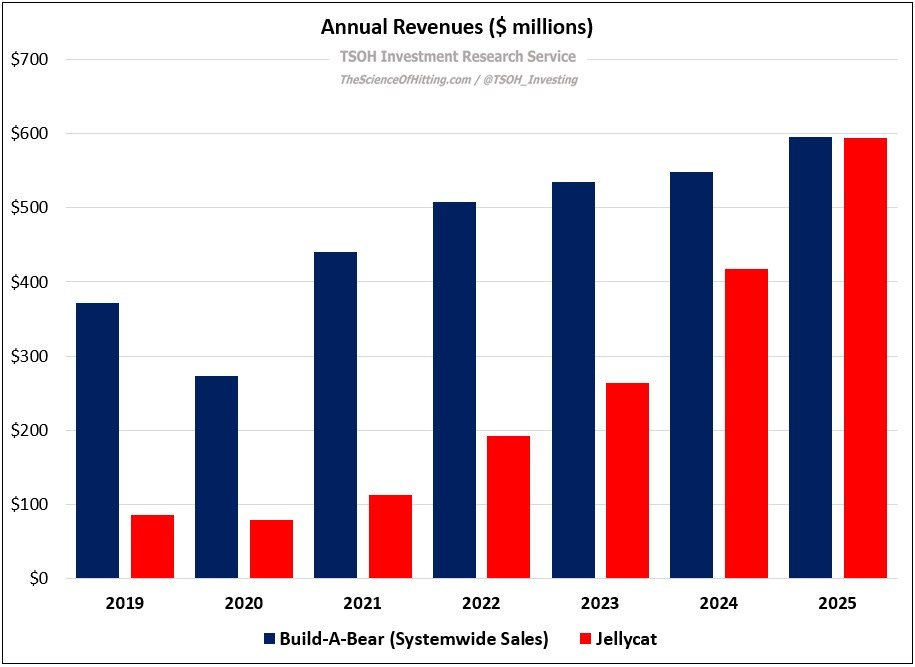
Putting bear cases to rest

Medpace authorized $1 billion of buybacks through 2028 after Q3 revenue rose 8.5% to $716 million; service revenue grew roughly 12% as…

Publications we follow

Every publication on this site, hand-picked.

129 publications

Newsletters 109

X accounts we follow

Every account on this site, hand-picked.

91 accounts

Investor letters we follow

190 firms

Sectors

Ordered by how often our editor reaches for them.