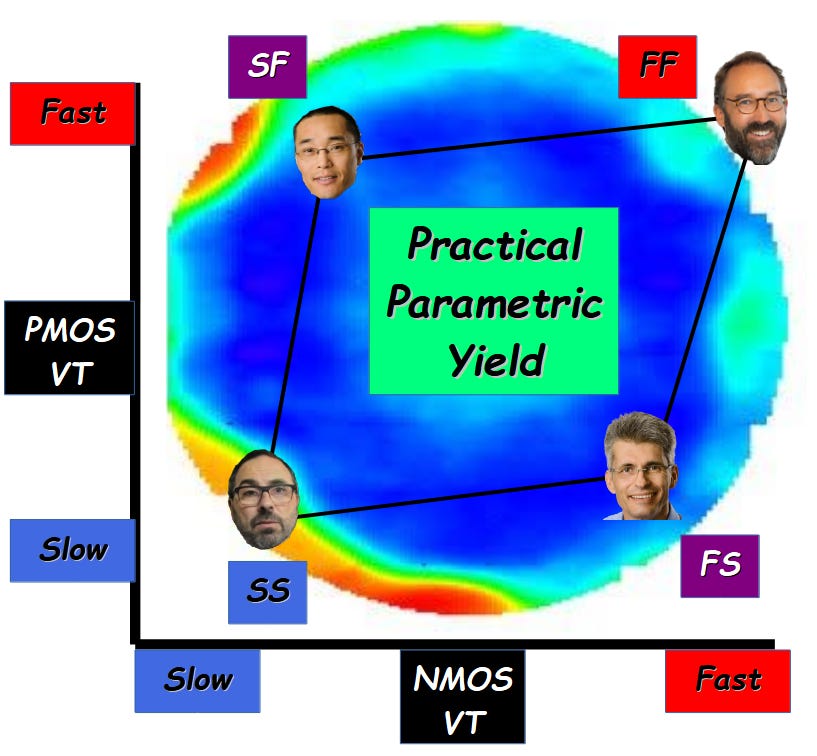
Practical Parametric Yield
Cerebras’s WSE-3 faces parametric-yield constraints that could restrict supply, making power and clock-speed tradeoffs central to its next 12 to 18 months.
Cerebras’s WSE-3 faces parametric-yield constraints that could restrict supply, making power and clock-speed tradeoffs central to its next 12 to 18 months.
@DavidWeinetayg @TidefallCapital Debt covenants matter. It won't however be the first or last company to buy itself back into ch11. I mean look at last quarter's buy backs in $FICO.
Looks like we got 13.5 million shares trading of $GME tonight. Not sure what’s going on. Besides the heavy insider buys. https://t.co/cU9aBeRwRR
$ONON so in vogue, it made it to the WSJ The Sneaker Taking Over America Was Inspired by iPhones and a Vacuum Cleaner https://t.co/rNjjRCEEnb
@At50w50882 @310Value @ctfn_news All of their existing debt is portable… this was by design and both mgmt / IR call this out regularly. Only need to raise the new debt….dovigi haters are always gonna hate. That’s why it needs to go private $GFL
Newest out. British American Tobacco: Harvest $BTI $PM $MO $IMBBY $HAYPP $STG https://t.co/IjOEe4izVz
Adding long exposure (through $IWM and $RSP mainly) makes me feel sick, which backs up my belief that the timing is good to add long exposure.
@TSOH_Investing this is what $nke tried to do unsuccessfully
Nike targets EBIT margin recovery from 5.2% in FY2027 to 13% by FY2032 as revenue declines persist and wholesale, China and digital remain…
Nike’s second Latticework program examines the company and the global athletic footwear and apparel industry for professional investors.

Nike grew from a $1,000 shoe-distribution venture in 1964 into the largest sports brand, using athlete endorsements, product innovation and…

Boeing won the $20 billion Navy F/A-XX contract after securing the Air Force F-47, concentrating U.S.
 Dhierin Bechai
Rocket Lab reported Q2 revenue up 62% to $234.1 million and backlog up 137% to $2.36 billion, while operating losses and cash burn…

AAR’s $1.8 billion acquisition of a 65% stake in MRO Holdings adds widebody aircraft maintenance and targets a 19% to 20% EBITDA margin by…

American Healthcare REIT’s senior-housing and outpatient portfolio is driving FFO growth and dividend safety, while a rich valuation limits…
 Albert Anthony 1 click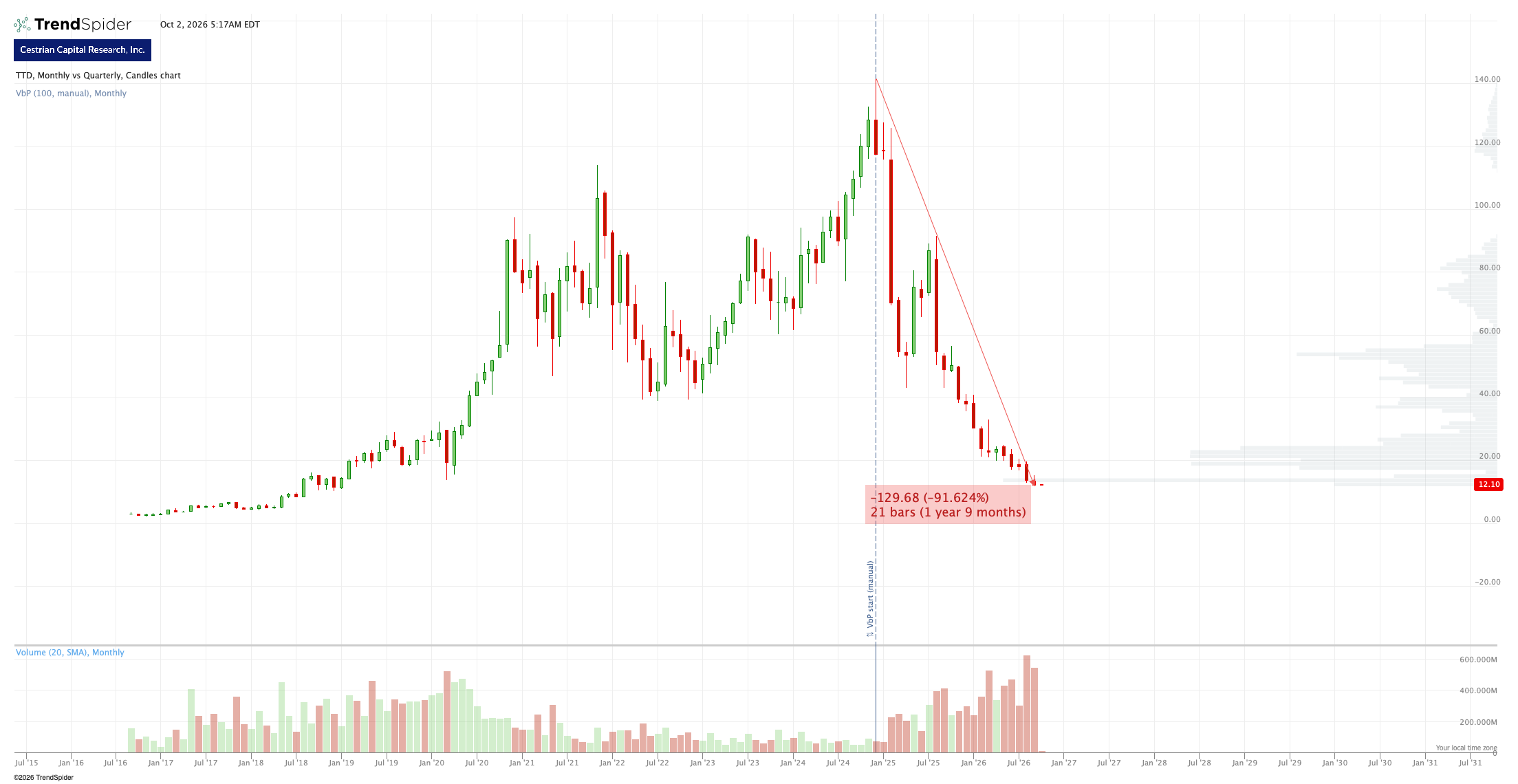
The Trade Desk's Q2 revenue grew 3% to $715 million as Q3 guidance called for a year-over-year decline; TTD has fallen over 90% from its…

Belden targets net leverage of 2.9x by 2027 from 3.9x, using RUCKUS's 65%+ gross margins and free cash flow to reduce debt.
 Lee Bailey
Crocs has $2 billion of buyback authorization, more than a third of its market cap, as North American sales stabilize and HeyDude drags on…
 CCOI · long
 Cogent Communications (CCOI) is presented as a long investment idea, revisiting prior bull cases from 2022 and 2025.

PINFRA's nonvoting PINFRAL shares trade 27.2% below voting stock despite identical economics, while its toll-road concessions average 31…

Oak Bloke’s 2026 picks have returned 37% in GBP, with AltynGold, Geiger Counter, Silvercorp and China-focused trusts still rated buys…
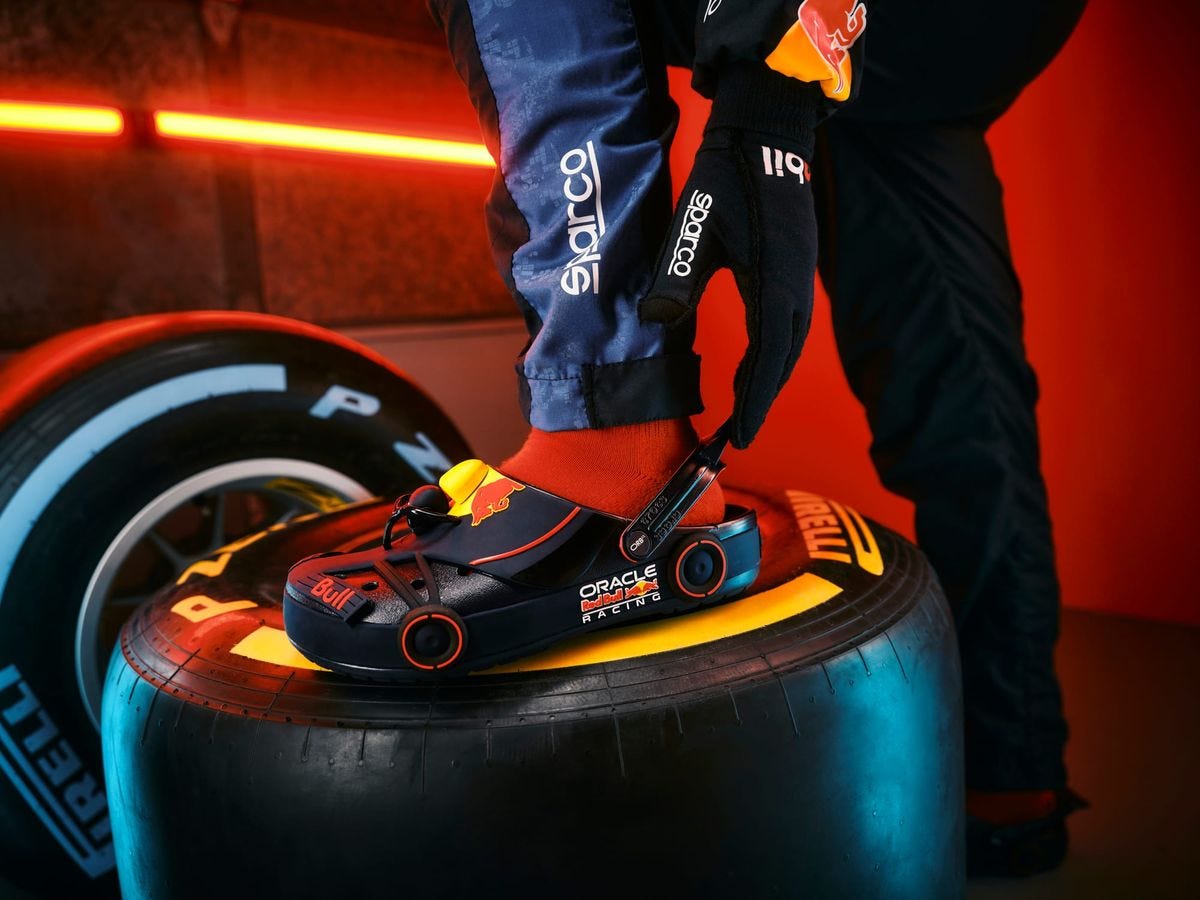
Crocs’ core brand surpassed $1 billion in quarterly revenue, while HEYDUDE weakness, tariffs and 2025 impairments weigh on shares trading…

Nintendo expects software, digital sales and character licensing to drive growth, with FY2027 revenue forecast at ¥2.05 trillion and…
 LL Insights
Adobe’s RPO and ARR growth continue to decelerate, while Oracle’s AI cloud capex economics face a supply-normalization test.

USA Compression targets nearly 30% full-year EBITDA growth as JW Power synergies, telemetry and maintenance reduce costs; its units yield…
 Ron Ferrie 3 clicks
Lululemon’s North American sales, margins and legging demand are falling as Alo and Vuori gain share, leaving its brand moat and depressed…

Groupon CEO Dušan Šenkypl and CFO Rana Kashyap discuss rebuilding the local-experiences marketplace with AI infrastructure, better…
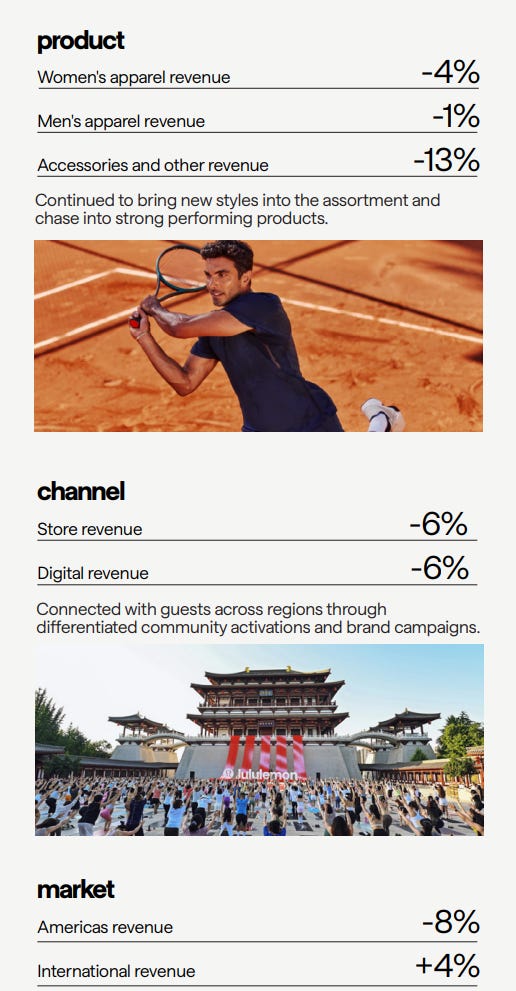
Lululemon’s growth stalled as affordable-luxury apparel brands face fading post-Covid demand, cheap social-media influence and China…
Every publication on this site, hand-picked.
Albert Anthony Andres Veurink
 Bay Area Ideas
 Capital Connoisseur
 David Zanoni
 Deep Value Investing Dhierin Bechai
 Equity Eagle
 Eudaemon Research
 Fernanda Galvez Jalil
 Henrik Alex
 High Alpha Professor
 Investor Overview
 IWA Research
 Jaden Mealy
 Khaveen Investments LL Insights
 Long Player
 Marc Gerstein
 Melissa Tucker
 Mike Zaccardi, CFA, CMT
 Miletus Research
 Myriam Alvarez
 Petri Dish Reports
 Philip Wang
 Prakhar Agarwal, CFA
 PV Research
 Quantryon Capital
 Robert J. Lake Ron Ferrie
 Sam Mancini
 Sharon McArd
 SiliconBytes Insights
 Simple Investment Ideas
 Sorrento Research
 Stephen Ayers
 Steven Fiorillo
 The Alpha Analyst
 The Asian Investor
 The Bullionaire
 The Curious Analyst
 The J Thesis
 The Supercycle Investor
 The Undercovered Dozen
 Value Capital Research
 Vishal Jadaun
Every account on this site, hand-picked.
 ⚽️📡
⚽️📡 💥PETITION💥
 A Capital
 Adam D. Wyden
 AltayCap
 Bank Reg Blog
 Barbarian Capital
 BDC
BDC Bill Ackman
 Broken Moats
 BuccoCapital Bloke
 Calvin Blissett
 catechwilliams
 Charles Frischer
 Chris Camillo
 Clark Square Capital
 Cluseau Investments
 Colin King
 Connor Haley
 Conor Maguire | Value Situations
 Convequity
 David Orr
 Deep Sail Capital
 Devin LaSarre
 DOMO Capital Management, LLC
 Edwin Dorsey
 Evan Tindell
 Fajasy
 Farmer
 Fierce_beast
 Fred Liu
 Gavin Baker
 Ian Bezek
 Idea Brunch
 JabroniCoin.USD
 John_Hempton
 junkbondinvestor
 kab60
kab60 KEDM.com
 Laughing Water Capital
 Lee Roach
 Little Owl Research
 Maius
Maius Maj Soueidan
 marginofdanger
 mavix
mavix Mike
Mike Mikro Kap David
 Multiples Capital
 Myles
Myles Nat Stewart
 Negligible Capital
 Odd Diligence
 Odd Lot Arbitrageur
 PAA Research
 Pernas Research
 Porter Collins
 Prepared Remarks
 Psyop Capital
 Raging Capital Ventures
 Red Dog Capital
 RiverRoadPartners
 Rusholme Capital
 Sahil Khetpal
 SG
SG Sheel Mohnot
 Tim Eriksen
 Timyan Bank Alert
 Todd Wenning
 ToffCap
 Trevor Scott
 Undiscovered Compounders
 Voss Capital
 Yaron Naymark
Ordered by how often our editor reaches for them.