

Garrett Arms on X
$TME is a long. At $7.86, Tencent Music has a $12.4B market cap & should earn $1.5B this year (8x EPS). With $6.9B of net cash & investments, you're paying less than 3.5x EV/EBIT for the core operating biz. 1/N
Thursday, October 8
Everything we published on this day.
92 stories — the front page that day →
$TME is a long. At $7.86, Tencent Music has a $12.4B market cap & should earn $1.5B this year (8x EPS). With $6.9B of net cash & investments, you're paying less than 3.5x EV/EBIT for the core operating biz. 1/N
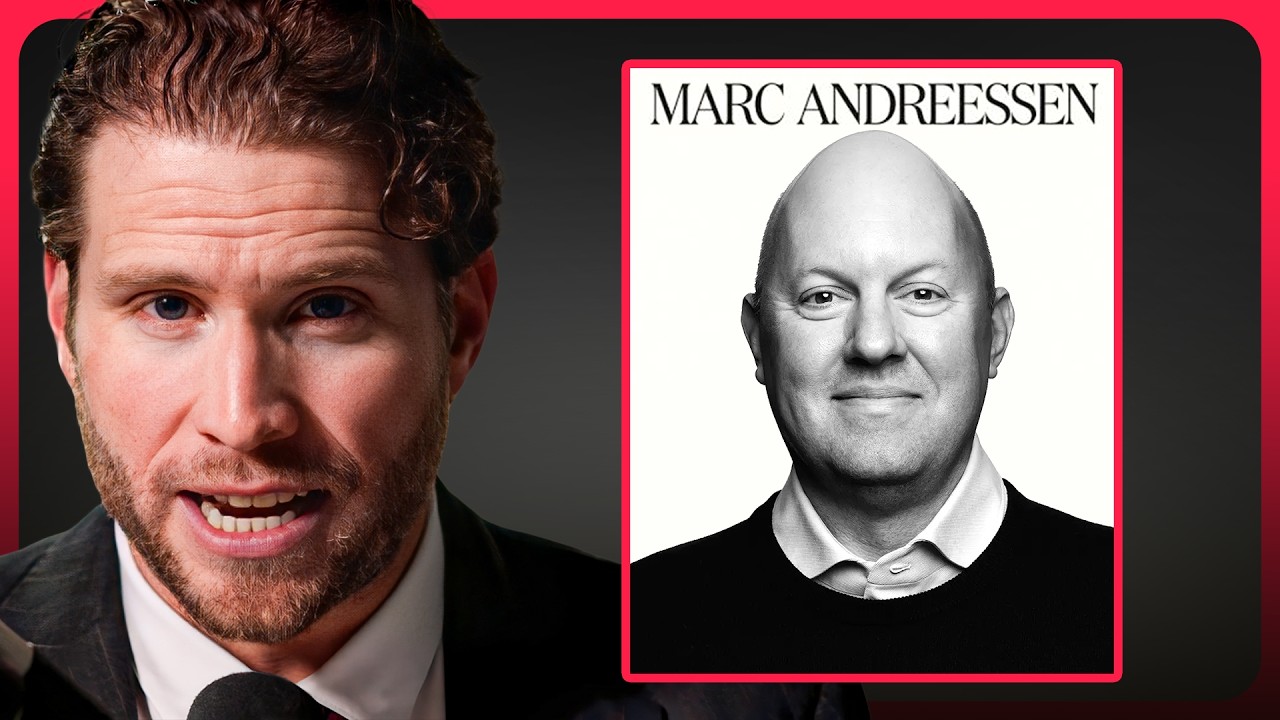
Marc Andreessen, speaking on a panel, argues that AI-driven robotics can create a new American manufacturing base rather than restore old…

Ray Dalio speaks with Julia La Roche for the Greenwich Economic Forum about the five forces shaping the changing world order: debt,…

This is now the second ARR rugpull in a few months. OpenAI and Anthropic just need to go public. Don’t think markets can support issuing hundreds of billions (eventually trillion+) of debt on their behalf without simply having audited financials to look at. Vendor financing can’t last forever and vendors extending credit ( $Orcl $AVGO) have seen multiples get hammered.
$MSFT outlining their view of digital work and application stack of the future: - Copilot as the UI/OS for getting work done - Supported by the context layer of Microsoft IQ, bringing in data from all of your other tools - Connected to an “infinite software factory” to build personalized apps that help you get work done more efficiently, running on a managed infra layer that keeps data within the rails and avoiding app sprawl - and he is clear that existing Systems of Record need to evolve to support this structure or be replaced.
$SKYD should probably be a ~$4 stock. Unlike $PARA and $WBD it cannot breakup/sell - the only way out is through. Thats no easy road: starting almost 7x levered and needs to achieve MSD growth and to find $6B synergies from two companies that have already been thoroughly gutted to hit their deleveraging plan. Interest expense 150% of FCF. Rates exploding higher so they better hope they can de-lever. Potential seismic changes to entertainment in next 3-5yrs from generative content and short-form competition are existential threats. With any decline in revenue $SKYD will not be able to afford its sports rights renewals and the entire legacy business falls apart from there. Putting ~30% odds $NFLX gets another shot at WB studio in eventual bankruptcy. If you disagree and you are optimistic, please share why? I'm openminded but do not currently see it. Mgmt seems shell-shocked in Faber interview this AM getting a few tough questions.

Based on Hunterbrook Media's reporting, at the time of publication Hunterbrook Capital is short $MRP, short $LEN, and long a basket of comparable securities. Positions may change at any time. This article is not investment advice or any recommendation. See full disclosures below.
Millrose management told Goldman Sachs its Lennar home purchases were a rent-to-own pilot, with a renter often lined up before $MRP buys. We found approximately 95% of more than 1,000 home addresses bought from $LEN were actually listed for rent to the public.
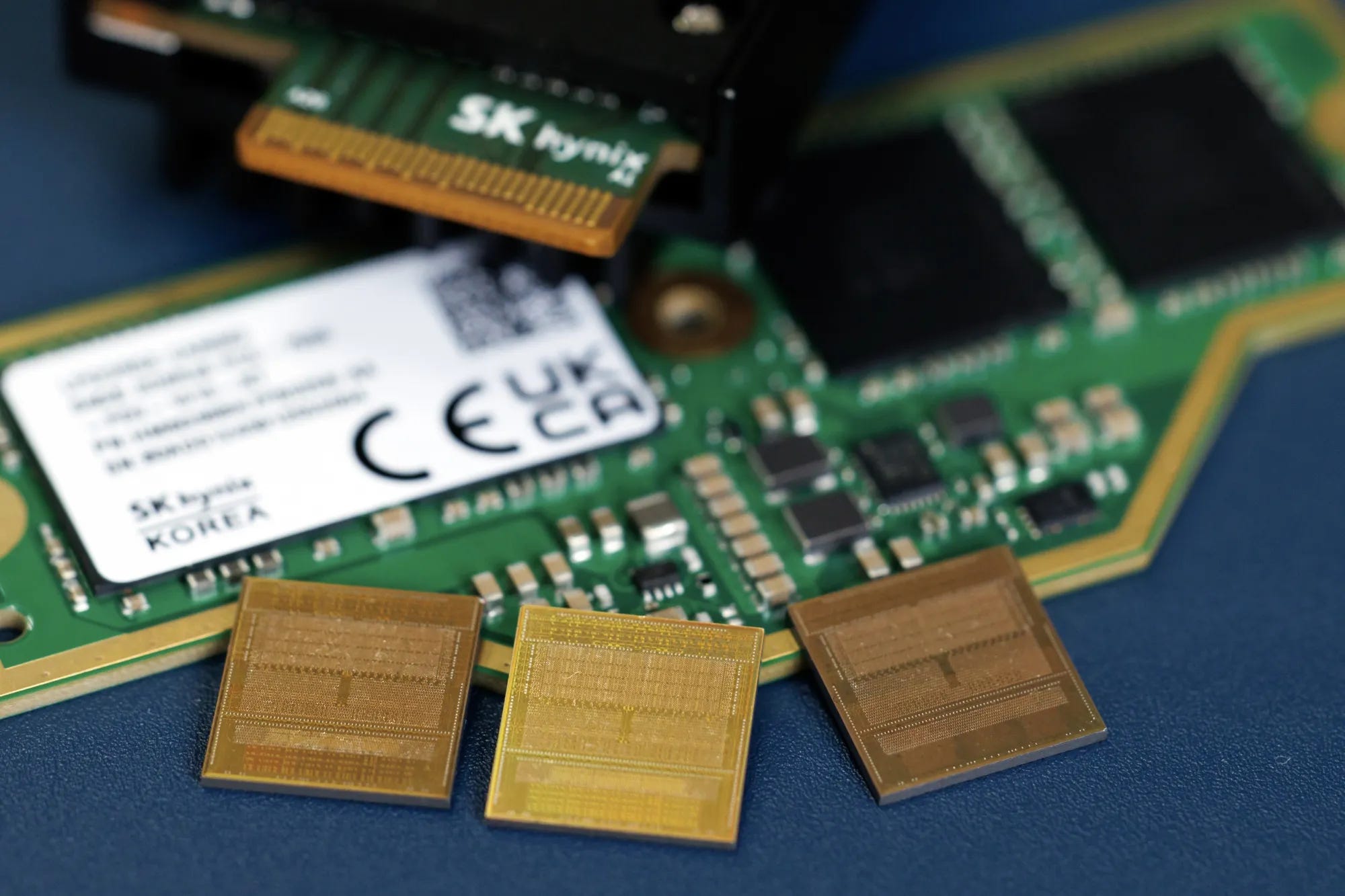
DRAM and NAND supply cuts, HBM capacity expansion and revamped LTAs are reshaping memory pricing, customer allocation and Chinese cloud…

Hyperscalers are the ones ultimately funding the AI buildout. As seen with $AMZN to $GOOGL earnings commentary, the ROI is seen as wildly attractive. Even $MSFT said they’d be FCF positive during the buildout period. I was more worried about counterparty risk until OpenAI went out and raised like $168B recently.
Real bubble is in VC land with private companies like Instinct… $10B valuations off 100k users while $SNAP is worth less with close to 1 Billion MAU. Supply chain stocks aren’t a bubble though, if anything names like $AAOI and others are very undervalued relative to forward growth. And you have demand visibility from hyperscalers extending multiple years…
Can someone explain how media headlines about OpenAI’s ~$50B ARR… (vs. ~$70B from incorrect accounting comparisons with Anthropic) Somehow ends a 3-5 year laser shortage with $AAOI or memory shortage with $MU? Hint: it doesn’t.
$CCXI looks like it's going public Q4 2026. And my hope is that it sort of looks like $OKLO if they generate enough excitement. Watched the investor presentation the other day, just waiting for the public listing anytime soon (I personally added some the other day). Big fan of humanoids, pretty confident physical AI shift is coming next. I'm personally not looking too much about the price action while it's in its filing phase, fun usually begins after ticker change. We'll see what happens

@Danstringer74 @TgMacro Same idea. Which is scary as an inflationista… Oddly, it’s probably somehow bullish $NVDA, but it’s always bullish $NVDA
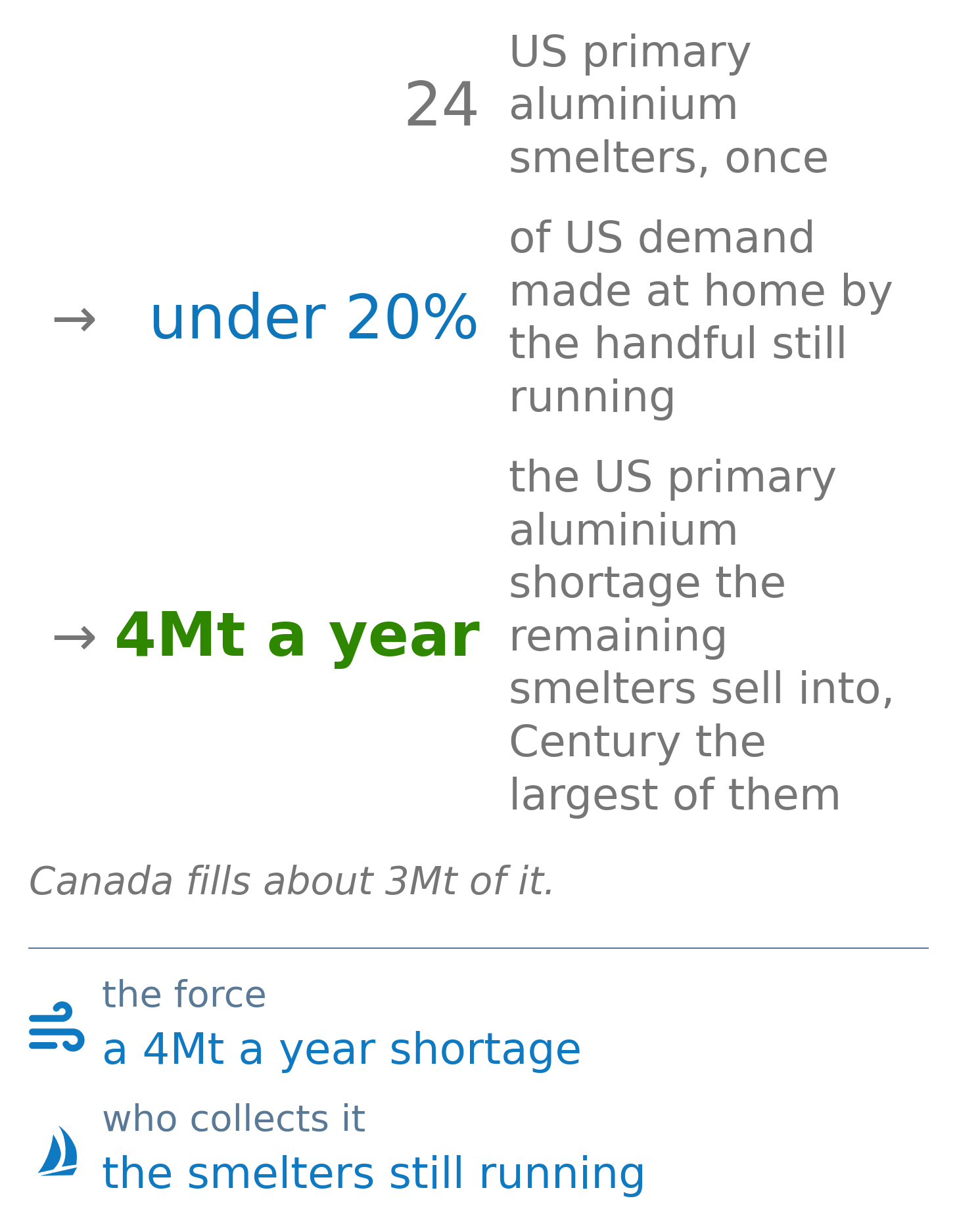
US aluminium tariffs, European glass automation and Foraco’s constrained drilling fleet create multi-year pricing tailwinds, with Century…

It feels like the networking/optical theme has room to run after $MRVL's recent analyst day. According to BNP Paribas: We remain bullish on the optical supply chain given the strong demand for 800G and 1.6T transceivers: Coherent, Credo, Fabrinet, Lumentum, MACOM, Marvell, and MaxLinear. This is interesting. Despite macro instability, there seems to be growing conviction in a heavier rotation into optical names pre-Q3 earnings.

@friedoystercult You are right and that is certainly interesting! From what I can see, he hasn't bought $PDEX since 2020. I'll have to keep an eye out for his future purchases.
One of four companies I added to my watchlist after attending the @PlanetMicroCap conference in Vegas earlier this year. $PDEX In this case, the trajectory of financials matches management's enthusiasm. Scores 80 on our quantitative model.
Namib Minerals posted H1 adjusted EBITDA of $19.0 million, up 76%, as higher gold prices offset lower production.

@marketplunger1 Probably $ASR or $SPGI. I think reits like $CPT would be a decent shout too. Wild how many of the answers are stock promotions and pumps.

Eisman top pick: "I like $NVDA as long as the AI story remains." 🧐

@odeliaenergy Shipyard nuclear is $BWXT's home turf, it already builds two to three reactors a year for Navy subs and carriers. And this isn't the only transportable deal, on October 5 Prodigy picked its 20MW microreactor for a transportable plant in New Brunswick.

Viatris to Buy Pacira BioSciences for $1.65 Billion $VTRS $PCRX
Devon Energy Sells Eagle Ford Assets to Crescent Energy for $4.2 Billion $DVN
"was responsible for 60% of passengers" American Airlines Is the Worst for Bumping Passengers. Now It Says It Will Stop. $AAL
Continue reading here for how $BWXT plans to deploy $5.5B of capital through 2030:
How did a boiler maker founded in 1867 become the Navy’s reactor supplier? BWX Technologies’ $BWXT history runs through two spin-offs and a decade of acquisitions: → 1867: George Babcock and Stephen Wilcox found Babcock & Wilcox (B&W) to make steam boilers. → 1953-1955: B&W builds components for the USS Nautilus, the first nuclear-powered submarine. → 1978: J. Ray McDermott, an offshore engineering firm, buys B&W. → 2008: B&W buys Nuclear Fuel Services, the Erwin, Tennessee plant behind the Navy’s fuel. → 2010: B&W spins off from McDermott as a standalone public company. → 2015: B&W spins off its boiler business as Babcock & Wilcox Enterprises $BW and renames itself BWX Technologies, keeping the naval and other nuclear businesses. → 2016-2020: Buys GE Hitachi Nuclear Energy Canada (fuel for CANDU, Canada’s heavy-water reactor design, 2016), Nordion’s medical isotope business (2018), and nuclear parts maker Laker Energy (2020), building out the Canadian commercial business. → 2022: Wins Project Pele, the Pentagon’s prototype transportable microreactor. → 2025: Buys the Aerojet Ordnance Tennessee (A.O.T.) unit of L3Harris $LHX for ~$100M in January and closes the Kinectrics deal (a Toronto-based nuclear engineering and testing firm, ~US$525M including assumed liabilities) in May. → 2026: Closes its purchase of Precision Components Group (PCG), a U.S. maker of heat exchangers and other heavy components, for ~$200M on July 1. Most recently, on August 3, Nordic Capital, a private equity firm, agreed to buy just over 80% of $BWXT’s medical isotope business for $750M plus up to $50M more. $BWXT wasn’t looking to sell until Nordic reached out, CEO Rex Geveden said on the Q2 call the same day. CFO Mike Fitzgerald said on the same call that the medical business should bring in $130M of 2026 revenue, at a margin “modestly accretive” to the 13% $BWXT expects from its commercial segment. Nordic’s $750M for just over 80% implies ~$0.9B for 100%, or ~7x revenue. At a ~14% margin, that’s ~50x EBITDA, more than double the 22.5x EBITDA $BWXT trades at. So $BWXT is selling a small side business at a premium to focus on what it calls its core businesses, nuclear national security and nuclear power.

@jupiters_string $VITL? 👀
Lowe’s trades at 15x earnings after a 23% decline, with weak housing and high rates pressuring growth while inventory discipline supports…
 Seeking Profits

American Assets Trust’s $AAT Chairman Rady continues to buy shares, now already owning 38% of s/o. The 13D also mentions that he may ‘discuss or encourage extraordinary transactions - including mergers, take‑private deals, asset sales, recapitalizations or board/management changes.’

@JustBankStocks @CorpusCol @TimyanBankAlert even Crazy Woman Creek Bancorp? $CRZY

@shidellian @CorpusCol Or the good folks in Altavista, VA- $PPBN
let me be the curmudgeon and point out that these announcements by Elon often don't proceed at quite the pace that the market expects. FSD, solar roof tiles, etc... placing some stinkbids in the overnight for $VZ $T.

This seems really positive for $stln as it validates their value prop to payers.

The CEO of Beasley Broadcasting $BBGI is seen here wearing a $60,000 Van Cleef necklace in her headshot on the company's website. This is the nepo baby that drove her family's business into the ground and then diluted equity holders to all hell with a nasty equity raise. I think she should sell her high end jewelry collection and start using the funds to pay down the company's debt. Still no word on who the entity was who bought into that deal. They now own 25% of the Class A stock and are past the SEC filing deadline. Could it be members of the family getting a sweetheart deal and really screwing minority shareholders here? Asset sales have been nil. Someone check Caroline's Neiman Marcus credit card transactions! Have more Van Cleef's been acquired in the interim?
@frothyassets ahh, I thought maybe but wasn't sure. Yes have short or short call positions in a lot of the 2x quantturd ETFs. Also in the $RGTZ 2x short ETF just for good measure.

I had $CHPX on my shorts watchlist, but maybe I should go long?
Netflix trades near 52-week lows at roughly 19 times earnings, more than 40% below historical averages, ahead of its October 20 Q3 results.
 Justin Purohit 1 click
Credo expects optical revenue to reach $600 million in FY27 after Q1 revenue grew 114.7% year over year, expanding from AEC cables into AI…
 Analysis Fundamental 4 clicks
Been debating shorting $TIH. I believe it previously operated as the mutual fund $TIHGX. Seems like most of the negative alpha was the fee. But also looks like it does poorly in market crashes which is nice. Borrow is only 0.25%.

Yellow Cake and Cameco say U.S. utilities have contracted only 40% of 2030 uranium needs, setting up a new contracting cycle as…
Special-situations survey profiles 26 activist, capital-return, M&A and strategic-alternative catalysts, led by buybacks at Under Armour,…

$ARQQ down 20% today on preliminary results. Still worth $300m or like 450x revenue.
Nuclear should bring in $3.7B of the $3.8B of revenue BWX Technologies $BWXT expects in 2026. $BWXT builds nuclear reactors and their heavy components, manufactures nuclear fuel, then services reactors once they’re running. It reports two segments: → Government Operations (73% of 2025 segment revenue, $2,350.1M): Reactors and fuel for the Navy’s submarines and aircraft carriers, uranium processing for the government, microreactor programs, and stakes in the joint ventures running government nuclear sites (booked as equity income, not revenue). → Commercial Operations (27%, $853.1M): Steam generators (heat exchangers turning reactor heat into steam), reactor pressure vessels, fuel, and field services for power utilities, mostly in Ontario. Also Kinectrics (a Toronto-based nuclear engineering and testing firm acquired in 2025) and a medical isotope unit $BWXT is selling. Naval propulsion is the core, at “a little bit less than 1/2” of revenue, CEO Rex Geveden said at $BWXT’s Investor Day on September 29, 2026. Special materials (the government uranium business) makes up 15-20%, and commercial power ~30%. The U.S. government accounted for 68% of 2025 revenue, directly or through prime contractors, down from 76% in 2024 as the commercial side grew. Four large utilities accounted for another 17%, per the FY2025 10-K. What keeps the Navy from switching suppliers is licensing. Only two plants in the U.S. hold Nuclear Regulatory Commission (NRC) licenses to produce fuel from high-enriched uranium (HEU, enriched to 20% or more, which is what naval reactors run on). Both belong to $BWXT (Nuclear Fuel Services in Erwin, Tennessee, and its Lynchburg plant), and the 10-K calls Nuclear Fuel Services “the sole provider of nuclear fuel for the U.S. Navy.”
starting buy-writes in a bunch of beaten-down former "compounders" $POOL $AN compounder bros, what else should I be looking at in this regard?
Can we officially crown $ARQQ as the shittiest quantum stock of the bunch? Guided today to a whopping $1m revenue for 2026. I'm short via naked calls.

$TLT to the entire AI complex today
$CD here's what @grok found about Chaince Digital's marketing claims:

@InverseMax @grok all management quotes on buybacks future and past for $YB
@ptuomov Are you talking about the NAV or what the vol would be if it were a publicly traded ticker? Things like $FPI and and $LAND could be a good guide if the latter.
OpenAI report from FT is from one source. I bet we get some alternative views quickly and the AI group bounces back. $MU

Private equity puts a floor under software valuations, and you can work out that floor with simple arithmetic. A private equity buyer takes the company private, removes unnecessary staff, lifts margins to 30%+ and keeps growth in the low teens. A company restructured that way should be worth at least 20x EV/EBIT. At a 33% EBIT margin, 20x EV/EBIT is about 6.7x EV/Sales. That gives a simple test for any software stock. If it trades well below that level, the market values the business at less than a buyer could get from it just by cutting costs. In our view, the market sees no differentiated future for that company. So why don't more of these companies get restructured? One reason is ownership. Dual-class share structures are common across large-cap and mid-cap tech, and they limit how much pressure private equity and activist investors can apply. That makes it hard for a company like $OKTA to accept legacy status and carry out a deep restructuring. We expect many SaaS companies to keep fighting slowing revenue with high operating expenses rather than restructure.
So many red flags with Chaince $CD. For example, - Chaince just increased its authorized share count 20-fold to 20 Billion!?! There is no reason whatsoever for a legitimate company with under $10m in revenue to have a share count like that. Think it will dilute? Me too. - Two months ago, Chaince did a registered direct offering at $0.53 per share. At the time the RDO price was about 1/6 its market price. Now Chaince shares fetch >20x that. This is not how normal companies, even microcaps, raise money.
$FTNT already has a fast-growing OT security business of more than $1bn. Robots will face the same security problems as factory machines. Factory equipment and IoT devices were designed for availability and safety. They shipped with weak or no security, and controls were added afterwards. Robots and humanoids are likely to follow the same pattern. Many will run custom or stripped-down operating systems, have tight CPU and power budgets, and sit under safety-certification rules that make heavyweight endpoint agents and frequent patches difficult. When security software is hard to install on the device, enforcement moves to the network: segment the environment, control which systems can talk to which, and inspect the traffic. That work needs a lot of switches inside the plant, in addition to a few firewalls at the perimeter. FortiSwitch is built to be price-competitive for cost-conscious industrial buyers, with security functions embedded and ASIC acceleration for always-on inspection. Endpoint vendors such as $CRWD can help protect higher-value machines, but their software has to run on the device itself, which is often hard on robots for the same reasons. As inference moves into factories, hospitals, warehouses and vehicles, every new AI-controlled actuator still sits on a network, often on the industrial backbones Fortinet already protects.

Millrose told Goldman its Lennar purchases had rent-to-own tenants lined up, but most analyzed homes were advertised for rent and showed…
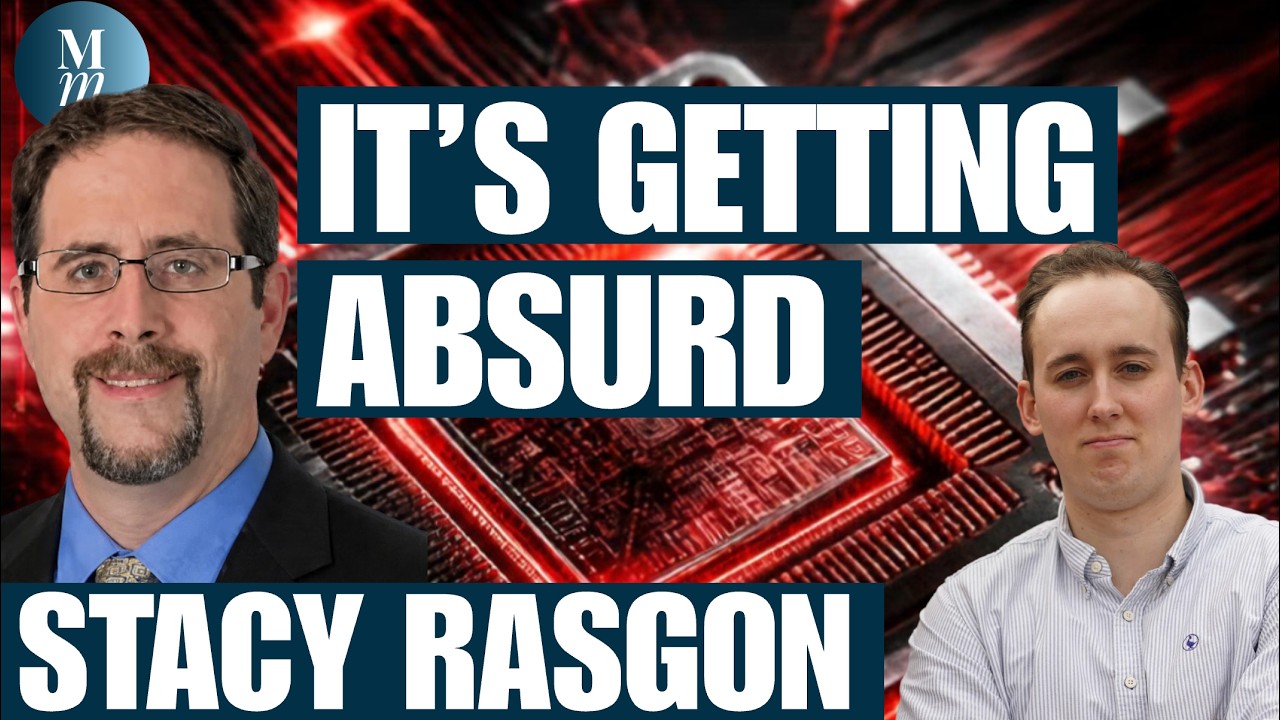
Stacy Rasgon says AI chip demand is constrained by land, power and clean rooms, lifting memory, optics and wafer-fab equipment spending…

Nike's 4.8% dividend yield masks payout ratios above 100% of forward EPS and inadequate free cash flow coverage, while China sales declines…
 Sensor Unlimited 1 click

$CCXI i assume they didnt invite everybody to this
The patents behind the key-capture technique of Nubeva Technologies $NBVAF (TSXV: $NBVA) now belong to Netskope $NTSK, a ~$7.6B cloud security company. In March 2024, Nubeva sold its web-traffic (TLS) technology for $1M to an unnamed “mid-sized U.S. based cyber security company,” keeping the right to support the product’s one remaining customer (still 41% of FY2026 revenue). USPTO records show Nubeva assigning five patents to Netskope in one filing signed March 1, 2024, three days before the sale closed, and recorded March 19, 2024. Three are cloud-security patents from Nubeva’s first business. The other two cover key extraction: 1) U.S. 11,805,107: The patent behind Session Key Intercept (SKI), Nubeva’s TLS key-copying software, granted October 31, 2023 to co-founders Greig Bannister and Randy Chou. It covers software that pulls an encryption key out of a computer’s memory and forwards it to whatever needs to decrypt. 2) U.S. 11,494,484: Granted November 8, 2022, and announced by Nubeva as its “U.S. Patent for Ransomware Decryption Technology,” with Bannister saying it “underpins Nubeva’s ability to continue as an effective solution against ransomware.” Bannister, the co-inventor on every SKI patent, resigned as CTO and director on March 1, 2024, the same day the patent assignment was signed, and went to Netskope with the patents. Following the TLS sale, Nubeva kept the other half of the process, turning captured keys into a working decryptor. It filed two patents on the decryptor side in 2024, both since granted: 1) U.S. 12,430,438, granted September 30, 2025: It covers running the ransomware in a sandbox (an isolated test machine) against a known file and matching the result to a library of standard encryption methods to find the one the malware used. With the method and the captured key, Nubeva can build the decryptor. 2) U.S. 12,561,431, granted February 24, 2026: It covers ransomware that encrypts scattered pieces of a large data store, like a virtual machine’s disk, from several processors at once. Nubeva’s method maps which pieces were encrypted, then decrypts each piece with the captured keys. When granting the second patent, the patent examiner flagged PayBreak, a 2017 Boston University research system that also copied ransomware’s keys as it ran, as earlier work in the same area. Copying ransomware’s keys mid-attack wasn’t new by 2024. Nubeva’s patents protect the recovery built on top of the captured keys. NuRR, Nubeva’s ransomware product, copies keys the same way SKI does, but Netskope now owns the two key-capture patents. Nubeva hasn’t disclosed any license from Netskope that lets NuRR keep using the patents. Any buyer would want the license question answered first. Chou has said Nubeva needs four AI patents granted before it partners or sells, and two are still pending. In a July 2024 video, he said a buyer wants the patents issued, since “if you are patent pending there’s a significant discount on the technology itself.” The last two are now well past the early-2026 timing he called typical, with no new date from Chou.

Shelly Group $SLYG published preliminary 9M revenues of EUR 112.8 million (+30% yoy). Full results will be published on November 10.

@latamsovereign Mexico has 10x as many American retirees than any other LatAm country. $ASR $PAC $OMAB
One of those months where $QQQ is outperforming $IWM massively (again)
@ptuomov I believe it's something like the residual of the $WOOD ETF after removing standard factors.
$YB 5% of my portfolio. See writeup for evidence and anecdotes of the quality of the founder
A few nuts and bolts on $CD: - Chaince has a $300M atm in place - mkt cap is around $1.25B - ttm revenue is <$3M - used to be called Mercury Fintech - company is in all kinds of trendy fintech type businesses, from tokenization to stablecoins to digital custody - also invests in AI/HPC infra including plans to explore "space-based" AI. Don't hold your breath.
@ptuomov No, but it pops up as a factor sometimes on. Just buy $ORR, lol.
taking another swing at Chaince Digital, selling naked $CD MAR 15C. Last time a similar trade worked well, but this is anticipatory and will be much safer after first red day.

Golar LNG ordered a $2.45 billion fourth FLNG vessel, targeting 3.5MTPA of capacity and $400 million in annual EBITDA under a 20-year…
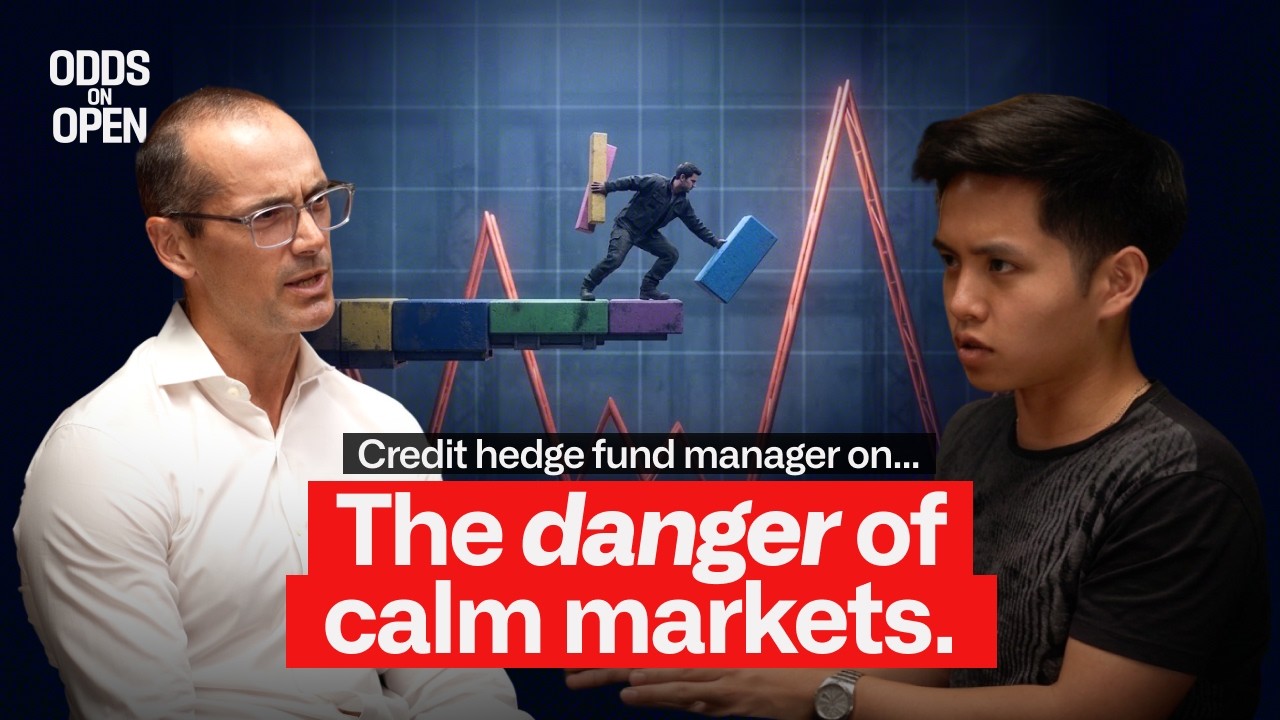
Geoffrey Williams explains CMBS underwriting, post-GFC securitized-credit risk transfer and why credit markets reprice in step functions.

Bernstein on China aluminum ceiling: The ceiling has moved from distant policy to binding constraint. China introduced a 45mtpa aluminum capacity ceiling in 2017, but the limit only matters now. Operating capacity reached 44.8mtpa in 2025, with utilization at around 98.5% $CENX
I listened to ~17 interviews with Jason Jessup, the CEO of Magna Mining $MGMNF (TSX: $NICU), from October 2025 to September 2026 (for my deep dive). For context, Magna owns McCreedy West, a producing copper mine in Sudbury, Ontario, plus Levack and Crean Hill, two past-producing mines it plans to restart. Here are the most important takeaways I got from those interviews: 1) Levack could be 2-3x McCreedy West: Jessup expects “possibly two to even three times” McCreedy West’s payable metal from Levack (The Resource Update, September 8). 2) R2 isn’t in Levack’s upcoming study: R2, a high-grade zone Magna found at Levack in 2025, could produce “10 to 15% copper equivalent material” even with 1-2 tons of waste mined per ton of vein (KE Report, July 10), 3-4.5x McCreedy West’s grades, and Jessup says the zone carries “no streams or royalties on the precious metals” (KE Report, April 20). 3) No more equity raises, he says: With CAD$140M coming from Alpayana, a private Peruvian mining group, for 19.9% of Magna, Jessup said “we could have five mines in production in 5 years and not have to ever do another financing again” (KE Report, July 10). 4) But three timelines moved back: (1) Levack commercial production went from “a good possibility” by the end of 2027 (KE Report, February 20) to 2028 (KE Report, July 10), (2) Crean Hill grid power from as early as Q1 2026 to Q4, and (3) the R2 resource estimate from the end of 2026 or start of 2027 to “potentially by the end of 2027” (Mining Stock Daily, August 13). 5) Skin in the game: Jessup says he owns ~10.6M shares, has “never sold a share,” and wants “a $5 billion company” by 2030 (Natural Resource Stocks, July 20), 6.5x Magna’s CAD$768M market cap at CAD$2.45/share. Levack’s PEA and Crean Hill’s pre-feasibility study are both due in October, and Jessup expects a formal Levack restart decision “shortly after seeing the PEA come out” (Mining Stock Daily, September 24). --- Link in bio to find the deep dive.
$CIFR < $14 👀
$NVDA vs $AVGO: The Optical Edge NVIDIA can keep growing while facing pressure from more directions. Custom chips, optical supply constraints and specialized inference systems give customers more reasons to consider alternatives. Broadcom’s optical capabilities could help it win the accompanying compute order. Customers need both accelerators and the optical components that connect them to bring capacity online. Securing those components alongside an ASIC purchase could shift the customer’s platform choice toward AVGO. Control across lasers, photonic and electronic chips, and packaging also gives Broadcom more freedom to optimize the complete design. Embedded lasers could reduce the laser power required, easing dependence on scarce, high-power external lasers, although replacement becomes harder. For AVGO, this remains a potential design route. NVIDIA can respond through partnerships, but separate suppliers still have their own margins and product priorities. Google ($GOOGL) and Amazon ($AMZN) are expanding the alternatives through TPUs and Trainium. Our ABBX model allocates 10GW of Anthropic’s 13.8GW planned capacity to those two platforms. The plans span different timelines, but show how a few large buyers could redirect substantial spending away from GPUs. Huawei adds pressure through its integrated optical approach and the prospect of Chinese models supplying cheaper tokens internationally. That could affect both hardware choices and the prices compute providers can charge. Cerebras ($CBRS) targets workloads where faster responses matter. It can compete for latency-sensitive decoding without replacing GPUs across every stage of inference. NVIDIA’s defenses remain substantial. GPU batching supports high total output, flexibility across workloads matters, and its ecosystem is deeply established. Customers can use GPUs for prefill and specialized chips for decoding. Wider enterprise model development would also favor NVIDIA because smaller buyers have less reason to fund custom-chip programmes. At comparable valuations, we prefer adding to AVGO: it can benefit from custom-silicon adoption while helping customers secure the optics needed to deploy it. For NVIDIA, the key question is how much market share and pricing power it retains as customers gain more alternatives.
$BYRN continues to disappoint. Other than cost/inventory reductions, there are few green shoots here. No position, and would want to see revenue gains before I get involved. Note that these results would be even worse without a tariff refund (recorded as a deduction to cost of goods sold), which will not recur.
Intuitive Surgical, down 32% from its January 2025 peak, faces slower US procedure growth and new robotic-surgery rivals despite $10.1…
Seems like a real bull thesis for $CIBR and $GLD
What’s $FTAI worth even assuming Power is $0?
One of the world’s 10 biggest financial institutions signed a deal in 2024 to deploy software from Nubeva Technologies $NBVAF (TSXV: $NBVA). Nubeva won’t name the bank, but its filings leave a trail. The April 2024 release on the deal said revenue from the first 12 months “is not expected to be material,” and no press release or filing has updated the deal since. Nubeva reports revenue by country, and in FY2026, U.K. revenue was $204,055, the same figure as the license line. Nubeva also discloses what share of revenue its largest customers make up. In both of the last two years, U.K. revenue matched one customer’s share almost exactly. In FY2026, U.K. revenue was 40.8% of the total ($204,055 / $500,586), and the two largest customers were 41% each. In FY2025, U.K. revenue was 36.6% ($193,986 / $530,616), and the second-largest customer was 37%. One of the two 41% customers lines up with the support and maintenance line, 41.1% of FY2026 revenue ($205,712 / $500,586), which the last customer of Nubeva’s old TLS (web-traffic decryption) product pays. That means the license revenue, the U.K. revenue, and the remaining 41% customer all appear to be the same account. The FY2025 statements show the 37% customer at 0% of FY2024 revenue, so it started paying in FY2025, the first full fiscal year after the bank deal. In a June 2024 video, CEO Randy Chou said the bank doesn’t want anyone to know it uses Nubeva. If the U.K. customer is the bank, HSBC $HSBC is the likeliest candidate. It’s based in London, and at eighth by assets, it’s the only U.K.-headquartered bank in S&P Global $SPGI’s top 10. Then there’s Netskope $NTSK. The company that bought Nubeva’s key-capture patents runs a public page titled “Netskope + HSBC” that pitches its platform to the bank. It’s a sales page, with a “Meet with your Netskope team” button and a named Netskope sales rep, and it pitches Netskope against a “Bluecoat / Zscaler hybrid approach,” which reads like HSBC’s current setup. It also shows Netskope courting HSBC, not HSBC buying from Netskope, and nothing on the page mentions Nubeva or ransomware. If the bank is HSBC, Netskope, which owns the key-capture patents Nubeva sold, is already pitching Nubeva’s biggest license customer. None of this proves the bank is HSBC. But in the latest quarter (February-April 2026), instead of growing, revenue from the U.K. customer fell ~70% (vs. a 19% rise in the same quarter a year earlier). License revenue was $18,796 ($204,055 for the year minus $185,259 through January), vs. the ~$62K/quarter it averaged in the first three quarters. The FY2026 MD&A doesn’t say whether the license customer renewed. If it didn’t, Nubeva likely lost the bank (possibly HSBC) behind 41% of its FY2026 revenue. The six-month report due by December 30, 2026 will show whether license revenue came back.

*GOOGLE CLOUD ANNOUNCES GEMINI AGENT, A UNIVERSAL AGENT FOR WORK $GOOG up, $META fading

Meta’s Reality Labs shifted spending toward smart glasses, accepting roughly $40 per-unit losses to build an eventual advertising platform…
Vertiv's 33% stock decline followed a 2026 forecast increase, despite a $15 billion backlog and rising AI data-center demand for power and…
$CCXI nice endorsement from Nvidia Head of Robotics Ecosystem and Edge AI Product today: “Now the robot is literally unchained—the safety goes with the robot wherever it goes,” Goel told Ars. “Now they can operate everywhere in a factory or a warehouse without having to set up a brand new infrastructure every time they want to do a new task.”
Robinhood’s AI agents, 24/7 equity trading and 10:1 crypto perpetual futures encourage higher retail trading velocity, leverage and…

Lesaka CEO Ali Mazanderani has bought more than $10 million of stock while pursuing a $20 to $30 valuation case through targeted…
$RBRK's backup engine breaks data into fixed-size blocks, for example 4 MB, and stores only the unique blocks across backups. Commvault and Cohesity instead divide data into variable-sized chunks, with the boundaries set by the content itself. Each design has a trade-off. With fixed blocks, a small change inside a block means the whole block gets written again, so Rubrik uses more storage. In return, hashing and comparing blocks is simple, which means faster backups and lower compute overhead. With variable chunks, only the changed portions are written, so storage use is much lower. Working out chunk boundaries and hashes as the data comes in takes more CPU and memory, which can slowdown backups. Cohesity offsets part of this with a scale-out architecture that processes in parallel across nodes. The two designs fit two different jobs. Variable-length deduplication suits long-term archives, where storage cost matters more than speed. Fixed-block deduplication suits recovery after a hack or ransomware attack, where fast restores and predictable performance matter more than saving storage. That matches how each company started. Rubrik came into the market in 2014 focused on security and on getting critical data back quickly after a breach. Cohesity started from a different idea. It built its own file system that spreads data across many servers, each with its own computing power. Backup copies stay readable like normal files, so companies could search and analyze them where they sit, without restoring them first. Security came second. The two are now moving closer together. Cohesity has leaned much more into security and recovery, especially after buying Veritas's backup business in 2024.

Alamar Biosciences' consumables revenue rose 147% in 2Q26, lifting gross margin to 60% as the company expands into clinical diagnostics.
 Petri Dish Reports 1 click
Huawei's finer bonding deserves more weight in the AI-chip race. $AVGO's 3.5D approach combines vertically stacked dies with the side-by-side packaging used to connect processors and HBM. It adds another direction in which designers can shorten the wires moving data around a chip. Besi describes Broadcom's initial face-to-face hybrid bonding at 6µm pitch. Huawei reports 1.5µm for its 2026 Kirin implementation. Pitch is the spacing between connections; face-to-face brings the dies' wiring surfaces together. On an identical square grid, that spacing difference allows 16x as many potential bond sites per unit area. Usable connections still depend on routing and the space reserved for power and repair. It is an architectural opportunity, not a bandwidth multiple. The size qualification matters. Kurnal's Kirin 9050 die shots measure roughly 121mm² per die. Extending fine-pitch bonding to much larger AI dies changes the economics: more expensive silicon is at risk when a stack fails, and heat and power delivery have to work across the whole assembly. Broadcom also said face-to-face compute SoC shipments began in February 2026. A later roadmap cannot be read as its first arrival at face-to-face bonding. Huawei looks ahead on this published pitch comparison. Our view is that this gives it a credible route to narrowing parts of the AI-chip gap through packaging. The stronger claim needs production evidence at large accelerator scale. The phone result alone does not establish when that arrives. Builds on Convequity's Huawei After Sanctions, Parts 1–2, 10 & 18 Sep 2026, with updated source checks.
Still a lot of smart money involved in $SOC (and adding). Wondering if the upcoming catalysts, particularly Hondo’s restart, potential NDAA protections and a West Coast SPR decision, could finally get this thing moving? The prospective FCF generation is pretty remarkable if they can execute…
Copilot's local AI won't lift PC sales much $MSFT's new local Copilot features need a Copilot+ PC. IDC counted those at 2.3% of Windows PCs sold in Q1 2025, the latest count we've found. Copilot+ PCs also need at least 16GB of memory, more than budget laptops carry. Memory costs are why IDC expects PC prices to rise 18.3% and shipments to fall 11.3% in 2026.

Maase, a $5B AI infrastructure company with sub-$50M annualized revenue and persistent losses, faces governance concerns over super-voting…
 Wolf Report 1 click

$AN $GPI $ABG $LAD
UK numbers for Group 1 Automotive are out and it ain't looking good (no surprise, flagged by co already)! Plz fix that and sell it to Vertu, they can issue shares at ATH, and then $GPI can focus 100% on the US: $GPI
