NASDAQ

Sandisk Corp

SNDK

30 stories

$179B Market cap · 2026-10-23

@aleabitoreddit

Serenity on X

$AXTI still the chokepoint of the entire optical buildout + demand for InP substrates will grow a lot. They have LTA supply agreements to $LITE / $COHR and probably ends up #1 vs. Sumitomo Electric. The main thing I'm watching is if they can pull a $SNDK style price hike. So far from some channel checks: - Q2 2026: 50-60% increase - Q3 2026: 10% increase - Q4 2026: 10%+ hike But from Coherent's SEC offering... it does look like there's a ceiling to how high % prices can go, which makes that case less likely. We'll see how it plays out
@aleabitoreddit

Serenity on X

Pretty crazy Reuters piece on the global selloff. - October 22 marked the 1st time since the COVID crash that long/short, systematic, and multi-strategy hedge funds tracked by Goldman Sachs ALL lost more than 1% in a single day. - Tech-focused hedge funds: down ~10% in October - Asia-focused hedge funds: down ~9% in October There’s separate interviews where Citadel/JP Morgan have been saying retail has been the ones buying the dip in semiconductor, neocloud, and memory stocks. And the stocks bought by most retail were $NBIS, $SNDK, and $TSM. Reuters stated this downturn triggered institutional deleveraging events among hedge funds. Quite the divergence, I do think there’s been a ton of irrational selling now, hedge fund deleveraging seems to be a major contributor.
@aleabitoreddit 3 clicks

Serenity on X

Just some words of emotional support for your SK Hynix, $SNDK, $MU fanclub. $DELL CEO on memory, suggested: "It's a 4 year problem because there's just not enough supply" Factories take about 4 years to build, meaning new production would emerge 2029 or 2030. and that semiconductor shortages could worsen in 2027 stating: "I do think it gets worse next year in terms of demand and supply". I think it's strange we're getting unprecedented forward visibility with memory... as $GOOGL and richest hyperscalers seek LTAs into 2035. And a major sector crash as well over durability/financing concerns.
@convequity 3 clicks

Convequity on X

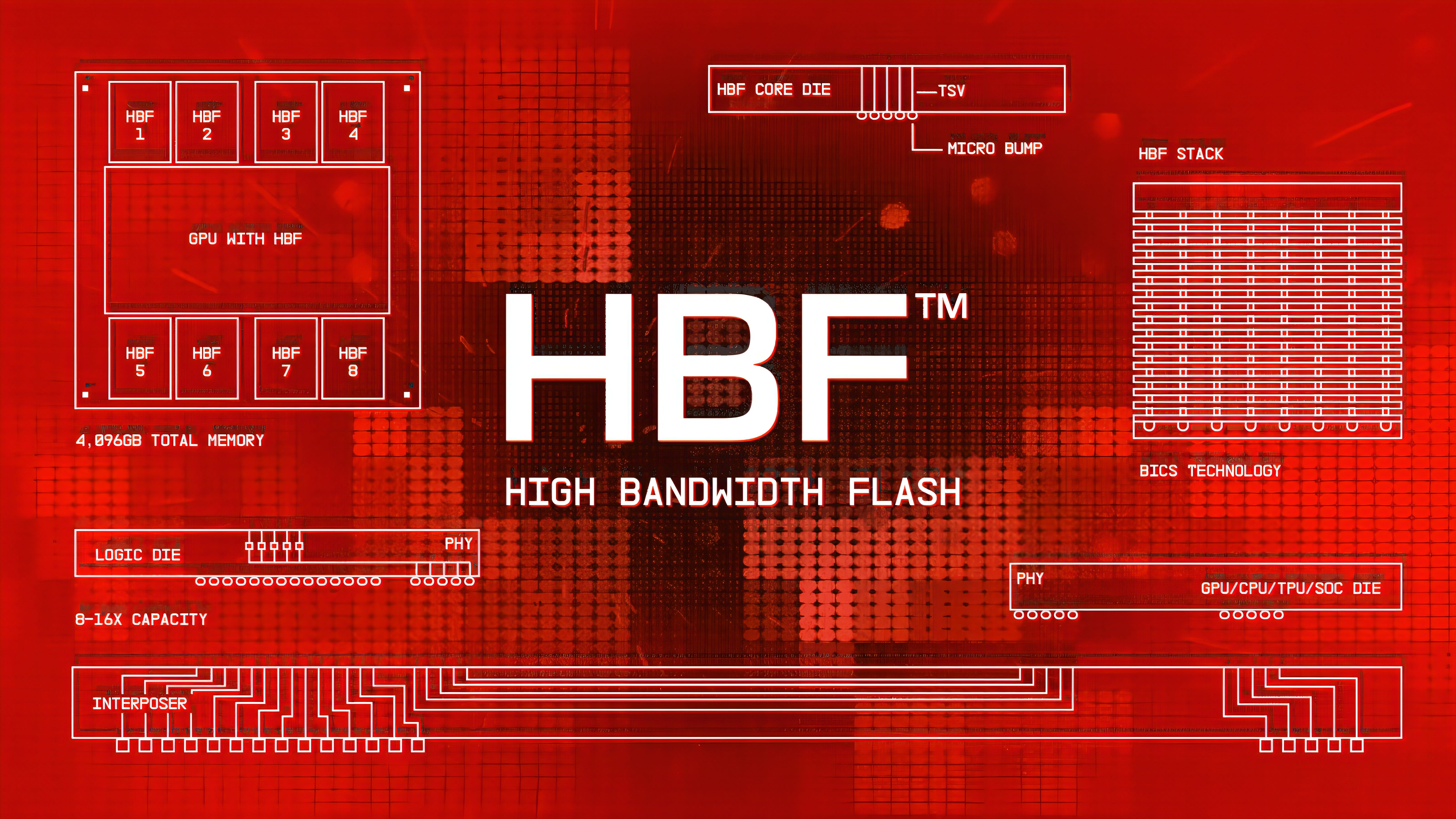
We think memory consumption can keep growing while memory prices fall. Memory prices depend on how quickly supply grows, not only on how much demand grows. Existing suppliers and Chinese manufacturers are expanding production. If new production and sales of distributor stock outpace demand, consumption can rise while prices decline. Chinese manufacturers reportedly hold enough lithography machines for three to four years of expansion. That stockpile could allow them to keep adding production capacity even if sanctions block further deliveries of the affected machines. Reports of large distributor inventories and falling spot prices for DDR memory point to a further source of supply. We have not verified the inventory estimates. If distributors start selling down the stock they accumulated in anticipation of shortages, that adds to supply and puts further pressure on prices. We hold SanDisk ($SNDK) for storage and high-bandwidth flash (HBF). HBF could let flash deliver data fast enough for more demanding computing tasks. That gives us a way to benefit from growing data demand without relying entirely on high memory prices.
@ParadisLabs 1 click

Paradis on X

Memory fundamentals are still very strong (stronger than Q1). $MU CEO: - "We expect memory and storage supply demand conditions to be much tighter in fiscal 2027 and 2028 than they were in 2026." - "We do not have line of sight to when supply and demand will return to balance." Back in July, $NVDA supply commitments rocketed from $119B -> $279B which was "primarily related to the procurement of memory", with ~$175B of commitments for 2028-29... $MU also said that >75% of FY27 output is already committed + "a majority of discussions with our customers today are already around 2028." So as a reminder....ultra long-term demand visibility in the context of the memory market. Samsung’s Q3 prelim last week was 107.4T Won O.P. on 195T Won revenue: - So that's ~55% margins company-wide. - Micron did 87% GM in their most recent quarter - $SNDK 84.6% GM. All accelerating/stabilizing margins as of their most recent fiscal Q's. Mass production from new capacity (from Micron, Samsung and SKHY) is also not expected to come online for quite some time. In other words, the shortage will intensify next year at least. Then long-term contracts solidify long-term earnings further via price floors + committed volumes: - $MU with 26 SCAs worth >35% of revenue through to 2030 with some now running into 2031. - $MU CFO: "even at floor prices, we expect margins meaningfully above any prior cycle peak margins." - $SKHY has ~10 LTAs of ~5 yrs w/ pricing structures "designed to respond to price fluctuations." - Sammy (as of recent reporting) holds ~70% of memory capacity under LTAs until 2031 with $MSFT, $NVDA and $GOOGL, with ~25% of contract value prepaid. - $SNDK also has their "New Business Model" agreements with 8 customers that lock in ~66% of fy28. Then on buybacks, $MU will step up returns from December - "over time, we expect to return 100% of our excess cash." Just crazy how much cash these companies are bathing in rn. Obviously there are risks, mainly with positioning and sentiment towards the AI trade currently - thanks to macro/ARR fears/pacing talks/other stuff I'm probably forgetting rn. China is ofc another risk with CXMT but I don't see how they'll be a massive problem for HBM / US hyperscaler RDIMM where they'll continue to face US restrictions + massive qualification walls imo. But ultimately, memory fundamentals are in-tact and very strong. Stronger than Q1.
@aleabitoreddit 2 clicks

Serenity on X

Sure... Random train of thoughts on markets now, optics like $LITE / memory + $IREN / Anthropic. On Memory: - Demand visibility on $MU / Samsung / SK Hynix extend into 2030-2031. Samsung has LTAs covering 70% of their capacity into 2031 (likely with SK Hynix type price floors)... and their operating profit is already absurd. There's a consensus that shortage in 2027 will be much more severe than 2026... Even $SNDK expends gross margins to exceed 80% entering 2030. You're going to hear Acer and other CEOs that want memory prices to go down cite bear cases like CXMT/YMTC, and Chinese players. But just looking at supply procurement that $NVDA is doing + hyperscalers, demand visibility is absurd for the next 5 years. And by that time, cumulative FCF coming in from these take/pay + pricing floor contracts might exceed some of their entire marketcaps so it feels like there's some baseline. Near-term is always volatile (IV dropped a ton across $EWY to $DRAM to $MU), so people with call options likely got nuked, along with underlying prices. But if Samsung is 3x 2027E, has 5 year LTAs with 70% of capacity committed from hyperscalers, and price floors, it's kinda hard to see these names suffer a sustained crash... For optics: - $LITE is literally sold out into 2029, starting discussions into 2030. With demand visibility lasting into 2031… with hyperscalers largely funding the capacity buildout. Their 2028 Greensboro fab expansion was ~$5B in UHP laser capacity revenue alone, yet it’s basically allocated toward $NVDA (50%+ with options for more) and co from channel checks. Existing supply chain bottlenecks are extremely severe as optical content/XPU skyrockets entering 2027-2028. So everything from DSPs/TIAs, photodiodes, lasers, InP/SOI substrates, wafers (epi, SOI, etc) are expected to go brrr. And what does that imply to anyone else with enormous amounts of capacity coming online like $AAOI + $SIVE + $MTSI capacity expansion in 2027? Or other players like Sumitomo / Furukawa? But again it's not quite the same situation as memory since the BOM % is extremely low in a cluster... If micron/samsung raised another 2000% hyperscalers would go bankrupt. But doing that for InP substrates seems possible. Or a 100% increase on CW laser content. I actually thought $LITE was overvalued at $100B+ MC, relative to capacity expansion on your smaller optical players to their respective MCs. So I chose to position accordingly (But lumentum does deserve premiums for demand visibility). For the companies leading the charge like $NVDA / $AVGO / $MRVL: - Nvidia has 70% forward revenue growth FY2028 which is supply constrained growth. - Broadcom 100% Y/Y for 2027/2028 which is also supply constrained growth. - Marvell FY2031 upgraded guidance to $70B-$90B from $46B analyst projections... They all seem to be very happy.... and read through on demand for next 2-3 years is enormous (also echoing what $INTC CEO said today on the panel with $AVGO CEO). So you have overwhelming growth on memory + photonics + from the leaders... But the nuance is not everything in the AI supply chain get the same economic benefit. HBM/Laser/CPU/MLCC and other players in the bottlenecks look to be printing money. And seem to be the largest beneficiaries of the current bottlenecks. Test players are also getting price hikes + capacity allocated by players like $NVDA, but economic impact seems a tad lower than other players since forward P/E for many I modeled were still in the 45x+ range even if you hiked prices like 10-30%. As for capex intensive players... there's some like $IREN ($25-30B for 2027) that despite a deal with Anthropic ended up dropping. I don't think markets seem to appreciate players spending a lot of money + ongoing financing (think they're like halfway through their $6B ATM). Just some hopium for $IREN investors, $NBIS also signed a deal with $META at the start of the year (but markets didn't care at all, since Nebius dropped to ~$70-80 at the lowest point?). But did 6 months later, as the time to revenue inflection gets closer and you're past the ATM/capex window, markets would likely care more. I don't think it's irrational but at the same time, the fundamentals have improved from Mirantis acquisition to others. I also think it was known for awhile it was either OpenAI/Anthropic from CEO comments earlier too? But either way to be a more risk-off environment where funds seem to be rotating to larger names as a flight to safety. $CRWD / $PLTR as just two example, but my take is that the valuations of these rotations are reaching clown levels. And that certain AI supply chain beneficiaries in comparison are undervalued now. I was thinking markets would just rotate to names that are extremely profitable like Samsung or names that have <2X P/E, so it was surprising to see $KOSPI and some legacy memory players get sold off today. Since all of this is colliding with uncertainty about sht macro environments and renewed sustainability concern of AI capex/commitments from frontier labs like OpenAI/Anthropic from due to that FT piece recently. I've always been sounding the alarm about the contractual backlog OpenAI has with $CBRS, $MSFT, $ORCL and others earlier in the year. But OpenAI did just raise $122B or so , so I don't quite think they're at risk of going down anytime soon. I also don't think overall capex can just exponentially go up, but even if it stalls / hovers around a certain point or even drops... Capex toward certain areas like optics will still explode as hyperscalers fight over allocations when CPO scale up comes about, but might drop in others where more capacity comes online like test or DRAM. So it's a lot more nuanced than capex down = everything down or vice versa. I also slightly agree with community agreements that open weight models wouldn't lessen demand on AI infrastructure (otherwise $NVDA wouldn't be funneling funds into Reflection), but all the contractual obligations that Anthropic has might get messy if their models/company get cannibalized. Either way, I'd expect some of these frontier lab valuations to likely compress but I do think Jensen knows what he's doing though to avoid contagion. But basically: - Extremely difficult market now, can't just throw money at any AI supply chain company like $GLW and expect it to go up. There's cause for concern of rate hikes mixed with financing per $AVGO CEO but not to the point you just blindly sell off everything. Also I think markets are stupid and ties baskets together so that leads to mispricing + individual buying opportunities with certain chokepoints too. If capacity + demand is visible and forward p/e compresses like $AAOI to single digits off hundreds or thousands of percent growth from hyperscalers off $471m transceiver revenues and hundreds of thousands of monthly ELSFP capacity. Or $SIVE coming online with 100M+ laser capacity + multiple foundries with ASP hikes on lasers. I wouldn't lump them into other AI supply chain names in IP like $RMBS or others. My take is that AI supply chain beneficiaries with closer inflection points, demand visibility, and forward P/E compressing due to economic leverage would likely outperform medium term despite current volatility. TLDR: - Memory strongest risk/adjusted return with LTAs + pricing floors extending to 2030's + buybacks. - My opinion is that optical supercycle for 2027-2028 with CPO/NPO is going to look absurd relative to capacity coming online of smaller suppliers. - Overwhelming fundamentals/growth colliding with sht macro + media scares - Markets are stupid and groups things in baskets and sells them all off together or buys overvalued names, creating short/long opportunities I'd give a prayer to people on short term options given underlying drop + IV decline, but there could be a reversal... who knows. Most valuable thing right now is time.
@aleabitoreddit

Serenity on X

I think almost everything about my $AXTI thesis from 2025 was validated? From AXT's position in the InP substrate bottleneck... Being able to threaten the hyperscaler buildout (per Reuters)... $IQE has been flagging this as a major risk, VPEC and Taiwan epiwafer foundries have been crying over InP substrate bottlenecks. And there's even AXT direct confirmation of partnerships with $LITE and $COHR as the InP substrate supplier. AXT also stated $130m/quarter InP revenue capacity exiting 2027 (~$520m annualized) so that's a massive revenue inflection compared to previously. Now... the biggest question is: How much can AXT price hike? The substrates they make are just such a tiny part of the BOM... but can threaten hyperscaler buildouts with optics. So if they manage to price hike to $SNDK NAND degrees (which they can), then I think AXT could get re-rated a ton from here. But if they end up like Japanese ABF suppliers that are less willing to abuse their position, that's a different story. Will need to do more channel checks to see how that's coming along. But at the very least, I would argue there should be some valuation baseline just due to their critical importance (eg. upstream refinery ownerships, crucible processing, etc) + existing capacity revenue without hikes. TLDR: - Bottleneck thesis was at like ~$500m MC - Upside now comes from price hikes due to duopoly position + ownership of upstream bottlenecks in the InP substrate manufacturing process. (which they can due to low cost of InP substrates in overall costs) - Uncharted territory, we'll see (also a central part of geopolitical tensions so there's always risk there).
@convequity 3 clicks

Convequity on X

Inference repeatedly reads the same model weights, with far fewer writes than training. 1. In training, weights are constantly updated, so the memory sees heavy read and write traffic. 2. In inference, the dominant pattern is repeated reading of the same weights, and the key-value cache alongside them, with far fewer writes. That is the case for putting AI model weights on flash. Flash has traditionally been weaker than DRAM on write endurance and write speed. A read-heavy, write-light workload plays to its strengths and gets around exactly those weaknesses. Today AI chips sit beside HBM built from stacked DRAM, and it is the expensive part of the memory bill. High-Bandwidth Flash (HBF) is the product built on the read-heavy observation. It aims to deliver HBM-like read bandwidth at far higher capacity and lower cost by using NAND flash instead of DRAM. Two caveats. These are aims, not measured specifications. As of our early-August note, the first prototype from Sandisk ($SNDK), developed with SK Hynix, was expected later in the year. HBF is also more specialised than commodity NAND, where Chinese producers are expanding capacity aggressively.
@aleabitoreddit

Serenity on X

$AAOI has finished a $500m ATM In April.. $600m ATM in June. Then filed another $600m in August. It's out of my control if management wants to abuse this trash repeated ATM structure. Instead following $AXTI like LTA prepayments and using that to fund buildout. Or taking private placements like $NVDA + Nebius for $2B and using that to fund buildout. Or convertible notes at 40% premiums. It's really hard for the stock to break out of $100 or $150 or $200 if there's $600M of selling pressure at those levels (and maybe expectations of future ATMs). I had the same criticism with $IREN with their $6B ATM, which is why it's been rangebound for half a year. And I'll say the same thing with my own thesis names too. I see $AAOI operationally very bullish for 2027, with $471m/month transceiver revenue. 400k ELSFP units/month entering 2028. The revenue ramp is absurd and can compress to single digit forward P/E. But I find it hard to get excited over funding infinite ATMs during the buildout, when you're sacrificing opportunity cost with names currently profitable like $SNDK or Samsung. I think a lot of retail investors conflate stock performance with how a company is doing operationally. $AAOI is capitalizing on a bottleneck with high demand visibility, but stock has been going nowhere near-term with repeated ATMs. I do expect AOI to strongly outperform (especially in 2027) if they stop issuing these stupid ATMs.
@RagingVentures 1 click

Raging Capital Ventures on X

I agree there are differences in HBM vs. NAND. I said we are “around” the peak of the cycle, with $SNDK much more at risk. Memory is an intensely cyclical business with a long history of booms and busts. Cyclical peaks are typically associated with double and triple+ ordering, as we are seeing today. Paybacks on new capacity are 1 year or less; capacity will come. $ASML is the primary limiter of capacity growth for DRAM/HBM, which is bullish for limiting supply growth in those markets. NAND is far less defensible. Memory is the biggest pain point in the ecosystem today and many entrepreneurs and engineers are intensively focused on solving this problem with innovation and other adjustments. De-speccing is already commonplace and memory pooling is coming. Finally, I am not saying it is time to short these stocks (although I am short some $SNDK). What I am saying is it is very poor capital allocation for $MU, $SNDK, etc. to be buying back stock at these multiples of invested capital.
@ChrisCamillo

Chris Camillo on X

I don’t have differentiated alpha on the memory bubble debate, but one important perspective: Sell side reports projecting the memory supply/demand imbalance to peak in the next few quarters are number crunchers modeling today’s known AI use cases. The problem is AI’s biggest use cases may not exist yet. I’d rather bet on AI creating unforeseen demand than on a spreadsheet correctly predicting its known memory needs two years from now. $SNDK $MU
@BlueDuckCap 1 click

BDC on X

I've been as skeptical of the semi hype/froth as any of the bears - but also open minded as per our process. We've largely avoided material positions on the long side in the space, with the exception of some trades here and there and some 2nd/3rd order beneficiaries that we identified early-ish. Also short $SOXX in decent size. But that said, and sticking with the open-minded process - it's pretty rare to see gaps between fwd EPS estimates and stock price as wide as what is visible in $SNDK here:

Investor Letters

Letters that discuss SNDK.

Tickers on this page

Companies the stories above are also about, besides SNDK.