

ELON MUSK INTERVIEW: X Takeover 2026, What's next for Humanity.
Elon Musk speaks at Tesla Owners Silicon Valley’s X Takeover at Giga Texas about Tesla’s near-bankruptcy periods and Starship’s path to…
Monday, October 12
Everything we published on this day.
88 stories — the front page that day →
Elon Musk speaks at Tesla Owners Silicon Valley’s X Takeover at Giga Texas about Tesla’s near-bankruptcy periods and Starship’s path to…

$MSFT Cloud Chief Scott Guthrie: “Over time we expect Maia to be the dominant compute for our inference fleet,” “Multi-GW deployments begin in CY27,” “The future of AI won’t be defined by a single model, or a single chip, we will continue to apply the right model and technology to the right problem to bend down the cost curve,” “We won’t ever get custom silicon to 100%, but do expect it to get to the majority of our internal consumption,”

Nebius’s 1 GW annual active-capacity target from 2027 is realistic, according to a former product manager, with greenfield data centers…

Dell booked $131.7B of AI server orders in four quarters and held a $95B backlog as enterprise AI demand accelerates.

Wow this is sad to see Korean markets with $SKHY / Samsung crash like this. Special thanks to $AVGO CEO adding fuel the fire… Calling AI investors gamblers and saying enterprise AI isn’t delivering ROI.
What oversupply? Even in the lower end ranges that they're focusing on, Chinese pluggable makers like Innolight are still bottlenecked for 70-100mW ranges from ECOC channel checks. Cambridge wouldn't be going out financing suppliers with convertible loans for scarce laser capacity. Suppliers wouldn't be raising ASPs if there was overcapacity. Also not all CW lasers are the same. China is a ways away from from scaling UHP lasers needed for CPO, which is why there's still premiums given to $LITE, $COHR, $SIVE. $LITE lasers are sold out into 2029 and they're starting negotiations into 2030. I don't think anyone genuinely believes that China will flood the laser markets medium term, even both $LITE / $AAOI CEO said there was a difference between comments made and what they're actually seeing. From AOI on China: "of them, they are working maybe 70 mW or very few can really do 100 mW. For 300 mW laser, especially DWDM spec, we don't see that." "Not in the next two, three years, especially the demand is so big. Okay? Even combined AOI, Lumentum, Coherent, Broadcom all together, it's still very tough to meet the customer demand in the next few years" From Lumentum last month: "At least at the moment, we see no impact from any Chinese laser supply." But whenever markets want a correction people just blindly point to China with memory or optics while ignoring what's actually occurring with demand imbalances + LTAs spanning many years and constantly extending.
Sure... Random train of thoughts on markets now, optics like $LITE / memory + $IREN / Anthropic. On Memory: - Demand visibility on $MU / Samsung / SK Hynix extend into 2030-2031. Samsung has LTAs covering 70% of their capacity into 2031 (likely with SK Hynix type price floors)... and their operating profit is already absurd. There's a consensus that shortage in 2027 will be much more severe than 2026... Even $SNDK expends gross margins to exceed 80% entering 2030. You're going to hear Acer and other CEOs that want memory prices to go down cite bear cases like CXMT/YMTC, and Chinese players. But just looking at supply procurement that $NVDA is doing + hyperscalers, demand visibility is absurd for the next 5 years. And by that time, cumulative FCF coming in from these take/pay + pricing floor contracts might exceed some of their entire marketcaps so it feels like there's some baseline. Near-term is always volatile (IV dropped a ton across $EWY to $DRAM to $MU), so people with call options likely got nuked, along with underlying prices. But if Samsung is 3x 2027E, has 5 year LTAs with 70% of capacity committed from hyperscalers, and price floors, it's kinda hard to see these names suffer a sustained crash... For optics: - $LITE is literally sold out into 2029, starting discussions into 2030. With demand visibility lasting into 2031… with hyperscalers largely funding the capacity buildout. Their 2028 Greensboro fab expansion was ~$5B in UHP laser capacity revenue alone, yet it’s basically allocated toward $NVDA (50%+ with options for more) and co from channel checks. Existing supply chain bottlenecks are extremely severe as optical content/XPU skyrockets entering 2027-2028. So everything from DSPs/TIAs, photodiodes, lasers, InP/SOI substrates, wafers (epi, SOI, etc) are expected to go brrr. And what does that imply to anyone else with enormous amounts of capacity coming online like $AAOI + $SIVE + $MTSI capacity expansion in 2027? Or other players like Sumitomo / Furukawa? But again it's not quite the same situation as memory since the BOM % is extremely low in a cluster... If micron/samsung raised another 2000% hyperscalers would go bankrupt. But doing that for InP substrates seems possible. Or a 100% increase on CW laser content. I actually thought $LITE was overvalued at $100B+ MC, relative to capacity expansion on your smaller optical players to their respective MCs. So I chose to position accordingly (But lumentum does deserve premiums for demand visibility). For the companies leading the charge like $NVDA / $AVGO / $MRVL: - Nvidia has 70% forward revenue growth FY2028 which is supply constrained growth. - Broadcom 100% Y/Y for 2027/2028 which is also supply constrained growth. - Marvell FY2031 upgraded guidance to $70B-$90B from $46B analyst projections... They all seem to be very happy.... and read through on demand for next 2-3 years is enormous (also echoing what $INTC CEO said today on the panel with $AVGO CEO). So you have overwhelming growth on memory + photonics + from the leaders... But the nuance is not everything in the AI supply chain get the same economic benefit. HBM/Laser/CPU/MLCC and other players in the bottlenecks look to be printing money. And seem to be the largest beneficiaries of the current bottlenecks. Test players are also getting price hikes + capacity allocated by players like $NVDA, but economic impact seems a tad lower than other players since forward P/E for many I modeled were still in the 45x+ range even if you hiked prices like 10-30%. As for capex intensive players... there's some like $IREN ($25-30B for 2027) that despite a deal with Anthropic ended up dropping. I don't think markets seem to appreciate players spending a lot of money + ongoing financing (think they're like halfway through their $6B ATM). Just some hopium for $IREN investors, $NBIS also signed a deal with $META at the start of the year (but markets didn't care at all, since Nebius dropped to ~$70-80 at the lowest point?). But did 6 months later, as the time to revenue inflection gets closer and you're past the ATM/capex window, markets would likely care more. I don't think it's irrational but at the same time, the fundamentals have improved from Mirantis acquisition to others. I also think it was known for awhile it was either OpenAI/Anthropic from CEO comments earlier too? But either way to be a more risk-off environment where funds seem to be rotating to larger names as a flight to safety. $CRWD / $PLTR as just two example, but my take is that the valuations of these rotations are reaching clown levels. And that certain AI supply chain beneficiaries in comparison are undervalued now. I was thinking markets would just rotate to names that are extremely profitable like Samsung or names that have <2X P/E, so it was surprising to see $KOSPI and some legacy memory players get sold off today. Since all of this is colliding with uncertainty about sht macro environments and renewed sustainability concern of AI capex/commitments from frontier labs like OpenAI/Anthropic from due to that FT piece recently. I've always been sounding the alarm about the contractual backlog OpenAI has with $CBRS, $MSFT, $ORCL and others earlier in the year. But OpenAI did just raise $122B or so , so I don't quite think they're at risk of going down anytime soon. I also don't think overall capex can just exponentially go up, but even if it stalls / hovers around a certain point or even drops... Capex toward certain areas like optics will still explode as hyperscalers fight over allocations when CPO scale up comes about, but might drop in others where more capacity comes online like test or DRAM. So it's a lot more nuanced than capex down = everything down or vice versa. I also slightly agree with community agreements that open weight models wouldn't lessen demand on AI infrastructure (otherwise $NVDA wouldn't be funneling funds into Reflection), but all the contractual obligations that Anthropic has might get messy if their models/company get cannibalized. Either way, I'd expect some of these frontier lab valuations to likely compress but I do think Jensen knows what he's doing though to avoid contagion. But basically: - Extremely difficult market now, can't just throw money at any AI supply chain company like $GLW and expect it to go up. There's cause for concern of rate hikes mixed with financing per $AVGO CEO but not to the point you just blindly sell off everything. Also I think markets are stupid and ties baskets together so that leads to mispricing + individual buying opportunities with certain chokepoints too. If capacity + demand is visible and forward p/e compresses like $AAOI to single digits off hundreds or thousands of percent growth from hyperscalers off $471m transceiver revenues and hundreds of thousands of monthly ELSFP capacity. Or $SIVE coming online with 100M+ laser capacity + multiple foundries with ASP hikes on lasers. I wouldn't lump them into other AI supply chain names in IP like $RMBS or others. My take is that AI supply chain beneficiaries with closer inflection points, demand visibility, and forward P/E compressing due to economic leverage would likely outperform medium term despite current volatility. TLDR: - Memory strongest risk/adjusted return with LTAs + pricing floors extending to 2030's + buybacks. - My opinion is that optical supercycle for 2027-2028 with CPO/NPO is going to look absurd relative to capacity coming online of smaller suppliers. - Overwhelming fundamentals/growth colliding with sht macro + media scares - Markets are stupid and groups things in baskets and sells them all off together or buys overvalued names, creating short/long opportunities I'd give a prayer to people on short term options given underlying drop + IV decline, but there could be a reversal... who knows. Most valuable thing right now is time.

Another odd-lot split-off worked out for SSI subs. $MDT offer expired at the max exchange ratio, with MMED shares expected this week. Hedged odd lots from write-up levels should net ~$600 after borrow fees and dividends. Full pitch below 👇
$GNTX is a dominant auto supplier trading at an undemanding valuation. - #1 in auto-dimming mirrors - Higher-value products improving the mix - Clean balance sheet, zero debt - ~10x normalized unlevered FCF Pitch by Palm Valley Capital
Liquidia’s Yutrepia sales reached $170.4 million in Q2 2026, while a patent ruling threatens its PH-ILD label but leaves PAH sales and a…

Here is what I wrote about Blackstone's $BX involvement with Bumble $BMBL, the potential deal situation and their recent debt refinancing:
We wrote about Bumble $BMBL as a potential deal situation we wanted to participate in for our August newsletter a few weeks ago and @compound248 has most of this right. Disclosure: I am long Bumble. Here is how the $1 billion acquisition value (if that number is correct) breaks down: Debt at the end of Q2 2026: $451 million Cash on the balance sheet: $154 million Net debt: $297 million Their recent debt refinancing required them to pay down $5 million of debt each month. The company generated over $50 million in free cash flow in Q2 2026, which was down from over $70 million in Q1 2026. Assuming they generated an additional $40 million in free cash flow in Q3 2026, net debt is probably closer to $260 million. This leaves $740 million for the equity portion of the deal. Common Class A shares outstanding: 131.86 million (as of June 30 from latest 10-Q) Common units (can be converted to class B shares): 21.25 million RSUs: 12.36 million I am not counting 1.42 million options because the vesting price is over $17. The 17 Class B shares are also a rounding error. Hence total diluted shares outstanding work out to approximately 165.47 million. The per share acquisition price works out to $4.47. Regarding the stock trading at a 8% discount to acquisition price, I will have to disagree because CEO Whitney Wolf Herd is supposed to roll over her equity and I don't see much antitrust risk. The average spread of the 79 active M&A transactions we are tracking is 3.96%. This includes deals like Western Union's $WU acquisition of International Money Express $IMXI that is trading at a spread of over 47% Normalized spreads excluding outliers are closer to 2%. I'll include parts of our August writeup about Bumble in the next tweet.
@stockoholics Exactly! And this was before the potential of a competing offer from that New Zealand billionaire $MAT
Interesting little note that caught my eye considering we just covered the potential bidding war for Mattel $MAT in our latest podcast episode:
Everpure and DigitalOcean face rising expectations as their stock prices shape Monday’s views.
Vicor uses ITC exclusion-order cases to license power-module patents, with published royalty multipliers rising from 1.0x before filing to…

@JSCC2020Lee I guess simplistically it comes down to Reflection AI, $NVDA and the customer still needing an ontology. That’s why they’ll need $PLTR

likely to return to $3 imo $CD
@Imperium1136 @DeepSailCapital agree, though think $MRNX is the better vehicle

@finphysnerd Ackman's been on a real heater lately with his smallcap pumps. Remember $HTZ?

@stone_maison_ @SowingAlphaSeed Bulls compare $SNAP to social media apps like $META, $RDDT, $PINS and others. However, those all have content as a significant part of the app, which Snap (in spite of their claims) doesn't. It's a simple difference but is the key to 5 years of underperformance.
@SowingAlphaSeed @frothyassets $META doesn't make money on their messaging, they make money on content. Nobody uses Snapchat for content. It's the same problem as WhatsApp, but WhatsApp has been able to pivot to business. Snapchat is all teenagers so doesn't have that possibility.

@frothyassets @finphysnerd But $META is worth like 100x more, right? Seems like a small bar to clear to be better than 1% of Instagram.
@amootpoint Lmao, I've made more money shorting $SNAP over the last 4 years than any other short. What's the lesson? Short crappy, unprofitable shitcos. I see you've been holding for a while.

Palm Valley Capital Fund bought even more of their largest position, Rayonier $RYN, during the quarter. The Fund estimated that the timberland REIT is trading at a meaningful discount to its estimated value, driven mainly by weak lumber prices. Shares continue to derate even as the company generates strong free cash flow. It now has a 5.6% dividend yield.
Am short a chunk of $CRWD and $AAPL here. Obvious it's never nice shorting good businesses with momentum, but it's an expression of my breadth trade that I think the winners lag and everything else catches up in the short term. Both trading at silly valuations due to flows.

A Credit-Score Shift at Fannie and Freddie Is Shaking Up the Mortgage Market $FICO
@SowingAlphaSeed That's part of it, but my $SNAP thesis has always been that bulls don't understand the product or user base. There's very little ability to monetise the core product (picture messaging) and their user base ages out and is saturated in developed markets. NA MAU is declining.
Meta Says New AI Model Is State-of-the-Art, Will Make Muse Agent Smarter $META
"A bench trial is slated to begin Oct. 19 and the proceeding is expected to last about two weeks." Albertsons Wants $8 Billion From Kroger After Failed Merger $KR $ACI
Dating-App Company Bumble in Advanced Talks to Go Private at $1 Billion Valuation $BMBL

Anyone following $NOMD with a take on their recent investor day presentation?
Remember when everyone was pitching $FNMA...
$SNAP up 40% from the June lows and I'm seeing pitches popping up on fintwit. It may be time to reload the short. Reminder: $SNAP is a forever short.
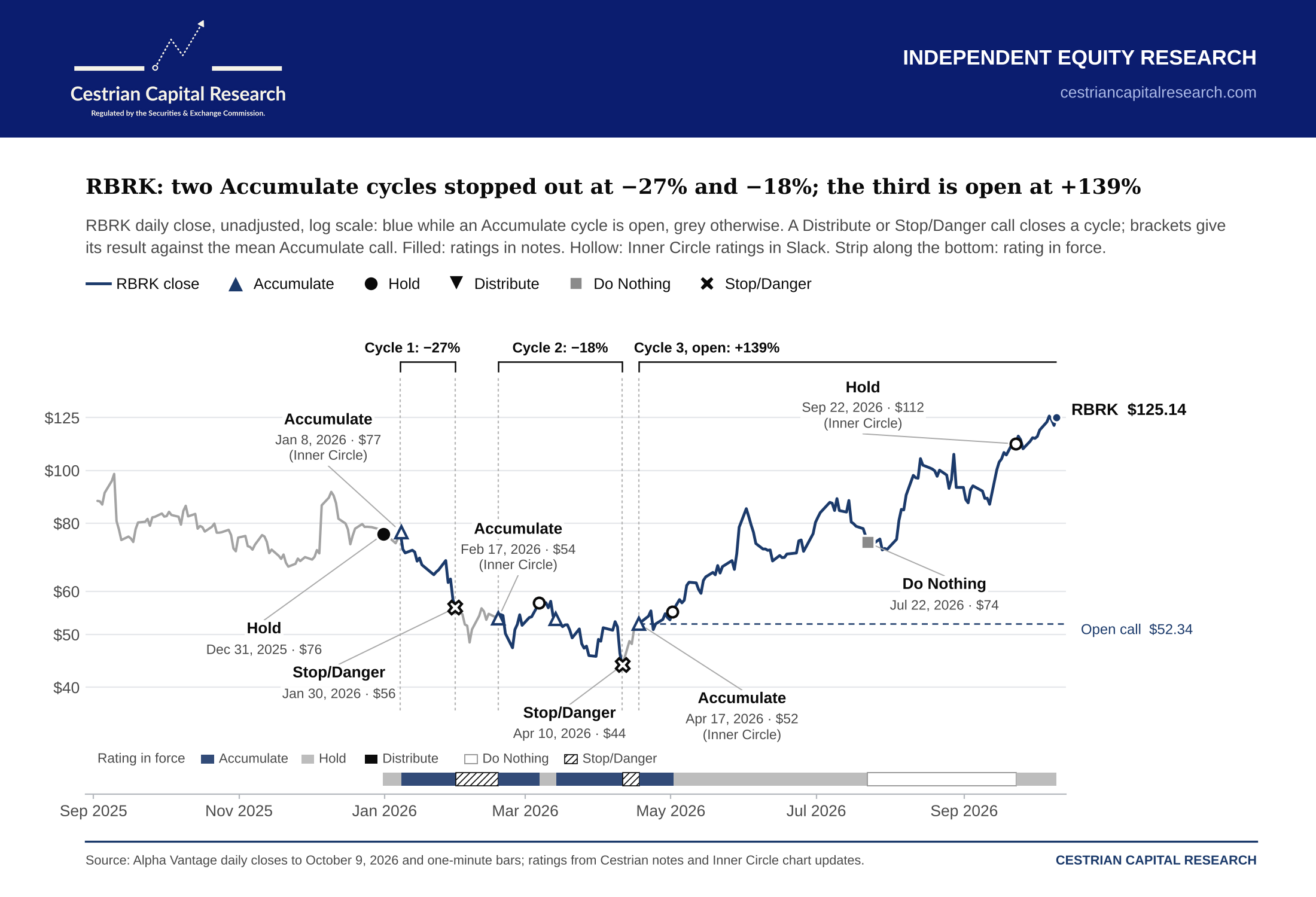
Rubrik posted 38% Q2 revenue growth to $427.3 million, but Cloud ARR growth slowed to 39% and its enterprise value reached 15.7 times…

$EVLV i'm getting something like -.2/sh of real earnigns right now, and something in that ball park for next year as a base case. The downside is significant PT <3/sh if they are unable to grow into their margins, or face continuous pressure from opengate. If they succeed (let's say 25% growth and margin improvement), i also see limited upside: Here's how i get my Earnings number: Adj. EBITDA: +$15M Stock comp: -$23M Fleet wear (D&A + retired units): -$29M Interest, growth capex, net one-offs: -$3M earnings of about -$40M, or -$0.20/sh Current management missed 3 of 4 gross margin guides, and the promised shift toward subscription reversed twice. Recent trends: Revenue +34%, but ARR only +20% (was 34% five quarters ago). Backlog (RPO) up only mid-teens Gross margin 58% → 50% in two years New ARR per unit added: ~$17K in 2024 → ~$10K now Here's how i get limited upside in the bull case: revenue grow 25% a year to about $557M in 2031 adj. EBITDA margin rises from 8.5% to 25% by 2031, then 27% by terminal year 2040 or so. SBC falls to 5–7% of revenue and fleet wear to 10–12%; Assuming a 9% required return, i am getting around 4.5/sh which is the current stock price. Are they subscale? Don't they have like 9k units deployed? That's subscale? What exactly are the "scale" advantages for this type of company? How good is their product vs opengate as a total cost of ownership? doesn't look good for evolv. Says Evolv is 5x the price over 4 years but little differentiation in terms of throughput and accuracy. Why would anyone buy evolv. The school contracts covered by the FTC settlement date from April 2022 through June 2023, and on 4-year terms they renew in 2026–27. We will just see what happens thousands of units are up for renewal or if there is some switching that happens.

Too small, you could buy for triple the stock price and do beautifully as a private equity firm even given the worst case outcome due to cybersecurity which is loss of momentum in sales and a bit of churn. Would be more than made up for by the amount of leverage $CCLD could withstand, how many acquisitions they could do with a deeper and cheaper cost of capital

BWX Technologies’ $BWXT commercial segment grew Q2 2026 revenue 72% to $302.5M, while its government segment grew just 2% to $601.3M. $BWXT reported Q2 2026 on August 3, and CEO Rex Geveden called it “another strong quarter characterized by excellent execution across the company”: → Revenue: $901.6M, up 18% y/y (9% organic). → Adjusted EBITDA: $155.5M, up 7%, a 17.2% margin vs. 19.1%. The government segment fell 5% to $126.5M, but grew 22.1% excluding a $29.4M one-time contract gain in Q2 2025, while the commercial segment more than doubled to $36.1M. → EPS: $0.97 GAAP (+14%) and $1.07 non-GAAP (+5%). → FCF: $115.0M, down 9%, as capex rose 27% to $41.4M. → Backlog: $8.4B, up 40% y/y, including $2.26B of government contracts not yet funded by Congress. Q2 bookings were $648.9M vs. $1,640.5M a year earlier, but over the past 12 months, new orders still ran 1.7x revenue. The 2026 guide now calls for $3.8B of revenue, $662-672M of adjusted EBITDA (a 17.5% margin), $4.70-4.80 of non-GAAP EPS, and $345-360M of FCF. In August, $BWXT also changed its guidance for both segments: 1) Government Operations: Lower revenue growth (high single digits, down from low teens) but a higher margin (20.5%, up from 19% at the start of 2026). CFO Mike Fitzgerald said on the Q2 call that high-purity depleted uranium (HPDU) costs are coming in under budget. Most of the segment’s contracts pay $BWXT its costs plus a fee, and the fee goes up when $BWXT spends less than the target cost, so lower HPDU costs mean less revenue but more profit. 2) Commercial Operations: Higher revenue growth (45%, up from 30%), with Precision Components Group (PCG), acquired July 1, adding slightly more than half of the increase, but a lower margin (13%, down from 14%) as $BWXT spends on U.S. capacity and new hires.
$IONQ is down 48.66% over the past year. So its 2x inverse ETF must be up a lot, right? Nope. $IONZ is down a whopping 86%. The 2x bull ETF $IONX is even worse, down 91.79%. These instruments are toxic.

Molina $MOH was the worst house in a bad neighborhood. Biggest beneficiary of the Medicaid public health exemption. And then continued to mislead investors about how much it was a beneficiary. Over-earned on volume and margin.
Ever since I started following $CCLD I thought it was a great LBO candidate. This thing belongs in a PE portfolio and whoever LBOs will do very well, I would love to participate. $85m market cap, around $120m EV roughly. Can support a lot of leverage due to subscription/reoccurring cash flows. It is cheap in absolute (circa 3x FCF). It is at 1/4 the average multiple arguably worse peers have transacted at (maybe even less by now). Long runway for continued acquisition playbook (management said constantly evaluating 2k opportunities). Acquisition playbook targets distressed RCM companies, cuts costs due to CCLD offshore cheap labor and cross and upsells to existing sticky customers, $CCLD offers a broad suite of products and are implementing adn devloping AI products. Acquisitions earn 20-40% in 6 months. Prices paid are .5-1x Revenues way towards the lower end. Risk: 2026 guidance requires aggresive H2 and cybersecurity incident If anyone is interested in a LBO or pushing for a sale, please reach out, I have done and will do extensive diligence.
@MikeFritzell The thing that's wrong with the thesis is that $BABA will be in a perpetual price war with other Chinese companies in every one of its business segments and will likely never realised the attractive economics comparative western companies have.

Someone is trying to make these $GME warrants go in the money.
This one has been lurking on Joel Greenblatts magic formula for a while; I read this and am intrigued. Est 5x earnings with identifiable catalysts, pretty easy double using conservative multiples that don't credit growth. $TZOO

Charles Lemonides argues the 18-year bull market has not reached its late-stage liftoff, pairing value-oriented semiconductor longs with…
I listened to all Whitney Wolfe Heard interviews, that gave me a lot of confidence she would/will improve the consumer experience relentlessly, the business wasn’t/isn’t declining as much as perceived or sentiment makes it out to be. Even if it continued melting at the current pace and never growing the FCF would create immense value for equity holders. I don’t think it will continue melting though as they update and iterate on the experience and resume marketing spend. I think resuming marketing spend would be a big catalyst in terms of returning to growth that wasn’t reflected in the stock . $BMBL

@stretchmikep I put on an industry short of genetic data companies early last week, $TEM, $CDNA, $DNA, and $ABSI Other than that a couple of stocks with good short activist write ups like $EQPT
@stoic_point $EVLV what you think the company actually earns LTM and NTM on a per share basis? Assuming SBC is a real expense, and replacing and growing their units as real costs.
@taobanker Man try $CCLD

If the $PPLI deal breaks, $MGM trades up, right?
@Cameron_Invest Thank you! I appreciate rebuttals always it tests conviction. I did do well as $BMBL is 5% of portfolio but I would not call that extreme conviction. I'm grateful for the luck

Bristlemoon Global Fund lost 8.4% in the September quarter and added shorts in Campbell’s, REA Group, MasterBrand and Polaris amid narrow…

Bumble is in "advanced talks" to go private at ~$1bn...for context, peak valuation after the IPO was about $14bn Didn't realize they refi'd their debt this April at S+800 (issued at 94)! If this deal takes the loan out at par, those lenders made ~12% in six months (20%+ IRR). Where do you think new debt on this would price? $BMBL
What do we think happens to the spread between $MIAX and $CBOE? 🤔
$BMBL. It seems gushing FCF and atrocious sentiment can work…
@gudovich Yeah but $FRMI sketchy as hell
Why I think Nvidia buying Reflection AI helps Palantir more than it hurts $NVDA wants its models inside enterprises, not just hyperscalers, neo-clouds and AI labs. Buying Reflection AI would speed that up. The FT reported on 10 Oct that Nvidia is in early talks to buy Reflection, raise its stake, supply it more chips, or hire its team and license its technology. Bloomberg's source says no terms have been reached. Nvidia has already invested $800m, so a buyout or a bigger stake means pricing a company it already partly owns. The enterprise push Nvidia agreed in September to buy Hugging Face for $12.9bn. Jensen Huang says more than 200,000 companies use it to deploy AI. Reflection is validated on Dell's AI Factory with Nvidia, and $PLTR's sovereign AI stack runs on Nvidia's AI factory design. Reflection is built for enterprise code. Its Asimov agent reads a company's code, Slack messages, emails and documents. Its first model, Beam (501bn parameters, 23bn active), is trained for coding. Reflection says the weights ship this month under Apache 2.0, for on-prem or air-gapped use. The bear case: Nemotron is moving too slowly at Palantir One reading is that Nvidia wants Reflection because its Nemotron models are moving too slowly with Palantir. I think that is unlikely, given how Palantir has executed. At AIPCon on 10 Sep, Nvidia's supply-chain team said Nemotron 3.5 Lightning, post-trained in Palantir, beat Nemotron 3 Ultra by a large gap on Nvidia's own benchmark. It runs on-prem and retrains on one GPU in a couple of hours. Cisco will offer Nemotron post-trained with Palantir in its AI Factory with Nvidia. L3Harris said open models fine-tuned on its own data beat the frontier models it had used within 48 hours, at 95% lower cost. Palantir has kept shipping open-model deployments. In June it launched an engine to run Nemotron in sovereign environments, and customers own the retrained models. On 1 Oct Armada became its first certified modular data-centre partner. On 12 Oct $ONDS formed Regna AI on AIP and open-weight models. The likelier case: Nvidia is backing more than one route Palantir fits open models to a company's data, permissions and workflows. Reflection is built to read the company's code. Buying a team that has already built that is quicker than building it in-house. The limit is vendor API rules Reflection reaches a company's systems through the vendors' APIs, and vendors decide what passes through them. $SAP's April API policy bars AI agents that plan or execute API calls, and bulk data extraction, outside SAP-endorsed pathways. Since May 2025, Slack's API terms bar third-party apps from using Slack data to train a large language model or bulk-exporting messages. Those rules apply to Palantir too. In May, SAP made Palantir AIP for data migration an SAP Endorsed App. An independent Reflection would likely need similar approval from each vendor whose systems it reads. Who pays the compute rent Reflection trained Beam on Nvidia GB300s rented from $SPCX at Colossus 2 in Memphis, under a June deal worth up to $6.3bn: about $150m a month through 2029. $NBIS agreed in July to sell it $1bn more capacity. If Nvidia buys Reflection, it takes on those contracts and pays SpaceX rent on Nvidia chips that SpaceX bought. In an acqui-hire, the contracts stay with what remains of Reflection unless the deal says otherwise. The FT says an acqui-hire would likely avoid a long regulatory review. Nebius holders should watch which company ends up owing that $1bn contract. What it means for Palantir The risk is an independent Reflection selling its own forward-deployed team and turnkey stack, which is how Palantir sells. If Nvidia owns Reflection, I expect Beam to reach AIP customers the same way Nemotron does, with each customer fine-tuning it on its own data inside Palantir.
$KYIV < $12 👀
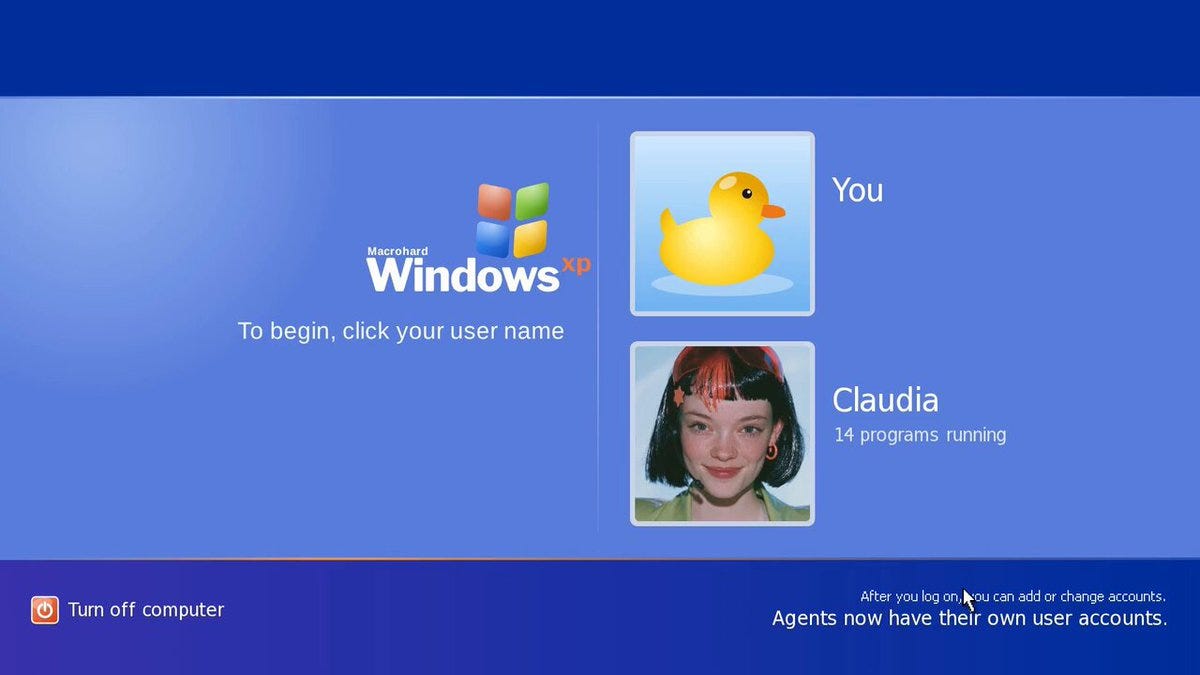
Meta’s Muse automated website fixes and design changes for a solo publisher, illustrating how $20-per-month AI agents can reduce…
See the 10-Q note on the $131.9M of capped calls here: Continue reading here for the Navy suppliers I compare $BWXT against:
In November 2025, BWX Technologies $BWXT sold $1.25B of 0% convertible notes due November 2030 and used $830.8M of the proceeds to repay its old credit facility. The conversion price is $262.51/share, 80.2% above $145.70, and $131.9M of capped calls offset dilution up to $396.24/share. Dilution has been minimal so far. Diluted shares have held at ~92M since 2023, helped by small buybacks ($30M in 2025). But stock comp rose to $20.1M in H1 2026 from $13.7M a year earlier, although it’s still only 1.1% of revenue, up from 0.9%. Management also said on the Q2 call it doesn’t plan buybacks in 2026, despite $347.6M left on the authorization, so nothing will offset the new shares. Even after paying ~$200M for Precision Components Group (PCG) on July 1, $BWXT’s leverage is within its 2-3x target: → Debt: $2.05B ($400M of 4.125% notes due June 2028, $400M of 4.125% notes due April 2029, and the $1.25B convert). → Cash and liquidity: $400M of cash and $1.7B of total liquidity, including an undrawn $1.25B revolver running to November 2030. → Leverage: 2.7x net debt to TTM adjusted EBITDA, or $1.65B of net debt on $602.1M of EBITDA. The $750M from selling its medical isotope business would cut leverage to 1.5x. → Ratings: Fitch BBB (investment grade) since September 2026; S&P BB+ and Moody’s Ba1, one notch below. → Other obligations: $152.0M of underfunded pension and retiree benefit plans. Net debt has hovered between $1.0B and $1.5B since 2023. $BWXT pays a dividend of $0.27/quarter ($1.08/year, a 0.7% yield), raised from $0.25 in February 2026. The company expects $5.5B of capital to deploy through 2030 at 2-3x leverage, with $3.5B left after capex and dividends. That’s what CFO Mike Fitzgerald said at $BWXT’s Investor Day on September 29, 2026, and he also put organic growth first for the $3.5B. But he said $BWXT is “not anchored to the same size of transactions” it has done before, and the deck lists “Disciplined Acquisitions” among the revenue drivers behind the 2030 targets. In other words, $BWXT has the track record and, once the medical sale closes, the balance sheet to go after its 2030 targets.
Getty Images is filing Chapter 11. No one's surprised. The equity holder's response? Provide up to $533mm of new equity for 100% of the post-reorg company. Say what you want about AI killing stock photos, but someone's still believes there's value $GETY
Flowers Foods trades at 7.5x earnings after an 80% decline, as a 50% dividend cut and potential asset sale aim to reduce leverage following…
$BCO $NATL merger math from VIC write-up $20 FCF per share might be conservative (BCO trading at ~$100 today)

Pretty solid technical backdrop for $LUXE. Short interest still at 4 million shares despite the big recent move. 4m shares short take 20 days to cover and represent almost 20% of the actual float (~23m shares). Then you have the company with a $50m authorization -- which could take out another 5m shares or so at current prices. In total, there could be buying for ~9m shares or ~40% of the float in the next few months. Crazy.

Pretty odd divergence in the move in $SHAK versus the rest of the QSR space in the past 10 days.....
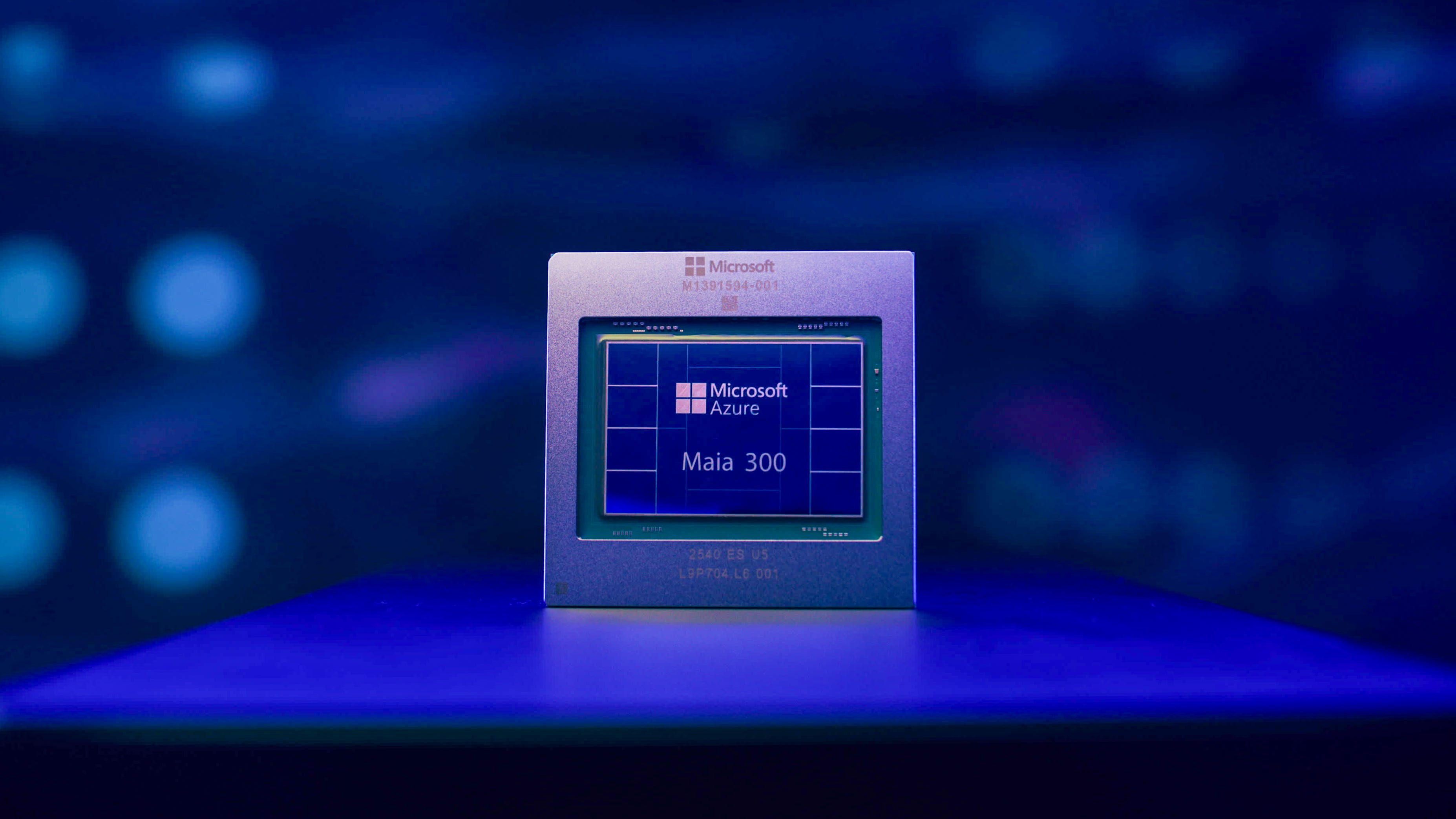
Microsoft plans multi-gigawatt Azure Maia 300 deployments starting next year, targeting 40% more tokens per megawatt than leading GPU…

Jevons Paradox Is Not a Business Model: We Might Be Building Too Much Compute and Four Other Reasons Why the AI CAPEX Cycle Could Come Crashing Down $ALAB $APLD $BE $CAT $CLS $CRWV $ETN $FN $GEV $HUT $LITE $MOD $NBIS $NVT $ORCL $POWL $STRL $TLN $VRT
We think Google's ($GOOGL) TPU volumes alone could add roughly $11 billion to $14 billion a year to Broadcom ($AVGO) revenue on our illustrative estimates, and Anthropic and OpenAI are a larger opportunity on top. April supply-chain estimates put Google's TPU demand at 4.2 million to 4.5 million units in 2026, rising above 6 million units in 2027. We allow for MediaTek's allocation to rise from around 600,000 units in 2026 to 1 million units in 2027 and assume Broadcom supplies the remainder. At the 6 million-unit level in 2027, that leaves Broadcom with roughly 1.1 million to 1.4 million additional chips compared with 2026. At an illustrative $10,000 of revenue per chip, that would add $11 billion to $14 billion in annual revenue from higher volumes alone. The actual increase will depend on which designs ship and their selling prices. Our working estimates put Anthropic's demand for Broadcom-supplied TPUs at around 1 gigawatt in 2026, rising to 5 gigawatts in 2027. OpenAI's separate custom-chip program has demand estimated at 1.3 gigawatts in 2027 and 5 gigawatts in 2028. Anthropic's TPU purchases overlap with the Google TPU opportunity, so we count those sales once. Together, the Anthropic and OpenAI estimates point to around 10 gigawatts of demand by 2028. Assuming Broadcom earns $10 billion to $20 billion for each gigawatt supplied, that represents a $100 billion to $200 billion revenue opportunity across those deployments.
Howmet Aerospace posted 24% Q2 revenue growth and 46% adjusted EPS growth, but HWM trades about 87% above a $120.69 DCF fair-value estimate.
 Alexander I. Velasquez 2 clicks
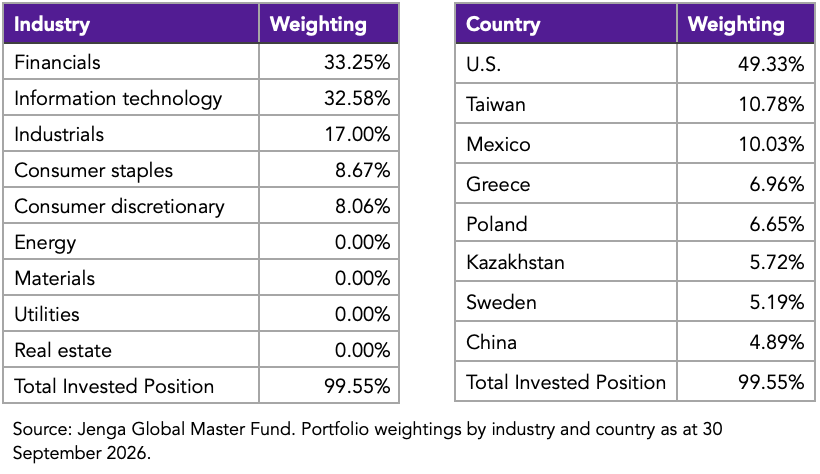
Jenga Global Master Fund returned 8.10% in Q3 2026, added Adobe and Mexican airports, and later initiated S&P Global.
We added to Tesla ($TSLA) as a long-term holding in physical AI through Optimus and Cybercab, and we keep the position small. Our view is that an affordable, capable Optimus could become an enormous product, extending Tesla's opportunity beyond its vehicle business. Tesla's batteries and its ability to coordinate difficult industrial supply chains add to that potential. The position stays small because reliability in real working environments, affordability and commercialization timing are unproven. Demonstrations alone do not establish that Optimus is ready for sustained use, and commercialization could take longer than investors expect. Reports that China was slowing humanoid-company IPO activity reinforce our concern that financial enthusiasm can advance faster than the underlying technology. A rumored Tesla facility in Ningbo, near Shanghai, could strengthen the industrial case if confirmed. Its proposed role is to coordinate Chinese suppliers and validate components for Optimus V3. The associated target of 50,000 Optimus units by year-end remains unconfirmed and ambitious, and we do not build our case around that volume. Our interest rests on the eventual product opportunity and Tesla's ability to solve production problems.

Quanta Services targets $39.3B to $39.7B of 2026 revenue as technology and load-center sales grow 220% to 240%, funded partly by M&A and…
 Go Finance Intelligence
Magna International’s gross margin reached 14.7% and operating margin 5.6%, supporting double-digit earnings growth alongside EV investment…
 David Zanoni 1 click
Cognex expects 15% revenue growth this year as its RealSense acquisition expands machine-vision exposure to robotic perception, logistics,…
 Fountainhead 2 clicks

"A lot of investors have no clue what they are investing in. They set very extreme expectations only to find out that it's almost like they are in a casino." - Hock Tan $AVGO
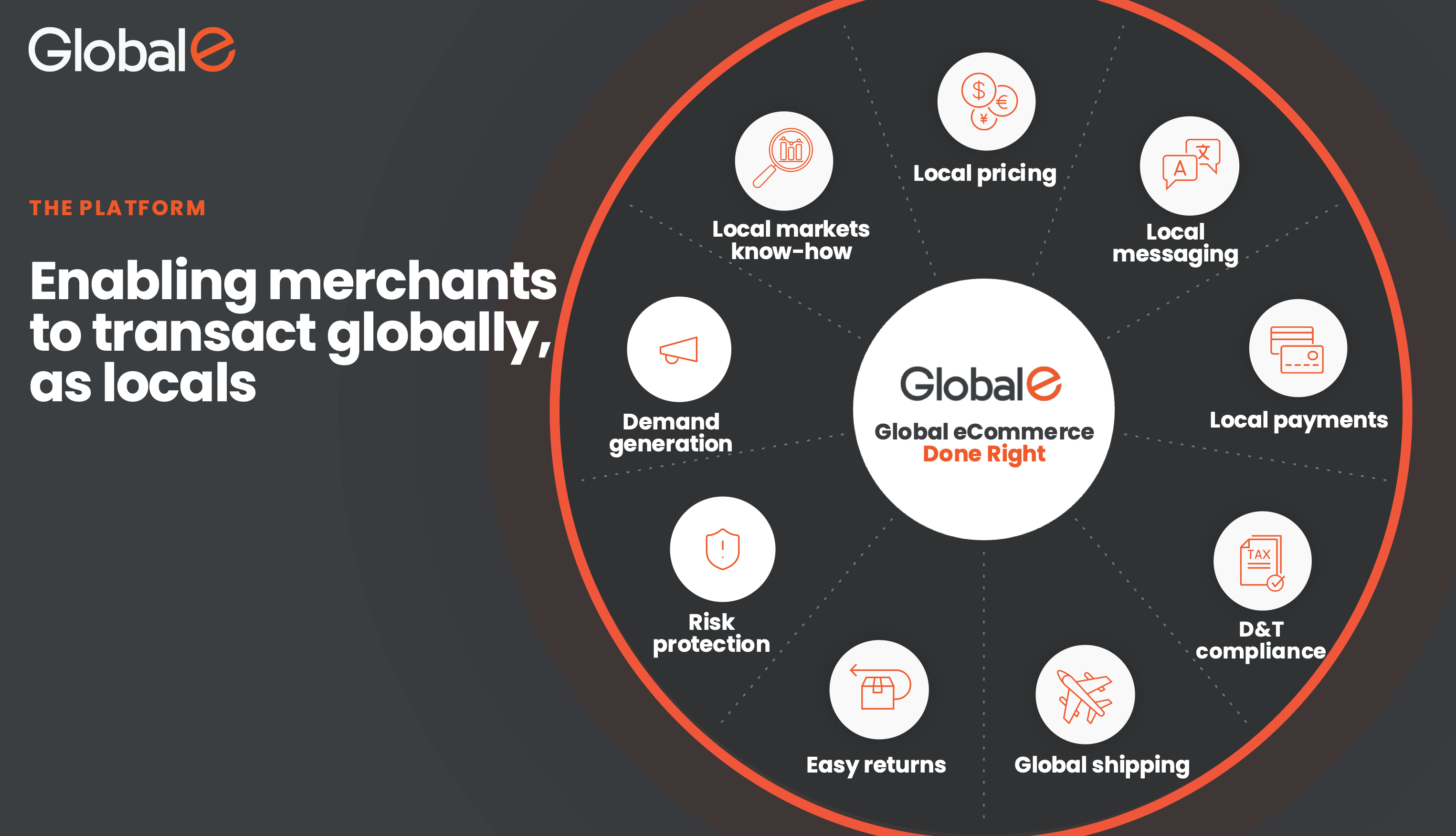
Global-e provides cross-border merchant-of-record, payments, tax and fulfillment services to more than 1,500 brands, including Shopify…
@MLedrappier Look at $CIFR < $14.00. Do you see that? I could be wrong… 🤷♂️
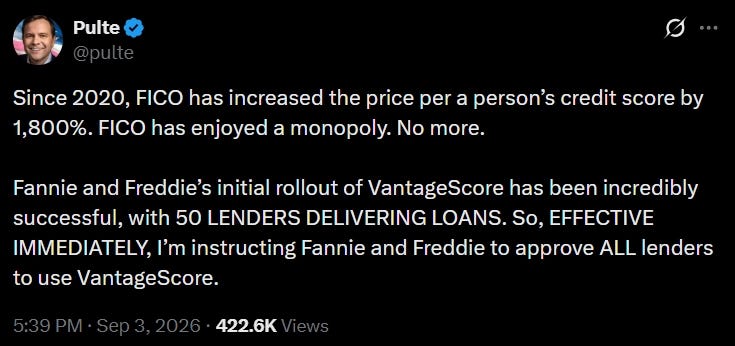
FICO’s mortgage credit-score monopoly sits at the center of a GSE-dominated U.S.
3D chips could create more room for specialist EDA startups. We are not convinced that more difficult chip design automatically translates into a large revenue windfall for $SNPS, $CDNS and Siemens. Fine-pitch stacking changes decisions that used to be made within one die. Put a circuit upstairs and its wires may get shorter, but its heat affects the circuit below. Placement, signal timing and power delivery have to be optimized together across the stack. That creates a reason for $AVGO and $NVDA to build custom tools around their architectures. Broadcom already describes a proprietary design flow built on industry-standard tools. Nvidia publishes its own research on assigning connections across tiers in 3D chips. Our inference is that the chip designers will keep some of the most differentiating optimization work in-house. A startup that solves a costly gap in cross-die planning or optimization could also win business without replacing an entire EDA suite. The incumbents still supply implementation, verification and manufacturing sign-off tools, and they are developing 3D capabilities themselves. Internal tooling is evidence that customers need more than the standard flow; it does not establish that incumbent spending falls. We see a more interesting startup opportunity where a tool can shorten repeated design iterations or improve the resulting chip enough to earn a separate budget. That is the part of the 3D transition we would investigate before assuming the largest EDA vendors capture most of the upside.zz
$FSLR
Penguin Solutions grew FY2026 revenue 26% as AI data-center and memory demand expanded, while negative free cash flow and cyclical memory…
 Investor Overview 5 clicks
$TMUS 🤔
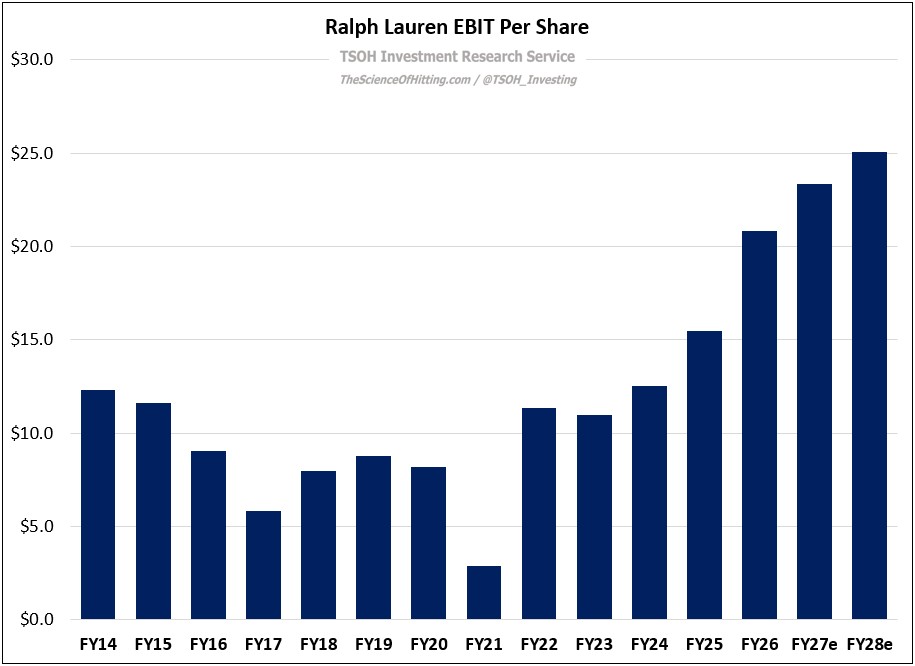
Ralph Lauren’s 2017 CEO change put Patrice Louvet in charge of reversing nine quarters of same-store sales declines and restoring the…
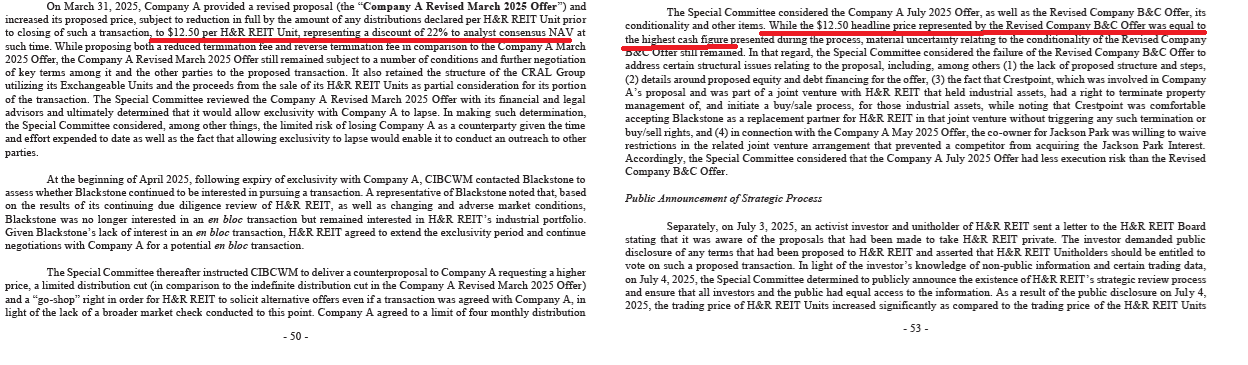
H&R REIT's proposed GO Residential transaction faces investor opposition over rejected $12.50 cash bids, insider benefits and tax…
The Information reports that Anthropic has an unannounced multiyear cloud contract with $IREN. Our view is that it is most likely a contract IREN has already announced and already counts. On 27 August, in its FY26 results, IREN said it had signed a new multiyear AI cloud contract with an unnamed "leading frontier AI lab". In the same release it put contracted annualised run-rate revenue (ARR) for its 2026 capacity at $4bn, against $1bn of ARR operating on 26 August, and said its 2026 capacity was largely sold out. The Information gives no size or term, and neither IREN nor Anthropic has confirmed the deal. If Anthropic is the August lab, the report names a customer but adds nothing to the $4bn. It would only be new revenue if IREN raised that figure, and IREN has not said it will.
Marvell’s Q2 revenue rose 37% to $2.74 billion, with data centers contributing 79%, while FY1/27 guidance targets roughly $12 billion in…

Dassault Aviation leads a 53-pitch roundup with a €45 billion order book against €7.4 billion of sales and a 26.6% Thales stake.
