

Bill Ackman on AI as a ‘Nuclear Weapon’, and Why Big Tech Still Looks Cheap
Bill Ackman discusses Pershing Square’s approach to durable businesses, arguing that AI brings both existential risks and major demand for…
Tuesday, October 6
Everything we published on this day.
81 stories — the front page that day →
Bill Ackman discusses Pershing Square’s approach to durable businesses, arguing that AI brings both existential risks and major demand for…
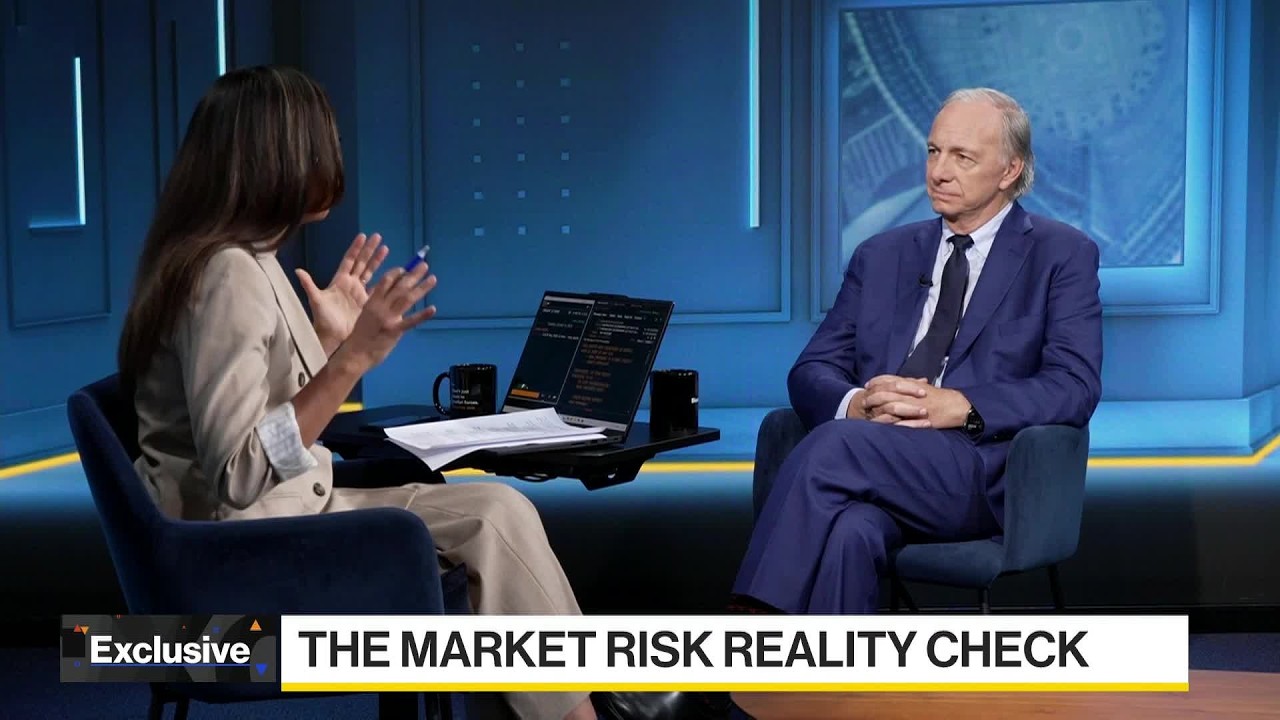
Ray Dalio joins Haslinda Amin in Singapore to discuss the US debt cycle, rising yields, foreign demand for Treasuries, expensive equities…

This is frontier lab only, $AMZN $MSFT would be the opposite and inference dominated. Possible that Anthropic is essentially going to be a nonprofit that will always be running at ~breakeven where training R&D = inference gross profit. In periods when they are accidentally profitable (now) that means they are behind on spend. And then partners like the clouds and inference marketplaces dedicate more compute to serve inference, which becomes capital light revenue to labs.
Wild how fast the sentiment rotations work these days and that $MSFT $META are back on top. These were utterly hated a few months ago.
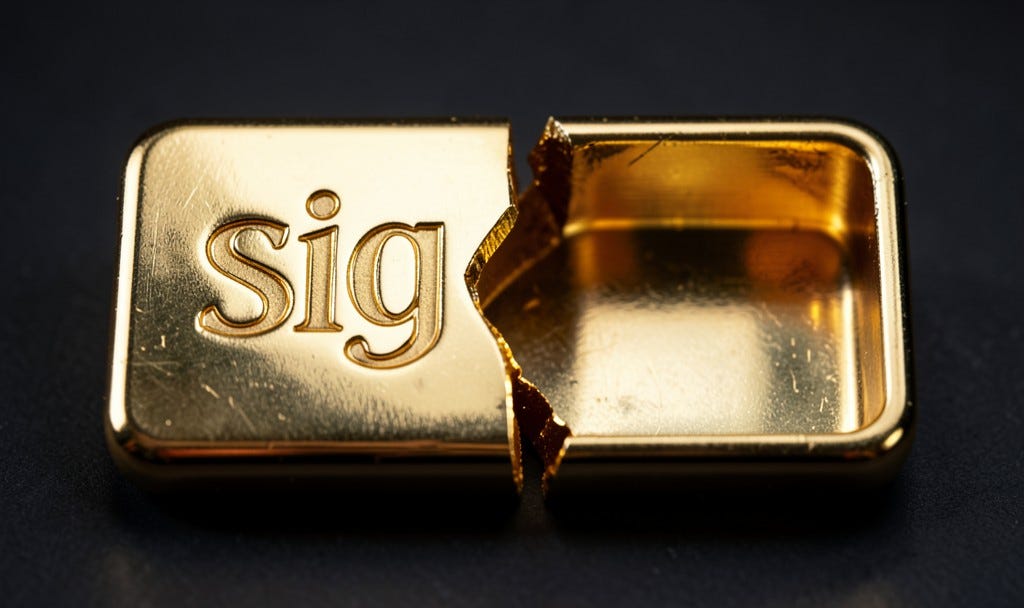
Signet’s shrinking store base and unit volumes have been masked by gold prices, while declining service-plan sales threaten its main profit…

$ONT first got hammered on what looked like a temporary earnings blip, completely overshadowing the potential sale thesis. Now another hit. A former employee alleges ONT helped downplay contamination from the 2023 East Palestine derailment. Stock is down another ~25%. It’s starting to look genuinely cheap, but the legal/regulatory overhang is hard to underwrite. A wider investigation, penalties or further civil claims could all follow, and the whole thing could easily complicate the sale process. Glad we didn’t commit here. Any thoughts on the potential exposure?

MGP Ingredients trades at 0.74 times tangible book after whiskey oversupply drove sales declines and more than $400 million of impairments.

My new hunting multibaggers warpath “call”… 🇲🇽 .. we’re coming for you! You can’t hide forever… $PPIH $SIF $RFIL

@paulcerro And $CCLD

I tracked the production targets Nubeva Technologies $NBVAF (TSXV: $NBVA) has set for its AI decryptor builder since 2023, and it missed all four! Nubeva’s agent copies the encryption keys ransomware generates during an attack, but a victim can’t use the keys until someone writes a decryptor (a program that reverses the encryption) for the strain behind the attack. Building every decryptor by hand is the capacity issue behind the 2023 exit of Kroll, Nubeva’s biggest customer. Nubeva’s FY2025 and FY2026 MD&As frame the same issue as cost, saying the company’s “current support structure carries costs that are not sustainable at scale.” Nubeva’s fix is to have AI write the decryptors instead. It announced a patent application for an AI decryptor builder in August 2023 and has pitched the builder ever since. Per the FY2026 MD&A, “a private, cryptographically trained AI engine” uses the captured keys to analyze encrypted samples, identifies the decryption method, and writes “the decryptor software, test kits, and documentation.” The goal is “a custom decryptor within an hour” of a customer getting hit by a new strain. Both MD&As also lay out two outcomes: → If automation works: Nubeva “will be positioned to re-expand its commercial footprint” through end users, managed security providers, incident-response firms, security integrations, and cyber insurers. → If automation falls short: Nubeva “will continue to advance and complete its IP portfolio, positioning the Company for strategic partnerships or potential M&A transactions.” Three years on, the AI decryptor builder still isn’t in production. The August 2023 release expected production “later this year,” the FY2024 and FY2025 MD&As said “later this year” again, and the December 2025 interim MD&A said “later this fiscal year.” Then the FY2026 MD&A, filed August 28, 2026, quietly dropped the date altogether. After four missed targets, dropping the date suggests Nubeva’s own builder isn’t close. CEO Randy Chou hinted at the delay in October 2025, saying Nubeva was “still waiting for an automated way to scale support,” which he said was true of “everybody else in the industry.” But the wait may finally be ending. On September 3, 2026 (six days after dropping the date), Nubeva said it had been approved for access to “a frontier artificial intelligence model made available to vetted organizations for authorized defensive cybersecurity work.” Nubeva doesn’t name the model’s provider, but the release came out the same day OpenAI committed $1B of subsidized access to its Daybreak cyber models. If the model is Daybreak, the access isn’t particularly rare. OpenAI said on September 3 that “thousands of defenders across 2,000 approved organizations and workspaces already use Daybreak.” Either way, decryption is where a frontier model could matter most, since writing a decryptor for an unfamiliar strain is the step Nubeva’s engineers still do by hand.

ezCater Uber to Expand Uber Eats Service with $2.3 Billion Acquisition of Catering Platform $UBER
$LW Lamb Weston Says Cost-Saving Efforts Are Paying Off
Google and Constellation Energy Strike a Sweeping Nuclear-Power Deal $CEG
Constellation Brands Profit Rises on Higher Beer, Spirits Sales $STZ

$BY Byline Bank will acquire Illinois State Bank
And the global half is already moving. $ELMT bought 4.99% of Masan High-Tech Materials for $124.75M on Oct 1, and expects the Vietnamese supplier to stay its key refiner even after Springer comes online. The ~$100M Refining & Trading bucket covers Australia and Spain on top of that.
@Million_Sancet Works out to ~$105M a year, and it runs five years vs the ~3-year take-or-pay term on most of the backlog. That narrows the gap against their 7-year colocation rent. Tho with go-live in early Q2 2027, none of it counts toward $BRUN's $400M ARR exit for 2026.
@ValueInvestShow $DECK is a heavy buyer of its own stock too. It repurchased $338M in Q1 alone, and the board added $3.5B in May, leaving $4.7B authorized as of June 30. Tho there's also ~$120M of old IEEPA tariffs it started filing to claw back that isn't in the guide yet.

The optical engine accounts for over 50% of an optical transceiver's cost, and it contains the most demanding alignment work in the module. For years, engines were built by active alignment: a technician switched on the laser and nudged parts into position until the light coupled. That was workable at 10G, 25G and 100G. At 400G and 800G the tolerances became too tight for manual assembly, and demand driven by AI exceeded what human throughput could supply. $POET's Optical Interposer replaces active alignment with passive assembly. It is a silicon wafer with waveguides and mechanical guides etched into it. Lasers, detectors and electronics are placed on it by automated pick-and-place machines, with nothing powered up during assembly. The parts align passively at the wafer level, much as Lego bricks fit together by their shape. The effect shows up at the transceiver maker. The engine arrives pre-aligned on a standardised substrate, so the remaining assembly looks like conventional electronics manufacturing. Foxconn does that kind of work at high volume, and it was historically locked out of optical transceivers because building them required deep photonic expertise around the engine. Our note's reading is that the interposer takes on the optical complexity so assemblers such as Foxconn, Luxshare, and LITEON do not have to, which helps relieve one of the bottlenecks in optical connectivity for AI clusters.

@2ang7 @EconomPic Seems like a lesson even she'd learn. Similar to $CALF changing its prospectus.

ProQR Therapeutics $PRQR CEO Daniel de Boer bought $513K across two separate purchases on July 7 and July 9, and a company director bought another $229.5K in late June (real money for a Dutch CEO). PRQR is a small-cap RNA-editing biotech backed by a major pharma partner: Eli Lilly. Their collaboration, running since 2021 and expanded in 2022, could pay ProQR up to $3.75 billion in milestones plus royalties, real validation for a company this size. The balance sheet just got stronger too: ProQR raised roughly $59 million in late June 2026, with Lilly buying in alongside the public offering to keep its stake intact, a vote of confidence from the partner who knows their science best.

@DavidBarbato_ I’m not talking about today’s price action. Explain the last month’s divergence from $CBOE thx
Here’s 1 Q3 that is most excellent. Ted has $PBNC humming. Former $CABT holders continue to rejoice.

@bigpoppastonk @Leetspeaker1337 @dcurras1 It gets smoked like every other cycle. The short $MU risk is that you essentially have every hyper scaler founder seeing AI as an existential threat and given their balance sheet it just keeps running on like David Goggins. Also a huge incentive for govt bailouts given size now.

$CRWD at 40x forward sales is pretty hard to wrap your head around CRWD multiple is now above 2021 levels (not to mention yields were at 1% then)
I’m not in the business of shorting things that go up but $CRWD at 40x forward sales is pretty hard to wrap your head around CRWD multiple is now above 2021 levels (not to mention yields were at 1% then)
@bigpoppastonk @Leetspeaker1337 @dcurras1 I think $MU is like 6x PE for next year but yes it's too hard for me.
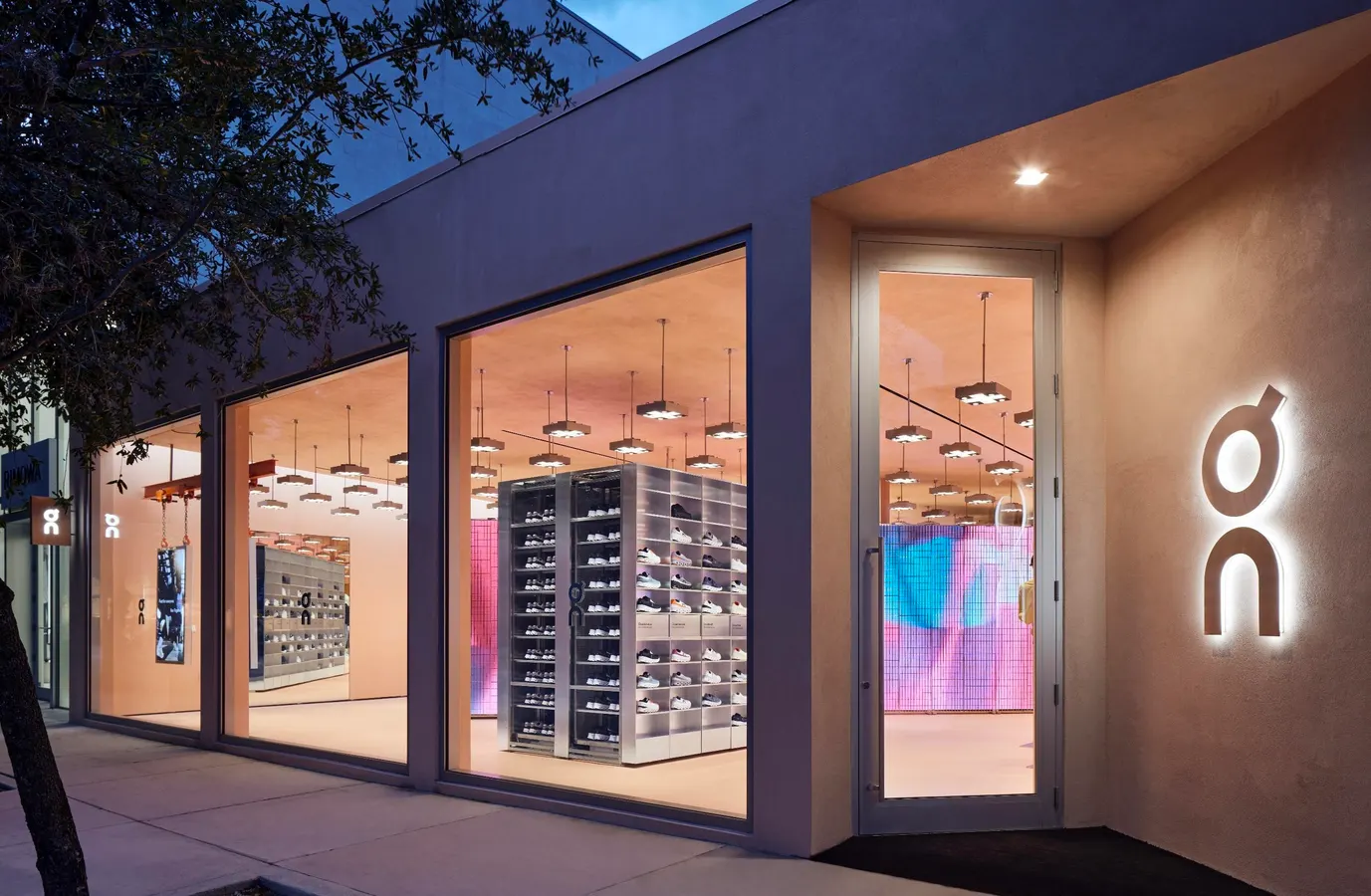
On Holding (ONON) is gaining sportswear share, expanding store space and launching soccer with Kylian Mbappé as investors debate U.S.

A lot of people bullish $NFLX here. I'm tempted to go short. They are losing to doomscroll slop and they have competition on every side investing more aggressively than they are.
Continuing to tweak my AI process (Peter Lynch 60 Second Drill) to quickly go through my research pipeline. It's a work in progress, but I'm happy to see it caught dilution risk... totally negating some positive insights I had jotted down. I still need to fact check - $MCDIF

Geo Group $GEO down 8% on a massive facility sale seems kind of crazy.

New $BFLY BCI customer announced today
I really think this can be a meaningful catalyst for Blacksky Aside from it opening a new vertical and revenue stream, as well as a entirely new TAM. The social arbitrage when every retail investor realizes how cool this tech is and the company behind the imagery and the AI read through on what the images says can be extreme. It is rolling out at first 4 observation sets related to 24 companies but obviously that is only the beginning. I believe this can be the start of a broader inflection of blackskys role in the mega theme i've been discussing the past few months of the value of proprietary data to increase exponentially over the coming months and years as advanced AI capabilities make the value and ease of monetization of proprietary data extremely valueable which also leads into how $BKSY edge in gen-3 having 35cm over the 50cm of competitors planet and satellogic become all the more valuable as AI tools. Many of these data 'moat' stocks have begun to re-rate in the past few months and I think this release on robinhood could be the start of that inflection in the sat names with blacksky leading the way to the social arb aspect of being integrated into hood as mentioned earier. $BKSY is also starting to become a massive beneficiary of the sovereign space infra spend which i've discussed and highlighted before with a now robust pipeline on sovereign deals through 27' as they discussed on the call. They also have moonshot upside working with the Air Force on orbital data centers. Shorts have begun to cover but still have a looooong way to go 20% is still short and as you probably know I am not a big TA guy but even i can spot a triple bottom I think it's a decent risk/reward assuming mkt can hold up a bit here
Crean Hill cost Magna Mining $MGMNF (TSX: $NICU) US$11.3M in November 2022, and a 2024 preliminary study put the mine’s after-tax NPV at US$137.0M. If R2, the high-grade zone Magna found at its Levack mine, is Magna’s copper and precious metals upside, Crean Hill is its biggest nickel exposure. Crean Hill’s 2024 PEA (preliminary economic assessment) outlined a 13-year, 2,200 tonnes/day underground mine that sells its ore to a third-party mill: → Resource: 18.4Mt indicated at 1.01% nickel, 0.87% copper, and 2.47g/t platinum, palladium, and gold. → Capital: US$34.2M for an advanced exploration phase (early underground work and bulk mining before full production) that earns US$11.6M of revenue, then US$19.6M before commercial production. → Economics: After-tax NPV (at an 8% discount rate) of US$137.0M and a 129% IRR, at $8.50/lb nickel, $4.00/lb copper, $900/oz platinum, $1,000/oz palladium, and $2,150/oz gold. Weighting each metal’s price change by its share of PEA revenue, I estimate Crean Hill’s revenue would be ~32% higher at Q2 2026 prices, even though nickel, 51% of PEA revenue, is the only metal below its PEA price. CEO Jason Jessup says the pre-feasibility study (PFS), due in the first half of October, will use “more realistic consensus metal prices for 2026” and update the capital costs. He expects the PFS to come in “generally in line” with the PEA, with “some additional costs.” Jessup also said in July that Crean Hill’s capital is “not going to be anywhere near $140 million.” Unlike McCreedy West, Magna’s producing mine, Crean Hill carries no precious metals stream. To fund the restarts, Magna now has ~US$124M of cash, most of it from Alpayana, a Peruvian mining group that bought 19.9% of the company in August.
Wondering if $MIAX is a perception vs. reality trade? Perception: Kalshi single-stock perps will cannibalize options and structurally impair $MIAX. Reality: perps are initially limited to mega-cap, highly liquid names, there’s no evidence of cannibalization yet, options volumes remain strong, and $MIAX can ultimately participate in perps itself… 🤷♂️

One of the most important disciplines in investing is constantly updating the best argument against your own position. Not dismissing it. Not looking for reasons it’s wrong. Actually understanding it well enough to decide how much conviction your own thesis deserves. $AMZN has badly lagged the market and many other AI names recently, and I think the counter thesis has evolved. The biggest new threat is agentic commerce. Meta’s Muse and other AI agents could increasingly control product discovery and purchasing, potentially weakening Amazon’s retail and advertising moat. That’s real. But I think it plays out slowly, Amazon will adapt through its own agents, including Project Moonraker, or partnerships that are seeking access into and monetization from the world’s largest ecommerce platform, and in an agent-first world the upside to AWS, Trainium, Graviton and Amazon’s broader AI infrastructure business could ultimately more than offset the advertising dollars at risk. Then there’s Anthropic. A recent barrage of negative headlines around slowing growth and Meta/Microsoft reducing Claude usage has spilled over into $AMZN sentiment. Again, worth taking seriously. But much of that narrative looks incomplete. Anthropic’s revenue growth remains extraordinary, its IPO appears very much alive, and its massive long term commitment to AWS remains intact. We are still early and one can make a strong argument that AWS has more to gain from an open source first AI world than it would lose from Anthropic’s and OAI’s relative weakness, if it even plays out that way. And now sharply higher diesel prices create another near term headwind to Amazon’s shipping margins. That’s real too. But either fuel prices normalize or as with past cost inflation Amazon eventually passes much of the higher cost through while continuing to drive down fulfillment costs. I don’t need the counter thesis to be wrong to own $AMZN. I just need the bull thesis to be more right.
S&P earnings expected to increase 27% in Q3 (slight decel from Q2). Chopping that growth up a few ways (H/T to GS’s Tony P): -->80% of growth expected to be driven by tech and energy -->Half the growth driven by AI infrastructure names -->1/3rd of the growth driven by $MU and $NVDA alone Headline 27% eps growth estimates not quite as healthy as they appear
$BMR

$FRVO price drops from ~$31 on Jun 26 to ~$13.50, and now they publish a short report?

$SMCI is a SpaceX pick-or-shovel?
Astronics targets $1.02 to $1.04 billion in 2026 revenue after adjusted operating margin reached 20.3%, with Boeing representing 12% of…
 Jordan Aquilina
$NDRA
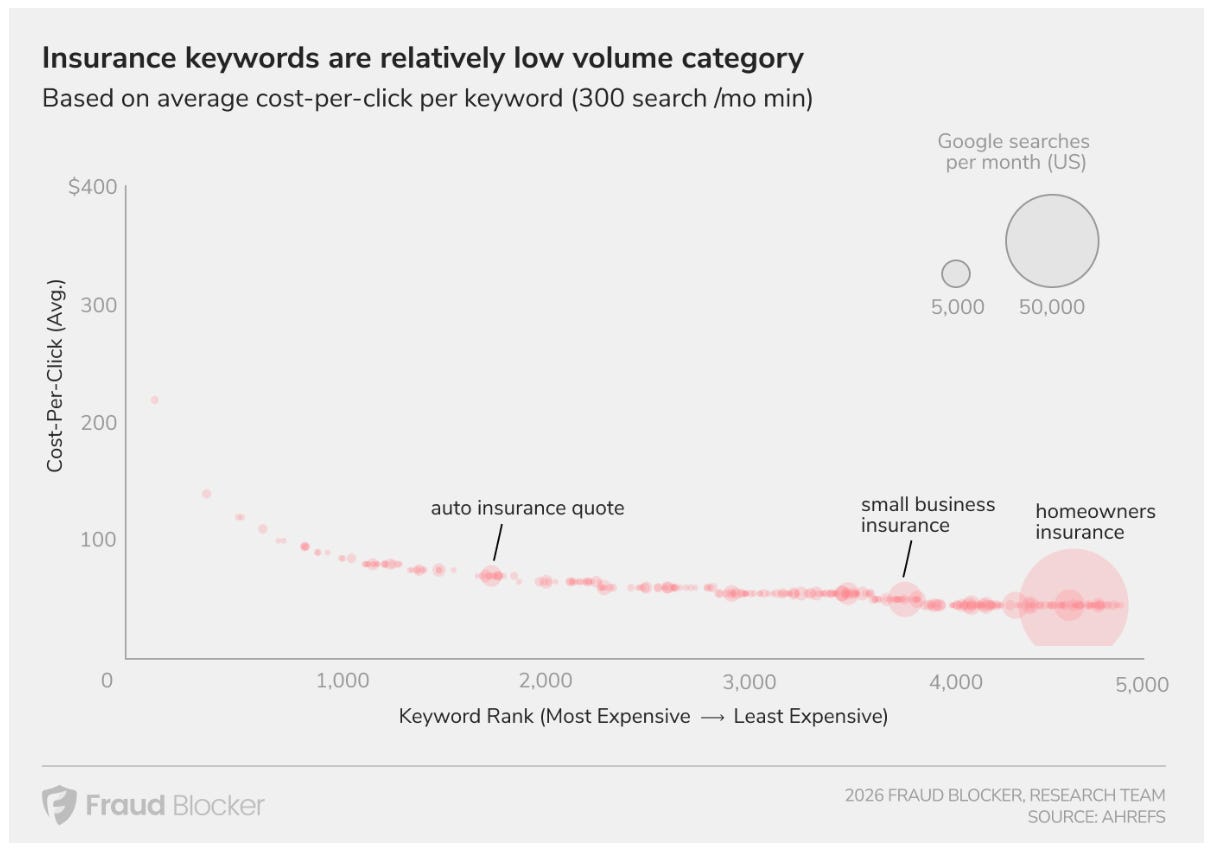
Meta’s Muse could place ads inside its AI agent by letting a private VM select offers from advertisers without sharing user data with…
Just sold a couple positions that have been frustrating me for a couple years ($GBFH and $AERG). They'll probably moon now, but feels liberating.
What you need to know about the $BRUN news.
Alpayana, a private Peruvian mining group, asked for 19.9% of Magna Mining $MGMNF (TSX: $NICU) when management was “thinking something probably below 9.9,” per CEO Jason Jessup. On August 28, 2026, Alpayana, chaired by Alejandro Gubbins, bought 62,356,682 shares at CAD$2.25/share for US$99M. The US$99M more than quadrupled Magna’s cash at the time. Alpayana runs six underground mines in Peru and Mexico, most of them bought from other miners, including the Los Quenuales mines from Glencore $GLNCY in December 2022 and Sierra Metals, a copper-zinc miner, for ~US$176M in 2025. While it holds at least 10%, Alpayana can join future equity raises and top up after dilution, and it gets one board nominee or an observer. Jessup says Magna’s pre-deal plan already funded Levack, its flagship restart project, from cash and the cash flow of McCreedy West, its producing mine. So the US$99M mainly spares Magna from “delaying the startup construction at Crean Hill,” its permitted nickel mine, “by 1 or 2 years,” and gives it “a bit of a war chest” for acquisitions in Sudbury, Ontario, where its mines are. He also says Magna “could have five mines in production in 5 years and not have to ever do another financing again.” Neither restart study is out yet (both are due in the first half of October), so the claim rests on capital budgets investors haven’t seen. After the deal, Alpayana holds 19.9%, institutions 47.4%, retail investors 26.9%, and management and directors 5.8%. The institutional stake includes the 16.0% held by Dundee Corporation $DDEJF, a Toronto investment company.
$RNAZ
@kingdomcapadv I am not trying to antagonize, I genuinely value your opinion and insight and know you have a financial interest. Thoughts on $BBGI?
I don't think $NTWK is done. Will likely add on any pullback.
@Brian_Spence73 @RealSalesCrap I rarely think in terms of valuation or stock price, and in an AI world I think it’s increasingly difficult to assess either beyond 1–2 years. I simply see $AMZN as misunderstood and underappreciated for what it is today.
Doubled my $LPRE position from ~2% to ~4%.

$6.6B to expand nuclear Virginia class submarine production capacity announced today. $ESP is the sole source supplier of certain power components for these Virginia class submarines. Should be a positive for things like backlog conversion and future order growth. This won't matter for revenues near-term, as the factory is live only in 2030, but subcomponents for eventual assembly are ordered well in advance.

Time for $LUXE to break out of its ~$10 range

I keep hearing that $SPCX share distributions by various SPVs have been delayed and more elongated than expected

Secondaries more likely with the reversal in bio discovery names this morning not less, they are coming --- almost all need money to fund their cash burning businesses $DNA $TXG $TWST $GRAL you are their liquidity if you want to fund them at 20-30x sales
Why has $SPHR been smoked lately? Wizard of Oz flop? Is it cheap now? Name is down 40% from its highs in August
@SurfShopCapital $ASTS 🚀

RLJ Lodging Trust trades below book value, with positive FY26 FFO guidance and property conversions offset by elevated leverage risk.
 Albert Anthony 2 clicks
Hi 👋 $GLND
$HHS spread kind of wide again. STARR CEO reaffirmed target of YE 2026, and said working on S-4. Gross 12.71%. Annualized 66%. A few other parties got pretty far in the go shop period providing to me a nice Margin of Safety. I sold a chunk at $4.63. Am buying back here. Writeup:
$FSLR <$200 is as dislocated as $TLN was at $280… This is perception <> reality. Do you see it?
Entravision $EVC down on the Univision deal as investors have completely forgot about the growing ad-tech business and are underwriting for a dying media company that plays non-stop Taco Bell ads.
Why is $SPCX up 19% in the last 3 days? Wrong answers only

Thanks for the shout-out @KEDM_COM @hkuppy $MNRO
$FIRY repaying debt
Here’s a good one 🤣 $GRML “Following the recent raise of more than $59 million, the Board has authorized a $20 million share repurchase program as part of an updated capital allocation strategy.” I can’t stop laughing..
VersaBank's Q3 revenue rose 23% and adjusted net income 27%, while a 2.19% net interest margin and 19.15x forward earnings temper its 2027…
 Grassroots Trading 2 clicks

Rollins’ recurring pest-control base requires ongoing spending to replace departing customers, a concern tied to its nearly 50%…

Intuit’s $21.4 billion software franchise faces AI-driven pricing pressure in tax and accounting, even as QuickBooks and TurboTax retain…
This is the next step for $EVC to unlock value with their media portfolio. I bet a deal is coming.
When the FinTwit crowd was pumpin $BCAR in a manic bullish AI data center period, I was publishing my objective, although clearly non-favorable view on the stock. Almost no one listened. Now look at the result! 🤷🏽♂️ Don't forget. If someone calls something a "speculative bet" (myself included), they really just mean they're gambling.
Capitol Federal Financial's 2.31% net interest margin and $23.6 million Q3 profit support its shift toward higher-yield commercial lending,…
 Growth Stock Hunter
OpenAI’s TPU lesson makes me more cautious on $CBRS. Richard Ho, OpenAI’s hardware chief and a former TPU designer, says one lesson from Google was that “you have to make it programmable.” Models change too quickly to overfit the chip to one architecture. That caught my attention because TPU is already programmable. Groq statically schedules execution in its compiler, while Cerebras makes a different bet on wafer-scale compute and distributed local memory. The question is how much of the performance advantage survives when models change, including MoE routing and memory demands. Ho also wants hardware that can move across inference workloads without locking the fleet into fixed ratios of specialized machines. That matters when buyers are committing years of capex and power. If OpenAI and other large buyers increasingly favor that flexibility, I expect CBRS to remain a specialist over the next few years. The absolute market can still be large enough for Cerebras to build a very good business, but I’m more skeptical that its architecture becomes the mainstream choice. "As long as you’re willing to live with those limitations, they’re good. But if you’re able to make it programmable, then you have a lot of flexibility for adapting to change. And we had to adapt to change. TPU also adapted to different changes in the algorithm, even at that time with CNNs. Clearly now, in the world of LLMs and agents, the mix is changing pretty rapidly. So that was the pitfall we really wanted to avoid: to overdesign and overfit to one particular model. We looked at it in that context." ---[54] The Man Who Built OpenAI's First Chip TechTechPotato

Golar LNG’s fourth FLNG vessel targets 3.5MTPA capacity and a 2029 delivery, supporting projected adjusted EBITDA above $1 billion in…

Would've been too easy, so I didn't buy. I prefer complicated roll-ups with excessive debt. Just hitching the wagon to a pair of founders who've compounded >17% for decades - below TBV and obvious catalyst NTM - would've been too easy. $LEGH

Uber’s valuation is framed as undervaluing ride-hailing and robotaxi growth, while record institutional ownership offsets concerns over…
 The J Thesis 3 clicks

Group 1 Automotive CEO Daryl Kenningham’s Toyota ties, capital-allocation decisions, compensation and stock sales face scrutiny after the…
Despite investor doubts, $IREN is worth a small position. The shares have fallen about 17% from their 22 Sep close. The equipment IREN had ordered at 30 June is covered by the cash, committed GPU financing and prepayments it reported on 27 Aug. In the June 2026 quarter customers funded most of its capex. On signed contracts the shares are priced about where $CRWV is. The main risk is that IREN runs GPU clouds worse than its peers. 1. IREN guided FY27 capex (Jul 2026–Jun 2027) at $25–30B on its 27 Aug results call. Its enterprise value is $14.6B at the 5 Oct close. IREN's FY26 results show revenue of $0.7B, of which $0.58B was bitcoin mining. IREN expects to have shut mining down by the end of December 2026. 2. At 30 Jun 2026 IREN had $13.8B of commitments for GPUs and site work, almost all payable by 30 Jun 2027, per its annual report. Orders placed after 30 June are not in that figure. On 27 Aug IREN put its existing cash, committed GPU financing and customer prepayments at about $14B. That covers the 30 June commitments. 3. The other $11–16B of the capex guide is not yet funded. Management targets about $8B more in GPU financing and prepayments for new GPU capacity, and that funding comes with new customer contracts. IREN says it is in late-stage talks for a large share of 2027 capacity. It has not announced any signed contract for that new 2027 capacity. The rest would come from data-center debt, operating cash flow and corporate funding, which includes selling shares. By 14 Aug 2026 IREN had sold about $2.5B of shares under its $6B ATM programme, leaving about $3.5B at that date, per its annual report. It has not reported any sale since. 4. On signed contracts, IREN is priced close to CRWV. On our ABBX dashboard, enterprise value is 0.88x contract value for IREN, 0.74x for CRWV and 1.60x for $NBIS. The contract values are company-reported, and each company measures them differently. IREN reports about $16.6B, of which about $5.1B is cloud service contracts and about $11.4B is GPU lease contracts. CRWV reports a $104.2B revenue backlog. NBIS reports $37.5B of remaining performance obligations. On 27 Aug IREN said its 2026 capacity was largely sold out. It had $4B of contracted annualised revenue run-rate (ARR) for 2026 capacity, which it earns once that capacity is delivered and accepted. $1B of ARR was already operating. EV is about 3.7x the contracted $4B. 5. In the June 2026 quarter, IREN's customers funded most of its capex. On our ABBX dashboard, customer prepayments and deferred revenue covered 87% of IREN's cash capex in that quarter ($1.72B of $1.98B). The same measure was 21% at NBIS and 12% at CRWV. Working-capital inflows covered 90% of IREN's capex and 36% of NBIS's. CRWV's working capital was an outflow equal to 8% of its capex. More than half of IREN's customer prepayments came under the $MSFT contract. At 30 Jun 2026, $1.01B of IREN's $1.84B of deferred revenue sat in the subsidiary that holds the GPUs for the MSFT contract, per its annual report. IREN said on 27 Aug that $3.6B of GPU financing plus customer prepayments fund about 96% of the GPU capex for the MSFT contract. IREN also said its recent contracts carry prepayments of 45–55% of GPU capex. So in that quarter customer cash, not new debt or shares, paid for most of IREN's capex. At NBIS and CRWV it paid for a small share. 6. Operations are the weak point. Some people are questioning the quality of the GPU cloud service IREN delivers to end customers. We share the concern, and it is not new to us. We recorded it in our 1Q26 rebalancing meeting and again in 2Q26 and 3Q26. One of our biggest concerns on IREN is that the CEO treats software as easy, low-value work next to power, land and data centres. That includes the orchestration software that schedules customers' jobs and manages the GPUs. We expected this to slow IREN's growth, not to threaten the business, for three reasons. (A) In our view the bottleneck in AI infrastructure today is powered capacity, not the know-how to run GPU fleets. IREN said on 27 Aug that its recent 3-year contracts price above $20M of revenue per MW of computing capacity. It estimates about a 2-year payback on the GPUs and related equipment. It also said its 2026 capacity is largely sold out. (B) Hyperscalers and other bulk buyers of IREN's capacity can manage and optimise GPUs better than IREN can. What they need from IREN is powered GPU data centres delivered on time. MSFT's $9.7B contract is for GB300 GPUs in four 50MW buildings. MSFT accepted the first, Horizon 1, in August 2026. IREN targets Horizons 2–4 in the December quarter. (C) $NVDA is partnering with IREN and is trying to make running large GPU fleets more standard and simpler. In our view NVDA wants standard fleet-management software so that more companies can run its GPUs well, which makes its chips easier to buy and use. On 7 May 2026 NVDA signed a five-year, $3.4B managed GPU cloud contract with IREN that uses Mirantis orchestration software. The same day it announced a partnership to deploy up to 5GW on NVDA's DSX reference designs. DSX is NVDA's standard set of designs and software for building and running AI data centres. In its 31 May 2026 DSX release, NVDA says the DSX OS software handles tasks such as keeping GPUs healthy, scheduling jobs and running several customers on one cluster. The same release names IREN, CRWV and NBIS among the cloud partners deploying core parts of DSX. The risk in (C) is that IREN's CEO may be too optimistic about how capable NVDA will be at this and how soon. 7. IREN is buying software and hiring managers to run its cloud better. It bought Mirantis, a cloud software company with more than 1,500 enterprise customers, on 4 Aug 2026. IREN said at completion that it paid about 12.6M shares plus about $40M. In July 2026 it hired a product chief from $ORCL (its cloud unit), a data-center development chief from $GOOGL and CyrusOne, and a security chief from $NTNX. We found no hire of a head of cloud operations. We would change our view in three cases. First, if a Horizon delivery for MSFT is missed or rejected. Second, if the Q1 FY27 report arrives with no new contract for 2027 capacity announced. Third, if IREN's weak end-user experience turns out to come from its infrastructure, meaning power, cooling, networking, storage or the GPU hardware itself, and not just from its orchestration software. The third matters because bulk buyers can replace IREN's software with their own, but they depend on IREN for the site and the hardware.
Reflection AI has committed to more than $7bn of compute, and it will pay for it with investors' money, not with revenue from its new model. 1. On 5 October Reflection launched Beam, an open-weight model, meaning anyone will be able to download and run it for free. Most of the talk on X is about its benchmark claims, which have not been independently verified. 2. Reflection does not plan to sell access to the model. It plans to make money by helping enterprises and governments train its models on their own data and run them in-house. 3. This summer it agreed to pay $SPCX $150m a month for chips through 2029, about $6.3bn over the full term. Either side can end that deal with 90 days' notice after the first three months. It also signed a deal with $NBIS worth more than $1bn. 4. Reflection has raised about $4.7bn. That cash, not model sales, is what pays these bills. 5. Nebius says prepayments covered 50-60% of the capex on its four big Q2 deals, including Reflection's. It has not disclosed how much of Reflection's own contract is prepaid, guaranteed or cancellable. Until it does, I would haircut Reflection's share of Nebius's backlog. Reflection is a small part of Nebius's $40bn+ of customer commitments, so the effect on the total is small. ABBX, our AI bubble barometer, says the AI market is not in bubble territory yet: forward returns on AI capital are still above the cost of capital. It names commitments that do not show up as debt as the main risk. A lab with no model revenue signing multi-year compute contracts paid for with venture money is that kind of commitment. If more deals like this appear, I will read them as an early sign the market is getting frothy.
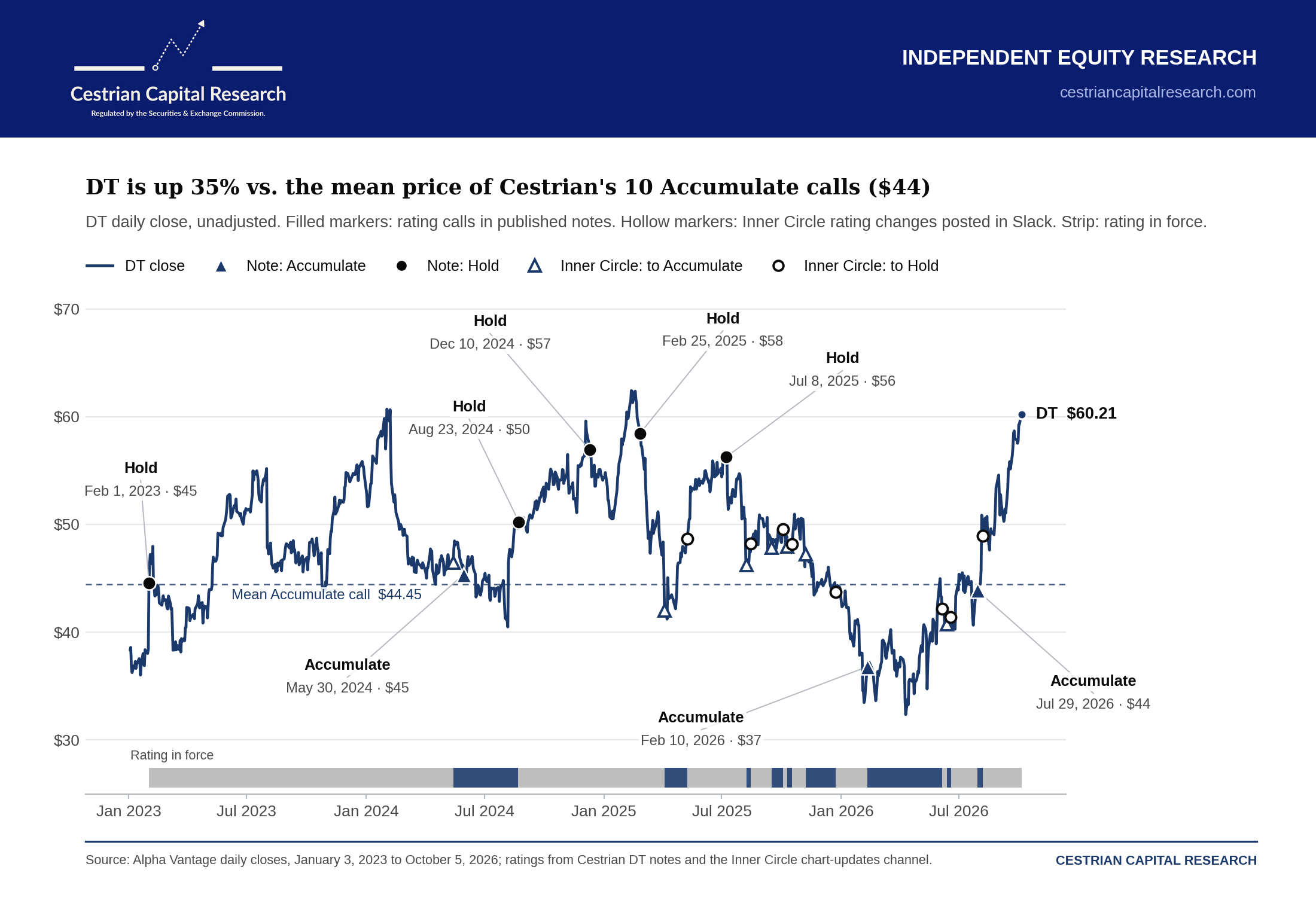
Dynatrace is rated Distribute after a 90% rally to $60.21 nears $62 resistance, while revenue and RPO growth decelerate ahead of November…

Nebius gains preferred sovereign infrastructure status for Palantir’s enterprise AI stack, using its customer base to accelerate modular…
 Petri Dish Reports 3 clicks
