
Dalius - Special Sits on X
@AndrewRangeley Full $PRTH pitch here: https://t.co/P31Z8owE6q
Friday, September 11
Everything we published on this day.
57 stories — the front page that day →
@AndrewRangeley Full $PRTH pitch here: https://t.co/P31Z8owE6q
@AndrewRangeley did a great pod with Zack from Buckley Capital on $PRTH. See the screenshot for a brief breakdown of the discussion. Full SSI write-up below👇 https://t.co/qhyD9esgF5
I think the main consideration with the CDER appointment/publication is that it narrows the gap about "Does COMP360 get approved?" Basically the situation gets de-risked by some %. I've seen some analysts suggest the probability of approval is around 75% (which I think is way too low), my estimate is in the 90%+ range. It would be extremely weird for the FDA/CDER (and White House) to give all of these "pro-psychedelics" signals to the public, and then turn around and immediately decline (or hamstring) the highest profile, most time-sensitive drug application. To be clear, this is not 100% chance of approval, because there are ALWAYS risks/weird things that can happen, but directionally, this moves in the right direction (and the recent stock price move partially reflects that). But my opinion, as I've said before, is we've got a long way to go before the market price truly reflects the opportunity for $CMPS.
$CMPS Lots to be excited about for the company and the space. Specifically there's been a lot of "thematic" interest in the psychedelics/psilocybin space in the last few weeks, and I expect that to continue. The most notable event recently is an article published in the New England Journal of Medicine: "FDA's New Framework for Psychedelic Drugs" (paywall) https://t.co/rdkgp5GsOG This was co-authored by Michael Davis (just named permanent director of CDER) and the FDA's top psychiatry and neuroscience reviewers. They're the group that ultimately approves/rejects COMP360 (and other psychedelic drugs). Aside from approve/reject, they will be helping negotiate/decide the "label" and essentially how permissive or strict the availability of these drugs/therapies are. The devil is in the details and hearing the FDA publicly state that they are aligned, i.e. "let's make sure these drugs get to market safely AND effectively" versus "this is weird/different, lets be extra cautious/slow with the roll out" is very important to both shareholders, and patients who could potentially be helped by these therapies. Another interesting article is here: WSJ: "Elon Musk's Inner Circle is Pouring Cash Into Making Psychedelics Mainstream" https://t.co/pfuE6JqBGD It is widely expected that COMP360 from $CMPS is going to be the first classic psychedelic (Psilocybin) drug to be approved and commercially available. Despite this being "priced in" by people who follow markets (or the industry) closely, I believe there's a good chance there's a positive public reaction to the headline when/if it comes out in the coming months. More importantly, I think we're at the very early innings of a treatment category that will be highly beneficial to a group of patients who historically have not had great treatment options. My full write on $CMPS is below, I have a $45 price target: https://t.co/rVZOU3yIz6 Disclosure: Creek Drive and its affiliated funds does hold a long position in CMPS. Views expressed are current opinions for informational educational only, subject to change and are not investment advice or a recommendation to buy or sell any security. Investing involves the risk of loss and past performance is not indicative of future performance. See the disclosures link in bio for more important information.

Nvidia disclosed $530 billion of off-balance-sheet commitments, including AI cloud floors and data-center guarantees, to finance AI…
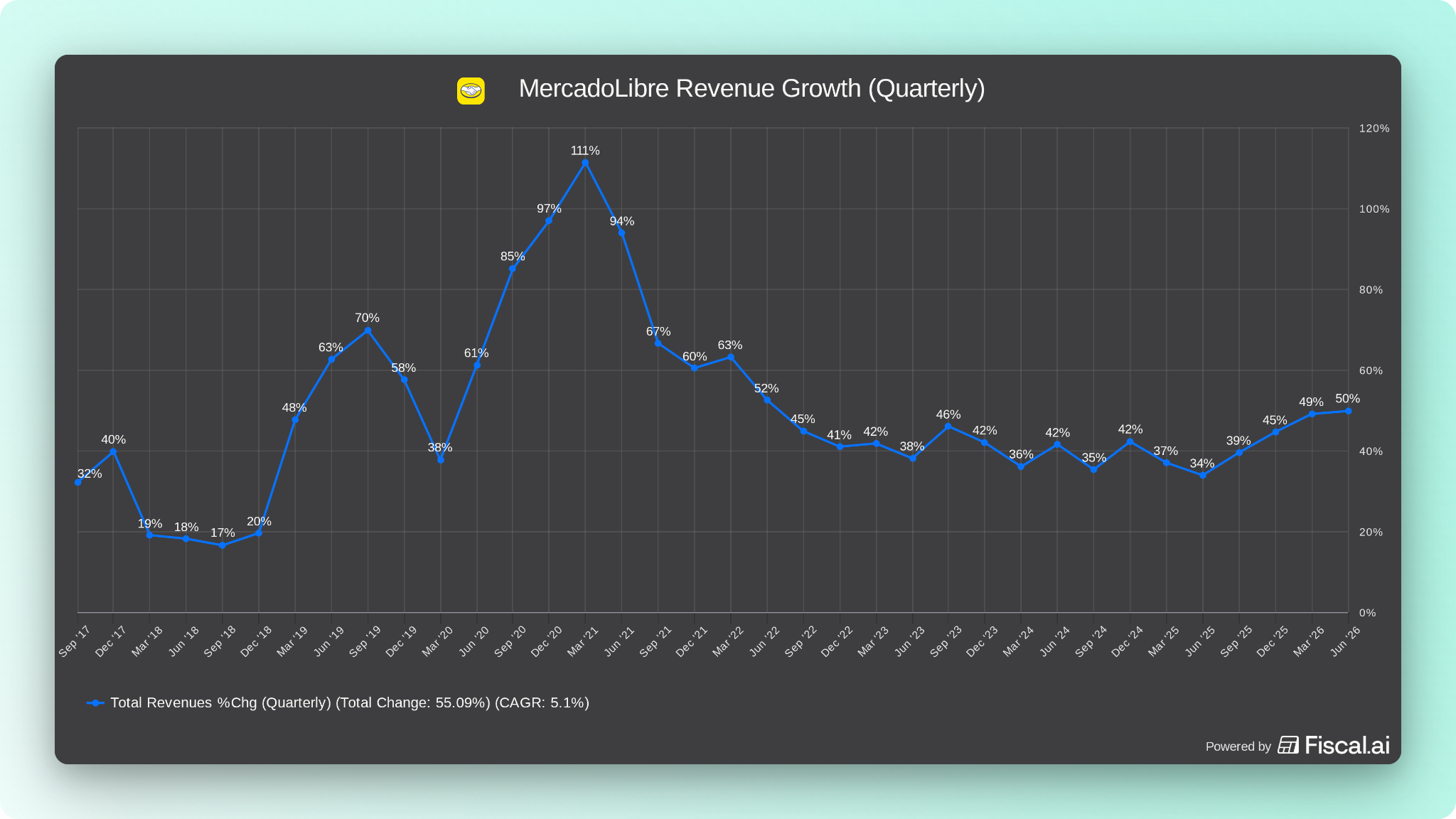
MercadoLibre’s Q2 2026 revenue hit its fastest growth since 2022 as broader free shipping, cross-border inventory and Mercado Pago deepen…
$OKLO nicely timed insider sales by the dynamic husband + wife ceo/coo duo, the week prior to $1b offering announcement @jakedewitte @caorilne https://t.co/r0d0TREUOJ

Dell closed Q2 2027 with a $95 billion AI-server backlog after $60.9 billion in quarterly orders, targeting data-center and enterprise AI…

Groupon CEO Dušan Šenkypl and CFO Rana Kashyap discuss rebuilding the local-experiences marketplace with AI infrastructure, better…
Convequity’s AI Bubble Barometer (ABBX) — Week 17 | 11 September 2026 Our weekly framework tracks valuations, returns, capex, financing risk and forward infrastructure economics across hyperscalers, neo-clouds and model labs. This week’s print is also an Oracle week. $ORCL reported FQ1 FY27 on 10 September: revenue and cloud growth accelerated, disclosed backlog (RPO) jumped to $664B, cash capex ran hot, FCF stayed negative but better than feared, and a $20B ATM equity sale was completed. Capacity delivery was the operational headline — 850 MW and >300k GPUs in the quarter. The ABBX read is below. As of 10 Sep session close (US ET), 13 selected companies (hyperscalers + neo-clouds): -EV / IC = 5.80x (↓ 0.06x from 5.86x on 4 Sep Friday close; ↓ 1.87x from 7.67x on 15 May series start) - All-in EV / IC (incl. private OpenAI & Anthropic) = 6.52x - ROIC / WACC = 3.07x in Q2'26 vs. 3.73x in Q1’26 - ROIC – WACC spread = +23.1% EV/IC tells you what the market is paying for every dollar of invested capital. ROIC/WACC tells you whether those dollars are still earning more than they cost. A classic bubble is when EV/IC keeps expanding while ROIC/WACC is rolling over. That is still not the setup. Returns remain more than 3× the cost of capital while EV/IC for the public builder set sits near 5.8x — well below the midsummer 7× prints and the 15 May series start. The multiple compression looks more financing-driven than fundamental: the return spread is still wide. Oracle is the live test of that financing channel — and on ABBX it sits halfway between the diversified hyperscalers and the neo-clouds. Start with backlog. ORCL’s $664B RPO is now in the same league as $MSFT (~$678B) and ahead of $GOOGL (~$520B) and $AMZN (~$496B). Neo-clouds are a different scale entirely: $CRWV ~$104B, $NBIS ~$40B, $IREN ~$17B. On disclosed backlog, Oracle is already peer to Microsoft — hyperscaler-scale contracted AI demand. The constraint is not finding counterparties; it is delivering power, GPUs and campuses against a backlog that already exceeds its AI enterprise value (EV/RPO ~0.7x on the company row). Valuation paints the halfway case. On Forward Valuation, Oracle’s AI EV is roughly mid-hundreds of billions against ~$163B/year of plan-implied revenue (~12.8 GW internal × ABBX blend (colo vs. GPU rental vs. mode/app derived revenue) — about 2.8x EV / plan-implied revenue and ~4.3x EV / implied gross profit. That sits well below Microsoft, Amazon and Google (roughly high-single-digit to low-double-digit EV/plan on the same framework) and Meta (~4.5x), but well above CoreWeave and IREN (sub-1x to low-1x on plan revenue). EV/IC tells a similar story: Oracle is cheaper than the big four diversified names and closer to the neo-cloud pack on capital multiples, while its backlog and quarterly capex now look hyperscaler-sized. The market is pricing Oracle more like a leveraged AI builder than like Azure/AWS/GCP — even though its contracted demand book looks like theirs. Capacity mix explains part of the gap. In AI Infrastructure Capacity Plans, Microsoft, Amazon, Meta and Google all show some external planned GW — capacity rented from specialists such as CoreWeave, Nebius and IREN. Oracle shows none. Its disclosed plan is treated as internal OCI build. Oracle is the landlord in this graph, not a tenant: it sells AI cloud to frontier labs and enterprises, and does not need a large rented-GPU line to hit the plan. That is control and a cleaner path to own-stack margin. It is also concentration. Build cost, leases and delivery sit on Oracle, not on a diversified supplier set. The Implied Revenue & Valuation Multiples table shows the same shape in the numbers. Oracle’s implied ABBX USD per planned GW is about USD 13 billion, below Microsoft at about USD 17 billion and well below Meta and Google in the mid-20s. That is not a claim that OCI is worse infrastructure. It is a revenue-density assumption. Oracle’s plan is weighted to large-contract AI infrastructure sold to hyperscale counterparties, closer to wholesale cloud economics. Meta and Google’s higher implied USD per GW embeds denser take on their own AI and platform stacks. CoreWeave can look high on a thin equity base. Oracle is the opposite: a huge RPO and more conservative revenue per gigawatt of disclosed plan. Financing is where Oracle looks more neo-cloud than Microsoft. Our Expanded Debt & Capex, split by disclosure vintage: From FQ1 FY27 (31 Aug, condensed balance sheet in the earnings release): borrowings $125.3B, cash $36.4B, IC $156.2B, plus operating-lease ROU/liability lines on the face of the BS. Still on the May / Q4 FY2026 full note lock (not in the FQ1 PR): on-books stack ~$167B (~1.3× borrowings), uncommenced DC leases ~$260B, purchase obligations ~$13B, all-in burden ~$441B (~3.4× borrowings). That roughly 3.4× all-in multiple sits near Amazon (about 4×) and above CoreWeave (about 2.5×) and IREN (about 2.9×), but far below Microsoft (about 17×), Google (about 10×) and Meta (about 9×). Those names carry large off-balance-sheet lease books relative to thinner headline debt. Oracle’s uncommenced lease line is still huge; the multiple looks moderate only because borrowings themselves are already large. The setup is notes debt, a completed ATM equity raise, heavy cash capex, negative FCF, and a large May commitment book that the next 10-Q still needs to update. Management says new contracts need no further equity raise. ABBX treats that as a claim to monitor, not a free pass. Oracle’s Q1'27 cash capex was about USD 28.5 billion — in the same league as Meta, below Microsoft, still below Amazon and Google. Against that sits about USD 664 billion of contracted future work, more than twenty times one quarter’s build spend, with management guiding that roughly half should become revenue inside three years. That is the highest backlog-to-build ratio in the group, and it is why demand on paper looks full. It does not mean this year’s cash bill is already paid. RPO is multi-year revenue, not cash this quarter. Capex is a repeating outflow — FY27 guidance is about USD 90–95 billion, or about USD 70 billion net after customer prepays — and Oracle has also signed about USD 260 billion of data-center leases (as of May 2026) that are not yet on the balance sheet and start as campuses come online. Rent is due once those leases begin, even if customer cash is later. That is why the stock can de-rate on funding even with a full book. The high ratio argues for utilisation if delivery lands. Free cash flow and the lease stack are the separate question of who funds the build before the backlog turns into cash. Other hyperscalers can look weaker on the same ratio because more of their spend serves their own ads and cloud stacks, which never appear as Oracle-style external backlog. Delivery is catching up with that book. Oracle has put about 850 MW and more than 300,000 GPUs into service, with GPU utilisation at 97.9% and renewals at a premium — capacity is being used when it lands. At the Abilene, Texas campus, six of eight buildings are live, and customer acceptance of new clusters has shortened to about 24 hours: delivered capacity is signed and usable in a day, not weeks. The earlier caution still holds: lab tests of how many tokens a cluster actually produces, and real traffic samples through gateways that serve open-weight models, are still thin. Campus delivery looking full is not the same as those checks. Direction still matters. Across the complex, Friday’s snapshot still looks like a build-out, not a hangover. For the 13 names, aggregate AI enterprise value is about USD 10.7 trillion. AI EV over disclosed backlog is in the mid-single digits. AI EV over plan-implied revenue is in the high-single digits on the broader cuts. Planned capacity is still well above 100 GW. Those multiples look attractive if the book converts: a few years of contracted work, and under 10 times the revenue the build plan implies — not a 20-times software multiple on a hope. Financing risk is the other side of the same picture. One debate is a high EV versus invested capital. Another is a high EV versus off-balance-sheet commitments. Oracle now forces both into one name: hyperscaler-scale backlog, a neo-cloud-like equity valuation, and a commitment stack you can inspect in ABBX. Verdict: no broad AI bubble signal. Week 17 of our ongoing weekly series. Updates every Friday. Full interactive dashboard (Fundamentals, Forward Valuation, Expanded Debt & Capex, Capacity) available at Convequity. #AIBubbleBarometer #AIBubble
I'll never understand going long $ADBE at 14x '27 when you can buy $CSU.TO at 15x '27. Maybe because it's Canadian listed.

USA Compression targets nearly 30% full-year EBITDA growth as JW Power synergies, telemetry and maintenance reduce costs; its units yield…
 Ron Ferrie 3 clicks
*NVIDIA IN TALKS TO INVEST UP TO $10B IN ANTHROPIC IPO: REUTERS Anthropic is in talks with $NVDA to bring them on as an anchor investor in the IPO. Probably the least surprising news ever Anthropic is in talks to raise as much as $100B, which would beat out SpaceX Safety or not here they come
Palo Alto, CrowdStrike and Palantir are positioned for enterprise spending on AI-driven cyber threats, compliance and internal data…
 Amrita Roy
Bought some $CVV <$5. Seems likely to be liquidated. $23.4m cash, $25 to $30m >100k SF building in NY, $3.5 million total liabilities (incl. high end of restr. charges), $1 to $2m wind down. ~$6-7 NAV on hard assets, could be more if they find a buyer for the whole enchilada. https://t.co/55FU3Goi0e
$EVTL Reducing the exercise price of options awards is so grifty. It eliminates the alignment with shareholders those grants were intended to create in the first place. In the end this dogshit, low-governance co is going to zero so it may not matter here but as a general proposition don't do this!
Lululemon’s North American sales, margins and legging demand are falling as Alo and Vuori gain share, leaving its brand moat and depressed…

Ten-year Treasury yields breach 4.9% as Steve Eisman discusses AI fears, OpenAI's price cut, Oracle's 30% revenue growth and Tesla's…
*CORNING ENTERS UP TO $2B EQUITY DISTRIBUTION DEAL $GLW announces a $2B at-the-market offering of common stock. More supply inbound
I simply refuse to believe that $ADBE has over 1 billion monthly active users https://t.co/U7tgBRDhM2

Chevron’s 2027 EPS could be underestimated by about $4.50 per share if U.S.-Iran conflict keeps oil near $100 rather than forecast $74 to…
 Envision Research 1 click

Petrobras trades at a 40–56% discount to peers despite sector-leading margins, with higher oil prices improving free cash flow ahead of…
 Multiplo Invest 1 click
Shopify posted 34% Q2 FY2026 revenue growth and $654 million in free cash flow as Shop Pay Installments expands to Australia, while trading…
 Sharon McArd
Amazon’s AI-driven AWS and data center spending increasingly determine its valuation, while an Anthropic IPO could validate compute demand…
 Ricardo Fernandez 1 click
@MananaInvesting @AKWilk I'd love for you to lay out the math. Only expensive if you don't understand where Blackrod takes the company (or think it's a dud). It's cheaper than the financially engineered hodgepodge of assets Adam has assembled. $GFR obviously a magnet to value bois/generalists.
@Mike10947310 What do you think of Edenbrook selling off some of its $FEIM position in August? https://t.co/YOsXfjCnr4
Deckers Outdoor $DECK increased its buyback authorization by $3.5bn to $5bn. Not bad for a ~$11bn market cap. And it makes sense: msd-hsd topline growth, >20% EBITDA margins, over 70% FCF conversion, strong and rapidly increasing net cash position. They bought back ~6.5% of s/o last year. 10x EV/EBITDA seems too low.
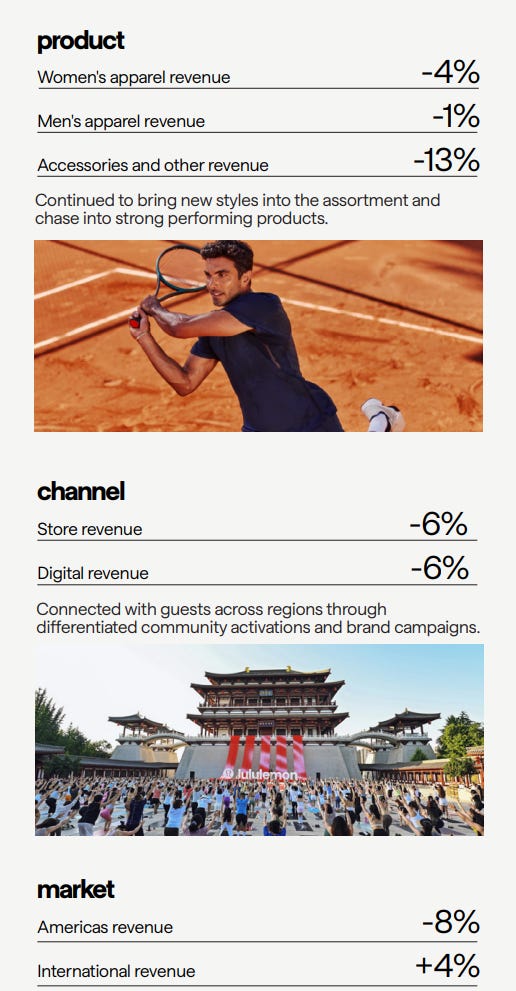
Lululemon’s growth stalled as affordable-luxury apparel brands face fading post-Covid demand, cheap social-media influence and China…
The VMS thesis: "AI is actually a tailwind" "I think most people -this is not a fact in dispute that AI is TAM expanding for software. The debate is who's going to be the claim that TAM expansion. We have a strong thesis that incumbents have a high, high, high right to win." $ROP
"I've never been more excited than I have in my career about the opportunity in front of us with AI. We are literally delivering a button when you press it magic happens. And I've always been in like the boring part of software and all of a sudden, software is not boring." $ROP https://t.co/AIQZYxhy8R
"Product velocity through agentic use cases has increased. We're going through a massive amount of commercial learnings right now. Agentic AI products are hitting the market... The surface area software has just expanded massively because of AI." - $ROP (Citi 2026 TMT)
"We have a business in pharmacy automation. Every prescription today has to be manually verified by a pharmacist today, it costs $1-$2. Our first agentic tool does that at a quality level that's higher than a human and we charge about $0.30. So very tangible ROI from day 1." $ROP
$ROP CFO on private equity being under pressure to return capital showing up in 2027. https://t.co/Xsd1BdKlNc
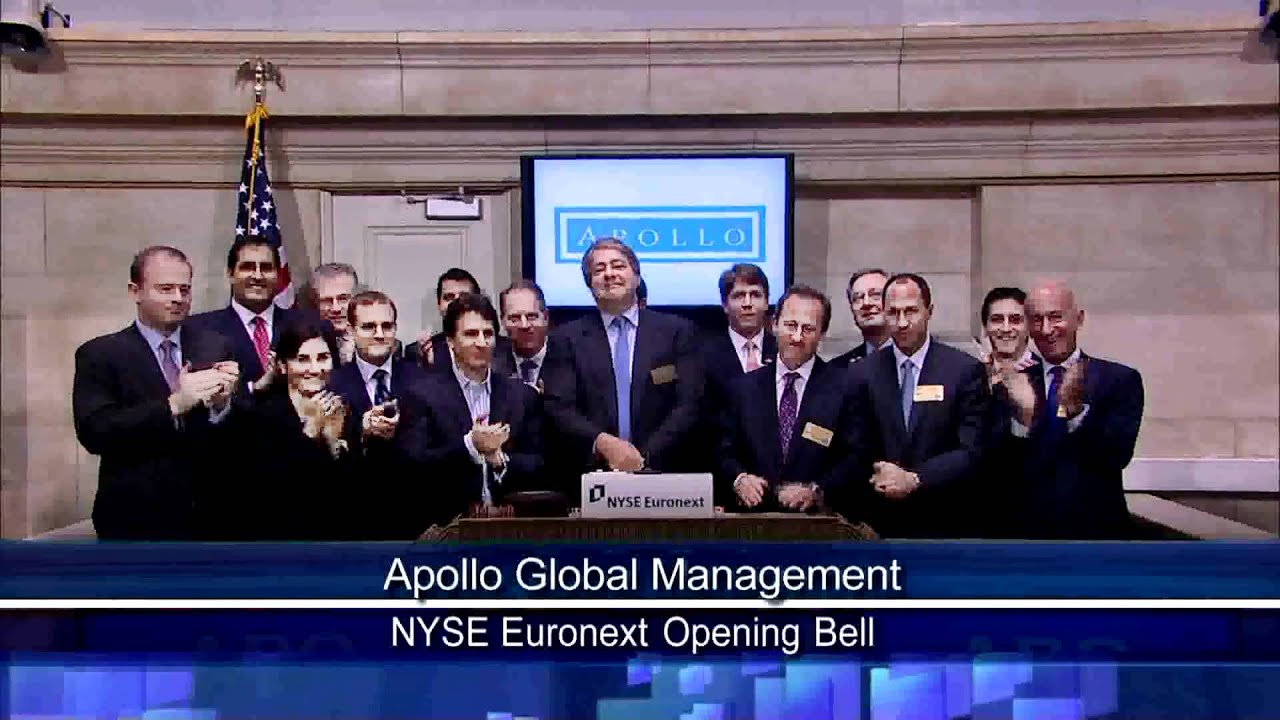
Apollo Global Management’s five defining deals, from Executive Life to Intel, built a $1 trillion asset manager spanning insurance and…
NVIDIA sees inference, agentic workloads and robotics broadening AI compute demand beyond hyperscalers, while high-speed memory shortages…

Apple’s iPhone Duo foldable pairs a TSMC 2 nm chip, IP68 protection and iOS 27 features, positioning it against Samsung’s Galaxy Z Fold 8.
 Mark Hibben 1 click
Small cap defense names with quality products or unique assets have held up better than some of the primes. Not much discussion of it but $ITA down quite sharply this past month. $FEIM w/ strong earnings. $ESP just declared another special dividend. $SIF just bouncing around.
Correct. $BN https://t.co/3Fa4m1qPxg
$PPIH .. This is how some of these old school construction / infrastructure stocks have seen their P/Es re-rate higher over time. Investors love certainty, especially as short-term as they (we) are these days. See it all over the place, like what happened with $BDT.TO $ARE.TO https://t.co/Bufb8xvHOc
Broadcom was upgraded to Accumulate at about $363 after Q3 revenue reached $29.6 billion, with AI semiconductor revenue up 221% to $16.7…
*SITUATIONAL AWARENESS ACTIVE IN OPTIONS MARKET: CNBC'S FABER CNBC reporting the Leopold is back and active in the options market, buying call options "of some significance" in $AMD, $BE, $SNDK, and others
Q3 $OCC InfoArb was unusual, given the usual cryptic nature of mgmt commentary on calls: -Demand remains strong -August sales strong -Backlog continued to grow after July 31 -Adding employees and equipment to increase capacity -Sales from its Lightera collaboration have begun https://t.co/5Xv3Qvr3PY

TSOH weekly roundup covers Meta’s child-safety settlement, Markel’s leadership transition, Peloton’s gym strategy and an upcoming Alarm.com…
Big day for the $PPIH family. First ever earnings call means we can start having fun. @InfoArbMonitor Q2 Delt-Sheet is ready. There's a lot of info for investors who weren't on the call to unpack... Let's stay ahead of the crowd and those who aren't willing to turn over rocks! https://t.co/zYszuSy2eZ

Independence Realty Trust is buying Centerspace in stock to create an $8.1 billion apartment REIT, targeting 5% 2027 Core FFO per-share…

Nucor's growth and $250 fair value estimate hinge partly on the U.S.-Canada steel tariff dispute.
 Ray Merola
$RUM is a perception <> reality trade… A right wing version of YouTube or a sleeper AI/HPC pivot? 🤷♂️ https://t.co/uBcXByq8OS
Palantir's NVIDIA supply-chain deployment supports its enterprise AI moat, but PLTR's 48x current-year sales valuation remains demanding.
 High Alpha Professor
NET Power’s $1.80 shares are paired with January $2 covered calls for 40 cents as the company pivots from carbon capture to Permian…
@evantindell $ROIV chart is a good example of buybacks doing nothing, until they do. https://t.co/oD6s9AK5No

Broadcom targets $230 billion in AI revenue by 2028 as custom XPUs and multiyear orders from Anthropic, OpenAI and Meta drive growth.
 PropNotes 1 click

Applied Materials reported Q3 revenue of $9.1 billion, up 25%, and $2.3 billion in free cash flow as AMAT fell roughly 40% from its June…

Tsakos Energy Navigation benefits from higher oil prices and stronger tanker sentiment, but faces long-term demand destruction and…
 Long Player

Joby Aviation is initiated at Accumulate after booking $116m of trailing revenue, forming a Toyota manufacturing venture and agreeing to…

NewtekOne’s bank conversion and retention of SBA-guaranteed loans target recurring income, while a 6% yield and book-value valuation…
 Stephen Nemo

Qualcomm offers more valuation cushion than Marvell despite Marvell’s stronger AI revenue, as its Amazon partnership supports data-center…
 Delta Analyst

Sofwave Medical grew Q2 revenue 43% as recurring usage fees reached 46% of sales for its non-invasive ultrasound skin-tightening devices.

