
Evan Tindell on X
Google Cloud revenue only give a short term boost, but semi revenues to $nvda etc are recurring? 🤔🤔🤔
NASDAQ
NVDA
251 stories
$4.6T Market cap · 2026-11-06
Get NVDA news in Claude, ChatGPT or your own code. See plans
Google Cloud revenue only give a short term boost, but semi revenues to $nvda etc are recurring? 🤔🤔🤔

SpaceX plans to build exclusively on Nvidia and lift compute toward 10 GW by end-2027, while Musk says AI memory demand is rising 200%…
@pradeeepk $AMD + ASICs will eat $NVDA margins
It's not THAT clear Citadel made a good bet. Probably good. But it could be losing. Three buckets: 1. Citadel brand buying the block creates a lot of buyers short term, letting them get out. A counter to this is: how many other funds/players blew up at the same time, with how much more stock still needing to be sold at any price by brokers? And redemptions. 2. The $SOXX drop was mostly just technical and will keep going up again after this. In which case Citadel will kill it. 3. The $SOXX drop was on real fundamentals, like the market knows the trade is over. In that case, Citadel stands to get slaughtered if the move continues down. Nobody really knows. Memory seems very questionable, though. I follow $TSM well and that seems merely fairly priced here, not a screamin' buy. $NVDA seems hard today, with all this chatter of competing chips / AI getting so powerful the software moat seems like probable junk in a few years.
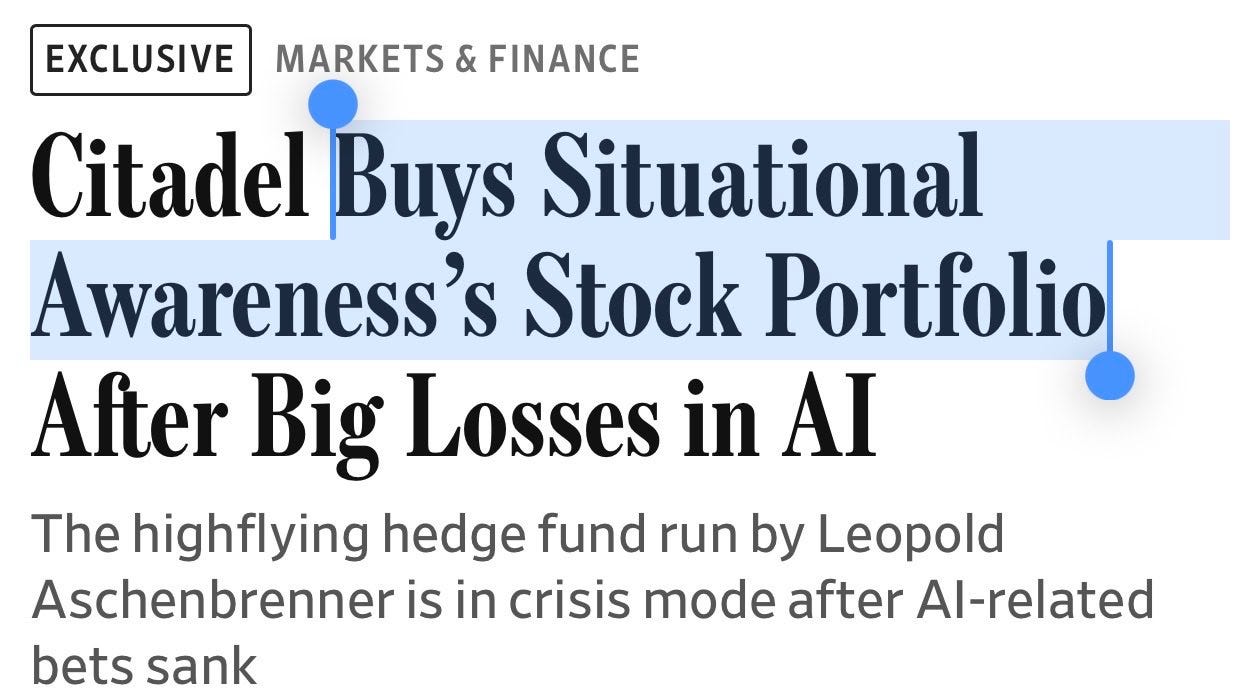
Situational Awareness's leveraged AI fund helped trigger a memory-stock unwind after SK Hynix missed elevated expectations, exposing…
I’ve been calling $AVGO a spectacular optical winner — and I still am. The mild caveat is that they’re also leaning into CPO rather than NPO or OCS. That said, their in-house optical technology is genuinely strong, which leaves them in a far better position than $NVDA on this front. Half-half, but still clearly ahead.

Nvidia will expand its investment in SSI and provide access to its Vera Rubin GPU platform, extending the cloud credits and GPU financing…
Nebius opens a series arguing Nvidia-backed neoclouds absorb the debt and construction risk of AI data centers while driving GPU demand.
NVIDIA’s Feynman: CPO Inside, OCS Outside According to supply-chain sources, $NVDA’s 2028 Feynman architecture is planning a dual-layer optical design around the NVL576 rack. An inner layer of Co-Packaged Optics will handle high-density, short-reach connections within and between racks. An outer layer of Optical Circuit Switching will manage larger-scale cluster connectivity, supporting flexible topologies at the 100,000-GPU level. In this framing, CPO and OCS are treated as complements rather than substitutes. CPO addresses density and power at short reach; OCS provides flexibility at longer distances. NVIDIA’s near-term path appears to favour mature MEMS switches to secure delivery schedules, with silicon photonics as the longer-term option once insertion loss improves. Higher insertion loss in SiPh currently requires more optical amplification, adding power, noise and cost — which is why MEMS remains the lower-risk choice for large deployments in the near term. $GOOGL’s earlier move into silicon photonics for inference is expected to help mature the supply chain, potentially making it easier for NVIDIA to follow later. Huawei, Oracle and others are also advancing along related paths.
Photonics Pt.4: OCS Roadmaps Are Splitting Convequity’s latest note examines how Optical Circuit Switching is diverging by workload. High-radix MEMS remains the practical choice for scale-out and training clusters that prioritise scheduled reconfiguration. Lower-latency silicon photonics is being pushed into the scale-up layer for inference, where millisecond switching is no longer acceptable. $GOOGL's V8i architecture is the clearest example. It moves OCS down into the scale-up domain for the first time and pairs it with 2.4T Coherent Lite modules that dramatically reduce fiber and port consumption. The combination is designed to close Google’s main networking gap versus NVIDIA. $NVDA's Feynman (2028) appears to be taking a dual approach: CPO for dense short-reach connections and OCS for larger cluster-level scale-out. Near-term deployments will likely rely on mature MEMS, with silicon photonics as the longer-term path once insertion loss improves. The broader OCS market is projected to grow from ~$400M in 2025 to over $2.5B by 2029 (58% CAGR). Silicon photonics offers a relatively open competitive field compared with MEMS, where incumbents hold stronger positions. We also re-examine CPO’s path forward and assess microLED as a more radical parallel alternative — one that inverts the industry’s “fewer, faster lanes” assumption and is physically confined to short-reach scale-up links. Full Part 4 is now live. Link in the comments.

Moonshot’s 2.8 trillion-parameter Kimi K3 is a China AI challenger that requires high-memory Nvidia servers and heavy inference compute.

AI capex rests on coding-centric benchmarks, cheap-model commoditization and circular financing: OpenAI’s $60 billion annual Oracle…
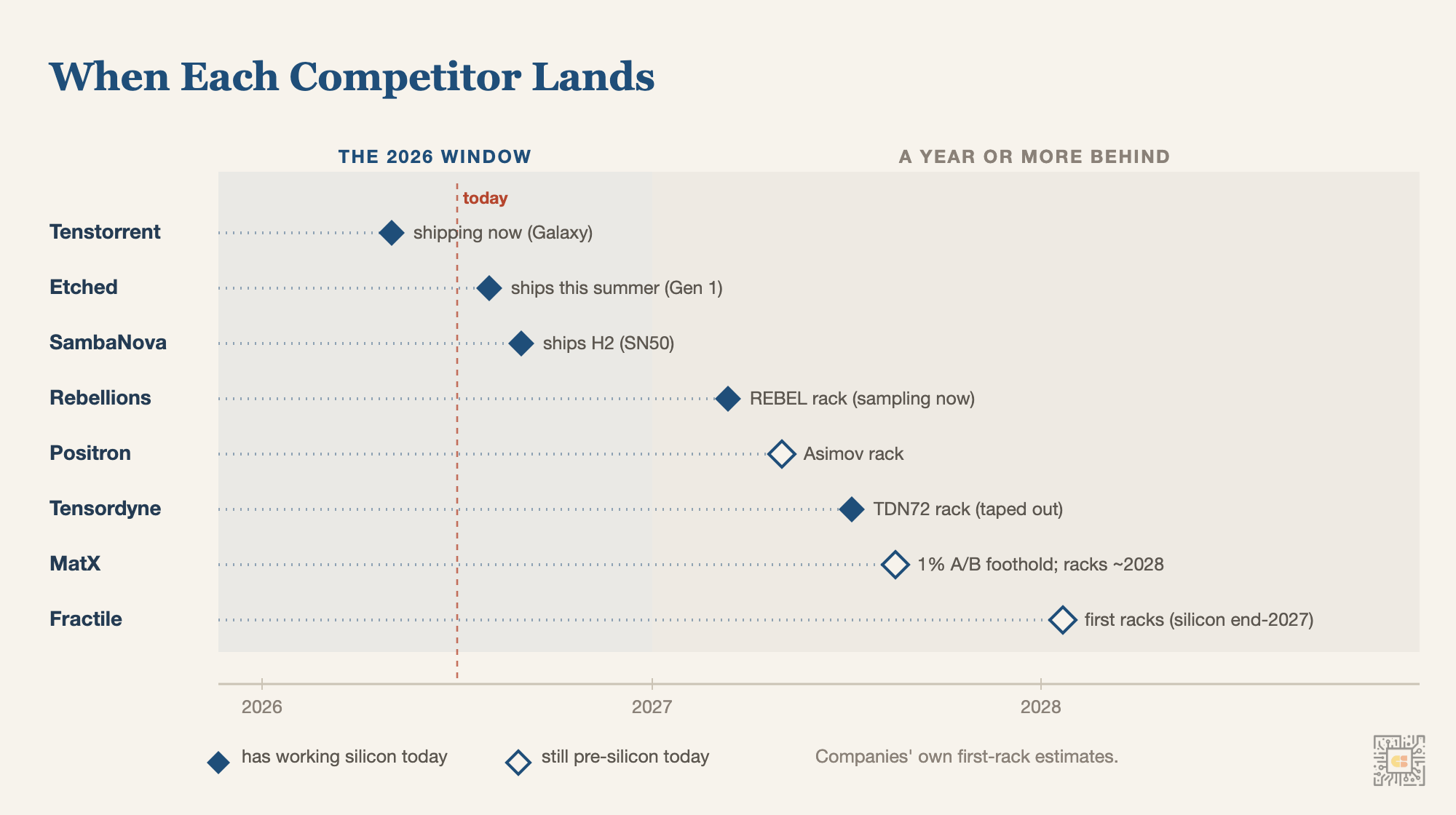
PostGPT inference-chip contenders need to run trillion-parameter models, ship rack-scale systems, beat GPUs on one KPI and win a frontier…
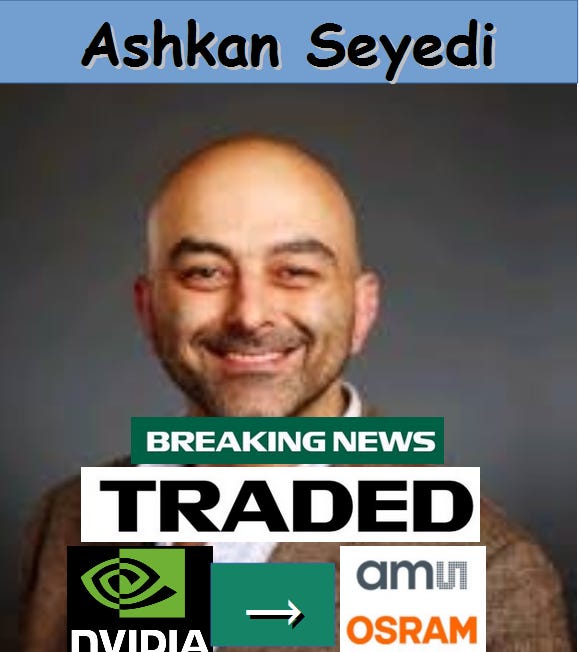
Nvidia shifted its optical interconnect plan from TSMC CPO to Tower Semiconductor NPO, increasing laser requirements that favor Lumentum…
Nvidia's Groq deal responded to OpenAI's Cerebras inference partnership, preserving its AI-chip lead through supply-chain control and rapid…
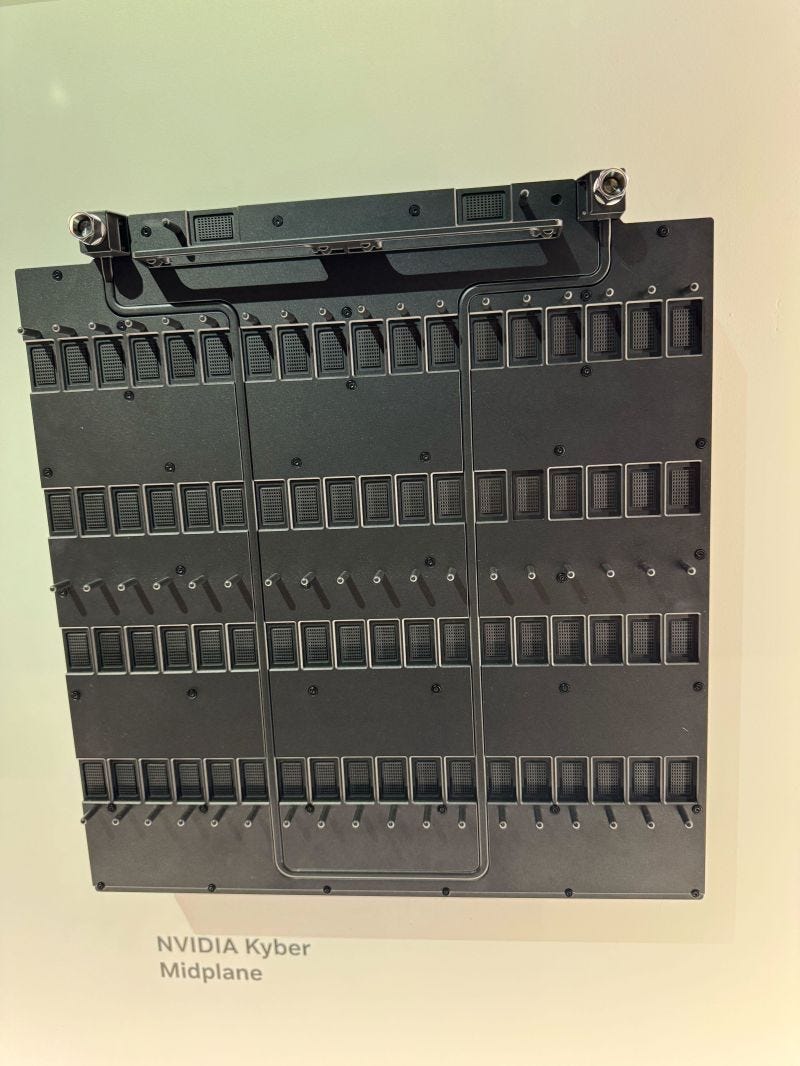
Nvidia's Kyber NVL144 midplane must replace 5,000 copper cables with roughly 20,000 PCB connections, driving manufacturing and signal-loss…

Nvidia reported more than $75 billion in fiscal Q1 2027 data center revenue and reorganized reporting around hyperscalers and AI clouds,…
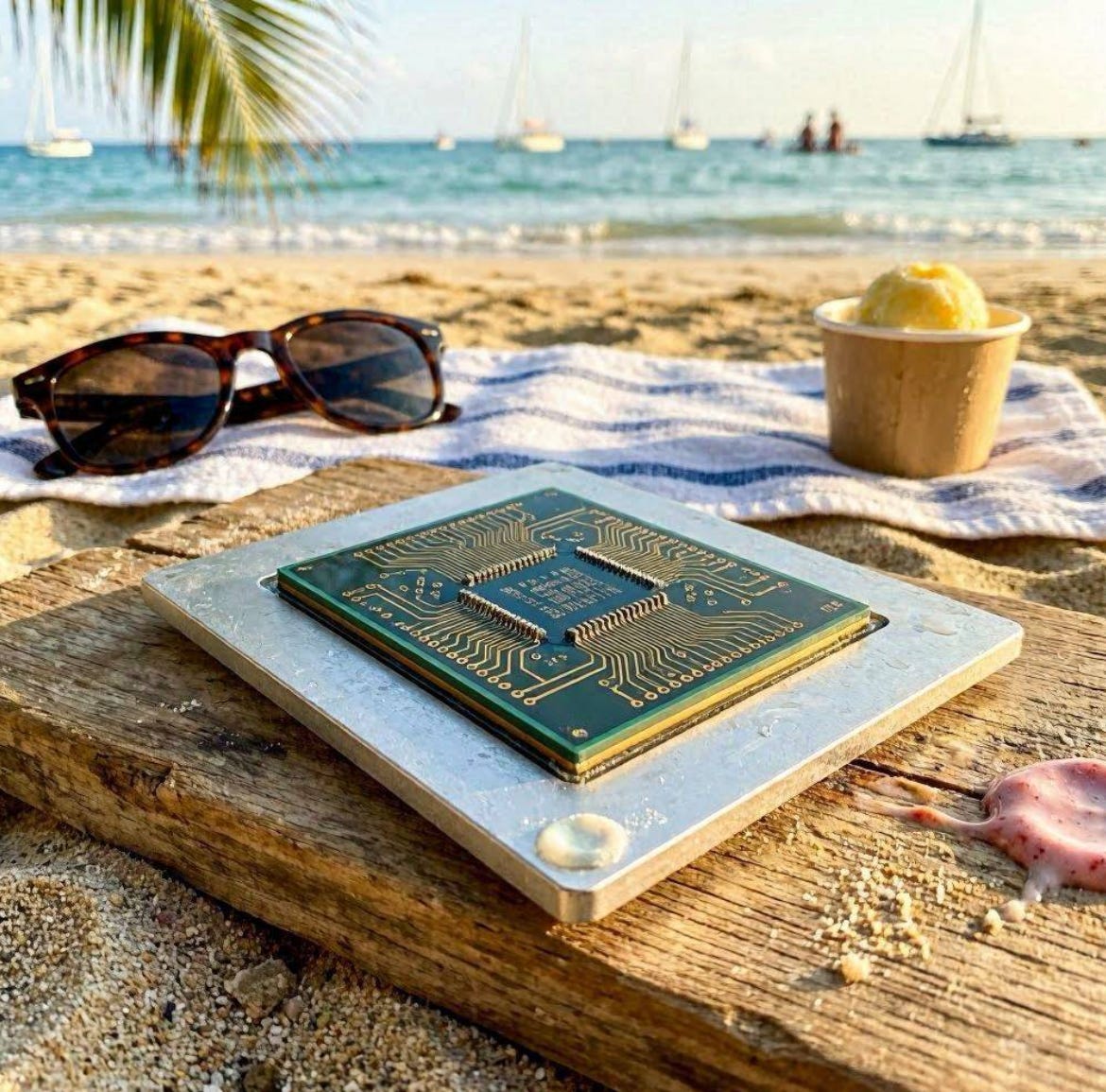
Applied Materials’ DRAM and CPO claims face scrutiny, while high-bandwidth flash needs SLC NAND and a solution for base-die heat.
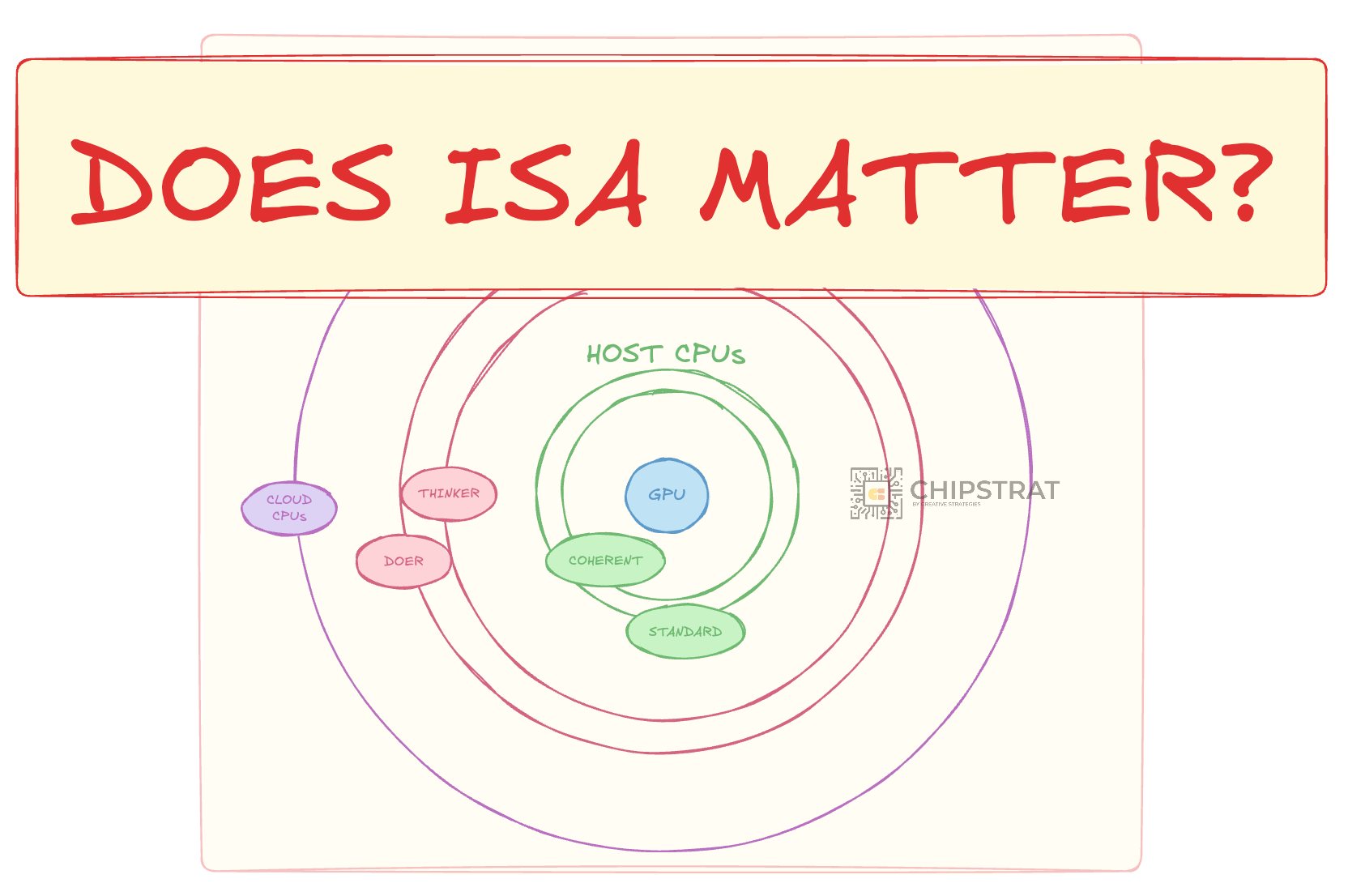
X86 and Arm matter less than GPU interconnects in AI server CPUs, with NVLink-C2C and Infinity Fabric defining the highest-value…

OpenAI commitments can be counted as Microsoft RPO, Nvidia revenue and neocloud backlog, layering claims on the same underlying demand.
If/when @altcap and $NVDA sell their shares in the next year or two, how is this different then what Andrew left did twitting a thesis and going to do the opposite shortly after?? That was deemed illegal and I am sure there they'll blame some event in the near future that disrupted their thesis, etc but this feels no different then self promotion in the opposite direction Bigger issue is existing shareholders from dramatically lower prices going on a retail oriented TV program to hype their holdings to buy in at inflated prices is blatantly perfidious and morally bankrupt. Bookmark this for when they sellout. Amazon ipo at a $438m valuation and Google at a $27B valuation by law of large numbers his statement is already categorically false unless all of GDP will be produced by these 3 companies
Quick thoughts on the $GOOG raise: 1) Management is old enough to remember when this stock traded at much lower multiples for YEARS, good time to raise capital and it's not that much relative to the market cap. 2) The demands of data center build out/token cost are even more insatiable than we thought (see $HPE, $DELL, or the $NVDA overnight news) 3) Profitability/cash flow could be headed lower in a meaningful way at some point in the not too distant future for the search business. This is the most important take away IMO. Someone explain to me how you take the greatest business model ever created in Search/Adwords where you have 90% share and replace it with LLM's/AEO, while somehow maintaining the same profitability. The structural economics are WORSE and market share is materially worse. Search traffic is DOWN in many categories and that will only get worse from here as consumers engage with #openAI, #claude, #gemini at higher rates. Honestly, I don't know why this isn't the primary narrative around $GOOG currently. I'm sure there are people that will have different perspectives on this, but ask around to people that rely on search. Volumes are down in many areas already.
Not sure what to think about the action in the $SMH and $NVDA ecosystem names ripping higher as $GEV and $ENR giving back ALL of their gains since they reported 1Q26 results. Notable at the very least.
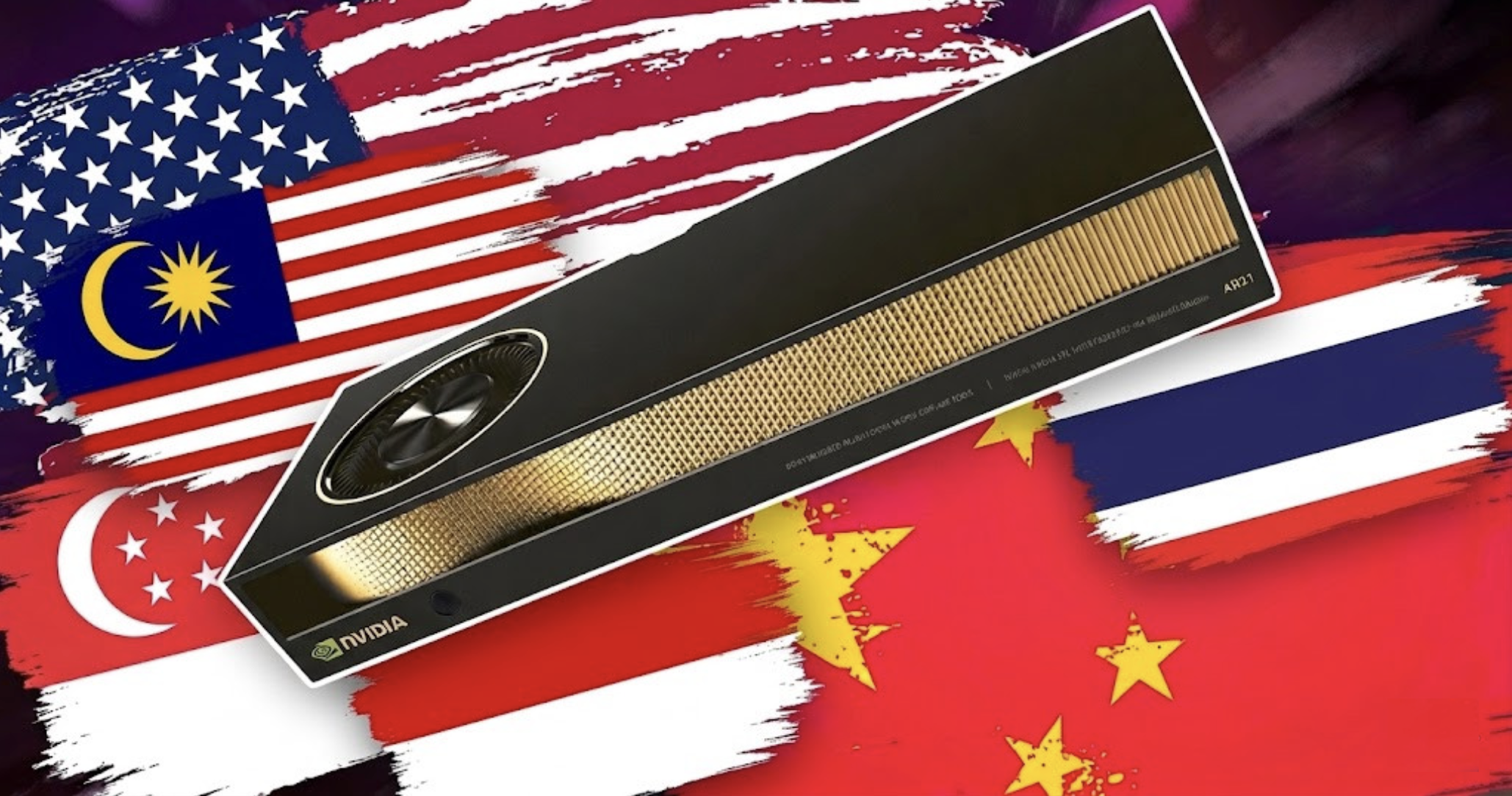
Nvidia’s switch from billing location to customer headquarters reclassifies geographic revenue and exposes a larger China footprint through…
Letters that discuss NVDA.
Companies the stories above are also about, besides NVDA.


