
Sixty Dollars or Nothing
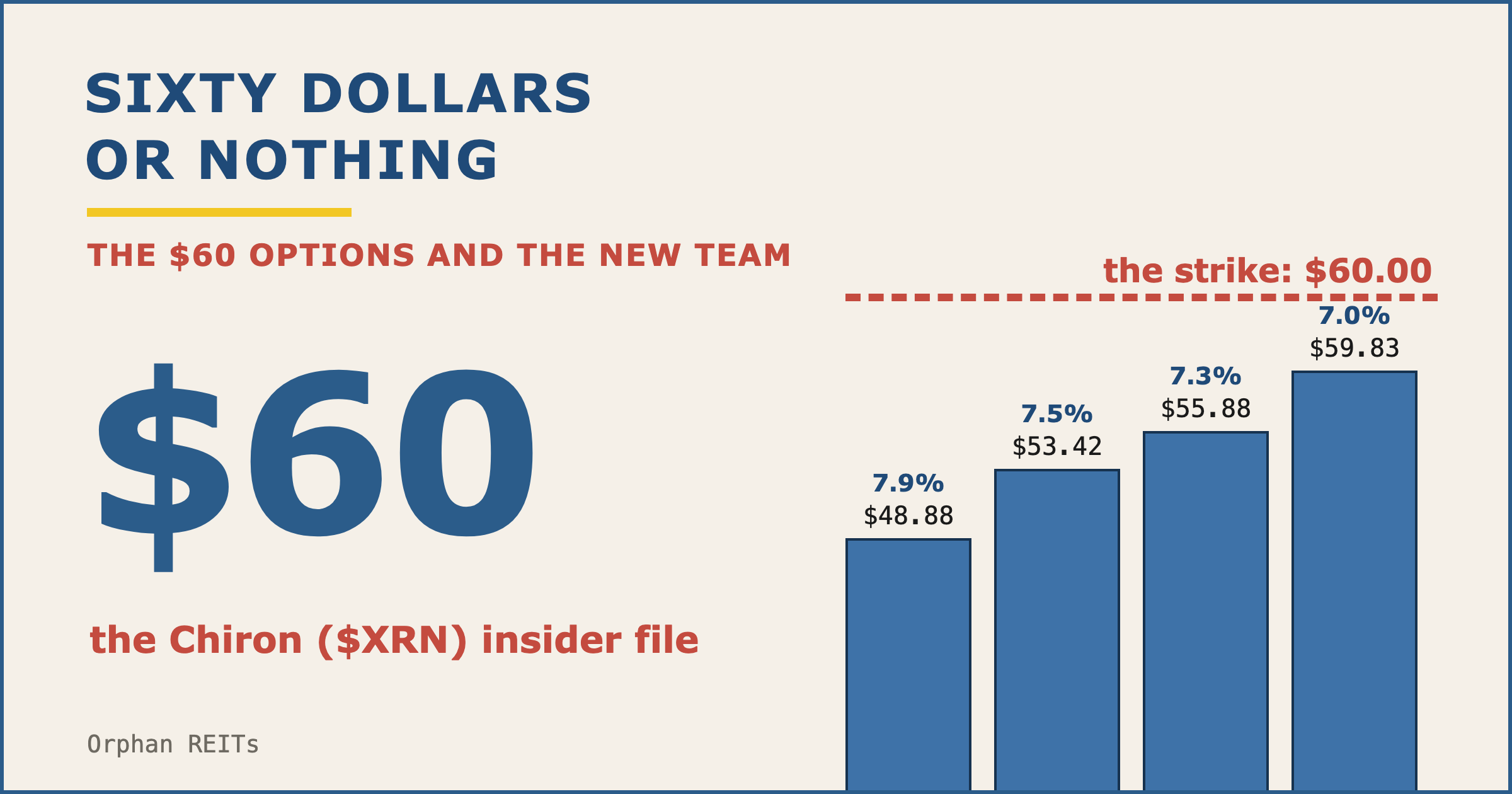
Chiron granted seven executives 195,610 options at a $60 strike, 63% above the market price and above its published valuation range.
Friday, September 4
Everything we published on this day.
60 stories — the front page that day →
Chiron granted seven executives 195,610 options at a $60 strike, 63% above the market price and above its published valuation range.

August payrolls and soaring diesel prices strengthen the case for a September Fed hike, while HBM costs are compressing AI hardware gross…
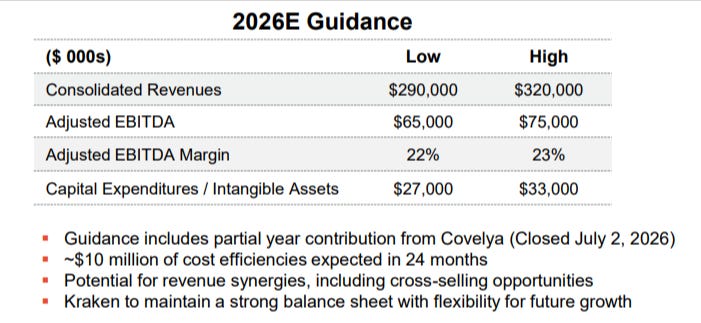
Kraken Robotics’ C$615 million Covelya acquisition roughly doubles its underwater defense content as mine-warfare risks drive naval…
@mac003_c $DRVN They said it was substantially undervalued at $18.00... Much more likely they buyback the stock to $25-30 and then revisit selling the entire company / segments...
Better re-framing of question. Why would someone be short $DRVN and long $VVV? Take 5 better franchisee economics...Trades at ~ 20 percent maintenance yield vs mid singles...Motivated Sponsor... It's not zero sum but....
@HiddenGemsInves $DRVN
@PrefShares They boy can work but $VVV is like a 4 pct FCF yield vs like 14 pct on $drvn… either both are wrong or $drvn is worth 3x as much… I also think the unit economics for franchisees are inferior at $VVV
Risk/reward at $75 looks really attractive… Own some $CALM common and Feb 2027 call spreads at $80 / $85 strike DYODD :) https://t.co/zbjdWieHQS

Applied Aerospace & Defense reported Q2 revenue growth of 47% to $167 million and $1.13 billion in backlog, supported by missile production…
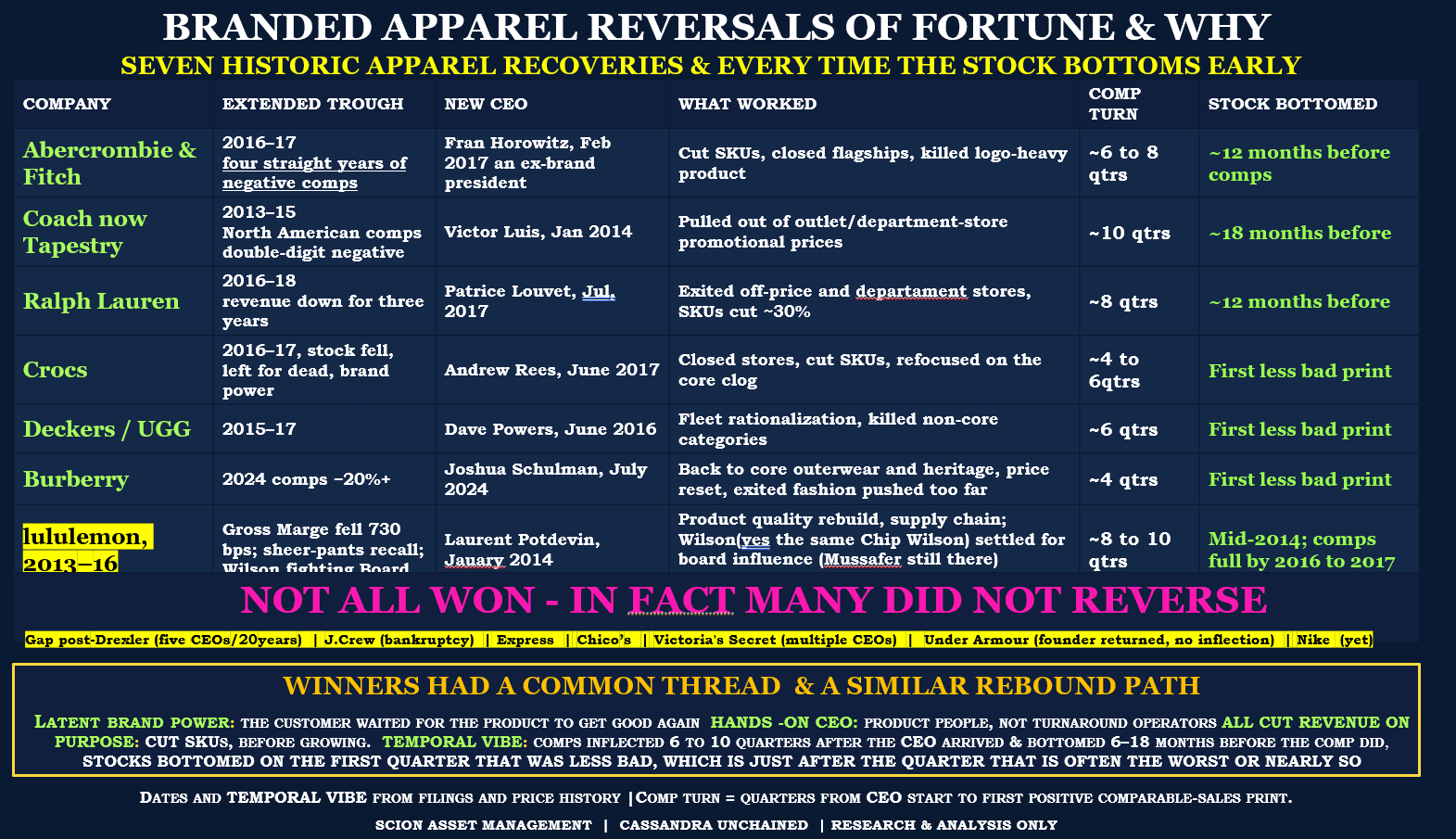
Lululemon reported a 9% global comparable-sales decline, 20% lower leggings sales and mid-single-digit operating-margin guidance, with…
$LULU 2026 marketing strategy deck_v1.pdf 😅 https://t.co/3KiBtmuUZN https://t.co/GvEmZwPVAx
The massive share buybacks at $SKHY & Samsung are highly supportive to the stocks but quickly coming to an end. The Hynix buyback is 32% done & at current pace will conclude by 10/15. For Samsung the comparable numbers are 37% & 9/30. Then we see where prices shake out.
Another $PBI debt upgrade... "Pitney Bowes Inc. Upgraded To 'BB-' From 'B+' On Strong Credit Metrics; Outlook Revised To Stable From Positive" https://t.co/dl97639K74
The egg market is getting killed and I am tempted to play this cycle bottom. Anyone up to speed on $VITL? This thing is looking so beaten down. https://t.co/wUgfMUorWW
@topazbenj he saw a video. if u been following me u know id love nothing more than to go all in on $TSLA with real optimus intel. believe me im on it
$TAP A quarter century and zero capital gain. Now being kicked out of the S&P https://t.co/RM49KQJm36
The bottleneck play on this is $COMP? 🧭 https://t.co/1ClFMI3z4d
Anyone get the dividend from Gravity $GRVY yet? I expected a bit of a delay.
He's NOT going full Big Short here but @realsteveeisman walking a much closer line than in the past. "A demise of OpenAI could push the US into an immediate recession." He recommend low vol and P&C ETFs in that scenario. $LVHD $SPLV $KBWP https://t.co/mx8SxT9iRd
It's Tecnoglass time $tgls. https://t.co/5gjN6emyo1
hell of a week to own the future. $BE https://t.co/Un6jGv7rrR
Has anyone done work on the prediction market ecosystem? Want to explore beyond the leaders to shit-tier plays like $GEMI and $ROLR.
Fantastic work by all of those involved in the $FICO short. The (-60%+) decline from the peak feels right in a lot of ways. The chart is as good as you'll get for a short seller. However, like every other great short idea, bears endured THREE contra-trend rallies of 30-40% on the march to a (-60%+) decline over the past 18-months. That is typical and one of the reasons why shorting is so difficult.

OpenAI's potential failure could expose the US economy's growing dependence on AI capital spending, according to Steve Eisman.
@gregerativeai If referring to the 1-day $10M-ish payout options trade that’s in the rear view but still very long $AMZN
$MRX is now a 4x since we first flagged it at the time of the IPO, with earnings roughly 3x in the last 3 years. We have flagged every move along the way and we wrote 2 company deep dives. For our subs, this one will have paid for a lifetime of KEDM. https://t.co/LMajGXWBWK https://t.co/IVEamHzN2o
This man is probably an activist investor in $RYN trying to create his own catalyst by removing timber supply from the market. Heard he has an MBA from Wharton too and his wife hates him. https://t.co/sAp2HUFNaO
@busgus Another replier pointed out they also run an ETF with beta, $CPAI
@StockJabber @BullpenDotNews @valuedontlie just had a great writeup on $RAVE and regularly publishes solid, easy to read reports
6/10 was the $AMZN LTL announcement… https://t.co/vwjXQlPywX
@SammyKoppelman Oh great shout. Names like $AWI do some acoustic performance wall and cieling stuff... it's just hard bc there's no pure play on this https://t.co/OOaBpZ9A3I
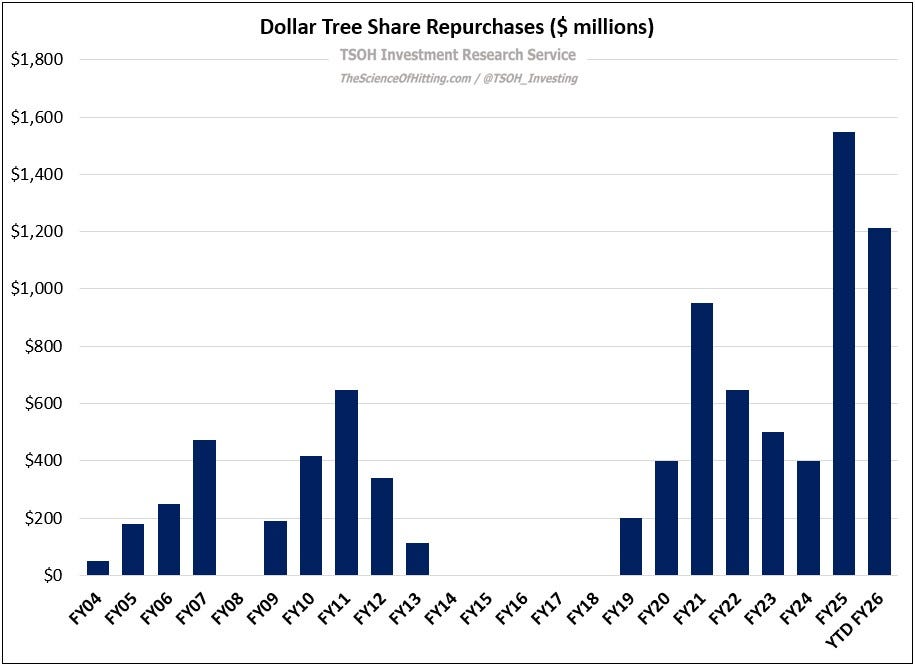
TSOH Weekly Roundup covers Costco’s $4.99 chicken supply chain, Celsius’s 20% energy-drink share, and California utilities’ wildfire…
Thoughts on $FDXF @ $128?

 Petri Dish Reports 4 clicks
@DreamPositiveCp @grok what is the binary event for $NN?
@everyonehatesp1 Idk but the lack of insight on coal names yesterday cost me this trade. Do better. $METC
@SurfShopCapital Thoughts on $PURR here?
The best trades are where perception <> reality. A common trader exercise is to ask yourself: who is on the other side of the trade and why are they selling to you? What information do they have? Are they more informed than you? The best opportunities are where the seller isn’t more informed, they’re simply misinformed about what’s actually going on. Take $OWL, where the prevailing narrative was a private credit apocalypse, but you did the work and saw the residual value in the fund stakes business and an overblown level of negative sentiment. Or $TLN, where Governor Josh Shapiro and CNN want you to believe data centers are the problem, while the thirst for compute, contractual cash flows and need for electricity remain undeniable. The narrative may work against you initially. That’s often what creates the opportunity. But if your work is thorough enough, your thesis is right and you can hang in there, the gap between perception and reality eventually closes. That’s where alpha is made.
New $LULU CEO is from $NKE too https://t.co/zf4Rwl1rH3
StoneX highlights $ZM into the post labor day Anthropic S-1 Unlike certain SPVs/tokens, Zoom has actual ownership. $125 PT that becomes $135+ if Anthropic meets $2T https://t.co/o0xtRsx5KG
UBS: We believe $CENX offers the best leverage to a US Regional Premium that is sustainably higher. CENX currently trades at ~3.1x UBSe 2027 EBITDA estimates (below ~5x normalized 5yr average). We expect CENX to rerate towards our ~4x peak multiple driven by clarity… https://t.co/93RbEN5Ex7
Haven't posted $AIRS thoughts since the Q2 miss. But after speaking to management and refreshing on the thesis here's an update: 1. The opportunity for post GLP1 procedures remains as large as ever. When a new "thing" starts trending, a business such as theirs with surgeons, devices, and rigid medical process can't just turn on a dime to capture the growing opportunity in a few months. It takes a little time and the management team is measured, disciplined, and thoughtful about the best way to pivot. Why? Because this is a health care setting where you don't just throw stuff at the wall. But... 2. ...Measurable evidence of the new are opportunities (skin removal, tightening etc) gaining momentum is emerging: Skin excisions grew 100% from Q4 and have increased within the mix going from Q4 4.3%, Q1 4.9% to Q2 5.9%. That's real evidence of progress on addressing a massive post GlP1 demand wave. 3. The announced partnership with Alloclae might be a GAME CHANGER as the fat transfer procedure is hitting the zeitgeist as we speak. Alix Earle has 14mn social media followers and the rumor mill consensus is that she just had the procedure done. Sure looks like it to me. 4. I was expecting them to announce a debt refi that didn't come. Disappointing, yes. But, I still believe it is coming and management said so too: "We recently signed an amendment exceeding the maturity of the facility to November 2027. At the same time, we continue to make progress refinancing. The continued stability in our business has allowed us to receive multiple-term sheets that we believe are aligned with our long-term interest and the maturity extension gives us additional time to achieve the right transaction." 5. Mgmt keeps talking about restarting store growth given low saturation and lack of presence in many notable markets such as Long Island, Tampa, etc. You don't wave new store growth in front of the market unless you think you are going to refi the debt and have some stuff cooking to reignite SSS. Maybe more promotional management teams would, but having gotten to know this team well, I am confident that they are not inclined to promote things that they don't have high confidence in. When Yogi became CEO he literally told me no plans to go on the road and meet with investors because they need stability first. Now its a total 180 on that point. 6. There's so much operating leverage here. If the new GLP1 related opportunities continue to gain momentum, and if they add 3 stores to the 31 store base, then we grow ebitda 41% next year. Today we are trading at just 4.9x past peak adj ebitda. In five years, why can't they expand to 40 stores? Based on the unit economics per store, they would then be in position to exceed prior peak earnings. This was a mismanaged business that got hurt by the early rapid onset of GLP1, but we now know that the other side of that demand wave comes with a whole new set of demand for aesthetic work. The opportunity is absolutely massive. And if this current team doesn't get it done, then given the long term filers in the name (PE, activists), I suspect that new owners would be happy to enter the picture. Meanwhile, the short interest remains high and the top five holders aren't going anywhere. *This is not advice, just our opinion. We are long AIRS but that can change at anytime.
$LULU's old brand was exclusive, high quality clothes. Curated for only the best thing. Back in 2015. Over time, they expanded a ton and from too-high of volume alone, it would have been impossible to keep quality high. Recently this spun out of control and quality is downright terrible. How can this problem possibly be fixed? Don't they use a zillion different suppliers? I don't think there are enough good ones to replace them, even if someone executed very well. On top of quality problems, they ruined the brand image with DEI garbage. I don't see how that is repairable, at least not for many years. And finally, the whole athleisure category is stale. Which is $LULU's entire brand. Point being, if I was management, I would see no path to turning this ship around within 5 years. And the remaining company at the end would be much smaller than it is today. And that'd be the good outcome, with any of the above three points being a failure mode anyway.
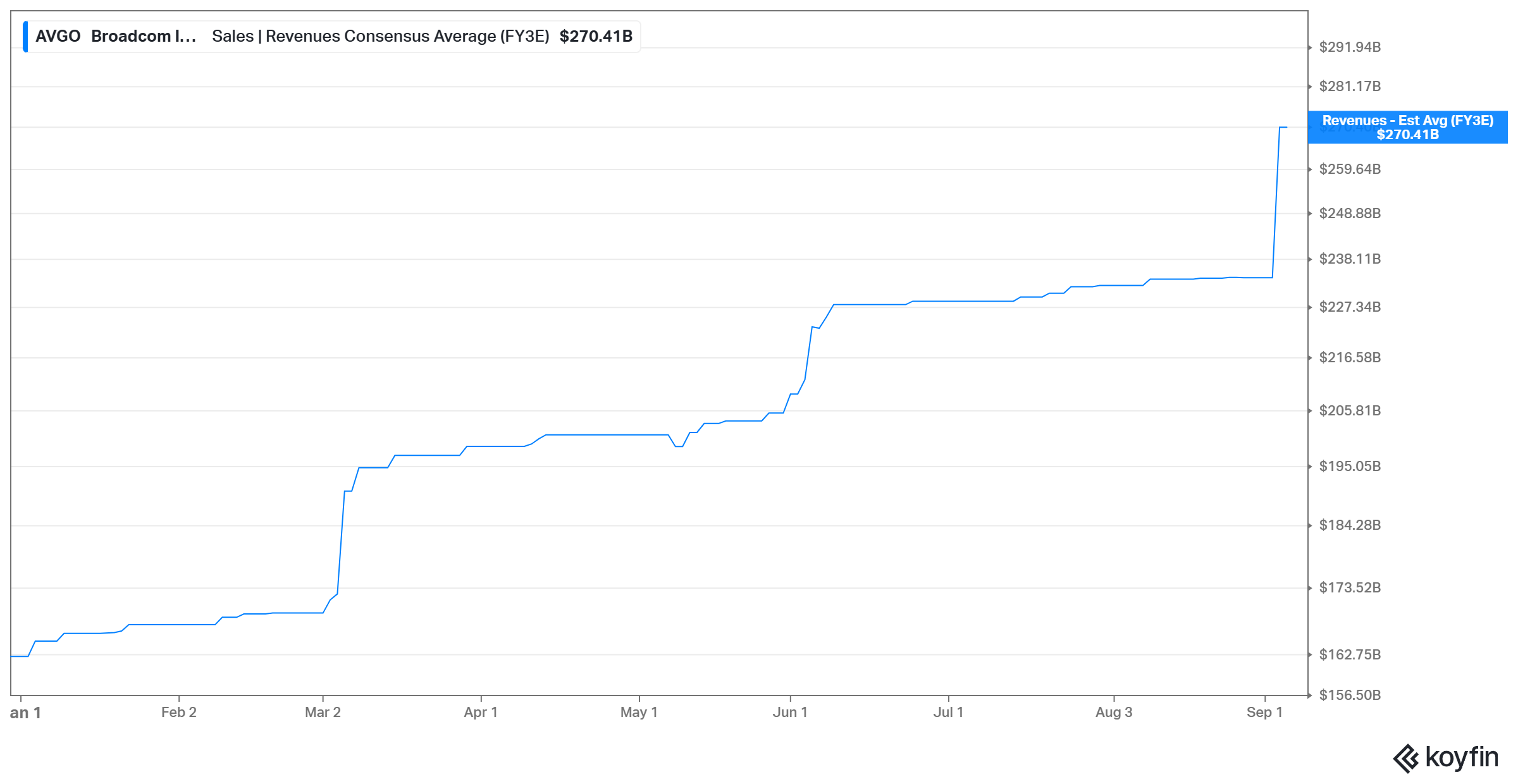
Broadcom’s FY2028 revenue estimate rose from $162 billion to about $270 billion and EPS from $17.60 to $30, while the stock remained flat…
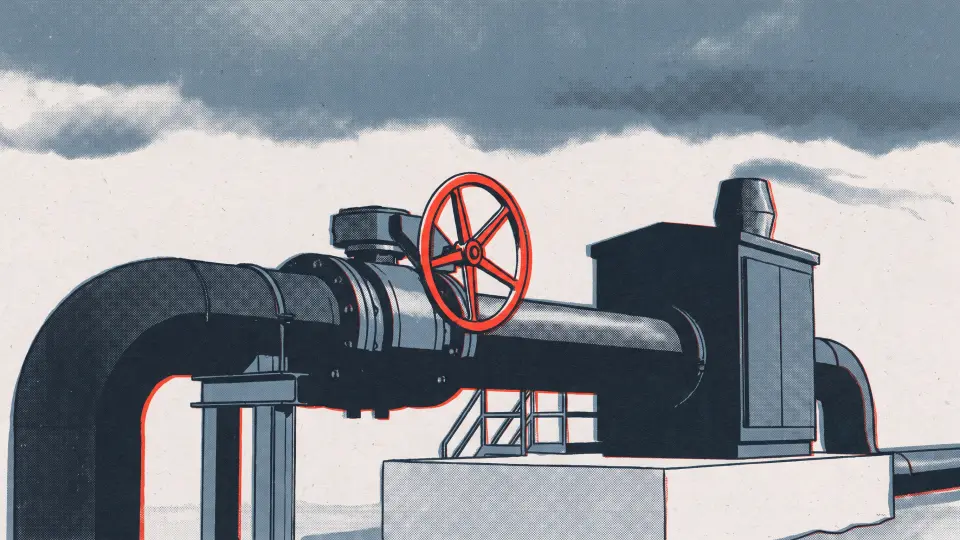
Equinor’s H1 2026 net income doubled to $7.94 billion as European gas prices rose, but EU energy-crisis measures could curb profitability.
 Zoltan Ban 4 clicks
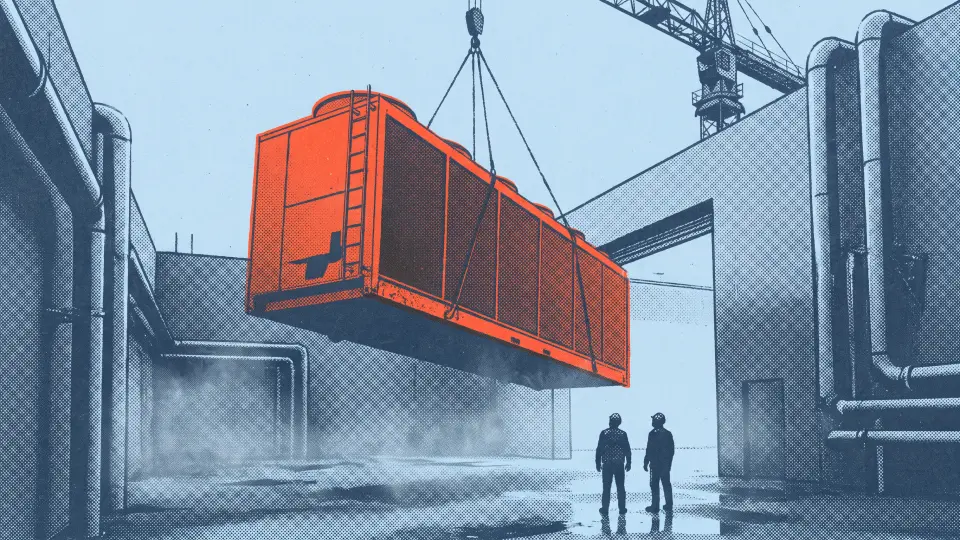
Broadcom's AI semiconductor revenue rose 221% year over year as custom silicon programs and VMware software cash flows fund further…
 Simple Investment Ideas 3 clicks
@FishtownCap Could $UNFI and $CHEF merge or too much overlap already
Why has $LULU never tried to buildout specialized yoga studios or acquire a chain like Corepower? Seems like it would be a great way to get more stable / recurring revenue via memberships and a good opportunity to cross sell products and attract the companies core clientele (fit yoga girls? I don't even know anymore man)
@FishtownCap Are there any decent food brand stocks any more? $MDLZ also seems troubled

Southwest Airlines is adding ancillary fees, assigned seating and premium products after a 6.7% Q2 adjusted operating margin, targeting up…
 Tim Dunn
Rayonier $RYN owns 4,003,000 acres across eleven states. Here's what happens when you value everything else on the balance sheet and subtract it. Enterprise value is $7.64B. Market cap $6.19B plus $1.45B of net debt. Now take out the pieces that aren't dirt: Six sawmills and a plywood mill, $1.0B. Cross-checked two ways. Replacement cost runs ~$700/MBF on 1,155 MMBF of capacity. Mid-cycle EBITDA of $175M at 6x gets you the same place. Three master-planned communities, $482M. Wildlight north of Jacksonville, Heartwood next to Hyundai's $7.59B plant in Georgia, Chenal Valley in Little Rock at 70% sold out. DCF'd at 12%. The rural land program, $650M. They sold 7,490 acres at $5,439 last quarter against a portfolio the market marks at $1,447. That 3.7x spread on ~30,000 acres a year, decayed and discounted over a 13-year runway. Solar options on 77,000 acres, $125M at a 25% conversion assumption. Carbon storage across 154,000 acres, $80M. Smackover lithium, $30M. Real geology, ten cents a share. The below-market debt mark, $130M, audited on the balance sheet. That leaves $5.14B for the timberland. Now subtract the trees. 188M tons of standing merchantable inventory at current TimberMart-South stumpage, with pine sawtimber at $23.34/ton and pulpwood at $5.40, is $3.57B. Residual: $1.57B of bare land across 4,003,000 acres. $393 an acre. Cutover land in the South, meaning ground that was just harvested with zero merchantable timber on it, transacts between $1,200 and $1,800. Three marks you can check yourself: In August the company sold 36,000 Washington acres at $4,028 and bought 57,000 Texas and Alabama acres at $2,561. Same month, same management. They paid 77% more than the market credits them for what they already own. Morgan Stanley's fairness opinion produced $47.55 to $55.80 on a DCF and $20.85 to $25.20 on trading comps in the same document. The stock is at $20.81. That gap is institutional cost of capital at 7% versus public equity demanding 9 to 10%, applied to an asset with thirty-year cash flows. Management bought back 4.9M shares for $103.5M in H1 and repaid a $200M term loan with cash rather than refinance it. I built the whole thing a second way, from transaction comps by state instead of tons and dirt. $31.80 versus $31.66. Bear case marks the entire South at $1,700/acre, puts the mills at a trough multiple, converts solar at 15%, and still lands at $24.74. Every case sits above the current price. One caveat I'll state myself: the $393 assumes rural HBU is a separate asset. Treat it as embedded in land value instead and you get $555. Still under cutover. The conclusion holds either way. Full work, every input shown, plus the part about the debt structure that I think almost nobody is modeling, linked below.
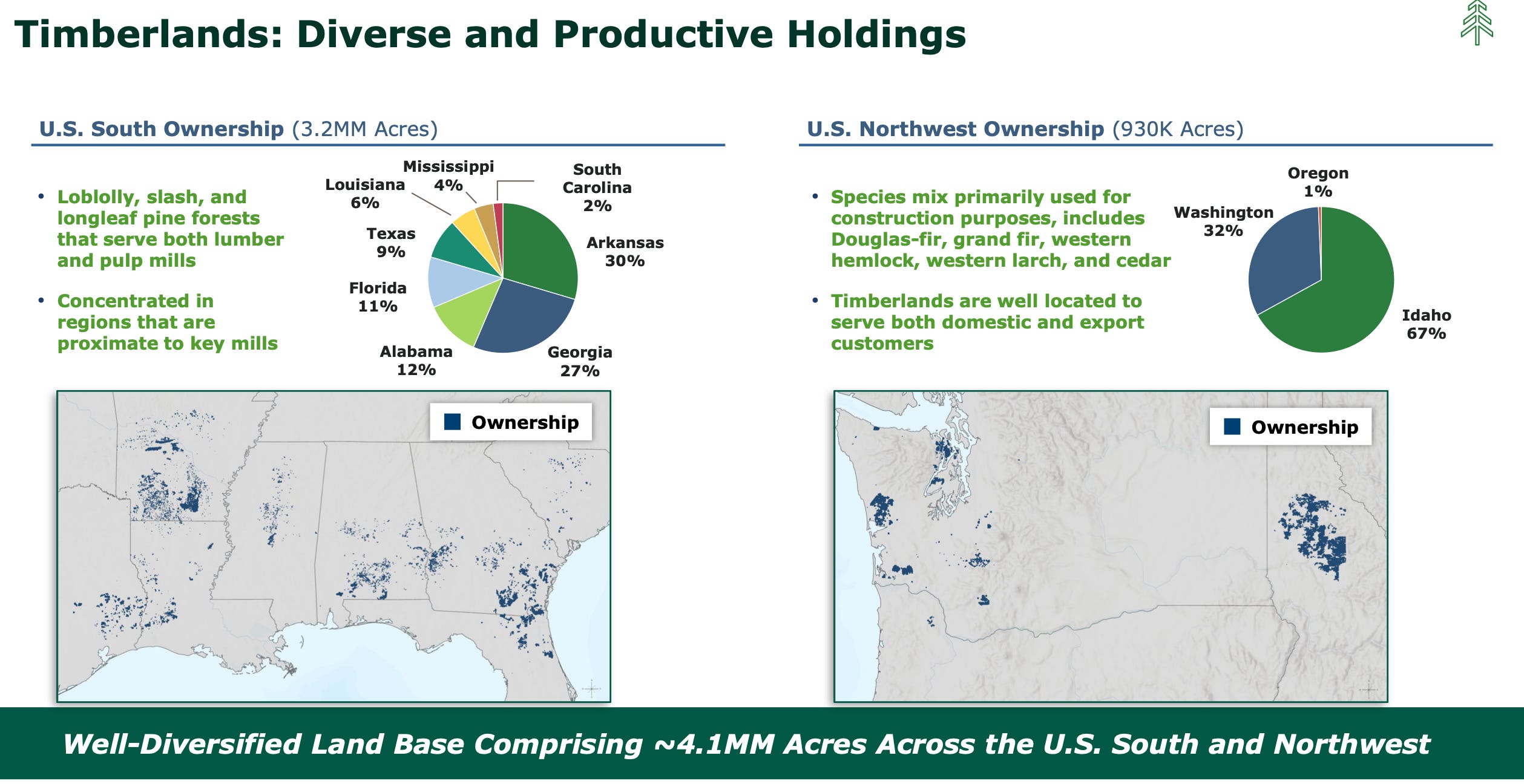
Rayonier’s 4.0 million acres are valued at $393 an acre after other assets, versus $1,200 to $1,800 cutover-land sales, framing the timber…
Buying PayPal $PYPL when Wall Street idiots sell this off and waiting for another takeover rumor to dump it back to them is like taking candy from a baby. https://t.co/q4OLppPbgm https://t.co/vVLuLhy0w1
Nvidia’s $12.93 billion Hugging Face acquisition pays 86 times annualized revenue for control of an AI developer ecosystem spanning 18…
 High Alpha Professor
Oklo’s Q2 progress includes Groves’ first criticality and Aurora agreements, while equity dilution cut its price target to $88 despite a $3…
 The Curious Analyst 1 click
Richardson Electronics posted 27.6% Q4 FY26 revenue growth and $0.21 non-GAAP EPS, but trades at roughly 43 times trailing earnings as BESS…
 Naples Investor
Roblox faces its first year-over-year DAU decline in Q3 2026, with bookings projected to fall 14-18% as fixed costs and infrastructure…
 Stephen Ayers 1 click
@pande40745264 @guptavinay Haven't followed QXO closely given it seemed outrageously priced, but a big attraction with these distributors are the countercyclical cashflow... Leverage @ $BLDR looks high, but unsecured notes not due until 2030-2032, and they should turn that inventory into cash
never been a crypto bro, but i’ve always related to them. $HOOD is where our worlds collide. we ride together.
why i own $HOOD 👇 https://t.co/7xA2UKdf3t
