New Ask Claude or ChatGPT about any stock, using Bullpen. Bullpen in Claude or ChatGPT. 7 days free

NASDAQ

Nvidia CORP

NVDA

251 stories

$4.6T Market cap · 2026-11-06

Get NVDA news in Claude, ChatGPT or your own code. See plans

@ParadisLabs 1 click

Paradis on X

Initial notes on $MRVL's rumoured $LITE acquisition: 1. Why?! - $LITE's CEO has said they're sold out into 2029. So do management think the InP laser shortage is shorter than what their orders suggest? Need more clarity on why Lumentum would green light this. - With lasers sold out into 2029, I think owning the fab might be the only way $MRVL can guarantee supply for FY28 growth. So maybe Marvell and Lumentum have different reads on the InP laser shortage? 2. This has to be mostly stock. - $MRVL has ~$3.9B cash vs. $5.0B debt. Combined run-rate EBITDA is circa $7-7.5B (my numbers), so I think staying investment grade caps new debt at around $15-20B. - At a ~30% premium that leaves $85-90B+ paid in stock, with $LITE holders owning ~30% of the combined company. - I feel that’s a lot of Marvell to hand over. 3. I think the strategy is much better than the reaction. - $MRVL are essentially buying the part of the optical link that survives the move to CPO which is a pretty smart hedge on their own DSP franchise. - Marvell announced Inphi around 6 years ago (~$10B in cash + stock), and that deal built the core of MRVL's optics business. - This is basically the same move just one layer down, from DSP to laser, stacked on Celestial AI. - Probably a good signal that Marvell are running the same optics playbook again? 4. Dilution. - $MRVL trades on about 52x run rate EPS. - $LITE is about 60x on its FQ1 guide at tonight's AH price and about 70x with a 30% premium. - That's ~15% dilutive to Marvell's run-rate EPS (my rough napkin math number) assuming a 30% premium, ~$17.5B of new debt at ~5%, and the rest in stock at $228. (Again, very rough numbers). - It only turns accretive if Lumentum keeps outgrowing Marvell at today's guided rates (+24% q/q vs +15%) for another five or six quarters. - I think that's achievable while the laser shortage lasts, but I feel the whole deal ends up being a bet on how long that is. 5. Fewer lasers on the open market. - If LITE's output gets prioritised for $NVDA and Marvell's own modules, everyone else buying LITE EMLs and CW lasers gets tighter allocation. - I think that's bullish for laser pricing at $COHR and for other laser sources like $SIVE (lol). - Feels like the module makers that depend on LITE lasers are the quiet losers. 6. Channel conflict. - Marvell is the leading DSP supplier to 800G/1.6T module makers, and LITE already sells its own modules through Cloud Light. - I think Innolight and Eoptolink start shifting DSP share to $AVGO and $CRDO? - I feel hyperscalers will push harder to second-source lasers from $COHR.
@convequity 1 click

Convequity on X

Circular AI financing keeps getting bigger. A record $63 billion vehicle, partly supported by Broadcom ($AVGO), will buy Broadcom chips for Anthropic, and it only pays off if enterprises adopt AI beyond coding. The vehicle borrows, buys Broadcom XPU accelerators (custom AI chips) and networking gear, and leases them to Anthropic. Deliveries are expected from 2027. Broadcom guarantees a residual value of $40B+. This is the latest example of the banks, hyperscalers, model labs and chipmakers are frontrunning AI demand they expect to be insatiable. Without faster enterprise adoption, that demand may not arrive, and the financing stays circular. AI has to spread from coding into the rest of the enterprise. Coding can be checked, because code has to compile and pass tests. Other domains need the same verifiability, which means codifying context that lives in employees' heads, or at best across email, Slack, WhatsApp and work-management platforms. Vendors that can codify that context should extract immense value. Palantir ($PLTR) is the closest so far. Palantir's ontology, a structured account of an enterprise's objects, relationships and rules that software can use to check a result, is critical because it is instrumental to verifiability. We think it can make an average Nemotron model state of the art for that enterprise's own work. If the result is good enough, enterprises will use it and achieve sovereign AI. Once that context is codified, enterprises will not want to blindly run closed frontier models on it and give their know-how away. Broader adoption depends on data sovereignty. The shift has been visible since Palantir's Alex Karp warned earlier this year that handing closed frontier labs their data, models and institutional know-how means losing control of the value. The path is intelligence sovereignty plus more verifiability, then greater enterprise adoption, which would justify this frontrunning. It would also benefit Nvidia ($NVDA), which needs enterprise adoption because hyperscalers and model labs are leaning toward custom chips.
@convequity 1 click

Convequity on X

We think AI power users are overestimating how far enterprise adoption has progressed. Anthropic’s S-1 says over half the Fortune 500 were $100k+ annual customers as of September. Among those publicly traded customers, Anthropic spending averaged under 0.1% of total expenses in Q3 2026. That measures spending on one provider, so it cannot establish whether their AI deployments are succeeding. But the expectation gap is familiar. When you spend all day using the best models, it is easy to assume the rest of the economy is close behind. Building and running an enterprise’s own AI applications is a much harder undertaking. In Part 2 of our recent $NVDA report, we argued that successful adoption remains concentrated in a few exceptionally capable organisations, with Palantir ($PLTR) and coding agents the clearest examples. For Nvidia, adoption through clouds and model providers still leaves compute demand concentrated in intermediaries with the scale and incentive to develop their own chips. It needs more enterprises buying its compute directly. This is why we continue to see Palantir as a strategic enabler. The ability to help enterprises put AI into production remains scarce, even as access to capable models spreads. From Convequity’s “Nvidia at 16x Earnings: Bargain or Value Trap?” (Pt.2), 20 Oct 2026.

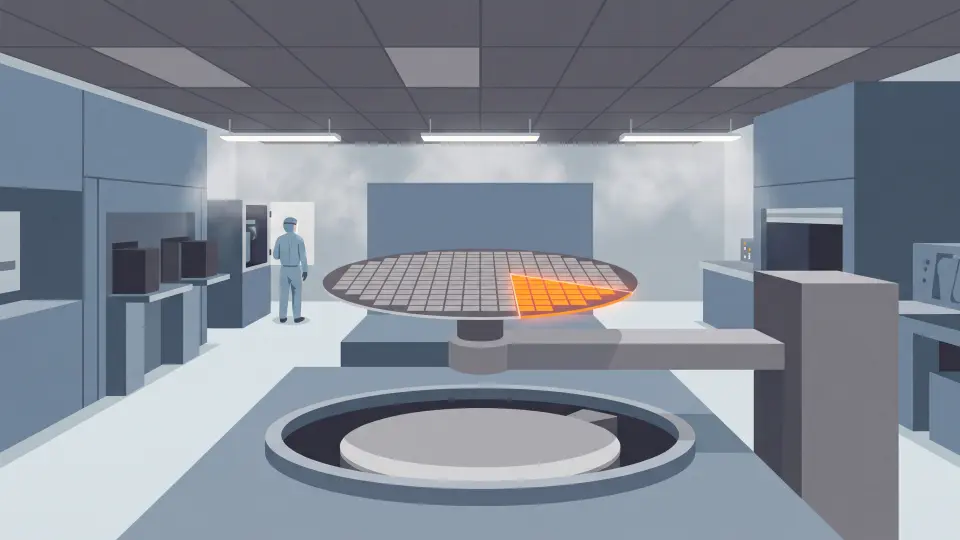
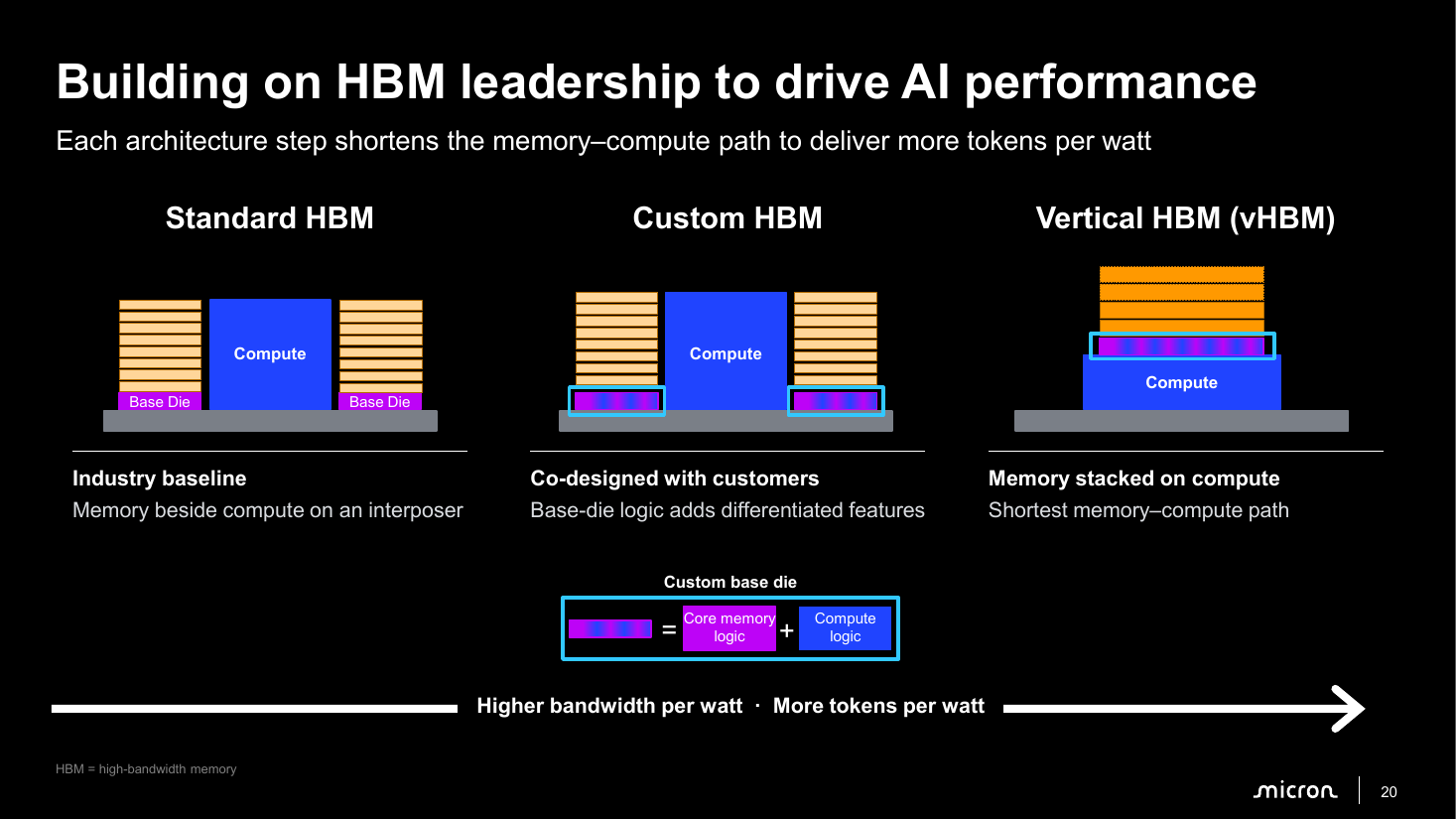
Right-Sizing Memory

Micron’s AI memory demand depends on workload-specific accelerator designs that shift bits among HBM, GDDR and LPDDR, changing wafer…

@StableBread

Fajasy on X

Meanwhile, here's what Anthropic has signed up to spend on compute: → $GOOGL: $114.5B from April 2026 to July 2033. → $AMZN: $110.0B from May 2026 to April 2036. → $MSFT: $44.9B from November 2026 to May 2033. → Five-year AI chip lease: $125.2B of rent, up to $42B of which Anthropic can fund by selling convertible notes to $AVGO or a financial partner $AVGO designates. → $SPCX's xAI: Up to $120.5B into 2029 for $NVDA GPU compute, cancellable on 90 days' notice after early 2027. As of June 30, 2026, Anthropic had $265.6B of non-cancelable compute purchase commitments and $321.4B of signed leases that hadn't started yet, up from $54.6B and $50.2B six months earlier. Anthropic has signed ~$266B more since June 30, which by my rough math brings the total to ~$850B (the S-1's own total is still blank). Add an estimated $125-150B for TPU (Google's AI chip) compute in 2028-2031 that isn't in those figures.
@convequity 1 click

Convequity on X

$SPCX negotiated a 90-day right to walk away from Anthropic. We infer that Musk expects Grok to catch up with Claude, and that SpaceX would then cancel and use the Anthropic compute for Grok rather than keep serving Claude. Either party holds that right. Anthropic's S-1 says each agreement can be canceled by either party on 90 days' written notice after a period when cancellation is not allowed. Those periods end in January 2027 and March 2027, depending on the agreement. Anthropic's S-1 says Anthropic agreed to spend up to $120.5 billion into 2029 with SPCX, for compute powered by $NVDA GPUs. SpaceX's S-1 says either party can terminate on 90 days' notice after an initial three-month period. SpaceX told the SEC it negotiated the clause so the capacity could go to other customers or to SpaceX's own compute initiatives. The Apollo finance lease does not involve Anthropic. SpaceX has a binding commitment to enter a separate lease of about $40 billion for Nvidia Rubin GPUs. The 8-K and the press release do not name Anthropic.
@convequity 1 click

Convequity on X

At similar valuations we prefer $AVGO over $NVDA, because Broadcom has more room to beat expectations. A custom-chip order still needs lasers, optical and electronic chips, and packaging, and Broadcom supplies all of them. Separate suppliers each protect their own margin, so cutting total system cost is harder. Broadcom could also win custom-chip orders by assuring customers that the optical components needed to deploy them will be available. Google TPU volume adds a second large revenue source. Estimates put Google's TPU-related contribution at roughly $11 billion to $13 billion in 2025. Supply-chain estimates put Google's TPU v8 shipments at about 4.0 million units in 2026, rising to about 9.1 million in 2027. Assuming Broadcom supplies the remainder after MediaTek's allocation, that leaves a large expansion for Broadcom. Nvidia starts with a much larger share, so more of its business is exposed as customers develop alternatives.
@aleabitoreddit 6 clicks

Serenity on X

Just another $40B going into the "AI Infra" Bubble... Elon stated this $SPCX financing would primarily fund $NVDA GPU procurement H1 2027. Which indirectly increases demand for memory, networking, etc needed. In some other notes, VPEC today in UDN: "InP substrates is seriously in short supply" in regards to suppliers like $AXTI. - Morgan Stanley believes that InP substrates, EML and CW lasers will be the primary bottlenecks - VPEC emphasized that whoever can secure more raw material supply in the future will have greater pricing power and influence in the market. Very true about supply procurement... both upstream materials like epiwafers/substrates to ultimately compute. We're in a volatile period where all your largest companies in the world are fighting over control of the future of AI infrastructure. Any slowdown seems unlikely.
@aleabitoreddit 4 clicks

Serenity on X

I've always defended X as the only platform to be on for financial discourse. But it's getting harder to when the owner constantly amplifies narratives of collapse… of companies whose interests conflict with his own at $SPCX or $TSLA. Would people be comfortable if $NVDA Jensen Huang owned $META? And then the timelines were dominated by his amplified narratives of $AVGO failing? I can't see how that would be healthy for grassroots discussion.
@aleabitoreddit 4 clicks

Serenity on X

$NVDA Jensen Huang on photonics: adding scale-up to optical domain, “is going to be, well, 15x” to aggregate volume. Relating to $LITE, $COHR, and laser companies.. “I'm fairly certain the amount of optics that we need in the future will be several orders of magnitude” Huang added. We’re already in a CW laser bottleneck, but given the time/rate for capacity expansion, I definitely don’t see it meeting the scale Jensen envisions… Your leading merchant suppliers focusing new capacity toward UHP CPO lasers might also unintentionally make shortages around lower end ranges more severe… Since even if you don’t reallocate capacity (which Coherent implied they’d do to maximize margins), the demand for lower end ranges increase too as pluggable demand grows. Anyway, you’re gonna need a lot of lasers and given low BOM cost… this might trigger some fun game theory allocation wars + price hikes for supply
@convequity 14 clicks

Convequity on X

We are more concerned about where a few large AI buyers place their next orders than about how many chip startups try to compete with $NVDA. Spending on frontier models is concentrated among a handful of companies. They have the scale to build chips for their own workloads or commit to large deployments of Google's TPUs and Amazon's Trainium. A single customer's decision can redirect several gigawatts of future demand. Our scenarios include custom ASICs taking a much larger share of the overall AI compute mix. The plans we track total 21.2GW for OpenAI and 13.8GW for Anthropic across suppliers. Google's TPUs and Amazon's Trainium together account for roughly 72% of Anthropic's planned power capacity. The projects have different deployment dates, but delivering them would put most of that capacity on custom chips. In our view, NVIDIA could keep growing sales to Anthropic while capturing a much smaller share of its expansion.
@StableBread

Fajasy on X

Can Boost Run $BRUN borrow the $527-686M it needs for H2 2026 without selling stock? CFO Erik Guckel said on the Q2 call that $BRUN is working on new ways to finance the build: “We continue to innovate on financing structures beyond the equipment financing approach used to date and expect to provide additional color and progress on this over the next quarter.” The October 8 prospectus amendment names asset-backed securitizations (bonds backed by its GPUs and customer contracts) and rated parent-level debt as new forms of financing $BRUN expects to access. But I found no new facility, lender, or term sheet in its filings or press releases from August 14 to October 16. Founder and CEO Andrew Karos acknowledged on the Q2 call that there’s “a big gap in the market right now” in financing for customers without investment-grade credit. $BRUN’s named customers are private AI startups without investment-grade ratings, so its contracts are harder to borrow against. For comparison, $NBIS’s first secured loan on July 17, $775M at 2.50 points over SOFR (a short-term benchmark rate), was backed by GPUs running under a contract with an investment-grade customer. Thinking Machines Lab, the AI startup founded by former OpenAI CTO Mira Murati, alone accounts for $157.2M/year, 52.3% of what $BRUN’s disclosed contracts should bring in by year-end, and was still in talks to raise $5-6B as of early September. I found no announcement that it closed the round through October 16, so lenders financing its GPUs are also betting that the round closes. Karos also mentioned $NVDA’s AI Compute Partnership (AICP), a program NVIDIA launched in July to backstop GPU clouds’ clusters with its investment-grade credit, for a share of their revenue. However, NVIDIA paused some of its AICP deals over antitrust concerns, the Wall Street Journal reported on August 27. NVIDIA said the program is still in place, but The Information, a tech news site, reported on October 5 that NVIDIA is rethinking its revenue-sharing deals with GPU clouds. Still, lessors funded 79.5% of the H1 2026 build for GPUs already rented out on contracts worth ~1.4x their cost, so I believe $BRUN most likely borrows the $527-686M without selling stock. The Q3 report (mid-November) will show how much $BRUN leased in Q3. If lessors funded 70% of the H2 2026 build instead of 79.5%, $BRUN would need $199-259M of its own cash for the build, more than its $191.8M of pro forma cash. Covering the ~$7-67M gap and keeping three months of the ~$221M of 2027 payments in cash would take a $62-122M stock sale. At $8.89/share, the sale would mean 7.0-13.8M new shares, 8.4-16.4% of the 83.8M outstanding. So the stock at $8.89 depends less on demand or the book $BRUN has signed than on whether it can finance the next ~$1B of GPUs without selling shares at beaten-down prices.
@convequity 19 clicks

Convequity on X

Cerebras ($CBRS) is a taxi built for very fast inference while Nvidia ($NVDA) runs the bus network. Most of the confusion around CBRS comes from reviewing the wrong vehicle. In our view, Cerebras' wafer-scale design and abundant on-chip SRAM let it reach high utilization at batches of roughly 3–4. That makes it exceptionally fast for low-batch inference. GPUs need much larger batches and tightly connected clusters to get there, but their flexibility, scalability and throughput make them the better mass-market token factories. The bus wins on economics when serving many users at once. We think Cerebras is mostly attractive over the next two to three years, provided demand grows enough for premium-priced, high-speed inference rather than mostly low-cost, high-volume tokens. How big that premium segment gets is the main variable in our thesis.
@convequity 7 clicks

Convequity on X

Nvidia's DSX POD container shortens the gap to system-level competitors like Google and Huawei, but it does not eliminate that gap. At GTC Berlin on 21 October, $NVDA introduced DSX POD, a partner-built container for Vera Rubin AI factories. Nvidia says it cuts deployment at a prepared site from six months to as little as 14 days, with worldwide delivery targeted for early 2027. Our latest Nvidia report, published a few days ago, flagged one drawback: Nvidia is not expanding into the full system solution quickly enough. Huawei, Google and Broadcom are leveraging system-level optimization, where the chip, the racks, the network between racks, power, cooling and software are designed together for one owner's workload. That is where they are finding further efficiency gains in the competition against Nvidia. Nvidia has stayed within rack-level optimization: the GPU, the NVLink switch and the rack they sit in. That is understandable. Nvidia serves many customers with many different designs and criteria, so it has to find the most common denominator those customers can accept. It also means this handicaps Nvidia's competitiveness against vertically integrated competitors like Google and Huawei. A container sits between a rack and a full system. Partners integrate the Vera Rubin racks, the networking, the power and the cooling inside the container and validate them together before delivery, so the customer receives a tested unit rather than racks to assemble. In our view that is why the gap shortens. It is still a gap, because Nvidia is not a vertical player and still does not provide the system-level solution. What DSX POD does show is that Nvidia is adaptive and very eager to stay in the game. We expect it to try whatever it can to alleviate this drawback.
@convequity

Convequity on X

Neoclouds Now Trade as a Hedge Against AI Demand Growth Convequity’s latest ABBX review shows $CRWV, $NBIS and $IREN are inversely correlated with AI demand growth. Stronger demand widens the working-capital hole and keeps investors risk-off, even as order books expand. Insatiable demand is usually the reason to own the supplier. Here it does the opposite. Jensen Huang told CNBC at GTC Berlin that neocloud demand is “off the charts” and that working capital is the missing piece. Working capital is current assets minus current liabilities. A cash-conversion mismatch squeezes it even when demand is huge. Liabilities hit first. A neocloud pays $NVDA and networking suppliers in roughly 30–60 days. Asset-backed hardware loans add heavy near-term debt service. Assets lag. A signed customer contract sits off the balance sheet as backlog. It only becomes receivables or cash once the cluster is deployed, energized and billed — months later. Cash leaves before revenue arrives. A faster pipeline simply widens the short-term deficit. Latest ABBX figures NBIS: $8.5B gross debt vs $8.0B cash; guidance for >$9B customer prepayments this year. IREN: $7.6B debt vs $5.9B cash; $13.8B hardware and site commitments; 20% prepay on the Microsoft contract. CRWV: $35.6B debt vs $5.5B cash, plus $16.3B operating leases and $35.5B rent not yet commenced. Build-out relies far more on debt than customer prepayments. Even with those prepayments, NBIS and IREN keep raising large extra funding. CRWV faces the same hole with a far larger debt stock. Handing contracts back to resell at higher spot prices would ease CRWV’s cash hole only if customers and lenders agreed. Customers pay even if they do not use the capacity, CRWV must deliver it, and we found no public right to change the price or exit early. Break a customer contract and the hardware lenders can lock up CRWV’s cash. If that lockup holds, they take the cash to repay the loan. Borrowing later would cost more, and the switch only pays while spot stays high. If spot fell, CRWV would lose both the committed revenue and the contract value backing those loans. For investors to turn risk-on again, AI demand growth needs to slow enough for infrastructure supply to catch up.
@convequity

Convequity on X

$NVDA is in a bind. In our view it needs enterprise AI adoption to grow quickly, but a typical enterprise cannot afford Nvidia's GPUs and does not have the resources to build and run an Nvidia stack directly. So enterprises take the cheaper and more manageable option and access AI through the hyperscalers. They skip the large upfront cost, and they can run inference on the hyperscalers' custom ASICs, or at least have that option versus Nvidia's GPGPUs. In our view, those ASICs are the more efficient inference choice where a hyperscaler offers them. To curtail that, we think Nvidia would have to cut GPGPU prices sharply enough to make direct enterprise adoption realistic. That means lower margins. Dell ($DELL) was supposed to be the way around the bind, a channel that puts Nvidia compute in front of enterprises that will not build the stack themselves. We think Dell has mostly used the relationship to secure GPU supply and grow its own revenue and margins, not to open the smaller enterprise market Nvidia needs. Palantir ($PLTR) is still the exception on enterprise AI adoption, not on buying Nvidia compute directly. Its US commercial revenue grew 149% year on year last quarter, accelerating from 133% the quarter before. Outside Palantir and coding agents, we see little enterprise success. The bind stands. Direct enterprise adoption of Nvidia compute is still progressing very slowly, and we do not see a way out that leaves margins where they are.

Investor Letters

Letters that discuss NVDA.

Every letter that discusses NVDA

Tickers on this page

Companies the stories above are also about, besides NVDA.