

Nvidia CEO Jensen Huang Says He Would Stop Selling To Buyers Building Unsafe AI
Nvidia CEO Jensen Huang discusses sovereign AI, arguing that countries and companies need control of their data and reliable access to AI…
Wednesday, October 14
Everything we published on this day.
95 stories — the front page that day →
Nvidia CEO Jensen Huang discusses sovereign AI, arguing that countries and companies need control of their data and reliable access to AI…

Interesting. My view is $LEN is basically the worst of the bunch, but I guess it’s priced accordingly. Tend to think most of the operating improvements are a mirage & reflect normalization after pandemic supply-chain distributions. You can get cycle time & construction costs for comps—most improved similarly. And I don’t get how LEN margin picture has yet to reflect improvements—saw the mgmt mention, but this isn’t a long-tail biz & it has seen as much margin pressure as rest of group. Then incentives fell for the Q, but I suspect they go higher again near term(tho that could change). Equity might still be a long.
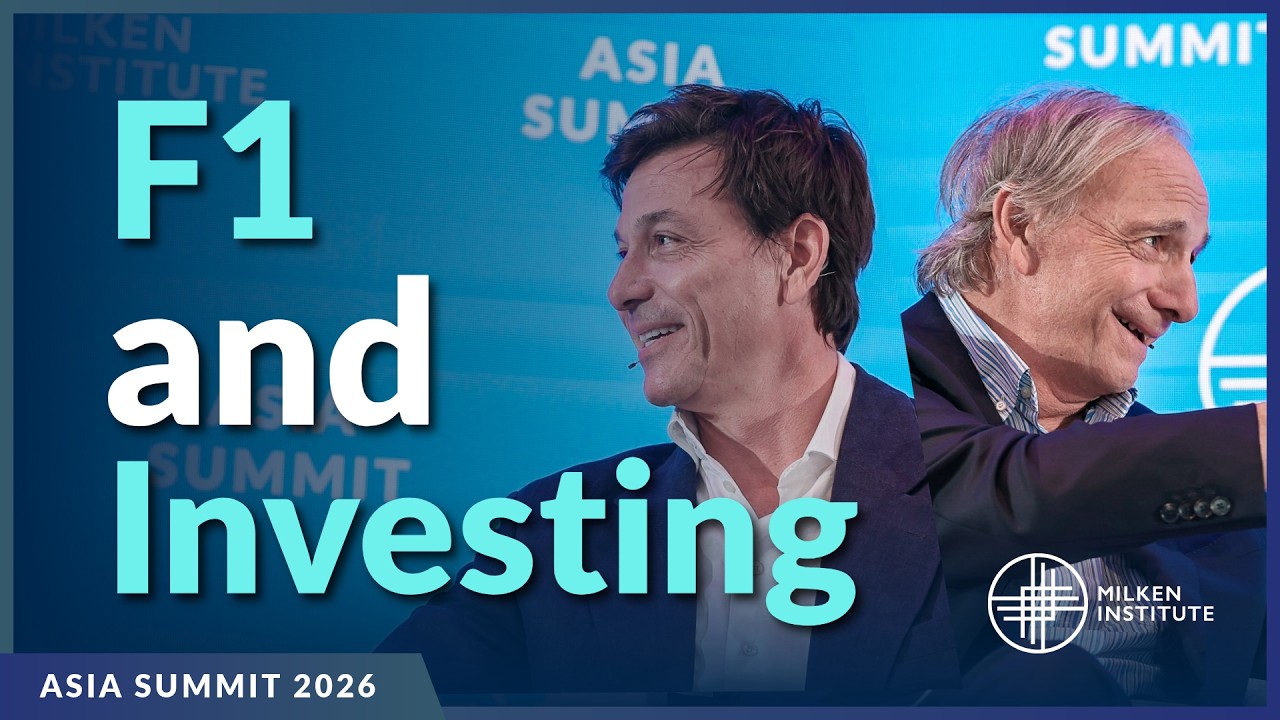
Ray Dalio and Mercedes Formula One team principal Toto Wolff compare the principles behind investment firms and racing teams at the Milken…

Ray Dalio joins Nicholas Thompson to argue that AI enthusiasm has created bubble-like financial conditions alongside a worsening US debt…

@tuviagroup IMO, $CPT generally owns the best assets of the public MF reits with an avg age of 16 years
Spoke with an expert about $LEN the other day He told me that Lennar focuses so much on entry level homes that it's got a "here goes the neighborhood" effect Other builders won't build in the same MPC/area This could potentially cut them off from sites in the future

@OnodaCapital Also $DELL
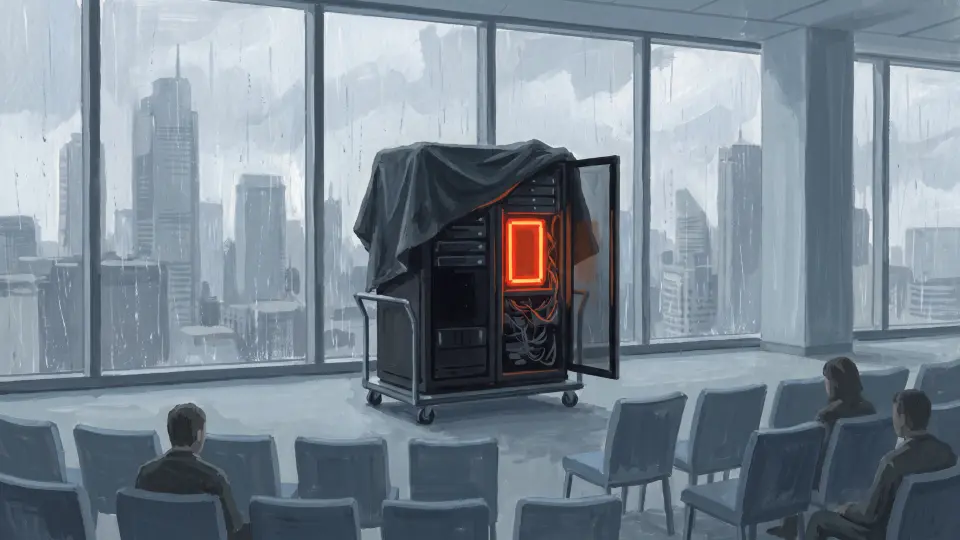
CoreWeave faces fresh skepticism as another AI trade selloff collides with bullish defenses of the company.
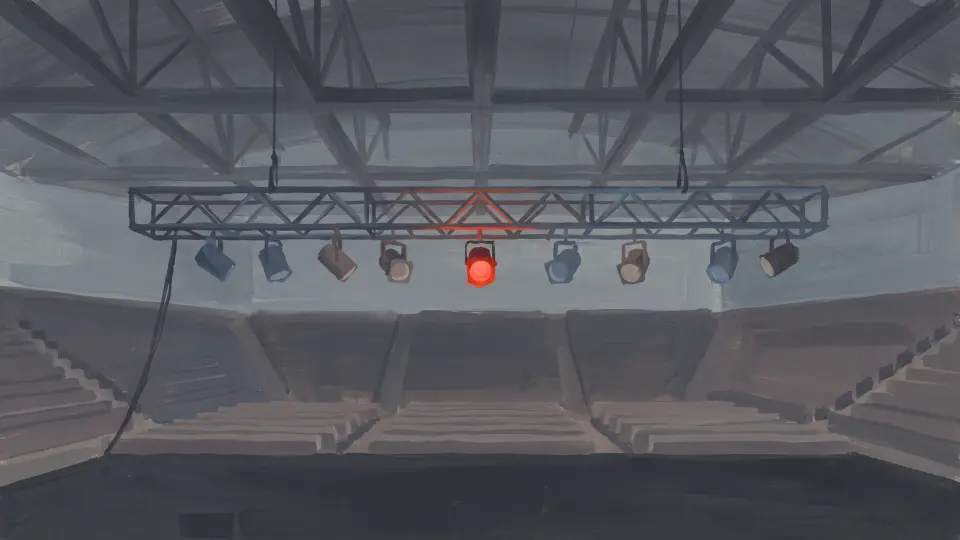
Ari Emanuel discusses AI’s impact on Hollywood, live events, social networks and the future of advertising.

@orrdavid @merrillmatter To be fair, I asked you *a lot* of questions - $SPCX was far from the hardest! In response, you were fully transparent and didn’t dodge any of my questions. You were great. I can’t wait to share the full cleaned up transcript of our discussion, likely in early November.

@bufetmastermind @secretlyaninja @mbamcnulty maybe i don't. I'd appreciate if you could explain. they had said 50% FCF margin on $1B in sales. $LQDA is still going to get to $1B in sales. Its just going to take longer. Tell me why 50% FCF margins are not in play. Bonus points if you can tell why they won't reduce costs

Is Tiktok Shop slowing? J&T Express just reported SE Asia parcel volumes, and are flat for the year at ~31M per day for the last few qtrs. They're guiding to 50-55% full year growth, implying Q4 holiday season only ramps to 33-37M parcels. Evidence Shopee's VIP & logistics investments are working? $SE $1519.HK

I’m sure that $CRWV is money good on funding its gazillions of chip purchase orders, as long as someone funds $CRWV…🤭🤭
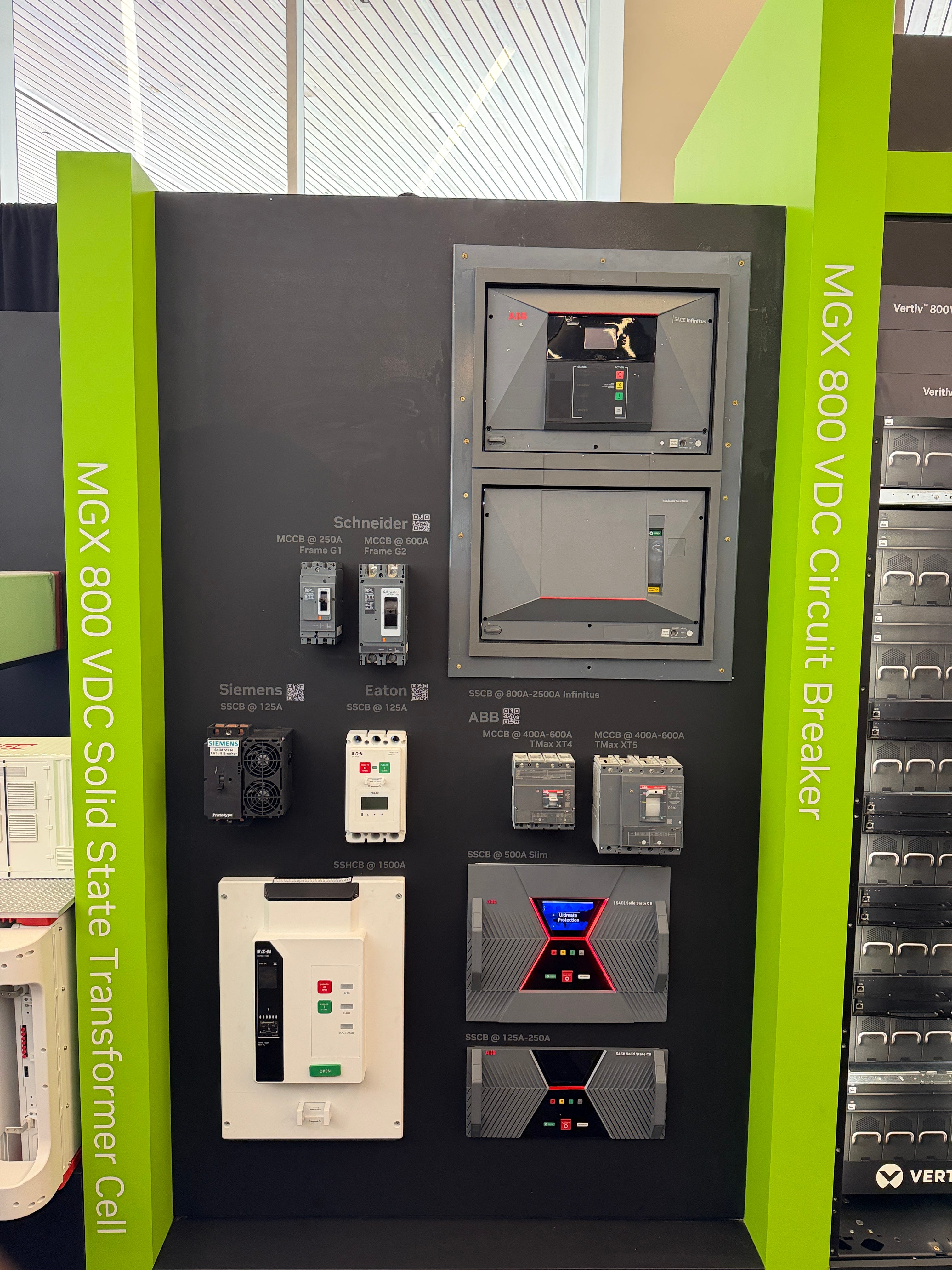
Nvidia’s Ian Buck says CUDA’s software ecosystem, GPU flexibility and annual Vera Rubin upgrades lower token costs as agentic AI pushes…

Archimedes Tech SPAC Partners II $ATII, the SPAC taking atomic-scale coatings maker Forge Nano public, amended the $100M lead commitment in its PIPE on October 13, three days before the October 16 merger vote. Alyeska, the Chicago hedge fund behind that $100M, will now take 7,031,175 of its 10M shares as pre-funded warrants, up from the 3M planned as of September 24. Those warrants cost $0.0001/share to exercise and never expire, but they don't vote until exercised, and Alyeska can cap its ownership at 4.9%, 9.9%, or 19.9% of the shares. ATII and its sponsor, with the consent of BTIG (the bank that ran ATII's IPO), also waived the transfer restrictions on the 3M founder shares the sponsor hands Alyeska for free at close. Counting the founder share transfer, Alyeska's effective cost is $7.69/share, and the S-4 (the merger filing) says so directly. So the $100M still lands at close, but the fund providing it got more flexible terms the day before ATII holders had to decide whether to redeem.

Keith, you are a total POS. You belong in jail for securities fraud. I own you. You laughed at me first shorting $OOEN at 8. You are such a pathetic, odious pile of garbage. So pathetic. The entire world is laughing at you. Thanks for playing. $OPEN @rabois @ericjackson @APompliano @

Hottest trade in the past month.....retail stocks Seems odd with rates and oil and diesel moves over the same time frame. And these are not bounces from being oversold these are double digit moves in most cases to new highs while dpz struggled on their print this week, stocks like DKS collapsed around the time this trade started. Bifurcation in retail in recent weeks that seems to be favoring low quality. Something to watch for a reversal soon $KSS $FIGS $URBN $SHOP

@valuedontlie Forgive me I haven’t done the work I may soon, isn’t the whole point of $VITL is having a brand and being specialized to insulate it from cyclicality to see degree? I’m one of those people who pay up for pasture raised no matter what

It's been 189 days since @evanspiegel had a confirmed sale. The longest sales void ever, per what we can discern from filings. He's in a blackout window now. If the sales do not resume post Q3 window opening then that would seem bullish. We would love an insider buy, too. Evan buys stock here we would think $SNAP is +10% on that day. At least. Not advice. Just pointing out the cadence of form 4's and lack of historical insider buying.

Bizarre update at $HTT with the company facing a large tax liability on behalf of the CEO. I'm genuinely puzzled with how to perceive this. Chatgpt suggests that the explanation is reasonable, but the company paying taxes for the CEO feels like such an obvious red flag. The stock

$KYIV
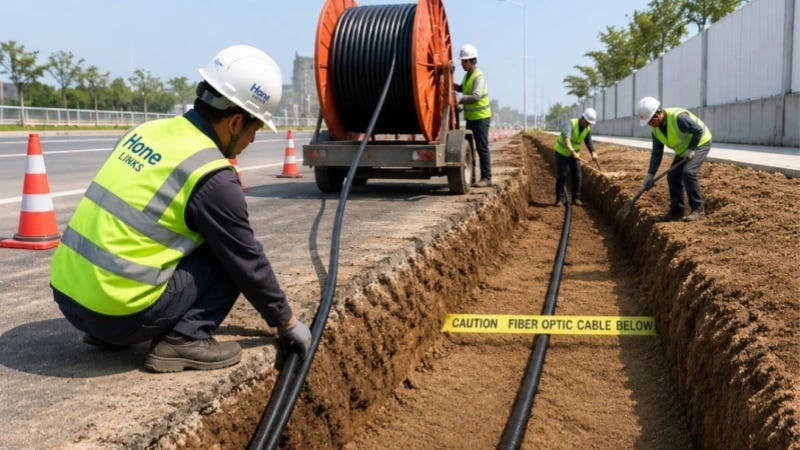
Shenandoah Telecommunications’ Glo Fiber buildout ends this year, and private infrastructure investors’ repeated fiber deals frame a…

$DJT Downside still 100% from here
Quickly back to very attractive levels to put back on short exposure on the software sector after the manic move in Q3 and digestion in September before the sudden crash up in the past 10 days..... AI wins software is in trouble - faster disruption more competition, pricing pressure AI trade is over, software is going to catch down as the market will tank and this won't sit that out (the are not cheap) Disruption and pricing is the tailwind, now valuation is too. Rates don't hurt either as up until recently these were considered long duration assets Recent results were status quo for most (no real acceleration) and pitch AI cohort growth as growing xx% but its not uplifting the total growth they are just changing what they charge for to show the street what it wants to hear) -- that phase is over, valuations are in many cases at year and multi year highs. SBC still a problem. Now comes renewals in the back of this year and thats where the issues will start to emerge on retention and pricing. An thats day 1 they will snowball overtime for the vast majority of these companies. Plenty of names to choose from: $PAYC $DOCU $TEAM $DDOG $PCTY $GDDY $RNG
@secretlyaninja @mbamcnulty mkt used to look 18 mos fwd & annualizing Q4 of a growing co would = a conservative look at where the stock should trade. Now unless it is beat & raise next Q nobody cares. Until they do. Whether $3.80 or $4.50 or '27 or '28 any reasonable mult gets a lot of upside for $LQDA

@valuedrift It's been trading almost 1:1 with whatever has been going on with $ARKG/speculative bios bucket. But yes, intellectually you are correct.

@ShitFund I remember being on the opposite side of him on $OPEN.

I asked @grok to assess how the full results that $MRNA plans to release at ESMO that would strengthen or weaken the impression from top line results announced in August. The results are copied below. Seems reasonable to me at first glance (without having checked any of the data cited) -- anyone have a different view? ~~~~~~~~~~~~~~~~~~~~~~~~~~~~~~~ Items that could weaken (or further strengthen) the positive view include: - Magnitude of benefit: Hazard ratios (HRs), confidence intervals, absolute risk reductions, and landmark rates (e.g., 1- or 2-year RFS/DMFS). The earlier Phase 2b KEYNOTE-942 showed an RFS HR of ~0.51 (~49% relative risk reduction) and a DMFS HR of ~0.41 at 5 years. A substantially weaker Phase 3 effect (for example, HR closer to 0.75–0.85 with modest absolute benefit) could make the result look less compelling given the complexity, cost, and personalized manufacturing of the therapy. A comparable or stronger effect would reinforce the topline. - Statistical robustness and maturity: Width of confidence intervals, exact p-values, number of events, and median follow-up duration. Narrow intervals and a solid number of events support reliability; wide intervals, low event counts, or very short follow-up at the interim analysis could raise questions about reproducibility or durability. Subgroup consistency: Results by stage (IIB/IIC vs. III vs. IV), age, BRAF status, PD-L1 expression, geography, or other factors. Benefit concentrated in higher-risk stages or selected subgroups would narrow the practical population and commercial opportunity relative to a broadly consistent effect. Durability (Kaplan–Meier curves): Early separation that later plateaus or converges would suggest limited long-term impact. Sustained separation would support durability. - Overall survival signal: Any immature OS HR, death counts, or curve separation. An adverse or flat trend (while not decisive this early) could temper enthusiasm pending mature data. - Safety, tolerability, and feasibility details: Grade ≥3 adverse events, serious AEs, immune-related AEs, discontinuations, quality-of-life/patient-reported outcomes, and any manufacturing metrics (production success rate, turnaround time, or treatment delays). Higher toxicity, discontinuations, or practical barriers could offset efficacy gains. The topline noted consistency with prior experience and no new signals, but granular rates matter. - Stronger, consistent, durable efficacy with manageable safety and feasible delivery would solidify the positive assessment, support regulatory filings, and underpin commercial expectations. Marginal magnitude, inconsistency across key subgroups, limited durability, or meaningful safety/feasibility issues would lead to a more cautious view of clinical utility and value, even though the trial formally met its endpoints.

Thank you again for these great $WAL Pr calls, Bill
@ThothCapital @valuedontlie I would love to/can’t wait to read your $calm report

RTX’s $289 billion backlog, including $119 billion in defense, supports growth from defense contracts and commercial aerospace aftermarket…
 Blake Winiecki 5 clicks
@Asymmetric_Val Without taking a look at $COF 100%
Tags: $JACK $GPRN $CRMT $HTZ $RTB $ARQQ $BTQ $MNRA $RUM $GPRO $SWMR $EQPT
@mbamcnulty Mark ILD @ $0. Assume $LQDA continues to + $20M in PAH revs per Q (Q3 was $30M) and @ YE'27 its annualizing ~$930M revs. At $1B they said "over 50%" would be FCF so call it $465M in normalized FCF or ~$4.50/share. Even very low multiples get you alot of upside in ~14 months.
@valuedontlie Colin would you pick $CALM over $VITL and why? Thank you, love your research and opinions

El Pollo Loco plans 18 to 20 FY26 openings, including 15 franchised New York stores over five years, as asset-light expansion and…
 Pedro Goulart 1 click
$BSP really have to question Gregg as the right to choice to lead Berkshire with this BSP investment. While it's meaningless in size to Berkshire, it's what it says about the investment process under Gregg and how they are underwriting managers. This does not strike me as a Buffet investment on any level. Something to watch as he continues to deploy capital....not sure how you get comfortable with an acquisition roll up of intangible assets, especially against the unknown of ai disruption. They should go back and study the intangible asset roll ups from the prior decade in the pharma space

That outta help - $CRWV

I believe there's a high % chance $QURE gets its approval. Stuff like this from the FDA, in my eyes, further strengthens that belief. They want to generally make the review criteria more clear, more patient (advocacy) focused, and more flexible about what evidence is reasonably attainable. Not lenient for the sake of being reckless, but because there are situations that warrant different criteria. I think it would be quite incongruent to be vocally advocating for these new policies (which are suspiciously similar to the QURE debacle), while simultaneously crushing a high-profile drug approval like AMT-130. Incongruent doesn't mean it can't happen, just that it seems like the tail outcome. "The new framework is intended to enable patient input at earlier stages and at milestones throughout the development and review process. It also aims to provide greater clarity and consistency to drug developers on regulatory decision making. The agency said in a statement that it should take into account what evidence is reasonably attainable, given the nature of rare diseases." To be clear, FDA officials denied that the initiative was motivated by the earlier controversies. The connection to AMT-130, and the positive read-through, is my interpretation. "In an interview, senior officials at the agency denied that the initiative had anything to do with the earlier controversies" --- Disclosure: Creek Drive and its affiliated funds holds positions in QURE. Views expressed are current opinions for information only, subject to change and are not investment advice or a recommendation to buy or sell any security. Investing involves the risk of loss and past performance is not indicative of future performance. See the disclosures link in my bio for more important information.

Now that the Bumble $BMBL deal is confirmed, the key question is: when will this deal close? Usually we get an indication of that in the press release announcing the deal but that was not the case here. There is also something called the "outside date" that is specified in the merger agreement filed with the SEC and this is the drop dead date by which both parties expect to close the deal. Like most things in life, there are exceptions and outside dates often have extensions. In the case of Bumble, the outside date is July 12, 2027. Ithaca has also indicated that they don't plan to close before November 26, 2026. So we land somewhere between November 26, 2026 and July 12, 2027. The average time it takes deals to close based on about 15 years of our internal data tracking M&A is 120 days. Biotech deals generally tend to close much faster and the average there is closer to 90 days. Considering there doesn't appear to be shareholder, financing or antitrust risk here, I would not be surprised if this one closed in less than 90 days. Personally I would prefer that it close in 2027, so I don't have to think about short-term gains this year. Another situation I was involved in last year (the narcolepsy drug company Avadel), ended up closing just days before it would have turned into a long-term position for me and we ended up paying short-term capital gains on it. This is one of the issues with all cash deals that force a tax event for long-term shareholders.

Bending Spoons now up 45% on this news. If you are thinking this can't possibly be real, then the source document is an exhibit filed with $BSP's 6-K today:

CEO and chairman of $DFH has a significant commitments in related party land banking asset manager, and from which he has already received over $10m in distributions? 🆒🆒🆒 More like a Dreamfinder's job amirite?

Look at slide 15: $PESI
Fantastic article on $PESI here: Extremely undervalued stock and market is putting way too much emphasis on whether or not Washington Ecology approves grouting at 200 East sooner vs later. It's going to happen and the West is already approved. $100+ stock moving forward. This is a $4.4 BILLION dollar project and $PESI has a market cap of just $276M. I expect them to be free cash flow positive by Q4 of this year and then (as you can see in article) the volumes really ramp-up whether grouting is approved or not (and it will be as soon as Ecology can approve without it bolstering Republicans in the mid-terms by giving Trump credit for accelerating a project no other administration cared to accelerate - a huge win for the people of Washington). PESI is the ONLY vendor listed on the official DOE. The facility is only one mile away plus it's a huge benefit to the local unions whose workers get to benefit from a local problem. Governor's of states with competitors have already said there's no way they'd allow the liquid nuclear waste to be transported through their state in order to be treated. There is no competitor for PESI. The market is completely sleeping on this. PESI has line of sight towards potentially $500M of annual, incremental revenue in the coming years with a revenue stream that will last DECADES yet trades at $277M. Not many opportunities like this come along and there is practically zero exposure to any sort of market or economic downturn. This is a court mandated clean-up project that will accelerate no matter what the economy does. Not a recommendation - do your own due diligence - but this is now a significant position for our clients.
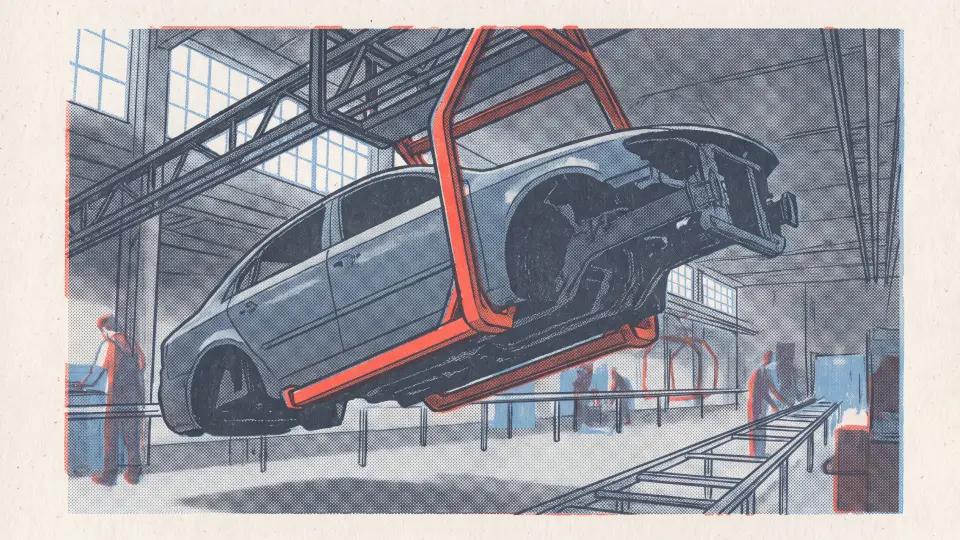
Tesla’s Q2 revenue rose 26%, but operating margin fell to 1.4% and free cash flow was negative $1.1 billion as valuation reached 215x…
 Julia Ostian 7 clicks

@intelfabs Thanks! $INTC
October 2026 market commentary covers SOLS’s cancelled merger, a hypothetical Starbucks-Chipotle deal, Russell 2000 weakness and AI…

Went to my local GameStop $GME today. The manager said they have more pre-orders to Zelda: Ocarina of Time than they do for GTA 6. The pre-orders are so much they are going to have a midnight release which they haven't had in years. He also said they going to start rolling out card tournaments inside of the store.
October’s podcast covers Starbucks-Chipotle merger rumors, SOLS’s cancelled deal, FICO competition, IMAX and Netflix, Oura’s withdrawn IPO,…

Almost every BDC trades below NAV right now. $CSWC trades 1.4x, and one of five that are actually up YTD. Internally managed, solid track record, minimal software exposure. On the flip side, this is LMM lending, so buyer beware. They issued bonds last month that are now at ~97 / 7.3% / 223bps. I took a look at the rel val here:
Been tough this year when you refuse to mindlessly speculate on the AI Mania… Those trade schools ($LINC and $UTI) have really hurt. However, I have added real size the whole way down, and they’re now one of our largest exposures. This was offset by solid performance in refiners ($MPC and $VLO) which I have now harvested. The rest of the book was mostly a wash…
Buffett trying to make sure they don't turn off those AOL servers. $BSP $BRK.B
I listened to the CEO of Nubeva Technologies $NBVAF (TSXV: $NBVA), a ransomware recovery company, explain why AI data labeling companies came to his team. Data labeling companies (firms that turn experts’ knowledge into training data for AI labs) have asked Nubeva whether it could help them label what each malware binary does, like whether it’s secretly encrypting files. Malware often arrives as a binary, a compiled program in machine code, and many are obfuscated, or scrambled to hide their purpose. CEO Randy Chou said in an October 5, 2026 interview on Nubeva’s YouTube channel that Nubeva has spent the last 7-8 years learning to spot homemade encryption, meaning encryption that ransomware authors write themselves instead of using a standard method. Homemade encryption is harder to catch, since it doesn’t match any of the standard methods security tools know. Here’s how Chou described what frontier models (the most advanced models from labs like OpenAI and Anthropic) can figure out today: “Frontier labs out there with their cybersecurity fully enabled, when they do full automation, they can approximately figure out 30% of the malware binaries. That’s the published numbers that are out today.” That claim is in line with GPT-5.6-sol’s 30.5% score on SRE-Bench, a Columbia University-led test of AI models on 262 binaries, but OpenAI’s GPT-6 Astra has since reached 56.9%. Chou said that for the other ~70%, a model might flag a binary as weird but can’t say what it does. He mentioned that some malware arrives compressed and obfuscated, then checks whether someone opened five apps, like a browser and Microsoft Office, in the past 72 hours, a known sandbox-evasion technique. If not, the malware assumes it’s inside a sandbox (an isolated computer analysts use to test suspicious programs) and does nothing. Today, Chou said, a small group of specialist cybersecurity labs takes malware apart by hand, and analyzing a new ransomware family typically takes weeks or months. He added that Nubeva has tested binaries written by its own engineers that frontier models couldn’t explain. That’s why Nubeva is now training its own model, which has no internet access, with “hundreds and thousands of AI agents.” The training only just started, but Chou said the timeline Nubeva is working to is “days and weeks,” not the 6-12 months he’d have quoted before AI agents. “I’m putting all my focus on this now,” he said.
Morgan Stanley Direct Lending trades at a 32% NAV discount as non-accruals reach 2.9%, NII and NAV decline, and dividend coverage falls to…
 Rubicon Associates 1 click

Berkshire now has a $1.3B position in Bending Spoons. Stock is up 38% (to $52) on news that Berkshire bought $330M via private placement at $33/share $BSP

August write-up on Cal Maine $CALM now available to freebie accounts on VIC... Good overview of the situation... at ~$60-65/sh it looks like an asymmetric bet with a 4-6 quarter time horizon
D.A. Davidson analyst Gil Luria (has a $100 price target and a neutral rating on $CRWV ) says “the equity value is going to be zero” on a podcast released today A bit conflicting there Gil
D.A. Davidson analyst Gil Luria (has a $100 price target and a neutral rating on $CRWV ) says “the equity value is going to be zero” on a podcast released today A bit conflicting there Gil
Happy 5-year anniversary to those who celebrate. $UPST
Short squeezes with high alerts this morning: $GLND and $TGL. We might be getting back into a bit of a short squeeze environment soon.
$CRDO Interesting. Credo might help with memory shortage.
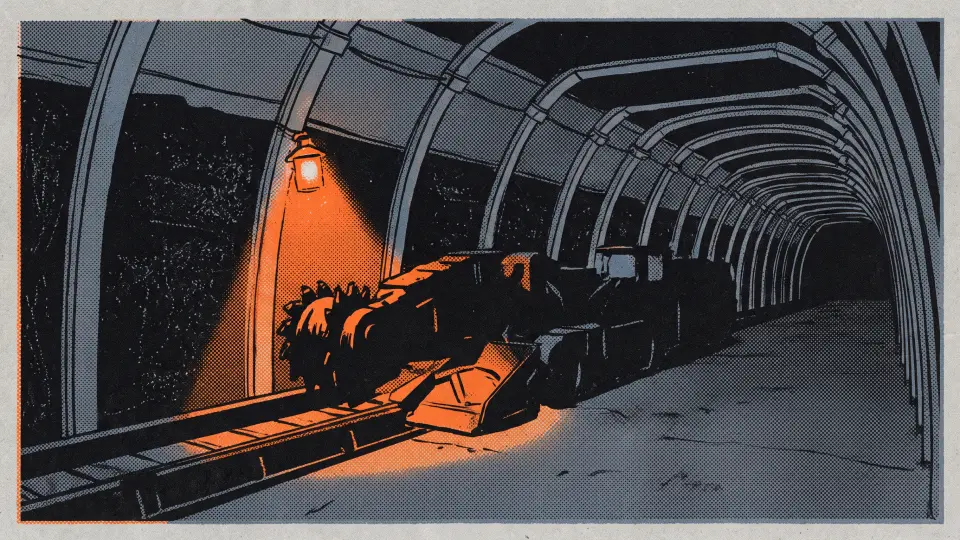
Peabody Energy’s recovery case hinges on Centurion, coal-market leverage, capital allocation and balance-sheet strength amid commodity…
 CAN Analyst 1 click
The Cable One deal is getting messier by the day. The company had lined up a $1.3bn financing (backed by GTCR) to buy the rest of MBI and pay off its B-4 TL. CoBank then bought ~$90mm of the RCF the day before the deal was set to close (according to Cable One) and sued to block it the next day, claiming cable was insolvent and overpaying. Now a judge has granted a TRO. Bear in mind, all of this is happening while the business keeps shrinking.. $CABO
@valuemaverick1 I have no view whether $33 is a good price for $BSP, but I'm comfortable selling calls in the 70s.

@GodelTerminal $PM market share 85% $TPB market share 15% Source: me looking at the box

@Musecases I took the "L" at the open on $BSP. It was small so lost ~50 bps. No borrow at IBKR, could continue to squeeze until the lock up in late Dec. Can't believe Berkshire owns this POS. Makes me question Greg.
Berkshire or no Berkshire, $BSP is awfully rich here. I'm a seller of far dated otm calls.

$TSEM remains one of our highest-conviction holdings, even after we trimmed the position in our 4Q26 rebalance. We wanted to keep Tower at its 6.1% portfolio weight despite a roughly 25% fall in its share price over the past quarter. To make room for new holdings, we trimmed the weight to 4.75% and banked some profits. With SpaceX ($SPCX) also becoming a larger holding, we are limiting further additions to avoid concentrating the portfolio in a few companies. Our confidence in Tower's technology remains strong. We think Tower's competitive advantage comes from combining chips that send and receive data using light with the electronic chips that drive and control them. Next-generation optical connections require these components to exchange more data within a smaller space. Hybrid bonding achieves this by joining the chips through densely packed electrical connections that move large amounts of data in a compact package. In our view, Tower's capabilities here are effectively unmatched among Western suppliers. Tower has also added manufacturing capacity more successfully than we expected. It can fulfill more customer orders itself, leaving less business for $GFS. Customers have less reason to switch to a supplier whose technology they consider weaker when Tower can meet their needs, so the capacity expansion strengthens our Tower thesis and weakens the case for competitors that rely on orders Tower cannot accommodate.

ASML’s €11.7 billion quarter benefited from €3.3 billion in installed-base sales and operating leverage, while the MATCH Act threatens…
*BERKSHIRE HATHAWAY INVESTS ADDITIONAL $330M IN BENDING SPOONS Today I learned $BRK.B had a stake in $BSP (now 4%)

Visa’s network economics support long-term compounding, but a 1.7–1.8 forward PEG and risks to high-margin payment revenues limit near-term…
 C Jessen 36 clicks
The CEO of Nubeva Technologies $NBVAF (TSXV: $NBVA) expects its third AI patent to be approved within two months, calling the rest “signature paperwork.” Nubeva, a ransomware recovery company, has been granted two of the four AI patents it applied for in 2024. CEO Randy Chou said in his October 5, 2026 interview on Nubeva’s YouTube channel that the patent office had sent an amendment on the third patent that week, which Nubeva plans to accept. The third patent covers detecting “nefarious or improper encryption” inside a binary (a compiled program in machine code), meaning Nubeva can tell when malware is encrypting files, even when the encryption is hidden. Spotting hidden encryption is also what drew AI data labeling companies (firms that turn experts’ knowledge into training data for AI labs) to Nubeva, Chou said. Nubeva hasn’t heard back on the fourth patent. Chou said the patent office told the company that AI patent applications are now taking much longer, with examiners reading filings as long as 150 pages vs. the ~30 pages he typically files (probably because of AI writing the patents). So the fourth patent, the last one Chou wants granted before pursuing a potential partnership or sale, is just a waiting game.
Applied Materials leads wafer-fab deposition and ranks third in etch, positioning it for tougher 3D chip manufacturing as investors weigh a…
Wow - $GLND is uniquely positioned to capitalize on this!

First Tracks Biotherapeutics’ ANB033 posted stronger Phase 1b celiac efficacy than Teva’s IL-15 inhibitor, with $168 million funding…
 Equity Eagle 9 clicks
@charrisinvest He doesn’t. Buying those unexercised rights shares of $BAFN was free $. The man struck a great deal for himself here. All set up by the idiocy in the c suite and board.
Not good for $FUN
@grok @grok are these good or bad convert terms for $CIFR?
IonQ’s $1.3 billion all-stock Elisity acquisition dilutes holders but targets engineering challenges in its quantum-computing buildout.
 Dilantha De Silva 2 clicks

I had an LP call my “shitco” … “snackwell”…. They can “snack” on this. $STGW @Mark_Penn @jayleveton @ballan11 Funny thing is it’s still 6x PE in 2027 ahead of a generational 2028 political year. $makeshitcosgreatagain $compoundersat30xPEnotthesamewith10yrat5pct $makingmoneythehardway. Or easy way?
We think memory consumption can keep growing while memory prices fall. Memory prices depend on how quickly supply grows, not only on how much demand grows. Existing suppliers and Chinese manufacturers are expanding production. If new production and sales of distributor stock outpace demand, consumption can rise while prices decline. Chinese manufacturers reportedly hold enough lithography machines for three to four years of expansion. That stockpile could allow them to keep adding production capacity even if sanctions block further deliveries of the affected machines. Reports of large distributor inventories and falling spot prices for DDR memory point to a further source of supply. We have not verified the inventory estimates. If distributors start selling down the stock they accumulated in anticipation of shortages, that adds to supply and puts further pressure on prices. We hold SanDisk ($SNDK) for storage and high-bandwidth flash (HBF). HBF could let flash deliver data fast enough for more demanding computing tasks. That gives us a way to benefit from growing data demand without relying entirely on high memory prices.
Rothschild out with a great piece on $KYIV. Such a strong fundamental business hampered by an enormous war discount. Any credible peace deal would not only remove the geopolitical overhang but also accelerate the underlying business through lower costs, reduced capex and significantly higher FCF. A double catalyst: multiple expansion (war discount removal) and fundamental acceleration…
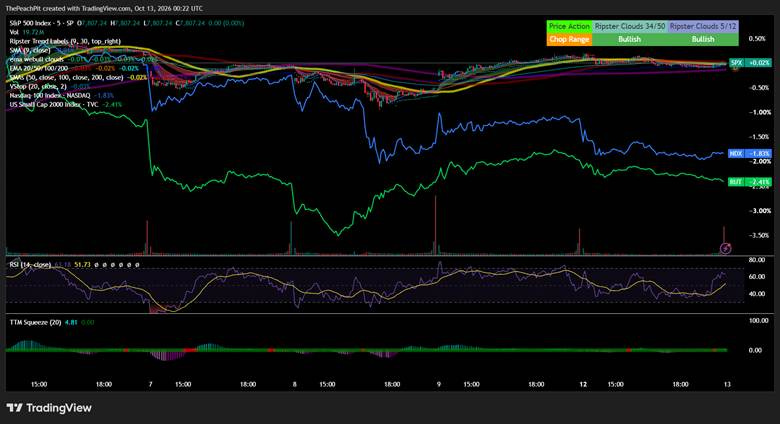
Howmet Aerospace is framed as a beneficiary of turbine and aircraft-engine demand, while J.B.
Palantir is cut to Hold after a 35% multiple-driven rally, while C3.ai is rated Sell on stalled revenue, expensive valuation and weak…
 The Alpha Analyst 11 clicks
@MDCTrades305 @grok if the $CIFR convert deal gets pulled, what happens to all of the delta hedging from yesterday?

McBee, a $CRWV co-founder who leads $CRWV’s financing efforts, said winning IG ratings for its chip-backed debt & eventually the $CRWV itself, would allow it to borrow from insurers whose capital “is unlimited.” Similar to how they packaged subprime debt to get an S&P AAA rating.
Lennar cut build times to 116 days and adopted an asset-light land model, while gross margin fell to 15.8% from 27.5% as land costs rose.

Lennar grew from a Miami builder into one of America’s two largest homebuilders, controlling land largely through options and land banks…

Lennar’s second audio program examines the homebuilder’s business for professional investors and housing analysts.
Why hasn’t the $CIFR convert deal priced? 🤔

ASML reported Q3 sales of €11.7 billion, up 55% year over year, and guided Q4 sales to €14.2 billion to €15.2 billion amid capacity…
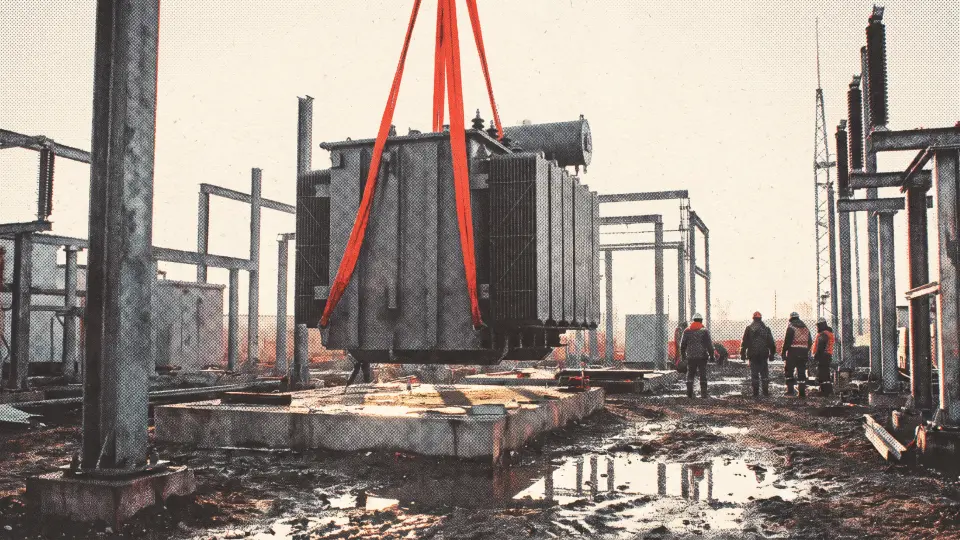
Eaton’s backlog, data-center, grid and aerospace demand, plus a 450–500 bp H2 2026 Electrical Americas margin recovery, support the growth…
 Value Capital Research 10 clicks

Femasys' $30 million PIPE funds its fertility and birth-control launch, with upside tied to OB/GYN sales execution and health-system wins.
 Daron Evans

Asian insider buying rose 19% to US$2.4 billion across 930 September transactions, led by Grab CEO Anthony Tan’s US$30 million purchase…
