

W.P. Carey: Rising Rates, Rising Rents
W.P. Carey’s CPI-linked leases cushion inflation, but capped escalators, sub-7.5% acquisition cap rates and refinancing costs threaten AFFO…
 REITer's Digest 2 clicks
Sector
Everything our editor has picked under this sector, best first.
197 stories
W.P. Carey’s CPI-linked leases cushion inflation, but capped escalators, sub-7.5% acquisition cap rates and refinancing costs threaten AFFO…
REITer's Digest 2 clicksAdding long exposure (through $IWM and $RSP mainly) makes me feel sick, which backs up my belief that the timing is good to add long exposure.
AI infrastructure’s $6.3 trillion financing gap is driving structured debt and asset-backed solutions, starting with Meta’s planned 5GW…

Treasury yields surged as the Fed’s expected hike shifted to December, while Micron beat guidance and forecast $61.5 billion in quarterly…
*EQUAL-WEIGHT S&P 500 DOWN FOR 7 STRAIGHT WEEKS, MOST SINCE 2022 $RSP has been horrendous. I miss when breadth was healthy https://t.co/hsKW5s6ODt
The $VIX closed at 14.87 on September 25, while the S&P 500's $SPY realized volatility over the past month was 10.8. That 4.1-point gap is the premium option buyers pay over what the index has actually done, and it's the newest row in the volatility section of my macro dashboard. The other volatility rows (VIX, the MOVE index for Treasury volatility, the VIX term structure, and SKEW) all live inside the options market, while this one checks option prices against the index's actual moves. A wide gap means protection is expensive relative to recent moves. A negative gap means the market is moving more than options priced in, which is what a selloff in progress looks like. I added it because a VIX of 15 means something different when the S&P 500 is moving 10% annualized than when it's moving 20%. The gap is near its 5-year average of 3.3 after swinging from -1.2 in early July to 8.4 by late July, 0.6 in mid-August, and 6.7 on September 11. Stocks look calm next to bonds right now. The VIX sits at the 23rd percentile of its 5-year range, while the MOVE index jumped from 80.6 to 96.0 in the week to September 25.
$TLT negative on the day, $RSP and $IWM retracing their big up moves. This market is wild.

American Healthcare REIT’s senior-housing and outpatient portfolio is driving FFO growth and dividend safety, while a rich valuation limits…
 Albert Anthony 1 click
On timber companies $RYN and $WY. If the long end keeps going up. 6-7% which I think is definitely possible. Then timber companies will get crushed. But my overall thesis remains and is happening in real time: energy-driven inflation, fiscal deterioration, failed treasury buybacks, the Fed losing the long end. Right now the market is repricing duration before it reprices scarcity. This gap can run for decades. Equities were destroyed in real terms through 1973 and 1974. But hard assets won the decade. I’m praying both of these timber companies keep going down. Land is my favorite asset to own. You can see it. You can touch it. You can hunt on it. You can fish on it. And you can grow productive timber on it. Huge swaths of land have massive optionality. Let’s hope Scott “I am the house” Bessent continues to lose the bond market. I want to see a bloodbath here.
Would be more interesting if it was $QQQ, but something like this seems good for hedging the market melt up possibility. I'm curious to see if the margin requirement turns out to be the standard 15% on IBKR. https://t.co/3hvxvkfJ1H
Good god $WY is getting low here. My guess is rates keep going up and assets like this trade down as people pour into yields. But eventually these become a load the boat up buy. Massive inflation hedges and owning large swaths of land creates multigenerational wealth. https://t.co/KvWmv9gBog

Occidental Petroleum could benefit as declining shale inventories and high rates curb industry capex, tightening oil supply against demand…
 Gen Z Investor
Corporates (spreads are tight, if this gets rly bad spreads should blow out). Long breadth, consumer exposure and small caps through stuff like $IWM, $RSP, $XSHQ, $RSPD. Short the narrow winners like $QQQ, $SMH, $AAPL, $CRWD, $ILMN, $NBIS. Also shorting long crowded bio longs
@svrnco @ASchulz888 @irbezek Hmm... $TLT implied vol is <15% for the January '29 expiry. Looks like an ATM straddle pays off if rates move by at least 1.5 percentage points in either direction. Probably not a bad trade.
Beyond Meat’s Q2 2026 revenue fell 8.2% as U.S. retail and foodservice volumes declined, while a flatter, not inverted, Treasury curve…
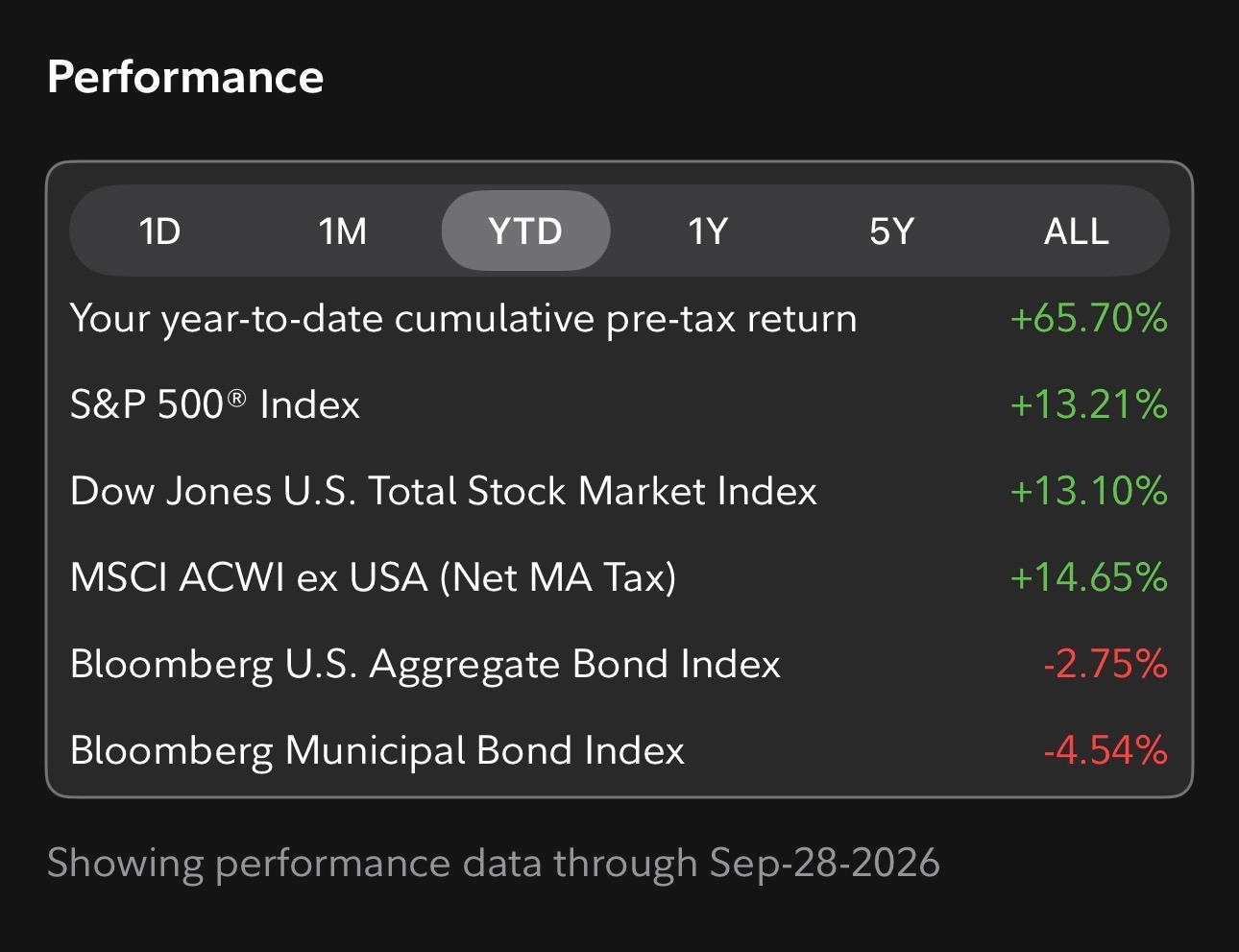
Portfolio returned 65.7% through September 28 versus the S&P 500’s 13.2%, while backing Tourmaline, EQT, Athabasca and SLB on gas demand…
@buysidedigest @GHadjia The market has destroyed high leverage type businesses as rates have escalated. $PAR besides its business challenges staying relevant in a new AI world (still to be seen) is caught in the basket with names like XRAY, FOUR, CCOI, PZZA they have all been rapidly sold this month
Selling low vol international stuff and buying risk and rate exposure today (with some hedging using $ANGL, $SMH and $QQQ). Purely a sentiment and positioning thesis. Historically I've been too cautious in these sorts of dislocations so im trying something new.
@ArgonathCapital The real trade is $RSPD/ $QQQ. That's blown out completely.

Shake Shack combines 23% restaurant-level margins, 703 locations and positive free cash flow; the bullish thesis targets $4 billion…
 Security Analysis 1 click
A contrarian pick, for AI-like return in real estate. $STWD (Starwood Property Trust) has an asymmetric setup for a possible ~50% total return over the next 12 months If Treasury yields peaks and then declines back with the next year, then a combination of its current 13.3% div yield + rerating back to above its undepreciated book value ($19/share) results in close to 50% return for this best of breed lender. True Multi-Cylinder Engine: Unlike pure-play lenders exposed to a single-sector, $STWD operates across commercial lending, infrastructure, and owned real estate. Built-in Counter-Cyclical Hedge: Its Special Servicing and Investing arm actually benefits when market volatility rises, collecting servicing fees that insulate cash flows when traditional credit tightens. Office Risk Is Overblown: U.S. office makes up less than 8% of its total asset base, with the balance anchored in residential, industrial, and essential infrastructure. Unmatched Dividend Track Record: Management has maintained its quarterly dividend for over 17 yrs without a single cut through multiple rate cycles. Collecting a 13.3% cash yield while waiting for a yield-driven rerating could deliver an equity-like upside with institutional downside protection.

Micron’s DRAM margin commentary, Core PCE and payrolls headline a week also shaped by Iran ceasefire talks over the Strait of Hormuz.

U.S. Treasury yields climbed above 5% as markets priced further Fed tightening, while Meta’s AI-agent announcement lifted risk appetite…

Encore Capital Group’s shift to higher-yielding U.S. debt portfolios lifted cash efficiency margin to 60.2% and ROIC to 13.7%, despite…
 Growth Stock Hunter 1 click
