@kevin__mak
Kevin Mak on X
$ABVX Anyone remember this day (chart)? We call it "Wednesday". As in, it was just a random Wednesday, with no news, no events, no nothing, the stock puked $20 from $95 to $75 because "maybe someone knows something". (June 24, 2026) Understanding how skittish this specific stock is, makes it a very easy target for a short report, especially one where the position doesn't plan to stick around. The incentives are really just that simple. Disclosure: Creek Drive and its affiliated funds holds a long position in ABVX. Views expressed are current opinions for information only, subject to change and are not investment advice or a recommendation to buy or sell any security. Investing involves the risk of loss and past performance is not indicative of future performance. See the disclosures link in my bio for more important information.
 @stockgutter
SG on X
$ABVX @scorpionfund short report is worth reading. I remain long, but consider Kir a serious person. He has identified some great shorts in biotech and related spaces such as $DNA. That said, I don't find this to be one of his more compelling reports. And piling on after an initial post-Scorpion drop has not historically been a good strategy. $HRMY recovered. Soleno was bought out at a premium. $TWST has gone up a lot since his report.
@stockgutter SG on X
$ABVX @scorpionfund short report is worth reading. I remain long, but consider Kir a serious person. He has identified some great shorts in biotech and related spaces such as $DNA. That said, I don't find this to be one his more compelling reports. And piling on after an initial post-Scorpion drop has not historically been a good strategy. $HRMY recovered. Soleno was bought out at a premium. $TWST has gone up a lot since his report.
@stockgutter SG on X
$ABVX @scorpionfund short report is worth reading. I remain long, but consider Kir a serious person. He has identified some great shorts in biotech and related spaces such as $DNA. That said, I don't find this one to be one his more compelling reports. And piling on after an initial post-Scorpion drop has not historically been a good strategy. $HRMY recovered. Soleno was bought out at a premium. $TWST has gone up a lot since his report.

Natera grew Q3 revenue 34% to $794 million, raised 2026 guidance to $3.005 billion to $3.035 billion, and named oncology head Solomon…
BL Cestrian Capital Research 4 clicks
@kevin__mak Kevin Mak on X
$CMPS Daily short interest data from Markit suggests that on the Nov 2nd "Usona filed their NPV" rumor, triggered ~5M shares of incremental short positions. My interpretation: The news came out earlier in the morning and the stock opened weak but not too bad. Then throughout the morning "someone/s" was leaning into the stock and just crushed it. It could have been a holder (or multiple holders) selling, or it could be new people shorting. This data from Markit suggests the latter. (Note that this is based on settlement data, so short sales that happen on 11/2 don't show up until 11/4 and 11/5.) I prefer to see people shorting versus longs selling, as it's more likely for the shorts to cover, versus a large long leaving the stock has a low chance of coming back. If they're still short by the time of the approval announcement, hopefully they get squeezed. Maybe today's strength is them covering and moving on? Disclosure: Creek Drive and its affiliated funds holds a long position in CMPS. Views expressed are current opinions for information only, subject to change and are not investment advice or a recommendation to buy or sell any security. Investing involves the risk of loss and past performance is not indicative of future performance. See the disclosures link in my bio for more important information.
 @SowingAlphaSeed
Farmer on X
$XBI is extra schizo today
Daiichi Sankyo’s 43% share-price decline leaves Enhertu’s $4.98 billion FY2025 sales and Datroway’s launch supporting a lower-valued…
SA  Another Mountain's Rock Investing 5 clicks
@kevin__mak Kevin Mak on X
$CMPS Company is presenting at Jefferies today. Q&A asked about NPV and the company believes there's no impact on them. Disclosure: Creek Drive and its affiliated funds holds a long position in CMPS. Views expressed are current opinions for information only, subject to change and are not investment advice or a recommendation to buy or sell any security. Investing involves the risk of loss and past performance is not indicative of future performance. See the disclosures link in my bio for more important information.
 @cfrischer1
Charles Frischer on X
@VeleryonSteal I am disappointed $OMER missed the revenue estimates. Outlook is still very good over time. $NN still has very valuable spectrum that satellite and MNOs want. Market is tough right, no doubt.
Amneal Pharmaceuticals posted its fourth straight earnings beat, with Q3 revenue up 10%, raised FY26 guidance and an expanding biosimilar…
SA  Albert Anthony 4 clicks
Electra Therapeutics trades near $150 million enterprise value after its broken IPO, with SURPASS pivotal data funded and ipsoprubart’s…
SA  Equity Eagle
Travere Therapeutics' FILSPARI has two FDA approvals and is driving revenue growth, while TVTX shares have nearly tripled since August 2025.
SA  Out of Ignorance 3 clicks
Iovance’s Amtagvi revenue rose 77% to $101.6 million as a lung-data update drove a 47.6% stock drop, despite weak response rates outside a…
SA  Seeking Edge 5 clicks

Harrow targets $350 million in 2026 revenue as VEVYE and IHEEZO grew 35% and 62% sequentially in Q3, supported by sales-force expansion.
SA  RiverBoat Investing
Kura Oncology's $5.85 fair value assumes limited room for execution misses as quarterly cash burn approaches $72 million and frontline data…
SA  Gary Aquilina 2 clicks

DiaMedica’s DM199 faces November 2026 fetal-growth-restriction data and a Q1 2027 ReMEDy2 stroke interim analysis, alongside planned…
SA  Terry Chrisomalis
 @StableBread
Fajasy on X
Six stocks I’m still following filed Q3 numbers: → $QXO: Operating cash flow was only ~$1M in Q3, down from $213M a year ago. → Boost Run $BRUN: Says it has secured $600M of non-dilutive project financing, but a Georgia delay leaves year-end ARR near my bear case. → Reviva $RVPH: Valued at 26.5% of its cash, but needs $50-55M for its second Phase 3 trial and FDA filing. → DigiPowerX $DGXX: ~$30M short of its ~$350M 2027 capex plan, even counting the $200M loan it hasn’t closed yet. → Agility Robotics $AGLT: Down 36.1% from its first-day close, with a little over two years of cash. → FORT Robotics’ SPAC $NTWO: 82% redeemed, and its price implies 36.7x FORT’s TTM revenue. So did the quarter change my call on any of the six? That’s what I answer in my new Q3 update, including whether I’m buying, selling, or holding each name.
@StableBread Fajasy on X
Read the proxy on the reverse split and the Nasdaq uplisting here: Here's my August 20 update on $RVPH (you can read most of it for free):
@StableBread Fajasy on X
Reviva Pharmaceuticals $RVPH now plans to apply to relist on Nasdaq in H1 2027, and its December 18 annual meeting asks shareholders to approve a reverse split of up to 1-for-100 to get there, nine months after its last one. Nasdaq suspended $RVPH on May 14 for trading below its $1.00 minimum bid price, and the stock has traded on the OTC since. At $0.35/share, $RVPH's market cap is ~$4.6M against $17.5M of cash as of September 30, or ~26% of its ~$1.33/share of cash. In my August 20 update, I wrote that steady ATM dilution looked paused, since Reviva said it doesn't expect to use its $50M ATM (selling new shares straight into the market) while it's quoted on the OTC. $RVPH's Q3 10-Q, filed November 13, says the same, and adds that the shelf registration behind the ATM expires February 13, 2027. And a company Reviva's size (under $75M of public float) needs an exchange listing to file a new shelf. RECOVER-2, the second Phase 3 trial of Reviva's schizophrenia drug brilaroxazine, plus the approval filing will cost $50-55M, CEO Laxminarayan Bhat said on an April fireside chat, about 3x Reviva's cash. The 10-Q says Reviva has no committed external sources of capital, and the Q3 earnings release still lists partnering as "pursuing partnership opportunities." So I read the reverse split and the relisting as the end of the pause in dilution: Back on Nasdaq, Reviva could sell stock again, through a new shelf or a public offering, to cover most of the $50-55M before RECOVER-2 starts. Cash fell $2.4M in Q3, and Reviva still says the $17.5M covers outlays "into the third quarter of 2027," close to the "into July 2027" it gave in August. The U.S. patent office also granted Track One priority examination to the patent application on a new formulation of brilaroxazine, which could extend the drug's protection to 2046. Track One aims for a final decision within ~12 months, and the decision can be a rejection.
@kevin__mak Kevin Mak on X
$CMPS Some questions about the CNPV program being shelved and how it will affect Compass' application. The honest answer is "nobody knows", though FDA has said on the record that career staff are still reviewing applications that already hold a voucher (a bit vague!). My hope is that they continue the existing process. CMPS (and Usona) have been on a rolling submission, so there is an established workflow to "keep the ball moving". See the transcript below for a sense of the relationship they've built with the FDA over the past months. Also, my guess is that 30-70% (yes, wide range) of the review is already "done", so FDA isn't starting from scratch as of the Nov 9th submission date. Even if they reallocate resources and "slow things down", I could see a plausible slowdown case where it takes 3-4 months (instead of 1-2 months on a full CNPV program, but not the 8-12 months of the regular non-CNPV track). Disclosure: Creek Drive and its affiliated funds holds a long position in CMPS. Views expressed are current opinions for information only, subject to change and are not investment advice or a recommendation to buy or sell any security. Investing involves the risk of loss and past performance is not indicative of future performance. See the disclosures link in my bio for more important information. -- Related/unrelated, the "race" between Usona and Compass is actually kind of moot. The actual "approval effective date" will likely be the DEA rescheduling date. Once the FDA gives the nod to EITHER drug, that starts the process on DEA rescheduling (which people are guessing will take around 90 days).
 @david_katunaric
Mikro Kap David on X
"Certainly protecting a calf worth more than $2,000 with a $15 product makes a lot of sense today." $ICCC 🐮
 @InvestSpecial
Dalius - Special Sits on X
$ENGN up 50% in just a few days! Final trial results improved over interim data, but efficacy still trails competitors. The stock has now reached my target, even if the thesis played out differently than expected. Closing this one out at +50%. Pitch on SSI👇

UniQure’s Huntington’s disease BLA has a May 1, 2027 priority-review date, with an FDA advisory committee expected in late first quarter.
S Triple S Special Situations Investing 4 clicks
Roivant’s $4 billion cash balance supports multiple late-stage immunology and pulmonary programs, including IMVT-1402, LISRAYA and…
SA  Stephen Ayers
 @pennycheck
⚽️📡 on X
@CKCapitalxx $RGTZ
 @LaughingH20Cap
Laughing Water Capital on X
@mbamcnulty The calculus for $UTHR is very different now. If they sue $LQDA over L606 the 327 is at risk again &”super POSA” is weak. If they lose 327 then more of their IP is at risk. & w/o HW the potential win = much smaller. So suing =high risk low reward.

Vir Biotechnology’s hepatitis delta therapy posted 44% primary endpoint success in Phase 3, alongside a new Gilead partnership and $991.3…
SA  Cypriot Invests 2 clicks
@stockgutter 1 click SG on X
@SowingAlphaSeed great info. Its much more tame this year -- other than $MRNA $KOD $SG I can't think of many other names that melted up 100+% in the past few months. $CHPT is close.
 @AsifSuria
Asif Suria on X
On our latest podcast, we spent some time talking about why Wendy's $WEN stock went up - instead of going down - last week after it turned down an acquisition offer by Trian Fund Management. The more interesting part was probably the insider purchases of two different biotech companies by Baker Bros. In one of those cases they were willing to buy after the stock went up more than 200% in less than two months. No wonder both $MDGL and $KOD are up more than 6% today.
@kevin__mak Kevin Mak on X
$CMPS Announced their completed NDA submission this morning at 6:30AM, which I think implies they sent it late last week or over the weekend. So that puts them about a week after Usona (reportedly, not confirmed) send theirs in. I wonder with the two applications so close together whether they announce their approvals (or rejections/CRL’s) at the same time? Also if they announce Usona first, I wonder if the market reads that through to CMPS. (Vice versa doesn’t matter since Usona isn’t publicly traded) Interesting times ahead. Will post more substantively about my thoughts on commercialization as we move closer to approval and beyond. Disclosure: Creek Drive and its affiliated funds holds a long position in CMPS. Views expressed are current opinions for information only, subject to change and are not investment advice or a recommendation to buy or sell any security. Investing involves the risk of loss and past performance is not indicative of future performance. See the disclosures link in my bio for more important information.
 @aleabitoreddit
Serenity on X
Even with current narratives like biotech eg. $TWST, there's 100%+ Y/Y growth from their AI testing segment with Anthropic. But if you look at company overall revenue projections, they're only calling for double revenue growth by 2031 (implying 15% annual growth). I'm sure they can beat, but this seems relatively slow compared to AI supply chains growing hundreds to 1000% Y/Y and seeing record levels of net income growth Q/Q. Not all bottlenecks have the same economic impact the way hyperscaler capex in AI supply chains does.
Moderna reported $1.313bn in Q3 revenue, up 29%, and $130m in operating income versus a $260m loss, while operating cash flow was negative…
BL Cestrian Capital Research 1 click

BL Clark Street Value 5 clicks
Twist Bioscience’s $200 rebound followed an Anthropic-linked short squeeze, yet its DNA and protein services face broad competition while…
BL Hunterbrook 4 clicks

CytomX Therapeutics trades near its $367 million cash balance as Varseta-M moves toward a 2027 pivotal colorectal cancer trial after 20–32%…
SA Cypriot Invests 
Moderna’s Phase 3 melanoma regimen cut relapse or death 42%, but persistent cash burn and limited launches leave its $220.83 share price…
SA  Lee Bailey 1 click
Novo Nordisk beat Q3 consensus as Wegovy pill sales reached DKK 5.4bn, raised 2026 guidance again and reported DKK 79.2bn revenue.
BL Cestrian Capital Research 5 clicks
@kevin__mak 1 click Kevin Mak on X
$CMPS No change to my position here, still ~10% of my book. Assuming reports are right, Usona's filing was sooner than I expected, and the timing is probably because they filed without durability data. CMPS has announced on earnings that they will file within the next 2 weeks. I think both have a very high chance of getting approved, and given they both have CNPV's, the approvals should be within 2 weeks of each other (FDA may just do both on the same day?). Usona filing and getting approved was always likely, so the reaction on Monday is odd. Even though they filed earlier than I expected, it doesn't change the long term competitive structure of the market. Sell side notes share my opinion that Usona still has many issues to resolve to be competitive- and there's room in the market for them to coexist. Excited to see the approvals on the very near time horizon and we can start seeing the commercialization steps take form. My guess is stock price reactions are just reflecting how jittery the markets are these days. Disclosure: Creek Drive and its affiliated funds holds a long position in CMPS. Views expressed are current opinions for information only, subject to change and are not investment advice or a recommendation to buy or sell any security. Investing involves the risk of loss and past performance is not indicative of future performance. See the disclosures link in my bio for more important information.
Eli Lilly uses AI-driven drug discovery and its research scale to accelerate molecule development and broaden its product pipeline.
SA  Elina Selianska
Merck reported Q3 revenue of $18.1 billion, up 5%, and raised 2026 guidance as Keytruda sales reached $8.6 billion ahead of its 2028 patent…
BL Cestrian Capital Research 2 clicks
Incyte reported Q3 revenue of $1.56 billion, up 14%, as Opzelura sales rose 36%; a $1.23 billion Vega acquisition charge drove an operating…
BL Cestrian Capital Research 3 clicks
Regeneron Q3 revenue rose 36% to $5.1 billion as Sanofi collaboration revenue jumped 68%, while EYLEA US sales fell 41%.
BL Cestrian Capital Research 1 click
Sanofi Q3 sales rose 14.3% at constant currency to €14.4 billion, led by 34.8% Dupixent growth, prompting a second increase to FY26…
BL Cestrian Capital Research 1 click
AstraZeneca reported Q3 revenue of $16.2 billion, up 7%, with oncology up 17% and core EPS beating expectations; Farxiga sales fell 25%…
BL Cestrian Capital Research
BioMarin's Q3 revenue rose 32% to $1.02 billion after the Amicus acquisition, while Alesta charges drove an $82 million operating loss and…
BL Cestrian Capital Research
 @John_Hempton
John_Hempton on X
@LucrativeLuApe No ladder attacks. My biggest long is $REGN and I have had a few good days. (Position is >100m.)
Pfizer’s Q3 revenue was flat at $16.6 billion, but non-COVID revenue rose 7% and 2026 guidance increased; operating income fell 30% and net…
BL Cestrian Capital Research
BioNTech's Q3 revenue beat consensus on €613 million of BMS partnership revenue, while COVID vaccine sales fell 35% and net cash totaled…
BL Cestrian Capital Research 1 click
BioNTech reported €1.29 billion of Q3 revenue, led by €613 million from its BMS partnership, while COVID-19 vaccine revenue fell 35%.
BL Cestrian Capital Research 2 clicks
@StableBread Fajasy on X
@OddDiligence Tho the 16M is just the public float. The $2.5B pre-money at $10/share works out to ~250M shares going to $CCXI's existing holders, so what trades now is a thin slice of the cap table, and that changes once lockups roll off. have a free deep dive:
 @OddDiligence
Odd Diligence on X
$CCXI much better now with 16M shares after redemption and heavy short interest (was 41.4M float before redemption)
ARS Pharmaceuticals’ neffy adoption and insurance hurdles have driven cash burn and a falling share price, while management targets…
SA Cypriot Invests 
BioMarin’s Q3 revenue rose 32% to $1.02 billion after the Amicus acquisition, while lower 2026 guidance and $2.8 billion of net debt…
BL Cestrian Capital Research 1 click
@StableBread Fajasy on X
@optionscjp Private route was potentially getting slow. The Series C ran 15 months, Nov 2024 to Feb 2026, for ~$223M, and they had already signed the $27.5M Fremont lease on Feb 10, four months before the deal was announced. Have a free deep dive $CCXI:
 @DeepSailCapital
Deep Sail Capital on X
This is wild. $QURE down on the FDA’s BLA acceptance.
Aura Biosciences expects pivotal Phase 3 bel-sar data in early choroidal melanoma in 2027, funded by $323.8 million of cash into the first…
SA Equity Eagle @cfrischer1 1 click Charles Frischer on X
$OMER The company just issued 500k shares to the CEO. The grants are four 125k tranches. They vest at $25, $30, $35 and $40 over the next five years. I love seeing this type of incentive structure and wish more companies did it this way. At $40, shares have to be up 120%.
@cfrischer1 1 click Charles Frischer on X
$OMER I don't think any CEO would accept this type of compensation structure unless they had extremely strong conviction of hitting these targets. I think the CEO knows he will likely hit them based upon the information the company already has about Yartemlia sales.

AstraZeneca reported $16.2 billion Q3 revenue, up 7%, as oncology grew 17% and Farxiga fell 25% after US generics.
BL Cestrian Capital Research 3 clicks
Sanofi raised FY26 guidance after Q3 sales grew 14.3% at constant currency, led by 34.8% Dupixent growth; vaccines declined 6.6%.
BL Cestrian Capital Research 1 click
@John_Hempton John_Hempton on X
@RawBooty2 yep. we are doing slightly better... biggest long is $REGN
Regeneron’s Q3 revenue rose 36% to $5.1 billion, driven by a 68% jump in Sanofi collaboration revenue, while operating income doubled to…
BL Cestrian Capital Research 2 clicks

Amazon’s AWS revenue grew 39% to $46B as capex drove negative FCF; Lilly raised 2026 guidance to $91-92B on GLP-1 volume growth.
S Rebound Capital 2 clicks
Tango Therapeutics reported an 82% response rate and 88% nine-month PFS for vopimetostat plus RASONQUE in RAS-mutant pancreatic cancer,…
SA Terry Chrisomalis 2 clicks @DeepSailCapital 1 click Deep Sail Capital on X
$DNA - Looks to have peaked mid day today.
Incyte reported Q3 FY26 revenue of $1.56 billion, up 14%, while a $1.23 billion Vega acquisition charge drove a $708 million operating loss.
BL Cestrian Capital Research 2 clicks
Merck reported Q3 FY26 revenue of $18.1 billion, led by $8.6 billion in KEYTRUDA sales and 93% WINREVAIR growth, while raising and…
BL Cestrian Capital Research 2 clicks
@DeepSailCapital Deep Sail Capital on X
Shorting the AI Genetics group here after the run over the last few days. $DNA is the biggest shitco in the group.
 @finphysnerd
Myles on X
Good day in the biotech basket today with $IOVA down 30% and $INSM up 15%. Reminder I have no idea what either of these companies actually do.
Novartis grew Q3 sales 4% to $14.5bn and raised profit guidance, but pipeline failures triggered a $1.9bn impairment as net debt reached…
BL Cestrian Capital Research 3 clicks
@stockgutter 1 click SG on X
$ZURA Q3 report looked fine to me. All eyes awaiting H2 readout. Just bought this last week, covered by calls. Options premia were off the charts then and still are quite large (e.g. while the stock was trading 3.36, my net price for the portion I covered with Nov 5C was 2.46. Even less for the portion I covered w Mar 7.5C). I realize readout could occur before Nov expiry and the options reflect the risk of a bad readout. I'm comfortable taking that risk.
@kevin__mak 6 clicks Kevin Mak on X
$CMPS Great article this weekend in Politico about psychedelics. There's overwhelming alignment across the government to moving these treatments forward. Given this, I really can't see COMP360 getting ensnared in the approval process, or worse, through reimbursement/REMS bureaucracy once commercialized. At current prices, I believe the market is treating CMPS as a "risky proposition" because historically, that was very true. I think that regime has changed dramatically in the last 12 months. Spend some time talking to an LLM about COMP360 vs Spravato (>$2B/year in sales). Which would you rather take? But even more importantly, Spravato has <5% market share of Treatment Resistant Depression, the other ~95% of patients are generally seeking options. Disclosure: Creek Drive and its affiliated funds holds a long position in CMPS. Views expressed are current opinions for information only, subject to change and are not investment advice or a recommendation to buy or sell any security. Investing involves the risk of loss and past performance is not indicative of future performance. See the disclosures link in my bio for more important information. --- The VA has led the push in Washington to advance access to psychedelic therapy. It’s involved in 20 psychedelic clinical trials and was one of the first major health care systems to roll out Spravato, an FDA-approved treatment for depression using esketamine, a chemical component found in ketamine. Ketamine — an anesthetic frequently referred to as a psychedelic due to its psychoactive effects — is currently the only psychedelic-like drug approved for medical use. Trump administration officials say they hope more will be approved soon. “We want to see the drug approved if it’s safe and effective, and the reason why is because there’s a mental health crisis,” Matt Zorn, deputy general counsel at the Health and Human Services Department, told POLITICO.
 @BarbarianCap 1 click
Barbarian Capital on X
AstraZeneca Readies New Portfolio of Targeted Cancer Therapies $AZN
 @RPavuluri 8 clicks
Rohan Pavuluri on X
Always amazed when I learn about a new public company for the first time. Especially one that did YC and is based in SF/NYC. @BillionToOneInc is a $5B+ public company ($BLLN) that I never heard of before today. Despite it being YC S17 and the fact that I did YC myself a couple batches afterwards, I had no clue it existed. As far as I can tell, it's @ycombinator's biggest bio success story too. Checked the X account and it has 1,302 followers. Have never seen on a podcast, a wsj article, on the timeline, etc. but yet a monster bio company making very real revenue! Goes to show that there are likely multiple companies founded in last 10 years (not just the sleepy under the radar midwest ones from decades ago) still based in hot areas (BillionToOne is in Menlo Park) that still don't show up on the "timeline" and are even public (BillionToOne IPOed last year) that fly very under the radar...looks like the buzz makes no difference to its success!
Avalo Therapeutics' Abdakibart enters a pivotal hidradenitis suppurativa trial after positive LOTUS data, with monthly dosing and…
SA  Myriam Alvarez 3 clicks
@kevin__mak 3 clicks Kevin Mak on X
$ABVX Couple things I noted today. 1) The ABVX fans love to talk about how bad this specific stock is. But looking at a group of late-stage, pre-commercial biotech peers since August 20th, the weakness looks a lot less ABVX-specific. ABVX is down ~26%, versus a peer median of ~27%. Different stories and catalysts, but ABVX is right in the middle of the group. 2) The latest Markit securities-lending update shows a sharp drop in reported shares on loan, from ~2.6m to ~460k. My read is that this is consistent with the possible “large short” I previously flagged having covered. The drop shows up in the October 21 data, immediately after the October 20 +5.8% rally, which has since largely fizzled out. Disclosure: Creek Drive and its affiliated funds holds a long position in ABVX. Views expressed are current opinions for information only, subject to change and are not investment advice or a recommendation to buy or sell any security. Investing involves the risk of loss and past performance is not indicative of future performance. See the disclosures link in my bio for more important information.
@BarbarianCap Barbarian Capital on X
Moderna’s Cancer Vaccine Success Doesn’t Live Up to Early Hype $MRNA

Tempus AI targets $1.6 billion of 2026 revenue through AI diagnostics, data licensing and cancer-testing partnerships, with Personalis…
SA  Edmund Ingham 7 clicks
 PYPD · long
PolyPid, an $80 million Israeli biotech, fell nearly 30% despite solving a clinical problem.
BL Value Investors Club
@BarbarianCap 1 click Barbarian Capital on X
Moderna’s Stock Plummets After Cancer-Vaccine Data Shared on Social Media $MRNA
 @BlueDuckCap 1 click
BDC on X
@srg444 bullish scenario on $MRNA is ~$50-60 / share. So yeah - more than cut in half.
@kevin__mak 2 clicks Kevin Mak on X
$MRNA Update on the realtime short-interest from Markit. Note that on 10/8 there was the NDX100 inclusion event, that mechanically increases short interest (due to index arb/basket/swap/etc) type of trades, so don't look at that step-up in short interest as indicative of anything. I am very interested in observing how positioning evolves from this point onwards, now that the "data is out". Most of the "bio experts" say this is massively overvalued, but someone obviously keeps buying. Does that buying come roaring back? Do they all switch to sellers? Time will tell! (I have a tiny short position on from $160ish.) Disclosure: Creek Drive and its affiliated funds holds a short position in MRNA. Views expressed are current opinions for information only, subject to change and are not investment advice or a recommendation to buy or sell any security. Investing involves the risk of loss and past performance is not indicative of future performance. See the disclosures link in my bio for more important information.
@finphysnerd 1 click Myles on X
$MRNA down 17% it's a beautiful day🥳
Unicycive’s oxylanthanum carbonate NDA earned a March 25, 2027 PDUFA date after two manufacturing-related rejections, with no FDA clinical…
S Triple S Special Situations Investing 4 clicks
 UNCY · long
Unicycive Therapeutics fell nearly 50% after a second FDA Complete Response Letter tied to a third-party manufacturer for its primary…
BL Value Investors Club
@stockgutter 3 clicks SG on X
@BioStocks if this analyst thinks he can model $MRNA 9 years out, I would love to see what he modeled for 2026 in 2017.

Sagimet Biosciences' denifanstat enters a fully funded U.S. acne registration trial after Phase 3 results, with SGMT trading below cash and…
SA Equity Eagle 3 clicks 
Arcus Biosciences’ casdatifan combinations produced competitive early renal-cell carcinoma results, but PEAK-1 and PEAK-20 Phase 3 trials…
SA  Petri Dish Reports
Bristol-Myers Squibb enters Q3 after 12.9% sequential revenue growth to $12.97 billion, driven by Camzyos and oncology, while RYZ101 met…
SA  ALLKA Research 2 clicks
Eli Lilly's Mounjaro and Zepbound drove 2025 revenue to $65.2 billion as the drugmaker expands AI partnerships with Nvidia, Isomorphic…
S SixSigmaCapital: Navigating the Financial Markets 25 clicks
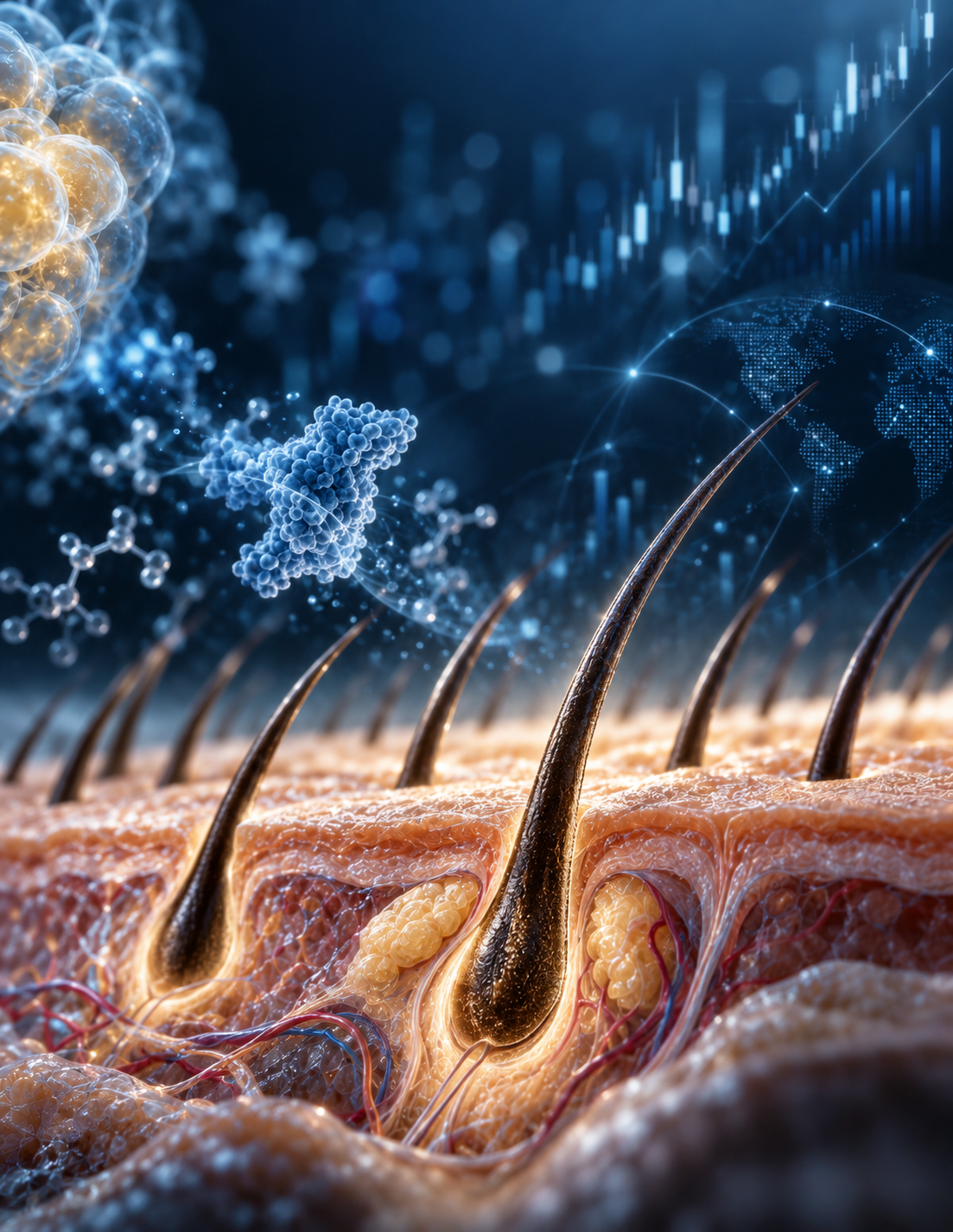
Novo Nordisk has only floated hair loss, while Veradermics’ Phase 3 oral minoxidil data lead a field of licensing and takeover candidates.
BL Cestrian Capital Research 42 clicks
@BarbarianCap Barbarian Capital on X
Germany’s Merck to Buy U.K. Biotech Silence Therapeutics for $1.3 Billion $SLN
@kevin__mak 2 clicks Kevin Mak on X
$CMPS Update on Compass Pathways (1) We're currently waiting for the company to complete its rolling NDA (New Drug Application) submission to the FDA, expected this quarter. The FDA has already started reviewing portions of the application. Reminder that Compass has been granted both rolling review and a Commissioner’s National Priority Voucher, which targets a review period of roughly 1–2 months once the complete application is filed. That timeline isn't guaranteed, but this is one of the fastest review processes available. It doesn't guarantee approval either, but it clearly shows that the FDA is prioritizing getting this drug reviewed. (2) The company presented at the STAT Summit, and the CEO said they will “go slow before we go fast.” My guess is that's being interpreted in a slightly negative way, suggesting that the initial drug launch won't necessarily get quick traction. As an investor in the company, my first reaction is that I don't want to hear that. I want to hear that revenues are going to explode out of the gate. But just because I want to hear something doesn't make it true. Taking a step back, Compass has taken a deliberate approach to developing this drug and preparing for launch. The CEO's point was that bad early experiences for patients or providers could set back both Compass and the broader industry. Getting those first experiences right matters. I think calibrating expectations and not being overly promotional is a smart choice. That could mean a more measured initial revenue ramp, and I'm fine with that if it sets them up for sustained adoption. At the same time, the company has been preparing to scale. Its strategic collaborations span more than 1,000 sites, including Neuronetics/Greenbrook and other established treatment networks. There is already substantial infrastructure to build on. I think this is the correct approach. (3) The company has now explicitly communicated expected annualized drug pricing of $50k–$65k per patient, based on an average of roughly three doses per year. That implies approximately $17k–$22k per dose, before clinic administration and monitoring costs. The final launch price hasn't been announced, but management has given us a much clearer pricing framework. In terms of M&A, which isn't part of my base case, my guess is the best window is after the label is set. At that point, a potential buyer will know much more clearly what they're buying and how it can be commercialized. From a positioning perspective, I think completing the NDA submission could bring new investors into the stock. It removes another layer of timeline uncertainty and puts an FDA decision much more directly in view. My guess is that matters to investors who have been watching but haven't wanted to get involved yet. My long-term outlook on the stock is unchanged. I think they get a good label, and I think concerns about the length of clinic visits are overblown. The market is massively underserved, and Spravato (which I believe COMP360 will offer a more attractive alternative to) is already selling at roughly a $2.5B annualized rate. My PT remains $45, and my full write-up is below. Disclosure: Creek Drive and its affiliated funds holds a positions in CMPS. Views expressed are current opinions for information only, subject to change and are not investment advice or a recommendation to buy or sell any security. Investing involves the risk of loss and past performance is not indicative of future performance. See the disclosures link in my bio for more important information.

Elutia’s antibiotic-eluting surgical matrices target breast-surgery infections, with Minot Light valuing $100 million in sales at a…
S Capital Employed 71 clicks
Hess Midstream, Iovance Biotherapeutics, Netlist and nine other lesser-covered stocks make this week’s Undercovered Dozen.
SA  The Undercovered Dozen 16 clicks
Oruka Therapeutics’ ORKA-001 posted PASI 90 and PASI 100 psoriasis responses at week 28; $1.1 billion of cash funds development through a…
SA Equity Eagle 3 clicks  ADCT · long
ADC Therapeutics centers on ZYNLONTA, an approved CD19-directed antibody-drug conjugate, after shares rose from roughly $4.
BL Value Investors Club 3 clicks
@stockgutter 3 clicks SG on X
@MeadowsPoppa @finviz_com definitely worth pulling up the "down 25% in a month" list and see what is getting hit: - a lot of biotech - data centers/HPC computing - entertainment ($SPHR / $MGM / $FUN ) - junior materials (lithium, uranium, rare earth, precious metals)
 FULC · long
Fulcrum Therapeutics trades below cash as it pursues a likely reverse merger, creating a biotech shell opportunity.
BL Value Investors Club 1 click
@finphysnerd 1 click Myles on X
Continuing to add Biotech long short exposure aggressively here. Just longing anything smart people/funds are long and shorting anything with high short interest that's a bit squeezy as a basket, plus shorting some $XBI. Nearing 10% gross exposure.
@SowingAlphaSeed 1 click Farmer on X
Bought some $ABVX calls instead.
@SowingAlphaSeed 3 clicks Farmer on X
@Biohazard3737 $ZURA price action makes me think retail accounts getting margin called. Unless pods are yolo'ing into @A_May_MD pitches too.
@BlueDuckCap 5 clicks BDC on X
$XGN on sale here. $STIM also. IMHO. Not advice - as always.
@SowingAlphaSeed 1 click Farmer on X
I'm very tempted to short $MRNA and $BSP, but I've never made money shorting tickers that are popular on Twitter.
UniQure's Huntington's gene therapy faces an FDA accelerated-approval decision around November 1 after three-year data met both agency…
SA  Bhavneesh Sharma 16 clicks
@LaughingH20Cap 7 clicks Laughing Water Capital on X
@bufetmastermind @secretlyaninja @mbamcnulty maybe i don't. I'd appreciate if you could explain. they had said 50% FCF margin on $1B in sales. $LQDA is still going to get to $1B in sales. Its just going to take longer. Tell me why 50% FCF margins are not in play. Bonus points if you can tell why they won't reduce costs
@LaughingH20Cap 4 clicks Laughing Water Capital on X
@secretlyaninja @mbamcnulty mkt used to look 18 mos fwd & annualizing Q4 of a growing co would = a conservative look at where the stock should trade. Now unless it is beat & raise next Q nobody cares. Until they do. Whether $3.80 or $4.50 or '27 or '28 any reasonable mult gets a lot of upside for $LQDA
 @irbezek
Ian Bezek on X
@valuedrift It's been trading almost 1:1 with whatever has been going on with $ARKG/speculative bios bucket. But yes, intellectually you are correct.
@stockgutter 3 clicks SG on X
I asked @grok to assess how the full results that $MRNA plans to release at ESMO that would strengthen or weaken the impression from top line results announced in August. The results are copied below. Seems reasonable to me at first glance (without having checked any of the data cited) -- anyone have a different view? ~~~~~~~~~~~~~~~~~~~~~~~~~~~~~~~ Items that could weaken (or further strengthen) the positive view include: - Magnitude of benefit: Hazard ratios (HRs), confidence intervals, absolute risk reductions, and landmark rates (e.g., 1- or 2-year RFS/DMFS). The earlier Phase 2b KEYNOTE-942 showed an RFS HR of ~0.51 (~49% relative risk reduction) and a DMFS HR of ~0.41 at 5 years. A substantially weaker Phase 3 effect (for example, HR closer to 0.75–0.85 with modest absolute benefit) could make the result look less compelling given the complexity, cost, and personalized manufacturing of the therapy. A comparable or stronger effect would reinforce the topline. - Statistical robustness and maturity: Width of confidence intervals, exact p-values, number of events, and median follow-up duration. Narrow intervals and a solid number of events support reliability; wide intervals, low event counts, or very short follow-up at the interim analysis could raise questions about reproducibility or durability. Subgroup consistency: Results by stage (IIB/IIC vs. III vs. IV), age, BRAF status, PD-L1 expression, geography, or other factors. Benefit concentrated in higher-risk stages or selected subgroups would narrow the practical population and commercial opportunity relative to a broadly consistent effect. Durability (Kaplan–Meier curves): Early separation that later plateaus or converges would suggest limited long-term impact. Sustained separation would support durability. - Overall survival signal: Any immature OS HR, death counts, or curve separation. An adverse or flat trend (while not decisive this early) could temper enthusiasm pending mature data. - Safety, tolerability, and feasibility details: Grade ≥3 adverse events, serious AEs, immune-related AEs, discontinuations, quality-of-life/patient-reported outcomes, and any manufacturing metrics (production success rate, turnaround time, or treatment delays). Higher toxicity, discontinuations, or practical barriers could offset efficacy gains. The topline noted consistency with prior experience and no new signals, but granular rates matter. - Stronger, consistent, durable efficacy with manageable safety and feasible delivery would solidify the positive assessment, support regulatory filings, and underpin commercial expectations. Marginal magnitude, inconsistency across key subgroups, limited durability, or meaningful safety/feasibility issues would lead to a more cautious view of clinical utility and value, even though the trial formally met its endpoints.
@LaughingH20Cap 2 clicks Laughing Water Capital on X
@mbamcnulty Mark ILD @ $0. Assume $LQDA continues to + $20M in PAH revs per Q (Q3 was $30M) and @ YE'27 its annualizing ~$930M revs. At $1B they said "over 50%" would be FCF so call it $465M in normalized FCF or ~$4.50/share. Even very low multiples get you alot of upside in ~14 months.
@kevin__mak 4 clicks Kevin Mak on X
I believe there's a high % chance $QURE gets its approval. Stuff like this from the FDA, in my eyes, further strengthens that belief. They want to generally make the review criteria more clear, more patient (advocacy) focused, and more flexible about what evidence is reasonably attainable. Not lenient for the sake of being reckless, but because there are situations that warrant different criteria. I think it would be quite incongruent to be vocally advocating for these new policies (which are suspiciously similar to the QURE debacle), while simultaneously crushing a high-profile drug approval like AMT-130. Incongruent doesn't mean it can't happen, just that it seems like the tail outcome. "The new framework is intended to enable patient input at earlier stages and at milestones throughout the development and review process. It also aims to provide greater clarity and consistency to drug developers on regulatory decision making. The agency said in a statement that it should take into account what evidence is reasonably attainable, given the nature of rare diseases." To be clear, FDA officials denied that the initiative was motivated by the earlier controversies. The connection to AMT-130, and the positive read-through, is my interpretation. "In an interview, senior officials at the agency denied that the initiative had anything to do with the earlier controversies" --- Disclosure: Creek Drive and its affiliated funds holds positions in QURE. Views expressed are current opinions for information only, subject to change and are not investment advice or a recommendation to buy or sell any security. Investing involves the risk of loss and past performance is not indicative of future performance. See the disclosures link in my bio for more important information.
First Tracks Biotherapeutics’ ANB033 posted stronger Phase 1b celiac efficacy than Teva’s IL-15 inhibitor, with $168 million funding…
SA Equity Eagle 9 clicks @AsifSuria Asif Suria on X
51% jump after hours in Liquidia $LQDA on this news.
BridgeBio Pharma reported Q2 revenue of $243.7 million and has three Priority Review NDAs, while $1 billion in convertible preferred…
SA Terry Chrisomalis 2 clicks 
Cabaletta Bio's 40% sell-off leaves CABA below its $2.41 pipeline value ahead of pivotal rese-cel autoimmune data in 2027, despite dilution…
SA Cypriot Invests 2 clicks @stockgutter SG on X
let's see how much this reads through to $MRNA. Unfortunately, its yet another confirmation that while mRNA cancer vax is promising the path will be choppy and we have many years if not decades to go.
@stockgutter 2 clicks SG on X
@Imperium1136 @DeepSailCapital agree, though think $MRNX is the better vehicle
@DeepSailCapital Deep Sail Capital on X
@stretchmikep I put on an industry short of genetic data companies early last week, $TEM, $CDNA, $DNA, and $ABSI Other than that a couple of stocks with good short activist write ups like $EQPT
Liquidia’s Yutrepia sales reached $170.4 million in Q2 2026, while a patent ruling threatens its PH-ILD label but leaves PAH sales and a…
S Trade Ideas Flow 5 clicks
Glaukos is expanding from glaucoma devices into sustained drug delivery and corneal cross-linking, but GKOS's premium valuation leaves…
SA Myriam Alvarez 4 clicks 
Helus Pharma's HLP003 Phase 3 depression data is due in 4Q26, with $166.4 million in cash and dilution risk from a $100 million ATM…
SA Petri Dish Reports 3 clicks  BNTC · long
Benitec Biopharma's BB-301 gene therapy is in a Phase 1b/2a trial for an ultra-rare muscular dystrophy.
BL Value Investors Club
 @KEDM_COM 2 clicks
KEDM.com on X
Qiagen $QGEN has had a new CEO (Jonathan Pratt) since Sept. 1. Let's see if he can bring some action. The company also recently confirmed it continues to evaluate strategic alternatives, with Goldman Sachs involved. There have been reports of takeover interest for a long time, with past reports linking Qiagen to Thermo Fisher, bioMérieux, and Bio-Rad. Qiagen is an interesting target given its leadership in nucleic acid prep, strong consumables-driven revenue, and growth areas like TB testing and digital PCR. The portfolio would fit well with major industry consolidators.
@OddDiligence Odd Diligence on X
$CCXI i assume they didnt invite everybody to this
Alamar Biosciences' consumables revenue rose 147% in 2Q26, lifting gross margin to 60% as the company expands into clinical diagnostics.
SA Petri Dish Reports 1 click  @SouthernValue95
SouthernValue on X
Danaher $DHR is combining technology from several of its bioprocessing and life science companies with Lab Robotics startup Automata to launch an AI-powered robotic autonomous research lab. From the Press Release: Danaher's first AI-powered autonomous lab is designed to deliver: - Speed: Up to 8x faster discovery of affinity reagents, helping researchers get from idea to breakthrough sooner - Scale: Unlocking up to a tenfold increase in annual reagent generation, from tens to hundreds of reagents per year as the lab scales - Quality: Each design built in the lab would also be verified, tested and fed back to improve the next, without trading speed for scientific rigor - Sustainability: Over time, this approach is expected to complement traditional immunization-based methods used in the discovery of antibodies and other research tools Based at Abcam, a Danaher company, the lab uses AI to help create new affinity reagents, including antibodies, then builds and tests each one, feeding every result back into the model to improve the next design. The lab brings together industry-leading technologies and expertise from several Danaher operating companies, including Beckman Coulter Life Sciences, Cytiva, Genedata, Integrated DNA Technologies, and Molecular Devices, in one connected workflow. The device orchestration and robotic automation is the result of collaborative work with Automata*. This continuous design-make-test-learn loop can run in a fraction of the time it takes today, without trading speed for scientific rigor. This approach applies the same test-and-verify discipline of continuous improvement long used across Danaher operations to an AI-enabled laboratory environment. The lab is set to be an early proof point for how Danaher's smart instruments, AI-ready data, and expert agentic systems can accelerate scientific discovery and medical progress.
@kevin__mak 3 clicks Kevin Mak on X
$ABVX Interesting data coming from S&P Markit* (daily short interest based on institutional lending data). Looks like someone established a large position over the past 10 days or so, about 2mm shares or $200M. Given people generally don't like to have single name short exposure over 1-2% of their book (often people size shorts as like ~50 bps), this would be part of a really big book or a really big basket trade. Given the current ABVX-specific situation, it feels weird to be directly betting on the stock falling further from these levels, without any known catalysts around. My best guess is this is part of a "short France" basket trade. But I also can't find any other items of the basket with large changes in short interest to corroborate. Retail Fintwit crowding (correlation with other popular bio names) is likely having an effect as well. Plus rates. Plus biotech degrossing. What I ruled out was a world where this could/would be frontrunning ahead of a possible liquidation (There's a fund with a large ABVX position that took a huge loss on LQDA), but the timing on that is off. In fact pretty much the whole short position was established prior to LQDA crashing. My observation is that the list of items above, plausibly causing weakness in the stock, largely has nothing to do with A) Does the drug work, B) Will the drug sell well. That's what I like about situations like this. ABVX is a large position for us, we've spent a long time recently double/triple checking our fundamental views on the stock and still strongly believe that their key drug, Obefazimod, will be successful even without an acquisition. Hope to have a detailed write-up about that at some point. *I find Markit data to be the most reliable among 3rd party short data, but there are still data anomalies for various reasons. Disclosure: Creek Drive and its affiliated funds holds a long position in ABVX. Views expressed are current opinions for information only, subject to change and are not investment advice or a recommendation to buy or sell any security. Investing involves the risk of loss and past performance is not indicative of future performance. See the disclosures link in my bio for more important information.
@KEDM_COM KEDM.com on X
ProQR Therapeutics $PRQR CEO Daniel de Boer bought $513K across two separate purchases on July 7 and July 9, and a company director bought another $229.5K in late June (real money for a Dutch CEO). PRQR is a small-cap RNA-editing biotech backed by a major pharma partner: Eli Lilly. Their collaboration, running since 2021 and expanded in 2022, could pay ProQR up to $3.75 billion in milestones plus royalties, real validation for a company this size. The balance sheet just got stronger too: ProQR raised roughly $59 million in late June 2026, with Lilly buying in alongside the public offering to keep its stake intact, a vote of confidence from the partner who knows their science best.
 @ACapitalLP 1 click
A Capital on X
$RNAZ
 @BrokenMoats
Broken Moats on X
Secondaries more likely with the reversal in bio discovery names this morning not less, they are coming --- almost all need money to fund their cash burning businesses $DNA $TXG $TWST $GRAL you are their liquidity if you want to fund them at 20-30x sales
@SowingAlphaSeed 1 click Farmer on X
When is the correct time to short $ARKG?
@AsifSuria Asif Suria on X
This is indeed highly unusual. I have seen billionaires get involved in actively buying a stock (Alfred Mann with MannKind $MNKD , Philip Frost with Opko Health $OPK, Harold Hamm with Continental Resources, etc.) but they are usually companies they founded or are deeply involved in.
@DeepSailCapital 1 click Deep Sail Capital on X
@shallowdives1 @peter_mantas Yeah it’s a nice little industry bubble forming. $DNA is also a Shitco
@DeepSailCapital Deep Sail Capital on X
$DNA - Looks like another genetics short too.
@BrokenMoats 2 clicks Broken Moats on X
$DNA another perfectly rational move, happens daily across this low quality business, low quality balance sheet biotech tangential name space (ironically while actual biotech names sell off due to rates). My biggest question is why are these co. not raising $$$, all of them need money in this basket and their stock prices are up 100's% points in a very short period of time (few months). Wh not stretch the life of the company and fix the balance sheets?
Nyxoah's Genio implant could reach CCC patients after an FDA label expansion, targeting 30% of the obstructive sleep apnea device market by…
SA  Stephen Tobin 3 clicks
Iovance raised 2026 revenue guidance to $410–$420 million as Amtagvi adoption accelerates, with melanoma, lung cancer and international…
SA  Hunting Alphas 2 clicks
Pyxis Oncology's recent financing extends MICVO's runway to clinical milestones as the oncology candidate works to establish a safe,…
SA Myriam Alvarez 2 clicks @stockgutter 1 click SG on X
$CVM looks like this shitco is about to make another run. I'm sure it will be followed with massive dilution.
 @calvinblissett 1 click
Calvin Blissett on X
@CompoundingEV There is no semi comprehensive tweet on $PAHC, there is no where for people to see a snapshot of it in such a pleasing manner unless they have value line. To me at least it’s nicer reading a quick pitch complied by a human than asking AI
@SowingAlphaSeed 1 click Farmer on X
You look at $LQDA? Just received this letter. "Liquidia was on track to generate $1.4 billion in revenue in 2027. Half of the revenue so far has been from PAH and half from PH-ILD. Net margins are likely to be in the 50% range. If PH-ILD is removed, we assume $700 million in revenue and $350 million in cash flow. At a reasonable multiple, we would be looking at a stock value from that sales market between $44 and $55. If there is a 30% royalty on PH-ILD sales, we would have $350 million in cash flow from PAH and $245 million in cash flow from PH-ILD sales. At a reasonable multiple, we would be looking at a stock value from that sales market between $75 and $94."
Regeneron and Sanofi expanded their antibody partnership, giving REGN $1 billion upfront, up to $7 billion in milestones and a 50:50 global…
SA  ONeil Trader
@KEDM_COM KEDM.com on X
Qiagen $QGEN has a new CEO (Jonathan Pratt) per Sept. 1. Let's see if he can bring some action. The company also recently confirmed it continues to evaluate strategic alternatives, with Goldman Sachs involved. There have been reports of takeover interest for a long time, with past reports linking Qiagen to Thermo Fisher, bioMérieux, and Bio-Rad. Qiagen is an interesting target given its leadership in nucleic acid prep, strong consumables-driven revenue, and growth areas like TB testing and digital PCR. The portfolio would fit well with major industry consolidators.
@finphysnerd Myles on X
Corporates (spreads are tight, if this gets rly bad spreads should blow out). Long breadth, consumer exposure and small caps through stuff like $IWM, $RSP, $XSHQ, $RSPD. Short the narrow winners like $QQQ, $SMH, $AAPL, $CRWD, $ILMN, $NBIS. Also shorting long crowded bio longs
Precigen’s FDA platform technology designation for AdenoVerse supports PAPZIMEOS uptake in recurrent respiratory papillomatosis and expands…
SA  Sean Daly 1 click
@BrokenMoats 1 click Broken Moats on X
Someone really should investigate the price action into some of these ancillary biotech stocks.....very reminiscent of a certain Situational Awareness with chip stocks earlier in the year. No one is filing ownership and yet these stocks push higher regardless of macro, or geopolitical news or the overall index moves. Someone with swaps? or options likely at play then using the momentum pf retail and algos to add to the bid. The trade is melting up perfectly to the end of the quarter (not surprised to see them even more aggressively up today than usual to mark performance). We saw this with the chips trade after an unprecedented April-June. But some of the moves with this trade exceed that euphoria (Look at $TXG, $TWST, $SDGR, $RGEN, $GRAL, and a host of other companies)........DO we see the similar move after a giant quarter with a reversal to kick of the next quarter, that was the fate with chips and caused the fund to blow up. Be interesting to see if they learned any lessons, Im guessing not based on recent performance, and if it is a different player the strategy looks the same. These companies need financing and should hit the market bid which is what set off Viacom and was the undoing of Bill Huang in 2021. Lets see, but a basket of these stocks looks interesting at current levels sometime today for gravity/secondaries to come early in Q4
CareDx's rally rests on prior-period collection adjustments, while transplant test volumes grew 17% and competition, management turnover…
 @valuedontlie
Colin King on X
And here's another CVR from $SSTI buyout... Stock trading at $8.20 with $8 cash + $3 CVR
@valuedontlie Colin King on X
$LFCR finally getting bought out... $6.28 cash + CVR with potential for another $3.39 per share based on post-close revenue performance Stock trading around $6.60 so paying ~30c for the optionality today
 SEER · long
SEER Inc became a founder-offer special situation just before publication.
BL Value Investors Club
@kevin__mak Kevin Mak on X
$QURE A bunch has been written about today's AMT130 news by people far more scientifically credible than me, so I'll just summarize to say my opinion is that the data was directionally bearish but only mildly. I think the reaction to the news was overblown. If you gave me the press release and conference call ahead of time and asked me to guess "what does the price trade to", I'd say around $32. Lots of people have complained about the type and quality of disclosure and messaging from the company but I want to highlight something I noticed that I think has been missed. My experience this morning was that the actual press release process was entirely mishandled. Here's what I think happened: 7:05AM ET is the "typical release time" for QURE. So naturally when they setup an interview with Stat News and Bloomberg the night before, they likely communicated this "embargo time". So at 7:05AM, the pre-written articles from Stat and Bloomberg hit the newswires. Bloomberg's article was particularly poorly done, with exceptionally little detail beyond the "-44% not stat sig" datapoint. (They later "updated" their news article to be more robust). But this awful article was essentially first to hit the headlines, and obviously thousands of bots and machines are scraping Bloomberg, and trading off it. Naturally one would want to "check for more data beyond two articles", but for some reason, at 7:05AM, there was no Press Release from QURE. This was likely a mistake (either by QURE or by the wire company). In the screenshot (and link) below, you'll see the timestamp of the official wire including ALL of the data. So investors were "left in the dark" for a full 7 minutes. Does 7 minutes really matter? To a long term investor, certainly not. But it matters to algo traders, who leave footprints of price action, which affect sentiment, so it does matter. Also, it leaves me unsettled that they're possibly getting some of the most basic things wrong. I get their jobs are stressful and there's a lot on the line here, that's why you have to dot your i's, cross your t's, because everything matters. To be clear, I don't know for a fact who's error this was, but I'd speculate it was the company. (Here's a normal press release from the company timestamped at 7:05AM ET. There are many other examples on the site that corroborate the 7:05 ET pattern) Disclosure: Creek Drive and its affiliated funds hold a long position in QURE. Views expressed are current opinions for information only, subject to change and are not investment advice or a recommendation to buy or sell any security. Investing involves the risk of loss and past performance is not indicative of future performance. See the disclosures link in my bio for more important information.
@DeepSailCapital 2 clicks Deep Sail Capital on X
Just buy $QURE every time it drops 50% and sell it when it recovers 100%. It’s happened like 3 times already. Wild one.
@stockgutter 1 click SG on X
@DeepSailCapital $MRNX via short Mar27 150-200C lots of ways for this trade to work. Its my preferred way to fade the outsized (and in the past 2 weeks heavily autocorrelated) move in $MRNA
@KEDM_COM KEDM.com on X
ProQR Therapeutics $PRQR CEO Daniel de Boer bought $513K across two separate purchases on July 7 and July 9, and a company director bought another $229.5K in late June (real money for a Dutch CEO). PRQR is a small-cap RNA-editing biotech backed by a major pharma partner: Eli Lilly. Their collaboration, running since 2021 and expanded in 2022, could pay ProQR up to $3.75 billion in milestones plus royalties, real validation for a company this size. The balance sheet just got stronger too: ProQR raised roughly $59 million in late June 2026, with Lilly buying in alongside the public offering to keep its stake intact, a vote of confidence from the partner who knows their science best.
@irbezek Ian Bezek on X
@PythiaR I think $SRPT is the undisputed king in this regard, at least over a full career.
Cullinan Therapeutics plans December 2026 autoimmune updates for CLN-978, while zipalertinib awaits an FDA decision in previously treated…
SA Myriam Alvarez 2 clicks 
Beam Therapeutics’ BEAM-302 AATD gene-editing program anchors its 2028–2029 upside, while a 2–3 year cash runway leaves dilution likely…
SA  Robert J. Lake
@BarbarianCap Barbarian Capital on X
AstraZeneca to Invest $2 Billion in Summit Therapeutics, Collaborate on Cancer Drugs $AZN
@BrokenMoats Broken Moats on X
A bunch of these bio tech "arms dealers" and "tech" companies need cash and are sitting on tremendous short term gains (2-4x in less than a few months) as they are being pushed aggressively by someone* Kind of odd to not see them hit the bid - $TXG, $GRAL, $MRNA could all use more cash, what are they waiting for?
@kevin__mak Kevin Mak on X
Here's a cheap but (kinda) funny jab... if my thesis above is correct, and if $ABVX was acquired in August/(early Sept)... it would have saved the whole biotech market...🤷♂️

Annexon targets functional recovery in geographic atrophy and Guillain-Barré syndrome, with ARCHER II vision-endpoint data due in Q4 2026…
SA Equity Eagle 3 clicks  @Fierce__beast 1 click
Fierce_beast on X
@JJNews002 bought a little of it too $ABVX
@Fierce__beast 2 clicks Fierce_beast on X
What are people buying and selling in this apparent biotech degrossing phase? I am looking given the irrationality of the situation and the temporary opportunities it may present on both sides of the ledger. $XBI recent returns seem driven by two stocks $MRNA and $TWST. I shorted small size some $CDNA, $MRVI. Long $ACAD, $UTHR and $CELC. Are these completely idiotic ideas?
@calvinblissett Calvin Blissett on X
$IRWD: Citizens raised from 8 to 10, profitable FDA approved biotech, raised guidance (second time in a year) to 450m-475m revenue vs 320m est. Bought VectivBio for 1b. Market cap 682m Q2 2026 earnings: LINZESS Pricing Power Powers a Guidance Raise Ironwood Pharmaceuticals delivered a robust Q2 2026, breaking past conservative Q1 expectations by posting $113M in total revenue (+33% YoY) and raising its full-year guidance across the board. The story here is a massive rebound in LINZESS net pricing. The elimination of inflationary rebates drove commercial margins to 78% (up from 69% a year ago). The company capitalized on this cash flow by paying off $200M in convertible notes with cash on hand, effectively de-risking the balance sheet ahead of heavy R&D investments for the apraglutide STARS-2 trial. Full article with charts - link in bio 🐂 𝐁𝐮𝐥𝐥 𝐂𝐚𝐬𝐞 • 𝐏𝐫𝐢𝐜𝐢𝐧𝐠 𝐏𝐨𝐰𝐞𝐫 𝐑𝐞𝐬𝐭𝐨𝐫𝐞𝐝 — The strategic reset of the LINZESS list price at the start of 2026 is paying massive dividends. Favorable gross-to-net rebate timing and eliminated inflationary rebates are driving net sales and commercial margins higher, resulting in a full-year guidance raise. • 𝐁𝐚𝐥𝐚𝐧𝐜𝐞 𝐒𝐡𝐞𝐞𝐭 𝐃𝐞-𝐫𝐢𝐬𝐤𝐞𝐝 — The $200M cash repayment of 2026 convertible notes removes a major maturity overhang, leaving the company well-positioned to self-fund the critical Phase 3 apraglutide trial while generating strong free cash flow. 📷 𝐁𝐞𝐚𝐫 𝐂𝐚𝐬𝐞 • 𝐕𝐨𝐥𝐮𝐦𝐞 𝐆𝐫𝐨𝐰𝐭𝐡 𝐍𝐨𝐫𝐦𝐚𝐥𝐢𝐳𝐢𝐧𝐠 — Despite the net pricing win, LINZESS prescription demand growth decelerated to 4% YoY in Q2, down from 5% in Q1 and the 11-13% growth rates seen in late 2025. The brand is reaching maturity. • 𝐇𝐞𝐚𝐯𝐲 𝐑𝐞𝐥𝐢𝐚𝐧𝐜𝐞 𝐨𝐧 𝐎𝐧𝐞 𝐀𝐬𝐬𝐞𝐭 — Almost 100% of Ironwood's revenue comes from its share of LINZESS profits. With no clear post-LOE strategy communicated, long-term terminal value remains a risk while the pipeline remains highly concentrated on apraglutide. 📷Bullish. Management is executing flawlessly on their stated goals: maximizing LINZESS cash flow, strengthening the balance sheet, and advancing apraglutide. The guidance raise confirms Q1's strength was not a fluke. 𝐊𝐞𝐲 𝐓𝐡𝐞𝐦𝐞𝐬 📷 𝐋𝐈𝐍𝐙𝐄𝐒𝐒 𝐂𝐨𝐦𝐦𝐞𝐫𝐜𝐢𝐚𝐥 𝐌𝐚𝐫𝐠𝐢𝐧𝐬 𝐄𝐱𝐩𝐚𝐧𝐝𝐢𝐧𝐠 [NEW] Accelerating. LINZESS commercial margin jumped to 78% in Q2 2026 from 69% in Q2 2025. This was driven by a combination of a 14% increase in U. S. net sales (to $282.3M) and a YoY decrease in AbbVie/Ironwood commercial costs and discounts (from $76.9M to $63.0M). The January 2026 list price reduction successfully eliminated significant inflationary rebates, directly benefiting the bottom line. 📷 𝐁𝐚𝐥𝐚𝐧𝐜𝐞 𝐒𝐡𝐞𝐞𝐭 𝐃𝐞𝐥𝐞𝐯𝐞𝐫𝐚𝐠𝐢𝐧𝐠 𝐄𝐱𝐞𝐜𝐮𝐭𝐞𝐝 [NEW] Stable. The company successfully executed its plan to repay the $200M aggregate principal amount of its 1.50% convertible senior notes at maturity in June using cash on hand. While cash balances dropped from $220.5M in Q1 to $79.1M, eliminating this near-term maturity removes a significant financial overhang. The remaining $385M on the revolving credit facility represents manageable leverage against >$310M in projected FY26 Adjusted EBITDA. 📷 𝐋𝐈𝐍𝐙𝐄𝐒𝐒 𝐏𝐫𝐞𝐬𝐜𝐫𝐢𝐩𝐭𝐢𝐨𝐧 𝐃𝐞𝐦𝐚𝐧𝐝 𝐃𝐞𝐜𝐞𝐥𝐞𝐫𝐚𝐭𝐢𝐧𝐠 [NEW] Decelerating. A specific data point contradicts the purely positive narrative: while revenue and profits are surging due to pricing, the underlying prescription volume growth is slowing. Q2 Rx demand grew 4% YoY (59.8M capsules). This marks a sequential deceleration from 5% in Q1 2026, and is down significantly from the 12-13% growth rates experienced in the second half of 2025. Management raised demand guidance to 'mid-single digits,' but the multi-year volume trend is clearly cooling. 📷 𝐒𝐢𝐠𝐧𝐢𝐟𝐢𝐜𝐚𝐧𝐭 𝐈𝐧𝐜𝐨𝐦𝐞 𝐓𝐚𝐱 𝐍𝐨𝐧-𝐂𝐚𝐬𝐡 𝐃𝐫𝐚𝐠 Stable. Ironwood recorded $22.4M in income tax expense in Q2 (vs $14.2M in Q2 25). The majority of this is non-cash as the company utilizes net operating losses (NOLs). While it doesn't impact immediate cash flow, it continually depresses GAAP EPS and highlights the complex tax situation of historical R&D-heavy biotech models. 𝐎𝐭𝐡𝐞𝐫 𝐊𝐏𝐈𝐬 𝐀𝐝𝐣𝐮𝐬𝐭𝐞𝐝 𝐄𝐁𝐈𝐓𝐃𝐀: $83.0 million Accelerating. Up 66% YoY from $50.1M in Q2 2025. The company’s focus on expense discipline combined with the rebound in LINZESS net pricing continues to generate massive operating leverage. 𝐎𝐩𝐞𝐫𝐚𝐭𝐢𝐧𝐠 𝐂𝐚𝐬𝐡 𝐅𝐥𝐨𝐰: $58.3 million Reversing positively. A massive swing from Q2 2025, which saw cash from operations at a negative $15.1 million. This robust cash generation enabled the $200M debt repayment without tapping into further credit facilities. 𝐆𝐮𝐢𝐝𝐚𝐧𝐜𝐞 𝐅𝐘𝟐𝟔 𝐓𝐨𝐭𝐚𝐥 𝐑𝐞𝐯𝐞𝐧𝐮𝐞: $460 - $485 million Accelerating. Raised from the prior estimate of $450 - $475M. At the midpoint ($472.5M), this represents an acceleration over the $290 - $310M baseline seen in 2025, heavily driven by the LINZESS pricing structure changes. 𝐅𝐘𝟐𝟔 𝐀𝐝𝐣𝐮𝐬𝐭𝐞𝐝 𝐄𝐁𝐈𝐓𝐃𝐀: >$310 million Accelerating. Raised from the prior floor of >$300 million. Proves that the incremental revenue gains from LINZESS are dropping almost entirely to the bottom line. 𝐅𝐘𝟐𝟔 🔴le-rate debt versus building cash for business development? 𝐒𝐓𝐀𝐑𝐒-𝟐 𝐄𝐧𝐫𝐨𝐥𝐥𝐦𝐞𝐧𝐭 𝐒𝐩𝐞𝐞𝐝 With STARS-2 actively recruiting, are you seeing any enrollment headwinds due to competing GLP-2 trials in the SBS-IF space, and when should investors expect completion of enrollment? 🔴
@SowingAlphaSeed 1 click Farmer on X
Why is $QURE down so much this week?
Eckert & Ziegler trades near €12, about 14 times expected earnings, as its isotope supply business expands with radiopharma demand despite…
S Substack von Philipp 2 clicks
@stockgutter SG on X
$NKTR $90m verdict per Law360. Will likely disappoint bulls.
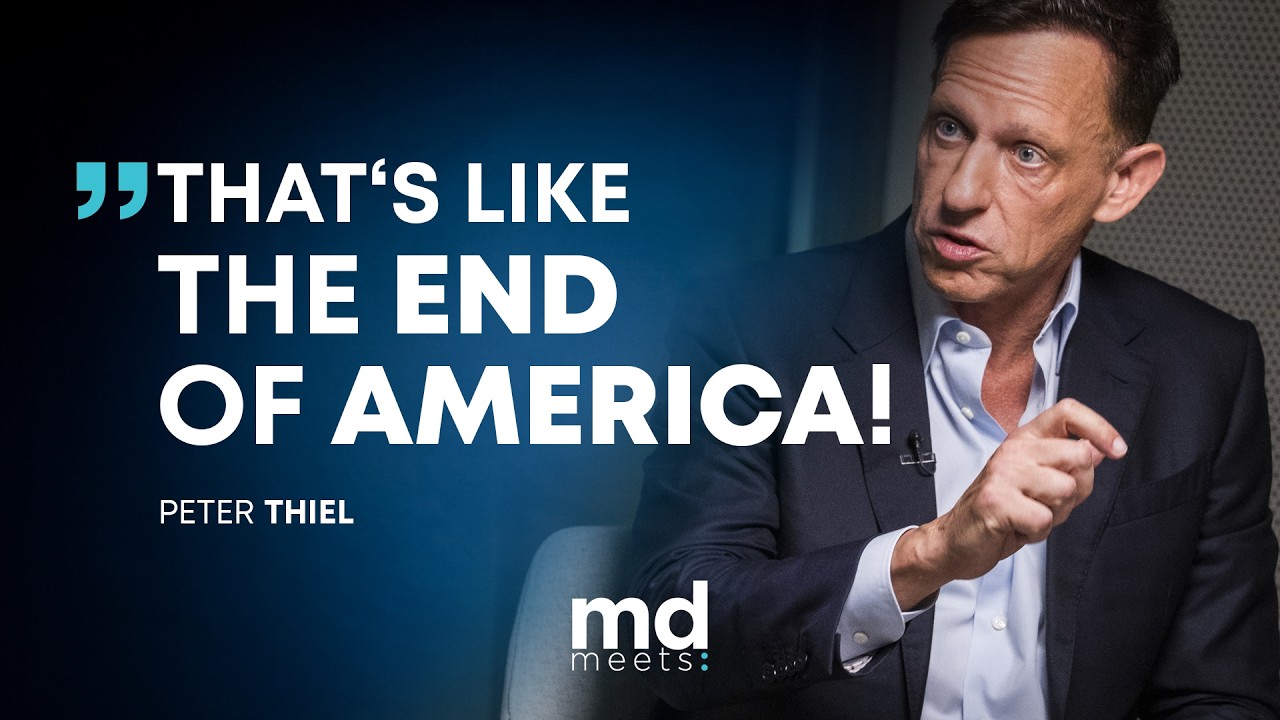
Peter Thiel speaks in Berlin about AI as a possible end to decades of technological stagnation, and about the risks of slowing it while…
YT MDMEETS - Essential Talks with Mathias Döpfner
@aleabitoreddit Serenity on X
@tradesidious @kkkkk61216936 I still have $CCXI, they haven't even had the listing event yet, so volatility up until then is kinda meaningless to me.
@kevin__mak Kevin Mak on X
$NKTR Lots of funky action in this name the past few days, some specific to the ongoing court case and some from bio as a whole. Let's unpack it. The jury note, paraphrased as "Is there a difference between breach + $1 and no breach + $0?", spooked the market and sent the stock down sharply. Two sides to this. First, the note is informative, but only a little. It tells us at least one juror sees the $0/$1 outcome as part of their possible resolution space. Where I think the market (or at least fintwit) got it wrong is treating the note as the voice of the entire jury. It could reflect the whole panel, or it could be a single juror's question. It doesn't even tell us direction: it could come from a juror looking for a way to find breach despite doubting the damages case. The price action implied the whole jury is now choosing between $0 and $1, which I think is a big overread. Second, this is NKTR: a retail/fintwit-heavy, relatively illiquid SMID-cap biotech that moves 5% on a random Tuesday with no news. A 10% move on this headline looks extreme, but near-term price action here mostly reflects value-agnostic traders playing local news and liquidity flow, not a considered repricing of long-term value. The bigger picture: the case is largely a distraction from the real value, which is Rezpeg. I'm not a biotech expert, but the sell side and most biotech specialists I respect see it as a likely viable commercial product that's underpriced here. If anything, the case matters mainly as an overhang. An uncertain $0-to-$1B+ claim is hard for any acquirer or partner to price, so resolution in almost any direction clears the path for corporate action. The distraction is creating the opportunity. Disclosure: Creek Drive and its affiliated funds holds a long position in NKTR. Views expressed are current opinions for information only, subject to change and are not investment advice or a recommendation to buy or sell any security. Investing involves the risk of loss and past performance is not indicative of future performance. See the disclosures link in my bio for more important information.
@BarbarianCap 1 click Barbarian Capital on X
Grail’s Multi-Cancer Blood Test Gets FDA Committee Vote for Premarket Approval $GRAL
@BlueDuckCap 1 click BDC on X
Recommend Banyan's substack for anyone researching $STLN, the MASSIVE opportunity for the company, and their ideal position within Oncology today. If you want to skip the industry jargon and go straight to the MEAT just read the summary of the CEO quotes from recent conferences. These guys are crushing it, and it will be a much bigger company imho.
@calvinblissett Calvin Blissett on X
$ABUS odd lot tender (buy 99 shares) No idea what price it goes through Sept 29th at 5pm but range is $5-$5.75 and it’s below $5 now. 20% shareholder said he will participate and some directors too. $5.21 before offer. Can’t lose any money and stand a good chance of making a nice return on laying out $495. Do it in a IRA if you can do get favorable tax treatment
@AsifSuria 1 click Asif Suria on X
@brain_altered @aurelius28 @Investor_NICK_ Indeed! We mentioned the company while discussing the impact of the AtaiBeckley acquisition by $LLY on peers:
Tempus AI’s Q2 oncology testing volumes rose 31%, while data and applications revenue grew 28% as its clinical data flywheel expands.
SA  Bay Area Ideas 2 clicks
@cfrischer1 Charles Frischer on X
$OMER Comments from today's investor day with Novo. I think these words are quite bullish for Omeros and their partnership with Novo.
@AsifSuria Asif Suria on X
@aurelius28 @Investor_NICK_ Long $LLY. Was doing work on $HELP but it ran up a lot after the AtaiBeckley acquisition. We wrote about it recently after some insider purchases:
@AsifSuria Asif Suria on X
Imagine what the next line of psychedelic treatments from companies like $HELP and $CMPS will do. Then there is Eli Lilly $LLY with its recent AtaiBeckley acquisition that closed ten days ago. They will be able to put their marketing muscle behind AtaiBeckley's lead candidate (if it gets FDA approval) the way Johnson & Johnson did with Esketamine.
Arcturus Therapeutics is advancing ARCT-810 for OTC deficiency after phase 2 data normalized glutamine and ammonia levels, with $191.5…
SA  C. C. Abbott 1 click
@calvinblissett 1 click Calvin Blissett on X
$ADMA Profitable small cheap biotech with 3 FDA approvals accelerated stock repurchase plan
@DeepSailCapital 1 click Deep Sail Capital on X
@LogicalThesis $MXCT ?
@DeepSailCapital 2 clicks Deep Sail Capital on X
@jiahanjimliu @JKeynesAlpha @PSInvestor Valuation seems a bit stretched here. I get the thesis, it’s just things don’t go straight up forever. Someone is going to cut $TEM at the knees soon.
Viridian Therapeutics is building a shared commercial platform for Lumvoa and investigational elegrobart in thyroid eye disease, with…
SA Equity Eagle @BrokenMoats Broken Moats on X
I will add after this weeks 30% rise in man of these names. A lot of them need cash, they are low on their cash balances with cash burn businesses. $TXG through 70m already this year with only 200m in cash, plenty others that are similar. I imagine they are about to hit the bid and soon
@BrokenMoats Broken Moats on X
SMR reactors last year or quantum...appears the current moments basket of trash stocks with a narrative that doesn't fit the companies is 3rd derivative ai drug discovery plays (genome, simulation software, etc). $TWST $TEM $SDGR $TXG and theres more My favorite is $WGS - opko rehash with key players from there somehow sitting on a multi billion dollar valuation currently. There were caught with billing schemes multiple times at Opko as well as other serious problems (see Philip frost and opko). A member of the board actually still sits on Frosts charity and the CEO was the CEO of Cathie Wood favorite Invitae, that went bankrupt a few years ago. The short story writes itself, seems like a CVNA almost where the setup is pretty opposite, and yet it probably continues to work against you
@stockgutter 1 click SG on X
@jrkelly @Ginkgo why have $DNA sales imploded under your leadership?
Kodiak Sciences expects Phase 3 DAYBREAK results for Zenkuda and KSI-501 in wet AMD, with durability and vision outcomes key beyond…
SA  Sam Mancini
@kevin__mak Kevin Mak on X
$ABVX We've been here before, about three months ago. Price is controlling the narrative again. In June people extrapolated a handful of malignancy cases into a broken thesis, the stock fell 43%, and then erased a month of losses in a single day when the next data landed. Nothing about the asset changed in either direction. I think the same thing is happening now. The price is lower, so people have decided shareholders are doomed and nobody is ever going to buy the business. The fair argument against me is that the probability of a takeout has fallen, because it hasn't happened yet. List your house, get no bids in 60 days, and that tells you something about your asking price. Silence is information. But big pharma M&A is a market with half a dozen real buyers, competing priorities, and internal politics. Deals come together in weeks or in years. The signal from "no deal yet" is extremely noisy, and people are treating it as a clean efficient market. I think the bigger problem is what shareholders were assuming in the first place. If you expected a $180-200 takeout within three months, at today's price that is a 78% return in a quarter. Call it 50/50 to be "conservative" and you are still assuming roughly 39% a quarter or 270% annualized. (Change the numbers to levels a month ago and you still get the same directional craziness) So the problem was never the price target. Targets have a defensible basis. The problem is the clock. My view: $150-200 over the next 18 months, either from a buyout or from a credible launch trajectory. From here that is 25-50% annualized, which is a number a portfolio can be built on. Roughly the same price everyone else is talking about. I just don't have the same timeline expectation. If a buyout comes sooner, that is the better outcome, not just the faster one. The asset is worth more inside a company that already has a GI salesforce than it is standalone. Disclosure: Creek Drive and its affiliated funds hold a long position in ABVX. Views expressed are current opinions for informational and educational purposes only, subject to change and are not investment advice or a recommendation to buy or sell any security. Investing involves the risk of loss and past performance is not indicative of future results. See the disclosures link in bio for more important information.
@SowingAlphaSeed Farmer on X
@stoked_on_waves Codex says biotech specialist HFs have $127B in AUM and hold $4B in $ABVX. Seems pretty high, but doesn't get you close to the reported $15+B buyout numbers.
@SowingAlphaSeed Farmer on X
Breaking my position limit rules to buy more $ABVX again. This seems like the stock with the stupidest price action?

GLP-1 drugs are gaining traction across Asia as Chinese developers advance candidates and Indian generics slash prices, reshaping prospects…
S Asian Century Stocks 3 clicks
@OddDiligence Odd Diligence on X
$CCXI
Zentek initiation report.
BL Atrium Research - Equity Research 4 clicks
 ANAB · long
AnaptysBio is pitched for a 50% to 80% return over four to six weeks after its April 2026 taxable spin-off of R&D-heavy operations.
BL Value Investors Club 6 clicks

AstraZeneca's tozorakimab cut COPD attacks 29% to 34% in two Phase III trials, including 23% among low-eosinophil patients after Wainua's…
SA Sam Mancini @kevin__mak Kevin Mak on X
I think the main consideration with the CDER appointment/publication is that it narrows the gap about "Does COMP360 get approved?" Basically the situation gets de-risked by some %. I've seen some analysts suggest the probability of approval is around 75% (which I think is way too low), my estimate is in the 90%+ range. It would be extremely weird for the FDA/CDER (and White House) to give all of these "pro-psychedelics" signals to the public, and then turn around and immediately decline (or hamstring) the highest profile, most time-sensitive drug application. To be clear, this is not 100% chance of approval, because there are ALWAYS risks/weird things that can happen, but directionally, this moves in the right direction (and the recent stock price move partially reflects that). But my opinion, as I've said before, is we've got a long way to go before the market price truly reflects the opportunity for $CMPS.
@kevin__mak Kevin Mak on X
$CMPS Lots to be excited about for the company and the space. Specifically there's been a lot of "thematic" interest in the psychedelics/psilocybin space in the last few weeks, and I expect that to continue. The most notable event recently is an article published in the New England Journal of Medicine: "FDA's New Framework for Psychedelic Drugs" (paywall) This was co-authored by Michael Davis (just named permanent director of CDER) and the FDA's top psychiatry and neuroscience reviewers. They're the group that ultimately approves/rejects COMP360 (and other psychedelic drugs). Aside from approve/reject, they will be helping negotiate/decide the "label" and essentially how permissive or strict the availability of these drugs/therapies are. The devil is in the details and hearing the FDA publicly state that they are aligned, i.e. "let's make sure these drugs get to market safely AND effectively" versus "this is weird/different, lets be extra cautious/slow with the roll out" is very important to both shareholders, and patients who could potentially be helped by these therapies. Another interesting article is here: WSJ: "Elon Musk's Inner Circle is Pouring Cash Into Making Psychedelics Mainstream" It is widely expected that COMP360 from $CMPS is going to be the first classic psychedelic (Psilocybin) drug to be approved and commercially available. Despite this being "priced in" by people who follow markets (or the industry) closely, I believe there's a good chance there's a positive public reaction to the headline when/if it comes out in the coming months. More importantly, I think we're at the very early innings of a treatment category that will be highly beneficial to a group of patients who historically have not had great treatment options. My full write on $CMPS is below, I have a $45 price target: Disclosure: Creek Drive and its affiliated funds does hold a long position in CMPS. Views expressed are current opinions for informational educational only, subject to change and are not investment advice or a recommendation to buy or sell any security. Investing involves the risk of loss and past performance is not indicative of future performance. See the disclosures link in bio for more important information.
@SowingAlphaSeed 1 click Farmer on X
@evantindell $ROIV chart is a good example of buybacks doing nothing, until they do.

BridgeBio Pharma raised Attruby peak-sales guidance as kidney-benefit data, fewer hospital days and competitor setbacks strengthen its…
SA  Atticus Analysis 1 click
Dyne Therapeutics fell 16% after Novartis’ HARBOR failure raised doubts that RNA-targeting biomarker gains translate into functional…
SA Petri Dish Reports 1 click @John_Hempton 2 clicks John_Hempton on X
@Benthom41722354 $NWBO needs no introduction. Such a bozo operation. Never heard of $AABB
 @eriksen_tim
Tim Eriksen on X
@kingdomcapadv @jawagner92 @Ron284Ron $PAWH

Scholar Rock’s apitegromab could become the first muscle-targeted SMA therapy by September 2026, but manufacturing setbacks and a…
SA Equity Eagle 
Summit Therapeutics needs HARMONi-3 and Western-subgroup data to validate China-based ivonescimab results, while $690.7 million in Q2 cash…
SA Stephen Ayers 8 clicks @kevin__mak Kevin Mak on X
I think this is a good analysis and I'm long $QURE, but I want to flag something about this style of argument because it shows up across a lot of stocks. The common version is "the fundamentals are much better than they were x years ago, but the market cap is the same, so it must be underpriced." That doesn't follow. A disconnect like that means one of the two prices was wrong. It could be too cheap now, or it could have been too expensive before. All you actually know is that the market was probably wrong once. (To credit: @ClearPath100 doesn't explicitly say it's underpriced here.) That said, I still think these situations are worth finding. I generally assume the market is more often right than wrong, so a stock that moves with its fundamentals isn't very interesting. The disconnects are where the market might be wrong, and that's what we want. You just have to do the work to figure out which price was the wrong one. For QURE, I think the shorter comparison is more useful than the 5 year one. The stock was $70+ before the FDA denial that took it to $8. It's $48 today at a lower market cap than it was at $70. In between, the path to approval got better, not worse. The BLA is filed, the confirmatory study design is agreed, the timeline to commercialization is shorter, there's a year more of follow up data, and more cash on the balance sheet. Every risk that exists today also existed at $70. The biggest risk that did exist at $70, the FDA refusing the dataset, has already played out and been resolved. So which price was wrong? My guess is a lot of sharp people owned this at $70+, dumped it on the news, and never came back. I think they were right to sell back then. But if you were right to own it at $75 with more risks and a longer timeline, you should want to own it even more at $48 with fewer risks and a shorter one. Not buying it back isn't consistent with their own original view. I think the reason is simple. Losing 75% on a stock stings, and it's a lot easier to stay away than to admit the same thesis is back on the table at a better price. That's part of why we own it here. Disclosure: Creek Drive and its affiliated funds holds a long position in QURE. Views expressed are current opinions for informational educational only, subject to change and are not investment advice or a recommendation to buy or sell any security. Investing involves the risk of loss and past performance is not indicative of future performance. See the disclosures link in my bio for more important information.
@BlueDuckCap 1 click BDC on X
The rheumatologists on the call also confirmed 2 things: 1.) XGN tests are superior in identifying lupus markers vs legacy and 2.) Myositis is critical to rule out early to avoid very serious lung issues. $XGN launches Myositis labs early next year. Confirmed the entire bull case imho.
Tectonic Therapeutic's TX45 CpcPH-HFpEF program gains support from Merck's CADENCE data; Phase 1b hemodynamics and cash through Q1 2029 set…
SA Equity Eagle 2 clicks 
Shattuck Labs pivots to DR3-targeted IBD therapy SL-325, funded through a Phase 2b readout as it competes with anti-TL1A drugs.
SA Equity Eagle  KRYS · short
Krystal Biotech is a profitable commercial-stage biotech with an $8.7 billion enterprise value and one FDA-approved topical gene therapy,…
BL Value Investors Club 1 click
@InvestSpecial Dalius - Special Sits on X
I really want to be wrong on $LSTA this time around. It’ll be pretty bad for retail shareholders if, by the end of the day, the offer still hasn’t been lobbed.

Verastem's AVMAPKI FAKZYNJA generated $43.7 million of H1 2026 revenue, funding its KRAS G12D oncology pipeline ahead of an October VS-7375…
SA Equity Eagle 2 clicks @stockgutter 1 click SG on X
$BMRN up premarket on settlement agreement. I continue to like/own.

Ultragenyx targets $730-760 million of 2026 revenue after GENGLYCOS approval, with UX111’s FDA decision and GTX-102 Phase 3 data due in…
S Hated Moats 1 click

INmune Bio's Ebstrocel targets recessive dystrophic epidermolysis bullosa with UK, EU and US filings planned by early 2027, while XPro adds…
SA  Tejo Strategy Investing
@stockgutter SG on X
@1991Wolfpack Glad to hear you avoided that shitshow. I don't know what is more amazing: - Geert still being CEO - $CVM still being listed - Multikine still being "investigational" (I recall reading Asensio reports on it more than 2 decades ago)
@stockgutter SG on X
Geert is one of the sleaziest ceos out there imo, but he does buy the stock from time to time. $CVM
Biohaven’s $795 million global opakalim licensing deal with SK Biopharmaceuticals boosts cash, lowers R&D spending and extends its funding…
SA Edmund Ingham 2 clicks @stockgutter 1 click SG on X
$MRNA offering $2B of Rule 144 convertible notes but says conversion price tbd. No 8-K so far. Great governance, guys. Keep up the insider sales.

S&P 500's 17% net margin reflects AI capex accounting, while contributors favor Sartorius in life-science tools and PVA TePla in wafer…
S Latticework by MOI Global
Dianthus Therapeutics has $1.2 billion to fund claseprubart and other late-stage neuromuscular programs through 2030, with key readouts…
SA Equity Eagle 1 click Nurix Therapeutics gained $700 million upfront from Roche, a 50% U.S. profit share and Roche-funded global bexobrutideg development,…
SA Equity Eagle 3 clicks @cfrischer1 Charles Frischer on X
$OMER My friend Matt just sent this to me. Great review of how Yartemlia works. Narsoplimab Mechanism of Action: Fighting Transplant–Associated Thrombot... via @YouTube
AVITA Medical’s more predictable reimbursement, RECELL GO rollout and PermeaDerm economics support adoption, with cash flow breakeven…
SA Myriam Alvarez 4 clicks  @majgeoinvesting
Maj Soueidan on X
$TENX needs a symbol change... Went the wrong way.... $13 to $1 in one day on weak phase 3 data. Respect to biotech investors who take on this type of risk to try and nab the "next one." Truly an expert's playing field.
 @AltaFoxCapital 5 clicks
Connor Haley on X
@tomicki @Biohazard3737 What’s your $CRL thesis?
 SLS · short
SELLAS Life Sciences Group faces a short case arguing that even a strong clinical outcome does not support its current valuation.
BL Value Investors Club

Moderna and Merck reported positive Phase III INTerpath-001 results for a personalized cancer vaccine, turning clinical clarity into a…
S Best Anchor Stocks
Eton Pharmaceuticals licensed rare-disease medicines, raised revenue guidance twice and climbed more than fourfold from its February 2026…
TG Therapeutics' Briumvi growth and subcutaneous formulation progress have fueled takeover rumors, with Biogen, Incyte and Sanofi cited as…
SA ONeil Trader 1 click @BlueDuckCap 5 clicks BDC on X
@be4_the_h3rd @JasperRidley $xgn just getting started imo
 @evantindell
Evan Tindell on X
Blog post alert: $MRNA
@DeepSailCapital Deep Sail Capital on X
$MRNA - Who wants to hold this over the weekend after the week it had and potential secondary overhang?
@BlueDuckCap 3 clicks BDC on X
Reviewing some expert transcripts. On $XGN this is worth flagging. The Rheumatologist being interviewed confirms the bull thesis. Says he uses AVISE (XGN) for his panels bc generic tests don't work well in autoimmune, and AVISE more accurate. Flat out says that the one autoimmune marker XGN doesn't offer is for Myositis, where he uses another lab. Guess what $XGN is offering in 2027?
Corcept Therapeutics expects Lifyorli and Korlym to support 44% revenue growth, while FDA and European decisions on relacorilant could…
SA  ChuckJones 1 click

Moderna's Phase 3 intismeran autogene trial met its recurrence-free survival endpoint in adjuvant melanoma, supporting an asymmetric…
BL Bireme Capital - Investor Letters 1 click
@BlueDuckCap 1 click BDC on X
Contrarian view: $MRNA raises equity in next week. Bullish. No equity raise in the next 2-3 weeks? Very bearish.
@stockgutter 1 click SG on X
@SixSigmaCapital I will believe that $MRNA cured cancer when Bancel and Hoge go a year without selling shares
@DeepSailCapital Deep Sail Capital on X
Did Moderna $MRNA just cure cancer? Probably not
@BlueDuckCap 3 clicks BDC on X
$XGN bio pharma revenue increased 40% yy in Q2 hitting a quarterly record. What we also love is that the stock trades for 2.5x sales vs a comp set at 10.3x. This is in advance of launching testing for Myositis which is another connective-tissue disorder that requires early diagnosis to treat and prevent serious organ damage. Rheumatologists have requested a calibrated Myositis test w/ 15x more frequency than any other test because the condition is so critical to rule out. Only $XGN will offer this and its coming in the 1H of 2027, maybe Q1 and the additional cost of launch are already baked into the cake.
@DeepSailCapital Deep Sail Capital on X
@stockgutter @paulcerro I see 18% borrow rate on $MRNX . Was up 353% today. Wow.
@stockgutter 1 click SG on X
$MRNA any basis to think this can make it as a monotherapy or just combination drug?
@BlueDuckCap 3 clicks BDC on X
@DueDoctor All goes well this could add $800mn in annual revenue to $mrna. Added $44B in market cap. Market said that theoretical 2-3 year out revenue is worth 50x + yesterdays' market cap
@BrokenMoats Broken Moats on X
$mrna secondary coming in 21.05 minutes
@BlueDuckCap 1 click BDC on X
Could happen. Also - there will be a massive 2ndary soon and insiders will start dumping shares. I wish this was a cure for cancer. It is not. If it ever even commercializes (still a big if) it will be just another thearaputic that will be sold along with Keytruda and in some cases may deter relapse. That's it. In fact, we may learn that the same lipid nano particles that the mrna technology relies on and which have been speculated to be a cancer causer in their own right (hint, they are) actually cause occurence of other cancers such as colon and pancreatic and breast. Does lowering recurrence in melanoma in exchange for a higher chance of colon cancer sound like a "cure"? I wish it was. No material position as of now. Congrats to bulls, I guess. $MRNA
 @AlphaVulture
Alpha Vulture on X
@given2tweet There is $SNTI if you want a terrible one 😬
@stockgutter 1 click SG on X
$MRNA news could be a huge breakthrough (probably will take years to know one way or the other), or it could be something not replicated in other trials. Either way the move is just enormous and the likelihood of a raise in the next few months is very high imo. Selling a few Jan27 220 calls, priced around 22.
@evantindell 1 click Evan Tindell on X
Hi please bring me all of your most bearish arguments on $MRNA and why this price is unsustainable, the final phase 3 data won't be that good, it won't work in other cancers, etc
@BlueDuckCap 1 click BDC on X
Reality check: Ph2 $MRNA lead with the data. Ph3, no actual data. They are just saying they hit their endpoints. Those being RFS, DFMS, OS. "We have not disclosed with Merk kind of where the goalpost is". This is not a "personalized cancer vaccine". $MRNA gave themselves an A on the test but we don't know how hard the test was. That's what this is.
AstraZeneca and Bristol-Myers Squibb are compared on oncology and inflammatory-disease drug portfolios as merger rumors cool.
SA ALLKA Research 2 clicks @KEDM_COM KEDM.com on X
Phoenician Capital is bullish on Halozyme Therapeutics $HALO. This company strongly focuses on licensing – and is doing that exceptionally well. Worth looking into.
 @orrdavid 3 clicks
David Orr on X
@keisan_15 Yes that is why I liked $MEDP
@orrdavid 3 clicks David Orr on X
I privately told a few fund managers I respect these investing themes/theses privately: "AI is going to drive far more medical/biotech research in pursuit of age reversal technologies than we had before. In fact, at least a couple of these are reasonably likely to be the most valuable companies on the planet in 10-20 years." and related, "Many of the old medical research companies are dinosaurs, since their tech will not keep up with the new age of AI driven medical research." I told them this at the start of 2025, and for example mentioned they avoid shorting $ARKG type stocks. I could tell they thought I was completely retarded, out of my mind, etc. A couple thoughts: 1. I bet those people don't think the idea is stupid at all today. and 2. Having a thesis that seems insane but is often wrong is *awesome*. It's a heads you win, tails you lose nothing situation. Besides $MEDP long, I didn't really know how to play the idea other than avoiding a bunch of shorts. These are theses I still very much believe today, and still today I don't see people talking about them.
@KEDM_COM KEDM.com on X
Tiny, but perhaps interesting. Neuphoria $NEUP will be acquired by Scancell in an all share merger, resulting in a Nasdaq-listed Scancell (SCLT) alongside Scancell’s AIM listing. The current ratio implies $4.55 per NEUP share (~16% gross spread), plus a few CVRs tied to several milestones. partnered asset milestones. The deal is paired with up to $89m of new financing, plus $10m of Neuphoria cash, to fund Scancell’s Phase 3 iSCIB1+ lead melanoma trial through key readouts into 2029.
@BlueDuckCap 2 clicks BDC on X
$XGN remains a top holding for us. Even after the big move higher post a beat and raise Q2, the shares trade for a material discount versus comps. The discount is silly. Especially when we consider that they are launching a new marker for Myositis. XGN tells us that Rheumatologists are BY FAR requesting a precise diagnostic for Myositis more than any other condition. The reason is because Myositis is treatable if caught early, but problematic if not. "this is the #1 asked for product amongst our rheumatologists clinical base... it's not even close to the #2 asked for offering" $XGN trades for 2x 2026 revenues. Comps go for 10x.
@BlueDuckCap 1 click BDC on X
@BillAckman @MikeBenzCyber Maybe it’s time for $mrna to you know reflect its fair value of $0.
 @TheBenSchmark
JabroniCoin.USD on X
@Borlaug_ @SouthernValue95 Thanks. How do you think this dynamic sets up for Halozyme $HALO?

Novo Nordisk’s Q2 adjusted sales rose 7% and operating profit 11%, prompting a 0% to -6% 2026 outlook as commercial recovery outpaces…
@OddDiligence Odd Diligence on X
Good for $CCXI
@BlueDuckCap 2 clicks BDC on X
Really starting to like this $XGN mgmt team.
 @convequity
Convequity on X
Why we exited $CRSP and kept $TEM AlphaFold solved the backend of the problem — predicting a protein’s 3D structure from its sequence. The harder frontend problem remains: knowing which protein or pathway is actually worth targeting. Most complex diseases are still poorly understood at the causal level. That distinction matters. The next real breakthroughs look more likely to come from AI-native groups that treat large-scale compute as the primary engine, in the same way OpenAI and Anthropic approached language before the ChatGPT moment. Public investors may only get clean access later via secondaries or IPOs. CRISPR sits on the earlier-generation side of that divide. Tempus is closer to the compute-and-data native side — building models while assembling a genuine clinical data moat. That is why one was exited and the other retained.
 CUE · short
Cue Biopharma faces a deteriorating balance sheet, recurring operating losses, ATM dilution and PIPE-investor selling pressure.
BL Value Investors Club 3 clicks
 @Mike10947310
Mike on X
If anyone likes playing busted biotechs I think $FULC is worth a look. Trading at -EV but with Tang upping stake and with very traditionally aligned insiders who tend to return capital and own a large amount of the name (incentivized). There has been - more than usual - a spate recent shells being used for reverse mergers.
 PEPG · long
PEPGen (PEPG) was bought at $1.40 in February 2025 and sold in the mid-$3s the next business day.
BL Value Investors Club 4 clicks

Danaher cut 2026 core revenue growth guidance to 3-4% as delayed chromatography resin shipments hit bioprocessing, while life sciences…
S Best Anchor Stocks
@LaughingH20Cap 3 clicks Laughing Water Capital on X
Friendly reminder that $MRK is well positioned and well incentivized to purchase $LQDA. Yutrepia fits very well with Merck's respiratory portfolio.
Seer trades at $2.04 against $3.90 per share of net cash as activists press a board that rejected five buyout proposals and won reelection.
S Triple S Special Situations Investing 4 clicks
Caris Life Sciences, CAI, uses AI-trained molecular oncology data for therapy selection and multi-cancer early detection, with 97% of…
S Substack von Philipp
@BlueDuckCap 1 click BDC on X
$mRna shots don't work either but it has a $25B market cap.
@BrokenMoats Broken Moats on X
$DHR move this week is odd. I know its trading off $TMO today but the bioprocessing is the bigger piece to DHR and those sales/guide were disappointing and you saw weak action from today off their numbers and even $RGEN trading off. $165 - $190 in two days this week seems off. Maybe the initial flush was over done, but hard to argue this business deserves to trade back at 200 where it came into earnings after seeing the bioprocessing commentary. Seems like a fade at 190
@LaughingH20Cap 2 clicks Laughing Water Capital on X
@CFAs4CFPs @BATMongoose it was disclosed at trial that GSK tried to buy $ANAB 3 times over the last year. IMHO this is more important than whatever odds I put on the trial outcome. It seems that in all scenarios ANAB gets sold. If they win trial, the $ will be higher. If they dont it will still be fine
@BlueDuckCap 1 click BDC on X
$STIM
@LaughingH20Cap Laughing Water Capital on X
@FriendlyCapMgmt @thecontracap there have been some things i view as negative for $ANAB and some that are positive. but in my view in order to make this investment you have to focus on the future cashflows, not the trial.
@BlueDuckCap BDC on X
Forget AI. Big Pharma is telling us where the next mega theme is. As some have postulated, health care is undergoing extraordinary change. From GLP1s to Peptides to value based Oncology care ($TOI) and of course - the emerging frontier of Psychedelics. $STIM owns the clinical distribution infrastructure for this new space. And the current stock price embeds zero (or negative) equity value for their asset. h/t: @QTRResearch
@OddDiligence Odd Diligence on X
$ASTS holders should take those spacemob profits and rotate over to $CCXI .... there's room for you
@LaughingH20Cap 4 clicks Laughing Water Capital on X
@thecontracap also worth noting that if $ANAB loses, maybe the stock goes down but future cash flows do not. Plan B is prob just sell the royalty stream, which is why the former CFO of $RPRX was added to the BOD 4 months ago. Heads win a ton. Tails you don't lose (if you can handle the vol)
@LaughingH20Cap 1 click Laughing Water Capital on X
@thecontracap agree ex-CEO statements are not +. However, statements from the GSK manager responsible for managing the $ANAB collaboration make it clear he thought GSK was in violation of the agreement. Not good for either side. Think sanctity of contract law has to come above all else though
@LaughingH20Cap 2 clicks Laughing Water Capital on X
@thecontracap 2/x)on the other hand, if $ANAB's position is upheld, it sucks for GSK, but contract law as a whole in DE continues to successfully govern the land as it has for centuries prior. Not clear to me that AI can consider the gravity of dismantling all of DE contract law...
@LaughingH20Cap 1 click Laughing Water Capital on X
@thecontracap 1/x)$ANAB also not a lawyer but seems to me that the implications of GSK's position would be catastrophic for contract law in DE if supported by the court. Effectively, any acquiror could disavow the obligations of a purchased subsidiary. Which seems "absurd" in the legal sense.
@OddDiligence Odd Diligence on X
$CCXI options start trading tomorrow
 @IdeaBrunchEmail
Idea Brunch on X
Read Idea Brunch #2 with Brian A. Finn of Findell Capital Brian's last pick in April 2023, $LQDA, is up ~10x. Find out what he likes today and what went right with LQDA:
Elanco’s pet health launches are taking share from Zoetis blockbusters, driving high-single-digit revenue growth and low-double-digit EPS…
S Librarian Capital's Research Library
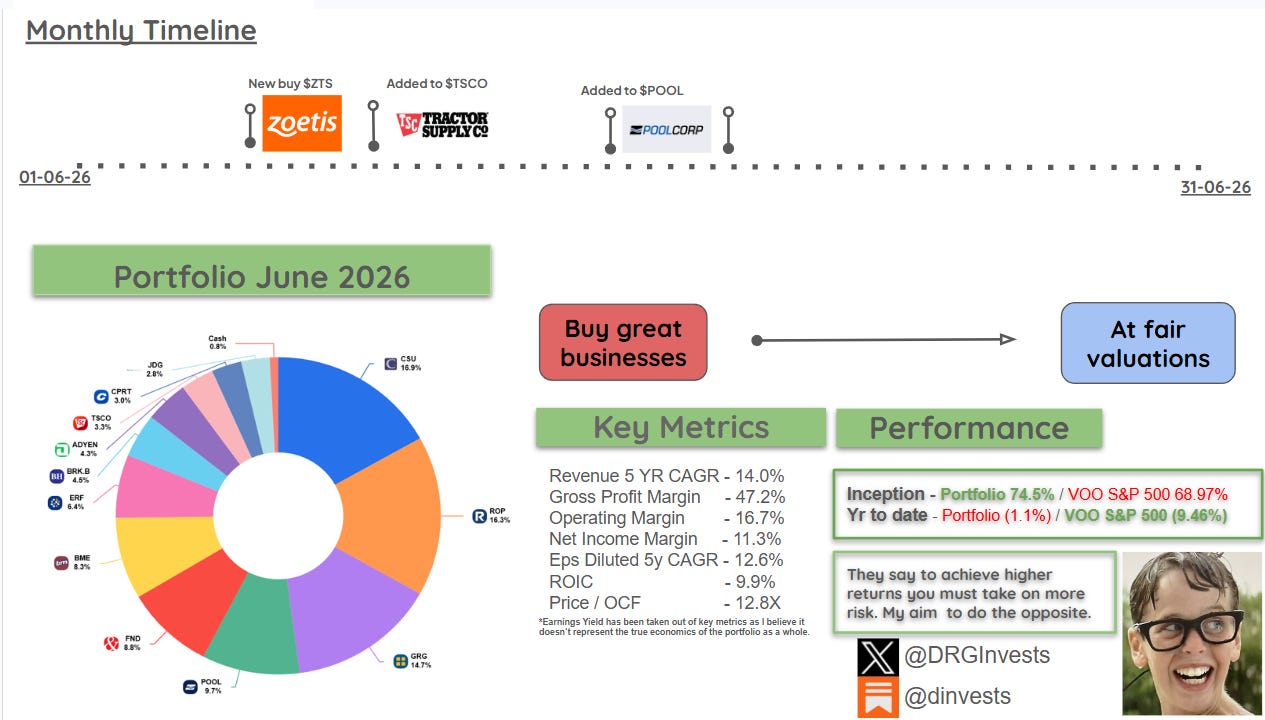
Portfolio added Zoetis, Pool Corp and Tractor Supply in June, lifting holdings to 13.
Zoetis trades near 10x EV/EBIT after its selloff, with animal-health leadership, a $9.5 billion revenue base and companion-animal demand…
@BrokenMoats Broken Moats on X
Sector action is bizarre today --- travel/discretionary (ex amazon (who posted very lousy prime sales) are surging), housing and adjacent like furniture ($w $wsm), biotech adjacent bid ($rgen, $medp) and waste stocks ($wcn). You want to derrick micron, I get it. And I get gas prices lower, market expects to fade out rate cuts that were priced moving forward as Warsh moves to trim mean/new data versus actually being hawkish, and some impact on a name like $hd off the housing bill. But all of these things are at the margin and known leading up to today --- so why target, kbh (on relatively inline to disappointing numbers yesterday) Expedia today versus yesterday? Market moves in very funny ways recently
@LaughingH20Cap Laughing Water Capital on X
Grt🧵on $GSK's cancer biz. But IMHO GSK cant max their ROI b/c $ANAB can block GSK from partnering w/ other PD1s like $MRK's Keytruda. Trial is 7/14 & GSK could lose 100% of JEMPERLI which IMHO is ~10% of GSK's mkt cap. I think GSK settles or buys ANAB for big $$$. Disc: Long
AnaptysBio’s Jemperli royalty receipts rise after a Sagard financing obligation ends in 2027.
S Triple S Special Situations Investing 2 clicks
@BrokenMoats Broken Moats on X
$LLY has nlrp3 trials so that would just put them in the same conversation no with a head start? Agree its valuable to NVO but wouldn't the derivatives like a $BIOA get more juice of ZEUS then $NVO from validating the space. I like NVO but management shoots themselves in the foot constantly and AZN etc competition on weight loss is coming
 @ToffCap 2 clicks
ToffCap on X
$ABVX
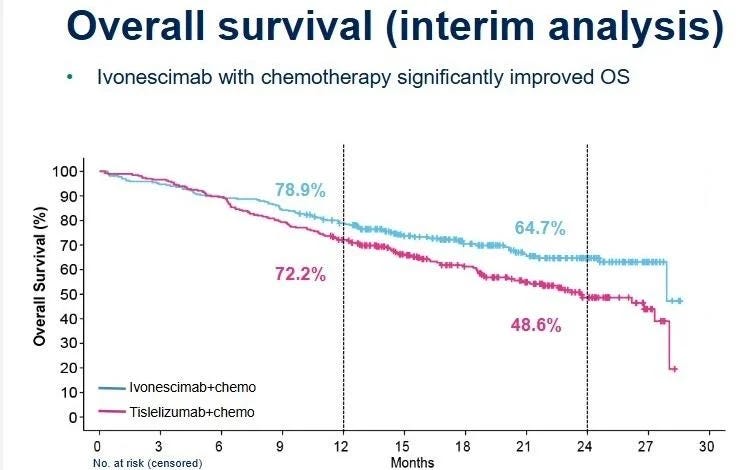
Ivonescimab plus chemotherapy extended median overall survival by 4.2 months versus Tevimbra plus chemotherapy in HARMONI-6, challenging…
S John Hempton's Newsletter 7 clicks
Bristol Myers Squibb’s bear case centers on patent-cliff revenue losses, debt, and failed drug investment after $28.3 billion of 2019–23…
S John Hempton's Newsletter 7 clicks
Zoetis trades at about 11x 2026 earnings after falling more than 60% from its peak, as disappointing launches and safety issues pressure…
Compass Pathways plans a Q4 2026 NDA submission for COMP360, a synthetic psilocybin treatment for resistant depression, backed by $466…
S Hated Moats 1 click

Novo Nordisk’s adjusted Q1 sales fell 4% despite 22% obesity-care growth, as lower US prices outweighed volume gains.
@ToffCap 1 click ToffCap on X
So $NKTR is now lower since the positive AA read out?
@ToffCap 1 click ToffCap on X
Roughly one year and >500% later 🔥🔥 $NKTR
Novo Nordisk’s GLP-1 franchise transformed obesity treatment, while its valuation framework prices in 17 years of discounted cash flows.
S Bearhold Research 2 clicks
FDA’s crackdown on HIMS’s $49 compounded oral Wegovy copy reshapes GLP-1 competition after Novo Nordisk forecast 2026 sales and profit…
S Modern Value Investing
Interpace Biosciences (OTC: IDXG) trades at 2x earnings after a Medicare reimbursement increase drove 19% growth, with a reverse split,…

Pharma-Bio Serv’s $11 million market cap nearly matches its $10.7 million cash balance as recovering life-sciences spending supports…

Cipher Pharmaceuticals’ $89.5 million Natroba acquisition doubles EBITDA to about $24 million and adds U.S.
S Raging Bull Investments
Mereo Biopharma has two late-stage assets, seeks non-dilutive financing for alvelestat Phase 3 trials, and reports cash runway through 2027.
S Raging Bull Investments
Instil Bio leased its 128,000-square-foot Tarzana life-sciences building to AstraZeneca for 15 years at $7.52 million annual rent,…
S Raging Bull Investments

IBio’s $20 million, debt-free valuation is a high-risk bet that it can partner a myostatin inhibitor for GLP-1-related muscle loss before…
S Multibagger Monitor 1 click

Sarepta’s Exondys 51 approval despite a 12-patient trial frames FDA regulatory risk and a call to remove Commissioner Robert Califf.
S John Hempton's Newsletter 1 click

Alnylam’s 2022 50% phase-three gain faces FDA advisory-panel scrutiny over its amyloidosis drug’s label extension.
S John Hempton's Newsletter 1 click
@IdeaBrunchEmail Idea Brunch on X
New Idea Brunch interview with @longcastadviser just dropped Tickers mentioned: $MTRX & $MMMB

Essex Biotechnology trades at 8 times earnings despite patented Chinese biologics, near-60% niche market share and a portfolio built with…
S Healthy Stock Picks