Sector

Asia

Everything our editor has picked under this sector, best first.

137 stories

FINV · long

Finvolution Group

FinVolution, a China and ASEAN unsecured consumer lender, trades at 4x earnings and 0.5x book value.

My 2028 numbers

ASML’s €11.7 billion quarter benefited from €3.3 billion in installed-base sales and operating leverage, while the MATCH Act threatens…

Insider activity September 2026

Asian insider buying rose 19% to US$2.4 billion across 930 September transactions, led by Grab CEO Anthony Tan’s US$30 million purchase…

@aleabitoreddit

Serenity on X

What oversupply? Even in the lower end ranges that they're focusing on, Chinese pluggable makers like Innolight are still bottlenecked for 70-100mW ranges from ECOC channel checks. Cambridge wouldn't be going out financing suppliers with convertible loans for scarce laser capacity. Suppliers wouldn't be raising ASPs if there was overcapacity. Also not all CW lasers are the same. China is a ways away from from scaling UHP lasers needed for CPO, which is why there's still premiums given to $LITE, $COHR, $SIVE. $LITE lasers are sold out into 2029 and they're starting negotiations into 2030. I don't think anyone genuinely believes that China will flood the laser markets medium term, even both $LITE / $AAOI CEO said there was a difference between comments made and what they're actually seeing. From AOI on China: "of them, they are working maybe 70 mW or very few can really do 100 mW. For 300 mW laser, especially DWDM spec, we don't see that." "Not in the next two, three years, especially the demand is so big. Okay? Even combined AOI, Lumentum, Coherent, Broadcom all together, it's still very tough to meet the customer demand in the next few years" From Lumentum last month: "At least at the moment, we see no impact from any Chinese laser supply." But whenever markets want a correction people just blindly point to China with memory or optics while ignoring what's actually occurring with demand imbalances + LTAs spanning many years and constantly extending.

A temporary glitch?

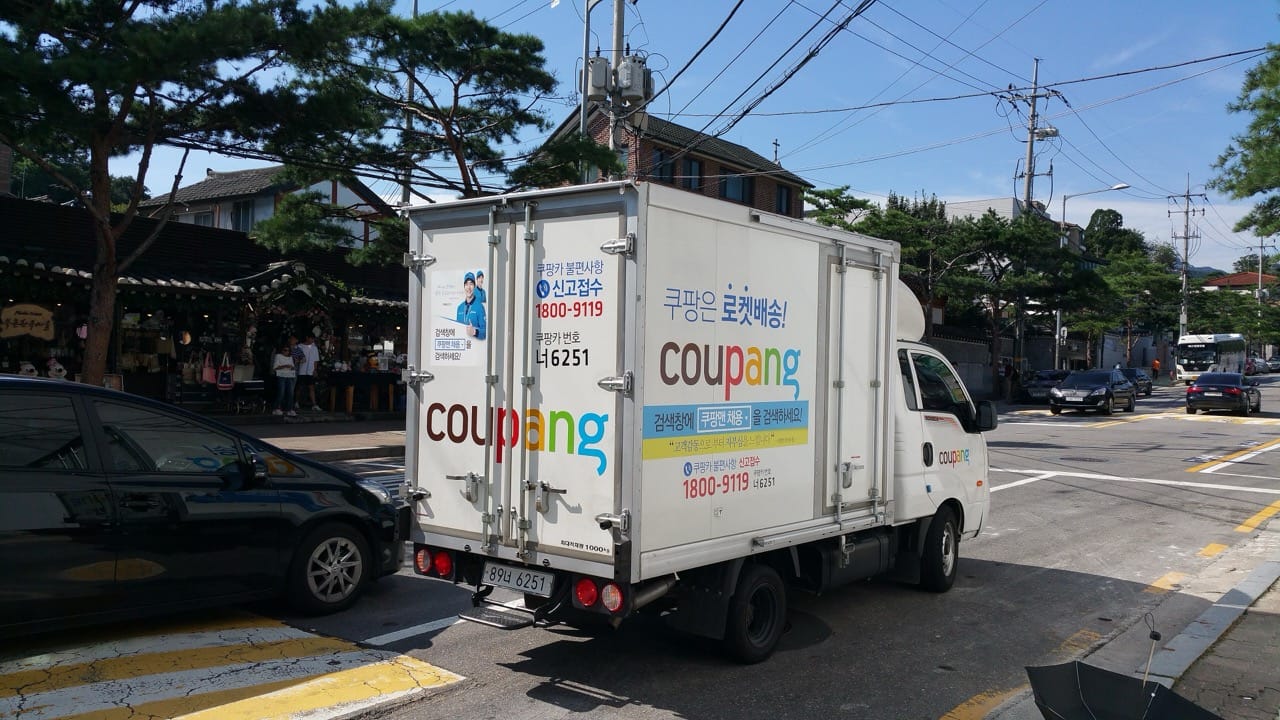
Coupang’s November 2025 cybersecurity breach tests whether a selloff is temporary despite its 28% Korean e-commerce share, 14 million-plus…

@convequity

Convequity on X

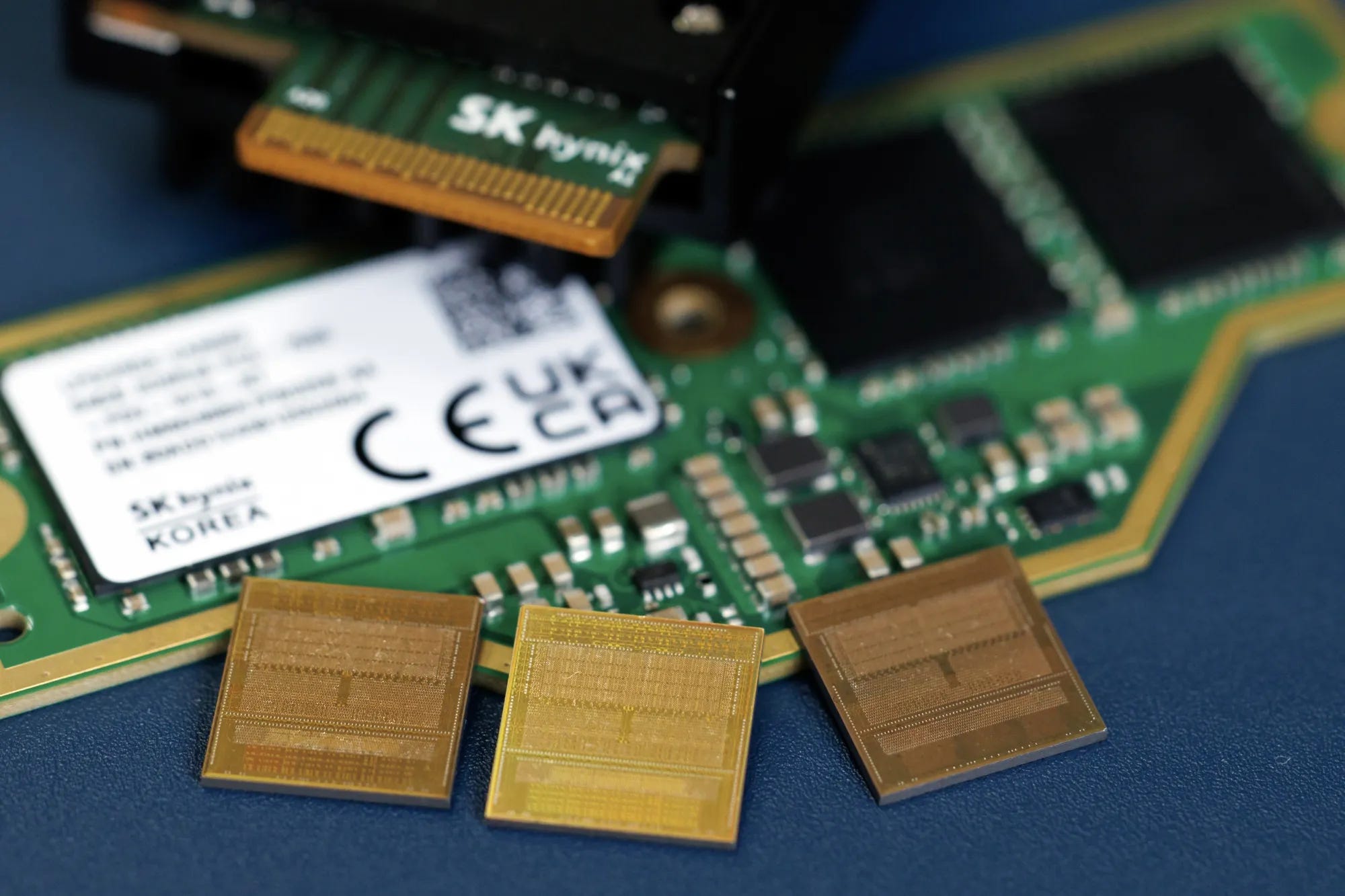
Huawei's finer bonding deserves more weight in the AI-chip race. $AVGO's 3.5D approach combines vertically stacked dies with the side-by-side packaging used to connect processors and HBM. It adds another direction in which designers can shorten the wires moving data around a chip. Besi describes Broadcom's initial face-to-face hybrid bonding at 6µm pitch. Huawei reports 1.5µm for its 2026 Kirin implementation. Pitch is the spacing between connections; face-to-face brings the dies' wiring surfaces together. On an identical square grid, that spacing difference allows 16x as many potential bond sites per unit area. Usable connections still depend on routing and the space reserved for power and repair. It is an architectural opportunity, not a bandwidth multiple. The size qualification matters. Kurnal's Kirin 9050 die shots measure roughly 121mm² per die. Extending fine-pitch bonding to much larger AI dies changes the economics: more expensive silicon is at risk when a stack fails, and heat and power delivery have to work across the whole assembly. Broadcom also said face-to-face compute SoC shipments began in February 2026. A later roadmap cannot be read as its first arrival at face-to-face bonding. Huawei looks ahead on this published pitch comparison. Our view is that this gives it a credible route to narrowing parts of the AI-chip gap through packaging. The stronger claim needs production evidence at large accelerator scale. The phone result alone does not establish when that arrives. Builds on Convequity's Huawei After Sanctions, Parts 1–2, 10 & 18 Sep 2026, with updated source checks.