

Elon Musk: What Comes Next for Humanity
Elon Musk addresses Tesla owners at Giga Texas during the 2026 X Takeover.
Sunday, October 11
Everything we published on this day.
43 stories — the front page that day →
Elon Musk addresses Tesla owners at Giga Texas during the 2026 X Takeover.

@compound248 $SPY 🔥🔥🔥
$AMZN paid <$400M for Annapurna … crazy how easy it is to spend money these days. Interesting acquisition, though. Decart has a world model and a video model, but the core piece AMZN is interested in is its “DOS” Decart Optimization Stack which helps AI models to train or inference over any chip technology, including already working with Trainium. This is a piece of technology AMZN wouldn’t want acquired by $NVDA. Makes a lot of sense within AMZN as a way to help customers use NVDA AMD CRBS TRN at optimal performance.
Should be an interesting week $META #Watermelon
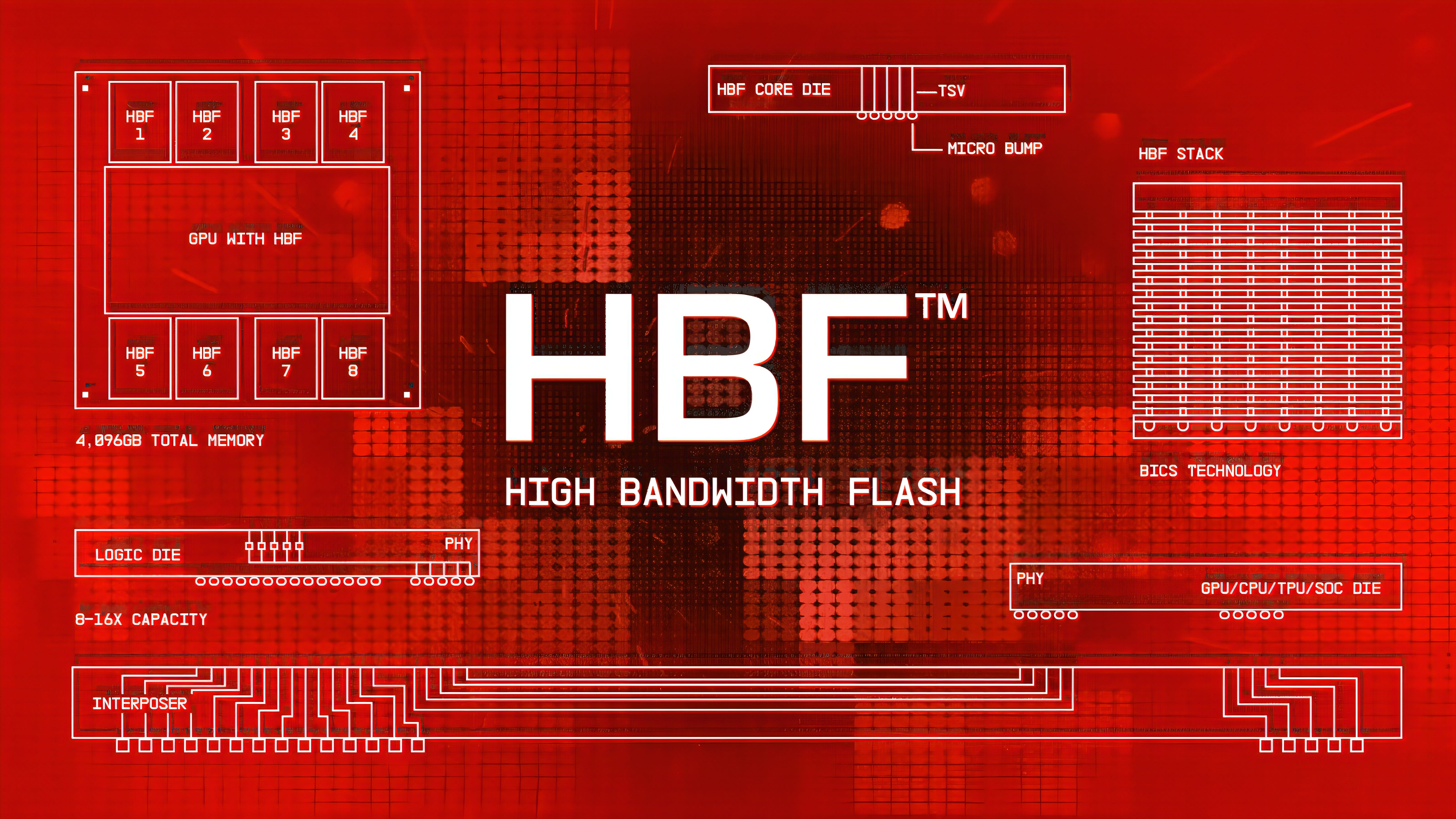
HBF is being positioned as a high-capacity inference-memory tier alongside HBM, with SanDisk, SK Hynix, Kioxia and Samsung pursuing…

I think Gavin's correct. Open-weight models that compress frontier margins are positive for AI infra -- they don't shrink demand for compute. An example is after Deepseek R1, Tencent, Alibaba and Bytedance *significantly* increased H20 orders...and smaller healthcare & education firms started buying $NVDA H20's to run DeepSeek in-house. So we saw a broadening out of the customer base for the infra providers. In the West, I think $DELL is the best read on whether the buyer base is broadening beyond frontier labs. Hyperscalers mostly buy directly from Taiwanese ODMs, so Dell's AI customers are mostly neoclouds, sovereigns and enterprises. Dell's AI customer count went from >5,000 to >6,500 last quarter (30% growth in one quarter) which management say is mainly down to enterprise acceleration. Feels like that's one of the better public data points on how fast the self-hosting buyer base is growing. Which is a net-positive for AI infra. I don't understand how it can't be?
With the Singapore Grand Prix in a few hours, I can't help but draw comparisons to the financial markets and the AI trade. One slow pitstop or a miscalculated overtake can undo weeks of preparation and cost millions of dollars. So with AI and semiconductor earnings fast approaching, it feels like we need a quick pitstop to get the race back on track. Rates remain high. Oil prices are elevated. Fresh frontier lab ARR concerns. AI capex. Circular financing.....all create some dark clouds which have resulted in de-risked positioning and low sentiment. Similarly, consumer confidence is low. New research from Morgan Stanley finds that net sentiment from Americans towards AI is at +14% compared with -20% for data center construction, with water requirements and environmental concerns among the biggest objections. It therefore seems like AI policy will become an even bigger stumbling block in the years to come... But the positive is that business fundamentals have remained strong highlighted by recent sold-out comments from $MU and $LITE CEOs. Plus $TSM reporting 55% YoY revenue growth as the de-facto proxy for the wider AI trade. My beloved Chelsea won 5-1 yesterday. But conceding even just 1 goal won't be good enough for the AI trade. With sentiment at fresh lows, I feel like all the key infrastructure companies need to report without any hiccups.

$SPHR Update on my old friend Sphere. The recent sell off seems to be directly related to some sell-side rerating of the stock based on "soft data". I find that kind of interesting because the data has been soft for many months (see daily ticket sales chart below), and among investors that I talk to, this isn't a "surprise". (Realistically that's why the stock traded down from $170 to $130). So this "surprise, the data is weak, stock rerates down 25%" is interesting to me, but also reminds me: it's always extremely hard to figure out what the market has or hasn't "priced in". The issue with the "soft data" is that my (and many) original projections was that WoZ would trough at around 1.4-1.6m/day of sales in 2027. By the summer we observed levels of ~1.2m so that likely wasn't going to happen. Towards the end of the year, the data has inflected upwards, we're down YoY (expected, given less hype than the launch a year ago). Some of this is likely due to LV weakness in general, but I think that's a relatively small fraction of the story. Personally, I find this data interesting because A) I think it's largely meaningless to value the company B) I think the market overreacts to it I think the Sphere business is humming along extremely nicely. The concert business is consistently improving (higher numbers, better acts, more utilization). The ads and bookings businesses are healthy/growing, there are 2 (and probably more unannounced) additional Spheres working through production. What WOZ did was prove that a "hit film" could generate enormous interest/revenues/visitors to the Sphere. Whether it "levels off" at $1m/day, or $1.2m/day or $1.4m/day, doesn't matter that much because the longer term model is to consistently launch NEW films launch and generate $1.5-$2.5m/day. And they have somewhere between 2-3 new films coming out next year, and probably another 2-3 films in 2028. AI is cutting their speed (and cost) of making films dramatically. Overall I'm a buyer at these $100-$120 price levels (We're long via some short Nov $120P's that are currently in the money). Given recent price action, it's hard to say how the market reacts to the November earnings release, but I think the earnings picture has stabilized from here and the stock is setup for good fundamental catalysts driving earnings growth in 2027.

who is long $woof here?

Idea Brunch with Chris Colvin of @BreachInletCap Tickers discussed include $BKTI, $PRG, $BATRK, $LRN, and $HGV Enjoy!
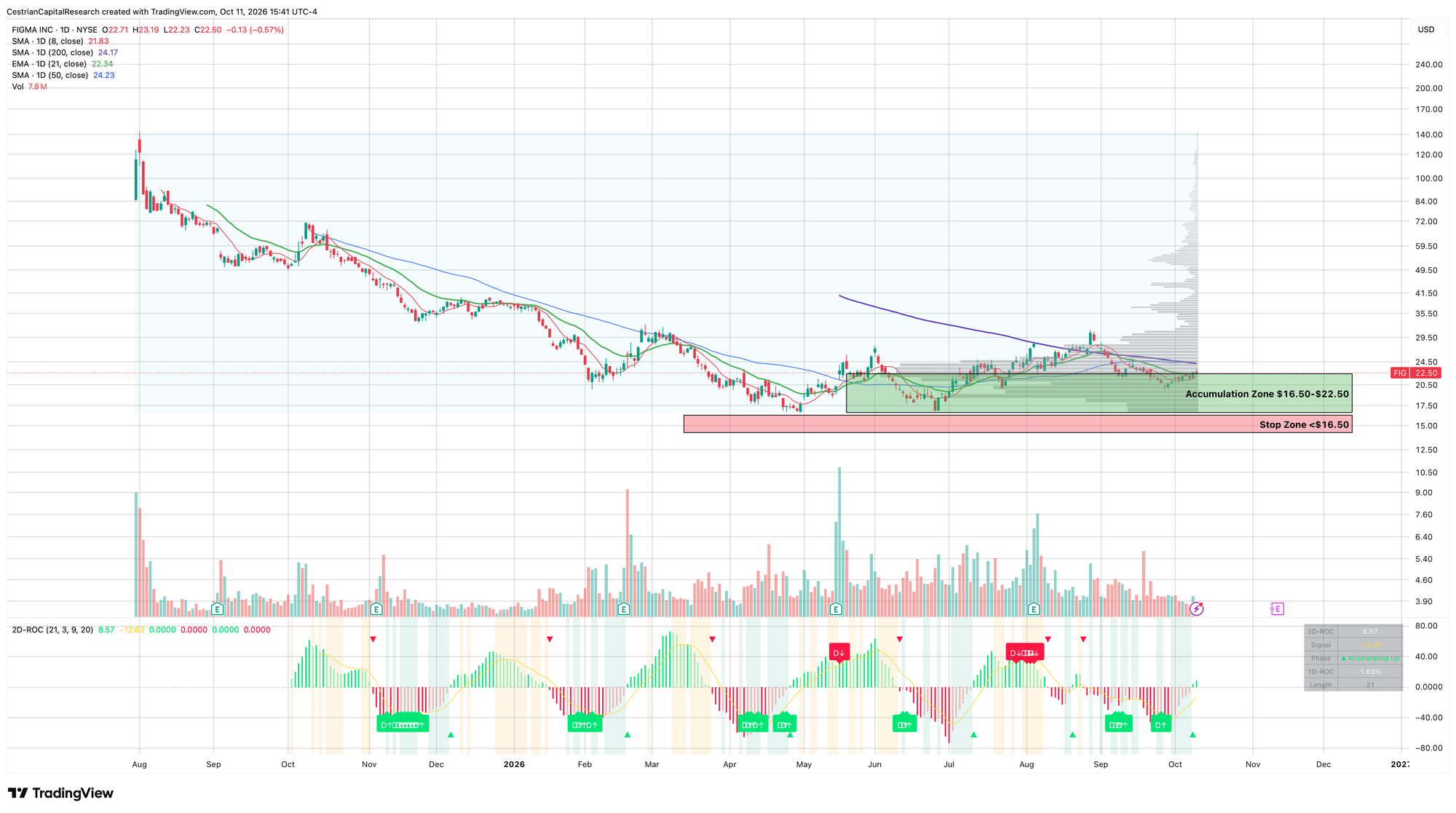
Figma’s Q2 revenue rose 48% to $370.1 million as AI credit adoption lifted retention to 136%; FY2026 revenue guidance increased to $1.463…

Four of BWX Technologies’ $BWXT six top executives took their current roles in 2025, but all four were promoted from inside the company. $BWXT’s 2030 plan depends most on the executives below: → Rex Geveden (President and CEO): CEO since 2017 after joining as COO in 2015. Previously an EVP at Teledyne Technologies $TDY and 17 years at NASA, where he was COO. → Mike Fitzgerald (CFO): CFO since July 2025, interim from May 2025. Joined in 2022 as chief accounting officer; previously at MorganFranklin Consulting and Deloitte. → Joe Miller (President, Government Operations): Since June 2025. Served on the submarine USS Norfolk, joined $BWXT in 2011 as an engineer, and ran Advanced Technologies before taking over the segment. → John MacQuarrie (President, Commercial Operations): More than 28 years at $BWXT, and more than 30 in the nuclear industry. → Kevin McCoy (Chief Nuclear Officer): Moved from Government Operations president in June 2025 to help speed up Columbia- and Virginia-class production. Retired vice admiral and former commander of Naval Sea Systems Command. → Kate Kelly (President, Advanced Technologies): Has run Advanced Technologies, home to Pele, BANR, and TRISO (its microreactor and fuel programs), since June 2025, after joining $BWXT in 2012. Several senior roles turned over in 2025 and 2026: → CFO: Robb LeMasters stepped down in May 2025 and stayed on as a special adviser; Fitzgerald replaced him. → General counsel: Ronald Whitford stepped down on November 4, 2025, and Toby Smith, previously corporate secretary at elevator maker Otis Worldwide $OTIS, replaced him. The 8-K says the exit wasn’t tied to “any legal issue or any disagreement.” → Strategy: Rik Geiersbach, previously head of strategy and corporate development for the defense unit of Boeing $BA, joined as chief strategy officer in September 2025. → Nuclear Operations Group: Retired Rear Admiral Howard Markle now runs the naval reactor plants in place of Gary Camper, with no release announcing the change. $BWXT’s board includes Adm. John Richardson, the former Chief of Naval Operations and former director of Naval Reactors.
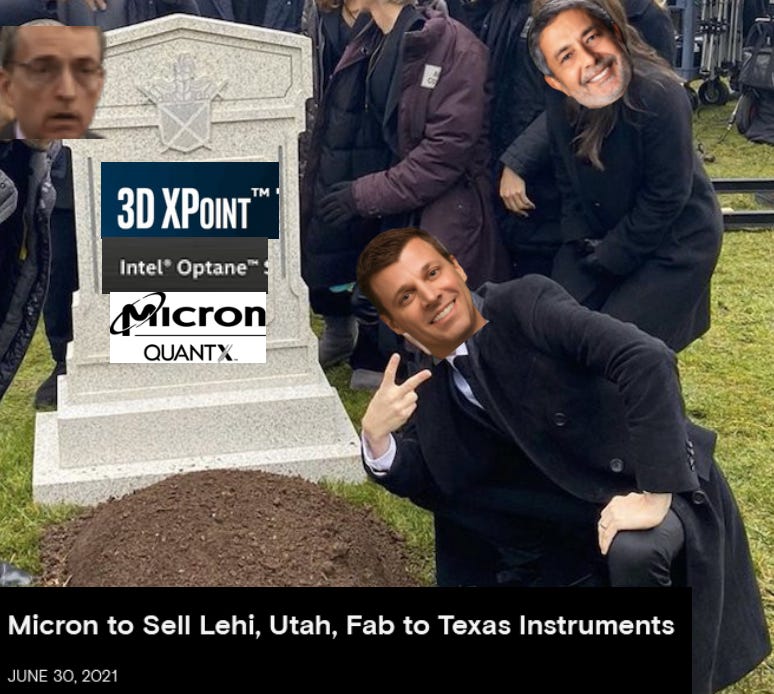
3D XPoint, sold as Intel Optane and Micron QuantX, failed against NAND economics despite DRAM-like latency and may regain value for…
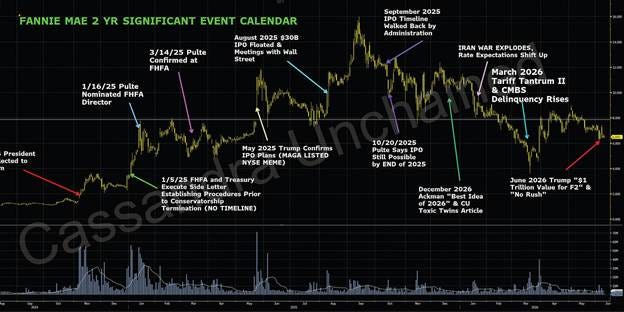
Fannie Mae and Freddie Mac common shareholders face at least 90% dilution if Treasury converts its growing senior preferred stakes into…

Cal is very smart, especially as it pertains to $NN - would listen…
Two event-driven levered equities I’m thinking about this weekend: $XRX and $SVC. $XRX seems simple on paper. Monetize XFS, delever and unlock substantial equity value. But if it’s that obvious, why hasn’t Icahn’s guy done it in eight years? The recent TPG IP monetization suggests they’re willing to get creative, so what’s preventing an XFS transaction? $SVC is potentially more interesting. If the board accepts TKO’s $2bn hotel portfolio offer, you’re creating the remaining net lease portfolio at a very attractive valuation with significant equity torque from deleveraging. My biggest question is whether TKO actually has the financing commitments to close… Thoughts welcome.
See the Form 4 note on Geveden’s 10b5-1 plan here: Continue reading here for the six events I’m watching next at $BWXT:
85.5% of the BWX Technologies $BWXT stock insiders have sold in the open market since January 2025 came from CEO Rex Geveden. All 14 open-market transactions since then were sales, totaling 129,322 shares and $20.1M. Geveden accounts for 110,625 of the shares and $17.2M, in two phases: 1) Discretionary sales: 45,625 shares at $107.40 on February 26, 2025, and 25,000 at $179.00 on August 6, 2025, both two days after an earnings release and neither under a 10b5-1 plan (a pre-set trading plan). 2) Plan sales: On August 11, 2025, five days after the second sale, he adopted a 10b5-1 plan to sell up to 40,000 shares through August 14, 2026. He sold 10,000 shares/quarter under the plan, at $197.90, $203.26, $204.81, and $172.50, using up all 40,000. He still holds 192,491 shares directly ($28.0M at $145.70). The last two 10-Qs show no new plans adopted in H1 2026, and the Q3 10-Q, due with results on November 2, will show whether he adopted another plan after the first expired. The other eight sales, by seven executives and directors, totaled 18,697 shares and $2.9M. Most of this selling carries little signal. The other insiders’ $2.9M is small, and Geveden’s 40,000 plan shares were scheduled in August 2025. His two discretionary sales matter more. They totaled 70,625 shares ($9.4M) outside any plan, and including the plan sales, he’s sold about a third of his shares since February 2025. But both came right after $BWXT reported earnings, not ahead of them, at $107.40 and $179.00, well below the $238.42 peak. So the selling isn’t a warning sign, but with no insider buying during the drop, insiders aren’t signaling a bottom.

Eisman is long $NVDA by the way
$evlv adoption doesn't matter if it's arriving at bad economic terms. anything can be adopted if a company is subsidizing it for example. i care about at whether the adoption is economically profitable and if that economic profit has a long and sustainable runway it doesn't seem like that's the case with $evlv
AI labs are paying to close the gap on malware binaries their best models still can’t read. A ransomware nanocap I wrote up last month is now training its own model to read them, after data labeling companies approached its team. Even with far more capable models today, OpenAI and other top AI labs still pay experts to write and grade the problems their models get wrong. And that’s where data labeling companies play a role. They recruit experts in fields where models still make mistakes, like coding, finance, and medicine, and turn what those experts know into graded examples for the labs to train on. Here are just some of the valuations of the largest AI data labeling companies: → Scale AI: Valued at over $29B after $META paid $14.3B for a 49% stake in June 2025. → Surge AI: Was in talks to raise at a $25B valuation in July 2025. → Mercor: Was in talks to raise at a $20B valuation in July 2026. One of the skills the labs need help with is reading malware, the malicious software hackers use to break into or lock up computers. Malware often arrives as a binary, a compiled program in machine code, and many are obfuscated, or scrambled to hide their purpose. In August 2026, researchers led by Columbia University released SRE-Bench, a test of AI models on 262 binaries, and concluded that reverse engineering, or figuring out what a binary does, “remains largely unsolved.” According to Vals AI’s SRE-Bench leaderboard, OpenAI’s GPT-6 Astra claims the top spot, fully solving 56.9% of the binaries. But GPT-6 Astra still can’t fully solve the other 43.1%. Data labeling companies are now recruiting malware experts to train the labs’ models. Scale AI, for example, is hiring a product manager to build a cybersecurity product line, with “malware and binary analysis” among the skills it covers. Mercor also pays security experts $200-250/hour to evaluate AI-generated analyses, preferring people with reverse engineering or binary analysis backgrounds. That demand for malware skills has now reached the ransomware nanocap I wrote up last month. Its CEO said in a new interview that data labeling companies have asked the company to help label what each malware binary does, like whether it’s secretly encrypting files. Its software copies the encryption keys ransomware creates during an attack, so its engineers can build a decryptor (a program that reverses the encryption) and recover a victim’s files without paying the ransom. So is a company the market values at under $10M on track to be acquired by, or partner with, an AI lab or data labeling company? Or is binary analysis another AI plan that misses its targets, like the AI decryptor builder it has pitched since 2023? That's what I talk about in my ~3,500-word company update:

Rocket Lab’s $2.36 billion backlog and Iridium acquisition support growth, but delayed Neutron testing, dilution and losses leave RKLB…
 Bohdan Kucheriavyi 7 clicks
How frequently do restructurings at this scale actually work? Did it work for $STLA?
for $evlv unfortunately it seems the economics of their incremental customer wins are margin dilutive as they are trying to continue growing while competitors are catching up

@ptuomov doesn't make many macro-y calls but he's 2 for 2 in the ones I've seen him make. Will be hedging my $LPRE position tomorrow.
@richtrades100 Yo $KYIV?
Continue reading here for the U.S. AP1000 push and the new plant $BWXT is weighing:
Excluding medical isotopes, commercial power revenue at BWX Technologies $BWXT nearly tripled, from ~$400M in 2023 to ~$1.1B expected in 2026. $BWXT’s commercial segment is growing much faster than its government segment, driven by (1) Ontario rebuilding its reactors, (2) Canada’s plan for new ones, and (3) the U.S. push for new AP1000 reactors. Its commercial backlog more than doubled to $1.6B. Kinectrics, a Toronto-based nuclear engineering and testing firm acquired in May 2025, explains part of the jump. Commercial revenue grew 72% in Q2 2026, or 33% excluding the acquisition. In Ontario, utilities are rebuilding reactors to run for decades longer. $BWXT is building 48 steam generators for Ontario Power Generation’s (OPG) Pickering refurbishment, part of more than CAD$1B (~$700M) of contracts. The same contracts cover the reactor pressure vessel for the first BWRX-300 at OPG’s Darlington station, a 300 MWe small modular reactor (SMR) designed by GE Vernova Hitachi. The 10-K calls $BWXT “the only commercial heavy nuclear component manufacturer in North America.” Notably, its Cambridge, Ontario plant is turning out more than 1.5 steam generators/month vs. the 1/month its schedule requires, per $BWXT’s Investor Day on September 29, 2026. Beyond refurbishments, Canada’s June 2026 nuclear strategy calls for “up to ten new large-scale reactors,” with two under construction by 2035 and five more planned or under development by 2040. $BWXT already has licensing and early engineering contracts for the large reactors planned by OPG and Bruce Power, the private operator of Ontario’s Bruce nuclear station. John MacQuarrie, president of Commercial Operations, estimated Canada’s new-build market at CAD$120-150B (~$84-105B) at Investor Day. Slide 31 shows $BWXT’s potential revenue per new reactor: → CANDU (Canada’s heavy-water reactor design): $350-700M per reactor. → AP1000 (Westinghouse’s large U.S. design): Low hundreds of millions of dollars. → SMRs: $50-100M.

M&A idea: $BCO closing on cash + stock acquisition of $NATL early 1Q27 Implied BCO market cap ~$5.5B post-close on $1B pro-forma FCF = 5.5x Leverage jumps to ~3.4x so they'll likely spend a few years balancing delevering No real arb situation, but worth watching...

Newest out. Imperial Brands: Collapse $IMBBY $LOG $MO $PM $BTI $STG $HAYPP

Inter & Co, Brazil’s second-largest neobank, grew over 20% with controlled delinquencies and 15% book-value compounding while trading at…
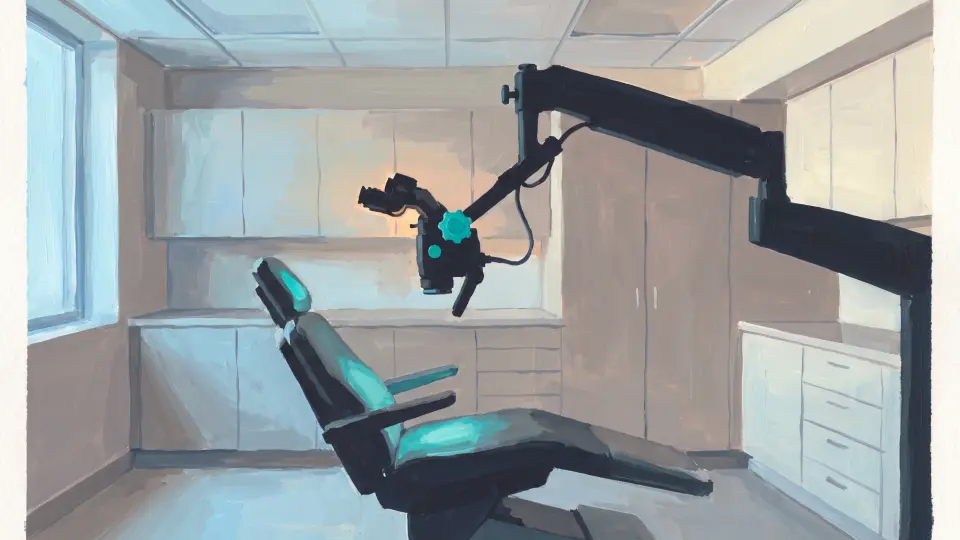
Glaukos is expanding from glaucoma devices into sustained drug delivery and corneal cross-linking, but GKOS's premium valuation leaves…
 Myriam Alvarez 4 clicks

OpenAI and Anthropic will rent most of the AI capacity they plan, but mainly from the big clouds rather than the listed neoclouds Convequity's AI Bubble Barometer (ABBX) tracks the data-centre capacity each company plans and how much of it it expects to rent from partners rather than own. 1. OpenAI plans 21.2 GW, of which 18.0 GW is to be supplied by partners. Anthropic plans 13.8 GW, all of it from partners. Together the two labs plan to rent 31.8 GW. 2. That is 2.8 times the 11.2 GW that the five hyperscalers, $MSFT, $AMZN, $GOOGL, $META and $ORCL, plan to rent from others. 3. The labs' named suppliers are mostly AWS, Oracle, Google, Azure and SB Energy. CoreWeave, a listed neocloud, and Nscale, a private one, appear on the lists, but the bulk of the 31.8 GW is not with listed neoclouds. 4. The seven listed neoclouds, $CRWV, $NBIS, $IREN, $APLD, $CORZ, $CIFR and $BTDR, plan to build 33.62 GW of their own. Much of that is gross site power rather than contracted IT capacity. 5. The labs are also behind most of the recent growth in AI capacity plans. Since 14 Jul, the total capacity that the 15 ABBX companies say they plan to have has risen by 22.19 GW, from 131.23 GW to 153.42 GW on 7 Oct. OpenAI and Anthropic raising their own plans accounts for 13.7 GW of that rise (62%). We think the labs' rental demand mainly supports $AMZN, $ORCL, $GOOGL and $MSFT. The neoclouds will need to fill their pipelines largely with other customers, including the hyperscalers' own 11.2 GW of planned rentals, so we would not read the labs' plans as demand for the neoclouds.

Helus Pharma's HLP003 Phase 3 depression data is due in 4Q26, with $166.4 million in cash and dilution risk from a $100 million ATM…
 Petri Dish Reports 3 clicks
The Department of Energy conditionally committed $17.5B in loans in June 2026 for long-lead equipment for up to 10 AP1000 reactors (Westinghouse’s large U.S. design), and only “a limited number of heavy engineering plants” can make the components, per World Nuclear News. BWX Technologies $BWXT bought Precision Components Group (PCG) in July 2026 to get a U.S. foothold. PCG makes heat exchangers and other heavy components at plants in York, Pennsylvania, and Florence, New Jersey, but it can’t make the largest parts, like an AP1000 reactor pressure vessel, CEO Rex Geveden said on the Q2 call. So $BWXT is weighing New Jersey, Indiana, and one other location for a new U.S. large-component plant, and Geveden expects “a final investment decision in the coming months.” He also expected at least one new-build equipment order by the end of 2026, from the three additional small modular reactors (SMRs) planned at Darlington in Ontario, the AP1000 projects, or BWRX-300 SMR projects in the U.S. John MacQuarrie, president of Commercial Operations, widened that window at $BWXT’s Investor Day on September 29, 2026, saying awards should start “either later this year or early in 2027.” $BWXT’s Investor Day targets call for high-teens annual revenue growth in the commercial segment through 2030, with adjusted EBITDA margins rising to the high teens from 13% in 2026. Reading “high teens” as 16-19%, commercial revenue would grow from ~$1.1B in 2026 to ~$2.0-2.2B by 2030, and adjusted EBITDA from ~$140M to ~$320-420M. That would make commercial about a third of $BWXT’s adjusted EBITDA, up from about a fifth.
Neoclouds trade at 2.6x invested capital, less than half the hyperscalers' 6.1x The seven neoclouds in Convequity's AI Bubble Barometer (ABBX), $CRWV, $NBIS, $IREN, $APLD, $CORZ, $CIFR and $BTDR, lost 7.2% of their combined enterprise value this week, from $190.2B at the 2 Oct close to $176.5B at the 9 Oct close. Over the same week the five hyperscalers, $MSFT, $AMZN, $GOOGL, $META and $ORCL, gained 2.4%, from $13,316B to $13,637B. 1. Enterprise value divided by invested capital (EV/IC) at the 9 Oct close was 2.6x for the neoclouds and 6.1x for the hyperscalers. At the 2 Oct close it was 2.8x and 6.0x. 2. ABBX estimates the weighted average cost of capital (WACC) at 14.6% for the neoclouds and 9.7% for the hyperscalers. 3. At the 9 Oct close, neocloud share prices were 20% to 45% below each stock's best Friday close since 17 Jul: CIFR −44.5%, CORZ −33.3%, BTDR −25.8%, IREN −24.6%, APLD −24.1%, CRWV −22.0% and NBIS −20.4%. Among the hyperscalers, ORCL was 10.9% below its best, AMZN and META 4.4% and GOOGL 1.3%, while MSFT closed above its best. We think most of the discount reflects the neoclouds' higher cost of capital rather than a mispricing. We would not call 2.6x cheap until they report their July to September backlog and customer prepayment figures.
Zscaler's $3.8 billion ARR grew 25% year over year as AI-driven security demand and operating leverage support a path to doubling ARR by…
 Andres Cardenal, CFA
Wix’s Base44 vibe-coding tool reached $100 million ARR in a year as AI disruption fears obscure expanding services, customer lock-in and…
 Fernanda Galvez Jalil 1 click
A laser that only one company can supply will not scale to the volumes AI needs. That is the main reason $LITE is a less attractive investment to us than it was a few quarters ago. Our post on Lumentum got more attention than we expected, so we want to set out the argument in plain terms, including what we think about microLED. We did not say microLED will certainly happen. 1. The part in question is Lumentum's ultra-high-power external laser source. In co-packaged optics, the optical parts sit inside the chip package. The laser sits outside, in its own module, and its light is carried into the package by fibre. That outside module is the external laser source. Ultra-high-power means one laser produces enough light to feed many optical channels at once. 2. If only one vendor can make that laser, it has little chance of reaching meaningful volume. One supplier cannot carry a part the whole industry needs. So the industry has to find other paths around that bottleneck. 3. The first likely path is micro-VCSELs. A VCSEL is a vertical-cavity surface-emitting laser: a tiny laser that sends light out of the top of the chip rather than out of its edge. They are made many at a time on a wafer, and each one is low power. A micro-VCSEL is a very small version. Many small lasers do the job of one very powerful one. 4. The second path is a less powerful laser packed inside the NPO package. CW stands for continuous wave: the laser emits a steady beam, and a separate part, the modulator, switches that light on and off to carry data. NPO is near-packaged optics: the optical engine sits on the board right next to the chip, rather than inside the chip package or in a pluggable module at the front of the switch. In this path the CW laser is still fairly high power, but not ultra-high power, and it sits inside the optics package instead of in a separate external module. 5. The third path is microLED. A microLED is a very small light-emitting diode, the same kind of device as in a display, not a laser. Each one is switched directly to carry data, and many of them run in parallel over short distances. 6. On microLED, the consensus on X is that it will not work for AI interconnects. We are not saying it will certainly happen. It is one of several alternatives. But there is good research work on it, and it has a chance. Most of the criticism we see is aimed at one architecture. The research we rate uses microLEDs in a different architecture, and the criticism does not address it. 7. Lumentum will still grow. But compared with the previous few quarters it is a less attractive investment, because its ultra-high-power laser is the part the industry has to find a way around. We trimmed most of our Lumentum position earlier this year, around when the share price began to flatten.
Penguin Solutions' Integrated Memory revenue nearly doubled in Q4 FY2026 as AI Factory contracts expanded, lifting non-GAAP operating…
 Blake Winiecki 2 clicks
@JCann777 @grok how has $TMC stock performed since this tweet on 8/23/26?
Albemarle posted a 20-fold Q2 profit increase and $638 million of free cash flow as lower lithium prices drove its shares down 40%.
 The Supercycle Investor 2 clicks
Coupang’s November 2025 cybersecurity breach tests whether a selloff is temporary despite its 28% Korean e-commerce share, 14 million-plus…
