@stockgutter
SG on X
$ABVX @scorpionfund short report is worth reading. I remain long, but consider Kir a serious person. He has identified some great shorts in biotech and related spaces such as $DNA. That said, I don't find this to be one of his more compelling reports. And piling on after an initial post-Scorpion drop has not historically been a good strategy. $HRMY recovered. Soleno was bought out at a premium. $TWST has gone up a lot since his report.
@stockgutter SG on X
$ABVX @scorpionfund short report is worth reading. I remain long, but consider Kir a serious person. He has identified some great shorts in biotech and related spaces such as $DNA. That said, I don't find this to be one his more compelling reports. And piling on after an initial post-Scorpion drop has not historically been a good strategy. $HRMY recovered. Soleno was bought out at a premium. $TWST has gone up a lot since his report.
@stockgutter SG on X
$ABVX @scorpionfund short report is worth reading. I remain long, but consider Kir a serious person. He has identified some great shorts in biotech and related spaces such as $DNA. That said, I don't find this one to be one his more compelling reports. And piling on after an initial post-Scorpion drop has not historically been a good strategy. $HRMY recovered. Soleno was bought out at a premium. $TWST has gone up a lot since his report.

Natera grew Q3 revenue 34% to $794 million, raised 2026 guidance to $3.005 billion to $3.035 billion, and named oncology head Solomon…
BL Cestrian Capital Research 4 clicks
 @kevin__mak
Kevin Mak on X
$CMPS Daily short interest data from Markit suggests that on the Nov 2nd "Usona filed their NPV" rumor, triggered ~5M shares of incremental short positions. My interpretation: The news came out earlier in the morning and the stock opened weak but not too bad. Then throughout the morning "someone/s" was leaning into the stock and just crushed it. It could have been a holder (or multiple holders) selling, or it could be new people shorting. This data from Markit suggests the latter. (Note that this is based on settlement data, so short sales that happen on 11/2 don't show up until 11/4 and 11/5.) I prefer to see people shorting versus longs selling, as it's more likely for the shorts to cover, versus a large long leaving the stock has a low chance of coming back. If they're still short by the time of the approval announcement, hopefully they get squeezed. Maybe today's strength is them covering and moving on? Disclosure: Creek Drive and its affiliated funds holds a long position in CMPS. Views expressed are current opinions for information only, subject to change and are not investment advice or a recommendation to buy or sell any security. Investing involves the risk of loss and past performance is not indicative of future performance. See the disclosures link in my bio for more important information.
 @SowingAlphaSeed
Farmer on X
$XBI is extra schizo today
Daiichi Sankyo’s 43% share-price decline leaves Enhertu’s $4.98 billion FY2025 sales and Datroway’s launch supporting a lower-valued…
SA  Another Mountain's Rock Investing 5 clicks
@kevin__mak Kevin Mak on X
$CMPS Company is presenting at Jefferies today. Q&A asked about NPV and the company believes there's no impact on them. Disclosure: Creek Drive and its affiliated funds holds a long position in CMPS. Views expressed are current opinions for information only, subject to change and are not investment advice or a recommendation to buy or sell any security. Investing involves the risk of loss and past performance is not indicative of future performance. See the disclosures link in my bio for more important information.
 @cfrischer1
Charles Frischer on X
@VeleryonSteal I am disappointed $OMER missed the revenue estimates. Outlook is still very good over time. $NN still has very valuable spectrum that satellite and MNOs want. Market is tough right, no doubt.
Amneal Pharmaceuticals posted its fourth straight earnings beat, with Q3 revenue up 10%, raised FY26 guidance and an expanding biosimilar…
SA  Albert Anthony 4 clicks
Electra Therapeutics trades near $150 million enterprise value after its broken IPO, with SURPASS pivotal data funded and ipsoprubart’s…
SA  Equity Eagle
Travere Therapeutics' FILSPARI has two FDA approvals and is driving revenue growth, while TVTX shares have nearly tripled since August 2025.
SA  Out of Ignorance 3 clicks
Iovance’s Amtagvi revenue rose 77% to $101.6 million as a lung-data update drove a 47.6% stock drop, despite weak response rates outside a…
SA  Seeking Edge 5 clicks

Harrow targets $350 million in 2026 revenue as VEVYE and IHEEZO grew 35% and 62% sequentially in Q3, supported by sales-force expansion.
SA  RiverBoat Investing
Kura Oncology's $5.85 fair value assumes limited room for execution misses as quarterly cash burn approaches $72 million and frontline data…
SA  Gary Aquilina 2 clicks

DiaMedica’s DM199 faces November 2026 fetal-growth-restriction data and a Q1 2027 ReMEDy2 stroke interim analysis, alongside planned…
SA  Terry Chrisomalis
 @StableBread
Fajasy on X
Six stocks I’m still following filed Q3 numbers: → $QXO: Operating cash flow was only ~$1M in Q3, down from $213M a year ago. → Boost Run $BRUN: Says it has secured $600M of non-dilutive project financing, but a Georgia delay leaves year-end ARR near my bear case. → Reviva $RVPH: Valued at 26.5% of its cash, but needs $50-55M for its second Phase 3 trial and FDA filing. → DigiPowerX $DGXX: ~$30M short of its ~$350M 2027 capex plan, even counting the $200M loan it hasn’t closed yet. → Agility Robotics $AGLT: Down 36.1% from its first-day close, with a little over two years of cash. → FORT Robotics’ SPAC $NTWO: 82% redeemed, and its price implies 36.7x FORT’s TTM revenue. So did the quarter change my call on any of the six? That’s what I answer in my new Q3 update, including whether I’m buying, selling, or holding each name.
@StableBread Fajasy on X
Read the proxy on the reverse split and the Nasdaq uplisting here: Here's my August 20 update on $RVPH (you can read most of it for free):
@StableBread Fajasy on X
Reviva Pharmaceuticals $RVPH now plans to apply to relist on Nasdaq in H1 2027, and its December 18 annual meeting asks shareholders to approve a reverse split of up to 1-for-100 to get there, nine months after its last one. Nasdaq suspended $RVPH on May 14 for trading below its $1.00 minimum bid price, and the stock has traded on the OTC since. At $0.35/share, $RVPH's market cap is ~$4.6M against $17.5M of cash as of September 30, or ~26% of its ~$1.33/share of cash. In my August 20 update, I wrote that steady ATM dilution looked paused, since Reviva said it doesn't expect to use its $50M ATM (selling new shares straight into the market) while it's quoted on the OTC. $RVPH's Q3 10-Q, filed November 13, says the same, and adds that the shelf registration behind the ATM expires February 13, 2027. And a company Reviva's size (under $75M of public float) needs an exchange listing to file a new shelf. RECOVER-2, the second Phase 3 trial of Reviva's schizophrenia drug brilaroxazine, plus the approval filing will cost $50-55M, CEO Laxminarayan Bhat said on an April fireside chat, about 3x Reviva's cash. The 10-Q says Reviva has no committed external sources of capital, and the Q3 earnings release still lists partnering as "pursuing partnership opportunities." So I read the reverse split and the relisting as the end of the pause in dilution: Back on Nasdaq, Reviva could sell stock again, through a new shelf or a public offering, to cover most of the $50-55M before RECOVER-2 starts. Cash fell $2.4M in Q3, and Reviva still says the $17.5M covers outlays "into the third quarter of 2027," close to the "into July 2027" it gave in August. The U.S. patent office also granted Track One priority examination to the patent application on a new formulation of brilaroxazine, which could extend the drug's protection to 2046. Track One aims for a final decision within ~12 months, and the decision can be a rejection.
@kevin__mak Kevin Mak on X
$CMPS Some questions about the CNPV program being shelved and how it will affect Compass' application. The honest answer is "nobody knows", though FDA has said on the record that career staff are still reviewing applications that already hold a voucher (a bit vague!). My hope is that they continue the existing process. CMPS (and Usona) have been on a rolling submission, so there is an established workflow to "keep the ball moving". See the transcript below for a sense of the relationship they've built with the FDA over the past months. Also, my guess is that 30-70% (yes, wide range) of the review is already "done", so FDA isn't starting from scratch as of the Nov 9th submission date. Even if they reallocate resources and "slow things down", I could see a plausible slowdown case where it takes 3-4 months (instead of 1-2 months on a full CNPV program, but not the 8-12 months of the regular non-CNPV track). Disclosure: Creek Drive and its affiliated funds holds a long position in CMPS. Views expressed are current opinions for information only, subject to change and are not investment advice or a recommendation to buy or sell any security. Investing involves the risk of loss and past performance is not indicative of future performance. See the disclosures link in my bio for more important information. -- Related/unrelated, the "race" between Usona and Compass is actually kind of moot. The actual "approval effective date" will likely be the DEA rescheduling date. Once the FDA gives the nod to EITHER drug, that starts the process on DEA rescheduling (which people are guessing will take around 90 days).
 @david_katunaric
Mikro Kap David on X
"Certainly protecting a calf worth more than $2,000 with a $15 product makes a lot of sense today." $ICCC 🐮
 @InvestSpecial
Dalius - Special Sits on X
$ENGN up 50% in just a few days! Final trial results improved over interim data, but efficacy still trails competitors. The stock has now reached my target, even if the thesis played out differently than expected. Closing this one out at +50%. Pitch on SSI👇

UniQure’s Huntington’s disease BLA has a May 1, 2027 priority-review date, with an FDA advisory committee expected in late first quarter.
S Triple S Special Situations Investing 4 clicks
Roivant’s $4 billion cash balance supports multiple late-stage immunology and pulmonary programs, including IMVT-1402, LISRAYA and…
SA  Stephen Ayers
 @pennycheck
⚽️📡 on X
@CKCapitalxx $RGTZ
 @LaughingH20Cap
Laughing Water Capital on X
@mbamcnulty The calculus for $UTHR is very different now. If they sue $LQDA over L606 the 327 is at risk again &”super POSA” is weak. If they lose 327 then more of their IP is at risk. & w/o HW the potential win = much smaller. So suing =high risk low reward.

Vir Biotechnology’s hepatitis delta therapy posted 44% primary endpoint success in Phase 3, alongside a new Gilead partnership and $991.3…
SA  Cypriot Invests 2 clicks
@stockgutter 1 click SG on X
@SowingAlphaSeed great info. Its much more tame this year -- other than $MRNA $KOD $SG I can't think of many other names that melted up 100+% in the past few months. $CHPT is close.
 @AsifSuria
Asif Suria on X
On our latest podcast, we spent some time talking about why Wendy's $WEN stock went up - instead of going down - last week after it turned down an acquisition offer by Trian Fund Management. The more interesting part was probably the insider purchases of two different biotech companies by Baker Bros. In one of those cases they were willing to buy after the stock went up more than 200% in less than two months. No wonder both $MDGL and $KOD are up more than 6% today.
@kevin__mak Kevin Mak on X
$CMPS Announced their completed NDA submission this morning at 6:30AM, which I think implies they sent it late last week or over the weekend. So that puts them about a week after Usona (reportedly, not confirmed) send theirs in. I wonder with the two applications so close together whether they announce their approvals (or rejections/CRL’s) at the same time? Also if they announce Usona first, I wonder if the market reads that through to CMPS. (Vice versa doesn’t matter since Usona isn’t publicly traded) Interesting times ahead. Will post more substantively about my thoughts on commercialization as we move closer to approval and beyond. Disclosure: Creek Drive and its affiliated funds holds a long position in CMPS. Views expressed are current opinions for information only, subject to change and are not investment advice or a recommendation to buy or sell any security. Investing involves the risk of loss and past performance is not indicative of future performance. See the disclosures link in my bio for more important information.
 @aleabitoreddit
Serenity on X
Even with current narratives like biotech eg. $TWST, there's 100%+ Y/Y growth from their AI testing segment with Anthropic. But if you look at company overall revenue projections, they're only calling for double revenue growth by 2031 (implying 15% annual growth). I'm sure they can beat, but this seems relatively slow compared to AI supply chains growing hundreds to 1000% Y/Y and seeing record levels of net income growth Q/Q. Not all bottlenecks have the same economic impact the way hyperscaler capex in AI supply chains does.
Moderna reported $1.313bn in Q3 revenue, up 29%, and $130m in operating income versus a $260m loss, while operating cash flow was negative…
BL Cestrian Capital Research 1 click

BL Clark Street Value 5 clicks
Twist Bioscience’s $200 rebound followed an Anthropic-linked short squeeze, yet its DNA and protein services face broad competition while…
BL Hunterbrook 4 clicks

CytomX Therapeutics trades near its $367 million cash balance as Varseta-M moves toward a 2027 pivotal colorectal cancer trial after 20–32%…
SA Cypriot Invests 
Moderna’s Phase 3 melanoma regimen cut relapse or death 42%, but persistent cash burn and limited launches leave its $220.83 share price…
SA  Lee Bailey 1 click
Novo Nordisk beat Q3 consensus as Wegovy pill sales reached DKK 5.4bn, raised 2026 guidance again and reported DKK 79.2bn revenue.
BL Cestrian Capital Research 5 clicks
@kevin__mak 1 click Kevin Mak on X
$CMPS No change to my position here, still ~10% of my book. Assuming reports are right, Usona's filing was sooner than I expected, and the timing is probably because they filed without durability data. CMPS has announced on earnings that they will file within the next 2 weeks. I think both have a very high chance of getting approved, and given they both have CNPV's, the approvals should be within 2 weeks of each other (FDA may just do both on the same day?). Usona filing and getting approved was always likely, so the reaction on Monday is odd. Even though they filed earlier than I expected, it doesn't change the long term competitive structure of the market. Sell side notes share my opinion that Usona still has many issues to resolve to be competitive- and there's room in the market for them to coexist. Excited to see the approvals on the very near time horizon and we can start seeing the commercialization steps take form. My guess is stock price reactions are just reflecting how jittery the markets are these days. Disclosure: Creek Drive and its affiliated funds holds a long position in CMPS. Views expressed are current opinions for information only, subject to change and are not investment advice or a recommendation to buy or sell any security. Investing involves the risk of loss and past performance is not indicative of future performance. See the disclosures link in my bio for more important information.
Eli Lilly uses AI-driven drug discovery and its research scale to accelerate molecule development and broaden its product pipeline.
SA  Elina Selianska
Merck reported Q3 revenue of $18.1 billion, up 5%, and raised 2026 guidance as Keytruda sales reached $8.6 billion ahead of its 2028 patent…
BL Cestrian Capital Research 2 clicks
Incyte reported Q3 revenue of $1.56 billion, up 14%, as Opzelura sales rose 36%; a $1.23 billion Vega acquisition charge drove an operating…
BL Cestrian Capital Research 3 clicks
Regeneron Q3 revenue rose 36% to $5.1 billion as Sanofi collaboration revenue jumped 68%, while EYLEA US sales fell 41%.
BL Cestrian Capital Research 1 click
Sanofi Q3 sales rose 14.3% at constant currency to €14.4 billion, led by 34.8% Dupixent growth, prompting a second increase to FY26…
BL Cestrian Capital Research 1 click
AstraZeneca reported Q3 revenue of $16.2 billion, up 7%, with oncology up 17% and core EPS beating expectations; Farxiga sales fell 25%…
BL Cestrian Capital Research
BioMarin's Q3 revenue rose 32% to $1.02 billion after the Amicus acquisition, while Alesta charges drove an $82 million operating loss and…
BL Cestrian Capital Research
 @John_Hempton
John_Hempton on X
@LucrativeLuApe No ladder attacks. My biggest long is $REGN and I have had a few good days. (Position is >100m.)
Pfizer’s Q3 revenue was flat at $16.6 billion, but non-COVID revenue rose 7% and 2026 guidance increased; operating income fell 30% and net…
BL Cestrian Capital Research
BioNTech's Q3 revenue beat consensus on €613 million of BMS partnership revenue, while COVID vaccine sales fell 35% and net cash totaled…
BL Cestrian Capital Research 1 click
BioNTech reported €1.29 billion of Q3 revenue, led by €613 million from its BMS partnership, while COVID-19 vaccine revenue fell 35%.
BL Cestrian Capital Research 2 clicks
@StableBread Fajasy on X
@OddDiligence Tho the 16M is just the public float. The $2.5B pre-money at $10/share works out to ~250M shares going to $CCXI's existing holders, so what trades now is a thin slice of the cap table, and that changes once lockups roll off. have a free deep dive:
 @OddDiligence
Odd Diligence on X
$CCXI much better now with 16M shares after redemption and heavy short interest (was 41.4M float before redemption)
ARS Pharmaceuticals’ neffy adoption and insurance hurdles have driven cash burn and a falling share price, while management targets…
SA Cypriot Invests 
BioMarin’s Q3 revenue rose 32% to $1.02 billion after the Amicus acquisition, while lower 2026 guidance and $2.8 billion of net debt…
BL Cestrian Capital Research 1 click
@StableBread Fajasy on X
@optionscjp Private route was potentially getting slow. The Series C ran 15 months, Nov 2024 to Feb 2026, for ~$223M, and they had already signed the $27.5M Fremont lease on Feb 10, four months before the deal was announced. Have a free deep dive $CCXI:
 @DeepSailCapital
Deep Sail Capital on X
This is wild. $QURE down on the FDA’s BLA acceptance.
Aura Biosciences expects pivotal Phase 3 bel-sar data in early choroidal melanoma in 2027, funded by $323.8 million of cash into the first…
SA Equity Eagle @cfrischer1 1 click Charles Frischer on X
$OMER The company just issued 500k shares to the CEO. The grants are four 125k tranches. They vest at $25, $30, $35 and $40 over the next five years. I love seeing this type of incentive structure and wish more companies did it this way. At $40, shares have to be up 120%.
@cfrischer1 1 click Charles Frischer on X
$OMER I don't think any CEO would accept this type of compensation structure unless they had extremely strong conviction of hitting these targets. I think the CEO knows he will likely hit them based upon the information the company already has about Yartemlia sales.

AstraZeneca reported $16.2 billion Q3 revenue, up 7%, as oncology grew 17% and Farxiga fell 25% after US generics.
BL Cestrian Capital Research 3 clicks
Sanofi raised FY26 guidance after Q3 sales grew 14.3% at constant currency, led by 34.8% Dupixent growth; vaccines declined 6.6%.
BL Cestrian Capital Research 1 click
@John_Hempton John_Hempton on X
@RawBooty2 yep. we are doing slightly better... biggest long is $REGN
Regeneron’s Q3 revenue rose 36% to $5.1 billion, driven by a 68% jump in Sanofi collaboration revenue, while operating income doubled to…
BL Cestrian Capital Research 2 clicks

Amazon’s AWS revenue grew 39% to $46B as capex drove negative FCF; Lilly raised 2026 guidance to $91-92B on GLP-1 volume growth.
S Rebound Capital 2 clicks
Tango Therapeutics reported an 82% response rate and 88% nine-month PFS for vopimetostat plus RASONQUE in RAS-mutant pancreatic cancer,…
SA Terry Chrisomalis 2 clicks @DeepSailCapital 1 click Deep Sail Capital on X
$DNA - Looks to have peaked mid day today.
Incyte reported Q3 FY26 revenue of $1.56 billion, up 14%, while a $1.23 billion Vega acquisition charge drove a $708 million operating loss.
BL Cestrian Capital Research 2 clicks
Merck reported Q3 FY26 revenue of $18.1 billion, led by $8.6 billion in KEYTRUDA sales and 93% WINREVAIR growth, while raising and…
BL Cestrian Capital Research 2 clicks
@DeepSailCapital Deep Sail Capital on X
Shorting the AI Genetics group here after the run over the last few days. $DNA is the biggest shitco in the group.
 @finphysnerd
Myles on X
Good day in the biotech basket today with $IOVA down 30% and $INSM up 15%. Reminder I have no idea what either of these companies actually do.
Novartis grew Q3 sales 4% to $14.5bn and raised profit guidance, but pipeline failures triggered a $1.9bn impairment as net debt reached…
BL Cestrian Capital Research 3 clicks
@stockgutter 1 click SG on X
$ZURA Q3 report looked fine to me. All eyes awaiting H2 readout. Just bought this last week, covered by calls. Options premia were off the charts then and still are quite large (e.g. while the stock was trading 3.36, my net price for the portion I covered with Nov 5C was 2.46. Even less for the portion I covered w Mar 7.5C). I realize readout could occur before Nov expiry and the options reflect the risk of a bad readout. I'm comfortable taking that risk.
@kevin__mak 6 clicks Kevin Mak on X
$CMPS Great article this weekend in Politico about psychedelics. There's overwhelming alignment across the government to moving these treatments forward. Given this, I really can't see COMP360 getting ensnared in the approval process, or worse, through reimbursement/REMS bureaucracy once commercialized. At current prices, I believe the market is treating CMPS as a "risky proposition" because historically, that was very true. I think that regime has changed dramatically in the last 12 months. Spend some time talking to an LLM about COMP360 vs Spravato (>$2B/year in sales). Which would you rather take? But even more importantly, Spravato has <5% market share of Treatment Resistant Depression, the other ~95% of patients are generally seeking options. Disclosure: Creek Drive and its affiliated funds holds a long position in CMPS. Views expressed are current opinions for information only, subject to change and are not investment advice or a recommendation to buy or sell any security. Investing involves the risk of loss and past performance is not indicative of future performance. See the disclosures link in my bio for more important information. --- The VA has led the push in Washington to advance access to psychedelic therapy. It’s involved in 20 psychedelic clinical trials and was one of the first major health care systems to roll out Spravato, an FDA-approved treatment for depression using esketamine, a chemical component found in ketamine. Ketamine — an anesthetic frequently referred to as a psychedelic due to its psychoactive effects — is currently the only psychedelic-like drug approved for medical use. Trump administration officials say they hope more will be approved soon. “We want to see the drug approved if it’s safe and effective, and the reason why is because there’s a mental health crisis,” Matt Zorn, deputy general counsel at the Health and Human Services Department, told POLITICO.
 @BarbarianCap 1 click
Barbarian Capital on X
AstraZeneca Readies New Portfolio of Targeted Cancer Therapies $AZN
 @RPavuluri 8 clicks
Rohan Pavuluri on X
Always amazed when I learn about a new public company for the first time. Especially one that did YC and is based in SF/NYC. @BillionToOneInc is a $5B+ public company ($BLLN) that I never heard of before today. Despite it being YC S17 and the fact that I did YC myself a couple batches afterwards, I had no clue it existed. As far as I can tell, it's @ycombinator's biggest bio success story too. Checked the X account and it has 1,302 followers. Have never seen on a podcast, a wsj article, on the timeline, etc. but yet a monster bio company making very real revenue! Goes to show that there are likely multiple companies founded in last 10 years (not just the sleepy under the radar midwest ones from decades ago) still based in hot areas (BillionToOne is in Menlo Park) that still don't show up on the "timeline" and are even public (BillionToOne IPOed last year) that fly very under the radar...looks like the buzz makes no difference to its success!
Avalo Therapeutics' Abdakibart enters a pivotal hidradenitis suppurativa trial after positive LOTUS data, with monthly dosing and…
SA  Myriam Alvarez 3 clicks
@kevin__mak 3 clicks Kevin Mak on X
$ABVX Couple things I noted today. 1) The ABVX fans love to talk about how bad this specific stock is. But looking at a group of late-stage, pre-commercial biotech peers since August 20th, the weakness looks a lot less ABVX-specific. ABVX is down ~26%, versus a peer median of ~27%. Different stories and catalysts, but ABVX is right in the middle of the group. 2) The latest Markit securities-lending update shows a sharp drop in reported shares on loan, from ~2.6m to ~460k. My read is that this is consistent with the possible “large short” I previously flagged having covered. The drop shows up in the October 21 data, immediately after the October 20 +5.8% rally, which has since largely fizzled out. Disclosure: Creek Drive and its affiliated funds holds a long position in ABVX. Views expressed are current opinions for information only, subject to change and are not investment advice or a recommendation to buy or sell any security. Investing involves the risk of loss and past performance is not indicative of future performance. See the disclosures link in my bio for more important information.
@BarbarianCap Barbarian Capital on X
Moderna’s Cancer Vaccine Success Doesn’t Live Up to Early Hype $MRNA

Tempus AI targets $1.6 billion of 2026 revenue through AI diagnostics, data licensing and cancer-testing partnerships, with Personalis…
SA  Edmund Ingham 7 clicks
 PYPD · long
PolyPid, an $80 million Israeli biotech, fell nearly 30% despite solving a clinical problem.
BL Value Investors Club
@BarbarianCap 1 click Barbarian Capital on X
Moderna’s Stock Plummets After Cancer-Vaccine Data Shared on Social Media $MRNA
 @BlueDuckCap 1 click
BDC on X
@srg444 bullish scenario on $MRNA is ~$50-60 / share. So yeah - more than cut in half.
@kevin__mak 2 clicks Kevin Mak on X
$MRNA Update on the realtime short-interest from Markit. Note that on 10/8 there was the NDX100 inclusion event, that mechanically increases short interest (due to index arb/basket/swap/etc) type of trades, so don't look at that step-up in short interest as indicative of anything. I am very interested in observing how positioning evolves from this point onwards, now that the "data is out". Most of the "bio experts" say this is massively overvalued, but someone obviously keeps buying. Does that buying come roaring back? Do they all switch to sellers? Time will tell! (I have a tiny short position on from $160ish.) Disclosure: Creek Drive and its affiliated funds holds a short position in MRNA. Views expressed are current opinions for information only, subject to change and are not investment advice or a recommendation to buy or sell any security. Investing involves the risk of loss and past performance is not indicative of future performance. See the disclosures link in my bio for more important information.
@finphysnerd 1 click Myles on X
$MRNA down 17% it's a beautiful day🥳
Unicycive’s oxylanthanum carbonate NDA earned a March 25, 2027 PDUFA date after two manufacturing-related rejections, with no FDA clinical…
S Triple S Special Situations Investing 4 clicks
 UNCY · long
Unicycive Therapeutics fell nearly 50% after a second FDA Complete Response Letter tied to a third-party manufacturer for its primary…
BL Value Investors Club
@stockgutter 3 clicks SG on X
@BioStocks if this analyst thinks he can model $MRNA 9 years out, I would love to see what he modeled for 2026 in 2017.

Sagimet Biosciences' denifanstat enters a fully funded U.S. acne registration trial after Phase 3 results, with SGMT trading below cash and…
SA Equity Eagle 3 clicks 
Arcus Biosciences’ casdatifan combinations produced competitive early renal-cell carcinoma results, but PEAK-1 and PEAK-20 Phase 3 trials…
SA  Petri Dish Reports
Bristol-Myers Squibb enters Q3 after 12.9% sequential revenue growth to $12.97 billion, driven by Camzyos and oncology, while RYZ101 met…
SA  ALLKA Research 2 clicks
Eli Lilly's Mounjaro and Zepbound drove 2025 revenue to $65.2 billion as the drugmaker expands AI partnerships with Nvidia, Isomorphic…
S SixSigmaCapital: Navigating the Financial Markets 25 clicks
Novo Nordisk has only floated hair loss, while Veradermics’ Phase 3 oral minoxidil data lead a field of licensing and takeover candidates.
BL Cestrian Capital Research 42 clicks
@BarbarianCap Barbarian Capital on X
Germany’s Merck to Buy U.K. Biotech Silence Therapeutics for $1.3 Billion $SLN
@kevin__mak 2 clicks Kevin Mak on X
$CMPS Update on Compass Pathways (1) We're currently waiting for the company to complete its rolling NDA (New Drug Application) submission to the FDA, expected this quarter. The FDA has already started reviewing portions of the application. Reminder that Compass has been granted both rolling review and a Commissioner’s National Priority Voucher, which targets a review period of roughly 1–2 months once the complete application is filed. That timeline isn't guaranteed, but this is one of the fastest review processes available. It doesn't guarantee approval either, but it clearly shows that the FDA is prioritizing getting this drug reviewed. (2) The company presented at the STAT Summit, and the CEO said they will “go slow before we go fast.” My guess is that's being interpreted in a slightly negative way, suggesting that the initial drug launch won't necessarily get quick traction. As an investor in the company, my first reaction is that I don't want to hear that. I want to hear that revenues are going to explode out of the gate. But just because I want to hear something doesn't make it true. Taking a step back, Compass has taken a deliberate approach to developing this drug and preparing for launch. The CEO's point was that bad early experiences for patients or providers could set back both Compass and the broader industry. Getting those first experiences right matters. I think calibrating expectations and not being overly promotional is a smart choice. That could mean a more measured initial revenue ramp, and I'm fine with that if it sets them up for sustained adoption. At the same time, the company has been preparing to scale. Its strategic collaborations span more than 1,000 sites, including Neuronetics/Greenbrook and other established treatment networks. There is already substantial infrastructure to build on. I think this is the correct approach. (3) The company has now explicitly communicated expected annualized drug pricing of $50k–$65k per patient, based on an average of roughly three doses per year. That implies approximately $17k–$22k per dose, before clinic administration and monitoring costs. The final launch price hasn't been announced, but management has given us a much clearer pricing framework. In terms of M&A, which isn't part of my base case, my guess is the best window is after the label is set. At that point, a potential buyer will know much more clearly what they're buying and how it can be commercialized. From a positioning perspective, I think completing the NDA submission could bring new investors into the stock. It removes another layer of timeline uncertainty and puts an FDA decision much more directly in view. My guess is that matters to investors who have been watching but haven't wanted to get involved yet. My long-term outlook on the stock is unchanged. I think they get a good label, and I think concerns about the length of clinic visits are overblown. The market is massively underserved, and Spravato (which I believe COMP360 will offer a more attractive alternative to) is already selling at roughly a $2.5B annualized rate. My PT remains $45, and my full write-up is below. Disclosure: Creek Drive and its affiliated funds holds a positions in CMPS. Views expressed are current opinions for information only, subject to change and are not investment advice or a recommendation to buy or sell any security. Investing involves the risk of loss and past performance is not indicative of future performance. See the disclosures link in my bio for more important information.

Elutia’s antibiotic-eluting surgical matrices target breast-surgery infections, with Minot Light valuing $100 million in sales at a…
S Capital Employed 71 clicks
Hess Midstream, Iovance Biotherapeutics, Netlist and nine other lesser-covered stocks make this week’s Undercovered Dozen.
SA  The Undercovered Dozen 16 clicks
Oruka Therapeutics’ ORKA-001 posted PASI 90 and PASI 100 psoriasis responses at week 28; $1.1 billion of cash funds development through a…
SA Equity Eagle 3 clicks  ADCT · long
ADC Therapeutics centers on ZYNLONTA, an approved CD19-directed antibody-drug conjugate, after shares rose from roughly $4.
BL Value Investors Club 3 clicks
@stockgutter 3 clicks SG on X
@MeadowsPoppa @finviz_com definitely worth pulling up the "down 25% in a month" list and see what is getting hit: - a lot of biotech - data centers/HPC computing - entertainment ($SPHR / $MGM / $FUN ) - junior materials (lithium, uranium, rare earth, precious metals)
 FULC · long
Fulcrum Therapeutics trades below cash as it pursues a likely reverse merger, creating a biotech shell opportunity.
BL Value Investors Club 1 click
@finphysnerd 1 click Myles on X
Continuing to add Biotech long short exposure aggressively here. Just longing anything smart people/funds are long and shorting anything with high short interest that's a bit squeezy as a basket, plus shorting some $XBI. Nearing 10% gross exposure.
@SowingAlphaSeed 1 click Farmer on X
Bought some $ABVX calls instead.
@SowingAlphaSeed 3 clicks Farmer on X
@Biohazard3737 $ZURA price action makes me think retail accounts getting margin called. Unless pods are yolo'ing into @A_May_MD pitches too.
@BlueDuckCap 5 clicks BDC on X
$XGN on sale here. $STIM also. IMHO. Not advice - as always.
@SowingAlphaSeed 1 click Farmer on X
I'm very tempted to short $MRNA and $BSP, but I've never made money shorting tickers that are popular on Twitter.
UniQure's Huntington's gene therapy faces an FDA accelerated-approval decision around November 1 after three-year data met both agency…
SA  Bhavneesh Sharma 16 clicks
@LaughingH20Cap 7 clicks Laughing Water Capital on X
@bufetmastermind @secretlyaninja @mbamcnulty maybe i don't. I'd appreciate if you could explain. they had said 50% FCF margin on $1B in sales. $LQDA is still going to get to $1B in sales. Its just going to take longer. Tell me why 50% FCF margins are not in play. Bonus points if you can tell why they won't reduce costs
@LaughingH20Cap 4 clicks Laughing Water Capital on X
@secretlyaninja @mbamcnulty mkt used to look 18 mos fwd & annualizing Q4 of a growing co would = a conservative look at where the stock should trade. Now unless it is beat & raise next Q nobody cares. Until they do. Whether $3.80 or $4.50 or '27 or '28 any reasonable mult gets a lot of upside for $LQDA
 @irbezek
Ian Bezek on X
@valuedrift It's been trading almost 1:1 with whatever has been going on with $ARKG/speculative bios bucket. But yes, intellectually you are correct.
@stockgutter 3 clicks SG on X
I asked @grok to assess how the full results that $MRNA plans to release at ESMO that would strengthen or weaken the impression from top line results announced in August. The results are copied below. Seems reasonable to me at first glance (without having checked any of the data cited) -- anyone have a different view? ~~~~~~~~~~~~~~~~~~~~~~~~~~~~~~~ Items that could weaken (or further strengthen) the positive view include: - Magnitude of benefit: Hazard ratios (HRs), confidence intervals, absolute risk reductions, and landmark rates (e.g., 1- or 2-year RFS/DMFS). The earlier Phase 2b KEYNOTE-942 showed an RFS HR of ~0.51 (~49% relative risk reduction) and a DMFS HR of ~0.41 at 5 years. A substantially weaker Phase 3 effect (for example, HR closer to 0.75–0.85 with modest absolute benefit) could make the result look less compelling given the complexity, cost, and personalized manufacturing of the therapy. A comparable or stronger effect would reinforce the topline. - Statistical robustness and maturity: Width of confidence intervals, exact p-values, number of events, and median follow-up duration. Narrow intervals and a solid number of events support reliability; wide intervals, low event counts, or very short follow-up at the interim analysis could raise questions about reproducibility or durability. Subgroup consistency: Results by stage (IIB/IIC vs. III vs. IV), age, BRAF status, PD-L1 expression, geography, or other factors. Benefit concentrated in higher-risk stages or selected subgroups would narrow the practical population and commercial opportunity relative to a broadly consistent effect. Durability (Kaplan–Meier curves): Early separation that later plateaus or converges would suggest limited long-term impact. Sustained separation would support durability. - Overall survival signal: Any immature OS HR, death counts, or curve separation. An adverse or flat trend (while not decisive this early) could temper enthusiasm pending mature data. - Safety, tolerability, and feasibility details: Grade ≥3 adverse events, serious AEs, immune-related AEs, discontinuations, quality-of-life/patient-reported outcomes, and any manufacturing metrics (production success rate, turnaround time, or treatment delays). Higher toxicity, discontinuations, or practical barriers could offset efficacy gains. The topline noted consistency with prior experience and no new signals, but granular rates matter. - Stronger, consistent, durable efficacy with manageable safety and feasible delivery would solidify the positive assessment, support regulatory filings, and underpin commercial expectations. Marginal magnitude, inconsistency across key subgroups, limited durability, or meaningful safety/feasibility issues would lead to a more cautious view of clinical utility and value, even though the trial formally met its endpoints.
@LaughingH20Cap 2 clicks Laughing Water Capital on X
@mbamcnulty Mark ILD @ $0. Assume $LQDA continues to + $20M in PAH revs per Q (Q3 was $30M) and @ YE'27 its annualizing ~$930M revs. At $1B they said "over 50%" would be FCF so call it $465M in normalized FCF or ~$4.50/share. Even very low multiples get you alot of upside in ~14 months.
@kevin__mak 4 clicks Kevin Mak on X
I believe there's a high % chance $QURE gets its approval. Stuff like this from the FDA, in my eyes, further strengthens that belief. They want to generally make the review criteria more clear, more patient (advocacy) focused, and more flexible about what evidence is reasonably attainable. Not lenient for the sake of being reckless, but because there are situations that warrant different criteria. I think it would be quite incongruent to be vocally advocating for these new policies (which are suspiciously similar to the QURE debacle), while simultaneously crushing a high-profile drug approval like AMT-130. Incongruent doesn't mean it can't happen, just that it seems like the tail outcome. "The new framework is intended to enable patient input at earlier stages and at milestones throughout the development and review process. It also aims to provide greater clarity and consistency to drug developers on regulatory decision making. The agency said in a statement that it should take into account what evidence is reasonably attainable, given the nature of rare diseases." To be clear, FDA officials denied that the initiative was motivated by the earlier controversies. The connection to AMT-130, and the positive read-through, is my interpretation. "In an interview, senior officials at the agency denied that the initiative had anything to do with the earlier controversies" --- Disclosure: Creek Drive and its affiliated funds holds positions in QURE. Views expressed are current opinions for information only, subject to change and are not investment advice or a recommendation to buy or sell any security. Investing involves the risk of loss and past performance is not indicative of future performance. See the disclosures link in my bio for more important information.
First Tracks Biotherapeutics’ ANB033 posted stronger Phase 1b celiac efficacy than Teva’s IL-15 inhibitor, with $168 million funding…
SA Equity Eagle 9 clicks @AsifSuria Asif Suria on X
51% jump after hours in Liquidia $LQDA on this news.
BridgeBio Pharma reported Q2 revenue of $243.7 million and has three Priority Review NDAs, while $1 billion in convertible preferred…
SA Terry Chrisomalis 2 clicks 
Cabaletta Bio's 40% sell-off leaves CABA below its $2.41 pipeline value ahead of pivotal rese-cel autoimmune data in 2027, despite dilution…
SA Cypriot Invests 2 clicks @stockgutter SG on X
let's see how much this reads through to $MRNA. Unfortunately, its yet another confirmation that while mRNA cancer vax is promising the path will be choppy and we have many years if not decades to go.
@stockgutter 2 clicks SG on X
@Imperium1136 @DeepSailCapital agree, though think $MRNX is the better vehicle
@DeepSailCapital Deep Sail Capital on X
@stretchmikep I put on an industry short of genetic data companies early last week, $TEM, $CDNA, $DNA, and $ABSI Other than that a couple of stocks with good short activist write ups like $EQPT
Liquidia’s Yutrepia sales reached $170.4 million in Q2 2026, while a patent ruling threatens its PH-ILD label but leaves PAH sales and a…
S Trade Ideas Flow 5 clicks
Glaukos is expanding from glaucoma devices into sustained drug delivery and corneal cross-linking, but GKOS's premium valuation leaves…
SA Myriam Alvarez 4 clicks 
Helus Pharma's HLP003 Phase 3 depression data is due in 4Q26, with $166.4 million in cash and dilution risk from a $100 million ATM…
SA Petri Dish Reports 3 clicks  BNTC · long
Benitec Biopharma's BB-301 gene therapy is in a Phase 1b/2a trial for an ultra-rare muscular dystrophy.
BL Value Investors Club
 @KEDM_COM 2 clicks
KEDM.com on X
Qiagen $QGEN has had a new CEO (Jonathan Pratt) since Sept. 1. Let's see if he can bring some action. The company also recently confirmed it continues to evaluate strategic alternatives, with Goldman Sachs involved. There have been reports of takeover interest for a long time, with past reports linking Qiagen to Thermo Fisher, bioMérieux, and Bio-Rad. Qiagen is an interesting target given its leadership in nucleic acid prep, strong consumables-driven revenue, and growth areas like TB testing and digital PCR. The portfolio would fit well with major industry consolidators.
@OddDiligence Odd Diligence on X
$CCXI i assume they didnt invite everybody to this
Alamar Biosciences' consumables revenue rose 147% in 2Q26, lifting gross margin to 60% as the company expands into clinical diagnostics.
SA Petri Dish Reports 1 click  @SouthernValue95
SouthernValue on X
Danaher $DHR is combining technology from several of its bioprocessing and life science companies with Lab Robotics startup Automata to launch an AI-powered robotic autonomous research lab. From the Press Release: Danaher's first AI-powered autonomous lab is designed to deliver: - Speed: Up to 8x faster discovery of affinity reagents, helping researchers get from idea to breakthrough sooner - Scale: Unlocking up to a tenfold increase in annual reagent generation, from tens to hundreds of reagents per year as the lab scales - Quality: Each design built in the lab would also be verified, tested and fed back to improve the next, without trading speed for scientific rigor - Sustainability: Over time, this approach is expected to complement traditional immunization-based methods used in the discovery of antibodies and other research tools Based at Abcam, a Danaher company, the lab uses AI to help create new affinity reagents, including antibodies, then builds and tests each one, feeding every result back into the model to improve the next design. The lab brings together industry-leading technologies and expertise from several Danaher operating companies, including Beckman Coulter Life Sciences, Cytiva, Genedata, Integrated DNA Technologies, and Molecular Devices, in one connected workflow. The device orchestration and robotic automation is the result of collaborative work with Automata*. This continuous design-make-test-learn loop can run in a fraction of the time it takes today, without trading speed for scientific rigor. This approach applies the same test-and-verify discipline of continuous improvement long used across Danaher operations to an AI-enabled laboratory environment. The lab is set to be an early proof point for how Danaher's smart instruments, AI-ready data, and expert agentic systems can accelerate scientific discovery and medical progress.
@kevin__mak 3 clicks Kevin Mak on X
$ABVX Interesting data coming from S&P Markit* (daily short interest based on institutional lending data). Looks like someone established a large position over the past 10 days or so, about 2mm shares or $200M. Given people generally don't like to have single name short exposure over 1-2% of their book (often people size shorts as like ~50 bps), this would be part of a really big book or a really big basket trade. Given the current ABVX-specific situation, it feels weird to be directly betting on the stock falling further from these levels, without any known catalysts around. My best guess is this is part of a "short France" basket trade. But I also can't find any other items of the basket with large changes in short interest to corroborate. Retail Fintwit crowding (correlation with other popular bio names) is likely having an effect as well. Plus rates. Plus biotech degrossing. What I ruled out was a world where this could/would be frontrunning ahead of a possible liquidation (There's a fund with a large ABVX position that took a huge loss on LQDA), but the timing on that is off. In fact pretty much the whole short position was established prior to LQDA crashing. My observation is that the list of items above, plausibly causing weakness in the stock, largely has nothing to do with A) Does the drug work, B) Will the drug sell well. That's what I like about situations like this. ABVX is a large position for us, we've spent a long time recently double/triple checking our fundamental views on the stock and still strongly believe that their key drug, Obefazimod, will be successful even without an acquisition. Hope to have a detailed write-up about that at some point. *I find Markit data to be the most reliable among 3rd party short data, but there are still data anomalies for various reasons. Disclosure: Creek Drive and its affiliated funds holds a long position in ABVX. Views expressed are current opinions for information only, subject to change and are not investment advice or a recommendation to buy or sell any security. Investing involves the risk of loss and past performance is not indicative of future performance. See the disclosures link in my bio for more important information.
@KEDM_COM KEDM.com on X
ProQR Therapeutics $PRQR CEO Daniel de Boer bought $513K across two separate purchases on July 7 and July 9, and a company director bought another $229.5K in late June (real money for a Dutch CEO). PRQR is a small-cap RNA-editing biotech backed by a major pharma partner: Eli Lilly. Their collaboration, running since 2021 and expanded in 2022, could pay ProQR up to $3.75 billion in milestones plus royalties, real validation for a company this size. The balance sheet just got stronger too: ProQR raised roughly $59 million in late June 2026, with Lilly buying in alongside the public offering to keep its stake intact, a vote of confidence from the partner who knows their science best.
 @ACapitalLP 1 click
A Capital on X
$RNAZ
 @BrokenMoats
Broken Moats on X
Secondaries more likely with the reversal in bio discovery names this morning not less, they are coming --- almost all need money to fund their cash burning businesses $DNA $TXG $TWST $GRAL you are their liquidity if you want to fund them at 20-30x sales
@SowingAlphaSeed 1 click Farmer on X
When is the correct time to short $ARKG?
@AsifSuria Asif Suria on X
This is indeed highly unusual. I have seen billionaires get involved in actively buying a stock (Alfred Mann with MannKind $MNKD , Philip Frost with Opko Health $OPK, Harold Hamm with Continental Resources, etc.) but they are usually companies they founded or are deeply involved in.
@DeepSailCapital 1 click Deep Sail Capital on X
@shallowdives1 @peter_mantas Yeah it’s a nice little industry bubble forming. $DNA is also a Shitco
@DeepSailCapital Deep Sail Capital on X
$DNA - Looks like another genetics short too.
@BrokenMoats 2 clicks Broken Moats on X
$DNA another perfectly rational move, happens daily across this low quality business, low quality balance sheet biotech tangential name space (ironically while actual biotech names sell off due to rates). My biggest question is why are these co. not raising $$$, all of them need money in this basket and their stock prices are up 100's% points in a very short period of time (few months). Wh not stretch the life of the company and fix the balance sheets?
Nyxoah's Genio implant could reach CCC patients after an FDA label expansion, targeting 30% of the obstructive sleep apnea device market by…
SA  Stephen Tobin 3 clicks
Iovance raised 2026 revenue guidance to $410–$420 million as Amtagvi adoption accelerates, with melanoma, lung cancer and international…
SA  Hunting Alphas 2 clicks
Pyxis Oncology's recent financing extends MICVO's runway to clinical milestones as the oncology candidate works to establish a safe,…
SA Myriam Alvarez 2 clicks @stockgutter 1 click SG on X
$CVM looks like this shitco is about to make another run. I'm sure it will be followed with massive dilution.
 @calvinblissett 1 click
Calvin Blissett on X
@CompoundingEV There is no semi comprehensive tweet on $PAHC, there is no where for people to see a snapshot of it in such a pleasing manner unless they have value line. To me at least it’s nicer reading a quick pitch complied by a human than asking AI
@SowingAlphaSeed 1 click Farmer on X
You look at $LQDA? Just received this letter. "Liquidia was on track to generate $1.4 billion in revenue in 2027. Half of the revenue so far has been from PAH and half from PH-ILD. Net margins are likely to be in the 50% range. If PH-ILD is removed, we assume $700 million in revenue and $350 million in cash flow. At a reasonable multiple, we would be looking at a stock value from that sales market between $44 and $55. If there is a 30% royalty on PH-ILD sales, we would have $350 million in cash flow from PAH and $245 million in cash flow from PH-ILD sales. At a reasonable multiple, we would be looking at a stock value from that sales market between $75 and $94."
Regeneron and Sanofi expanded their antibody partnership, giving REGN $1 billion upfront, up to $7 billion in milestones and a 50:50 global…
SA  ONeil Trader
@KEDM_COM KEDM.com on X
Qiagen $QGEN has a new CEO (Jonathan Pratt) per Sept. 1. Let's see if he can bring some action. The company also recently confirmed it continues to evaluate strategic alternatives, with Goldman Sachs involved. There have been reports of takeover interest for a long time, with past reports linking Qiagen to Thermo Fisher, bioMérieux, and Bio-Rad. Qiagen is an interesting target given its leadership in nucleic acid prep, strong consumables-driven revenue, and growth areas like TB testing and digital PCR. The portfolio would fit well with major industry consolidators.
@finphysnerd Myles on X
Corporates (spreads are tight, if this gets rly bad spreads should blow out). Long breadth, consumer exposure and small caps through stuff like $IWM, $RSP, $XSHQ, $RSPD. Short the narrow winners like $QQQ, $SMH, $AAPL, $CRWD, $ILMN, $NBIS. Also shorting long crowded bio longs
Precigen’s FDA platform technology designation for AdenoVerse supports PAPZIMEOS uptake in recurrent respiratory papillomatosis and expands…
SA  Sean Daly 1 click
@BrokenMoats 1 click Broken Moats on X
Someone really should investigate the price action into some of these ancillary biotech stocks.....very reminiscent of a certain Situational Awareness with chip stocks earlier in the year. No one is filing ownership and yet these stocks push higher regardless of macro, or geopolitical news or the overall index moves. Someone with swaps? or options likely at play then using the momentum pf retail and algos to add to the bid. The trade is melting up perfectly to the end of the quarter (not surprised to see them even more aggressively up today than usual to mark performance). We saw this with the chips trade after an unprecedented April-June. But some of the moves with this trade exceed that euphoria (Look at $TXG, $TWST, $SDGR, $RGEN, $GRAL, and a host of other companies)........DO we see the similar move after a giant quarter with a reversal to kick of the next quarter, that was the fate with chips and caused the fund to blow up. Be interesting to see if they learned any lessons, Im guessing not based on recent performance, and if it is a different player the strategy looks the same. These companies need financing and should hit the market bid which is what set off Viacom and was the undoing of Bill Huang in 2021. Lets see, but a basket of these stocks looks interesting at current levels sometime today for gravity/secondaries to come early in Q4
CareDx's rally rests on prior-period collection adjustments, while transplant test volumes grew 17% and competition, management turnover…
 @valuedontlie
Colin King on X
And here's another CVR from $SSTI buyout... Stock trading at $8.20 with $8 cash + $3 CVR
@valuedontlie Colin King on X
$LFCR finally getting bought out... $6.28 cash + CVR with potential for another $3.39 per share based on post-close revenue performance Stock trading around $6.60 so paying ~30c for the optionality today
 SEER · long
SEER Inc became a founder-offer special situation just before publication.
BL Value Investors Club
@kevin__mak Kevin Mak on X
$QURE A bunch has been written about today's AMT130 news by people far more scientifically credible than me, so I'll just summarize to say my opinion is that the data was directionally bearish but only mildly. I think the reaction to the news was overblown. If you gave me the press release and conference call ahead of time and asked me to guess "what does the price trade to", I'd say around $32. Lots of people have complained about the type and quality of disclosure and messaging from the company but I want to highlight something I noticed that I think has been missed. My experience this morning was that the actual press release process was entirely mishandled. Here's what I think happened: 7:05AM ET is the "typical release time" for QURE. So naturally when they setup an interview with Stat News and Bloomberg the night before, they likely communicated this "embargo time". So at 7:05AM, the pre-written articles from Stat and Bloomberg hit the newswires. Bloomberg's article was particularly poorly done, with exceptionally little detail beyond the "-44% not stat sig" datapoint. (They later "updated" their news article to be more robust). But this awful article was essentially first to hit the headlines, and obviously thousands of bots and machines are scraping Bloomberg, and trading off it. Naturally one would want to "check for more data beyond two articles", but for some reason, at 7:05AM, there was no Press Release from QURE. This was likely a mistake (either by QURE or by the wire company). In the screenshot (and link) below, you'll see the timestamp of the official wire including ALL of the data. So investors were "left in the dark" for a full 7 minutes. Does 7 minutes really matter? To a long term investor, certainly not. But it matters to algo traders, who leave footprints of price action, which affect sentiment, so it does matter. Also, it leaves me unsettled that they're possibly getting some of the most basic things wrong. I get their jobs are stressful and there's a lot on the line here, that's why you have to dot your i's, cross your t's, because everything matters. To be clear, I don't know for a fact who's error this was, but I'd speculate it was the company. (Here's a normal press release from the company timestamped at 7:05AM ET. There are many other examples on the site that corroborate the 7:05 ET pattern) Disclosure: Creek Drive and its affiliated funds hold a long position in QURE. Views expressed are current opinions for information only, subject to change and are not investment advice or a recommendation to buy or sell any security. Investing involves the risk of loss and past performance is not indicative of future performance. See the disclosures link in my bio for more important information.
@DeepSailCapital 2 clicks Deep Sail Capital on X
Just buy $QURE every time it drops 50% and sell it when it recovers 100%. It’s happened like 3 times already. Wild one.
@stockgutter 1 click SG on X
@DeepSailCapital $MRNX via short Mar27 150-200C lots of ways for this trade to work. Its my preferred way to fade the outsized (and in the past 2 weeks heavily autocorrelated) move in $MRNA
@KEDM_COM KEDM.com on X
ProQR Therapeutics $PRQR CEO Daniel de Boer bought $513K across two separate purchases on July 7 and July 9, and a company director bought another $229.5K in late June (real money for a Dutch CEO). PRQR is a small-cap RNA-editing biotech backed by a major pharma partner: Eli Lilly. Their collaboration, running since 2021 and expanded in 2022, could pay ProQR up to $3.75 billion in milestones plus royalties, real validation for a company this size. The balance sheet just got stronger too: ProQR raised roughly $59 million in late June 2026, with Lilly buying in alongside the public offering to keep its stake intact, a vote of confidence from the partner who knows their science best.
@irbezek Ian Bezek on X
@PythiaR I think $SRPT is the undisputed king in this regard, at least over a full career.
Cullinan Therapeutics plans December 2026 autoimmune updates for CLN-978, while zipalertinib awaits an FDA decision in previously treated…
SA Myriam Alvarez 2 clicks 
Beam Therapeutics’ BEAM-302 AATD gene-editing program anchors its 2028–2029 upside, while a 2–3 year cash runway leaves dilution likely…
SA  Robert J. Lake
@BarbarianCap Barbarian Capital on X
AstraZeneca to Invest $2 Billion in Summit Therapeutics, Collaborate on Cancer Drugs $AZN
@BrokenMoats Broken Moats on X
A bunch of these bio tech "arms dealers" and "tech" companies need cash and are sitting on tremendous short term gains (2-4x in less than a few months) as they are being pushed aggressively by someone* Kind of odd to not see them hit the bid - $TXG, $GRAL, $MRNA could all use more cash, what are they waiting for?
@kevin__mak Kevin Mak on X
Here's a cheap but (kinda) funny jab... if my thesis above is correct, and if $ABVX was acquired in August/(early Sept)... it would have saved the whole biotech market...🤷♂️

Annexon targets functional recovery in geographic atrophy and Guillain-Barré syndrome, with ARCHER II vision-endpoint data due in Q4 2026…
SA Equity Eagle 3 clicks  @Fierce__beast 1 click
Fierce_beast on X
@JJNews002 bought a little of it too $ABVX
@Fierce__beast 2 clicks Fierce_beast on X
What are people buying and selling in this apparent biotech degrossing phase? I am looking given the irrationality of the situation and the temporary opportunities it may present on both sides of the ledger. $XBI recent returns seem driven by two stocks $MRNA and $TWST. I shorted small size some $CDNA, $MRVI. Long $ACAD, $UTHR and $CELC. Are these completely idiotic ideas?
@calvinblissett Calvin Blissett on X
$IRWD: Citizens raised from 8 to 10, profitable FDA approved biotech, raised guidance (second time in a year) to 450m-475m revenue vs 320m est. Bought VectivBio for 1b. Market cap 682m Q2 2026 earnings: LINZESS Pricing Power Powers a Guidance Raise Ironwood Pharmaceuticals delivered a robust Q2 2026, breaking past conservative Q1 expectations by posting $113M in total revenue (+33% YoY) and raising its full-year guidance across the board. The story here is a massive rebound in LINZESS net pricing. The elimination of inflationary rebates drove commercial margins to 78% (up from 69% a year ago). The company capitalized on this cash flow by paying off $200M in convertible notes with cash on hand, effectively de-risking the balance sheet ahead of heavy R&D investments for the apraglutide STARS-2 trial. Full article with charts - link in bio 🐂 𝐁𝐮𝐥𝐥 𝐂𝐚𝐬𝐞 • 𝐏𝐫𝐢𝐜𝐢𝐧𝐠 𝐏𝐨𝐰𝐞𝐫 𝐑𝐞𝐬𝐭𝐨𝐫𝐞𝐝 — The strategic reset of the LINZESS list price at the start of 2026 is paying massive dividends. Favorable gross-to-net rebate timing and eliminated inflationary rebates are driving net sales and commercial margins higher, resulting in a full-year guidance raise. • 𝐁𝐚𝐥𝐚𝐧𝐜𝐞 𝐒𝐡𝐞𝐞𝐭 𝐃𝐞-𝐫𝐢𝐬𝐤𝐞𝐝 — The $200M cash repayment of 2026 convertible notes removes a major maturity overhang, leaving the company well-positioned to self-fund the critical Phase 3 apraglutide trial while generating strong free cash flow. 📷 𝐁𝐞𝐚𝐫 𝐂𝐚𝐬𝐞 • 𝐕𝐨𝐥𝐮𝐦𝐞 𝐆𝐫𝐨𝐰𝐭𝐡 𝐍𝐨𝐫𝐦𝐚𝐥𝐢𝐳𝐢𝐧𝐠 — Despite the net pricing win, LINZESS prescription demand growth decelerated to 4% YoY in Q2, down from 5% in Q1 and the 11-13% growth rates seen in late 2025. The brand is reaching maturity. • 𝐇𝐞𝐚𝐯𝐲 𝐑𝐞𝐥𝐢𝐚𝐧𝐜𝐞 𝐨𝐧 𝐎𝐧𝐞 𝐀𝐬𝐬𝐞𝐭 — Almost 100% of Ironwood's revenue comes from its share of LINZESS profits. With no clear post-LOE strategy communicated, long-term terminal value remains a risk while the pipeline remains highly concentrated on apraglutide. 📷Bullish. Management is executing flawlessly on their stated goals: maximizing LINZESS cash flow, strengthening the balance sheet, and advancing apraglutide. The guidance raise confirms Q1's strength was not a fluke. 𝐊𝐞𝐲 𝐓𝐡𝐞𝐦𝐞𝐬 📷 𝐋𝐈𝐍𝐙𝐄𝐒𝐒 𝐂𝐨𝐦𝐦𝐞𝐫𝐜𝐢𝐚𝐥 𝐌𝐚𝐫𝐠𝐢𝐧𝐬 𝐄𝐱𝐩𝐚𝐧𝐝𝐢𝐧𝐠 [NEW] Accelerating. LINZESS commercial margin jumped to 78% in Q2 2026 from 69% in Q2 2025. This was driven by a combination of a 14% increase in U. S. net sales (to $282.3M) and a YoY decrease in AbbVie/Ironwood commercial costs and discounts (from $76.9M to $63.0M). The January 2026 list price reduction successfully eliminated significant inflationary rebates, directly benefiting the bottom line. 📷 𝐁𝐚𝐥𝐚𝐧𝐜𝐞 𝐒𝐡𝐞𝐞𝐭 𝐃𝐞𝐥𝐞𝐯𝐞𝐫𝐚𝐠𝐢𝐧𝐠 𝐄𝐱𝐞𝐜𝐮𝐭𝐞𝐝 [NEW] Stable. The company successfully executed its plan to repay the $200M aggregate principal amount of its 1.50% convertible senior notes at maturity in June using cash on hand. While cash balances dropped from $220.5M in Q1 to $79.1M, eliminating this near-term maturity removes a significant financial overhang. The remaining $385M on the revolving credit facility represents manageable leverage against >$310M in projected FY26 Adjusted EBITDA. 📷 𝐋𝐈𝐍𝐙𝐄𝐒𝐒 𝐏𝐫𝐞𝐬𝐜𝐫𝐢𝐩𝐭𝐢𝐨𝐧 𝐃𝐞𝐦𝐚𝐧𝐝 𝐃𝐞𝐜𝐞𝐥𝐞𝐫𝐚𝐭𝐢𝐧𝐠 [NEW] Decelerating. A specific data point contradicts the purely positive narrative: while revenue and profits are surging due to pricing, the underlying prescription volume growth is slowing. Q2 Rx demand grew 4% YoY (59.8M capsules). This marks a sequential deceleration from 5% in Q1 2026, and is down significantly from the 12-13% growth rates experienced in the second half of 2025. Management raised demand guidance to 'mid-single digits,' but the multi-year volume trend is clearly cooling. 📷 𝐒𝐢𝐠𝐧𝐢𝐟𝐢𝐜𝐚𝐧𝐭 𝐈𝐧𝐜𝐨𝐦𝐞 𝐓𝐚𝐱 𝐍𝐨𝐧-𝐂𝐚𝐬𝐡 𝐃𝐫𝐚𝐠 Stable. Ironwood recorded $22.4M in income tax expense in Q2 (vs $14.2M in Q2 25). The majority of this is non-cash as the company utilizes net operating losses (NOLs). While it doesn't impact immediate cash flow, it continually depresses GAAP EPS and highlights the complex tax situation of historical R&D-heavy biotech models. 𝐎𝐭𝐡𝐞𝐫 𝐊𝐏𝐈𝐬 𝐀𝐝𝐣𝐮𝐬𝐭𝐞𝐝 𝐄𝐁𝐈𝐓𝐃𝐀: $83.0 million Accelerating. Up 66% YoY from $50.1M in Q2 2025. The company’s focus on expense discipline combined with the rebound in LINZESS net pricing continues to generate massive operating leverage. 𝐎𝐩𝐞𝐫𝐚𝐭𝐢𝐧𝐠 𝐂𝐚𝐬𝐡 𝐅𝐥𝐨𝐰: $58.3 million Reversing positively. A massive swing from Q2 2025, which saw cash from operations at a negative $15.1 million. This robust cash generation enabled the $200M debt repayment without tapping into further credit facilities. 𝐆𝐮𝐢𝐝𝐚𝐧𝐜𝐞 𝐅𝐘𝟐𝟔 𝐓𝐨𝐭𝐚𝐥 𝐑𝐞𝐯𝐞𝐧𝐮𝐞: $460 - $485 million Accelerating. Raised from the prior estimate of $450 - $475M. At the midpoint ($472.5M), this represents an acceleration over the $290 - $310M baseline seen in 2025, heavily driven by the LINZESS pricing structure changes. 𝐅𝐘𝟐𝟔 𝐀𝐝𝐣𝐮𝐬𝐭𝐞𝐝 𝐄𝐁𝐈𝐓𝐃𝐀: >$310 million Accelerating. Raised from the prior floor of >$300 million. Proves that the incremental revenue gains from LINZESS are dropping almost entirely to the bottom line. 𝐅𝐘𝟐𝟔 🔴le-rate debt versus building cash for business development? 𝐒𝐓𝐀𝐑𝐒-𝟐 𝐄𝐧𝐫𝐨𝐥𝐥𝐦𝐞𝐧𝐭 𝐒𝐩𝐞𝐞𝐝 With STARS-2 actively recruiting, are you seeing any enrollment headwinds due to competing GLP-2 trials in the SBS-IF space, and when should investors expect completion of enrollment? 🔴
@SowingAlphaSeed 1 click Farmer on X
Why is $QURE down so much this week?
Eckert & Ziegler trades near €12, about 14 times expected earnings, as its isotope supply business expands with radiopharma demand despite…
S Substack von Philipp 2 clicks
@stockgutter SG on X
$NKTR $90m verdict per Law360. Will likely disappoint bulls.
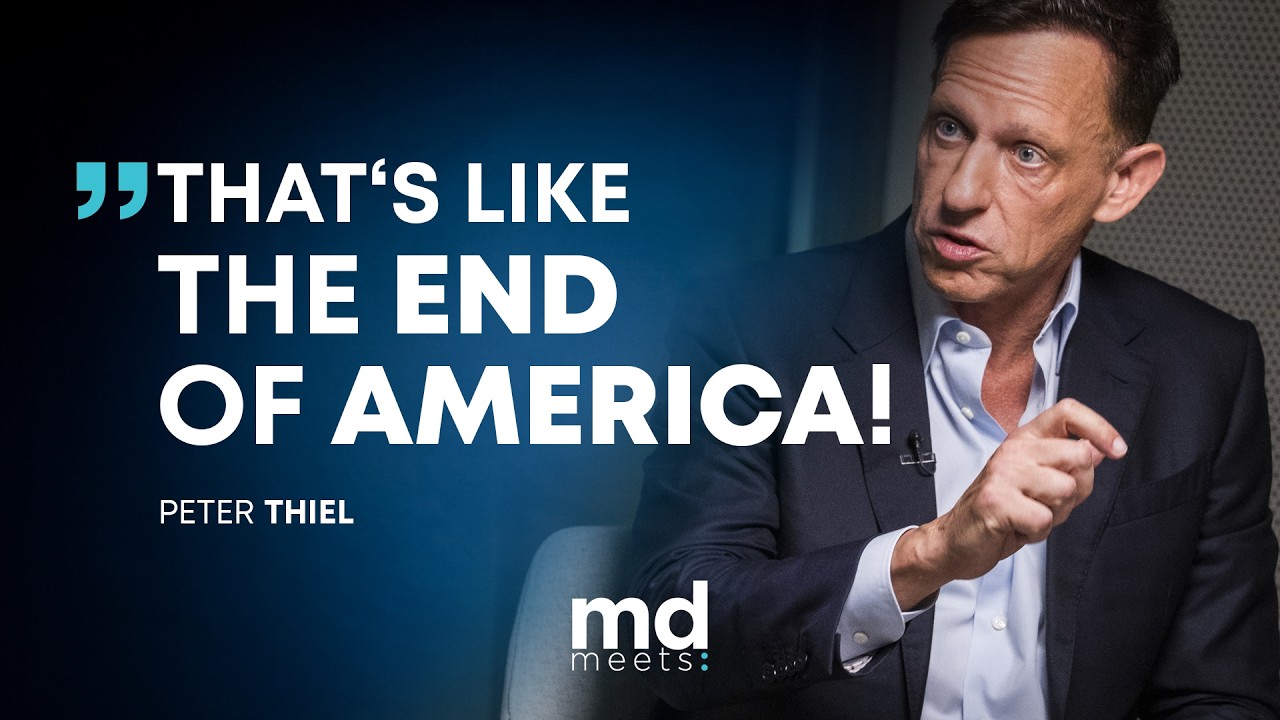
Peter Thiel speaks in Berlin about AI as a possible end to decades of technological stagnation, and about the risks of slowing it while…
YT MDMEETS - Essential Talks with Mathias Döpfner
@aleabitoreddit Serenity on X
@tradesidious @kkkkk61216936 I still have $CCXI, they haven't even had the listing event yet, so volatility up until then is kinda meaningless to me.
@kevin__mak Kevin Mak on X
$NKTR Lots of funky action in this name the past few days, some specific to the ongoing court case and some from bio as a whole. Let's unpack it. The jury note, paraphrased as "Is there a difference between breach + $1 and no breach + $0?", spooked the market and sent the stock down sharply. Two sides to this. First, the note is informative, but only a little. It tells us at least one juror sees the $0/$1 outcome as part of their possible resolution space. Where I think the market (or at least fintwit) got it wrong is treating the note as the voice of the entire jury. It could reflect the whole panel, or it could be a single juror's question. It doesn't even tell us direction: it could come from a juror looking for a way to find breach despite doubting the damages case. The price action implied the whole jury is now choosing between $0 and $1, which I think is a big overread. Second, this is NKTR: a retail/fintwit-heavy, relatively illiquid SMID-cap biotech that moves 5% on a random Tuesday with no news. A 10% move on this headline looks extreme, but near-term price action here mostly reflects value-agnostic traders playing local news and liquidity flow, not a considered repricing of long-term value. The bigger picture: the case is largely a distraction from the real value, which is Rezpeg. I'm not a biotech expert, but the sell side and most biotech specialists I respect see it as a likely viable commercial product that's underpriced here. If anything, the case matters mainly as an overhang. An uncertain $0-to-$1B+ claim is hard for any acquirer or partner to price, so resolution in almost any direction clears the path for corporate action. The distraction is creating the opportunity. Disclosure: Creek Drive and its affiliated funds holds a long position in NKTR. Views expressed are current opinions for information only, subject to change and are not investment advice or a recommendation to buy or sell any security. Investing involves the risk of loss and past performance is not indicative of future performance. See the disclosures link in my bio for more important information.
@BarbarianCap 1 click Barbarian Capital on X
Grail’s Multi-Cancer Blood Test Gets FDA Committee Vote for Premarket Approval $GRAL
@BlueDuckCap 1 click BDC on X
Recommend Banyan's substack for anyone researching $STLN, the MASSIVE opportunity for the company, and their ideal position within Oncology today. If you want to skip the industry jargon and go straight to the MEAT just read the summary of the CEO quotes from recent conferences. These guys are crushing it, and it will be a much bigger company imho.
@calvinblissett Calvin Blissett on X
$ABUS odd lot tender (buy 99 shares) No idea what price it goes through Sept 29th at 5pm but range is $5-$5.75 and it’s below $5 now. 20% shareholder said he will participate and some directors too. $5.21 before offer. Can’t lose any money and stand a good chance of making a nice return on laying out $495. Do it in a IRA if you can do get favorable tax treatment
@AsifSuria 1 click Asif Suria on X
@brain_altered @aurelius28 @Investor_NICK_ Indeed! We mentioned the company while discussing the impact of the AtaiBeckley acquisition by $LLY on peers:
Tempus AI’s Q2 oncology testing volumes rose 31%, while data and applications revenue grew 28% as its clinical data flywheel expands.
SA  Bay Area Ideas 2 clicks
@cfrischer1 Charles Frischer on X
$OMER Comments from today's investor day with Novo. I think these words are quite bullish for Omeros and their partnership with Novo.
@AsifSuria Asif Suria on X
@aurelius28 @Investor_NICK_ Long $LLY. Was doing work on $HELP but it ran up a lot after the AtaiBeckley acquisition. We wrote about it recently after some insider purchases:
@AsifSuria Asif Suria on X
Imagine what the next line of psychedelic treatments from companies like $HELP and $CMPS will do. Then there is Eli Lilly $LLY with its recent AtaiBeckley acquisition that closed ten days ago. They will be able to put their marketing muscle behind AtaiBeckley's lead candidate (if it gets FDA approval) the way Johnson & Johnson did with Esketamine.
Arcturus Therapeutics is advancing ARCT-810 for OTC deficiency after phase 2 data normalized glutamine and ammonia levels, with $191.5…
SA  C. C. Abbott 1 click
@calvinblissett 1 click Calvin Blissett on X
$ADMA Profitable small cheap biotech with 3 FDA approvals accelerated stock repurchase plan