

STAAR Surgical: A Recovery Story Priced As Growth
STAAR Surgical derives 56% of Q2 sales from China and trades near 3x EV/sales despite weak U.S.
 Stephen Ayers
Sector
Everything our editor has picked under this sector, best first.
137 stories
STAAR Surgical derives 56% of Q2 sales from China and trades near 3x EV/sales despite weak U.S.
Stephen Ayers @JordanBoekel I have skimmed over $FINV, $LX made good money in $YUMC, looked at $PDD. I think management is even more important given regulatory risk and China and that is partly why I like $YB
I don't see an easy turnaround at $nke. Social media has lowered the barriers to entry on athleisure. I get ads all the time from no name upstarts with cool stuff in my Instagram feed. Clearly Nike is losing share in China. Hard to see what turns that around. Most abstract but maybe most important is that the brand no longer resonates as high quality and certainly doesn't seem "cool" at least from what I can tell. 20x on declining EPS. Not sure what turns it.
I feel AI can answer this better than me, kind of just giving more context on my other response. 54 sources used. Good read for $YB investors: Acquisition tactics repeatedly described as traps Chinese media, Black Cat (Heimao) complaint records and consumer-association notices describe a variant of the industry “magic-cube” (魔方) funnel that regulators have tried to curb since 2020–2021: - Pop-up and short-video/mini-program ads offering “first month ¥0.6 / ¥1,” “free claim,” or “¥1 for high coverage.” - Low-friction flows (SMS code, minimal identity checks) that default or bury auto-renewal, password-free WeChat/Alipay debit and upgrade from a one-month “experience” policy to a full-price monthly plan (often ¥90–800+). - Terms, health declarations and price jumps placed in small print or behind easy “next” clicks. Elderly users in lower-tier cities are disproportionately cited; children frequently discover multi-month or multi-year deductions only when reviewing bank or Alipay statements. - Documented examples include continuous deductions totaling ~RMB 1,500–2,200 over months and one multi-year case claimed at ~RMB 22,400; several policies sometimes opened on the same person. Refunds are often obtained after platform or media complaints, sometimes with partial fees withheld until complaints are withdrawn. A 2022 Shaanxi banking-insurance regulator fine (RMB 10,000 on the brokerage entity plus warning/fine on an executive) cited failure to conduct internet brokerage business as required. In 2024 the Gansu Consumers Association publicly criticized a related agency (Shouxin) for enrolling and debiting a consumer without authorization. SEC 20-F risk factors discuss dependence on third-party traffic channels, evolving CBIRC/NFRA online-insurance rules (including limits on intermediary marketing of personal lines), reputation harm from complaints, and the need to retain consumers, but do not specifically disclose the auto-debit or “first-month” funnel controversies. Not unique to YB The same pattern is widespread among Chinese internet insurance intermediaries. Waterdrop (水滴保) has drawn larger complaint volumes on the same platform (reports of 2,300–3,200+ entries) and has received larger fines (including a RMB 1 million penalty tied to “first-month zero” sales). Zhonghui Mutual and other carriers appear in parallel cases. Regulators have repeatedly flagged “first-month ¥1,” default upgrades and unperceived auto-debits; a 2026 multi-agency network-marketing rule (effective 30 September 2026) adds mandatory reading timers, bans one-sided promotion of the first-period premium, requires one-click popup closure, and prohibits default bundled sales and unauthorized automatic charges. Management statements and evidence of change - 2022 company responses (Sina Finance and others) defended “first-month ¥1” products as carrier-designed and regulator-filed, said many listed complaints predated tighter rules or were mis-attributed, and claimed near-100% resolution of its own cases with relatively low complaint counts versus peers. - August 2026 responses to Pengpai/The Paper on a specific ¥0.6-to-full-premium case asserted that backend logs showed completed login, disclosure reading, health notice and bank authorization, called the enrollment compliant, and issued a full refund “to resolve the dispute and improve service,” not as an admission of fault. The company stated that 2026 flows added mandatory reading countdowns and stronger confirmation steps; independent media tests of the WeChat mini-program confirmed longer forced-read sequences and the removal of some ¥0.6 experience creatives. Quantitative signals are mixed. Black Cat counts cited across 2022–early 2026 cluster around 850 rising to ~1,200 and then largely plateauing while new policies scaled into the tens of millions (one outlier report cites a much higher cumulative figure under broader search terms). Absolute complaint volume is therefore small relative to 30 million+ annual policies, yet the cases that surface are concentrated on elderly users, multi-month silent debits and difficult cancellation—exactly the pattern that generates media coverage. Many disputes end in refunds once escalated. High marketing intensity continues, consistent with reliance on low-friction paid traffic. How large is the problem? It is real and recurring, documented in complaint platforms, consumer-association notices, small regulatory actions and consistent anecdotal patterns, but it is amplified by media focus on elderly victims and by the emotional visibility of “unknown deductions.” It is an industry feature of high-CAC internet insurance distribution in China rather than a YB-only practice; peers show comparable or higher complaint intensity. Upcoming 2026 marketing rules directly target the tactics described. Filings treat the issue mainly as general regulatory and reputation risk rather than a disclosed operational failure.
Yes, obviously some nuance depending on what site but I see what you mean, one listing 1,217 complaints. They did have a 100% resolution rate which was nice to see. Also the article in June 2026 about a women’s complaint. This is a risk to watch as it mostly stems from them selling low priced first month policies (0-1RMB) which then go to say 100RMB a month that people get blindsided by. This is also a regulatory risk as regulators have mentioned against this. $YB
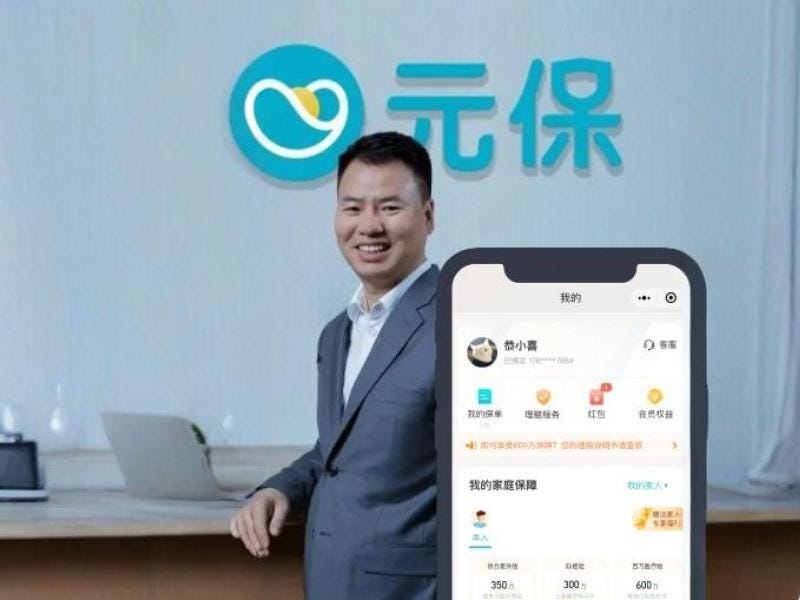
Yuanbao pairs a 10.2% dividend and cash exceeding its market value with 33.5% first-half profit growth from AI-enabled Chinese insurance…
Both Up Fintech $TIGR and Futu $FUTU benefited from Asians YOLO-ing into 3x levered long MU and SPCX ETFs, with FUTU now up significantly since the regulatory crackdown in May. They only started throttling Mainland accounts in mid-June so the real impact won't be visible until next quarter. ~12x P/E ex-Mainland if you annualize Q2, although Q3 is bound to be a little weaker.

Asia's elevator boom favors maintenance and modernization providers, with Otis deriving nearly 90% of operating profit from after-sales…
I have been bullish on China’s WFE localization after reading Chip War in 2023 on my couch $ACMR https://t.co/TYlm6DgtuK
@srg444 Me looking at $MGM trading at $32 when Osaka asset is worth 💰 https://t.co/jvVZZ37LP0
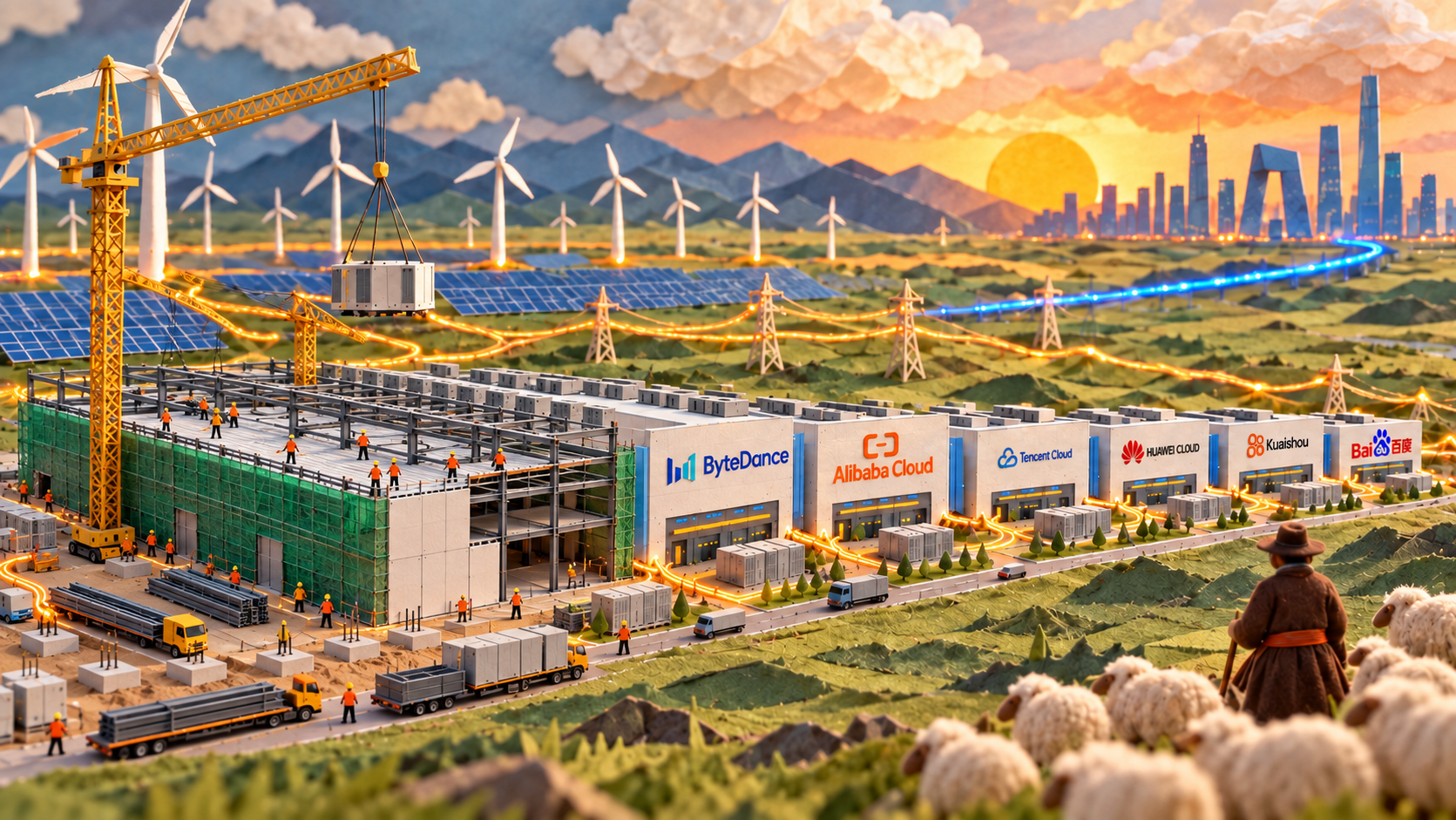
China’s datacenter fleet exceeds 24GW across 1,000 facilities, while Alibaba, Tencent and Baidu doubled capex to $20 billion in 2Q26 amid…
Am long Prosus $PRX here, shorting $ECNS to hedge china risk. I think $TCEHY is pretty attractive here. In relative terms it's way more attractive than the junk in ECNS at a similar low teens valuation. The discount is very large and Prosus continues to create value with buybacks
I’ve actually entered positions in many tiny Korean companies recently… That actively supply memory, test, machines, etc. to $MU, $SKHY, Samsung, and others like $SMTC + US companies. It’s pretty interesting what you find in the $30-$250m range for optical components, CPUs, memory, and others that are inflecting due to AI. I don’t share these names publicly since risks/volatility is enormous. But one or two going from $40M -> $400m makes the risk/reward worth it for me personally.
Wrote this quick note when adding $GRAB to my internal watchlist after the dual insider transactions by CEO @AnthonyPY_Tan and COO @alexhungate that were filed after hours yesterday. The purchase reminds me of Neil Mehta's (Greenoaks) insider purchases of Coupang $CPNG and @Alfred_Lin's $100 million purchase of DoorDash $DASH for Sequoia last year.
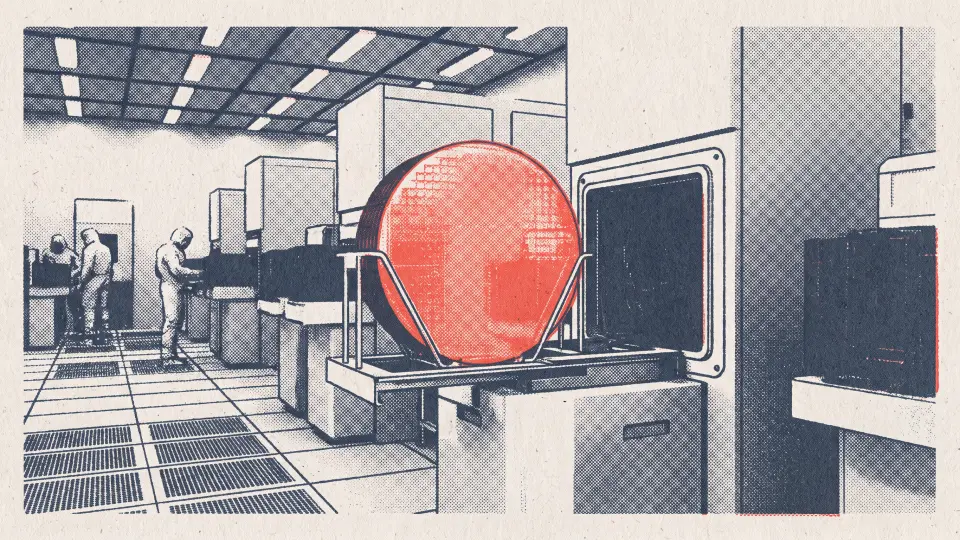
Applied Materials' AI-driven demand lifted Q3 revenue 25%, with Q4 guidance implying 51% growth and further margin expansion.
 Bay Area Ideas 2 clicks
Three planar generations of Kirin added 150 MHz in total. The first folded one added 350 MHz in a single step, on the same non-EUV process. How Huawei did it, and why it matters for $NVDA, $AVGO and the Western toolmakers. https://t.co/pzpPjCUIJ7
*ALIBABA TARGETS 20GW OF DATA CENTER CAPACITY BY 2032 *ALIBABA UNVEILS NEW AI CHIP IT CALLS CHINA'S MOST POWERFUL Sounds like a whole lot more capex coming for $BABA https://t.co/iptpqpNPAE
Bernstein on CXMT: “We believe a new fab of max capacity at 100k wpm is being built in Shanghai now, & is due to begin production early next year. There is no mention of this fab in any company filings” Models capex rising 70% YoY through ‘28 to $35B CXMT capex is $ACMR revenue https://t.co/rQXi6eh7PX
$ACMR seems to be the simplest way to play the inevitable CXMT/YMTC ramp https://t.co/NlvTBGCZSr
The main duo $SKHY and Samsung are having a fun day. I'm still long memory (eg. $EWY / $DRAM ) since if capacity agreements extend 3-5 years... and your analysts model 2.8-3.3x 2027E. Risk/reward is attractive over time. But I think legacy memory a very interesting trade currently due to ASP hike potential.. It also just so happens these same companies procure memory from even smaller memory companies (that might have higher sensitivity)... So if you want to, you can track $PSMC wafer allocations, and find some interesting companies that likely replace $MU discontinued legacy memory through Alliance or supply directly to Samsung. Won't mention them on X, but just throwing out some research ideas.

Grab generates 53% of revenue from delivery, 36% from mobility and 10% from financial services, using its Southeast Asian marketplace to…

Diamond Estates Wines & Spirits plans to expand grocery and export sales, invest in six brands, and improve winery operations through FY29.
What’s the bear thesis on $MGM here? All of the $PPLI Barry deal premium has evaporated. Even if his bid was fugazzi, it highlighted a valuation disconnect especially as it related to Asian assets… What am I missing?
Huawei just updated the Ascend 960 & 970 roadmap. $NVDA's competition pressure is increasing from both $AVGO and Huawei continuously as we've anticipated. → 960DT rollout pulled forward from 4Q27 to 1Q27. (Seems like they are finally getting the HBC-like, tailored-memory approach closer to high-volume production.) → 960PR by 3Q27 with 8 PFLOPS FP4—double the 960DT’s FP4 compute. (Closing in on NVDA’s Blackwell Ultra, which tops out at 15 PFLOPS dense FP4. Rubin moves that target to 35 PFLOPS dense FP4.) → 970 by 2028 with 14 PFLOPS FP4, up from the previous 8 PFLOPS target. Overall, this looks consistent with our Tau Scaling thesis: a higher compute ceiling, more tailored chip designs, and a faster path to production. Not every specification has doubled, but a near-doubling of the 970’s planned FP4 compute alongside an accelerated 960 rollout is a meaningful change. The bigger story, in our view, is Huawei’s CIDM model. Optimizing the entire vertical—not just the logic die—creates more room to change the compute design and shorten the development cycle. Huawei’s disclosed co-optimization already spans devices, circuits, chips and systems. This is the kind of vertical integration Elon Musk is targeting with Tesla and SpaceX’s Terafab. But Huawei is already putting its ecosystem version to work. (Would be quite funny if the Chinese ecosystem gets accelerator-based EUV into production lithography first, too.) Against NVDA, our thesis is that the single-chip gap narrows from roughly three years toward two—and potentially less as the roadmap accelerates. From a PPAC perspective, Tau Scaling could bring the logic die within a year—or less—while memory remains further behind. Bandwidth, not simply capacity, looks like the harder bottleneck. But Huawei may be able to lean into memory capacity and co-design the LLM and serving strategy around that constraint, rather than simply copy something optimized for NVDA’s hardware balance. System-level performance still needs to be proven at the cluster sizes Huawei is targeting. But we would not be surprised if it works better than expected. Even before the full UnifiedBus vision is realized, we think Huawei could gain system-level performance leadership on some large-model workloads sooner than many expect.
