
Reflections on quality investing
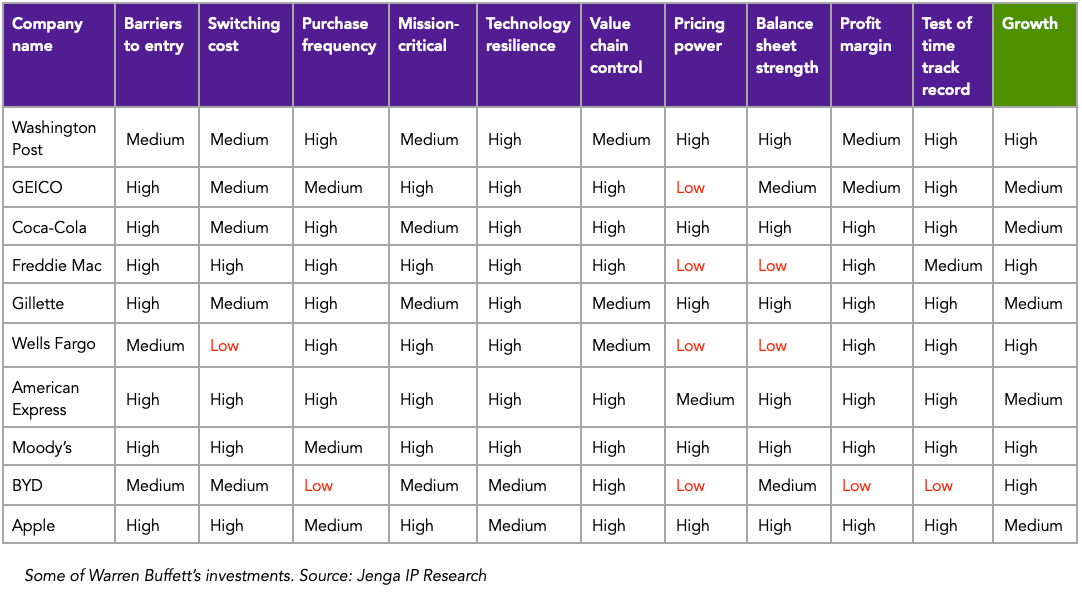
A 10-factor quality table ranks companies by moats, pricing power, balance sheets and growth, then applies it to 10 Buffett investments.
Tuesday, July 28
Everything we published on this day.
35 stories — the front page that day →
A 10-factor quality table ranks companies by moats, pricing power, balance sheets and growth, then applies it to 10 Buffett investments.
Wen $BSP borrow? The Valeant of B2C software. I was told that all software is a zero bc of Claude?
$QXO short has been okay
$DRAM short has been okay
@FoxNews Paging $SABR
@ramahluwalia $GSHD ~double off the early June lows was easy money!
We know there's a lot of talk about AI disrupting white collar jobs. But, for now, the growth over at $PJT, as just one example of an investment bank, has been impressive. https://t.co/3WUXRgdPXg
Kimi K3 open source just made local frontier inference a different game 1.56TB download. 2.88T total / 104B active. Recommended: 64-chip supernode. Individual users are effectively locked out of running the new frontier open-source models at home. The only realistic path left is hoping Apple’s M7 Ultra with Thunderbolt-based RDMA can handle it — and that still depends on memory pricing from Samsung/SK Hynix/Micron or whether Washington lets Apple source from CXMT/YMTC. The bigger shift is on the enterprise side. If you run K3 on an NVL72 rack without stuffing the batch with enough concurrent users, your inference cost can easily run 5x+ versus an API provider that aggregates queries. Most companies will need an orchestration layer that either: - pools multiple user requests in real time, or - parks non-urgent demand for overnight runs to maximize hardware utilization. That reality makes GPU rental structurally more attractive than buying and operating the iron yourself. Which is an uncomfortable implication for $DELL’s enterprise GPU server business. Curious how many enterprises will actually choose to run models at this scale on-prem without sophisticated batching. The economics are no longer obvious.
Rocket Lab just won its biggest launch contract ever: $266 million from the U.S. Space Force The deal covers 12 guaranteed suborbital test launches (with options for 6 more) for missile-defense work. First flight no earlier than the end of 2026, mostly from a brand-new Rocket Lab site in Alaska. This locks in real multi-year defense work and a new U.S. launch site. Solid backlog signal for $RKLB — and exactly why we keep the position in the Convequity portfolio.
Samsara and the physical-AI narrative We exited $IOT. The market is still pricing it as a core beneficiary of the coming wave of AI-enabled robots in warehouses, offices, and homes. Our read is different. Samsara’s real differentiation is software orchestration for distributed IoT fleets, not proprietary sensors or hardware. The physical sensors are outsourced to Asian manufacturers, and the orchestration layer itself is exactly the part of the stack that AI coding tools are making easier to replicate. As a result, the competitive position looks less durable than the current narrative suggests.
Rubrik’s quiet edge in the agentic era As enterprises deploy autonomous AI agents, the real constraint is becoming governed access to trusted data — not just more models. $RBRK’s Annapurna is building exactly that layer: indexing unstructured data in place, preserving Zero Trust controls, and turning the backup estate into a secure, queryable foundation for AI. In a world where agents can move fast and break things, the company that already owns the governed copy of enterprise data is well positioned.
The complacency is the point. Gas-directed rigs are still only in the low-to-mid 120s and the trend remains essentially flat. Turbine lead times run 3–5 years and the major OEMs are already sold out into 2029–31. Data-center announcements are loud today, but the actual incremental gas draw from behind-the-meter and new generation does not hit the system until the turbines arrive and the sites come online. That lag is why the market can keep treating gas as abundant through 2026–27 even as the structural deficit builds. When the convexity shows up, it will likely arrive later and harder than most are pricing. $EQT, $AR, $CRK
Never thought I'd be loading the boat again.... $ALTO
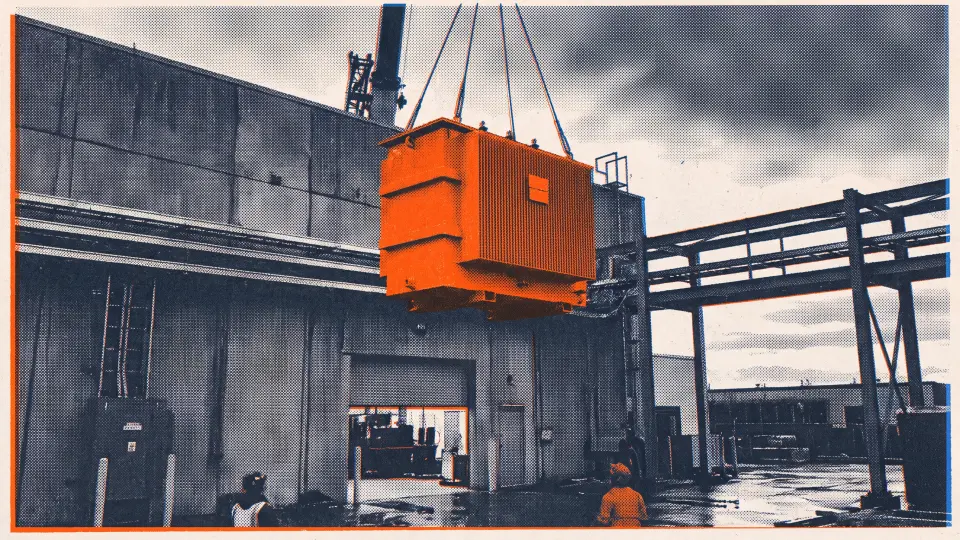
Bloom Energy posted $1.065 billion in Q2 revenue, up 165.5%, as AI data-center demand lifted margins, operating income and full-year…
CME Group trades at 21.7 times trailing earnings versus a 25.1 times 12-month average, despite near-record futures volume and 94%…
5%+ SSS comps for the core franchise at $CAKE this quarter. The stock was obviously telling everyone about the inflection in trend. I would like to see better comps at North Italia. Flower Child units could grow faster, but it's clear some of the menu changes and technology improvements are yielding better traffic. It's been a long time since they posted a 5%+ comp. SSS + unit growth is a rare breed in consumer land, $CAKE has it. The LLOK trade remains alive and well. @TiberiusCapital
Who remembers the $CAR squeeze from April? It feels like 3-decades ago. In any case, the stock is trading at $121 AH. If you ever wonder about the market's ability to inflict the most pain, take a gander at that chart over the past year.
$LUXE still in the doldrums even as all the luxury players beat. Should bode well for results though. https://t.co/EJZPsggXDs
Dispersion trade creating opportunities of fundamentals not matching price: $FDS now higher than the before SaaS (apocalypse) took off. Hard to argue they are not one of the most disrupted names across data services / software $PAYC $PCTY $WDAY - same challenges across software names and pricing / seat pressures. These names also face heavy increased competition from Rippling $EXPE - Hotels going direct has already started and OTAs should see supply pressure and take rate pressure $RNG - Does anyone legitimately believe they're an AI play? Agents don't need calls, don't need phones, and you don't need RNG to provide those agents - especially as every sb and up software provider and crm/erp Many others across software but also in financials, industrials and consumer
@AurelionRsch There's 2x $MEXX and 2x $BRZU, but there hasn't been enough underlying volatility to cause them to blow up like semis or Korea.
@SowingAlphaSeed Of the US indexes, my personal holdings are now most correlated to $dia. Weird world.
Excellent quarter for Skyline Bankshares $SLBK. GAAP EPS $0.89. Cash EPS of $0.91. Trades at 7x earnings. https://t.co/7d5KOoG3Og
@calleymeans @SecKennedy Looks like a tailwind for $UNFI
From the $TOI Q4 call: “That’s actually a very important question and something that we continue to try to drive clarity with our investors on, which is the MA rate cycle and sort of pressure that you’ve seen health plans and full risk, medical groups that are getting a percent of premium face is actually a tailwind for TOI.Our top line Medicare Advantage reimbursement is not a percent of total premium. It’s not impacted by risk adjustment. In fact, pressure on the top line for payers generally causes them to reach out more proactively when it comes to seeking opportunities to provide great care for their patients and good access while also driving improvement in utilization. And so from that perspective, that actually helps our growth. So we tend to get lumped into some of those macro issues with payers, but I just want to make it very clear that, that is actually probably a good thing for TOI.”
Shelly Group $SLYG has exercised a Call Option for the acquisition of the remaining stake of 24 % of the share capital in its Slovenian IoT subsidiary Shelly Tech. The total purchase price for the 24%-stake under the exercised Call Option is EUR 0.9 million. https://t.co/qlSBzPVtnU
Timna Tanners: We see limited impact from the aluminum tariff tweak $CENX https://t.co/B4tCNvsy5Z
Like $GLW, I wish margins/ROIC were higher and capital intensity were lower at $AMKR. Yet, with the stock now back around $46 (largely flat YTD and cut in half from its highs), the Amkor setup now seems pretty good over the next 3-4 years due to their scale, new capacity investments, and the increasing importance of advanced packaging capabilities.
Despite my past skepticism, $GLW around its current $125 per share ($110 b cap) actually seems fairly compelling given the company’s scale, leading market position, and multi-year growth ramp.
$AGYS does not see negative impact of AI on enterprise software companies, argues that they are "seeing the opposite effect." Also notes the cost/benefit analysis favors software subscriptions vs. investing in expensive AI development. https://t.co/W4qnsF26r4

Seer trades at $2.04 against $3.90 per share of net cash as activists press a board that rejected five buyout proposals and won reelection.
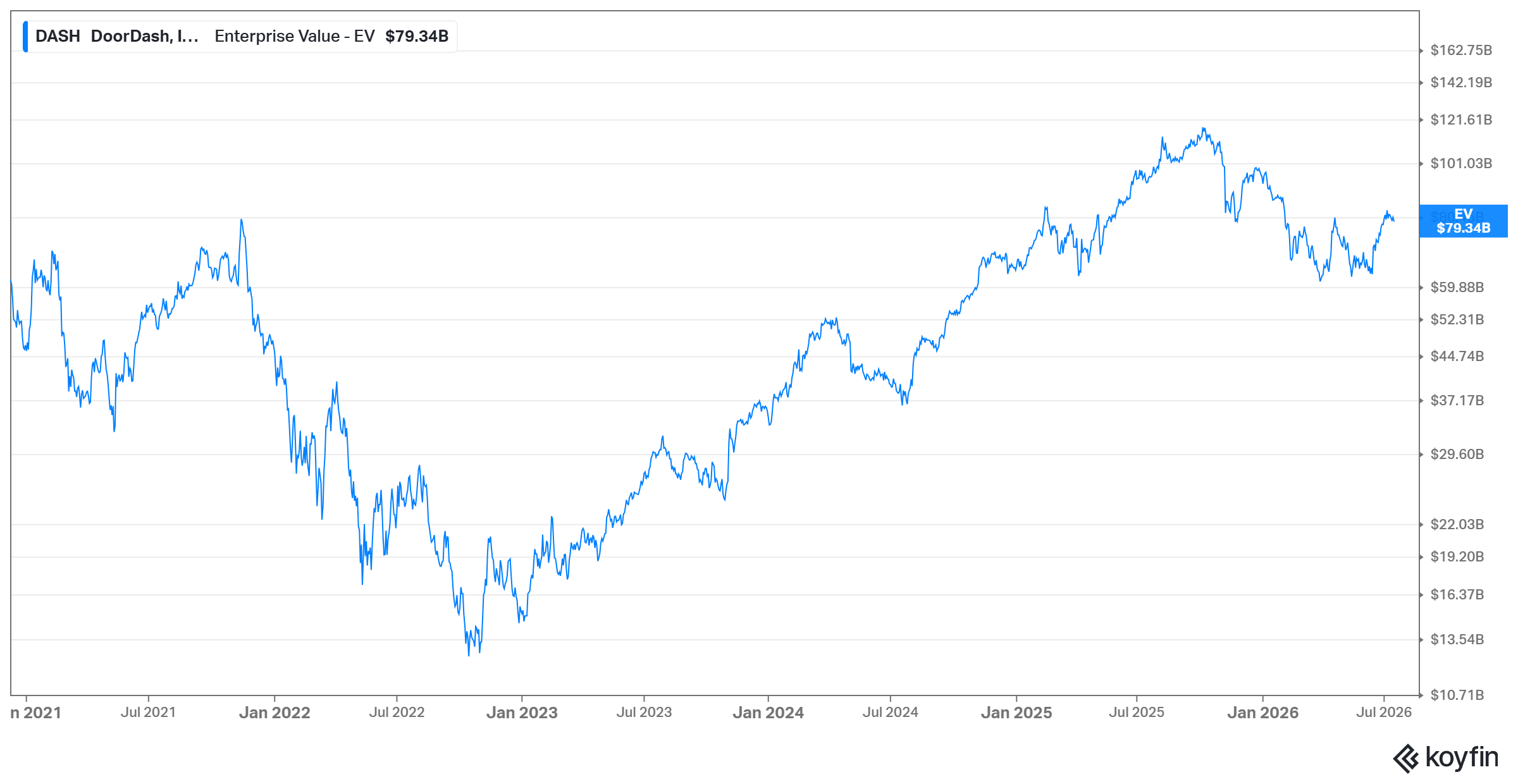
DoorDash built a last-mile logistics network around restaurant delivery, then extended it to groceries, convenience, and other local…
DoorDash positions itself as infrastructure for local commerce.

Biorem reported 66% revenue growth and over 260% profit growth after trading at 11.3 times earnings and 5.9 times EV/EBITDA.

Alphabet’s $132 billion AI capex produced an estimated 49% post-tax incremental ROIC once only in-service assets are counted, versus a…
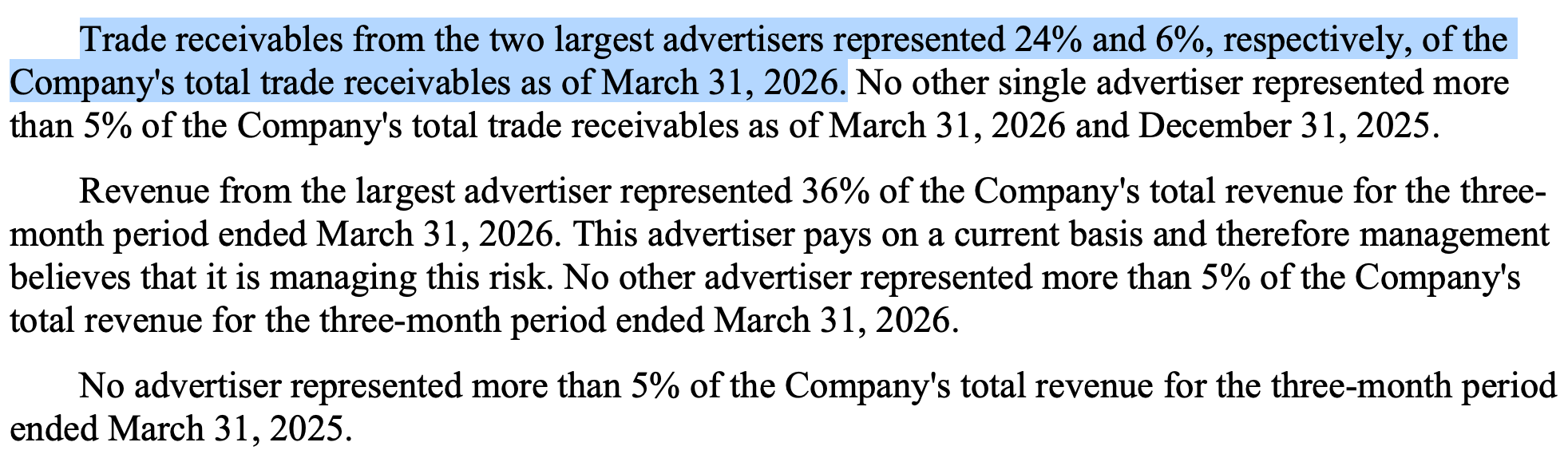
Entravision’s Q1 filings contain a new footnote disclosure pointing to a potential second large advertiser beyond its Hong Kong customer,…
