
WD #363: LatAm Bank Earnings, More Preferreds, Venezuela ETF
Latin American banks INTR, NU and AVAL reported solid quarters, while preferred-stock ETF distortions create opportunities in individual…
Sector
Everything our editor has picked under this sector, best first.
Latin American banks INTR, NU and AVAL reported solid quarters, while preferred-stock ETF distortions create opportunities in individual…

$NPB ~$14.50, right at its Feb 2025 IPO price. Its Mortgage Purchase Program buys freshly closed mortgages from 100+ independent lenders and holds them ~30 days until they're sold to Fannie/Freddie. No charge-offs in the program since inception. 0.84x tangible book, 5.9x 2027 estimates. Owner earnings ~5.9x market cap with no growth. Catalyst: sold its retail mortgage channels to CMG. CEO Chuck Williams: "the volumes could no longer carry the infrastructure overhead." CFO: $50-55M of savings "will be greater than the revenue losses." Then Williams bought 100,000 shares at $15.37 ($1.54M), after ~$3.6M of buys since May. A former VP: "Northpointe is a very ethical lender... they didn't skate close to the line." Growth: a step up in 2027 from cost cuts, then ~10-15% a year. Watch the CEO's bonus: 10% of net income every quarter, in cash.
$MBIN ~$49.01. I had to include this one. Merchants Bank has its name on IU's field ($50M over 20 years), Hopper the frog walks the sidelines, and Cignetti tells him "I'm banking on you" in their commercial. Behind the frog: ~21% average ROE since 2016, 35% efficiency ratio, 1.18x tangible book, 8.1x earnings, insiders own ~45%. Tangible book/share compounded ~24%/yr since 2019 and hit a record for the 31st straight quarter. Owner earnings ~$261M: 8.6x market cap to owner earnings with no growth, 13.6x at 5% growth. A former SVP: "it's the flattest organization I've ever seen or worked in... There is access from the CEO founder to the lowest level analyst." Moat: one of the 15-20 approved Freddie Mac servicers, plus a servicing book that hedges gain-on-sale. 2025 was the trough (10.5% ROTCE) on multifamily fraud losses; NPLs down from 2.81% to 1.47%. Growth range ~8-12% a year.
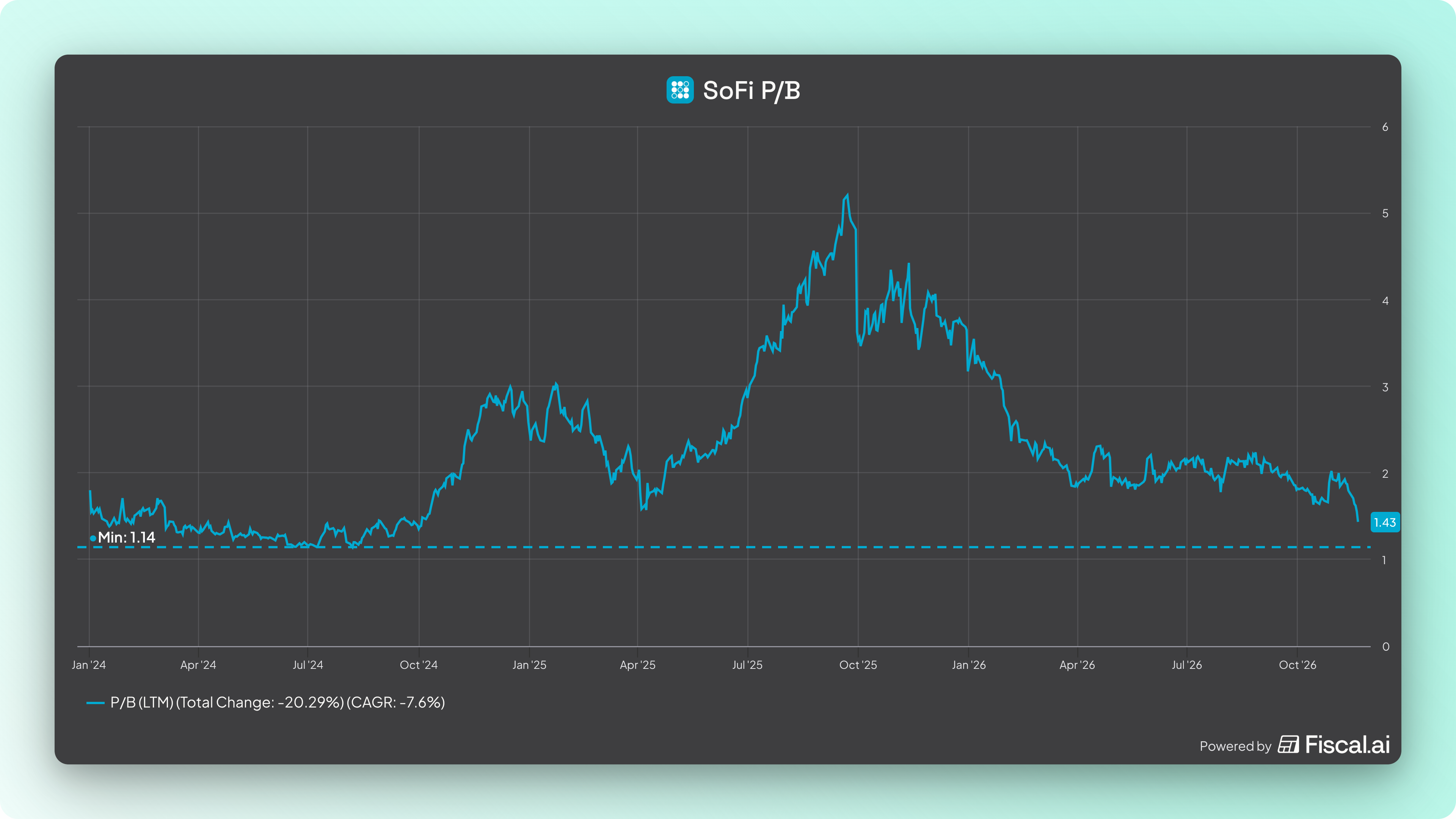
TPG’s $63.25-a-share takeout of Bill Holdings shifts coverage to SoFi, whose drawdown follows strong customer and deposit growth and recent…

I’ll take the other side of that During the GFC, EBITDA declined less than 10% for $PSA JPM was fine, but other big bank almost went under This is a “negative art” where you want to eliminate that tail risk Dimon there, fine. Dimon not there. Not sure. Lehman and Wachovia wasn’t so lucky.
Because when shit hits the fan, I know that $PSA interest/pref is covered 6.1 times I don’t know how to read a bank balance sheet I know that you probably can’t make a $78 bn of self storage EBITDA go down more than 80% I know what I know. JPM is probably fine as long as Dimon is there.

NatWest trades below 8x 2026 consensus EPS after weaker net interest margin guidance, despite multi-year-high profitability, solid credit…
 Mark Dockray 5 clicks
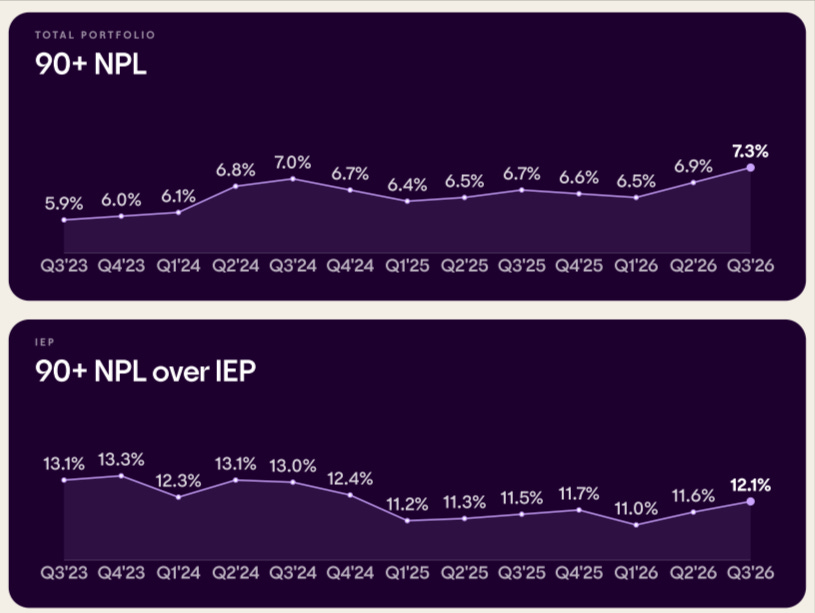
Nu Holdings is expanding banking in Brazil, Mexico, Colombia and the US while investors scrutinize Brazilian credit quality and lending…

In July 2023 I let $ESBS know I was filing a shareholder proposal to sell the bank. Management spent exorbitant fees on lawyers to block the vote. In April, 2025 they turned down $8.25 cash. A sad waste of time and shareholder wealth from the $10 IPO

@atelicinvest The KKR one is funny because the PE related shorts in $ORR have performed fantastically.

A rare bank deal with big earnings upside for $BSVN - Target's majority owner was forced to sell due to financial troubles - BSVN scooped up a quality bank below TBV - Deal expected to boost EPS by 25%+ - Alluvial sees ~40% upside to $80+/sh. Pitch by Alluvial Capital
 FOTB · long
First Ottawa Bancshares, a Chicagoland commercial bank, has roughly 30% insider ownership, including 20% bought in the open market by its…
Ameris Bancorp $ABCB Enhances Central Florida Presence Through Agreement to Acquire Bank of Central Florida Holding Company 190% of book & 11x earnings-

$KORU trading at the number of the beast. 😳
Nubank and MercadoLibre update target prices as Brazil’s 9% real rates, weaker currency and tighter credit favor their cost advantages and…
 INTR · long
Inter & Co, a Brazilian digital bank, grew net revenue 32% year over year while trading at 1.4 times tangible book and 7.9 times earnings.

Banco do Brasil trades below 0.5x book after profit, guidance and payout cuts, while its BB Seguridade stake equals nearly 60% of market…
 Pedro Augusto Prazeres
$TRMK to merge into $HWC
Coherent, Applied Optoelectronics and MaxLinear are pitched on AI optical-networking demand and earnings growth, alongside Bank of America,…

"As has always been the case, we would rather pass on a loan than make one we are not comfortable with." ~no bank ever Jk...from Q3 $TYBT letter
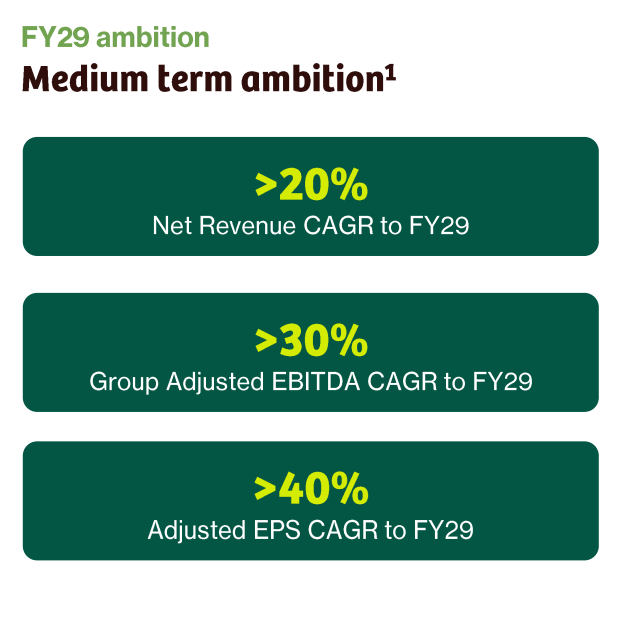
Lesaka expects its Bank Zero acquisition to close by end-January 2027, though it could still close this calendar year.

October VDL write-ups: 1) Portfolio update part 1 & 2 — current holdings, what i’m buying, etc. 2) $TFC — management change + insider buy 3) $FLO — beaten down CPG 4) $THNC.TO — restructuring / profit inflection 5) Guide to turnarounds

Asian insider buying reached $2.9 billion in October, the highest since 2018, with South Korea and Thailand leading.
C&F Financial's asset quality and net interest margin remain strong as loan growth reaches 4.5% YTD and commercial real estate rises to…
 Crimson And Gold Research 3 clicks

Midland States Bancorp lifted Q3 net interest margin above 4% as asset quality improved, despite heavy commercial real estate exposure and…
Crimson And Gold Research 
Two things I’m watching could change my read on the U.S. economy: → Fed’s December 8-9 meeting and core PCE: Another 0.25% hike with core PCE at 3.1%, or core PCE below 2.9% with the fed funds rate unchanged, pushes the real rate (the Fed’s policy rate minus core PCE inflation) above 1%, which Growth × Policy calls late cycle. That favors commodities, value stocks, emerging markets and banks over long-term Treasuries and growth stocks. Futures put the odds of a December hike at ~75%, and October’s core PCE comes out November 25. → Bank-held AI debt: In September, the Financial Times reported that ~$18B of bank loans for Project Jupiter, a data center $ORCL is leasing in New Mexico to serve OpenAI, were being quoted at 89-91 cents on the dollar, and the banks were stuck holding more of the debt than they had planned. At its October 28 Investor Day, $ORCL said its capex peaks in FY2027-2028 and steps down in FY2029 (years ending in May), when it expects at least $30B of free cash flow.
First Capital, $FCAP to Expand Southern Indiana and Western Kentucky Presence with the Acquisition of First Bancorp of Indiana, $FBPI .

Aurelion Research increased healthcare exposure and sees opportunities in banking and defense, alongside research on Alcoa, Nike, ONON and…
$FMBM escaping the Mark Hanna $GLBZ past and listing. Thank you, Mark Wilkerson. Cc $EMYB $MFGI $CPKF $SLBK $LRBI $EXSR $VLNT $CCNB $BOTJ $NACB similarly situated but may or may not take advantage of Index fund buyers.

Alluvial @alluvialcapital pitched Bank7 $BSVN. The bank acquired Century Financials through a receiver-led auction, which gives the buyer a significant pricing advantage. The combination boosts EPS by 25%, but Alluvial thinks this guidance is modest (plenty of efficiency gains not reflected in this EPS guidance), and the shares are worth at least $80 (vs. ~$58 today).

@evantindell How about this for a company name: Banco Latinoamericano de Comercio Exterior, S.A. Thankfully they renamed to Bladex $BLX
@redhookmarket1 Yup I really like what they have done and bought for my personal portfolio as well. We wrote about them in February but the valuation was too rich for me at that time. I wish the $JEF note had not landed this morning.

SoFi targets $6.4 billion in 2027 adjusted net revenue and $0.90 EPS as financial services growth lifts margins and profitability.
 The Asian Investor 2 clicks

7/n $BSP CEO @luke10ferrari on Joys of Compounding @Buhrman_Rick @PaulBuser Sounds like a very thoughtful operator, not that he needs my opinion
$TBBK: $46.75, $1.91B mkt cap, 8.2x trailing earnings and ~6.6x the new 2027 guide ($7.00-7.20), a 36% ROE, and 11% fewer shares than a year ago. $200M of buybacks this year, about 10% of the market cap. The Bancorp is the bank behind a lot of the fintech cards in your wallet. Fintechs bring the customers and Bancorp holds the deposits, which cost it almost nothing. Q3 EPS was $1.53, up 30%, fintech fees grew 19%, and payment volume grew 23% to $54B. The stock still fell 7.5% Friday because they cut the 2027 target from $8.10-8.30 to $7.00-7.20. In September Chime agreed to buy Stride Bank, its other partner bank, and the market read that as Chime eventually leaving. The bears have been loud and sometimes right. A VIC short in Dec 2023 at $38.93 called the earnings unsustainable and the accounting aggressive. On X, one guy called the guide-down "easy to call" before it happened, and others flagged the small business lending exit, layoffs, and a lending head leaving with a $2.5M package. But since that short the share count has gone from 54M to 41M, and the stock is higher. Even on the reset numbers you're paying ~6.6x 2027 and ~5.8x their preliminary 2028, and they plan to buy back ~100% of net income from 2027 on. Value Line cut it to Technical 5 on Friday, so nobody wants it. The whole question is how much Chime volume leaves. Management calls the new 2027 number a baseline, so watch whether it holds.
$NTB: $56.15, $2.22B mkt cap, 9.8x trailing and 8.1x forward earnings, a 21% ROE, a 3.6% dividend, and 5.4% of the shares bought back in the last year. ~2.2x tangible book of $25.32. Butterfield has been banking in Bermuda since 1858 and also runs trust and wealth businesses in Cayman and the Channel Islands. Offshore deposits are sticky and cheap, and the trust business is a fee stream that doesn't care about rate cuts. Q3 core EPS was $1.58, flat with Q2, revenue beat at $161.9M, and tangible book dipped 3.3% on bond marks. gary9 wrote it up on VIC in 2017 at $33.94 and nailed why it stays cheap: "NTB screens as expensive on a P/B multiple, while the higher ROEs are dismissed due to a 0% tax rate." Nine years later the same thing is true. 2.2x tangible book looks expensive for a bank, until you see it earns 21% on equity and sends ~9% of its market cap back every year in dividends and buybacks. Value Line rates it Safety 2 with a Price Stability of 75, the steadiest name in the issue. The thing to watch is taxes. If Bermuda's global minimum tax ever reaches a bank this size, the 0% rate goes away, and so does part of the ROE.
SoFi raised its 2026 guidance after a blowout Q3 and issued a strong 2027 outlook, with revenue projected to reach $5 billion by Q4 2030.
 Riyado Sofian
$TFC CEO with another sizable insider buy… New CEO, first bout of insider buying in years, discount to bank peers, etc. Seems interesting…

@Ron284Ron I still don't understand why $UBAB posts a press release that is one paragraph long and then a separate detailed press release. Stupid.

SoFi’s stock case hinges on interest rates, tangible book value and private-credit loan sales after its $1.5 billion equity offering.
$NEWT bottom line looks light but reaffirms 2026 EPS. With the stock trading at a discount to TBV will that be good enough? I repurchased Newtek recently and will likely hold as long as the Oct. low is not broken.
$PFBX- $TRMK cash is only a phone call away, Chevis
First Community Bankshares, Inc. Announces Acquisition of Main Street Financial Services $MSWV Brian Hopkins of Ancora served the owners very well.

Enova’s Q3 2026 revenue exceeded $1 billion as originations rose 31%, while its failed Grasshopper Bank bid drove a 23% one-day stock…

@ericgold34 Been buying $UBAB lately. A few I have not followed closely. Some are very illiquid.
First ECIP repurchase has occurred. From M&F Proxy Supplement $MFBP Others to watch $CZBS $UBAB $BFCC $PDLB $MNMB $SFDL $PCB $BYFC $NMBF $HRBK $IBWC

Idea Brunch with T. Heath Fountain, CEO of Colony Bancorp $CBAN We are looking to interview more excellent business operators; please DM with nominations!
Dime's $DCOM $ESBS deal announcement takes back seat on earnings call | S&P Global Market Intelligence
Merion Road and Blue Hill are going activist at United Bancorporation of Alabama $UBAB, looking for board seats. They see UBAB at a key moment, needing better capital allocation, tighter expenses, and a clearer strategy. Still, the board hasn't acted on their proposals despite years of engagement. They're also looking for a $40m tender (~17% of the market cap). These guys hold just 2%, so UBAB basically replied, 'yeah, that's not going to happen,' but this ECIP winner could indeed do more.
@CorpusCol Speaking of pretty smart- These were spot on. $MNSB $SOUB $NEWT et al
@youngermunger7 Have you looked at $CZBS, I’m a little out dated but same idea and theme but better
@FredCam53180687 @JustBankStocks @OurBank3 Yes, Bill is correct. I will stay too long on both though also. Mastly as a tax avoidance and salute to Joe Stilwell for his brilliant move in getting Ken to second step $NECB.

A Brazilian digital bank with 45 million clients fell 36% after Lula’s election, despite 16.3% ROE, 13 record quarters and a 7.4x earnings…
So $LNKB was correct in their assessment of $MNSB credit and Jeff was wrong, so no double dip to $BHRB. Also the Chicago banc stock investment fund who cast the deciding vote against the sale proposal harmed his investors. Perhaps Jeff can stop lying about the close vote.
Bought $INTR $4.53, stinkbid to add at $4.25. New position for me.

Truist Financial trades at 10.5x earnings and 1.5x tangible book as new CEO Mike Lyons sells non-core assets and targets 16% to 18% ROTCE.

@realroseceline My only question is on valuation assumption. Why would $NU trade at a 30x pe in 2030?
Flagstar $FLG probably outside my "circle of competence" but can't help looking... Cut FY27 EPS guidance from $1.65 to $0.90 (ouch) and pushed out to FY28 (because higher rates?) $60bn loan book with half of it in questionable CRE/MF loans concentrated in NYC (former NYCB), another ~third in growing C&I loan book Efficiency ratio ugly $10 stock with $15/sh TBV = 0.67x Maybe a value trap?
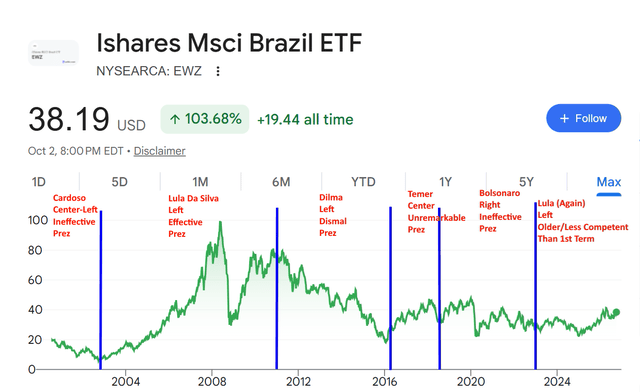
Brazil’s Lula victory leaves Nu and Inter’s thesis intact, while JetBlue heads toward bankruptcy and Mexican airlines pursue a merger.

Columbia Banking System pairs a 5% yield and $1.2 billion buyback with Pacific Premier Bancorp acquisition accretion and a 20% discount to…
 Sorrento Research 3 clicks
First Citizens $FCNCA is open to buying more branches post-BMO deal
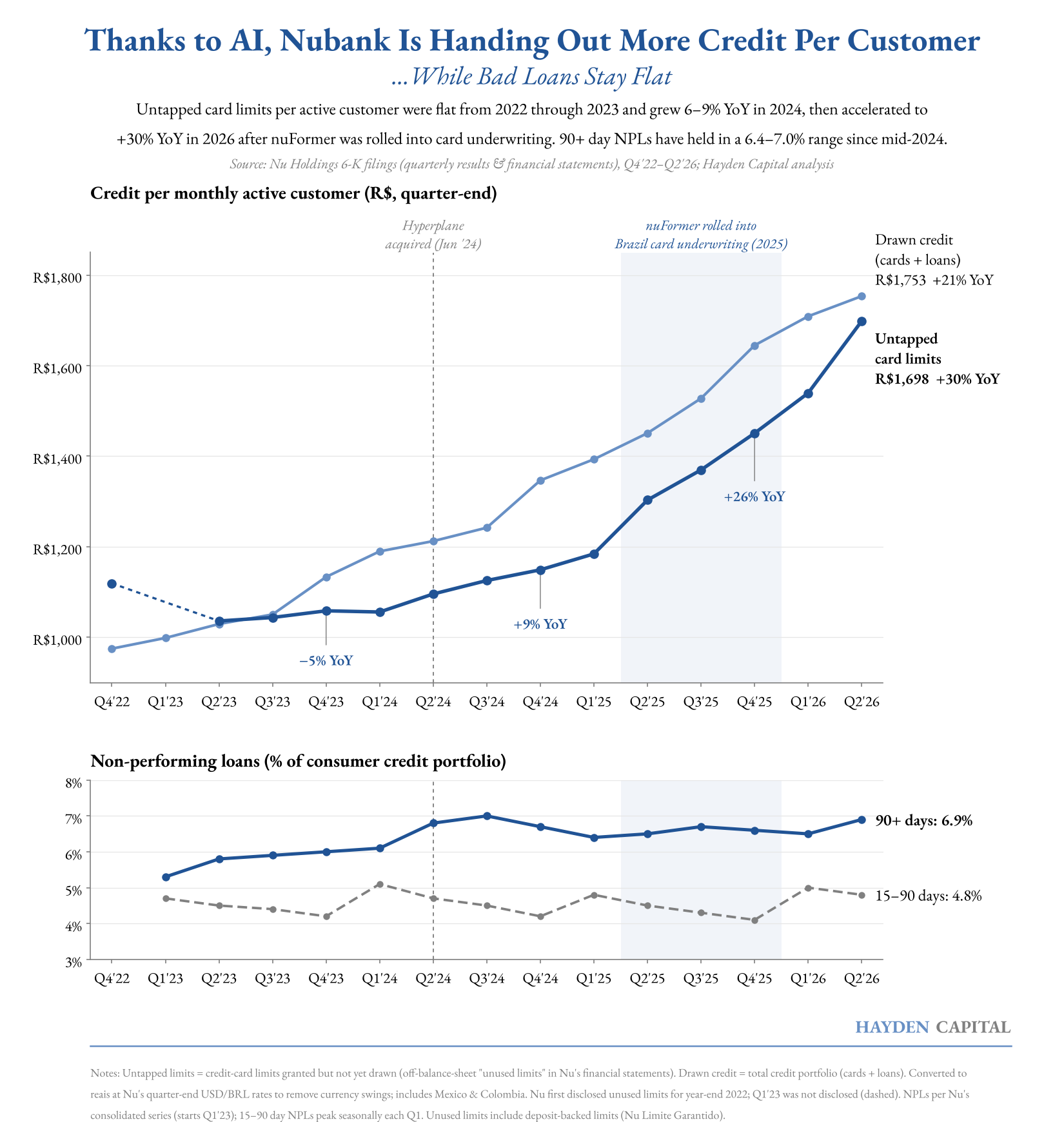
Nubank raised credit limits 30% year over year while 90-plus-day delinquencies held at 6.4% to 7.0%, citing AI-driven underwriting models.
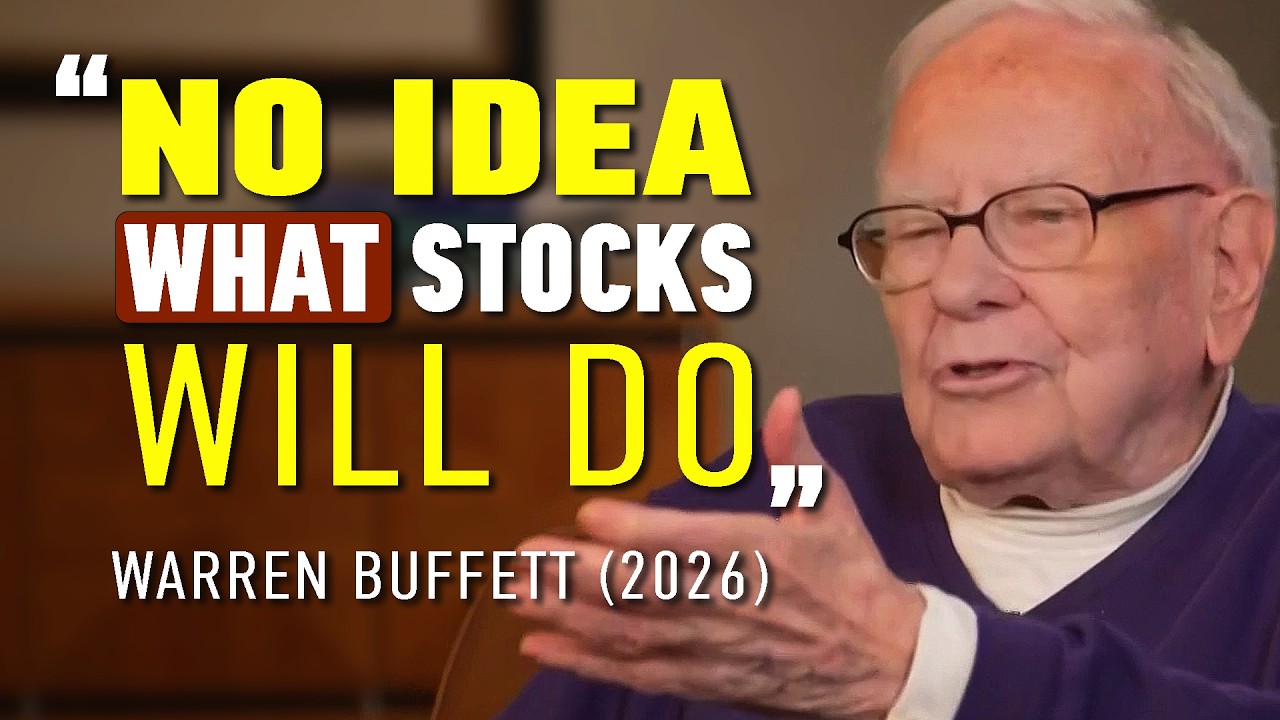
Warren Buffett discusses valuing businesses rather than predicting stock-market moves, and explains why he does not try to assess AI or…
@trades021 I think Curtis at $BHB would like to be an acquirer. $LFGP is a logical target but Josephine will only sell if she can run a combined bank. Curtis has other targets. I’ve been a small holder only from back when Joe Murphy more thoughtfully ran this bank. He retired in 2013.
Adams owns more stock than any board member than Robinson. The $CIBN board largely are not owners and their interests are not aligned with ours. Gary Frankhouse doesn’t own a single share.
Like last year, I will get my brokerage firms to assign me the proxy voting rights and then I will assign them to Mr Robinson who will vote them at the meeting. Since Ohio has cumulative voting, I’m confident Mr Adams will soon be rightfully seated on the board of $CIBN
Upcoming proxy event in Bucyrus at $CIBN Last year, in spite of the board’s wasting shareholder 💰 on lawyers to keep Mark Robinson off the board he was overwhelmingly elected. This year, $CIBN is again spending our cash to keep John Adams off our board.
$CBBI increases dividend by 20% cc: @Ron284Ron
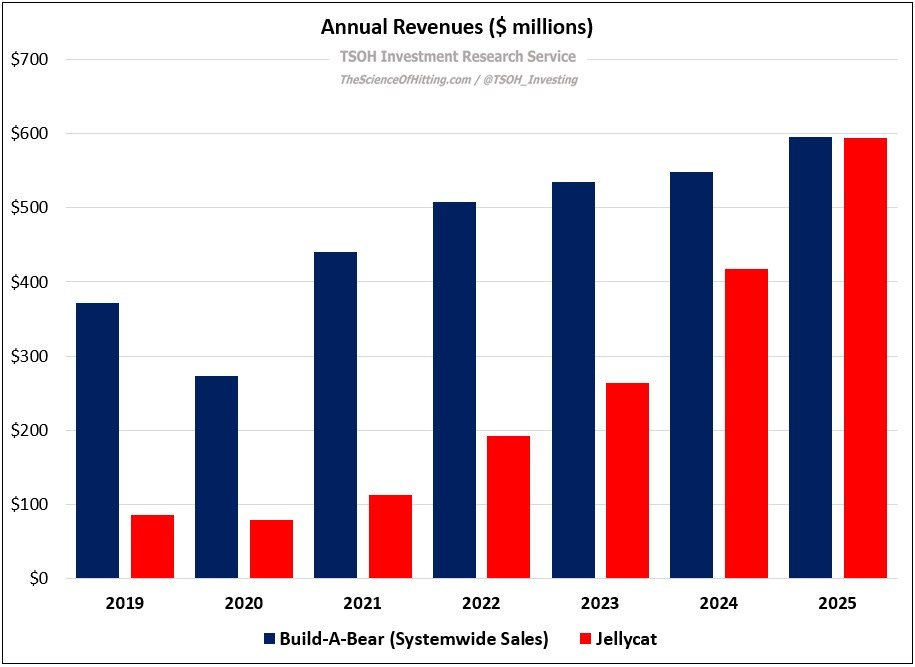
TSOH Weekly Roundup covers Ally’s improving credit and capital returns, Pepsi’s weak beverage brands, and Match Group’s plan to revive…

Banks are right, for now, to block third-party AI agents from taking action inside consumer bank accounts. An agent paying with a capped card, as $META's Muse does, is a different and narrower permission. Axios reported this week that major U.S. banks are finding unapproved third-party agents inside customer accounts, most let in with the customer's own login. Some tried actions that looked independent of what the customer asked. $MS is blocking such agents, per Axios sources. $JPM, $BAC and $C are restricting them. Banks are slow to change how a deposit account works for a reason: the duty runs to every customer and to the bank's own systems, not only to the early adopter who opted in. An agent logged in with real customer credentials puts fraud, liability and security risk on the bank, and that risk reaches customers who never opted in. The bank is right to keep that action out of the account for now, even if some customers want it. An agent holding the login can see the whole account and send money out. An accepted wire is generally final and sits outside Regulation E, the consumer rule for electronic transfers. An ACH transfer the account sends has no chargeback. Getting it back depends on the receiving bank agreeing. Tell an agent to pay, and an ACH payment inside that instruction can count as authorized under that rule. Money lost inside that grant is the customer's. Jamie Dimon called this a liability transfer: "If people are using them, they should understand the risk." That settles the customer's loss, not the bank's exposure. Muse pays through Stripe Link or a single-use virtual card capped at the total the buyer approves. The customer can dispute a wrong charge. The issuer can cancel that card so the next attempt fails. The agent never touches the deposit account. Agentic commerce has to prove itself on the capped card before that access reaches the deposit account.
Quoted that stuck out to me from $SLM earnings call Still in peak season, stronger than normal volume continue into 4Q We believe the customers charging off today have an enhanced ability to repay compared with customers in history Length of deposits up to 37 months from 24. What mean and why good Loan sales in this environment would be below minimum acceptable threshold Not executing planned October loan sale. Sacrificing the short term for the long term. (5% NIM on retaining loans)
$SLM update. I can’t put it better than this. Odd that they expected this volume and yet blame the earnings loss on upfront credit reserving. The volume part of the thesis has shown up as has the second partner for the “franchise” model. Need to watch if they convert volume to profitability. Macro could hurt as with most companies
$CUBI is one of the few banks I own, and I thought this report was fine. Staying long (at least until the Feb27 85C I sold expire or are assigned).

Barclays firing 5k ppl bcuz tech/AI. Meanwhile AI agents running rampant around the internet and inside peoples' bank accounts. And we think banks are gonna vibe code shit or decrease IT investment? $FIS THAT!
the spoon will keep bending until the gap is filled $BSP
"We're going to be drinking WhistlePig and having a tent party out front here when we get final resolution," Allison said. "I think it's close, close enough I can smell the whiskey” $HOMB
AGI Inc trades at 5.6x earnings after a 35% post-IPO decline, despite roughly 30% ROE and resilient INSS payroll-loan growth.
 Multiplo Invest 14 clicks
$ESBS merges into $DCOM Finally 🤪

Goldman Sachs carries a $1,116 price target, based on $82.69 estimated 2027 EPS and growing recurring revenue from investment banking,…
 The Curious Analyst 4 clicks
LCNB’s Q3 2026 net interest income rose 8.6% year over year as the bank beat revenue and EPS estimates, while trading at a 27% discount to…
Sorrento Research 2 clicks 2/n $NU founder/CEO @velez_david with @patrick_oshag Crash course on banking economics, how tech impacts banking, cash-to-digital global opportunity, management/leadership, AI implementation
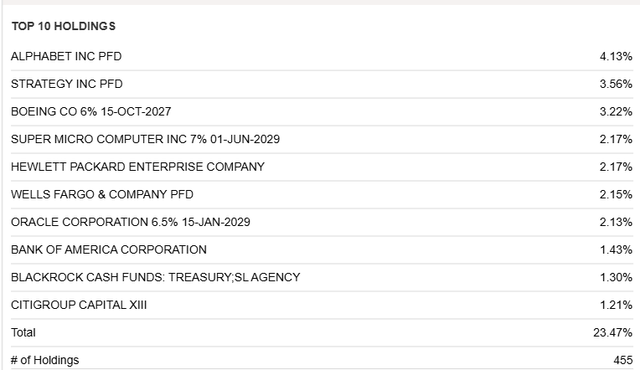
Wells Fargo’s Q3 EPS beat and $12.5 billion net interest income failed to move shares, while WFC.PZ preferreds yield 7.10%.
 Jeremy LaKosh 7 clicks
First Financial’s merger with First Illinois Financial is expected to lift net interest income and ROE from 2027 after Q2 net income rose…
Sorrento Research 2 clicks Farmer Mac ($AGM) Upside: ~28% to ~$265. Assumes 2027 core EPS of ~$22 (Q2 run-rate excluding a one-time $7.4 million interest recovery, growing ~12%) at 12x. Farmer Mac is the government-sponsored secondary market for agricultural and rural infrastructure loans, the “Fannie Mae of the farm.” The stock fell 12% in February after a Q4 earnings miss and has not fully recovered. At $206.92, AGM trades at about 10.5x normalized core EPS and roughly 1.8x book value, for a business with a 19% core ROE and record Q2 core earnings of $5.40 per share (+24%). The underappreciated shift is in mix. Rural infrastructure is now one of the fastest-growing parts of the business: broadband volume grew 58% and renewable energy 55% in Q2, at net effective spreads of 2.30% and 1.72%, versus 1.01% on traditional farm and ranch loans. As higher-spread infrastructure lending becomes a bigger share of $37.2 billion in total volume, Farmer Mac’s spread should expand. Its GSE status lets it fund at near-agency rates. Tier 1 capital is a healthy 13.2%.
Enova International ($ENVA) Upside: ~30% to ~$215. Assumes 2027 adjusted EPS of ~$19.50 (Q2 run-rate of ~$17 growing ~15%) at 11x. Enova is an online lender to non-prime consumers and small businesses. Shares fell from $227 to $167 in September after Enova withdrew its $369 million bid to acquire Grasshopper Bank, following opposition from 20 state attorneys general and two senators who argued the deal was designed to escape state rate caps. At $167.11, ENVA trades at about 10x annualized Q2 adjusted EPS of $4.31. The sell-off treats the bank charter as if it were in the earnings base, but it was option value; the core business is performing. Q2 adjusted EPS grew 33%, originations rose 27% to a record $2.3 billion, and net charge-offs improved to 7.3% from 8.1%. CEO Steve Cunningham stated that Enova’s “future growth and success do not depend on becoming a bank.” The episode also matters for peers: it shows charter acquisitions by non-bank lenders face real political resistance, a read-across for OppFi’s pending BNC National Bank deal. Enova repurchased $19 million of stock in Q2.
Atlanticus ($ATLC) Upside: ~35% to ~$120. Assumes 2027 EPS of ~$12 (H1 2026 run-rate of ~$10 growing ~20%, consistent with management’s 20%+ ROE target) at 10x. Atlanticus is a technology-driven lender serving near-prime consumers through private-label and general-purpose credit cards. The stock fell 13% after a Q2 beat, as investors focused on rising interest expense ($123 million versus $54 million a year ago) and integration risk from the ~$3 billion Mercury card portfolio. At $87.53, ATLC trades at about 9x annualized 2026 EPS and roughly 2.3x common book value, for a business earning a 28% return on equity. The footnotes show why reported earnings understate the economics. Atlanticus carries its receivables at fair value, currently 96.6% of face, so expected lifetime losses are marked upfront when loans are booked. Rapid growth therefore depresses near-term earnings rather than flattering them, the opposite of most lenders, where growth front-loads interest income and back-loads losses. Excluding Mercury, managed receivables still grew 26%, and the company added 790,000 new customers in the quarter. Management has guided that Mercury product and pricing changes will add meaningful revenue over the next several quarters.
OppFi (OneMain Holdings ($OMF) is the largest installment lender to non-prime consumers in the U.S. The stock has fallen from the high $60s on fears that sticky inflation and slowing wage growth will squeeze its borrowers, a worry crystallized by JPMorgan’s downgrade to Underweight. At $55.39, the regular dividend alone yields about 7.6%, and Q2 capital generation of $229 million annualizes to roughly $0.9 billion. That’s a mid-teens yield on the market cap for a lender earning 20%+ returns on new loans. The bears miss that OneMain’s credit problem is shrinking. Loans originated before management tightened underwriting in August 2022 now make up only about 4% of the portfolio but roughly 12% of 30+ day delinquencies, so losses should keep improving as that book runs off. Every new loan is still underwritten with a 30% stress overlay and must clear a 20% return-on-equity hurdle. Management reiterated 2026 charge-off guidance of 7.4–7.9% and expects improvement into 2027. Meanwhile, the BrightWay credit card (1.3 million accounts, charge-offs down 186bps year over year) and auto finance (receivables up 14%) are diversifying growth.OPFI) is a tech-enabled installment lender to consumers underserved by banks. Shares have nearly halved this year after OppFi cut 2026 adjusted EPS guidance from $1.76–1.84 to $1.34–1.51, as delays in its LOLA platform migration and line-of-credit launch weighed on originations. At $6.03, the stock trades at about 4x the midpoint of revised 2026 guidance and 2x management’s reaffirmed target of roughly $3 of EPS by 2028. The headline charge-off spike is partly arithmetic: originations fell 9% as underwriting tightened, and with fewer new loans in the denominator, the ratio rises. Management expects a return to growth in the second half. The overlooked catalyst is OppFi’s pending acquisition of BNC National Bank, filed with the OCC and targeted to close in Q4. A national charter would let OppFi lend directly instead of through partner banks, removing its biggest regulatory overhang, the “true lender” challenges states use against bank-partnership lenders. OppFi has authorized a $40 million buyback.
@sidecarcap This is exactly what I think is happening with $SLM $KSPI and maybe $YB. $KNSL too

Shorts that aren't actually that overvalued (a 10+15% grower trading at 30x earnings can be overvalued, but still easily trade to 40-50x). Sizing is very important. Stuff like $CBA, $WDFC, $WMT, $WING have been some of my biggest winners this year with no catalyst.
Reposting because of the amount of work I put into this and how quality of an opportunity I think it is. A 300bps rate hike affects 9% of NI. I think Wall Street still thinks it’s same old keep every loan or wholesale interest rate sensitive $SLM. Not giving them credit at a LTM 5.8x multiple for the new expanding TAM and Capital light partnership model. Just like it took Wall Street ages to figure out $FNMA in the early 80s when Lynch was accumulating every share he could.
Steve Eisman examines AI data-center debt, CoreWeave's tech correction and agentic AI's effect on banks as earnings season begins.
in the spoon-bending world, today was more Amazing Randi than Uri Geller $BSP
@charrisinvest @netnethunter I don’t think there is any. @The_Bank_Slate had any interview with him a couple years ago. Best is to dig up old 13d filings. $BRBS is a good proxy.
Sallie Mae ($SLM) 5.8x OE, Uber Cannibal (50% bought back since 2021), Outsider CEO, double digit EPS growth for years, 30% ROE. TAM just exploded. Franchise business model as a bank. 2.4% dividend Free writeup so please share if you find valuable or useful so I can do more free. Next 2 negative EV companies for founding subs only.
Another excellent quarter from River Financial $RVRF EPS of $1.93. Trading at 6x growing run rate. Can be hard to buy at some brokers. Fund bought a year ago at ~$33.
Thank you again for these great $WAL Pr calls, Bill
@Asymmetric_Val Without taking a look at $COF 100%

Morgan Stanley Direct Lending trades at a 32% NAV discount as non-accruals reach 2.9%, NII and NAV decline, and dividend coverage falls to…
 Rubicon Associates 1 click
 FMBL · long
Farmers & Merchants Bank of Long Beach, FMBL, is presented as a long investment idea with a history of prior VIC writeups.
$BAFN shareholders did not exercise their free rights to buy more shares at $3.50 when it was trading at $7. 749,535 shares worth. It never ceases to amaze me when this free money is passed up but it happens every time.
$AVGO's Hock Tan is right that capital is now the constraint on AI, and that is healthy. The $60bn banks are placing for Anthropic's lease of $GOOGL's TPUs shows how it gets eased: by moving risk, not reducing it. We read his two remarks as cause and effect: tokens are not yet earning a return, so capital is expensive. That brake stops a buildout outrunning its returns. The $42bn senior slice leans on Broadcom's A-minus credit through a partial guarantee of the chips' residual value. The rest is expected to wait for Anthropic's IPO. The brake works where Broadcom's credit stops. On the guaranteed slice the risk has moved, not shrunk: out of a loan spread lenders would price, into a chip deal the seller priced, onto a balance sheet already long the same cycle, where it is too small to move the shares. Google sits on the same outcome three times: Anthropic shareholder, TPU lessor, Broadcom's customer for those chips. The IPO junior lenders are waiting for also puts a public price on Google's stake, and Broadcom's guarantee is safest if it goes well. Spreading risk only reduces it when the holders are diversified against it. None here are. Each piece is ordinary. The total is capital arriving ahead of proven returns, and two of the market's largest companies carrying more of one lab's downside than their labels suggest.
 DB · long
Deutsche Bank trades at 1.0x tangible book, with projected ROTCE above 13% and a favorable setup ahead of earnings.

Inter & Co, Brazil’s second-largest neobank, grew over 20% with controlled delinquencies and 15% book-value compounding while trading at…
$OPBK: Korean American depositor focus across Southern CA, TX, NV, WA. LTM Owner's Earnings=27.32m 7.8x multiple. 3.7% dividend. At book. 12 full service branches and 1 loan production office (LPO). SBA preferred lender status allows them to unload 75% of loans at a premium. Focused on real estate and housing. 1h 2026 closed 5 LPOS due to "limited market demand" was outside core geography. NPLS +22.7% from YE 2025 to Q2 2026. Cost of deposits end of Q2 2.93%, more than 50% are CDs which is bad as they are not sticky and rate sensitive.
.@barrons out with an article promoting $C as the next $JPM. It seems Citi has shifted from most hated to most loved among the big banks, with CEO Jane Fraser heaped with praise in article after article. I'm long Citi so enjoying the rise, but this near universal lauding makes the contrarian in me suspicious.
@JustBankStocks @CorpusCol @TimyanBankAlert even Crazy Woman Creek Bancorp? $CRZY
@shidellian @CorpusCol Or the good folks in Altavista, VA- $PPBN
One of the world’s 10 biggest financial institutions signed a deal in 2024 to deploy software from Nubeva Technologies $NBVAF (TSXV: $NBVA). Nubeva won’t name the bank, but its filings leave a trail. The April 2024 release on the deal said revenue from the first 12 months “is not expected to be material,” and no press release or filing has updated the deal since. Nubeva reports revenue by country, and in FY2026, U.K. revenue was $204,055, the same figure as the license line. Nubeva also discloses what share of revenue its largest customers make up. In both of the last two years, U.K. revenue matched one customer’s share almost exactly. In FY2026, U.K. revenue was 40.8% of the total ($204,055 / $500,586), and the two largest customers were 41% each. In FY2025, U.K. revenue was 36.6% ($193,986 / $530,616), and the second-largest customer was 37%. One of the two 41% customers lines up with the support and maintenance line, 41.1% of FY2026 revenue ($205,712 / $500,586), which the last customer of Nubeva’s old TLS (web-traffic decryption) product pays. That means the license revenue, the U.K. revenue, and the remaining 41% customer all appear to be the same account. The FY2025 statements show the 37% customer at 0% of FY2024 revenue, so it started paying in FY2025, the first full fiscal year after the bank deal. In a June 2024 video, CEO Randy Chou said the bank doesn’t want anyone to know it uses Nubeva. If the U.K. customer is the bank, HSBC $HSBC is the likeliest candidate. It’s based in London, and at eighth by assets, it’s the only U.K.-headquartered bank in S&P Global $SPGI’s top 10. Then there’s Netskope $NTSK. The company that bought Nubeva’s key-capture patents runs a public page titled “Netskope + HSBC” that pitches its platform to the bank. It’s a sales page, with a “Meet with your Netskope team” button and a named Netskope sales rep, and it pitches Netskope against a “Bluecoat / Zscaler hybrid approach,” which reads like HSBC’s current setup. It also shows Netskope courting HSBC, not HSBC buying from Netskope, and nothing on the page mentions Nubeva or ransomware. If the bank is HSBC, Netskope, which owns the key-capture patents Nubeva sold, is already pitching Nubeva’s biggest license customer. None of this proves the bank is HSBC. But in the latest quarter (February-April 2026), instead of growing, revenue from the U.K. customer fell ~70% (vs. a 19% rise in the same quarter a year earlier). License revenue was $18,796 ($204,055 for the year minus $185,259 through January), vs. the ~$62K/quarter it averaged in the first three quarters. The FY2026 MD&A doesn’t say whether the license customer renewed. If it didn’t, Nubeva likely lost the bank (possibly HSBC) behind 41% of its FY2026 revenue. The six-month report due by December 30, 2026 will show whether license revenue came back.

What's wrong with $BSP ?
$BY Byline Bank will acquire Illinois State Bank
Here’s 1 Q3 that is most excellent. Ted has $PBNC humming. Former $CABT holders continue to rejoice.

VersaBank's Q3 revenue rose 23% and adjusted net income 27%, while a 2.19% net interest margin and 19.15x forward earnings temper its 2027…
 Grassroots Trading 2 clicks

Capitol Federal Financial's 2.31% net interest margin and $23.6 million Q3 profit support its shift toward higher-yield commercial lending,…
 Growth Stock Hunter
Huron Valley Bank to merge into Bank of Ann Arbor. A few $OXBC holders may be pleased to see it transact for 180% of book value.

Maybe I'm being too simplistic, but it seems like it's going to be hard for the market to have a sustained move higher if $GS doesn't start acting better.

Brazilian fintechs NU, INTR and PICS stand to benefit from a Bolsonaro-led runoff surprise that lowers fiscal risk premiums, rates and the…
Latticework’s briefing questions AI capex returns while featuring Close Brothers, Green Landscaping and OMS Energy Technologies.

M&T Bank's 10.4% five-year revenue CAGR, improving net interest margin and commercial loan growth support its earnings resilience despite a…
 Albert Anthony 2 clicks
$FSBW: Bought Pacific West Bank in August for 30m. Exp +7.5% EPS growth in 2027 due to this. PWBK has a 92% deposit mix NOT CDs. (attractive b/c lower cost). First Bancorp a bit cyclical due to home lending, consistent double digit ROE, conservative way to play eventual housing rebound. The problem was not that Pacific West had no franchise. It had a recognizable Portland commercial-banking niche, a relatively attractive deposit base, and specialized relationships with SMBs, nonprofits, professional-services businesses and digital partners. The problem was scale. Management acknowledged that Pacific West's size and market position made both organic and strategic growth difficult, while the cost and complexity of running a regulated community bank had risen materially after 2008 and 2020.

@aurelius28 I think $CIB is worth about $100 so you're hoping for overshoot of fair value if you buy it here. I much prefer its smaller and much less liquid peer $AVAL as the "catch-up" trade.

