

Boeing: The Real Test Of Its Recovery Begins Now
 Dhierin Bechai 2 clicks
Sector
Everything our editor has picked under this sector, best first.
187 stories
Dhierin Bechai 2 clicksA company that is not having a good time is the recent spin-off, Honeywell Aerospace $HONA, which is still not recovering from the poor set of results. A reminder that these guys are targeting 6-8% organic growth through 2030, with EBIT and FCF growing faster than revenue. The business combines leading OEM positions with a large aftermarket franchise, including the #1 position in APUs (~65% share) and the #2 position in avionics. Cheaper than its peers, but for a reason? That's why it's interesting to see the first insider buying shares on the open market.
$ASTS So many questions about ASTS (please don't reply to unrelated threads to get my attention, just DM me). I have no position in the company. My comments from 3+ quarters ago is that I wanted to see "more metal in space". My concern from 5+ quarters ago was "how do they go from producing 1 satellite in 6 months, to 6 satellites per month, that's a really hard scaling problem". I think Starlink screwed up with their Swarm acquisition and trying to force that tech to work, it put a 18+ month delay on them. My hope was that ASTS would capitalize on that, and it generally appears that they've had scaling issues that prevented that from happening. That isn't really their fault, "space is hard" and "mass production is different from prototypes". I think money isn't a problem for them, they have so much cash (they were smart to take advantage of their high stock price). The problem is execution is hard even if you have lots of cash. Strategically they're in a good place, the MNO's definitely want/need them to work to compete w/ Starlink. But the MNO's are powerless, they're awful at execution (they're only good at increasing your monthly bill!). The BO failure was a really big problem. SpaceX (Starlink) had very little leverage on ASTS before. If they slowroll/deny F9 launches, they just push ASTS towards their competitor (BO). Two competitors (BO and ASTS) become stronger. But since BO was offline, it makes SpaceX the de facto monopolist to ASTS' launch. That gives them a ton of power in this situation and I imagine (but have no way to prove it), they would flex that competitive pressure on the company. That's not illegal anti-competitive behavior, that's just "pressure". It's a tricky set of problems that face the company and the stock price reflects that. I don't have a strong view in either direction of whether things get better or worse from here. But my initial hopes/thesis were steadily eroded by the execution issues (and valuation), hence my eventual exit from my long position. I don't think I'm saying anything thoughtful or what people don't already know/experience. But worth putting it out there because I've received _a lot_ of questions. Disclosure: No position in ASTS.
We think hardware manufacturing and chip costs, more than launch, will decide how much $SPCX earns from orbital compute. Our SPCX model estimates how much orbital compute can be made and launched, what it costs and what it earns as it ages, then adds that revenue to our forecasts for SpaceX's launch, Starlink and Cursor businesses in our SPCX DCF. Each year, deployment equals the gigawatts of solar and AI computing hardware the supply chain can make for orbital data centers, capped by what Starship can carry. In our base case, launch is the tighter limit only in the first four years of the forecast, and manufacturing is the limit after that. Our base case puts chips and racks at about 80% of the cost to build each gigawatt and launch at about 11%. Solar arrays, satellite structure and laser communications make up the rest. Because chips make up most of the cost and launch only a small part, whether SpaceX uses merchant GPUs, custom chips or makes its own chips at Terrafab will matter more to returns than how cheap launch gets. Revenue per gigawatt depends on the business model, and we assume it is higher for selling AI services through an API than for renting out compute. Revenue falls as the hardware ages, and we assume each satellite is replaced after a 7-year life. The model's price-cut settings let us test price competition. We think Chinese companies could use their own launch and computing infrastructure to offer cheaper AI services internationally, pressuring the prices U.S. AI companies charge and what they can pay for capacity. The U.S. and China could also tie access to their AI services to defense and trade relationships. Countries with ties to both, including India and some Middle Eastern states, could keep access to U.S. and Chinese providers and negotiate lower prices.

Park Aerospace’s 11% Q2’27 sell-off overlooks sole-source PAC-3 rocket-motor materials and A320neo engine composites, with missile capacity…

AeroVironment's $465M LOCUST laser award and earnings beat support its 2027 growth outlook despite government budget uncertainty.
 Melissa Tucker 6 clicks
RTX’s $289 billion backlog, including $119 billion in defense, supports growth from defense contracts and commercial aerospace aftermarket…
 Blake Winiecki 4 clicks
Howmet Aerospace is framed as a beneficiary of turbine and aircraft-engine demand, while J.B.
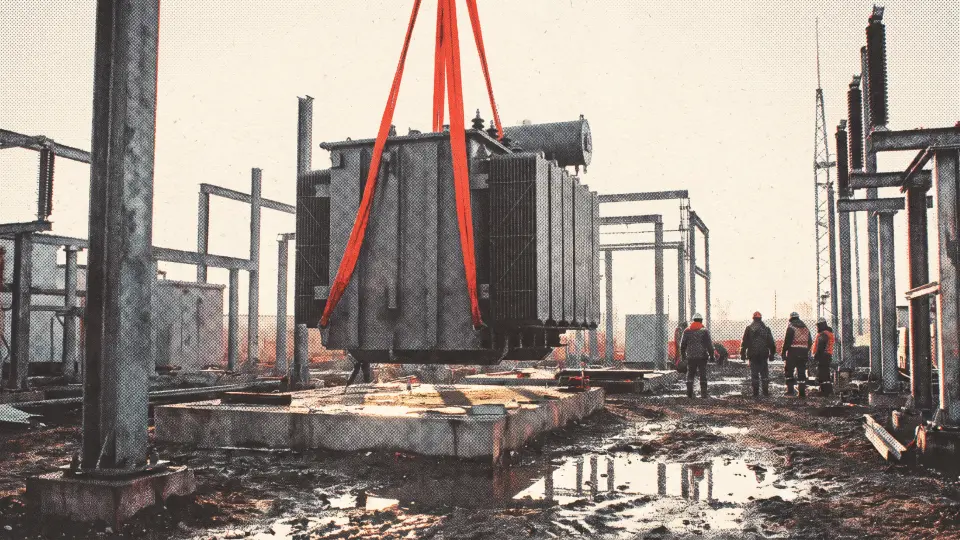
Eaton’s backlog, data-center, grid and aerospace demand, plus a 450–500 bp H2 2026 Electrical Americas margin recovery, support the growth…
 Value Capital Research 7 clicks
@POVMexico Tulum Airport was only built in 2024 as an AMLO pet project, minimal market demand. The hippies can go back to flying through Cancun Airport as they should. $asr
How much of the $8.4B backlog at BWX Technologies $BWXT turns into revenue by the end of 2027? $BWXT expects to recognize 55% of the $8.4B backlog, or ~$4.6B, by the end of 2027. Another $1.4B of unexercised contract options sit outside the backlog, with $900M expected to be awarded in 2030 and $500M in 2035. Three items drive $BWXT’s quarterly FCF swings: 1) Payables: Higher accounts payable added $71.4M to H1 2026’s $249.0M of operating cash flow, vs. $6.9M a year earlier. The 10-Q credits the cash flow increase mainly to the timing of vendor payments, customer billings, and project cash flows, which can reverse in later quarters. 2) Seasonality: Retainages (payments withheld on the government segment’s fixed-price incentive contracts until set conditions are met) build in Q1 and Q3, with larger payments in Q2 and Q4. 3) Equity income: $BWXT’s share of the profit from the joint ventures that manage 14 government nuclear sites, including Savannah River and Pantex, comes in as equity income, now $80M/year. It counts toward adjusted EBITDA (15.7% of Q2’s $155.5M), but $BWXT only gets the cash when the joint ventures pay dividends. That’s why I’d judge $BWXT’s FCF on the full year, not the quarter.

Park Aerospace reported 27% revenue growth and 72% EPS growth, supported by composite materials for Airbus engines and PAC-3 rocket motors.
BWX Technologies’ $BWXT commercial segment grew Q2 2026 revenue 72% to $302.5M, while its government segment grew just 2% to $601.3M. $BWXT reported Q2 2026 on August 3, and CEO Rex Geveden called it “another strong quarter characterized by excellent execution across the company”: → Revenue: $901.6M, up 18% y/y (9% organic). → Adjusted EBITDA: $155.5M, up 7%, a 17.2% margin vs. 19.1%. The government segment fell 5% to $126.5M, but grew 22.1% excluding a $29.4M one-time contract gain in Q2 2025, while the commercial segment more than doubled to $36.1M. → EPS: $0.97 GAAP (+14%) and $1.07 non-GAAP (+5%). → FCF: $115.0M, down 9%, as capex rose 27% to $41.4M. → Backlog: $8.4B, up 40% y/y, including $2.26B of government contracts not yet funded by Congress. Q2 bookings were $648.9M vs. $1,640.5M a year earlier, but over the past 12 months, new orders still ran 1.7x revenue. The 2026 guide now calls for $3.8B of revenue, $662-672M of adjusted EBITDA (a 17.5% margin), $4.70-4.80 of non-GAAP EPS, and $345-360M of FCF. In August, $BWXT also changed its guidance for both segments: 1) Government Operations: Lower revenue growth (high single digits, down from low teens) but a higher margin (20.5%, up from 19% at the start of 2026). CFO Mike Fitzgerald said on the Q2 call that high-purity depleted uranium (HPDU) costs are coming in under budget. Most of the segment’s contracts pay $BWXT its costs plus a fee, and the fee goes up when $BWXT spends less than the target cost, so lower HPDU costs mean less revenue but more profit. 2) Commercial Operations: Higher revenue growth (45%, up from 30%), with Precision Components Group (PCG), acquired July 1, adding slightly more than half of the increase, but a lower margin (13%, down from 14%) as $BWXT spends on U.S. capacity and new hires.
See the 10-Q note on the $131.9M of capped calls here: https://t.co/qisg1oxKVm Continue reading here for the Navy suppliers I compare $BWXT against: https://t.co/bPIYua98gd
In November 2025, BWX Technologies $BWXT sold $1.25B of 0% convertible notes due November 2030 and used $830.8M of the proceeds to repay its old credit facility. The conversion price is $262.51/share, 80.2% above $145.70, and $131.9M of capped calls offset dilution up to $396.24/share. Dilution has been minimal so far. Diluted shares have held at ~92M since 2023, helped by small buybacks ($30M in 2025). But stock comp rose to $20.1M in H1 2026 from $13.7M a year earlier, although it’s still only 1.1% of revenue, up from 0.9%. Management also said on the Q2 call it doesn’t plan buybacks in 2026, despite $347.6M left on the authorization, so nothing will offset the new shares. Even after paying ~$200M for Precision Components Group (PCG) on July 1, $BWXT’s leverage is within its 2-3x target: → Debt: $2.05B ($400M of 4.125% notes due June 2028, $400M of 4.125% notes due April 2029, and the $1.25B convert). → Cash and liquidity: $400M of cash and $1.7B of total liquidity, including an undrawn $1.25B revolver running to November 2030. → Leverage: 2.7x net debt to TTM adjusted EBITDA, or $1.65B of net debt on $602.1M of EBITDA. The $750M from selling its medical isotope business would cut leverage to 1.5x. → Ratings: Fitch BBB (investment grade) since September 2026; S&P BB+ and Moody’s Ba1, one notch below. → Other obligations: $152.0M of underfunded pension and retiree benefit plans. Net debt has hovered between $1.0B and $1.5B since 2023. $BWXT pays a dividend of $0.27/quarter ($1.08/year, a 0.7% yield), raised from $0.25 in February 2026. The company expects $5.5B of capital to deploy through 2030 at 2-3x leverage, with $3.5B left after capex and dividends. That’s what CFO Mike Fitzgerald said at $BWXT’s Investor Day on September 29, 2026, and he also put organic growth first for the $3.5B. But he said $BWXT is “not anchored to the same size of transactions” it has done before, and the deck lists “Disciplined Acquisitions” among the revenue drivers behind the 2030 targets. In other words, $BWXT has the track record and, once the medical sale closes, the balance sheet to go after its 2030 targets.

Howmet Aerospace posted 24% Q2 revenue growth and 46% adjusted EPS growth, but HWM trades about 87% above a $120.69 DCF fair-value estimate.
 Alexander I. Velasquez 2 clicks
Dassault Aviation leads a 53-pitch roundup with a €45 billion order book against €7.4 billion of sales and a 26.6% Thales stake.
Four of BWX Technologies’ $BWXT six top executives took their current roles in 2025, but all four were promoted from inside the company. $BWXT’s 2030 plan depends most on the executives below: → Rex Geveden (President and CEO): CEO since 2017 after joining as COO in 2015. Previously an EVP at Teledyne Technologies $TDY and 17 years at NASA, where he was COO. → Mike Fitzgerald (CFO): CFO since July 2025, interim from May 2025. Joined in 2022 as chief accounting officer; previously at MorganFranklin Consulting and Deloitte. → Joe Miller (President, Government Operations): Since June 2025. Served on the submarine USS Norfolk, joined $BWXT in 2011 as an engineer, and ran Advanced Technologies before taking over the segment. → John MacQuarrie (President, Commercial Operations): More than 28 years at $BWXT, and more than 30 in the nuclear industry. → Kevin McCoy (Chief Nuclear Officer): Moved from Government Operations president in June 2025 to help speed up Columbia- and Virginia-class production. Retired vice admiral and former commander of Naval Sea Systems Command. → Kate Kelly (President, Advanced Technologies): Has run Advanced Technologies, home to Pele, BANR, and TRISO (its microreactor and fuel programs), since June 2025, after joining $BWXT in 2012. Several senior roles turned over in 2025 and 2026: → CFO: Robb LeMasters stepped down in May 2025 and stayed on as a special adviser; Fitzgerald replaced him. → General counsel: Ronald Whitford stepped down on November 4, 2025, and Toby Smith, previously corporate secretary at elevator maker Otis Worldwide $OTIS, replaced him. The 8-K says the exit wasn’t tied to “any legal issue or any disagreement.” → Strategy: Rik Geiersbach, previously head of strategy and corporate development for the defense unit of Boeing $BA, joined as chief strategy officer in September 2025. → Nuclear Operations Group: Retired Rear Admiral Howard Markle now runs the naval reactor plants in place of Gary Camper, with no release announcing the change. $BWXT’s board includes Adm. John Richardson, the former Chief of Naval Operations and former director of Naval Reactors.
See the Form 4 note on Geveden’s 10b5-1 plan here: https://t.co/bbczIEmVOj Continue reading here for the six events I’m watching next at $BWXT: https://t.co/bPIYua98gd
85.5% of the BWX Technologies $BWXT stock insiders have sold in the open market since January 2025 came from CEO Rex Geveden. All 14 open-market transactions since then were sales, totaling 129,322 shares and $20.1M. Geveden accounts for 110,625 of the shares and $17.2M, in two phases: 1) Discretionary sales: 45,625 shares at $107.40 on February 26, 2025, and 25,000 at $179.00 on August 6, 2025, both two days after an earnings release and neither under a 10b5-1 plan (a pre-set trading plan). 2) Plan sales: On August 11, 2025, five days after the second sale, he adopted a 10b5-1 plan to sell up to 40,000 shares through August 14, 2026. He sold 10,000 shares/quarter under the plan, at $197.90, $203.26, $204.81, and $172.50, using up all 40,000. He still holds 192,491 shares directly ($28.0M at $145.70). The last two 10-Qs show no new plans adopted in H1 2026, and the Q3 10-Q, due with results on November 2, will show whether he adopted another plan after the first expired. The other eight sales, by seven executives and directors, totaled 18,697 shares and $2.9M. Most of this selling carries little signal. The other insiders’ $2.9M is small, and Geveden’s 40,000 plan shares were scheduled in August 2025. His two discretionary sales matter more. They totaled 70,625 shares ($9.4M) outside any plan, and including the plan sales, he’s sold about a third of his shares since February 2025. But both came right after $BWXT reported earnings, not ahead of them, at $107.40 and $179.00, well below the $238.42 peak. So the selling isn’t a warning sign, but with no insider buying during the drop, insiders aren’t signaling a bottom.

Rocket Lab’s $2.36 billion backlog and Iridium acquisition support growth, but delayed Neutron testing, dilution and losses leave RKLB…
 Bohdan Kucheriavyi 7 clicks
Continue reading here for the U.S. AP1000 push and the new plant $BWXT is weighing: https://t.co/bPIYua98gd
BWX Technologies $BWXT is in military base power three ways, through (1) Project Pele, a prototype reactor it’s building for the Pentagon, (2) the TRISO fuel its microreactors run on, and (3) Janus, the Army program that chose $BWXT’s commercial reactor for Fort Campbell, Kentucky. Pele is a 1.5-megawatt (MW) transportable, gas-cooled microreactor built for the Pentagon’s Strategic Capabilities Office under a 2022 award. $BWXT delivered its full TRISO fuel core to Idaho National Laboratory (INL) in December 2025, received the Department of Energy’s (DOE) preliminary safety approval in September 2026, and targets delivering the reactor to INL in 2027. TRISO (tri-structural isotropic) fuel, which the Department of Energy calls “the most robust nuclear fuel on earth,” packs uranium into particles coated in carbon and ceramic layers. $BWXT produces TRISO at Lynchburg “in the hundreds of kilograms quantities,” Joe Miller, president of Government Operations, said at its Investor Day on September 29, 2026. It also supplied the fuel for Antares, a microreactor startup whose reactor was the first new reactor to reach criticality (a self-sustaining chain reaction) under DOE’s reactor pilot program in June 2026. POWER magazine, a power-industry trade publication, reports $BWXT is “the only Janus vendor that self-supplies its TRISO fuel.” $BWXT is also negotiating a commercial TRISO plant in Wyoming with Kairos Power, an advanced reactor developer, at up to $500M of capex. CFO Mike Fitzgerald said at Investor Day that $BWXT needs to see high-assay low-enriched uranium (HALEU, the 5-20% enriched uranium most advanced reactors need) become available before committing to the plant, and “probably will not make a decision on that for a little while.” The Army chose BANR (the BWXT Advanced Nuclear Reactor), a 20 MWe (megawatts of electricity) gas-cooled design scaled up from Pele, for Fort Campbell. $BWXT plans to start construction at the site in late 2028 and have the reactor running in the early 2030s. Three details matter here: 1) No contract value: $BWXT’s release describes “a phased contracting approach.” For comparison, the Janus agreement for Radiant, a microreactor startup, is worth up to $750M. 2) $BWXT will own the reactor: The Army chose vendors “to own, construct and operate nuclear microreactors” ($BWXT’s release), under fixed-price, milestone-based agreements in which the Army pays at milestones rather than buying power. 3) Not first in line: With operation in the early 2030s, $BWXT’s reactor won’t meet the September 30, 2028 deadline a May 2025 executive order set for an Army-regulated reactor running on a U.S. military base. Radiant and Antares, two of the other Janus vendors, both target 2028 for their first reactors. After Radiant’s agreement, $1.45B of the program’s $2.2B is left, and an even split among the other four vendors would give $BWXT ~$360M over fiscal 2027-2031, or $72M/year, under 2% of 2026 revenue guidance.
Continue reading here for what a budget slip would do to $BWXT’s stock in my bear case: https://t.co/bPIYua98gd
