
Barbarian Capital on X
Accenture looks to sell Chinese operations for up to $1.5 bn $ACN https://t.co/0LrYwpiFkl
Search
Every story we have published, filed by the company it is actually about.
3834 stories about companies over $2B
Accenture looks to sell Chinese operations for up to $1.5 bn $ACN https://t.co/0LrYwpiFkl
Evercore appoints co-presidents for the first time in leadership reshuffle $EVR https://t.co/XTqr3gW9jX
Fair points, but I think you’re conflating capital markets access with the economics of the underlying contracts. A pulled equity offering doesn’t mean secured project financing has disappeared. And more importantly, $CRWV and $CIFR have fundamentally different business models, funding requirements and residual asset values. That’s precisely my point.
Excellent illustration of $CRWV capital structure https://t.co/fEZpy9xXbe https://t.co/9kK2aZS3Up
𝙒𝙝𝙖𝙩 𝙝𝙖𝙥𝙥𝙚𝙣𝙚𝙙 𝙩𝙤 𝙩𝙝𝙚 𝙉𝙚𝙤𝙘𝙡𝙤𝙪𝙙 / 𝘼𝙄/𝙃𝙋𝘾 𝙩𝙧𝙖𝙙𝙚 𝙡𝙖𝙨𝙩 𝙬𝙚𝙚𝙠: I like distilling complex topics down to plain English. Here’s my understanding of what happened. Please correct where wrong… $CRWV and its peers rent $NVDA GPUs to AI labs and hyperscalers under multi-year take-or-pay contracts. The capex is so large relative to cash flow that the model only works if they can keep raising tens of billions a year in new financing to build what customers have already signed for. Much of that comes from secured loans backed by specific chips and contracts, while the rest comes from unsecured bonds, converts or stock. Importantly, not all secured debt is non-recourse, and many of $CRWV’s GPU loans are guaranteed by the parent. Still, the secured facilities held up considerably better than the unsecured bonds, which went from ~12% to ~15% yields, while the cost of insuring them via CDS roughly doubled… Nothing fundamental appears to have caused it. No major customer walked, GPU pricing held up, and the quarter looks fine. What happened was a cluster of headlines landing on a nervous market with the 10-year near 5.2% and hundreds of billions of AI debt issuance expected: Chamath calling it a private-credit bubble, an analyst saying the equity could go to zero, Gartner forecasting that over 80% of neoclouds stop operating independently by 2030, a few smaller peers failing to get IPOs and debt deals done. Underneath sat the bigger question of whether neoclouds are durable businesses or really just financing wrappers that hyperscalers eventually insource and cheap open-source models undercut. Once investors doubt the parent can fund growth, the stock falls, which makes the equity leg more dilutive, which worries bondholders more. Credit and equity fed on each other and the whole group fell 10-30% in sympathy. Was it justified? In three parts. (1) The $CRWV unsecured bond move was likely overdone: a company with ~$17bn of liquidity and a $129bn contracted backlog doesn’t suddenly become a distressed credit because of a handful of headlines. But backlog isn’t cash flow, and secured lenders have first claim on specific assets and cash flows, with many loans also carrying parent guarantees. The question for unsecured creditors is how much cash actually makes it back to the parent after servicing the secured debt. Still, a move to ~15% yields looks more like aggressive HF de-risking with headlines as the accelerant than a sudden collapse in the underlying business. (2) The $CRWV equity move was more understandable, just not for the headline reasons: this is a levered financing business whose equity returns depend on the cost of the marginal dollar of capital. When financing gets more expensive, the residual value on every future GW shrinks, and any gap that needs to be filled with equity becomes more dilutive. That said, unsecured bonds trading at 15% doesn’t mean every new GPU deployment costs 15% to finance. A 20% haircut for a stock that may not self-fund until 2030 could be seen as fair, but it ultimately depends on how much parent-level capital is actually required. (3) The group ($CORZ, $CIFR, $WULF) selloff was the least justified: $CRWV finances depreciating GPUs and bears the risk of obsolescence and replacement. The miners converting to HPC are increasingly financing long-lived power and data center infrastructure leased to hyperscalers under 15-20 year contracts, often with the customer owning the GPUs. Their risks are construction, power delivery and financing, not GPU replacement or compute pricing. Different assets, different contracts, different capital structures. Yet the market sold them as though they had the same problem, and that’s where the mispricing most likely sits…

Digital Realty paid $120 million for Atlanta-area parcels including a former Army dump with buried carcinogens and military ordnance.
HY bonds losers from last week. Some familiar faces. $FMC $JBLU $UNIT $FUN $CRWV https://t.co/MvkKq0lssG
Crews at a data center construction site in Georgia unearthed incendiary white phosphorus late last year. Police sent in a bomb squad. The site: a former Army dump near Atlanta, where Digital Realty ($DLR) is building a $3 billion data center campus. https://t.co/BSLbwjk7cE
Feels like shorting Taiwanese AI stocks is probably a good hedge right now. Positioning remains extremely elevated = highly exposed to short-term downside. Just look at how the market responded to $TSM's awesome earnings/guidance....-2.5%.
I’ve spent a few days thinking about the Tesla Roadster reveal and landed somewhere I haven’t seen much discussion. I’m neither a Tesla fanboy nor a Tesla hater. And I couldn’t care less whether what we saw technically qualifies as a flying car. Three takeaways: (1) The risk of that live demonstration going horribly wrong was real. Almost no CEO would willingly expose their company to that kind of public humiliation for a product with so little financial upside. Elon did. (2) That willingness to attempt the seemingly impossible is what makes Tesla special. It’s also arguably Elon’s greatest contribution to America. He’s helped bring back something we’ve lost. The American spirit of chasing big scary ideas that most people think are impossible. That mindset is spreading across a new generation of founders and its long term impact on America’s future could dwarf anything Tesla ever sells. I think this is deeply underappreciated. (3) Can we just acknowledge how insanely cool that moment was? We’ve reached a strange place culturally where even extraordinary feats of human ingenuity immediately become arguments about why they don’t count. Not everything needs to be a debate. Sometimes we should just be able to stand back together and marvel at what humans are capable of. I’ve been both bullish and critical of Tesla’s ambitions over the years. But watching Elon and his team push the boundaries of what’s possible reminds me why I’m glad we have him. Whether the Roadster ever makes Tesla a dollar or impacts $TSLA stock price is almost beside the point. We need more people willing to risk failure in pursuit of things the rest of us think are impossible. Because when they succeed we all win.
Wells Fargo’s Q3 EPS beat and $12.5 billion net interest income failed to move shares, while WFC.PZ preferreds yield 7.10%.
 Jeremy LaKosh
Cerebras, a wafer-scale AI chipmaker, is forecast to nearly 10x sales by 2028 as capacity expands, while its shares have fallen on capacity…
 Stone Fox Capital 1 click
Oruka Therapeutics’ ORKA-001 posted PASI 90 and PASI 100 psoriasis responses at week 28; $1.1 billion of cash funds development through a…
 Equity Eagle
DexCom’s 15-day G7 sensor lifted Q2 2026 gross margin 400 basis points to 64.1%, lowering CGM costs ahead of broader Type 2 diabetes…
Equity Eagle 4 clicks
Semtech raised Q3 guidance and targets $3.2 billion of fiscal 2030 revenue, excluding upside from its AI data-center optical and copper…
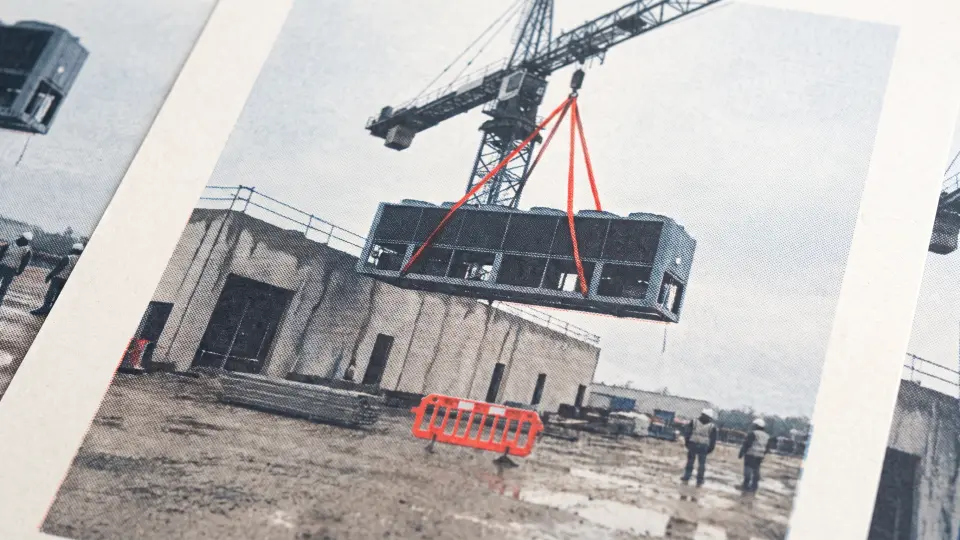
DigitalOcean’s CEO says the cloud company will not take on extraordinary leverage to fund its AI push.
Optical-component vendor call covers 800G and 1.6T demand, AI cluster optical density, market share, pricing and 2027 growth for Coherent,…
$CRWV has ~$10bn of unsecured HY notes, all yielding 14-15%. There’s also another ~$11bn of converts. That’s ~$21bn of unsecured claims, sitting behind the secured debt that funds the GPUs. Here's the latest market pricing on the HY notes (converts excluded): https://t.co/vVxKgKVCRc
Farmer Mac ($AGM) Upside: ~28% to ~$265. Assumes 2027 core EPS of ~$22 (Q2 run-rate excluding a one-time $7.4 million interest recovery, growing ~12%) at 12x. Farmer Mac is the government-sponsored secondary market for agricultural and rural infrastructure loans, the “Fannie Mae of the farm.” The stock fell 12% in February after a Q4 earnings miss and has not fully recovered. At $206.92, AGM trades at about 10.5x normalized core EPS and roughly 1.8x book value, for a business with a 19% core ROE and record Q2 core earnings of $5.40 per share (+24%). The underappreciated shift is in mix. Rural infrastructure is now one of the fastest-growing parts of the business: broadband volume grew 58% and renewable energy 55% in Q2, at net effective spreads of 2.30% and 1.72%, versus 1.01% on traditional farm and ranch loans. As higher-spread infrastructure lending becomes a bigger share of $37.2 billion in total volume, Farmer Mac’s spread should expand. Its GSE status lets it fund at near-agency rates. Tier 1 capital is a healthy 13.2%.
Enova International ($ENVA) Upside: ~30% to ~$215. Assumes 2027 adjusted EPS of ~$19.50 (Q2 run-rate of ~$17 growing ~15%) at 11x. Enova is an online lender to non-prime consumers and small businesses. Shares fell from $227 to $167 in September after Enova withdrew its $369 million bid to acquire Grasshopper Bank, following opposition from 20 state attorneys general and two senators who argued the deal was designed to escape state rate caps. At $167.11, ENVA trades at about 10x annualized Q2 adjusted EPS of $4.31. The sell-off treats the bank charter as if it were in the earnings base, but it was option value; the core business is performing. Q2 adjusted EPS grew 33%, originations rose 27% to a record $2.3 billion, and net charge-offs improved to 7.3% from 8.1%. CEO Steve Cunningham stated that Enova’s “future growth and success do not depend on becoming a bank.” The episode also matters for peers: it shows charter acquisitions by non-bank lenders face real political resistance, a read-across for OppFi’s pending BNC National Bank deal. Enova repurchased $19 million of stock in Q2.
Blue Owl Capital Corporation ($OBDC) Upside: ~34% total return. Assumes the shares re-rate to 0.90x NAV ($12.83, +22%) plus a ~12% dividend yield. Blue Owl Capital Corporation is one of the largest business development companies (BDCs), with a $15 billion portfolio of loans to sponsor-backed middle-market companies. The stock has fallen on contagion from its manager, Blue Owl, which gated redemptions at a retail credit fund and sold assets amid fears that AI will disrupt the software companies private credit lends to. At $10.49, OBDC trades at 0.74x NAV of $14.26 and yields 11.8% on its $0.31 base dividend, which is covered by adjusted net investment income of $0.34. A detail in the credit disclosures suggests the marks are already conservative: non-accruals rose to 2.8% at cost but fell to 0.8% at fair value, meaning troubled loans have been written down hard. With 73% of the portfolio in first-lien debt and leverage at a two-year low of 1.11x, the market price implies losses far beyond what the marks show. Every share OBDC buys back at a 26% discount adds to NAV per share, and it repurchased $35 million in Q2. The risk to watch is a shrinking portfolio: repayments ($747 million) outran new commitments ($319 million) last quarter.
Encore Capital Group ($ECPG) Upside: ~30% to ~$124. Assumes 2027 EPS of ~$15.50 (2026 guidance midpoint of $13.50 plus the $1.00 non-recurring refinancing cost, growing ~7%) at 8x. Encore Capital is the largest buyer of defaulted consumer debt in the U.S., operating as Midland Credit Management, and in Europe through Cabot. The stock has more than doubled from its low, yet still trades at just 7x the midpoint of raised 2026 EPS guidance of $13–14 at $94.44. The less appreciated point is that Encore is a counter-cyclical business. Rising credit card charge-offs, the same trend that worries investors in lenders like OneMain, create more supply for Encore to buy at better prices. That’s why U.S. purchases hit a record $372 million in Q2 and collections rose 17%. Estimated remaining collections of $10.2 billion are about 2.4x its $4.2 billion of debt, and the May refinancing should save about $15 million of interest a year. Encore repurchased $27 million of stock in Q2, reducing diluted shares to 22.8 million from 23.6 million a year ago.
OppFi (OneMain Holdings ($OMF) is the largest installment lender to non-prime consumers in the U.S. The stock has fallen from the high $60s on fears that sticky inflation and slowing wage growth will squeeze its borrowers, a worry crystallized by JPMorgan’s downgrade to Underweight. At $55.39, the regular dividend alone yields about 7.6%, and Q2 capital generation of $229 million annualizes to roughly $0.9 billion. That’s a mid-teens yield on the market cap for a lender earning 20%+ returns on new loans. The bears miss that OneMain’s credit problem is shrinking. Loans originated before management tightened underwriting in August 2022 now make up only about 4% of the portfolio but roughly 12% of 30+ day delinquencies, so losses should keep improving as that book runs off. Every new loan is still underwritten with a 30% stress overlay and must clear a 20% return-on-equity hurdle. Management reiterated 2026 charge-off guidance of 7.4–7.9% and expects improvement into 2027. Meanwhile, the BrightWay credit card (1.3 million accounts, charge-offs down 186bps year over year) and auto finance (receivables up 14%) are diversifying growth.OPFI) is a tech-enabled installment lender to consumers underserved by banks. Shares have nearly halved this year after OppFi cut 2026 adjusted EPS guidance from $1.76–1.84 to $1.34–1.51, as delays in its LOLA platform migration and line-of-credit launch weighed on originations. At $6.03, the stock trades at about 4x the midpoint of revised 2026 guidance and 2x management’s reaffirmed target of roughly $3 of EPS by 2028. The headline charge-off spike is partly arithmetic: originations fell 9% as underwriting tightened, and with fewer new loans in the denominator, the ratio rises. Management expects a return to growth in the second half. The overlooked catalyst is OppFi’s pending acquisition of BNC National Bank, filed with the OCC and targeted to close in Q4. A national charter would let OppFi lend directly instead of through partner banks, removing its biggest regulatory overhang, the “true lender” challenges states use against bank-partnership lenders. OppFi has authorized a $40 million buyback.
Radian ($RDN) is a leading U.S. private mortgage insurer that is reshaping itself into a global specialty insurer through its $1.7 billion acquisition of Lloyd’s carrier Inigo, closed in February. Investors are skeptical of the pivot: Q2 missed estimates as a $30 million reserve charge tied to Middle East exposure pushed Inigo’s combined ratio to 97.7%. At $30.61, RDN trades at about 0.85x book value of $36 and roughly 7x annualized operating earnings of $1.14 per quarter. The core mortgage book is better than ever: primary insurance in force hit a record $284 billion, and higher rates keep policies in force longer because fewer borrowers refinance. Radian still holds $1.45 billion of capital above the mortgage insurance standard (PMIERs), 37% above requirements, and excluding the one-off charge, specialty margins were in the high 80s. Book value grew 8.5% year over year, and buybacks are tracking toward the top of the $200–250 million target.
